Who Invented Spark Plugs: Complete History and Technology Explained
Who invented spark plugs is often credited to Edmond Berger, who created the first known spark plug around 1839. Though he never patented it, Berger’s early design set the foundation for ignition technology. Later contributions by inventors like Robert Bosch refined spark plug performance to fit evolving engine demands. Starting with Berger’s invention helps understand how spark plugs enabled reliable internal combustion engines, making it important to know their role and maintenance, like replacing plugs every 30,000 miles to ensure proper engine function.
Key Takeaways
- Edmond Berger invented the first known spark plug in 1839 but did not patent it.
- Robert Bosch improved spark plug reliability and mass production in the early automotive age.
- Spark plugs operate within 500 to 850 °C to avoid carbon buildup and overheating.
- Replacing spark plugs approximately every 30,000 miles prevents engine performance loss.
- Iridium and platinum plugs resist gap adjustment damage due to their fragile electrode discs.
- Side electrodes require about 45% higher voltage and are mainly used in wasted spark ignition systems.
Who Invented the First Spark Plug and Early Pioneers

The very first spark plug is credited to Edmond Berger, who is said to have created an early version on February 2, 1839. Berger’s invention predated the widespread use of internal combustion engines and did not receive a patent. This lack of patent protection and limited documentation mean Berger’s design is often overshadowed by later developments. His spark plug’s exact design and intended application remain somewhat unclear, partly because the internal combustion engine itself hadn’t yet become practical in 1839. However, Berger’s work marks the beginning of the spark plug story.
In the late 1800s and early 1900s, inventors such as Oliver Lodge and Robert Bosch made key advancements in ignition technology. Lodge, an English physicist, created a dependable electric spark ignition system and invented what became known as the “Lodge Igniter.” He started the Lodge Plug Company around 1903 with his sons, which sold spark plugs commercially. While Lodge earned recognition for producing the first dependable spark plug, Bosch, along with his engineer Gottlob Honold, made a notable innovation in 1902. Honold designed the first commercially practical high-voltage spark plug as part of Bosch’s magneto ignition system. This technology became widely adopted, helping improve automotive engine reliability on a larger scale.
Alongside these pioneers, other inventors contributed patents and ideas essential to the spark plug’s evolution. Nikola Tesla’s 1898 U.S. Patent (No. 609,250) focused on ignition timing systems using electric sparks. Frederick Richard Simms also filed early patent applications in 1898. The timeline shows an overlapping effort of various innovators refining spark ignition methods.
Etienne Lenoir developed one of the earliest internal combustion engines in 1858 and obtained a patent for an electric ignition system in 1860. Although sometimes linked to the invention of the spark plug, Lenoir’s patent actually covered a broader engine ignition method rather than the modern spark plug design specifically used in engines today.
Summarizing the key early spark plug contributors: Edmond Berger appears first with a primitive form in 1839, offering the initial concept but without commercial success or patent protection. By the turn of the 20th century, Oliver Lodge’s 1903 Lodge Igniter provided a more dependable spark plug design that his family turned into a business. Meanwhile, Robert Bosch’s team, particularly engineer Gottlob Honold in 1902, created the first practical high-voltage spark plug suitable for mass production and automotive use.
The intertwined timeline of these innovations reflects how spark plugs rapidly moved from experimental curiosities to commercially reliable engine components. Each step involved improving electrical properties, materials, and manufacturing techniques to meet the emerging needs of internal combustion engines. Understanding who invented the first spark plug requires balancing early conceptual inventions like Berger’s with the practical, proven designs that propelled automotive development.
How Spark Plug Technology Evolved Through the 19th and 20th Centuries
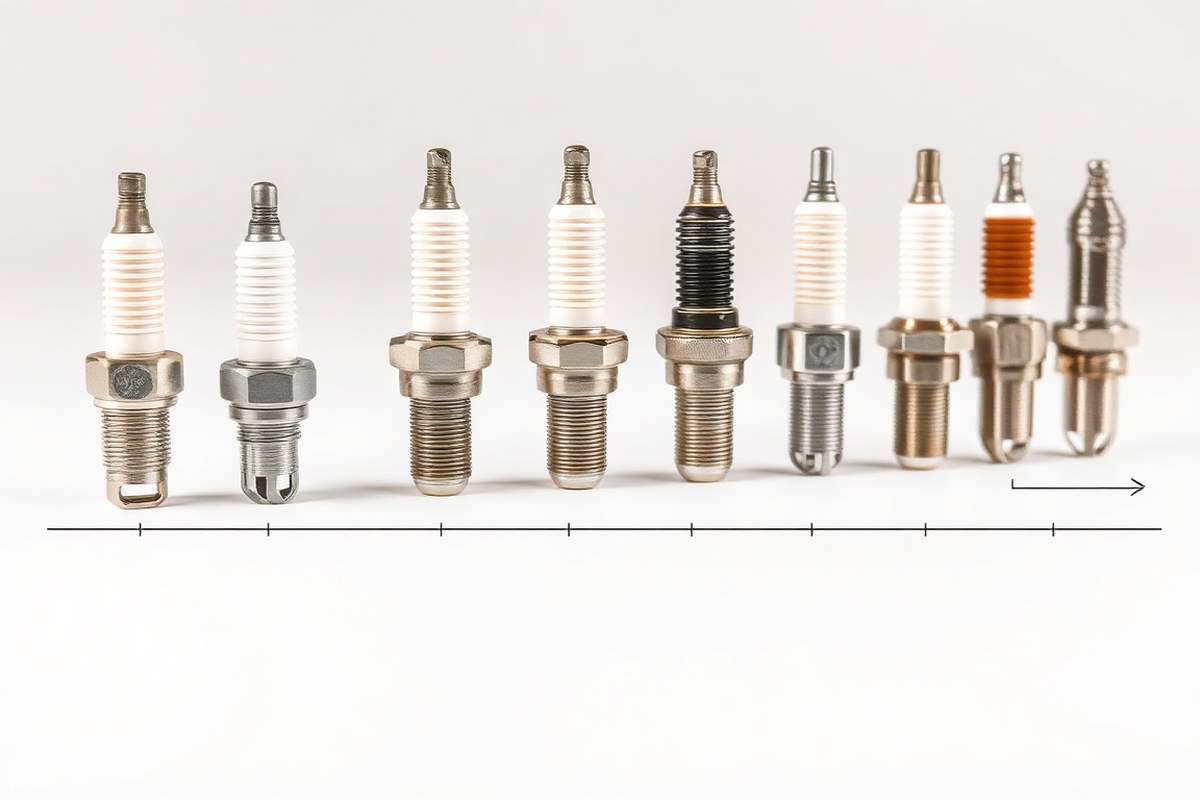
Spark plugs started being developed in the late 1800s, evolving quickly as cars became more widespread. Early models were experimental and often unreliable, with small improvements over time leading to the dependable designs seen by 1900. The ignition magneto’s appearance in 1902 increased spark plug use and practicality in engines. By 1911, companies such as Ford used spark plugs with a porcelain insulator, center electrode, and side electrode mounted on a metal base, which became the foundation for today’s spark plugs.
Throughout the early 20th century, the number of spark plug manufacturers expanded dramatically. France initially led manufacturing efforts, but by the mid-1910s, companies such as Bosch had made significant inroads, despite patent delays in the United States through 1914. The proliferation of brands, estimated at around 6,700 from the early 1900s to the 1930s according to the Spark Plug Collectors of America, reflected both high demand and continuous technological advances. By the 1930s, spark plugs had transformed from delicate experimental devices into dependable, mass-produced automotive parts, able to meet the growing demands of internal combustion engines.
As engines evolved in complexity, the design and materials of spark plugs advanced as well. Modern spark plugs typically feature a copper core covered by a nickel alloy, paired with a ceramic alumina insulator extending into the combustion chamber. The distance between the electrodes, which influences spark strength, generally ranges between 0.6 and 1.8 mm (0.024 to 0.071 inches). The introduction of electronic fuel injection and solid-state ignition systems, replacing traditional distributors, encouraged the use of wider electrode gaps to improve combustion. Manufacturing improvements also decreased the need for regular upkeep such as filing or sandblasting the electrodes.
Leading brands like Champion, Bosch, and newer entrants such as E3 Spark Plugs have driven significant improvements in spark plug technology. E3’s DiamondFIRE design represents a recent leap forward, emphasizing improved ignition performance and durability for everyday vehicles, off-road machines, and racing engines alike. The torque specifications evolved alongside spark plug designs, with some modern plugs requiring lower installation torque to avoid damage, particularly for those with tapered seats compared to washer-sealed types.
Always use the correct torque when installing spark plugs to prevent damage, tapered seat plugs cannot be swapped with washer-sealed plugs without risking engine or plug damage.
Key Contributors: Edmond Berger, Robert Bosch, Oliver Lodge, and Others
Robert Bosch and his engineer Gottlob Honold made critical breakthroughs enabling spark plugs to become commercially viable in the early 20th century. In 1902, Honold designed a magneto-based ignition system that delivered the high voltages necessary for reliable ignition within internal combustion engines. Bosch then secured patents covering this ignition technology, creating a practical system that manufacturers could adopt en masse. This advancement mattered because it overcame the earlier problem of weak sparks and unreliable firing, which limited spark plugs’ usefulness before then.
Albert Champion influenced the American spark plug market soon after. Around 1905, Champion began producing spark plugs in Boston and later moved operations to Flint, Michigan. He founded the Champion Ignition Company for spark plug manufacture and reportedly innovated the orientation of the spark gap relative to the thread shell, improving performance. Champion used ceramic kilns to produce the insulating porcelain in the plugs, sourcing sillimanite mineral from his mining ventures in California’s Sierra Nevada Mountains to ensure quality materials. After parting from the original company circa 1908, he started a new one in 1910 that became AC Spark Plug Co., reflecting his initials. His work helped standardize production and scale up availability for the growing U.S. Automobile industry.
Nikola Tesla secured a patent in 1898 for an electrical igniter used in gas engines, which probably was the first capacitive-discharge ignition system. His invention centered on the ignition circuitry, not on the spark plug design as it is used today in engines. The spark plug capable of enduring the demands of car engines came later, thanks to improvements by Bosch and other companies. Tesla’s work set important technical foundations but did not produce a commercial spark plug ready for everyday automobiles.
Key milestones from these inventors’ contributions include Bosch securing high-voltage magneto patents in 1902, Champion producing ceramic-insulated plugs by 1905, and the emergence of standardized manufacturing techniques. Effective spark plugs rely on materials like porcelain ceramic for insulation, precious metals or carefully shaped electrodes to maintain stable gaps, and strong connections compatible with ignition systems developed by innovators like Bosch. The timeline from around 1898 to 1910 saw important transitions from experimental ignition patenting to practical spark plug manufacturing capable of supporting reliable engine startups and running conditions.
For your own spark plug replacement or maintenance, understanding their roots helps appreciate the precision behind gap settings and materials. Modern plugs, influenced by these historical innovations, typically last about 30,000 miles before replacement. Handling iridium or platinum plugs requires care to avoid damaging delicate electrodes during gap adjustments, a detail stemming from material improvements pioneered by these early manufacturers. The work of Bosch, Champion, and Tesla each contributed key technical steps in transforming spark plugs from laboratory curiosities into essential automotive parts.
How Spark Plugs Work in Internal Combustion Engines
A spark plug serves as the ignition source inside an internal combustion engine, delivering an electric spark to ignite the air-fuel mixture within the cylinder. This ignition initiates combustion, which drives the engine’s pistons and produces power. The spark plug works within a carefully designed ignition system that generates and delivers the necessary high voltage at exactly the right moment.
Ignition Process Inside the Cylinder
The spark plug is installed in the engine’s cylinder head, with its tip protruding into the combustion chamber. As the piston compresses the air-fuel mixture, pressure and temperature increase, preparing the mixture for ignition. At the precise point in the engine’s cycle, the ignition system sends a high-voltage current to the spark plug. This causes electricity to jump across the small gap between the center and ground electrodes of the plug, creating a spark.
The spark ignites the compressed air-fuel mixture, causing it to combust rapidly. This combustion creates expanding gases that push the piston down, generating the power stroke. The accurate timing of the spark plug’s firing relative to piston position and engine speed is critical for efficient and smooth engine operation. Malfunction or mistimed sparks lead to incomplete combustion, engine knocking or power loss.
Electrical Requirements for Spark Plug Firing
Spark plugs require a very high voltage to fire properly, typically between 12,000 and 45,000 volts depending on engine design and conditions. Modern ignition coils convert the 12-volt electrical system voltage into this high-voltage pulse. The pulse travels through the spark plug wire to the plug’s terminal and then across the electrode gap in a fraction of a millisecond.
The spark plug gap is usually between 0.020 and 0.060 inches (0.5 to 1.5 mm), carefully set to ensure consistent spark production without misfiring. The ignition system’s timing and voltage level must match the engine’s speed and load to maintain reliable ignition. Too low voltage might cause a weak or no spark, while too high voltage risks damaging components.
Thermal Conditions and Heat Ranges
The tip of a spark plug operates at very high temperatures, commonly between 500 °C and 800 °C (932 °F to 1472 °F). The plug’s heat range, the measure of its ability to dissipate heat, is determined by factors like insulator material, length, and surface area exposed to the combustion chamber. A spark plug must maintain an optimal temperature to prevent fouling by combustion residues or overheating that damages the plug or engine.
Spark plugs rated with a “hot” heat range hold more heat to burn off deposits but risk overheating in high-performance or high-compression engines. “Cold” plugs dissipate heat faster, suitable for high-speed or turbocharged engines to prevent pre-ignition. Selecting the correct heat range balances combustion efficiency with plug durability, tuned to specific engine requirements.
Materials and Construction Differences Between Early and Modern Spark Plugs
Early spark plugs used simple metals such as iron or nickel alloys for their electrodes, which wore out quickly due to corrosion and fouling. These materials struggled to tolerate the high temperatures and pressures inside combustion chambers, leading to inconsistent ignition and shorter service life. Over time, advances in materials science have allowed manufacturers to improve spark plug durability and performance significantly.
Modern spark plugs often incorporate precious metals like platinum or iridium in their central electrodes. These materials resist corrosion better and maintain spark efficiency under extreme conditions. Iridium, with a melting point over 4,700°F, allows electrodes to be made thinner without sacrificing strength, improving ignition precision and combustion efficiency. This contributes to better fuel economy and lower emissions, with longer intervals between spark plug replacements. The table below compares material and design features between early and modern spark plugs:
| Feature | Early Spark Plugs | Modern Spark Plugs |
|---|---|---|
| Electrode Material | Iron, nickel alloy | Platinum, iridium |
| Wear Resistance | Low; frequent degradation | High; longer service life |
| Heat Tolerance | Limited; risk of melting or fouling | Can withstand extreme temperatures and pressures |
| Insulator Design | Ribbed insulators to prevent flashover | Improved dielectric strength; ribs sometimes omitted |
| Size and Shape Consistency | Variable; limited manufacturing techniques | Standardized; precise engineering |
| Service Interval | Short; regular replacement needed | Long; thousands of miles between changes |
The use of precious metals in electrodes allows you to maintain ignition efficiency longer and reduce fouling, which is critical for maintaining engine power and lowering emissions. Not all engines need iridium plugs; high-performance or newer vehicles tend to benefit most. For everyday use in older cars, standard nickel alloy plugs may be acceptable but expect shorter service life.
Always check your vehicle’s manufacturer recommendations before switching to premium plugs, as incorrect heat ranges or materials can cause engine misfire or damage.
Also, modern spark plug insulation has improved dielectric strength, making ribs on the porcelain sometimes unnecessary. This improve durability and helps spark plugs tolerate the high combustion temperatures common in today’s high-compression engines. Premium spark plugs with iridium or platinum are typically more expensive but save money over time due to fewer replacements and improved fuel efficiency.
Common Myths and Misconceptions About Spark Plug Invention
Many popular ideas about who invented the spark plug and what technologies it used aren’t quite right. Nikola Tesla did not invent the spark plug, even though he held ignition system patents. Radioactive spark plugs sold by Firestone in the mid-20th century were real but less common and not widely used. The first reliable spark plug patents belong to early inventors like Edmond Berger, with the legal history involving several contributors and improvements over time.
Nikola Tesla’s Ignition System Patents
Nikola Tesla held patents related to ignition systems, including US Patent #345596, which involves spark ignition methods. While Tesla’s work improved high-voltage ignition technology, he did not invent the spark plug itself. His patents focused more on the broader ignition system design that sparks the fuel-air mixture in the engine.
By 1902, other inventors like Honold had already introduced high-voltage magneto ignition systems paired with spark plugs. Tesla’s contributions influenced ignition technology but are often confused with the invention of the actual spark plug component, which pre-dates his work.
Firestone’s Radioactive Spark Plugs Explained
From 1940 through at least 1953, the Firestone Tire and Rubber Company marketed radioactive spark plugs containing polonium. These plugs were advertised to provide better combustion by improving the ionization process inside the combustion chamber. Despite the marketing claims, radioactive spark plugs were a niche product and did not become a standard in the automotive industry.
The idea of adding radioactive materials to spark plugs originated earlier, with France’s Helita producing the first commercial radioactive spark plug. Firestone’s plugs were the main example in the U.S., and though they promised improved performance, the actual benefits were limited and the use declined after the 1950s due to safety concerns and cost.
Patent History and Legal Claims
Edmond Berger is generally credited with inventing an early practical spark plug design. His improvements led to patents for reliable ignition components critical to engine performance. Patent records show a progression of designs and refinements by various inventors through the late 19th and early 20th centuries, with legal claims often overlapping.
Several patents successively improved spark plug design and function, including Hubbard’s radioactive spark plug, which built on Greenslade’s method of creating conductive paths between electrical conductors. Such progress reflects incremental innovation rather than a single inventor holding all rights. The complex patent history shows the spark plug as a product of multiple contributors rather than a sole invention.
How Spark Plug Innovation Impacted Automotive Engine Development
Advances in spark plug technology directly improve engine reliability by providing consistent, controlled ignition under various operating conditions. Around 1915, for example, the Frenchtown Porcelain Co. Introduced its “775” porcelain formula. This new material had superior heat resistance and vibration tolerance compared to earlier porcelain or mica insulators. These properties allowed spark plugs to endure the intense temperatures and mechanical stresses inside internal combustion engines, reducing misfires and failures that previously plagued early vehicles.
Reliable spark plugs meant engines could run smoothly for longer periods without frequent maintenance. This reliability was essential as car manufacturers transitioned to mass production. The introduction of durable, mass-producible spark plugs allowed companies like Ford to standardize parts across millions of vehicles, lowering costs and simplifying repairs. Pre-gapped, factory-approved spark plugs became common, so most owners could replace plugs easily without special tools or adjustments. Engines with consistent firing and minimal downtime helped cement the automobile as a practical everyday vehicle for broad consumer use.
Spark plugs also affect fuel efficiency and emissions, key factors in engine performance and environmental impact. A well-functioning spark plug ignites the fuel-air mixture at the optimal moment, ensuring a complete burn that maximizes power and minimizes wasted fuel. Poor or worn plugs can cause incomplete combustion, leading to higher fuel consumption and increased emissions of unburned hydrocarbons and carbon monoxide. Modern spark plugs often feature improved materials designed to withstand higher combustion temperatures and pressures in today’s engines, helping optimize fuel economy and reduce pollution.
Another critical function of spark plugs is heat dissipation. While the spark plug sparks the fuel mixture, it also transfers excess heat from the combustion chamber to the engine head. This dual role helps prevent pre-ignition or “knocking,” which can damage the engine. Advances in spark plug design included variations in reach, the length a plug’s electrode extends into the combustion chamber, ranging from about 0.0375 inches to over 1 inch for different engine types. Selecting the proper reach maintains optimal combustion chamber temperature and improves efficiency.
Trade-offs exist between spark plug types and engine demands. High-performance or modified engines may require specific plug gaps and materials to handle increased combustion pressures. In contrast, most stock engines work efficiently using manufacturer-recommended, pre-gapped spark plugs. Replacing spark plugs with the correct specification ensures reliable spark timing, good fuel burn, and engine protection.
Worldwide Contributions and the Future of Spark Plug Technology
Germany, France, and the USA each played significant roles in advancing spark plug technology, shaping the global automotive landscape. Early manufacturing techniques in Germany and France laid groundwork for reliable ignition systems, while American innovation focused on scaling production and brand development. Today, new designs and materials aim to improve combustion efficiency and engine performance through precise spark control and durability improvements.
German and French Early Manufacturing Influence
Germany was instrumental in refining spark plug reliability through precision manufacturing and materials science. Companies like Bosch developed electrodes with improved heat resistance and sealing technologies that prevented combustion chamber leakage. This focus on durability was important to maintain consistent spark timing, helping engines run smoothly at high revolutions per minute (RPM).
Meanwhile, French engineering contributed significantly to spark plug designs that could handle varied engine types, including rotary engines. Their innovations addressed challenges such as the constantly changing combustion chamber shapes within Wankel engines, requiring spark plugs to maintain consistent ignition despite unpredictable positioning relative to the rotor’s apex seals. This variety helped lay the foundation for specialized spark plugs that fit diverse engine architectures.
American Mass Production and Brand Evolution
The USA accelerated spark plug availability by adopting mass production methods during the early 20th century, making the part widely accessible for the booming automotive market. Brands like Champion and AC Delco became synonymous with spark plug innovation, introducing progressive electrode designs and strong sealing methods to secure combustion integrity. American manufacturers focused on creating standardized plugs that could serve a broad range of vehicles, balancing cost-efficiency with durability.
Scaling production helped lower prices and allowed for more frequent replacement intervals, important since spark plugs wear out from normal use and combustion byproducts. Mass production also enabled incremental improvements like indexing the plug upon installation. This process involves orienting the spark plug so the exposed spark gap faces the center of the combustion chamber, minimizing spark obstruction by the ground electrode and maximizing ignition efficiency.
Emerging Spark Plug Technologies and Designs
Modern spark plugs increasingly feature advanced electrode geometries and materials designed to direct the spark more effectively within combustion chambers. For example, the DiamondFIRE plug use a diamond-shaped electrode edge that channels the spark toward the optimal ignition zone, promoting more complete fuel combustion. This precise control reduces unburned hydrocarbons and improves overall fuel efficiency.
In addition to electrode shape, advances in materials like iridium and platinum extend spark plug life by resisting electrode erosion at operating temperatures often exceeding 1000° Celsius. These metals withstand the intense heat and electrical load better than traditional nickel alloys, prolonging service intervals and maintaining stable spark energy over time.
Engine tuning also influences spark plug performance. Proper spark timing, usually firing just before the combustion stroke, combined with carefully selected plug heat ranges can prevent fouling and pre-ignition. Indexing remains a practical technique to optimize combustion in performance engines, especially those running turbocharged or high-compression setups. However, incorrect installation or using plugs with improper heat ratings may cause misfires or accelerated wear.
Always follow manufacturer guidelines on spark plug heat range and installation orientation to avoid engine damage or performance loss.
Your Quick-Start Plan to Understand Spark Plug Invention and Impact
Follow these steps to grasp the origins, evolution, and significance of spark plugs in automotive technology.
- Day 1: Read about Edmond Berger and Robert Bosch to see who made the first reliable spark plug and why it mattered. Look for dates around the late 1800s.
- Day 2: Explore how spark plug design changed in materials and shape through the 20th century. Check sources explaining why ceramic insulators and metal electrodes improved performance.
- Week 1: Study the technical basics of how spark plugs ignite fuel in internal combustion engines. Identify the role of the electrical spark and combustion chamber conditions.
- Week 2: Investigate common myths about spark plug invention to separate fact from fiction. Verify claims by comparing multiple historical accounts.
- Week 3: Look into how spark plug innovation accelerated automotive engine performance and fuel efficiency. Note key breakthroughs linked to specific engine improvements.
- Week 4: Review recent global developments shaping spark plug technology, including environmental and automotive trends. Focus on advances in materials for durability and emission control.
- Ongoing: Take notes on influential figures worldwide who contributed to spark plug evolution, recognizing how international collaboration shaped modern engines.
Frequently Asked Questions
Who Made the First Spark Plug?
Edmond Berger invented the first known spark plug in 1839, marking the beginning of ignition technology in engines. This early design set the foundation for modern spark plugs used in combustion engines today.
Are Cars Still Made with Spark Plugs?
Yes, most gasoline-powered cars still use spark plugs to ignite the fuel-air mixture in their engines. Electric vehicles do not use spark plugs because they rely on different propulsion systems.
Did Nikola Tesla Invent the Spark Plug?
Nikola Tesla did not invent the spark plug but received a patent in 1898 for an ignition timing system that included spark technology. The actual first spark plug predates Tesla’s work by decades.
What Is the Oldest Spark Plug?
The oldest spark plugs date back to the early 19th century with Edmond Berger’s 1839 design. Original early plugs are rare but represent the beginning of automotive ignition systems.
Who Invented the Spark Plugs and How Do They Work?
Spark plugs were invented by Edmond Berger and others improved the design into the early 20th century. They generate a spark to ignite the fuel-air mix, powering the engine’s combustion process.
Why Do Spark Plugs Need Replacement?
Spark plugs wear out due to heat and deposits, reducing engine efficiency. Regular replacement keeps engines running smoothly and prevents misfires.
Wrapping Up
Identifying the inventors of the spark plug highlights how important this component has been for the automotive industry. You can deepen your understanding by examining specific technological milestones that improved engine ignition. Visit a local automotive museum or speak with a mechanic to see different spark plug types firsthand and ask questions about their role in engine performance.