When to Replace Spark Plugs: A Complete Guide to Timing and Signs
The timing for changing spark plugs varies based on the model installed on your vehicle and driving habits. Common spark plugs typically last from 20,000 up to 100,000 miles. Spark plugs made from iridium or platinum usually have a longer lifespan, nearing 100,000 miles. Begin by consulting your vehicle’s owner’s manual to find the manufacturer’s suggested replacement schedule.
Key Takeaways
- Copper spark plugs generally need replacement every 20,000 to 30,000 miles due to quicker wear.
- Single and double platinum spark plugs usually last between 60,000 and 100,000 miles before replacement.
- Iridium spark plugs are durable and often last up to 100,000 miles or more under normal conditions.
- Harsh driving conditions, like excessive idling or stop-and-go traffic, can shorten spark plug life.
- Regularly inspect spark plugs for wear patterns which can indicate specific engine issues.
- Replace ignition coils and wires if worn to avoid misfires when installing new spark plugs.
How to Know When Spark Plugs Need Replacement
Replacing spark plugs every 80,000 to 100,000 miles is a solid general rule, as long as your car runs smoothly and shows no issues. Checking your spark plugs at 30,000-mile intervals can help catch problems early, especially since manufacturers’ recommendations vary widely. Modern vehicles equipped with iridium spark plugs, like many Toyota or Honda models, often extend that interval to about 100,000 miles. Still, your vehicle’s owner’s manual offers the most accurate schedule for your specific model.
Signs your spark plugs need replacing before hitting the mileage mark include rough idle, difficulty starting, reduced fuel efficiency, engine misfires, or sluggish acceleration. These symptoms happen because worn plugs fail to create a consistent spark, which affects engine combustion. Notice these issues? Replace the spark plugs soon to prevent extra stress on parts such as ignition coils, which might cause more expensive repairs later.
Inspection of spark plugs can be done by removing them and checking for wear patterns such as burnt electrodes, heavy deposits, or cracked insulators. This visual check often reveals early wear that might not yet trigger warning lights but can degrade performance. Use a spark plug gap gauge to ensure the gap meets your vehicle’s specifications, as a widened gap can also affect ignition. For DIYers, inspecting plugs every 30,000 miles makes it easier to decide whether to wait for the scheduled replacement or act sooner.
Waiting too long to replace spark plugs risks engine misfires, poor fuel economy, and difficulty starting. In extreme cases, neglected spark plugs can damage the catalytic converter or ignition system components. While spark plugs themselves are generally inexpensive, replacing a damaged converter or ignition coils can cost hundreds of dollars. Preventing this starts with timely plug replacement, either by following the manufacturer’s timeline or sooner if warning signs appear.
Driving conditions matter too. Driving often in heavy traffic, dusty areas, or taking short trips that don’t let your engine fully warm up can mean replacing spark plugs a few thousand miles earlier is a smart choice. Routine inspections help you track wear under these harsher conditions. Some vehicles covered by warranty have plugs inspected and replaced by dealerships as part of regular maintenance, easing the burden on owners.
A practical plan to keep spark plugs in good condition includes consulting your owner’s manual for the recommended interval, inspecting plugs visually every 30,000 miles, and replacing them at the first sign of drivability problems. This approach balances cost and performance, helping prevent engine issues while avoiding premature replacements. Having the right tools, a spark plug socket, gap gauge, and possibly a torque wrench, makes inspection and replacement straightforward for most DIY enthusiasts.
How Different Spark Plug Materials Affect Replacement Intervals

The type of material in your spark plugs determines their lifespan and efficiency. Copper plugs usually wear out after 20,000 to 30,000 miles but offer great conductivity at a budget-friendly price. Platinum plugs last longer, generally between 60,000 and 80,000 miles, providing better durability. Double platinum plugs extend durability further by having platinum on both the center and ground electrodes, which suits engines with waste spark ignition systems. Iridium plugs stand out for their longevity, often exceeding 100,000 miles, and deliver top-tier performance, though they cost the most.
| Spark Plug Type | Typical Lifespan (Miles) | Key Pros | Key Cons |
|---|---|---|---|
| Copper | 20,000 – 30,000 | Excellent conductivity, lowest cost | Shortest lifespan, wears fastest |
| Platinum | 60,000 – 80,000 | Good durability, longer life than copper | Mid-range cost, less durable than iridium |
| Double Platinum | 60,000 – 100,000 | Greater durability, consistent performance especially in waste spark systems | Higher cost, limited to specific engine types |
| Iridium | 100,000+ | Longest lifespan, superior performance, heat resistant | Highest cost |
Choosing the right spark plug material depends on your vehicle’s engine type, your budget, and how long you want to go between replacements. Copper plugs are common in older vehicles but require changing twice as often as platinum or iridium plugs. Platinum plugs offer a good balance between cost and lifespan for many mid-range vehicles. Double platinum plugs extend lifespan further by reinforcing both electrodes, which can improve performance in engines with specific ignition systems. Iridium plugs suit modern engines needing the longest intervals and the best heat resistance, despite their price.
Keep in mind that switching to higher-end spark plugs means you can save on labor and potential engine problems by extending replacement intervals. However, paying more upfront might not be cost-effective if your vehicle or driving habits don’t demand that level of durability. Use manufacturer recommendations and adjust based on your own engine’s response and maintenance budget.
Remember to always check your vehicle’s owner’s manual for recommended spark plug types and replacement intervals to avoid costly damage or decreased engine performance.
Common Spark Plug Wear Patterns and What They Mean
Common spark plug wear patterns reveal a lot about your engine’s condition and performance. By checking the electrode, insulator, and deposits on a spark plug, you can identify normal wear, fouling, heat damage, or corrosion issues. Understanding these patterns helps you decide when to replace plugs to keep your engine running smoothly and avoid further damage.
Normal Wear Indicators
Normal use causes the spark plug’s electrodes to show minor erosion or rounded edges. You might notice some wear on both the central and ground electrodes, but their shape remains mostly intact. The gap between electrodes may grow slightly, by a few thousandths of an inch, due to slow material loss. This kind of wear generally happens between 30,000 and 100,000 miles, depending on the plug type and how you drive.
You’ll typically see a light tan or grayish color on the insulator tip, which indicates a healthy combustion process. This color means your engine condition is good, and your spark plugs are functioning properly. Such plugs don’t need immediate replacement but should be monitored during routine inspections to track future wear.
Signs of Fouling or Deposits
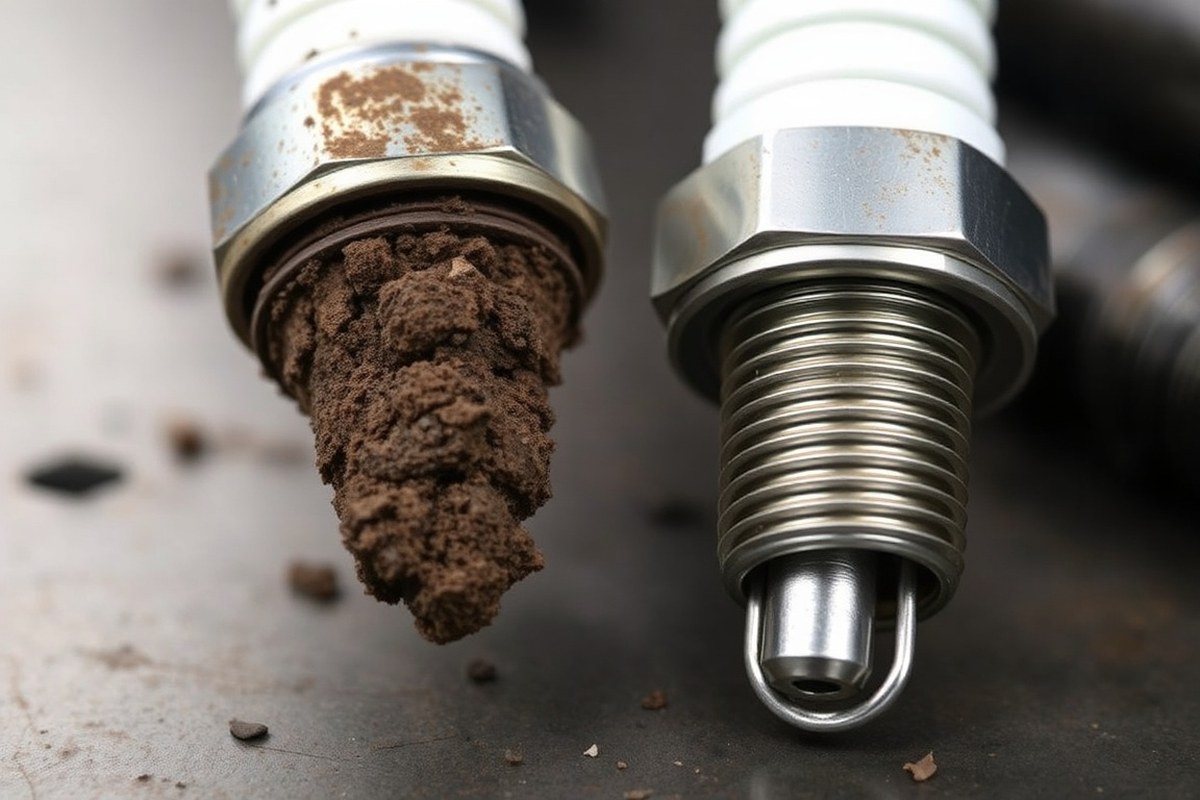
Heavy carbon deposits covering the electrodes or insulator indicate fouling, usually caused by a rich fuel mixture, poor combustion, or frequent short trips where the engine doesn’t fully warm up. Black, dry soot means incomplete fuel burn, while wet, oily deposits suggest oil leaking into the combustion chamber, often from worn piston rings or valve guides.
These fouled plugs can cause poor engine performance like misfires, rough idling, and reduced fuel efficiency. The deposits interfere with spark formation, which can trigger the check engine light and diagnostic trouble codes like P0300 for random misfires. Cleaning won’t restore performance, so replacement is necessary to prevent damage to the catalytic converter and maintain engine efficiency.
Heat Damage and Electrode Wear
Overheating shows as blistered, white, or melted insulators, along with eroded or burned electrodes. This damage often results from incorrect spark plug heat range, lean fuel mixtures, or cooling system problems. High temperatures accelerate electrode wear, widening the gap beyond the manufacturer’s specifications, which weakens spark intensity and reduces engine efficiency.
Excessive rounding or wear on the spark plug’s electrode edges indicates the plug has exceeded its useful lifespan. This wear increases the voltage needed to create a spark, putting stress on ignition coils and possibly causing misfires. Replacing overheated or worn electrodes improves combustion and prevents costly ignition system repairs.
Corrosion and Physical Damage
Corrosion on the metal shell or electrode stems from exposure to moisture, salt, or chemicals, especially in older vehicles or those frequently driven in harsh weather. Rust can make plugs difficult to remove and compromise the electrical connection, affecting spark delivery. Corroded plugs often cause rough running and may eventually fail to fire entirely.
Physical damage includes cracked insulators, bent electrodes, or broken spark plug wires. Such damage usually stems from improper installation tools or impacts during maintenance. Cracks and breaks allow combustion gases to escape, degrading performance and risking engine damage. Inspecting plugs carefully during removal helps spot these problems early, letting you replace faulty plugs before they cause engine misfires or harder-to-fix issues.
Driving Conditions That Shorten Spark Plug Life
Driving conditions and habits greatly influence how long your spark plugs last. Frequent stop-and-go traffic, for example, causes the engine to fire more often at low speeds and under heavier loads. This extra strain can wear out spark plugs faster than steady highway driving. On the other hand, consistent highway driving allows spark plugs to burn cleaner and last longer, often pushing closer to the higher end of their lifespan range, around 60,000 to 100,000 miles for most modern plugs.
Turbocharged engines typically run hotter and under more pressure, which can reduce spark plug life. These engines often need more frequent spark plug checks and possibly earlier replacements, sometimes around 30,000 to 50,000 miles depending on the vehicle and driving style. Hybrid vehicles, while often operating their engines less frequently, can still cause spark plugs to age if the engine cycles on and off frequently or runs at unusual temperatures. This intermittent use might require paying closer attention to plug condition, as irregular combustion can cause uneven wear.
Extreme environments take a toll on spark plugs as well. Very cold climates can cause condensation and lead to corrosion on plugs, while very hot climates increase engine temperatures and combustion pressures. Both extremes exacerbate electrode wear and fuel deposit buildup. Off-road driving or carrying heavy loads increases engine stress, raising combustion chamber temperatures and accelerating spark plug degradation. In such cases, consider inspecting plugs every 20,000 to 30,000 miles, even if the vehicle’s manual suggests longer intervals.
To manage spark plug life in challenging conditions, regular inspection and timely replacement are key. For stop-and-go city driving, plan to check plugs near about 30,000 to 50,000 miles. If you drive a turbocharged car, track your mileage carefully and prepare for replacement sooner than typical schedules suggest. In extreme climates, keep an eye on your engine’s performance and emissions, since misfires and rough idling often indicate worn spark plugs.
DIY spark plug replacement in these scenarios requires attention to the correct techniques and tools. Carefully access the plugs, ensure the new ones are properly gapped according to the engine’s specifications, and use a torque wrench to avoid overtightening. Incorrect installation can cause misfires or damage. Replacement costs vary but generally range from $10 to $20 per spark plug part, plus labor if you opt for a professional service, which might cost $100 to $200 depending on vehicle complexity. Good results show smoother idling, better fuel economy, and more reliable starts, while ignoring these signs can lead to reduced power, higher emissions, and costly engine damage over time.
Step-by-Step Guide to Replacing Spark Plugs Safely
Replacing spark plugs can be a manageable DIY task if you have the right tools, follow safety steps, and understand the process of removal, gap checking, and installation. Taking your time and working carefully helps ensure your engine runs smoothly without damage to components.
Tools and Preparation
Gather all the necessary tools before you start. You need a ratchet with an extension bar, the correct size spark plug socket (commonly 5/8-inch or 13/16-inch), a spark gap gauge or feeler gauge, and a torque wrench. A dielectric silicone compound can also help later make wire boots easier to remove.
Always disconnect the battery to avoid electric shock and let the engine cool for at least 30 minutes to prevent burns or damage. Check your owner’s manual to confirm the spark plug location, number, correct gap, socket size, and torque specs for your vehicle.
Removing Old Spark Plugs
Careful removal avoids stripping or breaking plugs, which can be costly to fix. Gently pull off the spark plug wire by the boot, not the wire, to prevent damage. Use your ratchet, extension, and spark plug socket to turn the plug counterclockwise until it comes out.
If a plug is difficult to remove after many miles, avoid forcing it as this can break the plug’s ceramic insulator. Applying some penetrating oil and letting it soak for a few hours can help loosen rust or corrosion.
Spray penetrating oil and wait before removing stuck plugs to avoid the risk of breaking the plug in the cylinder head.
Gapping and Installing New Plugs
Check the factory-recommended spark plug gap with your feeler gauge. Slide the gauge between the center electrode and ground electrode; the right gap will offer slight resistance. Adjust the gap gently by bending the ground electrode if needed, do not hammer or overbend. Some new plugs come pre-gapped, but always verify.
Before installing, apply a small amount of anti-seize compound on the threads if the manufacturer allows. Screw the new plugs in by hand to avoid cross-threading, then tighten with a torque wrench to the spec in the owner’s manual, typically between 10 and 20 ft-lbs depending on the vehicle.
Reassembly and Testing
After tightening, reconnect the spark plug wires or coil packs firmly. Applying a bit of dielectric compound inside the wire boots can prevent corrosion and ease future removal. Reconnect the battery and start the engine to confirm smooth running. Listen for any misfires or rough idling.
Check for trouble codes with an OBD-II scanner if you have one. A smooth running engine, steady idle, and no warning lights indicate successful spark plug replacement.
- Disconnect the battery and let the engine cool.
- Remove spark plug wires or coils carefully by the boot.
- Use the ratchet, extension, and spark plug socket to remove old plugs.
- Check and adjust the spark plug gap with a feeler gauge.
- Install new plugs by hand, then tighten to specified torque.
- Apply dielectric grease inside wire boots and reconnect wires.
- Reconnect the battery and start the engine to test.
Manufacturer Schedules and Differences by Vehicle Model
Your vehicle’s manufacturer provides the most accurate spark plug replacement intervals based on extensive engine testing and design specifications. These intervals vary widely across makes and models, reflecting differences in engine technology, spark plug materials, and driving conditions. Sticking to the recommended schedule helps maintain engine efficiency, fuel economy, and prevents potential ignition problems.
For many common vehicles, manufacturer intervals range from around 60,000 to 120,000 miles. Some turbocharged engines, like certain Honda and Ford EcoBoost models, require closer attention because higher operating temperatures can accelerate spark plug wear. When replacing plugs yourself, always select the part type and model specified by your vehicle’s OEM to avoid compatibility or performance issues.
| Vehicle | Years | OEM Plug | Mfr Interval | Recommended Interval | Notes |
|---|---|---|---|---|---|
| Toyota Camry (4-cyl) | 2012-present | NGK Iridium | 120,000 mi | 100,000 mi | Toyota extends interval but check at 80,000 mi |
| Honda Civic | 2016-present | NGK Iridium | 105,000 mi | 90,000 mi | 1.5T turbo runs hot; check earlier |
| Ford F-150 (EcoBoost) | 2015-present | Motorcraft Platinum | 60,000 mi | 60,000 mi | Turbocharged, follow Ford schedule strictly |
| Chevrolet Silverado (5.3L) | 2014-present | ACDelco Iridium | 100,000 mi | 100,000 mi | Standard interval for this engine size |
Owner’s manuals remain the most reliable resource to verify these intervals because they tailor recommendations to your vehicle’s specific engine variant. General advice such as changing plugs every 30,000 to 90,000 miles can be a useful starting point if you don’t have immediate access to your manual. However, following the OEM schedule ensures the best balance between performance, cost, and parts longevity.
Older vehicles or those with conventional spark plugs might have shorter replacement intervals, sometimes around 60,000 miles. For turbocharged engines or severe driving conditions, checking spark plugs earlier than the recommended mileages helps avoid misfires or power loss. When you replace your plugs, aim for the exact type recommended to maintain engine health.
When to Replace Related Parts Like Ignition Coils and Wires
Replacing ignition coils and spark plug wires at the same time as your spark plugs depends on their condition and age. These components work closely together; ignition coils generate the high voltage needed to ignite the fuel-air mixture and send it to your spark plugs, often via spark plug wires unless your vehicle has a coil-on-plug system. Any weak or failing part in this chain can cause misfires, rough engine performance, or even engine damage over time. Replacing ignition coils and wires proactively can prevent these issues and improve overall engine reliability.
You don’t always have to replace ignition coils or wires with every spark plug change. However, it is wise to inspect them whenever you service the plugs, especially if your vehicle has more than 60,000 miles or is showing symptoms like engine misfires, rough idling, or a check engine light related to ignition faults. Ignition coils that feel excessively hot, have visible cracks, or show signs of corrosion at electrical connections should be replaced. Spark plug wires should be checked for cracks, brittleness, or worn insulation since these indicate electrical leakage which reduces spark efficiency.
Here’s a simple checklist for deciding whether to replace ignition coils and wires alongside spark plugs: First, check the vehicle’s maintenance schedule; some manufacturers suggest replacing wires every 30,000 to 50,000 miles and coils less frequently unless problems appear. Second, observe for any symptoms like poor acceleration, hard starts, or misfires that could signal coil or wire failure. Third, inspect physically for oil leaks or damage, especially valve cover gasket leaks that drip oil into the spark plug wells and quickly ruin both coils and plugs.
Replacing these parts is straightforward but requires care when you decide or are advised to do so. Remove the ignition coil carefully, some coil-on-plug units are secured with bolts, and disconnect the wiring connector. Replace damaged coils or wires with brand-matched or OEM parts for compatibility. After installing, clear any trouble codes using a diagnostic scanner or disconnect the battery for a few minutes. Costs vary widely; ignition coils can range from $30 to $100 each, and spark plug wires around $15 to $50 per wire, plus labor if not DIY.
Replacing related components along with spark plugs prevents weak ignition coils from stressing new plugs and avoids repeated labor costs in the near future. In extreme cases, continuous misfires from bad plugs or coils put stress on engine internals that might cause costly repairs. Dealers like Firestone Complete Auto Care offer combined inspection and replacement services that ensure all ignition components work well together, which is important for maintaining solid engine performance and fuel efficiency.
When to Call a Professional for Spark Plug Replacement
Calling a professional for spark plug replacement makes sense when your engine has a complex setup, the plugs are hard to reach or stuck, or you want to avoid costly damage and preserve your vehicle’s warranty. Professionals can also save time and handle unexpected issues during replacement. Expect to pay roughly $100 to $300 for parts and labor, depending on your vehicle.
Complex Engine Designs
Modern engines often have designs that make accessing spark plugs tricky for a DIYer. Some vehicles feature coil-on-plug ignition systems or high-performance engines with plugs buried deep under engine covers or tight compartments. Mistaking the proper sequence or removing parts without guidance risks damaging delicate components like ignition coils or wiring harnesses. Professionals have the experience and specialized tools to navigate these setups efficiently, ensuring all plugs are replaced correctly without harming other engine parts.
Attempting spark plug replacement on complex engines without the right knowledge can lead to incomplete installation or missed defects, causing poor engine performance or further mechanical issues. It’s best to have a trained technician handle replacement if your vehicle falls into this group.
Stuck or Hard-to-Reach Plugs
Spark plugs can become seized due to carbon buildup or corrosion, especially in older engines or those exposed to harsh driving conditions. Removing stuck plugs requires not only strength but the proper tools like a spark plug socket with a swivel joint, torque wrench, and sometimes penetrating oil. Improper force risks snapping the plug off inside the cylinder head, which means expensive repairs.
Also, plugs located in cramped engine bays with limited clearance pose challenges for alignment and torque, which are key to avoiding leaks and thread damage. Professionals know techniques to loosen seized plugs safely and replace them without risking thread stripping or causing costly cylinder head damage. They can also assess if plugs need anti-seize compound on the threads for future service.
Avoiding Damage and Warranty Issues
Incorrect spark plug replacement can cause multiple problems such as stripped threads, cross-threading, or over-tightening that damages the cylinder head. These issues may result in costly repairs beyond just replacing plugs. A professional follows the manufacturer’s specifications for spark plug gap, torque, and sequence. This ensures optimal engine performance and prevents damage.
Many new vehicles come with warranties that require maintenance to be done by certified technicians or authorized service centers. Performing spark plug replacement yourself could void warranties if damage occurs or if the replacement isn’t done according to factory guidelines. A professional service preserves warranty coverage, which could save you thousands in future repairs.
Use a torque wrench to tighten spark plugs to the vehicle manufacturer’s specified torque to prevent thread damage.
Cost and Time Considerations
The cost of professional spark plug replacement varies by vehicle and region but generally falls between $100 and $300. This includes the plugs ($10 to $30 each) and labor, which averages one to two hours. Luxury and high-performance cars often cost more due to complex designs and longer service times.
While some spark plugs are easy to reach and replace at home, others take significant time and effort, especially when covers, wires, or ignition coils need removal. A professional can complete the job faster with experience and tools on hand. Avoid rushing the process, as rushing can cause mistakes like mixing up plug wires or not checking plug condition thoroughly.
Step-by-Step Action Plan for Spark Plug Replacement
Follow these steps to keep your engine running smoothly by replacing spark plugs on time and safely checking related parts.
- Before you begin: Locate your vehicle’s recommended spark plug replacement interval in the owner’s manual to set a timeline.
- Day 1: Inspect the spark plugs for wear or deposits using a visual check or gap gauge; replace if signs of erosion or fouling are present.
- Day 2: Order the correct spark plug type based on your vehicle’s specifications and driving conditions.
- After 3 days: Prepare tools and workspace; disconnect the battery and allow the engine to cool before starting.
- Day 4: Remove old spark plugs carefully with a spark plug socket; note the firing order and gap of new plugs before installation.
- Day 5: Install new plugs hand-tight, then torque to the manufacturer’s specification to avoid damage or poor performance.
- After 1 week: Monitor engine performance and fuel economy for improvement; check for any misfires or rough idling.
- Monthly: Regularly inspect ignition coils and wires for wear or damage and replace them as needed to maintain optimal ignition system health.
Frequently Asked Questions
How Often Should I Replace Spark Plugs in a Well-Maintained Car?
Replace spark plugs every 80,000 to 100,000 miles if the car runs well and shows no issues. This helps maintain engine efficiency and avoids drivability problems.
Can I Wait Longer Than 100,000 Miles to Replace Iridium Spark Plugs?
It’s not recommended to exceed 100,000 miles for iridium plugs as performance may decline. Check your owner’s manual to stay safe.
How Do Driving Habits Affect Spark Plug Replacement Intervals?
Frequent short trips or heavy loads can wear plugs faster, requiring earlier replacement. Adjust intervals if you drive in harsh conditions.
Are Spark Plug Replacement Costs Worth the Maintenance?
Yes, spark plugs are inexpensive and replacing them regularly prevents engine problems and costly repairs. It’s a small investment for smooth engine operation.
Should I Replace Spark Plugs If My Check Engine Light Is On?
Yes, a check engine light may indicate misfires caused by worn plugs. Inspect and replace spark plugs promptly to avoid further engine damage.
How Do I Choose the Right Spark Plugs When Replacing Them Myself?
Use plugs that meet your vehicle manufacturer’s specifications to ensure compatibility and performance. Check your owner’s manual for exact types and gap settings.
Wrapping Up
Recognizing the right time to replace spark plugs hinges on understanding wear signs, driving conditions, and your vehicle’s guidelines. Acting promptly prevents engine issues and maintains efficiency. Check your plug condition regularly and replace them with the right type and tools, or consult a mechanic if unsure.