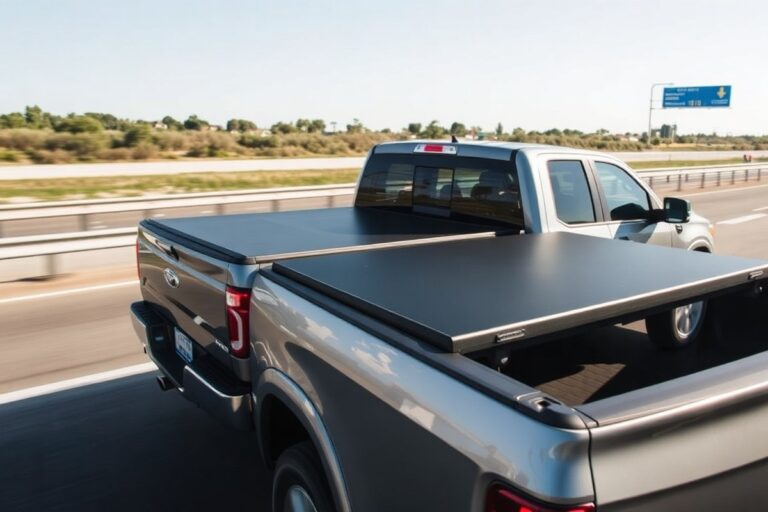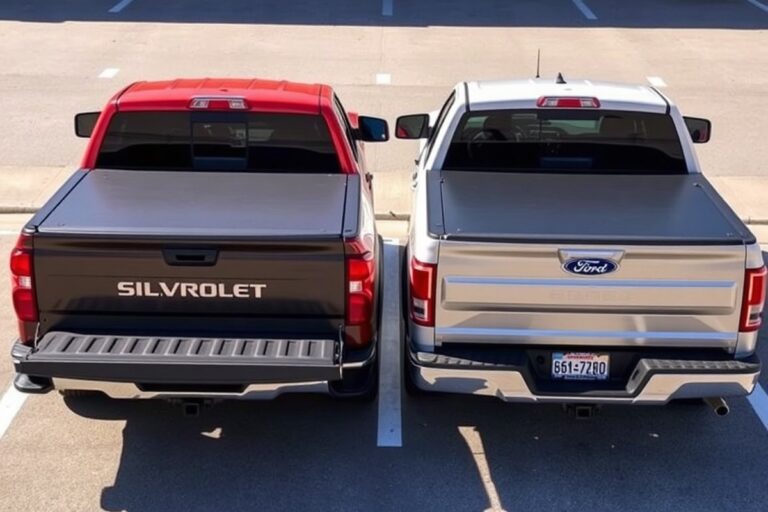
Can You Use a Tonneau Cover with a Toolbox? Complete Fit and Installation Guide
Can you use a tonneau cover with a toolbox? Yes, many tonneau covers are designed to work with truck bed toolboxes, especially if you choose the right style and size for your setup. Low-profile toolboxes under 12 inches in height provide the easiest fit, allowing most tonneau covers to close without issues. Start by measuring your toolbox height to ensure compatibility with your truck’s tonneau cover.
Key Takeaways
- Toolboxes 14 inches or shallower offer the widest compatibility with tonneau covers.
- A crossover toolbox standing 18-20 inches high can fit beneath a raised tonneau cover, though it makes accessing the toolbox more difficult.
- Soft Roll Up Tonneau Covers suit toolboxes between 19-21 inches wide for a better fit.
- The Access Toolbox Edition Tonneau Cover fits 20″-21″ over-the-rail toolboxes and specific Chevy/GMC trucks.
- Low profile toolboxes under 12 inches prevent interference with tonneau cover closing mechanisms.
- The Extang Trifecta Toolbox 2.0 supports maintaining both toolbox and tonneau cover without compromising either.
Can You Use a Tonneau Cover with a Toolbox in Your Truck Bed?
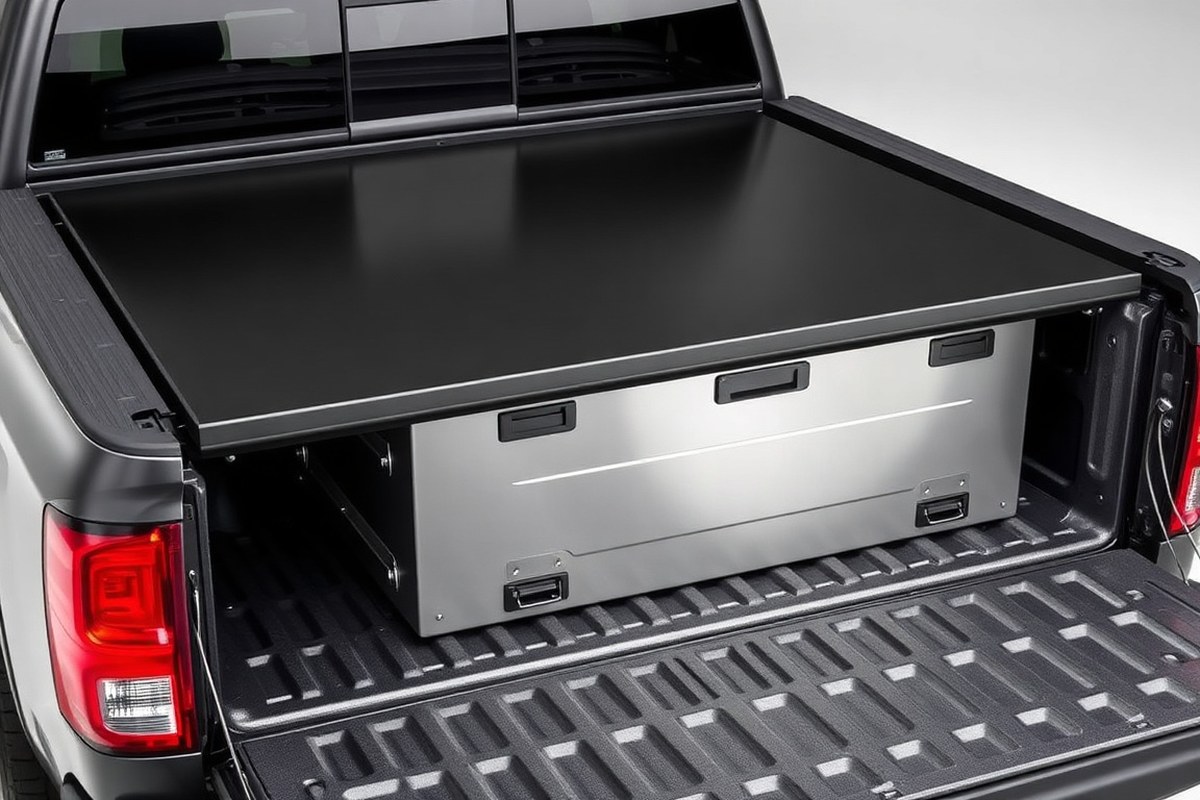
Using a tonneau cover with a toolbox in your truck bed is possible, provided you meet some key requirements. The toolbox must be firmly installed and located to allow the tonneau cover to form a tight seal around it. This arrangement helps keep your truck bed and toolbox contents safe from weather damage and theft. A poor fit could let water and dirt in and prevent the cover from closing properly, limiting its protective function.
The compatibility depends largely on toolbox size and placement. Most tonneau covers designed to work with toolboxes accommodate boxes between 19 and 21 inches wide, sitting either over or behind the truck bed rails. You must measure your truck bed space carefully to confirm your toolbox won’t interfere with the cover’s movement or sealing edges. A toolbox that extends too high or too far forward can block the cover from laying flat or rolling up properly.
Proper mounting is critical. The toolbox should be fastened firmly to prevent shifting that can cause gaps or damage the cover. Some toolbox models, like the Extang Trifecta Toolbox 2.0, are tailored for use with tonneau covers, featuring profiles that sit low or flush with the bed rails. These designs allow the cover to close securely around or over the toolbox. Less compatible toolboxes may require a custom cover or professional adjustment.
Installation must consider the cover type as well. Soft folding or soft roll-up tonneau covers are generally more adaptable to toolboxes since they can conform around shapes and gaps. Hard covers or rigid folding types often need specific cutouts or mounting systems to fit over a toolbox, which might increase cost or installation time.
Investing in both accessories typically runs between $800 and $2,500. This includes the cost of a high-quality, weather-resistant tonneau cover and a durable toolbox. The combined protection you get safeguards expensive tools and cargo while keeping your truck bed organized and functional. Failing to ensure compatibility can lead to water leaks, cover damage, and difficulty accessing tools quickly.
To avoid issues, start by precisely measuring your truck bed length, width, and rail height, then measure the toolbox dimensions exactly. Compare these to the tonneau cover specifications to check clearance and mounting requirements. Some tonneau covers offer built-in features to work with specific toolbox models, improving fit and durability. Planning your purchase with these factors in mind will help you create a truck bed setup that keeps both your cover and toolbox secure and fully functional.
Which Truck Toolbox Styles Are Compatible with Tonneau Covers?

Toolbox style significantly impacts how well it fits with a tonneau cover on your truck. Compact, low-profile designs like crossover toolboxes usually work best, while larger or oddly placed options can create clearance problems or limit access. Properly matching the toolbox height and placement with the cover type ensures smooth operation and easy use.
Crossover Toolboxes: Most Common Fit
Crossover toolboxes rest directly behind the cab and span the full bed width. Their depth typically ranges from 12 to 18 inches, with heights often around 12 to 14 inches. This low profile keeps them under many tonneau covers, especially tri-fold or retractable models designed to accommodate toolbox clearance.
Because crossover boxes mount near the front rail, the cover’s folding panels need clearance to open fully. Low-profile tri-fold tonneau covers that fold compactly (around 10-12 inches stacked height) fit best here. They usually mount 1-2 inches behind the front bed rail to avoid interfering with the toolbox lid.
Choosing a crossover toolbox under 14 inches tall generally offers the widest compatibility. This setup allows you to keep your toolbox secure and fully accessible without removing the cover.
Side-Mount and Swing-Case Options
Side-mount toolboxes attach along the bed rails, often measuring 18-20 inches wide and varying in height. These run parallel to the tonneau cover’s folding panels, so cover styles like retractable, roll-up, or one-piece designs are the best match because they don’t require folding over the toolbox.
Swing-case toolboxes are larger and can mount near the tailgate or on the side, sometimes interfering with tailgate latches or limiting tonneau cover options. Tri-fold covers tend to work here but check for clearance and latch conflicts carefully before purchasing.
Placement of these toolbox styles is important. Side-mounted boxes leave the bed floor clear for a full-size cover, but bulky swing-case boxes may force you to select a specialized tonneau cover or leave gaps.
Low-Profile vs Chest-Style Toolboxes
Low-profile toolboxes, usually under 12 inches tall, sit just behind the cab and do not extend beyond the front bed rail, making them almost universally compatible with most tonneau covers designed for toolbox use. Chest-style toolboxes are floor-mounted, wider (30-48 inches), and deeper, often reducing usable bed length. They don’t interfere with cover panels but may require covers that open fully without obstruction. Many tonneau cover types fit chest toolboxes, but verifying height clearance and cover length is essential.
- Low-profile toolboxes (<12″) allow use with tri-fold and retractable covers.
- Crossover toolboxes 12-14″ tall fit best with low-profile tri-fold covers.
- Side-mount toolboxes need roll-up or one-piece covers to avoid folding panel issues.
- Chest toolboxes require checking cover length for bed floor clearance.
- Swing-case toolboxes often need custom or tri-fold covers due to latch conflicts.
- Custom-fitted toolboxes help eliminate coverage and clearance problems.
- Proper toolbox placement ensures cover operates smoothly and maintains security.
Selecting the right toolbox style linked to a compatible tonneau cover preserves both the function of your gear storage and the protection of your equipment.
Measure your toolbox height and location carefully before buying a tonneau cover to avoid clearance and access problems.
Types of Tonneau Covers Best Suited for Use with Toolboxes
Roll-up and retractable tonneau covers are the best choices when pairing with a truck toolbox. These styles offer the clearance needed to fit over or alongside most toolboxes without interfering with bed access or sealing. The Access Toolbox Edition roll-up cover, for example, is designed to fit 20″-21″ over-the-rail toolboxes and comes with a 5-year warranty, reflecting its focus on toolbox compatibility. It also works well with bed liners, caps, and other bed accessories.
Soft roll-up covers like the Access Toolbox Edition roll-ups provide easy access by rolling back without needing to remove the toolbox. Retractable hard covers offer durable weather protection while sliding along rails designed to clear toolbox edges. On the other hand, folding and snap covers tend to create clearance issues because they fold against the toolbox or require mounting points that conflict with toolbox installation. Hinged hard covers often fail to accommodate taller toolboxes since they hinge directly from the truck bed rails, cutting off vertical clearance and sealing.
| Tonneau Cover Type | Toolbox Compatibility | Key Features | Typical Cost Range |
|---|---|---|---|
| Soft Roll-Up (e.g., Access Toolbox Edition) | High, fits 20″-21″ over-the-rail toolboxes | Easy roll-back access, 5-year warranty, compatible with caps and liners | $600 – $1,200 |
| Retractable Hard Cover (e.g., Extang Trifecta Toolbox 2.0) | High, designed for specific toolboxes on Ford and GM trucks | Durable, slides back along rails, specialized mounting | $1,200 – $1,800 |
| Folding Cover | Low, clearance and sealing issues common | Folds over toolbox but may block bed access | $500 – $1,200 |
| Hinged Hard Cover | Low, poor fit with taller toolboxes | Hinged from rails, limiting vertical clearance | $800 – $1,500 |
Using a tonneau cover tailored for toolbox use avoids modification hassles. Some models come as toolbox edition bundles that reduce pricing by 5-10% compared to buying the cover and toolbox separately. These options ensure you maintain truck bed warranty coverage by adhering to recommended mounting positions and compatible accessories. Premium combinations pair a quality aluminum toolbox priced from $800 to $1,200 with a top-tier retractable or powered cover costing $1,200 to $1,800. Selecting covers made for toolbox compatibility also preserves bed function, weather resistance, and easy access without sacrificing the protection a tonneau cover provides over the toolbox.
How to Measure Your Truck Bed and Toolbox for Proper Fit
Start by measuring your truck bed and toolbox dimensions closely to confirm they fit well together without blocking the tonneau cover’s movement. Focus on toolbox height, depth, bed length, and clearance from the bed rails to avoid interference during cover operation.
Measuring Toolbox Height Above Bed Rails
Toolbox height is critical because if your toolbox extends too far above the truck bed rails, it can stop the tonneau cover from closing properly. Measure from the bed rail’s top edge up to the highest point of the toolbox lid to assess how much vertical space it occupies.
Low-profile toolboxes that sit flush or slightly below the bed rails allow most tonneau covers to close smoothly. If your toolbox sticks out more than about 6 inches above the rails, you might need a cover with enough clearance or a different toolbox style. Checking this height prevents damage to both the cover and toolbox over time.
Determining Available Bed Length After Toolbox Installation
The toolbox’s length and position inside the bed reduce the remaining space for installing and using the tonneau cover effectively. Measure the distance between the truck cab’s back wall and the front edge of your toolbox. This measurement reveals the practical bed length left for the cover to seal and open.
Some toolboxes consume up to 8 inches of bed length, which can affect the fit of standard tonneau covers that rely on certain bed lengths for proper sealing. Measuring accurately lets you choose a cover design compatible with shorter bed spaces or a compact toolbox suited to your truck’s size.
- Clean out your truck bed to get clear access to all measuring points.
- Use a tape measure to record the length from the bed wall behind the cab to the toolbox closest edge.
- Note the toolbox’s front-to-back size based on manufacturer specs or by measuring it directly.
- Calculate remaining bed length by subtracting toolbox length from total bed length.
- Compare this leftover space with your tonneau cover’s mounting and sealing requirements.
- Adjust toolbox position if possible to maximize usable bed length.
- Mark these numbers for reference when choosing your cover.
Checking Bed Rail Width and Tailgate Clearance
Measuring the distance between the truck bed rails is important because many tonneau covers mount to the rails rather than the bed floor. You need enough clearance around the toolbox to install mounting hardware without obstruction.
Measure the width between the inner edges of the bed rails and the depth from the bed rail’s top to the box’s outer edge, especially if your toolbox swings open or slides. Make sure the tailgate can close without hitting a toolbox lid or cover edge, particularly for swing-case toolbox styles which typically leave 3 to 4 inches clearance from the bed rail. A carefully checked clearance prevents rubbing, damage, or restricted access to tool compartments or tailgate latches after installation.
Step-By-Step Installation Process for Toolbox and Tonneau Cover
Install the toolbox first to ensure proper placement and mounting without obstructing the tonneau cover rails or folding areas. Once the toolbox is securely mounted, you can attach the tonneau cover, making adjustments as needed to achieve a tight seal and full functionality.
Installing the Toolbox Correctly
Begin by placing the toolbox in the truck bed without fully tightening the mounting bolts. This lets you adjust its position to avoid interference with the tonneau cover rails or folding mechanisms. Properly positioning the toolbox ensures you maintain full access to both the toolbox compartments and the truck bed cover functions.
Measure the vertical clearance above the toolbox to confirm the tonneau cover can close without obstruction. Position the toolbox toward the cab side or where it won’t block the tonneau cover rails. Secure the mounting bolts only after confirming there’s no interference with potential tonneau cover installation.
- Set the toolbox in the desired location of the truck bed where it won’t block cover rails or folding areas.
- Loosely fasten the toolbox mounting bolts, leaving room for adjustments.
- Verify mounting hardware does not protrude into tonneau cover rail paths.
- Confirm toolbox height allows the cover to close fully without contact.
- Tighten the mounting bolts securely once correct positioning is established.
Never fully tighten toolbox bolts before testing the tonneau cover’s movement to avoid damaging the hardware or interfering with cover operation.
Mounting Rails and Attaching the Tonneau Cover
After installing the toolbox, attach the tonneau cover rails along the bed sides, ensuring they align with the truck bed and avoid the toolbox mounting areas. Select a tonneau cover designed to accommodate your toolbox style and height. This helps prevent leaks and fitment issues.
Position the rails carefully to provide a continuous frame for the tonneau cover while leaving enough clearance to open the toolbox lid when necessary. Follow the tonneau cover manufacturer’s instructions for securing the rails, which typically involves clamps or bolts that should not damage the toolbox or affect its mounting.
- Align tonneau cover rails evenly on each side of the truck bed next to the toolbox.
- Attach the rails without tightening fully to allow for minor adjustments.
- Fit the tonneau cover onto the rails, checking for proper clearance with the toolbox.
- Adjust the rails as needed to ensure the cover closes securely and opens smoothly.
- Tighten all rail clamps or bolts firmly once proper fitment is verified.
Final Clearance and Seal Testing
With both toolbox and tonneau cover installed, check the clearance by opening and closing the cover slowly. Test whether the cover seals securely against the toolbox and truck bed rails. Look for gaps that might allow water or debris to get inside.
Check the toolbox accessibility by fully opening its lid with the tonneau cover closed. This step avoids surprises that could restrict reach to tool compartments. Inspect the rubber seals on the tonneau cover for compression and consistent contact with the toolbox edges.
- Close the tonneau cover gently to confirm it doesn’t hit the toolbox or mounting bolts.
- Open the tonneau cover and toolbox lid to ensure full movement and access.
- Look for gaps or uneven seals between the cover and toolbox edges.
- Adjust tonneau cover tension or reposition rails slightly if leaks or clearance issues appear.
- Check for water tightness after a few days, especially following rain or washing.
Maintaining and Troubleshooting Your Toolbox and Tonneau Cover Combo
Maintaining the combination of your tonneau cover and toolbox starts with regular care of weather seals and locks. Dirt and debris can wear down seals that keep moisture out, so clean them monthly using mild soap and water. After drying, apply a silicone-based lubricant to keep the seals pliable and prevent cracking, which typically costs around $10 to $15 for a spray can at auto parts stores. Inspect locks for rust and grime; lubricate lock cylinders with graphite powder or a lock-specific lubricant to maintain smooth operation. Properly functioning locks and seals prevent water intrusion and theft, key concerns when both accessories are in use.
Assess the fit by examining the tonneau cover’s placement over the toolbox. Gaps appearing between the front edge of the tonneau and the crossover toolbox often allow water into the bed. Pay attention to any fluttering or rattling sounds, which might suggest the cover isn’t secured properly or there are clearance issues. Moisture or frost inside the bed after rain or low temperatures usually signals seal problems. Address these concerns promptly to keep your equipment functioning well.
- Clean weather seals and toolbox edges monthly with soapy water and a soft cloth.
- Apply silicone lubricant to seals every 3 to 6 months to maintain flexibility.
- Lubricate locks seasonally using graphite powder to prevent sticking.
- Adjust the toolbox height or reposition it if the tonneau cover cannot close flat.
- Install foam tape or weatherstripping to close small gaps where water enters.
- Check for loose mounting bolts and tighten them if the cover or toolbox shifts.
- Use a drip rail or rain guard accessory if water continues to collect near the toolbox.
When clearance problems arise, repositioning the toolbox slightly forward or backward may solve the issue by creating proper space for the tonneau cover to lie flat. Some toolbox styles allow height adjustment or use slim profiles to fit under the tonneau. Water entering despite proper positioning often stops when you add aftermarket weatherstripping or foam strips to fill gaps. For stubborn water intrusion, test sealing with a water hose in the gap area to identify exact points of entry. Addressing these problems sooner prevents rust or damage to items stored inside.
Routine inspections following rainfall or truck washing will help you catch early trouble signs. Maintaining both toolbox and tonneau cover with attentive cleaning, lubrication, and adjustment keeps their interaction smooth and effective. The investment in upkeep, both time and under $20 for lubricants and seal materials, extends the service life of both components and preserves the secure, weatherproof storage you rely on.
Security and Accessibility When Using Both Toolbox and Tonneau Cover
Using both a tonneau cover and a toolbox in your truck bed improve security by combining two locking systems. The toolbox itself usually has a built-in lock that secures tools inside, while the tonneau cover locks over the entire bed, including the toolbox. This two-tier protection makes it much harder for thieves to access your cargo. In addition, the tonneau cover conceals the toolbox, hiding tools from view and reducing theft risk.
Lock compatibility rarely causes issues as long as the toolbox and tonneau cover are designed to work together in the same truck bed layout. Some tonneau covers are specifically engineered to fit over common toolbox styles, like low-profile or crossover toolboxes. Testing your chosen combo before installation ensures the tonneau cover can close properly without interfering with toolbox locks or handles. This avoids situations where one lock blocks the other or access to the tools becomes difficult.
Accessibility to tools changes primarily in how you open both devices. Normally, you get the tonneau cover first to access the truck bed area. Then, depending on the toolbox style, you lift its lid or open its drawer sections. With some tonneau covers, you can open panels or sections independently, meaning you won’t have to expose the entire truck bed just to reach your toolbox. This design keeps your cargo protected while letting you quickly grab tools.
To set this up correctly, measure the toolbox and truck bed space to ensure the tonneau cover fits without obstruction. A typical toolbox adds 6 to 8 inches in height above the bed rails, so select a tonneau cover with enough clearance or flexible opening panels. Expect to spend $300 to $700 for a tonneau cover compatible with a toolbox, plus $200 to $600 for the toolbox itself. Installation can take 1 to 2 hours for a do-it-yourself project or less if done by a professional.
Good results mean a snug fit where the tonneau cover closes smoothly over the toolbox, locks engage without trouble, and you can operate the toolbox easily without lifting the entire cover. Problems arise if the cover binds on the toolbox edge, locks are misaligned, or the cover flap limits quick access. Adapting with adjustable or modular cover sections usually remedies these hiccups. For trucks with multiple accessories, verify future additions won’t block locks or reduce toolbox access.
Budgeting and Selecting the Right Toolbox and Tonneau Cover Combination
Budgeting for a toolbox and tonneau cover combo varies widely depending on the quality, materials, and design compatibility. You can expect prices to range from more affordable sets around $1,000 total to premium combinations exceeding $1,800. Spending more often means better durability, precise fit, and included features like adjustable mounting brackets that make integration smoother. Planning the budget early helps you avoid costly mistakes like buying mismatched parts or having to modify installations later.
Bundled deals or package sets are worth considering if you want a reliable fit and streamlined installation. Manufacturers who offer toolbox-compatible tonneau covers often include brackets that reposition the cover 2 to 4 inches rearward, accommodating taller toolboxes without obstructing cover operation. These packages can sometimes save money compared to buying parts separately and reduce the time needed for measuring and adjustment.
| Product Tier | Toolbox Type | Tonneau Cover Type | Price Range (USD) | Key Features |
|---|---|---|---|---|
| Basic | Steel crossover box | Soft roll-up cover | $400 – $700 total | Lower cost, moderate weatherproofing, less precise fit |
| Mid-range | Aluminum crossover box | Hard-panel cover with adjustable brackets | $1,200 – $1,800 total | Better durability, weatherproofing, and toolbox clearance |
| Premium | Custom or brand-name toolbox | Hard folding or retractable cover | $1,800 and up | Highest durability, perfect fit, advanced weatherproofing |
Choose the product tier based on your main priorities: budget, durability, or appearance. A hard-panel tonneau cover coupled with a quality aluminum toolbox offers a solid balance of strength and style. It’s important to confirm toolbox height and placement before ordering since these factors determine if the tonneau cover’s adjustable mounting brackets will work properly. The right pairing ensures your cover opens without interference and protects your gear from weather.
Make sure to measure both the toolbox height and its position inside the bed to avoid buying a tonneau cover that won’t open fully or fit over the toolbox correctly.
While cheaper options might save money upfront, they could mean more frequent repairs or limited weather protection. At higher price points, expect better materials and installation ease, often backed by warranty coverage. Opting for a bundle or purchasing separately, you should verify compatibility and maintenance requirements to extend the life of your equipment.
Step-by-Step Action Plan for Using a Tonneau Cover with Your Truck Toolbox
Follow this plan to ensure your tonneau cover and toolbox fit and work well together in your truck bed.
- Before you start: Measure your truck bed and toolbox carefully to confirm compatibility. Accurate measurements prevent installation problems.
- Day 1: Choose a compatible toolbox style, like a low-profile crossover toolbox, that fits under the tonneau cover without blocking access. Test fit the toolbox if possible.
- Day 2: Select a tonneau cover type suited for use with your toolbox, such as a soft roll-up or retractable cover. Check product specifications for clearance.
- Day 3: Install the toolbox according to the manufacturer’s instructions, ensuring it is secure and won’t shift under the cover.
- Day 4: Install the tonneau cover, making sure it closes fully without interference from the toolbox. Confirm that seals remain tight to protect your gear.
- Week 2: Use the combo daily to test accessibility and security. Open and close the cover and toolbox to identify any issues.
- Week 4: Inspect seals, locks, and mounting points for wear or damage. Tighten hardware as needed and apply lubricant to hinges and locks.
- Ongoing: Clean both the toolbox and tonneau cover regularly to prevent corrosion and keep locks functioning smoothly.
Frequently Asked Questions
Can a Tall Crossover Toolbox Fit Under a Raised Tonneau Cover Lid?
A crossover toolbox around 18-20 inches tall may fit but limits toolbox access unless you remove the tonneau cover fully. This setup reduces convenience when regularly using the toolbox.
Do Shallow Toolboxes Improve Compatibility with Tonneau Covers?
Yes, toolboxes 14 inches deep or shallower offer the best fit with most tonneau covers, allowing easier lid operation and full deck coverage. Measuring your toolbox depth before purchase helps avoid fit issues.
Are There Tonneau Covers Designed Specifically for Trucks with Toolboxes?
Yes, covers like the Access Toolbox Edition and Extang Trifecta.toolbox 2.0 are created to fit over larger toolboxes while maintaining security and access. Choose covers compatible with your truck model for best results.
How Much Does It Typically Cost to Outfit a Truck with Both a Toolbox and Tonneau Cover?
Expect to spend $800 to $2,500 total depending on brand and features, with affordable options around $600 combined and premium setups over $2,000. Bundles can save 5-10% off separate purchases.
Why Might I Consider a Toolbox and Tonneau Cover Bundle Deal?
Bundles often provide a 5-10% discount and matched compatibility between tools and cover, saving money and ensuring fit. Shopping bundles can be more convenient than selecting items separately.
Can Toolbox and Tonneau Cover Combinations Be Installed Without Modifications?
Most well-matched combinations fit without custom modifications, especially if you select products designed to work together. Testing by experts confirms which brands and models fit typical truck beds smooth.
Final Thoughts
To combine a tonneau cover and toolbox effectively, choose products that fit well together and install them correctly. Begin by measuring the dimensions of your truck bed and toolbox, then select a low-profile toolbox that pairs with the style of your tonneau cover. Proper installation keeps your tools safe and allows easy access to your equipment. Measuring your truck bed and toolbox before buying helps prevent fitting issues during setup.