Where Are Spark Plugs Located? A Complete Guide to Finding and Accessing Them
Where are spark plugs located? They are usually found on the cylinder head of your engine, screwed directly into the combustion chamber. Most engines have one spark plug per cylinder, making their number match the cylinder count. Start by opening the hood and looking for the thick wires or coil packs running to the cylinder head, as these lead to the spark plugs.
Key Takeaways
- Spark plugs are typically located on the engine’s cylinder head, directly threaded into the combustion chamber.
- Check for spark plug wires or coil packs on top of or around the engine to identify plug location.
- Inline engines usually have spark plugs arranged in a single row along the cylinder head.
- V engines have spark plugs on both cylinder heads, making two banks of plugs to locate.
- Electric ignition coils often sit directly atop each spark plug without wires, especially in newer cars.
- Remove engine covers or air intake components if they block access to the spark plugs.
Where Are Spark Plugs Located in Different Engines?
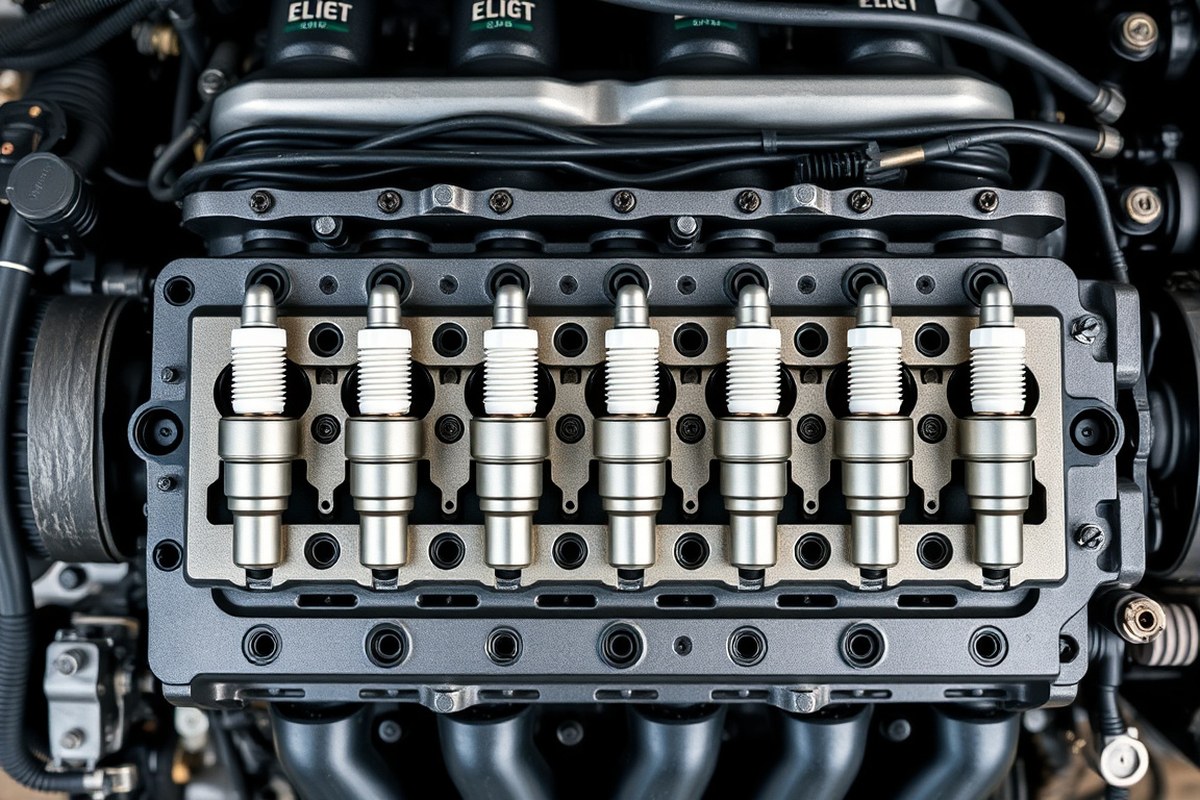
Spark plugs are typically located at the top or side of the cylinder head in most engines. Their specific placement varies based on the engine layout, inline, V-shaped, flat, or motorcycle engines, all of which affect how accessible the plugs are. In every case, spark plugs sit outside the combustion chamber but inside the cylinder head, where they ignite the air-fuel mixture.
Spark Plugs in Inline Engines
Inline engines have cylinders arranged in a straight line, so spark plugs are usually found on one side of the engine block near the top of the cylinder head. You can identify them by following the ignition coils or wires, they lead directly to the plug. These plugs have a metal washer that seals into the cylinder head, with the spark plug thread length commonly between 0.095 and 2.649 cm depending on the engine. Since all cylinders sit side by side, accessing the spark plugs is straightforward, often requiring removal of an engine cover or coil packs.
Because the plugs are evenly spaced, you can replace them one at a time without disturbing others. Replacing spark plugs every 30,000 to 100,000 miles helps maintain efficient combustion, preventing symptoms like rough idling or hard starting. Inline engines generally have one spark plug per cylinder, simplifying maintenance and diagnostics.
Spark Plugs in V and Flat Engines
V-shaped engines arrange cylinders in two banks set at an angle, while flat engines have two horizontally opposed banks. In these layouts, spark plugs are positioned on the top side of each cylinder bank within the cylinder heads. Access can be more challenging compared to inline engines because plugs are located on both sides of the engine, sometimes tucked deeper under other components like the intake manifold or wiring harnesses. When searching for spark plugs on these engines, look for ignition coils mounted directly above or on the side of each cylinder bank.
The placement means you need to locate plugs on both the left and right cylinder banks individually. This design requires more time during spark plug replacement and may increase labor costs at a shop, often reaching $100 to $250 total with parts. V engines occasionally require multiple spark plugs per cylinder, especially in performance applications, adding to the number of plugs you must locate and service.
Spark Plugs on Motorcycles and Small Engines
Motorcycles and smaller engines usually have fewer cylinders and often a single spark plug per cylinder, making identification easier. Their spark plugs are often visible on the top or side of the cylinder head and connected directly to a single ignition wire or coil. Some motorcycle spark plugs have a bare thread without the metal washer common in car spark plugs. This difference can make them slightly easier to access but also requires care when installing to avoid damage.
Small engines on lawn equipment or ATVs also share this layout, with spark plugs protruding from the cylinder head and attached to one ignition wire each. Because there are fewer components around the cylinder head, these plugs are generally simpler to locate and change. Ensuring the plugs are seated properly with the correct gap and torque helps avoid engine misfires and poor fuel efficiency in these compact engines.
How to Identify Spark Plugs Without a Manual

You can find spark plugs without a vehicle manual by knowing what they look like and where they usually sit on the engine. Spark plugs screw into the cylinder head and have a metal threaded shell and a ceramic insulator that sticks out. Recognizing these parts visually lets you pinpoint their position, even without diagrams.
Recognizing Traditional Spark Plug Wires
Look for thick wires that connect to the engine’s cylinder head; these are often attached directly to the spark plug terminal. Most spark plug wires have rubber boots that snap onto the plug, making them easier to spot on engines with this older ignition setup. The wire usually runs from a distributor or coil pack to the plug.
- Thick wire with a rubber boot covering the connector
- Boot snaps onto the spark plug’s metal terminal
- Located on or near the cylinder head
- Wires usually grouped in a bundle matching the number of cylinders
- Wire length varies based on cylinder position
- Wires often run from a distributor cap or ignition coil pack
Once you trace these wires to where they join the cylinder head, you have located the spark plugs. They will be screwed into the head just beneath the wire connection, usually near engine valves.
Don’t pull the spark plug wires by the wire itself; always grip the boot to avoid damage.
Spotting Coil-On-Plug Arrangements
Modern engines often use coil-on-plug (COP) systems instead of spark plug wires. Each spark plug has its own ignition coil mounted directly onto it, replacing the wire connection. These coils are usually cylindrical and screwed onto the spark plug, so the plugs lie directly under them.
- Small cylindrical ignition coil mounted on top of each spark plug
- Coils often secured by bolts through mounting tabs
- No visible spark plug wires leading away from plugs
- Coils can be black plastic or metal casing
- Located on the cylinder head, matching cylinder count
- Plugs are underneath these coils and may require coil removal to access
To visually confirm, look for the coil and then locate the spark plug threaded into the cylinder head below. Removing the coil usually requires a socket wrench. This system simplifies ignition but adds a step in spark plug replacement.
Be sure to disconnect the battery and wait for the engine to cool before removing ignition coils to avoid electric shock and burns.
Common Visual Clues and Markings
Spark plugs are easy to identify by their unique shape and placement. The threaded metal shell screws into the engine’s cylinder head and acts as an electrical ground. The central electrode is surrounded by a white or off-white ceramic insulator that stands out against the engine block.
- Threaded metal shell screwed into cylinder head
- Creamy white ceramic insulator protruding from shell
- Exposed electrode tip at the spark gap end
- Sometimes marked with part numbers or brand logos on the shell
- Usually located on the top or sides of the cylinder head
- May be visible or partly hidden by engine components
Check for any wires, coils, or connectors leading to these parts. Good results mean identifying each plug to service or inspect without removing guesswork. Avoid forcing or unscrewing parts that don’t look like plugs to prevent damage.
Using a flashlight helps reveal spark plug features if the engine bay is dark or cramped.
Tools and Safety Steps for Accessing Spark Plugs
To access and replace spark plugs, a few essential tools and safety steps are necessary. Using the right tools prevents damage to engine components, while safety precautions protect you and ensure the process goes smoothly. Handling ignition parts with care avoids costly repairs later on.
Required Tools for Spark Plug Access
Specialized tools make reaching and removing spark plugs easier and safer. Most spark plugs require a spark plug socket, which has a rubber insert to grip and protect the plug during removal. Using a quality ratchet wrench with an extension helps reach plugs deep inside the engine bay. A torque wrench ensures the new plugs are tightened to the manufacturer’s recommended specifications, preventing leaks or damage.
- Spark plug socket sized 5/8 inch or 13/16 inch depending on your vehicle
- Ratchet wrench with 3-6 inch extension
- Torque wrench for accurate tightening (typically 10-15 lb-ft)
- Feeler gauge to check and adjust spark plug gap
- Socket swivel or universal joint for angled access if needed
- Anti-seize compound for spark plug threads (optional but recommended)
- Compressed air or brush to clean spark plug wells
The exact size and type of socket may vary by engine model. Many modern vehicles require specific tools designed to fit under ignition coils or remove coil-on-plug assemblies safely.
Preparing Your Vehicle Safely
Before accessing the spark plugs, prepare the vehicle to reduce risk and protect components. The engine must be cool; hot engines can cause burns and may damage spark plugs or threads if removed too soon. Disconnecting the battery’s negative terminal prevents accidental electrical shorts while working on the ignition system.
- Allow the engine to cool for at least 30 minutes after running
- Disconnect the negative (-) battery terminal using a wrench
- Wear safety gloves and eyewear to protect against sharp parts and debris
- Open the hood and secure it with the prop rod or hood struts
- Clear the engine bay of loose items, oil, and dirt to prevent contamination
- Remove any engine covers or air intake components blocking spark plug access
Following these steps helps ensure your safety and maintains the vehicle’s electrical integrity. Skipping the battery disconnection increases the risk of damaging ignition coils, which can be expensive to replace.
Handling Ignition Components Carefully
Spark plug wires and ignition coils are delicate and easily damaged during removal. To avoid this, handle connectors gently and use proper tools like ignition coil pliers if recommended. Pulling on wires rather than connectors can stretch or tear them, leading to misfires or electrical problems.
- Gently twist ignition coil or plug wire connectors to loosen, then pull straight out
- Use a small flathead screwdriver to release clips if needed without forcing
- Keep ignition coils upright to avoid contaminating internal components
- Place removed coils and wires on a clean surface to prevent dirt from entering
- Check coil boots and wires for cracks or wear before reinstallation
- Apply dielectric grease inside coil boots to improve electrical connection and ease future removal
Proper handling protects the ignition system and ensures the spark plugs reseat correctly. Mishandling can break coil springs inside boots or crack coil casings, resulting in engine misfire codes and costly repairs.
Common Challenges When Locating Spark Plugs
Locating spark plugs can be more challenging in modern cars because of complex engine covers and tighter engine compartments. Many newer vehicles have large plastic covers or intake manifold assemblies that conceal the spark plugs for a cleaner appearance and better engine noise reduction. Removing these covers usually requires basic hand tools such as a socket wrench and screwdriver, but it adds time and steps to the process. You should carefully unbolt or unclip the covers, store fasteners safely, and keep track of how parts fit together to avoid difficulties when reassembling.
In certain engine layouts like V6 or V8 configurations, spark plugs may be positioned in hard-to-reach spots, such as near the firewall or beneath wiring harnesses. At times, you may need to loosen components like ignition coils, fuel lines, or air intake ducting to gain proper access. This minor disassembly typically adds 10 to 30 minutes of labor, depending on the vehicle model and engine design. Always disconnect the battery before working near ignition components to prevent electrical shock or damage.
Some common pitfalls when searching for spark plugs include mistaking ignition coil connectors for the plugs themselves, overlooking hidden bolts securing protective covers, or attempting to remove spark plugs without proper tools. Using a magnetic spark plug socket with an extension can improve grip and control in tight spaces. Avoid prying with screwdrivers or pliers, which could damage the spark plug or the engine head threads.
Once located, removing spark plugs can vary from straightforward to moderately difficult. Spark plugs threaded into aluminum cylinder heads can seize due to corrosion or overtightening, especially in engines that have seen several years of use. Applying a small amount of penetrating lubricant around the spark plug base and allowing it to sit for 10 to 15 minutes helps loosen the threads. Use a spark plug socket with a rubber insert to snugly grip the plug and turn it counterclockwise with a proper torque wrench or breaker bar. Do not force it with excessive torque to avoid breaking the spark plug or stripping threads.
Access restrictions can increase the risk of damaging ignition coil connectors, spark plug wires, or nearby sensors if you work blindly or rush the process. Taking clear photos before disassembly or labeling parts can keep you organized. In some cases, consulting a repair manual for your specific vehicle can provide the exact locations of spark plugs and step-by-step removal instructions.
Although removal difficulty varies, professional technicians often quote 0.5 to 2 hours of labor for spark plug replacement depending on engine complexity. Investing in this knowledge and preparing accordingly can reduce frustration and prevent costly mistakes while maintaining your vehicle’s optimal combustion, fuel efficiency, and emission standards.
Step-by-Step Guide to Finding Spark Plugs
Accessing spark plugs starts with finding the area where they are installed, usually on the cylinder head. Removing the ignition components that connect to the spark plugs, either spark plug wires or coil packs, is key to getting clear access without damage. This is important because rough handling can break the wires or coils, causing engine misfires or costly repairs. The time it takes varies, but on most four-cylinder to V6 engines, it lasts between 15 and 45 minutes depending on your vehicle’s design and how crowded the engine bay is. Follow these steps carefully to reach the spark plugs:
- Locate the ignition coils or spark plug wires. On newer vehicles, you’ll see a coil pack on top of each spark plug. Older models usually have wires leading to each spark plug from a distributor or coil pack. Look for rubber boots or cylindrical parts on top of the engine’s cylinder head.
- Disconnect the battery for safety. This prevents accidental shocks or short circuits while handling ignition parts. Use a wrench to loosen the negative cable clamp and set the cable aside.
- Carefully remove spark plug wires by gripping the boot, not the wire. Twist slightly and pull straight out to avoid damaging the wire. For coil packs, unbolt any fasteners and gently pull the coil off the spark plug.
- Clear any debris from around the spark plug area. Use compressed air or a soft brush to prevent dirt from falling into the cylinder when removing plugs.
- Use a spark plug socket and a ratchet with an extension. Insert the tool into the spark plug well and turn counterclockwise to loosen and remove the spark plug. Extensions help reach plugs that sit deep inside the engine block.
- Assess the spark plug area for any oil, grime, or corrosion. A clean, dry area helps ensure proper installation and prevents misfires when you replace spark plugs.
Take care not to force spark plug wires or coils off; damage to ignition parts can be expensive to fix and cause engine problems.
Differences in Spark Plug Access by Engine Types
Engine layout plays a direct role in how easily you can access and replace spark plugs. Inline engines tend to have spark plugs arranged in a single row along the cylinder head, making them relatively straightforward to locate and change. V engines feature two banks of cylinders set at an angle, so spark plugs sit on both sides, often requiring more effort to reach, sometimes needing removal of engine covers or other parts. Flat or boxer engines have a horizontally opposed layout, placing spark plugs on opposite sides of the engine block, which may limit access due to tight spaces.
The location of spark plugs is mechanical rather than performance-driven. While their placement doesn’t affect engine performance traits directly, it does impact how often you can easily inspect or replace them. Engines with accessible spark plugs typically allow for quicker maintenance, which might encourage more frequent checks, possibly every 30,000 miles or so depending on the vehicle manufacturer’s recommendations. Hard-to-reach plugs might lead to longer intervals simply because owners or mechanics delay inspections. Below is a comparison table summarizing the common spark plug location differences across engine types in terms of access and maintenance considerations.
| Engine Type | Spark Plug Location | Access Difficulty | Maintenance Frequency (Typical) | Common Challenges |
|---|---|---|---|---|
| Inline Engine | Single cylinder head row | Easy to Moderate | Every 30,000-50,000 miles | Usually clear, minor space constraints |
| V Engine | Two cylinder heads, opposite banks | Moderate to Difficult | Every 30,000-45,000 miles | Requires removal of engine covers, tighter space |
| Flat (Boxer) Engine | Opposing cylinder heads on both sides | Difficult | Every 30,000-50,000 miles | Limited workspace, may need specialized tools |
Routine inspection involves visually checking spark plug condition through the engine bay. In inline engines, you can often see and access the plugs without removing many components. V and flat engines usually need removal of plastic engine covers or intake parts first. Use a spark plug socket to avoid damage and ensure the correct spark plug type; copper core plugs with nickel alloy electrodes are common standards.
Good results include clean plugs with proper spark gaps and no visible damage. Watch for cracked insulators or unusual wear, signs that can indicate engine detonation problems. Delaying inspection in engines with harder plug access can cause increased replacement costs and potential engine damage, so plan maintenance accordingly based on your engine layout and manufacturer advice.
When to Get Professional Help Locating Spark Plugs
Call a professional to locate or replace spark plugs when access is limited by engine design, such as V6 or V8 engines with tightly packed components. Deep-set plugs beneath intake manifolds or near fuel injectors often need removal of additional parts, requiring special tools and experience. Professionals have the right equipment, like long reach sockets and extensions, to reach spark plugs without damaging surrounding wiring, hoses, or engine covers.
Improper removal of spark plugs risks stripping the threads in the cylinder head or breaking the spark plug inside the hole, which usually demands costly repairs. If you force a stuck spark plug or use incorrect tools, the ceramic insulator can fracture, making extraction difficult and potentially damaging the cylinder head’s metal threads. This situation often leads to expensive machine work or even cylinder head replacement. A professional technician can detect seized plugs early and use lubricants or heating techniques to minimize damage during removal.
Ignoring hard-to-access spark plugs can lead to engine misfires, reduced fuel efficiency, and increased emissions. A spark plug that doesn’t ignite properly or at the right time may cause rough idling or knocking, which subjects the engine to abnormal stresses. Over time, this may cause damage to pistons or valves. High spark plug tip temperatures, sometimes caused by improper plug heat range or firing problems, can trigger pre-ignition or detonation, both harmful to engine internals.
The decision rule to call a professional is simple: if you cannot easily see or reach the spark plugs within 30 minutes of inspection, or if removing nearby parts looks complex, it’s safer to seek expert help. Professional labor for spark plug replacement typically ranges from $100 to $200 depending on vehicle make and model. This cost includes diagnosis, removing obstructing engine components, plug replacement, and reassembly. The extra cost pays off by preventing engine damage, costly repairs, and extended downtime.
Good results from professional intervention include properly gapped, correctly torqued new spark plugs installed without damage to other engine parts. The engine should run smoothly, with stable idle and improved fuel economy after service. Wrong timing, loose plugs, or damaged threads can cause persistent rough running and return visits to the mechanic. Knowing when to get expert help avoids those pitfalls and protects your engine’s health over time.
Mistakes to Avoid When Searching for Spark Plugs
One common mistake when searching for spark plugs is not fully removing or disconnecting surrounding components like ignition coils or wiring harnesses before attempting to extract them. This can lead to broken coils or damaged spark plug threads. Carefully release clips and connectors, and use manufacturer-recommended tools such as a spark plug socket with a swivel extension for hard-to-reach plugs. Take your time to avoid snapping delicate parts.
Applying too much force when unscrewing spark plugs causes stripped threads or snapped parts inside the engine. To prevent this, use a torque wrench with settings appropriate for your vehicle, usually between 13 to 22 foot-pounds depending on the engine. Turn the plug counterclockwise gently at first. When a plug feels stuck, apply a penetrating oil like PB Blaster and let it soak for 10 to 15 minutes before trying to remove it again to ease removal without damage.
- Mark the position of ignition coils before removal to ensure proper reinstallation.
- Use a spark plug socket with rubber insert to protect the plug during removal.
- Apply penetrating oil sparingly and allow adequate soak time on stuck plugs.
- Avoid extensions that cause socket slipping or misalignment.
- Do not force spark plugs; loosen gradually with steady pressure.
- Keep the engine cool before working to prevent heat-related expansion of the plug.
- Use a torque wrench for reinstalling to avoid overtightening or loosening.
Checking your owner’s manual for the correct torque and removal technique saves costly errors. Over-torquing can cause thread damage, while under-torquing leads to poor contact and misfires. When a spark plug is stubborn, avoid hammering or using power drills since they can break the plug inside the cylinder. Instead, try gentle rocking motions back and forth and repeat the penetrating oil application.
Always let the engine cool for at least 30 minutes before working on spark plugs to prevent heat expansion that makes plugs harder to remove and increases risk of damage.
Step-by-Step Action Plan for Locating and Accessing Spark Plugs
Follow this plan to quickly find and prepare your spark plugs for inspection or replacement. Each step keeps you on track and confirms your progress.
- Before You Begin: Gather your basic tools including a spark plug socket, ratchet, and gloves. Knowing your engine type helps narrow down spark plug locations.
- Day 1: Open your vehicle’s hood and identify the engine cover or valve cover. Removing or lifting this cover often exposes the spark plug boots or wires.
- Day 1 Continued: Look for spark plug wires or ignition coils connected to the engine’s cylinder head; these lead directly to the spark plugs. Confirm you see multiple plugs matching your engine cylinder count.
- Day 2: Use your socket and ratchet to carefully loosen one spark plug after disconnecting its wire or coil. This confirms you have found the correct component.
- After Accessing Plugs: Inspect the spark plug condition and verify there are no cracks or heavy deposits, showing you’ve accessed the plugs properly.
- Within One Week: Practice replacing one spark plug or have a professional assist, ensuring your access method works safely and correctly.
- If You Encounter Resistance: Pause work and consult a service manual or professional if spark plugs seem hidden or covered by complex components.
Frequently Asked Questions
What Are the First Signs That My Spark Plugs Are Bad?
The first signs are rough idling, engine misfires, and hard starts. These issues happen because spark plugs ignite the fuel-air mix, so worn plugs reduce engine performance.
Are Spark Plugs Easy to Change?
Changing spark plugs is fairly easy with basic tools but can be tricky in tight engine spaces. Prepare by removing engine covers and using a spark plug socket for best results.
Will AutoZone Change Your Spark Plugs for You?
AutoZone offers installation services depending on location, but not all stores provide this service. Call ahead to confirm if they can change your spark plugs.
How Often Should Spark Plugs Be Replaced?
Spark plug replacement intervals vary between 30,000 and 100,000 miles, depending on the specific type and manufacturer instructions. Refer to the owner’s manual to find the recommended schedule.
Can Bad Spark Plugs Cause Decreased Fuel Efficiency?
Yes, worn spark plugs can lower fuel efficiency because they cause incomplete combustion in your engine. This wastes fuel and reduces engine power.
Do All Vehicles Use the Same Type of Spark Plug?
No, spark plugs vary by size, thread, and heat range to match specific engines. Using the wrong type can damage your engine or reduce performance.
Before You Go
Spark plugs typically sit on the engine’s cylinder head, reachable by following the ignition components attached to that area. Knowing your engine type and following simple steps helps find them without guesswork. Start by locating the ignition wires or coils, then carefully remove any covers blocking your view. Taking one step at a time sets you up to inspect or replace the plugs safely and effectively.