

How Is Synthetic Fuel Made: 8 Methods and Key Production Insights
How is synthetic fuel made? It’s primarily produced by combining carbon dioxide with hydrogen through chemical processes like Fischer-Tropsch synthesis. This creates liquid fuels that mimic traditional petroleum but with potentially lower emissions when powered by renewable energy. Starting with clean energy sources is important to maximize environmental benefits.
Key Takeaways
- Synthetic fuel production often begins with capturing CO2 and generating hydrogen via electrolysis powered by renewable energy.
- Fischer-Tropsch synthesis converts carbon monoxide and hydrogen into liquid hydrocarbons that serve as synthetic fuels.
- The gradual integration of synthetic fuels with conventional fuels can start at around 4% by 2025, increasing to full adoption by 2050.
- Using wind or solar power at production sites, like Porsche’s pilot plant in Chile, reduces the carbon footprint of synthetic fuel.
- Fischer-Tropsch jet fuels reduce particulate emissions by over 75% compared to conventional jet fuels in engine tests.
- Industrial-scale synthetic fuel production may take 5 to 20 years to become feasible and requires stable, low-cost renewable electricity.
1. How Synthetic Fuel Is Produced from CO2 and Hydrogen
Synthetic fuel production from carbon dioxide and hydrogen relies on capturing CO2 from air or industrial emissions and combining it with green hydrogen produced by splitting water using renewable electricity. This process avoids fossil fuels, aiming for a carbon-neutral fuel cycle. Green hydrogen is important because it provides hydrogen atoms sustainably, unlike hydrogen from fossil gas reforming, which emits CO2.
CO2 is captured through technologies like direct air capture or from concentrated industrial exhaust streams. The captured CO2 usually requires purification to remove impurities such as nitrogen and oxygen, ensuring efficient downstream reactions. Green hydrogen is obtained by electrolysis, where renewable electricity (from solar, wind, or nuclear) splits water at temperatures near 50, 80°C under atmospheric pressure, producing pure hydrogen and oxygen. Costs and efficiency depend on the electrolyzer technology and energy source, with proton exchange membrane electrolyzers being common.
The synthetic fuel creation involves chemical reactions that combine CO2 and hydrogen to form molecules usable in combustion engines. One main pathway starts by reducing CO2 to methanol or directly synthesizing hydrocarbons through catalytic processes. The CO2-to-fuel conversion typically occurs at temperatures between 200 to 300°C and pressures of 20 to 50 bar, optimizing reaction rates and selectivity.
These steps require catalysts, often metal-based, to facilitate combining carbon and hydrogen into fuel molecules. Methanol can be further processed via established methods to produce liquid hydrocarbons, such as synthetic gasoline or diesel, often called eFuels. The carbon released when these fuels burn closely matches the CO2 captured for their production, establishing a closed carbon loop. Key steps to produce synthetic fuel from CO2 and hydrogen include:
- Capture CO2 by pulling it from air or industrial emissions using chemical absorption or adsorption technologies, then purify it to remove contaminants for consistent feedstock quality.
- Produce green hydrogen via electrolysis, splitting water with renewable electricity, maintaining proper temperature and pressure conditions to optimize hydrogen yield and purity.
- Compress and condition gases to suitable pressures (20, 50 bar) and temperatures (200, 300°C), preparing CO2 and hydrogen for catalytic reactions.
- React CO2 and hydrogen on metal catalysts in fixed-bed reactors where hydrogen reduces CO2, forming intermediate molecules such as methanol or synthesis gas (a mixture of CO and hydrogen).
- Convert intermediates like methanol or syngas via additional catalytic processes (e.g., Fischer-Tropsch synthesis) into longer-chain hydrocarbons suitable as liquid fuels.
- Separate and refine the liquid products to meet fuel standards, removing by-products and adjusting composition for engine compatibility.
- Store and distribute the synthetic liquid fuel through existing fuel infrastructure, benefiting from high energy density and familiar handling compared to gaseous fuels.
Challenges include the cost of green hydrogen production, which often dominates synthetic fuel pricing, and energy efficiency losses at each stage. Advances in electrolyzer technology and catalyst development have improved conversion efficiency by more than 10 percent recently. Proper integration of renewable power sources and CO2 capture technologies also significantly impacts economics and environmental benefits. The process is scalable and can produce fuels compatible with current combustion engines with minimal modification, making it a promising route to reduce fossil fuel dependence and lower net CO2 emissions.
2. Fischer-Tropsch Synthesis and Its Role in Synthetic Fuels
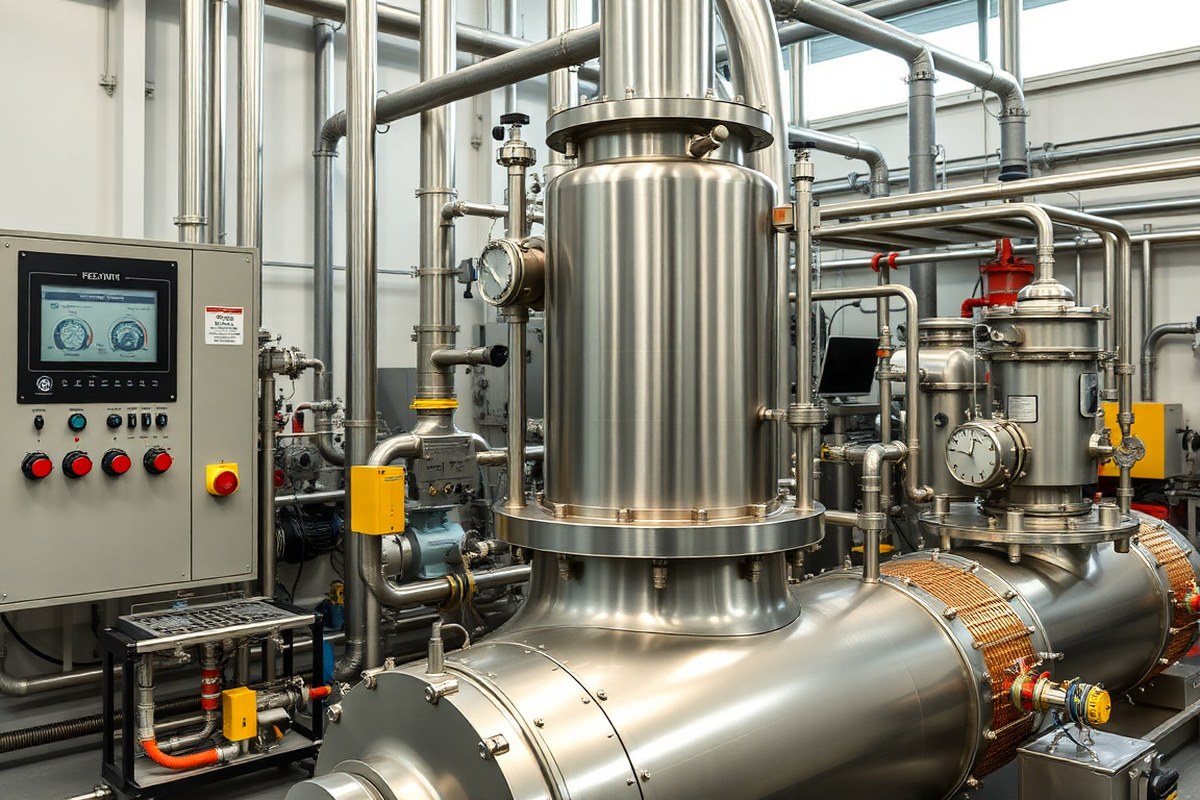
The Fischer-Tropsch synthesis is a catalytic chemical process that converts synthesis gas, a mixture of hydrogen and carbon monoxide, into liquid hydrocarbons. It primarily produces synthetic diesel, jet fuel, and other hydrocarbons compatible with existing engines and fuel infrastructure. The process uses metal catalysts, typically iron or cobalt, to drive chemical reactions at improve temperatures and pressures.
Chemical Reactions in Fischer-Tropsch
The core of the Fischer-Tropsch process involves converting synthesis gas (syngas) into longer-chain hydrocarbons through surface catalytic reactions. Syngas reacts on a catalyst, breaking apart into hydrogen and carbon monoxide fragments. These fragments then recombine to form chains of hydrocarbons following the general reaction: NCO + (2n + 1)H₂ → CₙH₂ₙ₊₂ + nH₂O
This represents the formation of alkanes (paraffins), which are the primary products. The catalyst surface, often cobalt for low-temperature processes (200-250°C) or iron for high-temperature ones (300-350°C), facilitates the breaking and reforming of bonds. Operating pressures typically range from 20 to 40 bar. The process duration and conditions affect the distribution of products, including paraffins, olefins, and waxes.
The resulting hydrocarbons vary in carbon chain length depending on the catalyst properties and reaction parameters. Shorter chains can be processed into gasoline, while longer chains are cracked or refined into diesel and jet fuel. The synthesis also produces water as a byproduct, which must be managed within the plant to avoid deactivating the catalyst.
Feedstock Options for Fischer-Tropsch
The feedstock for Fischer-Tropsch synthesis is syngas, which must be produced before the catalytic step. Syngas itself is derived from various carbon-containing resources. Traditional sources include coal, natural gas, and biomass. Gas-to-liquids (GtL) plants typically start with natural gas, reforming it into syngas. Biomassto-liquids (BtL) facilities gasify plant-based materials such as wood chips, agricultural waste, or energy crops.
Hydrogen and carbon monoxide ratios in syngas vary based on the feedstock and gasification or reforming technology. Adjustments in water-gas shift reactors optimize this ratio to suit the Fischer-Tropsch catalyst. The choice of feedstock influences both economics and environmental impact, with renewable biomass and recycled wastes offering lower lifecycle emissions. Some processes convert vegetable oils or animal fats instead of syngas, undergoing hydrodeoxygenation and cracking to reach similar hydrocarbon profiles, but these do not strictly fall under Fischer-Tropsch synthesis.
Typical Synthetic Fuels Produced
Fischer-Tropsch synthesis typically yields synthetic diesel and jet fuel that meet existing fuel specifications. These synthetic fuels have a high cetane number and low sulfur content, improving combustion quality and emissions. Diesel fuels derived from Fischer-Tropsch are called Gas-to-Liquid (GtL) diesel when sourced from natural gas and Power-to-Liquid (PtL) diesel when electricity-generated hydrogen is used.
Synthetic jet fuel produced by Fischer-Tropsch is often called Synthetic Paraffinic Kerosene (SPK). It is used as a drop-in replacement for conventional aviation kerosene with minimal modifications to turbine engines. These fuels burn cleaner, producing fewer particulates and sulfur oxides. In addition, some synthetic waxes can be produced as co-products, usable in industrial applications or further refined into liquid fuels.
Keep catalyst temperatures strictly controlled; overheating can deactivate catalysts and increase byproduct formation, reducing product quality and process efficiency.
3. Comparing Major Synthetic Fuel Production Methods
The main pathways for producing synthetic fuels vary widely in their feedstocks, energy inputs, and final products. Direct conversion methods such as the Bergius process liquefy coal by hydrogenation, heating coal with hydrogen gas to yield liquid fuels without first forming syngas. Indirect methods, including coal-to-liquid via Fischer-Tropsch synthesis, first gasify coal or biomass into syngas, which is then converted into fuels. Biomass gasification also uses syngas but relies on organic material, potentially reducing carbon emissions. Electrolysis-based e-fuels generate hydrogen by splitting water using renewable electricity, combining it with CO2 to synthesize fuels, promising a closed carbon cycle. Coal-to-liquid technologies mainly use coal and hydrogen to produce liquid fuels but require high temperatures and pressures, with varying environmental impacts.
Efficiency and scalability often depend on energy input sources and system maturity. Direct methods like coal hydrogenation offer established technologies but involve fossil resources and significant CO2 emissions. Indirect routes enable more flexible feedstocks but need energy-intensive gasification. Electrolysis-based e-fuels boast zero-carbon energy input potential but face challenges with renewable electricity availability and production costs. Biomass gasification appeals for renewable feedstock use but requires sustainable biomass supply. Coal-to-liquid plants involve substantial infrastructure and environmental management, making deployment slower and costlier.
| Method | Feedstock | Energy Input | Key Process | Output Fuel Types | Efficiency & Scale Notes |
|---|---|---|---|---|---|
| Direct Coal Conversion (Bergius process) | Coal | Hydrogenation; high pressure and heat | Coal liquefied by hydrogen gas | Liquid hydrocarbons | Established; high emissions; lower scalability due to fossil reliance |
| Indirect Conversion (Gasification + Fischer-Tropsch) | Coal, Biomass | Gasification energy + catalytic synthesis | Feedstock → syngas → fuels | Diesel, jet fuel, methanol | Flexible feedstocks; energy intensive; moderate scale potential |
| Biomass Gasification | Organic biomass | Thermal gasification energy | Biomass → syngas → fuels | Synthetic diesel, methanol | Renewable feedstock; sustainable if biomass is managed; moderate efficiency |
| Electrolysis-based E-fuels | Water, CO₂ | Renewable electricity (wind, solar) | Water electrolysis → H₂ + CO₂ → synthetic fuels | E-diesel, e-kerosene, e-methanol | Potentially carbon-neutral; energy input intense; scaling depends on renewable power |
| Coal-to-Liquid (CTL) | Coal | Gasification + hydrogenation | Coal → syngas → liquids | Diesel, jet fuel | High infrastructure cost; emissions concern; large-scale plants exist |
Direct conversion methods involve heating coal with hydrogen at temperatures often above 400°C and high pressures reaching 200 atmospheres, resulting in liquid hydrocarbons. This requires significant hydrogen supply and fossil fuel feedstocks, which affects environmental footprint. Indirect methods rely on gasification at approximately 1,200 to 1,500°C to form syngas, a mixture of carbon monoxide and hydrogen, before catalytic synthesis into fuels. Biomass gasification provides a renewable alternative but depends on sustainable feedstock logistics.
Electrolysis-based e-fuels use renewable electricity to split water molecules into hydrogen at ambient to moderate temperatures using PEM or alkaline electrolyzers. Combining this hydrogen with captured CO2 in processes similar to Fischer-Tropsch or methanol synthesis can produce fuels like e-diesel with no net carbon emissions during use. However, the energy intensity and cost of electrolyzers and renewable power infrastructure currently limit large-scale deployment.
Coal-to-liquid technologies typically encompass both direct and indirect pathways, with plants requiring complex gas cleanup and catalytic reactors. They consume high amounts of energy and water, impacting operational costs and sustainability. Despite this, they can be scaled to produce millions of barrels per year, as seen in regions like Kansas, where synthetic fuel production is established.
Currently, the most efficient pathway for carbon-neutral synthetic fuels is electrolysis-based production when powered by renewable energy. Scalability depends on expanding renewable electricity capacity and CO2 capture availability. Indirect methods with flexible feedstocks offer moderate scalability but less environmental benefit when relying on fossil resources. Biomass gasification can supplement renewable fuel production where feedstock supply is reliable. Direct coal conversion remains less attractive due to emissions unless combined with carbon capture.
4. Raw Materials and Energy Sources for Synthetic Fuel Production
Synthetic fuel production relies on a variety of raw materials, known as feedstocks, including biomass, coal, natural gas, captured carbon dioxide, and water. Biomass and waste gases stand out for their renewable and sustainable qualities, while coal and natural gas remain common due to their established infrastructure. The choice of feedstock significantly impacts the carbon footprint and the energy profile of the final synthetic fuel.
Renewable energy sources are essential in powering the chemical processes that convert these feedstocks into liquid fuels. Electricity generated by solar, wind, or wave power is often used to extract hydrogen from water through electrolysis. This renewable hydrogen then reacts with carbon from captured CO2 or the feedstock to create synthetic hydrocarbons. Approximately half of the energy stored in synthetic fuels comes from renewable electricity, with the other half coming from biogenic feedstocks like biomass waste.
Waste and biomass can be used efficiently as feedstocks. Biomass offers a carbon-neutral option because the CO2 released during fuel combustion was recently captured by the plants from the atmosphere. When combined with renewable hydrogen, biomass-derived syngas (a mixture of hydrogen and carbon monoxide) forms a key input for Fischer-Tropsch synthesis and other conversion technologies. Using biomass also helps reduce reliance on fossil fuels and lowers greenhouse gas emissions, especially when sourced from non-food crops or biogenic waste gases. Here are typical raw materials and energy inputs involved in synthetic fuel production:
- Biomass feedstocks such as agricultural residues, forestry waste, and non-food energy crops
- Coal and natural gas as traditional hydrocarbon feedstocks
- Captured CO2 from industrial emissions or direct air capture
- Water for electrolysis to produce green hydrogen
- Renewable electricity from solar, wind, or wave power to drive electrolysis and synthesis reactions
- Waste gases from biomass or industrial processes used as carbon and hydrogen sources
The cost and efficiency of synthetic fuel production depend on feedstock availability and energy source. Renewable electricity drives up initial costs compared to fossil-based energy inputs but offers a path to near carbon-neutral synthetic fuels. Locations with abundant biomass resources and renewable energy can transition synthetic fuel plants from coal or gas to 100% biomass-based feedstocks, improving sustainability while maintaining output. Challenges include managing feedstock logistics and ensuring a steady supply of clean energy to sustain the chemical reactions at required temperatures, often between 200°C and 350°C for synthesis steps.
5. Step-By-Step Chemical Processes in Synthetic Fuel Generation
Synthetic fuel production relies on a series of chemical conversions starting with splitting water molecules to obtain hydrogen, followed by combining this hydrogen with carbon monoxide or carbon dioxide to form hydrocarbons. The reactions require precise catalysts to speed up processes and ensure high fuel yield. Key transformations include water electrolysis and hydrogenation steps that synthesize the final fuels from elemental building blocks.
Water Electrolysis Producing Hydrogen
Water electrolysis is the initial and essential step in synthetic fuel manufacture, where electric current splits water (H2O) molecules into hydrogen (H2) and oxygen (O2). This reaction typically occurs in an electrolyzer using either acidic or alkaline media, often at temperatures between 60 and 80°C. The half-reactions are: Anode (oxidation): 2H2O → O2 + 4H+ + 4e− Cathode (reduction): 4H+ + 4e− → 2H2 The overall reaction is: 2H2O → 2H2 + O2
Electricity sourced from renewables facilitates this process, allowing the generation of “green” hydrogen with oxygen as the only by-product. Proton exchange membrane (PEM) and alkaline water electrolysis are common technologies, with PEM being favored for its higher purity hydrogen output and quicker response times. This hydrogen becomes the reducing agent in subsequent fuel synthesis. Electrolysis requires careful control of voltage and temperature to optimize efficiency and minimize energy use, which currently costs roughly $4 to $6 per kilogram of hydrogen depending on scale and electricity price.
CO2 Hydrogenation and Synthesis Routes
After producing hydrogen, the next key chemical step is hydrogenation of carbon oxides, primarily carbon dioxide (CO2) or carbon monoxide (CO), converting these molecules into hydrocarbons suitable for fuels. The water-gas shift reaction can generate additional hydrogen and carbon monoxide from water and CO, which feeds into fuel synthesis: CO + H2O → CO2 + H2 Hydrogenation then uses hydrogen to reduce CO or CO2 into hydrocarbons through processes like methanol synthesis and Fischer-Tropsch synthesis. The generic methanol synthesis reaction is: CO + 2H2 → CH3OH Or CO2 + 3H2 → CH3OH + H2O The Fischer-Tropsch process further converts syngas (a mixture of CO and H2) into longer-chain hydrocarbons ranging from gases to waxes, depending on catalyst and conditions: (2n + 1)H2 + nCO → CNH2n+2 + nH2O
This step happens typically at 200 to 350°C and 10 to 40 atmospheres pressure. Adjusting temperature and catalyst properties allows control of product distribution between gasoline, diesel, or jet fuel analogues. Synthetic fuels produced this way can fit directly into existing engine designs, which makes the chemical process economically and practically beneficial.
Catalysts Accelerating Reactions
Catalysts are critical for lowering the activation energy of synthetic fuel reactions, enabling them to run efficiently at technologically achievable temperatures and pressures. For water electrolysis, platinum group metals like platinum or iridium often coat the electrodes to speed up hydrogen and oxygen evolution. Acidic PEM electrolyzers typically use such catalysts, while alkaline systems use nickel-based electrodes.
Methanol synthesis commonly employs copper-based catalysts combined with zinc oxide and alumina. These catalysts facilitate the selective hydrogenation of CO and CO2 to methanol without producing excessive side-products. Fischer-Tropsch synthesis relies on iron or cobalt catalysts, with cobalt preferred for its higher activity and selectivity toward long-chain hydrocarbons.
Catalyst performance and lifespan impact the overall economics and sustainability of synthetic fuel production. Deactivation through sintering or poisoning by impurities in feed gases is a significant operational concern. Maintaining high surface area and purity optimizes reaction rates and fuel yield over thousands of operating hours.
Handling catalysts carefully and regularly regenerating them helps avoid efficiency losses in synthetic fuel production processes.
6. Environmental Impact and Sustainability of Synthetic Fuels
Synthetic fuels have the potential to be close to carbon neutral because their production captures carbon dioxide that would otherwise remain in the atmosphere. During the fuel’s lifecycle, the carbon released when the fuel is burned approximately equals the carbon absorbed during its raw material phase, such as biomass growth or direct CO2 capture. This creates a closed carbon loop that significantly reduces overall greenhouse gas (GHG) emissions compared to fossil fuels. For example, coal-to-biomass-to-liquid (CBTL) plants with carbon capture and storage (CCS) operating on at least 40% biomass feedstock can achieve a neutral lifecycle GHG footprint. Synthetic fuels made entirely with renewable energy and captured CO2 have the highest carbon reduction potential.
Emissions from synthetic fuel production and use vary by technology and energy inputs. Synthetic fuels produced with coal and CCS still reduce GHG emissions by 9-15% compared to petroleum diesel. Fischer-Tropsch (F-T) fuels inherently emit less CO2 because each unit contains more energy per carbon atom and such fuels are less dense than conventional fuels, enabling aircraft to carry less fuel weight for the same range. Laboratory tests show F-T jet fuels can reduce particulate matter emissions by up to 96% at idle and 78% during cruise compared to standard jet fuel, helping to decrease local air pollution significantly. However, synthetic fuel combustion releases CO2 equal to the carbon originally captured, so it’s critical the CO2 capture process effectively keeps it out of the atmosphere beforehand.
The sustainability of synthetic fuels depends greatly on the energy sources powering their production. When hydrogen used for synthesis is generated from renewable sources like wind or solar, synthetic fuels achieve nearly zero net emissions, making them viable low-carbon alternatives. Relying on fossil-based electricity or fossil hydrogen reduces their environmental advantage. Alongside direct air CO2 capture or sustainably harvested biomass, renewable energy ensures synthetic fuels contribute to substantial emission reductions. The U.S. Department of Energy notes that using non-food crops to produce liquid fuels could potentially cut vehicle greenhouse emissions by up to 50% over coming decades.
In practice, synthetic fuels often enter the market as blends mixed with conventional fossil fuels rather than fully replacing them initially. This gradual integration reduces emissions incrementally without requiring immediate infrastructure overhaul. Industries that currently rely on fossil natural gas can also benefit by substituting synthetic methane or propane, cutting emissions without large system changes. Heating and cooling systems can similarly switch to renewable hydrogen, further decarbonizing sectors beyond transportation.
Costs and complexity remain barriers to widespread synthetic fuel adoption. Producing these fuels requires significant renewable energy input and carbon capture infrastructure, which can be expensive and energy intensive. The choice of biomass, its transportation, and efficient CCS all influence the final carbon footprint. Until renewable energy becomes more affordable and CCS technologies mature, the carbon savings from synthetic fuels will vary. Despite these challenges, synthetic fuels present a promising option for reducing the carbon lifecycle impact of liquid fuels traditionally derived from fossil sources.
7. Challenges, Costs, and Production Timelines for Synthetic Fuels
The production of synthetic fuels currently faces high economic barriers due to the significant capital investment required for plant construction coupled with the relatively low price of conventional crude oil. Building new plants can drive costs above EUR 1,000 per ton, making synthetic fuels less competitive without supportive policies or scaling benefits. Achieving economies of scale is critical, as experts suggest that large-scale power-to-gas operations might reduce costs enough to approach broader market viability. Industrial sectors that need high energy inputs or extreme temperatures, like processes reaching 2000°C, could benefit most from synthetic fuels despite the cost.
Technical challenges have mostly been addressed, with advancements in capturing contaminants and refining synthetic fuels that align with existing fuel infrastructure. However, the development of hydrogen refueling networks for fuel cell electric vehicles remains a hurdle for widespread adoption. Renewable energy integration and scaling hydrogen production safely and economically contribute to the complexity. Also, while direct methanol fuel cells are gaining popularity in niche markets where fast refueling is essential, mass adoption depends on advances in synthetic fuel production capacity and cost.
The timeline for synthetic fuels becoming widely available hinges on investments in plant construction and technological improvements. Industry commitments, such as Porsche’s planned mass production facilities in South America, signal expansion within the next decade. A study published in the AIChE Journal indicates that building approximately 130 synthetic fuel plants across the United States could meet the entire country’s transportation fuel demand, reflecting the scale needed for market presence. Commercial-scale deployment will likely rise gradually over the next 10 to 20 years as costs decrease and infrastructure matures. Production costs vary considerably based on location, scale, energy sources, and technology, but the table below highlights key cost and timeline factors involved in synthetic fuel deployment:
| Factor | Description | Typical Range / Estimate |
|---|---|---|
| Capital Investment | Cost to build synthetic fuel plants | High, often above EUR 1,000 per ton production cost initially |
| Economies of Scale | Cost reduction achievable by larger plants | Significant; scaling reduces per-ton cost over time |
| Energy Input | Renewable electricity or hydrogen production | Variable; cost depends on local energy prices and technology |
| Production Timeline | Time to achieve commercial-scale plants | 10, 20 years for widespread availability |
| Technical Limitations | Hydrogen infrastructure, fuel refinement, contaminant management | Mostly solved but infrastructure development ongoing |
| Market Adoption | Early sectors and niches benefiting | High-energy sectors, materials handling vehicles, specialty fuels |
Companies like Audi aim to reduce production costs through efficient power-to-gas processes, while renewable hydrogen remains a decisive factor in pricing. The necessity to balance capital expenses against clean fuel benefits drives much of the ongoing research and investment. Your ability to consider synthetic fuel as a viable option will depend on future market conditions and technological breakthroughs that lower energy input costs and expand infrastructure.
8. Innovations Improving Synthetic Fuel Efficiency and Scalability
Recent innovations in synthetic fuel production focus on boosting efficiency and enabling scalable solutions. Advanced catalysts improve chemical reactions, hybrid renewable energy systems provide cleaner inputs, and modular plant designs allow flexible, cost-effective expansion. These efforts aim to meet rising demand and reduce production costs, moving synthetic fuels closer to commercial viability.
Advanced Catalyst Development
Catalysts accelerate the key chemical reactions that produce synthetic fuels, such as Fischer-Tropsch synthesis. New materials with higher activity and selectivity enable faster conversion of feedstocks like carbon dioxide and hydrogen into usable fuels. This reduces energy consumption and improves yield, lowering cost per gallon.
Developers are exploring catalysts based on novel metals and nanostructures that can operate efficiently at lower temperatures, around 200 to 250 °C, instead of traditional harsher conditions above 300 °C. Operating under milder conditions extends catalyst lifespan, reducing replacement frequency and downtime.
High-performance catalysts also minimize byproducts that require costly cleanup. As a result, production processes demand less energy and produce fewer emissions, improving sustainability.
Renewable Hybrid Energy Integration
Synthetic fuel plants increasingly use hybrid renewable systems combining solar, wind, and hydroelectric power to generate hydrogen and supply heat. Using clean energy sources directly reduces carbon footprint and lowers reliance on fossil fuels for process energy.
For example, a plant pairing solar photovoltaic arrays with wind turbines can maintain consistent power despite variability in sunlight or wind. Excess electricity generated during peak times can be stored or used immediately to drive electrolysis for hydrogen production.
Integrating renewable energies helps plants achieve near-zero emissions and cut operational costs over time by avoiding fuel purchases. However, upfront capital must cover diverse equipment and energy storage to ensure reliability.
Modular and Decentralized Plants
Instead of massive centralized facilities, modular plants consist of smaller, standardized units that can be assembled onsite or in factories. This approach reduces initial capital cost, shortens construction time, and allows incremental scaling by adding modules as demand grows.
Smaller plants can locate closer to renewable energy sources or CO2 capture points, reducing transportation costs and energy losses. Modular designs also simplify maintenance and upgrades.
- Standardized reactor and electrolyzer units
- Pre-fabricated modules for faster on-site assembly
- Flexible plant sizes from a few hundred to thousands of barrels per day
- Easy integration with local renewable energy sources
- Reduced capital risk due to incremental scaling
- Lower transportation and feedstock logistics costs
- Adaptable to remote locations off-grid
By relying on modular plants, operators can test new technologies at smaller scales before full deployment, reducing financial risk. However, separating processes across multiple modules requires sophisticated control systems to maintain efficiency.
Pilot Projects and Industry Leaders
Several pilot plants and partnerships showcase how innovations improve synthetic fuel production. For instance, Synhelion focuses on a solar-driven process that cuts production costs by eliminating traditional cost drivers. Their project in Switzerland demonstrated that producing fuel using concentrated solar heat and water splitting can lower investment requirements per ton of fuel.
Large automotive and energy companies, including Bosch, Shell, and Porsche, are investing heavily in R&D to refine catalysts, optimize hybrid energy use, and scale modular plants. These collaborations aim to make synthetic fuels competitive with fossil fuels by the late 2020s.
Early commercial synthetic fuel plants are becoming bankable as rising crude oil prices and improved efficiency close the economic gap. These projects indicate a shift from experimental to commercial feasibility, promising synthetic fuels as a realistic option for sustainable mobility.
Ensure renewable energy availability when choosing plant location to avoid operational losses from intermittent power supply.
Starting Your Synthetic Fuel Project: A Step-by-Step Action Plan
Begin your journey into synthetic fuel production with clear, manageable steps to understand and engage with the process effectively.
- Week 1: Research local regulations governing synthetic fuel production to ensure compliance and feasibility. Confirm that the required permits and safety standards are identified.
- Week 2: Choose your feedstock source, prioritizing sustainable options such as captured CO2 and renewable hydrogen. Assess supplier reliability and quality.
- Week 3: Select the appropriate production method based on your resources, like Fischer-Tropsch synthesis or methanol synthesis. Verify the chosen method aligns with your scale and goals.
- Week 4: Secure necessary equipment and arrange for catalysts and raw materials specific to your production path. Double-check equipment compatibility and quality certifications.
- Week 5: Set up small-scale pilot reactions to understand reaction parameters and identify efficiency bottlenecks. Monitor process stability and output quality.
- Week 6: Analyze environmental impact factors of your setup, focusing on energy consumption and emissions. Use this data to adjust your process toward better sustainability.
- Week 7: Develop a cost assessment and production timeline considering raw material costs, energy inputs, and labor, aiming for economic viability. Confirm budget alignment and identify cost-saving opportunities.
- Week 8: Begin scaling your operation incrementally, integrating innovations such as improved catalysts or renewable energy sources to improve efficiency. Track scalability metrics and process consistency.
Frequently Asked Questions
Why Can’t We Make Synthetic Fuel More Widely?
Synthetic fuel production is limited by high plant construction costs and low crude oil prices, making it expensive for broad use. Improvements in technology and higher oil prices may improve feasibility over time.
Is Synthetic Fuel Bad for the Environment?
Synthetic fuel can reduce carbon footprints because it uses captured carbon dioxide instead of fossil carbon. However, environmental impact depends on the energy sources used during production.
What Are the Downsides of Synthetic Fuels?
They require significant energy input and expensive infrastructure, limiting current economic viability. Costs and feedstock availability can also vary regionally, affecting competitiveness with petroleum fuels.
How Did the Germans Make Synthetic Fuel in WWII?
Germany used coal gasification and Fischer-Tropsch synthesis to convert coal into liquid fuels, bypassing the need for crude oil. This method allowed fuel production despite limited oil access during the war.
Can We Make Fuel Without Crude Oil?
Yes, by using coal, natural gas, biomass, or CO2 with hydrogen, synthetic fuels can be produced without crude oil, potentially reducing dependence on fossil reserves.
What’s the Difference Between Synthetic Fuel and Biofuel?
Synthetic fuel is chemically manufactured from CO2 and hydrogen, while biofuel comes directly from biological materials like plants or animal fats.
Wrapping Up
Synthetic fuel production relies on carefully balancing chemical processes, resource inputs, and environmental considerations to create a viable alternative to conventional fuels. Your next step is to connect with industry experts or research institutions to explore collaboration opportunities that can help you access advanced technologies and improve your production results.


