Whats the Difference Between a Jeep Wrangler and Rubicon: Full Feature and Performance Comparison
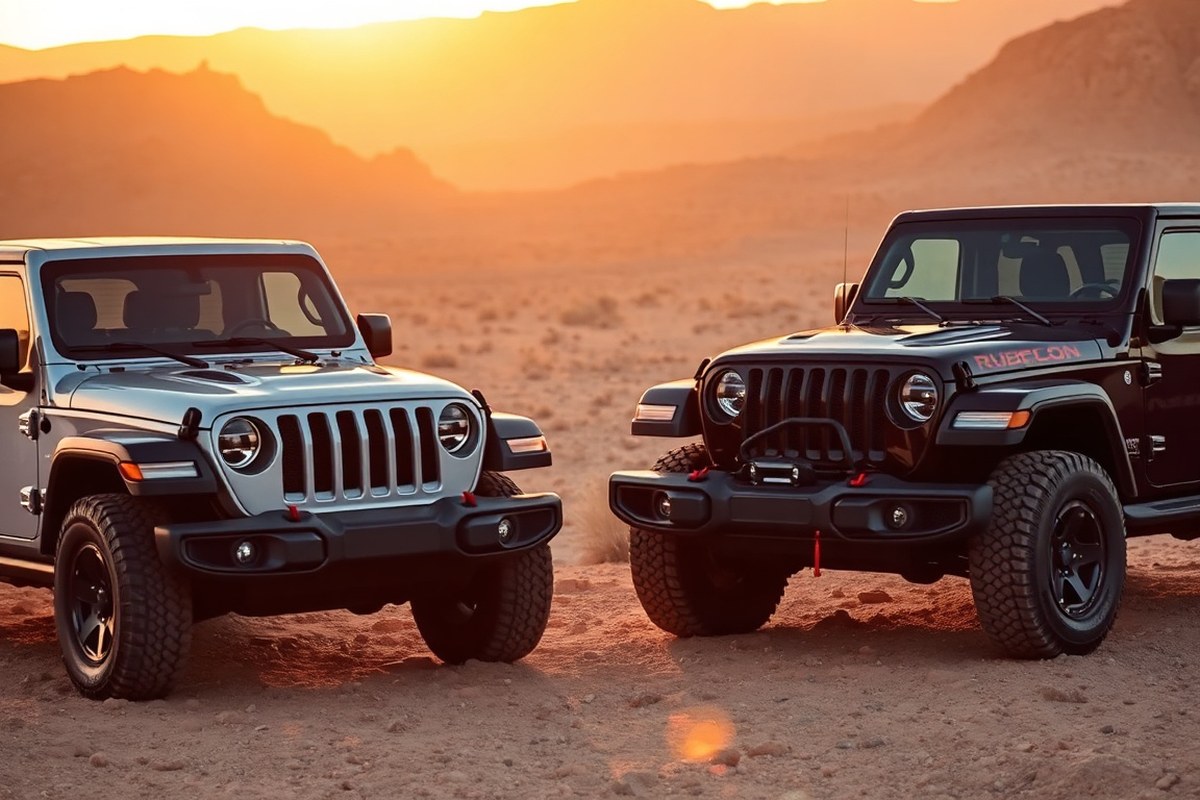
The main distinction between a Jeep Wrangler and a Rubicon lies in the improve off-road equipment found on the Rubicon. It comes equipped with Dana 44 axles, locking differentials, and a Rock-Trac transfer case, which boost its performance on challenging trails. The regular Wrangler doesn’t have these specialized parts but still performs well as an everyday vehicle. Start by assessing your off-road needs before choosing, since the Rubicon’s added equipment adds cost but boosts performance in challenging conditions.
Key Takeaways
- The Rubicon features heavy-duty Dana 44 axles that improve durability over the standard Wrangler axles.
- Front and rear locking differentials on the Rubicon improve traction on uneven or slippery surfaces.
- The Rubicon’s Rock-Trac 4:1 low-range transfer case offers superior torque for technical off-roading compared to the Wrangler’s standard transfer case.
- Jeep Wrangler Rubicon starts around $47,550, which is higher than the base Wrangler’s approximate $32,690 MSRP.
- Both the Wrangler and Rubicon tow 2,000 pounds in their base configurations, so towing capacity is similar.
- The Rubicon comes with 33-inch all-terrain tires and extra skid plates for better ground clearance and underbody protection.
What Key Differences Separate a Jeep Wrangler from a Rubicon?

The Jeep Wrangler and the Wrangler Rubicon are not separate vehicles but variations of the same base platform tailored for different uses. The Rubicon trim adds specialized mechanical hardware that sets it apart, making it distinctly more capable off-road. Understanding these differences is key for anyone choosing between a standard Wrangler and the Rubicon.
At the core, the Rubicon includes heavy-duty Dana 44 axles both front and rear, which are stronger and more durable than the axles on the base Wrangler. These axles can handle tougher terrain and higher stresses encountered during off-road driving. Along with this, the Rubicon comes fitted with Tru-Lok locking differentials. These electronically controlled lockers enable both wheels on an axle to rotate at the same speed, increasing traction on uneven or slippery surfaces where a standard differential would lose grip.
An important mechanical feature exclusive to the Rubicon is the Rock-Trac transfer case with a 4:1 low gear ratio. This gear reduction improves crawl control on steep inclines or rocky trails by providing more torque to the wheels at lower speeds, giving you finer driving control in tough conditions. The base Wrangler models use a less capable transfer case without this low-range ratio, which limits their slow-speed torque and control off-road.
Also, the Rubicon has an electronic sway bar disconnect. This system lets you remotely disconnect the front sway bar, improving wheel articulation, so the front wheels can move more independently and maintain contact with the ground on rough terrain. The standard Wrangler lacks this feature, which limits its ability to keep all wheels firmly planted during extreme articulation demands.
Tire size and suspension tuning also differ. The Rubicon rides on larger 33-inch all-terrain tires, compared to smaller tires on the base Wrangler. This increased tire size improves ground clearance and obstacle clearance. The Rubicon’s suspension is optimized for rugged trails, with improve skid plates protecting critical components like the fuel tank and transfer case. These additions help prevent damage when navigating rocky or uneven trails.
The Rubicon name originated as a nod to Jeep’s legendary off-road capabilities, named after the Rubicon Trail in California, one of the toughest and most famous rock-crawling trails. Technically, the Rubicon trim equips the Wrangler with the factory-installed hardware necessary to tackle such extreme trails confidently. This badge is a promise of improve toughness and specialized off-road engineering.
Choosing a Rubicon means paying more upfront, starting prices are generally higher due to the added components and technology, but it answers the needs of serious off-road enthusiasts looking for maximum capability straight from the factory. For those who plan to use their Jeep mostly on paved roads or light off-roading, the base Wrangler offers sufficient performance at a lower price and simpler maintenance demands.
Exploring these mechanical differences helps clarify the purpose behind each trim. The Rubicon brings a package of upgraded axles, locking differentials, a specialized transfer case, sway bar disconnect, and trail-focused hardware to the Wrangler’s foundational strengths. These upgrades matter because they enable safer, more controlled, and more capable off-road driving where ordinary vehicles would struggle or suffer damage.
How Do Wrangler and Rubicon Off-Road Capabilities Differ?

The Jeep Wrangler Rubicon delivers superior off-road capability compared to the standard Wrangler by upgrading key components like axles, differentials, transfer case, tires, and suspension features. These enhancements improve traction, durability, and control on challenging trails, setting the Rubicon apart for serious off-road use.
Stronger Axles and Lockers Explained
The Rubicon replaces the Wrangler’s Dana 30 front axle and standard-duty rear with heavy-duty Dana 44 axles at both front and rear. These stronger axles handle more torque and resist damage from rough terrain better than the standard setup. The axles pair with electronic Tru-Lok locking differentials on both ends, which lock the wheels together for maximum grip in low-traction situations. This means wheels on one side spinning in the air won’t stop forward motion, a common problem with open differentials on non-Rubicon Wranglers.
Lockers engage automatically or via a switch to improve control over rocks, mud, and steep inclines, essential for technical trails. In contrast, the standard Wrangler typically uses open or optional limited-slip differentials, which offer less traction when the ground is uneven or slippery.
Rock-Trac vs Command-Trac Transfer Cases
The Rubicon uses the Rock-Trac transfer case, which provides a lower gear ratio of 4:1 in low range. This gives it more torque multiplication at slower speeds, allowing better crawl control when navigating obstacles. The standard Wrangler comes with the Command-Trac transfer case, offering a 2.72:1 low range that is less aggressive for technical off-roading.
A lower gear ratio in the Rock-Trac transfer case means the Rubicon can maintain precise control over rough terrain without straining the engine, improving overall drivability on tough trails. The Rock-Trac system is paired exclusively with the Rubicon’s heavy-duty axles and lockers for optimized off-road performance.
- Rubicon’s Rock-Trac transfer case: 4:1 low-range ratio for more torque at low speeds
- Standard Wrangler’s Command-Trac: 2.72:1 low-range ratio, suitable for moderate off-road conditions
- Electronic Tru-Lok locking differentials standard on Rubicon front and rear axles
- Heavy-duty Dana 44 axles front and rear on Rubicon improve durability
- Standard Wrangler uses lighter Dana 30 front axle and varies rear axles
- Electronic front sway bar disconnect only on Rubicon for improved wheel articulation
- 33-inch all-terrain tires standard on Rubicon, versus 32-inch tires on basic Wrangler trims
Using the Rubicon’s electronic sway bar disconnect on rough trails improves wheel travel but avoid using it on paved roads as it can reduce stability.
Tire Sizes and Ground Clearance Benefits
The Rubicon comes standard with 33-inch off-road all-terrain tires, offering better grip and ground clearance than the ~32-inch all-season or all-terrain tires found on most standard Wranglers. Some special Rubicon models, like the Xtreme Recon, feature 35-inch tires for even more clearance and traction. This increased tire size helps the Rubicon clear obstacles more easily and adds to its aggressive stance on difficult trails.
Ground clearance and tire size directly affect a vehicle’s ability to avoid damage from rocks, roots, and uneven surfaces. The Rubicon also includes extra rock rails and skid plates to protect vulnerable components underneath. Also, its electronic front sway bar disconnect improve wheel articulation, allowing the front wheels to move more independently and maintain contact with the ground on uneven terrain. This system activates only in 4-Low gear, providing a better off-road experience with improved flexibility without sacrificing on-road handling when engaged.
Comparing Pricing, Value, and Ownership Cost Differences
The Rubicon costs more than the base Wrangler, mainly because it comes with advanced off-road hardware and features. You can build a similar off-road setup from a Sport trim, but it’ll likely cost nearly the same without factory warranty benefits. Considering resale value, the Rubicon holds appeal for serious off-road buyers willing to pay upfront for built-in capability. For daily driving or light trails, the base Wrangler offers strong value at a lower cost and better fuel economy.
Base Prices and Fees Comparison
Starting prices give a clear first look at the cost difference. The base Wrangler Sport begins around $32,690. The Rubicon trim carries roughly an $11,500 premium, reflecting more advanced suspension, tires, and drivetrain components. This premium includes features engineered specifically for rugged terrain.
Heavier curb weight on the Rubicon (about 4,439 lb for a Rubicon Unlimited) compared to lighter Sport trims impacts fuel economy and handling, usually lowering efficiency and creating a firmer ride on pavement. The base Wrangler offers a slightly smoother daily drive and better fuel economy due to its lighter weight and fewer off-road components.
| Feature | Wrangler Willys (Base) | Wrangler Rubicon |
|---|---|---|
| Off-Road Capability | Strong | Extreme |
| Price | More Affordable (~$32,690 start) | Higher (~$44,190 start) |
| Ideal For | New adventurers, light trail use | Hardcore off-roaders, rock crawlers |
| Daily Driving Comfort | Smoother ride | Slightly stiffer ride |
| Customization | Moderate | Extensive |
This table highlights the key distinctions that factor into the price gap.
Value Added by Factory Off-Road Features
Factory-installed off-road parts on the Rubicon include heavy-duty axles, locking differentials, electronic sway bar disconnects, and aggressive tires. Buying a base Wrangler and adding these components individually runs close to the $11,500 markup you pay at the factory, often without the same warranty protection or resale value.
These integrated features provide extreme off-road capability right from the dealership. When you plan to do rock crawling or tackle rugged trails often, the Rubicon’s ready-to-go tech makes the extra upfront cost worth it. For casual trails or road driving with occasional off-road use, the base Wrangler’s strong capability can suffice at a lower expense.
Long-Term Cost Considerations
The Rubicon’s specialized off-road gear adds weight and lowers fuel efficiency compared to lighter base trims. This results in more frequent fuel stops and potentially higher wear on components like brakes and tires. The base Wrangler typically offers better gas mileage, which can save money over time, especially for daily drivers.
In terms of resale, the Jeep Wrangler as a whole has a strong value retention history. According to Kelley Blue Book, the Wrangler earned the 2009 Best Resale Value Award among SUVs, and Forbes Autos ranked it fourth in highest resale value vehicles back in 2008.
Decision rule: If your priority is serious off-road performance and you plan frequent trail use, spend extra on the Rubicon for factory-ready capability and durability. Choosing a base Wrangler or Willys trim makes sense if you need a daily driver for light off-road use and want better fuel savings. Building a similarly equipped Rubicon from a Sport usually costs about the same but with more effort and fewer guarantees.
Towing Capacities and Cargo Space on Wrangler Versus Rubicon
Both the Jeep Wrangler and the Wrangler Rubicon offer towing capacities that peak at 3,500 pounds, but towing ability can depend on which model and options you select. Properly equipped, some configurations of either trim can tow up to 5,000 pounds when fitted with the Trailer Tow and Auxiliary Switch Group. The Rubicon’s heavier-duty axles and gear ratios provide an advantage when carrying heavy loads over rough or off-road terrain, making it a stronger choice for towing off the beaten path.
Payload capacity differs more noticeably, with the Rubicon supporting around 1,300 pounds compared to approximately 1,000 to 1,100 pounds for the Sport, Sahara, and Willys trims on the Wrangler. This means the Rubicon can carry more weight inside the vehicle alongside passengers and cargo. Both trims offer nearly identical cargo volume behind the rear seats and are the same size overall, so your gear capacity stays consistent between models.
| Specification (4-door) | Wrangler (Sport/Sahara/Willys) | Wrangler Rubicon |
|---|---|---|
| Max Tow Rating | Up to 3,500 lb (up to 5,000 lb with Trailer Tow package) | Up to 3,500 lb (up to 5,000 lb with Trailer Tow package) |
| Max Payload | ~1,000, 1,100 lb | ~1,300 lb |
| Ground Clearance | 9.7 in. | The vehicle offers a ground clearance of 10.8 inches, which can increase up to 12.9 inches when equipped with the 35-inch Xtreme Recon tire package. |
| Approach Angle | Not published | 43.9° standard, 47.4° with Xtreme Recon |
| Departure Angle | Not published | 37° standard, 40.4° with Xtreme Recon |
| Cargo Volume Behind Rear Seats | 31.7 cu ft | 31.7 cu ft |
Towing capacity depends on your choices like engine, axle ratio, and towing package. Both trims share engine options including V6 and turbocharged four-cylinder engines, so you can expect similar baseline towing across models when configured the same. The Rubicon trim’s improve suspension and drivetrain gearing are designed to improve performance with heavy loads off-road, but on paved roads both Wrangler and Rubicon handle towing duties comparably.
The interior cargo space is identical in volume, measured at 31.7 cubic feet behind the rear seats for both two- and four-door models, making no difference in hauling gear. Dimensions like legroom, headroom, and shoulder room match across these trims, so your passenger comfort and gear space stay the same whether you pick a Sport or Rubicon. Understanding these distinctions helps you select the right balance of towing and carrying capacity based on your off-road and daily needs.
Interior Features, Tech, and Comfort Differences Between Trims
The Jeep Wrangler Rubicon focuses on durable, adventure-ready interior features with technology tailored for off-road use. It includes advanced navigation and off-road pages showing pitch, roll, and altitude data. In contrast, trims like the Sahara prioritize interior comfort with upgrades such as leather-trimmed seats, ambient lighting, and multiple interior color options. This makes Sahara and some lower Wrangler trims more appealing for daily driving where comfort and style matter more. The Rubicon uses tougher materials to better handle dirt and wear from rugged use, which might feel less plush to those who use their Jeep mostly on city streets or highways.
Both the Wrangler and Rubicon include the Uconnect® infotainment system with touchscreen displays, Apple CarPlay, and Android Auto compatibility. However, the Rubicon tends to offer more off-road oriented tech packages, like a more detailed off-road information screen. This extra specialization helps drivers monitor vehicle angles and terrain challenges but may add complexity for typical highway or city driving. The Sahara and other trims might include features like ambient LED interior lighting that is not standard on the Rubicon, improving daily use ambiance. Both trims come with backup cameras and available automatic transmissions, supporting safe and easy maneuvering in usual driving conditions.
Regarding driver assistance and safety, the Rubicon and other Wrangler trims include features valuable for daily use and trails, such as blind spot monitoring, rear cross-path detection, and adaptive cruise control. These systems build confidence during both highway commutes and weekend off-road trips. The Rubicon’s advanced safety suite adds peace of mind when venturing off-road into unpredictable environments, while Wrangler trims balanced more for street driving focus on convenience and comfort features. Choosing the four-door Wrangler or Rubicon increases the vehicle’s practicality by providing expanded rear seating and cargo space, which substantially aids everyday usability.
Comfort differences directly impact daily driving. The Sahara’s more luxurious interior materials and added creature comforts create a more pleasant environment for road trips and city travel. Meanwhile, the Rubicon’s tougher interior excels in durability but offers fewer luxury touches, which can feel more utilitarian over long drives. Technology and seating options reflect these priorities: for example, heated front seats and dual-zone climate control tend to be more widely available or standard on trim levels focused on comfort. The Rubicon’s off-road technology suits drivers who value detailed terrain data over plush interiors. Buyers should weigh how much time they will spend both on highways and trails to select the right balance between ruggedness and daily comfort.
Consider opting for the four-door variant if you plan to use your Jeep primarily for daily driving, as it provides better interior space and comfort without sacrificing off-road capability.
What Customization and Upgrade Options Come with Wrangler and Rubicon?
Both the Jeep Wrangler and Rubicon support numerous customizations tailored to off-road use, but they differ in what each trim includes without upgrades. The Rubicon arrives packed with factory-installed off-road components, saving you the time and effort of adding costly gear later. In contrast, the base Wrangler provides a solid platform that lets you add performance parts and trail accessories gradually, making it possible to approach Rubicon-level capability on your own schedule and budget.
Common Performance Upgrades for Wrangler
Starting with a base Wrangler, popular upgrades focus on improving traction, protection, and suspension travel. Many Wrangler owners install aftermarket lockers to improve axle grip, a key feature that the Rubicon includes from the factory. Skid plates are another common add-on, protecting important underbody parts that the standard trims do not cover fully.
You can also upgrade suspension with lifts or heavy-duty shocks to increase ground clearance and wheel articulation, although this requires careful selection to avoid negatively impacting handling or drivability. Tires designed for off-roading, such as all-terrain or mud-terrain variants, are essential for real trail performance.
- Aftermarket locking differentials
- Protective skid plates for fuel tank, transfer case, and oil pan
- Lift kits (2 to 3 inches typical)
- Off-road tires (33-inch diameter common)
- Upgraded shocks and springs for improved wheel travel
- Heavy-duty bumpers and rock sliders
- Winches and recovery anchors
Each of these upgrades adds cost and time. Since a new Wrangler starts around $41,035 for the four-door, expect to spend $3,000 to $7,000 or more to outfit it with gear that closes much of the gap to a Rubicon’s factory package. Installation complexity varies: some changes like swapping bumpers and adding skid plates can be done in a weekend with basic tools, while suspension changes might require a professional install. Good results mean increased off-road capability without compromising daily drivability. Insufficiently matched upgrades, or cheap parts, can lead to poor handling, increased wear, or unexpected failures.
Rubicon’s Factory Off-Road Equipment
The Rubicon comes out of the gate with a complete set of trail-ready equipment designed for serious terrain. This includes electronic locking front and rear differentials, ultra-durable Dana 44 axles, and a disconnecting front sway bar for improved wheel articulation. The Rubicon’s suspension is factory-tuned to provide more wheel travel and ground clearance than base models, so you get improve off-road performance without further modifications.
Other standard Rubicon features include skid plates covering important components, rock rails, aggressive all-terrain tires, and heavy-duty off-road bumpers designed to handle obstacles. This hardware package justifies the roughly $11,500 price jump over a base Wrangler four-door, but it saves thousands compared to buying and installing these parts individually.
Essential Recovery and Trail Gear Checklist
Trail and recovery gear is important for off-roading with either trim, regardless of factory equipment. A basic set of recovery tools can prevent a minor mishap from turning into a costly tow. Many owners, whether on a Wrangler or a Rubicon, prioritize these items for both safety and preparedness.
- Recovery straps and kinetic ropes
- Pair of D-ring shackles for secure attachment points
- Portable air compressor for re-inflating tires after airing down
- Hi-lift jack or bottle jack with base plate
- Gloves and a basic tool kit for quick repairs
- Shovel for digging out stuck tires
- CB radio or handheld two-way radios for communication
Factory gear on the Rubicon includes a couple of trail-ready items, but most recovery tools are owner-installed or carried separately. Choosing what to bring depends on the trails you plan to tackle and how remote your trips are. Carrying the right recovery gear and knowing how to use it safely is as important as having factory upgrades for off-road reliability.
Choosing Between Wrangler Sport and Rubicon for Daily Driving
Choosing between the Jeep Wrangler Sport and the Rubicon for daily driving depends on how you plan to use the vehicle on and off-road. The Wrangler Sport serves as an excellent daily driver with a balance of street-friendly handling and light trail capability. Its lighter weight compared to the Rubicon improves fuel economy and makes highway driving more comfortable. For example, the base four-cylinder Sport trim can achieve an EPA rating around 20 mpg city and 23 mpg highway, making it more practical for commuters. On open roads, the Sport’s simpler suspension setup and fewer off-road components lead to smoother ride quality and better handling than the Rubicon.
The Rubicon, designed for tougher terrain, weighs more due to specialized parts like the Rock-Trac 4WD system, heavy-duty axles, and extra skid plates. This added weight slightly reduces fuel efficiency, with real-world highway mileage closer to 18-22 mpg depending on engine choice and driving conditions. The improve off-road hardware contributes to a stiffer ride and can feel less composed during daily highway travel. However, it excels on uneven surfaces, making it the preferred choice for experienced off-roaders who need reliable traction and durability in rugged environments.
For new Jeep buyers focused mainly on daily driving and occasional light trails, the Sport strikes the best balance between comfort, fuel economy, and cost. Its lower price point means you spend less upfront, save on fuel, and enjoy easier maneuverability around town or on highways. The decision rule here is simple: prioritize the Sport if your driving is mostly paved roads or if you want a Jeep that’s welcoming for daily commuting without sacrificing too much off-road ability.
If your daily driving includes rough roads or gravel paths, or you know you’ll do frequent off-roading, the Rubicon remains an attractive option despite its tradeoffs in comfort and economy. In those cases, expect fuel consumption to drop 3 to 5 mpg relative to the Sport due to the extra weight and aggressive hardware, but gain confidence and capability on challenging terrain.
Handling differences come down to suspension tuning and weight distribution. The Sport’s lighter build helps with sharper steering responses and less body roll on highways. The Rubicon’s heavier components and lockable differentials offer better control off-road but require more driver input on pavement, possibly making daily highway driving feel less smooth. For buyers weighing these trims, a test drive on both paved and unpaved surfaces helps clarify personal comfort levels with ride stiffness and cornering feel.
Considering your priorities, ease of driving, and typical routes will guide your choice. The Sport fits driver lifestyles valuing fuel savings, lower cost, and responsive handling under normal driving conditions. The Rubicon suits those leaning toward serious off-roading, prepared to accept reduced fuel economy and a firmer ride. Both trims can serve daily use, but your selection hinges on where and how much off-road driving you plan to do versus highway cruising.
Understanding Jeep Wrangler Rubicon Variants and Model Configurations
The Jeep Wrangler Rubicon comes in several configurations that impact both its off-road abilities and price. You can choose between 2-door and 4-door versions, each offering different dimensions and cargo capacities. The 2-door models offer a shorter wheelbase around 96 inches, making them more maneuverable on tight trails but with less passenger and cargo space. The 4-door Wrangler Unlimited models extend the wheelbase to about 118 inches, improving interior room and storage but slightly reducing agility.
Within the Rubicon trim, there are also variations like the standard Rubicon and the Rubicon 392, which is powered by a 6.4-liter V8 engine. This version produces more horsepower and torque, providing stronger performance on and off-road but at a significantly higher price point. When shopping, understanding these options matters because the engine choice affects fuel economy, towing capacity, and overall driving experience.
The Rubicon trim includes enhancements over the base Wrangler models, such as heavier-duty axles, electronic locking differentials, and a disconnecting front sway bar, which improve traction and off-road handling. The 2-door and 4-door versions come with similar off-road gear, so your choice depends on passenger needs and space preferences. Knowing the exact configuration helps you match the Jeep to your intended use.
| Model | Doors | Wheelbase (inches) | Engine Options | Key Off-Road Features | Typical Price Range |
|---|---|---|---|---|---|
| Jeep Wrangler Rubicon 2-Door | 2 | 96 | 3.6L V6 or 6.4L V8 (392 model) | Locking differentials, sway bar disconnect | $43,000 to $65,000+ |
| Jeep Wrangler Rubicon 4-Door (Unlimited) | 4 | 118 | 3.6L V6 or 6.4L V8 (392 model) | Same as 2-door, plus more interior space | $47,000 to $70,000+ |
| Jeep Wrangler Sport (Base for comparison) | 2 or 4 | 96 or 118 | 3.6L V6 | Standard off-road setup, less heavy-duty | $30,000 to $40,000 |
The model options show that Rubicon trims are designed for serious off-roading, while choices between 2-door and 4-door configurations primarily affect usability and space. The 392 model’s V8 engine offers a significant boost in power but at an improve price and potentially lower fuel economy. Deciding between these versions depends on your balance of trail performance and daily driving needs.
Be aware that the 2-door Rubicon’s shorter wheelbase can make it less comfortable for passengers on long drives despite its trail advantages.
Safety, Maintenance, and Reliability Considerations for Both Trims
Both the Jeep Wrangler and the Rubicon come equipped with a solid set of safety and driver-assist features. These include electronic stability control, hill start assist, and hill descent control, which are especially helpful in off-road situations by preventing rollbacks and controlling speed on steep declines. Both trims also typically feature rearview cameras and available blind-spot monitoring, rear cross-traffic alerts, and automatic emergency braking to improve driver awareness on and off the road.
Maintenance needs for the Wrangler and Rubicon overlap significantly, but some differences arise from the Rubicon’s more aggressive off-road components. The Rubicon’s heavy-duty Dana 44 axles, locking differentials, and improve suspension require more frequent inspection and service. For example, check the locking hubs and differential fluids every 10,000 miles, especially after mud or water exposure. Typical maintenance includes regular oil changes every 6,000 miles, tire rotations every 7,500 miles, and brake inspections every 15,000 miles. Failing to keep these components well-lubricated and clean can lead to premature wear or failure, which is costly.
Known reliability concerns generally relate to the Wrangler line’s iconic but relatively simple mechanical design, which can be prone to leaks around door seals and occasional electrical quirks. The Rubicon’s specialized off-road parts may add wear on suspension bushings and drivetrain components under extreme use. Keeping an eye out for clunking noises or unusual vibrations after off-road trips can catch issues early. Addressing them within a week prevents more expensive repairs.
Maintaining reliability on demanding trails involves a careful, proactive approach. After any off-road run, wash the undercarriage thoroughly to remove mud, sand, and salt, which can accelerate corrosion. Inspect skid plates for dents or cracks that might indicate impact damage. Check tire pressure to stay within recommended ranges for the terrain: typically 30-35 psi on-road, reducing to as low as 15 psi for sand or rocks to improve traction, then reinflate for highway use to avoid tire damage. Lubricate all greasable joints monthly during heavy use seasons.
When preparing for a long off-road trip, create a maintenance checklist that covers fluid levels, brake condition, tire tread depth above 6/32 inch, and proper function of locking differentials and sway bar disconnects on the Rubicon. Replace wiper blades and confirm the battery is secure and fully charged, as remote trail situations require full functionality. Tools should include a basic socket set, a floor jack rated for at least 2 tons, and a portable air compressor or tire deflator.
Costs for regular maintenance generally range from $200 to $500 annually, but heavy off-road use can push expenses higher if parts like shocks or axles need replacement every 30,000 to 50,000 miles. Monitoring and addressing minor issues early keeps your Wrangler or Rubicon reliable and safe, allowing you to enjoy off-road adventures without unexpected breakdowns or safety risks.
Your Quick-Start Plan for Choosing Between a Jeep Wrangler and Rubicon
Follow this plan to pinpoint which model fits your off-road and daily needs. This approach helps you make a confident choice based on your priorities.
- Day 1: List your primary Jeep uses, like daily driving, heavy off-roading, or towing. Check if challenging trails or cargo space rank highest to guide your focus.
- Week 1: Visit a dealership and test drive both trims. Pay attention to ride comfort, off-road features, and interior tech to see what feels right.
- Week 2: Compare ownership costs like insurance, maintenance, and fuel based on your driving habits. Use online calculators or dealer estimates to understand long-term expenses.
- Week 3: Explore customization options specific to the Rubicon and Wrangler trims, considering which upgrades fit your usage and budget.
- Week 4: Evaluate safety features and ratings to ensure they meet your standards for daily and off-road driving.
- Before Purchase: Narrow down to your preferred trim. Confirm towing capacity and cargo space match your requirements for equipment and gear.
- After Purchase: Schedule routine maintenance promptly, especially if you use your Jeep off-road, to maintain reliability and safety.
Frequently Asked Questions
Are Wrangler and Rubicon the Same?
No, the Rubicon is a specific Jeep Wrangler trim with added off-road hardware like Dana 44 axles and Tru-Lok lockers for superior capability. It shares the same base platform as other Wranglers but is designed for tougher trails.
Which Jeep Wrangler to Stay Away From?
Avoid older models with high mileage or lacking modern safety features, as these can lead to reliability issues. A careful inspection and checking vehicle history help avoid costly repairs.
Is a Rubicon Worth the Extra Money?
Yes, if you need advanced off-road features like electronic sway bar disconnect and locking differentials, the Rubicon provides better trail performance. Otherwise, a base Wrangler could save money for lighter use.
Which Is More Expensive, Rubicon or Wrangler?
The Rubicon is more expensive, starting around $47,550 compared to the base Wrangler Sport, reflecting its extra off-road gear and features. Higher cost also means better trail readiness.
Does the Rubicon Have Better Fuel Economy Than Other Wranglers?
No, the Rubicon’s heavier off-road equipment and larger tires usually lower its fuel efficiency compared to other Wrangler trims.
Can You Use the Wrangler Rubicon for Daily Commuting?
Yes, the Rubicon can handle daily driving but its off-road enhancements may affect ride comfort and fuel economy in regular traffic. Choose based on your driving needs and priorities.
The Bottom Line
Choosing between a Jeep Wrangler and a Rubicon hinges on how much off-road prowess you need versus daily comfort and cost. The Rubicon stands out with superior off-road gear but at a higher price and maintenance commitment. Begin by prioritizing your main uses and test driving both trims to identify which aligns with your lifestyle and budget. That first drive will clarify which Jeep suits you best.