Can I Put E85 Fuel in My Car? A Complete Guide to Compatibility and Use
Can I put E85 fuel in my car? You can only use E85 if your car is designed for it, usually labeled as flex-fuel vehicles (FFV). Putting E85 in a regular car not built for it can cause performance problems and damage. Check your owner’s manual first to see if E85 is recommended for your vehicle.
Key Takeaways
- Look for an FFV badge or E85 label on your fuel door or near the gas cap to identify compatible cars.
- Consult your owner’s manual to confirm if your vehicle supports E85 fuel before filling up.
- Flex-fuel vehicles adjust fuel delivery for E85’s higher ethanol content, requiring 30-40% more fuel than gasoline.
- Using E85 in a non-flex-fuel car can reduce fuel economy and may harm engine components.
- Mixing E85 with regular gasoline risks improper combustion but small amounts are usually diluted after a few days of normal driving.
- If you accidentally use E85 in a regular car, refuel with gasoline immediately and consult a mechanic if issues persist.
Can You Put E85 Fuel in Your Car?
You can only put E85 fuel in your car if it’s designed to handle it, meaning it must be a flex-fuel vehicle (FFV). These vehicles are built with fuel systems and engine components made to run on a mix of gasoline and ethanol up to 85 percent, which is what E85 contains. Regular cars are generally not compatible with E85 because typical gasoline usually contains about 10 percent ethanol. Using E85 in a non-FFV risks engine damage, poor performance, and costly repairs.
How to decide if your car can run on E85 starts with checking the owner’s manual. Look for explicit mentions of E85 or flex fuel compatibility. Another quick way is to inspect your car for markings like a “Flex Fuel” badge or a yellow gas cap labeled “E85.” These indicate your vehicle’s fuel system is adapted to handle higher ethanol blends safely. Without these signs or mentions in the manual, it’s safest to avoid E85.
You might consider retrofit options like specialized conversion kits if your car isn’t designed for E85 use but you want to try it. These modify your engine and fuel system to cope with ethanol’s properties. However, these conversions can cost several hundred dollars and should be done carefully by professionals to avoid engine problems. They also might affect your car’s warranty or insurance.
Putting E85 into a regular gasoline car is not recommended because ethanol absorbs more water and can corrode certain fuel system parts not made for it. Fuel pumps, fuel lines, seals, and injectors may wear out faster or clog. The engine may run poorly or stall because ethanol’s energy content per gallon is lower than gasoline’s, requiring adjustments to air-fuel mixtures that non-FFVs don’t have.
Using E85 in an FFV doesn’t usually cause engine wear if the system is designed for it. You might notice that E85 can be less energy-dense, resulting in lower miles per gallon, but it typically burns cleaner and can produce more power in engines tuned for it. The tradeoff includes considering local fuel prices: sometimes E85 at the pump costs less per gallon than regular gasoline, but you’ll use more fuel overall.
Start your checklist before using E85 by confirming your car is an FFV, either through the manual or external labels. Second, ensure your fuel system and engine are designed or converted for E85. Third, consider the cost difference of E85 versus regular fuel and how that affects your fuel economy. Avoid using E85 in any car without clear flex-fuel designation to prevent engine damage and performance problems.
How to Identify If Your Car Supports E85 Fuel
To find out if your car supports E85 fuel, start by looking for specific visual badges and labels on the vehicle. Check the color of your gas cap and any markings around the fuel filler area. The owner’s manual and online manufacturer tools provide a definitive answer. Using these methods together will tell you clearly whether your vehicle is compatible with E85.
Looking for Flex Fuel Badges
Flex fuel vehicles (FFVs) usually have a badge or label indicating they can run on E85. These badges are often located on the rear of the vehicle, near the trunk or tailgate, or on the sides by the front fenders. The label typically says “Flex Fuel” or “E85.” Spotting these badges is one of the quickest visual confirmations that your vehicle is made to handle E85 fuel.
This matters because only vehicles designed as flex fuel have the necessary hardware and engine management systems to safely burn high-ethanol blends. Without these, using E85 may cause poor engine performance or damage.
Checking the Gas Cap Color and Labeling
Another practical way to confirm E85 compatibility is by examining your gas cap and the fuel filler area. Flex fuel vehicles often have a yellow gas cap or a yellow ring around the fuel filler door. In addition, there might be a label near the gas tank opening that explicitly states E85 is acceptable. Look out for these common indicators near the fuel door:
- Yellow-colored gas cap or ring around filler
- A sticker or badge labeling “Flex Fuel” or “E85”
- Text specifying E85 compatibility on or near the fuel filler
- Instructions about fuel types acceptable for the vehicle
- In some cases, a capless filler with yellow markings
Seeing any of these markers means the vehicle can safely use E85. Missing them doesn’t prove incompatibility but suggests you should verify another way before pumping E85.
Never rely on fuel pump labels alone; always confirm your vehicle’s compatibility before filling with E85.
Consulting the Owner’s Manual and Online Resources
The owner’s manual is a trusted source for verifying if your car supports E85. Look in the fuel or specifications section, where fuel types are listed. You’ll find clear language specifying if E85, flex fuel, or ethanol blends are recommended or acceptable.
Besides the manual, car manufacturers often provide online tools where you can enter your vehicle’s make, model, and year to check flex fuel capability. These tools are free and offer instant confirmation without any guesswork. Steps to check using the owner’s manual and online resources:
- Find the fuel section in your owner’s manual (usually under “Fuel” or “Specifications”).
- Search for terms like “flex fuel,” “E85,” or “ethanol blends.”
- Visit the manufacturer’s website and access their fuel compatibility tool, if available.
- Enter your vehicle’s details to confirm E85 support.
- Double-check with your dealership if uncertain or if the manual lacks clear info.
Following these steps ensures you know definitively whether your car was built to use E85. This knowledge protects your engine and helps you avoid problems from incompatible fuel.
What Happens If You Put E85 in a Regular Car?
Putting E85 fuel in a regular car that isn’t designed for it usually causes noticeable but often temporary issues. Your car’s engine management system is calibrated for gasoline blends with much less ethanol, typically around 10-15%. When you fill your tank with E85, which contains up to 85% ethanol, the different combustion properties can lead to rough running and trigger the check engine light.
Common symptoms after misfueling include stalling, hesitation on acceleration, and reduced power. These effects usually show up within the first few miles of driving and can worsen as the ethanol concentration affects sensor readings and fuel delivery. Despite this, immediate permanent engine damage is uncommon because modern cars have safety features that limit harm and shut down if conditions become unsafe. Over a short timeline, here’s what you can expect:
- Within the first few miles: rough idle, stalling, or hesitation
- Check engine light likely to come on during the drive
- Fuel economy and power noticeably drop due to ethanol’s lower energy density
- After a tank or less, symptoms usually lessen as the fuel system clears ethanol
- Leaving E85 in the tank for a long time may harm fuel pumps and seals that aren’t designed for high ethanol blends.
Because ethanol absorbs more water and has different chemical properties, it can harm rubber or plastic components in fuel systems not designed for it. This gradual wear can lead to costly repairs if misfueling happens repeatedly. Also, fuel mileage decreases since ethanol contains about 33% less energy per gallon than pure gasoline, so you will notice more frequent fill-ups while running on E85 in a non-flex-fuel vehicle.
Immediate performance degradation is typical, but long-term engine harm typically requires extended use of E85 that’s not compatible. Adding E85 by mistake just once calls for switching back to regular gasoline as soon as possible to avoid more problems. Avoid driving long distances on E85 to reduce risk. In cases where you notice persistent poor performance or multiple warning lights after misfueling, having a licensed mechanic inspect the fuel system is recommended to check for damage or sensor errors.
Mixing E85 with Regular Gasoline: Safe or Risky?
Mixing E85 with regular gasoline is possible but requires caution to avoid problems with your engine. E85 contains about 51% to 83% ethanol depending on the season and region, while regular gasoline usually has up to 10% ethanol. When you blend E85 with regular gasoline, you lower the ethanol concentration, effectively creating a fuel mixture somewhere between the two. This can be safe for some vehicles but risky for others, depending on their fuel system design and manufacturer recommendations.
The main advantage of mixing E85 with regular gasoline is that it increases the overall octane rating of the fuel. Ethanol has a higher octane rating than regular gasoline, so adding E85 can reduce engine knock, the premature combustion that damages the engine. This higher octane blend is beneficial if your engine is designed to handle ethanol, especially in flex-fuel vehicles (FFVs). These vehicles have sensors and engine controls that adjust to ethanol’s different combustion properties.
However, mixing fuels can affect your car’s fuel economy. E85 generally delivers fewer miles per gallon compared to gasoline because ethanol contains less energy per volume. Diluting E85 with gasoline increases the energy content slightly, improving fuel economy compared to pure E85. Still, the result is a tradeoff: more ethanol means cleaner combustion and knock resistance but lower mileage, while less ethanol improves range but reduces the environmental and performance benefits.
For those without FFVs, mixing E85 with regular gasoline is less advisable. Fuel delivery systems and engine components in conventional cars might not be compatible with high ethanol content, potentially causing corrosion or poor engine performance. The AAA recommends sticking to the manufacturer-recommended fuel for your vehicle. Using a mix might temporarily help if you accidentally add E85 to a non-compatible car’s tank, but you should dilute it quickly with regular gasoline and drive gently until the ethanol blend is flushed.
The exact mix ratio matters. If you want to create a blend yourself for a compatible vehicle, starting with a fuel mixture containing 20% to 30% ethanol is common, known as E20 or E30. These blends offer moderate octane improvements without major fuel system changes. For example, mixing one part E85 with two to three parts regular gasoline roughly creates E30-E35. Ensure both fuels are fresh and use a reliable measuring method to avoid damaging your engine.
Mixing E85 with gasoline can save costs if E85 is cheaper in your area, but consider the reduced fuel economy and possible engine wear in non-FFVs. In FFVs, this blending extends flexibility, allowing you to balance cost, performance, and emissions. Avoid mixing fuels in older vehicles with carbureted engines, which are not designed for ethanol’s corrosive effects. Keep in mind that consistent use of the appropriate fuel blend tailored to your car’s requirements offers the best results for performance and longevity.
Steps to Take After Accidentally Filling Your Tank with E85
Accidentally filling your non-flex-fuel vehicle’s tank with E85 requires quick action to minimize engine damage. Stop filling immediately and avoid running the engine until you dilute the fuel with regular gasoline. Then monitor your car’s performance and check for engine codes before seeking professional help if problems continue.
Stop Filling and Avoid Starting the Engine
Once you realize you’ve put E85 in a car not designed for it, don’t start the engine. Starting or running the engine can circulate the ethanol-rich fuel through fuel lines and components, increasing the risk of damage or corrosion. Even a small amount of E85 in a regular fuel system can cause rough idling, misfires, or longer-term fuel system damage.
Stop adding E85 immediately, and leave the car off to limit exposure. This pause gives you a chance to address the problem without worsening it.
Starting the engine may spread ethanol to sensitive parts, so avoid trying to move the vehicle until the fuel is diluted.
Dilute with Regular Gasoline Quickly
Adding regular gasoline as soon as possible dilutes the high ethanol content in the tank. Fill up with standard unleaded gas right after stopping with E85. This step reduces the ethanol concentration, helping the fuel system handle the blend without as much trouble.
Letting the tank fill mostly with regular gas usually lowers ethanol to safe levels, often below 10%, which the engine can tolerate temporarily. Avoid topping off the tank with more E85, as this worsens the issue.
- Stop filling the tank once you notice the mistake.
- Do not start or run the engine.
- Drive to a fueling station if needed, using extreme caution or arrange a tow.
- Fill the rest of the tank with regular unleaded gasoline immediately.
- Start the engine and drive gently for a few miles to consume the diluted fuel mixture.
- Clear any check engine codes with an OBD-II scanner after driving.
- Check for unusual noises, rough running, or engine warning lights during and after this process.
Adding regular gasoline right away can prevent costly damage by lowering ethanol content below what the engine can tolerate.
Monitor Vehicle Performance and Codes
After diluting the fuel, pay attention to how your vehicle runs. Symptoms such as rough idle, hesitation, or engine warning lights indicate residual ethanol-related issues. Use an OBD-II scanner to check and clear error codes once you have driven on the diluted fuel for several miles.
Error codes may remain after the initial incident but often clear once the engine has burnt enough regular gasoline. Pay close attention if engine problems persist beyond a short test drive or if performance declines significantly, as this signals a need for further intervention.
Wait at least a few miles on regular petrol before clearing engine codes to ensure accurate resets.
Seek Professional Inspection If Symptoms Persist
Persistent issues after dilution and driving indicate the ethanol caused damage or contamination. A mechanic can inspect fuel lines, injectors, and sensors for problems caused by ethanol’s corrosive effects on parts not designed for E85.
Professional fuel system flushing or part replacement might be necessary if your car’s engine struggles to run normally or if warning lights don’t clear. Costs vary widely but expect several hundred dollars for extensive cleaning or repairs.
Do not delay professional inspection if your vehicle continues to run poorly or shows signs of fuel system damage after accidentally using E85.
Impact of E85 on Fuel Economy and Engine Performance
E85 fuel has a higher ethanol content than regular gasoline, typically up to 85 percent ethanol mixed with 15 percent gasoline. This high ethanol blend impacts fuel economy, engine power, and long-term engine health in specific ways. Flex-fuel vehicles (FFVs) equipped with sensors and fuel systems designed to detect ethanol levels can adjust engine operation to run efficiently on E85. For those cars, performance changes are noticeable but come with tradeoffs.
When you use E85, miles per gallon (MPG) usually drops compared to regular gasoline. Ethanol contains about 33 percent less energy per gallon than pure gasoline, meaning you need to burn more fuel to travel the same distance. Typical fuel economy loss ranges from 15 to 30 percent. For example, if your car normally gets 30 MPG on regular gasoline, it might drop to around 21 to 25 MPG on E85.
Despite the reduction in MPG, E85 offers a higher octane rating, usually around 100 to 105 octane, compared to 87 to 93 for regular gas. Higher octane improves the fuel’s resistance to knocking and can allow engines to achieve better power output when tuned for E85. In flex-fuel vehicles, the engine control unit adjusts the ignition timing and air-fuel mixture to take advantage of the fuel’s properties. This can lead to a small increase in horsepower and smoother engine operation, especially under heavy acceleration.
Mechanical adjustments for running E85 effectively include having flexible fuel sensors that detect ethanol content and fuel system components resistant to ethanol’s corrosive effects. Ethanol can degrade rubber seals, plastic parts, and metal components not designed for it. Factory flex-fuel vehicles use ethanol-resistant fuel pumps, fuel lines, and injectors. If your car isn’t built or modified for E85 compatibility, using this fuel can cause damage over time and void warranties.
Switching to E85 in an FFV doesn’t require manual changes; the onboard system manages injection and timing automatically. However, if you want to optimize performance further, aftermarket engine tuning can improve power gains by adjusting fuel maps and ignition curves tailored for E85’s high octane. These modifications can increase horsepower by up to 10 percent, but they add cost and complexity. Here’s a simple comparison:
| Aspect | Regular Gasoline | E85 Fuel (Flex-Fuel Vehicle) |
|---|---|---|
| Energy Content per Gallon | ~114,000 BTU | ~76,000 BTU (about 67% of gasoline) |
| Typical Fuel Economy | 30 MPG (varies) | 21, 25 MPG |
| Octane Rating | 87, 93 | 100, 105 |
| Power Output | Standard for vehicle | Up to 10% increase with tuning |
Using E85 requires paying attention to fuel availability and cost since ethanol fuel prices fluctuate by region and season. Typically, E85 is priced lower per gallon than premium gasoline but given the lower MPG, the overall cost per mile may be comparable or higher. For urban drivers with FFVs, E85 may make sense environmentally and performance-wise, especially if local fuel prices are favorable.
Long-term engine health in flex-fuel vehicles isn’t negatively affected by E85 because these vehicles use ethanol-compatible materials and sensors. For non-flex-fuel vehicles, however, high ethanol content increases risks of corrosion and fuel system damage. Always consult your owner’s manual or a licensed mechanic before using E85 to avoid mechanical problems and maintain your warranty coverage.
Which Vehicles Are Designed to Use E85 Fuel?
Flex fuel vehicles (FFVs) are specifically designed to run on gasoline blended with ethanol up to 85%, commonly called E85. Major automakers have developed flex fuel systems that adjust to the different chemical and combustion properties of ethanol-blended fuels. These systems include modified fuel injectors, sensors, and engine control units that detect the ethanol content and adjust fuel delivery and ignition timing automatically.
Common flex fuel models available in the US from 2018 through 2025 include various offerings from Ford, General Motors, and Chrysler. These models are engineered with corrosion-resistant fuel system components to handle ethanol’s solvent properties and its tendency to absorb moisture, which can damage standard fuel systems.
- Ford F-150 and Ford Explorer
- Chevrolet Silverado and Chevrolet Equinox
- Dodge Grand Caravan and Jeep Grand Cherokee
- Ford Mustang and Ford Fusion
- Chevrolet Impala and Chevrolet Traverse
The flex fuel system’s key technology involves sensors like the ethanol content sensor or fuel composition sensor, which continuously monitor the fuel mixture’s alcohol percentage. The engine control module processes this data and adjusts fuel injection duty cycle and ignition timing to optimize combustion and emissions. This dynamic adjustment lets the vehicle run efficiently on pure gasoline, E85, or any blend in between without driver intervention.
Converting an older, non-flex fuel car to use E85 is possible but requires significant modifications. You’d need to replace fuel lines, fuel pumps, injectors, and potentially the engine control unit to cope with ethanol’s corrosive nature and different combustion profile. Also, recalibration or replacement of sensors is necessary for proper fuel mixture detection. Conversion costs can range from $1,000 to $3,000 or more, depending on the vehicle and parts used. Without these changes, E85 fuel can cause engine performance issues and damage.
| Step | Action | Estimated Cost |
|---|---|---|
| 1 | Replace fuel lines and pump with ethanol-compatible parts | $300 – $700 |
| 2 | Install ethanol-capable fuel injectors | $200 – $600 |
| 3 | Update or replace ECU for flex fuel programming | $400 – $1,500 |
| 4 | Calibrate ethanol content sensor or install one if absent | $100 – $400 |
How to Safely Use E85 Fuel and Avoid Common Mistakes
Using E85 fuel safely involves clear attention at the pump, ongoing vehicle checks, and maintenance tailored to the blend’s properties. Taking these steps helps you avoid misfueling and ensure your engine runs smoothly on E85.
Confirm the Fuel Pump Label and Handle Color
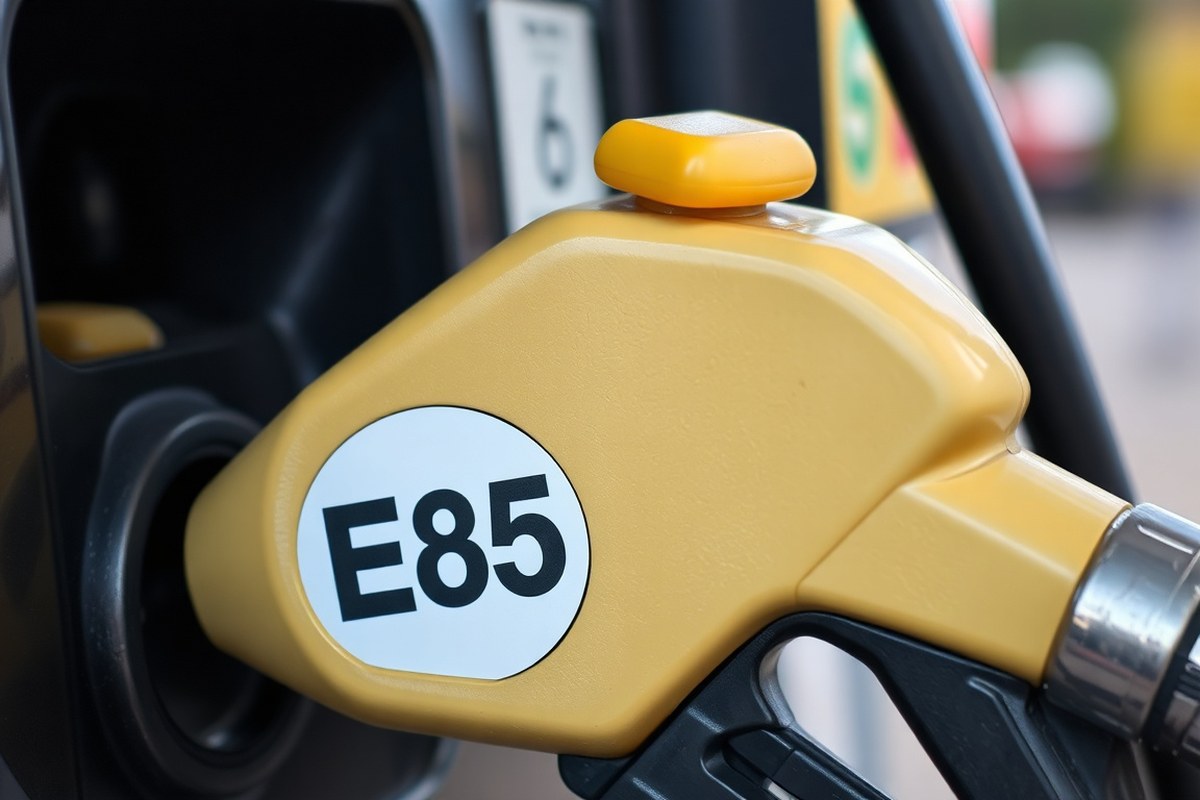
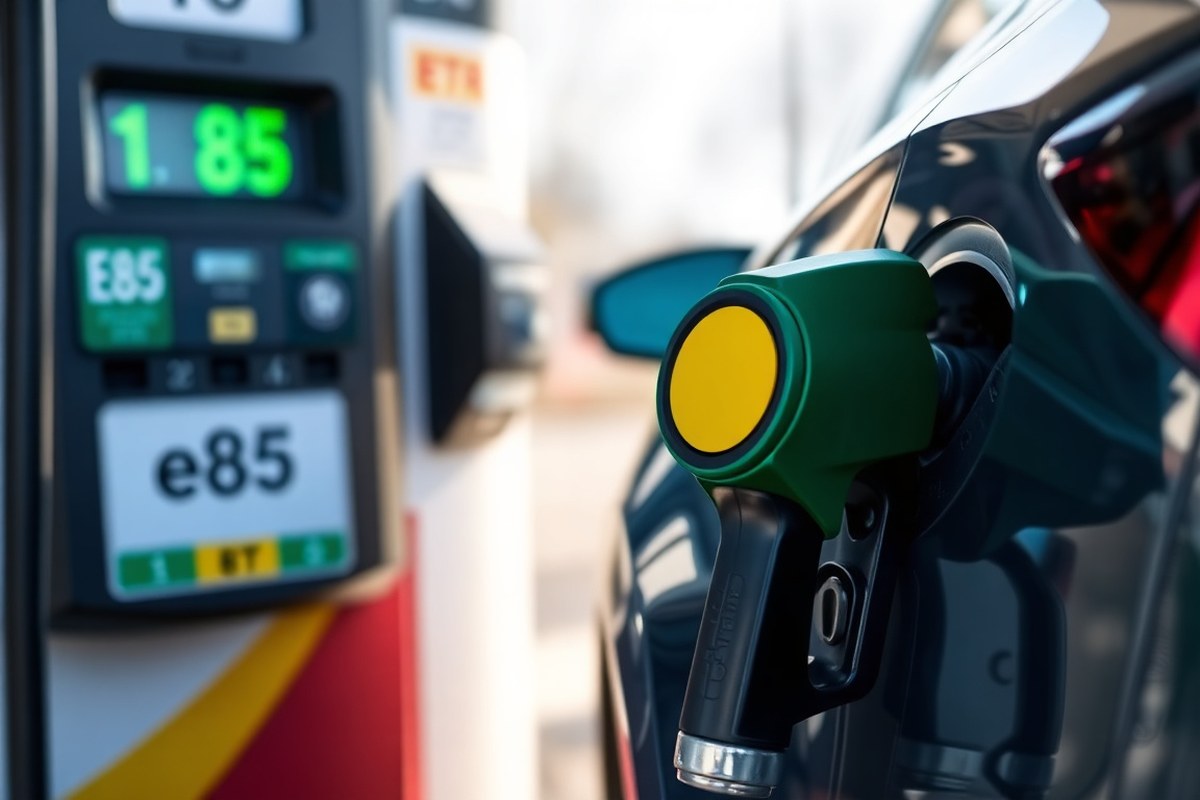
Always verify the fuel pump’s label before filling your tank. E85 pumps typically feature a yellow label and handle to distinguish them from regular gasoline pumps. Looking for these visual cues can prevent costly mistakes like using E85 in a non-compatible vehicle.
At many stations, the E85 nozzle is intentionally designed to stand out. Comparing the yellow handle to the usual black or green on gasoline nozzles helps you avoid grabbing the wrong fuel.
Check Your Vehicle’s Fuel Compatibility Regularly
Even if your car was built to handle E85, double-check your owner’s manual or manufacturer’s website to confirm ongoing compatibility. Some older flex-fuel vehicles might need software updates or other adjustments over time to optimize E85 use.
Keep an eye on fuel system components like seals and hoses. Fuel blends with up to 85% ethanol can be more corrosive than gasoline, so parts certified for E85 use stay reliable longer.
Drive Conservatively When Switching Fuel Types
Switching from regular gasoline to E85 requires a short adjustment period for your engine. Drive gently for the first few miles after refuelling to let your car’s fuel system adapt to the different combustion characteristics of E85.
Rapid acceleration or heavy loads immediately after filling with E85 may cause rough idling or decreased performance. Moderation in power demand allows sensors and engine controls to calibrate properly.
Routine Engine and Fuel System Maintenance
Maintaining your vehicle on E85 means paying attention to a few key areas that can be affected by ethanol blends:
- Regularly replace fuel filters (every 15,000 to 30,000 miles) to avoid clogging from ethanol-related residues
- Use fuel injector cleaners compatible with ethanol fuels at recommended intervals
- Inspect fuel lines and seals annually for signs of wear or cracking
- Check engine oil more frequently, as E85 combustion can increase oil dilution
- Monitor spark plugs and replace as needed due to different combustion properties
Following these maintenance tips helps your engine run clean and efficiently on E85 fuel. Proper upkeep can prevent performance issues and costly repairs.
Always double-check the pump label before you fill up to avoid accidental misfueling and engine problems.
Step-by-Step Action Plan for Using E85 Fuel Safely
Follow these steps to determine if E85 is right for your car and how to use it without issues.
- Before You Buy: Check your owner’s manual or look for an “E85 compatible” badge on your fuel door. If you don’t see any indication, avoid using E85 to prevent engine problems.
- Before Filling Up: Locate a reliable station selling E85. Confirm the pump is clearly labeled E85 to avoid accidental misfueling.
- First Fill: Use E85 for the first time when your tank is nearly empty. Monitor your car’s performance and fuel economy closely to detect any unusual sounds, rough idling, or loss of power.
- After First Fill: If your car runs smoothly and shows no warning lights, continue using E85 but track your miles per gallon to compare fuel economy against regular gasoline.
- After 1 Month: If you notice reduced fuel efficiency beyond typical variation, try blending some regular gasoline with your next fill-up or consult a mechanic experienced in flex-fuel vehicles.
- Routine Maintenance: During oil changes or service visits, mention your use of E85 so your technician can check fuel system components more prone to ethanol corrosion or wear.
Frequently Asked Questions
What Are the Signs My Car Might Be a Flex-Fuel Vehicle (FFV)?
Look for a Flex Fuel badge on the back of your car or a yellow gas cap labeled “E85”. Checking your owner’s manual also confirms if your vehicle is designed to run on E85 fuel safely.
Can E85 Use Cause Engine Damage in Non-Flex-Fuel Cars?
Yes, putting E85 in a regular car can damage the engine because it’s not designed to handle high ethanol levels. Ethanol can corrode engine parts and affect fuel system components in non-FFVs.
How Does E85 Impact My Car’s Fuel Economy Compared to Regular Gasoline?
E85 usually lowers fuel economy because ethanol contains less energy per gallon than gasoline. You’ll likely need to fill up more often, even if your car runs well on E85.
Can Adding Small Amounts of E85 to Regular Gasoline Improve Performance?
Mixing small amounts of E85 with regular gas can slightly raise octane, but it won’t boost performance unless your car is built or tuned for E85. Otherwise, benefits are minimal.
What Steps Should I Take If I Accidentally Put E85 in My Regular Gas Car?
Avoid driving the car and have the fuel system drained by a professional to prevent damage. Start using the correct fuel once the system is cleaned to avoid costly repairs.
Is Converting a Non-Flex Fuel Car to Run on E85 Worth It?
Retrofitting to run E85 can be done with systems like eFlexFuel, but it’s costly and requires careful tuning. It’s best only if you want E85 benefits and are prepared for maintenance changes.
Wrapping Up
You can use E85 fuel safely only if your vehicle is designed or approved for it. Putting E85 in a non-compatible car risks engine damage and decreased performance. Take the time to verify your car’s flex-fuel capability before trying E85, and closely watch how your vehicle responds after switching fuels. Your next step is to consult your owner’s manual or contact your dealer to find out if your car can handle E85 without problems.