

Are Jeep Wranglers Safe? A Complete Guide to Its Crash Tests and Risks
Are Jeep Wranglers safe? Recent crash test results show notable improvements, especially in newer models like the 2026 Jeep Wrangler, which performed well in important driver-side overlap tests. Still, these vehicles carry a higher rollover risk due to their design, requiring careful consideration of safety features and driving habits. Start by prioritizing models with updated safety technology and understanding how the Wrangler’s off-road build affects its on-road stability.
Key Takeaways
- The 2026 Jeep Wrangler passed the driver-side small overlap crash test, marking a major safety milestone.
- Jeep Gladiator shares similar safety ratings with the Wrangler for the 2026 model year.
- Wranglers have a 26.7% rollover risk, higher than many SUVs due to their tall, narrow design.
- Euro NCAP rated the Wrangler 50% overall, reflecting average protection in European crash tests.
- Older models scored low on safety aids like automatic emergency braking, impacting ratings significantly.
- Jeep 4×4 models are rigorously tested for off-road capabilities, influencing on-road safety dynamics.
Are Jeep Wranglers Safe According to Crash Test Results?
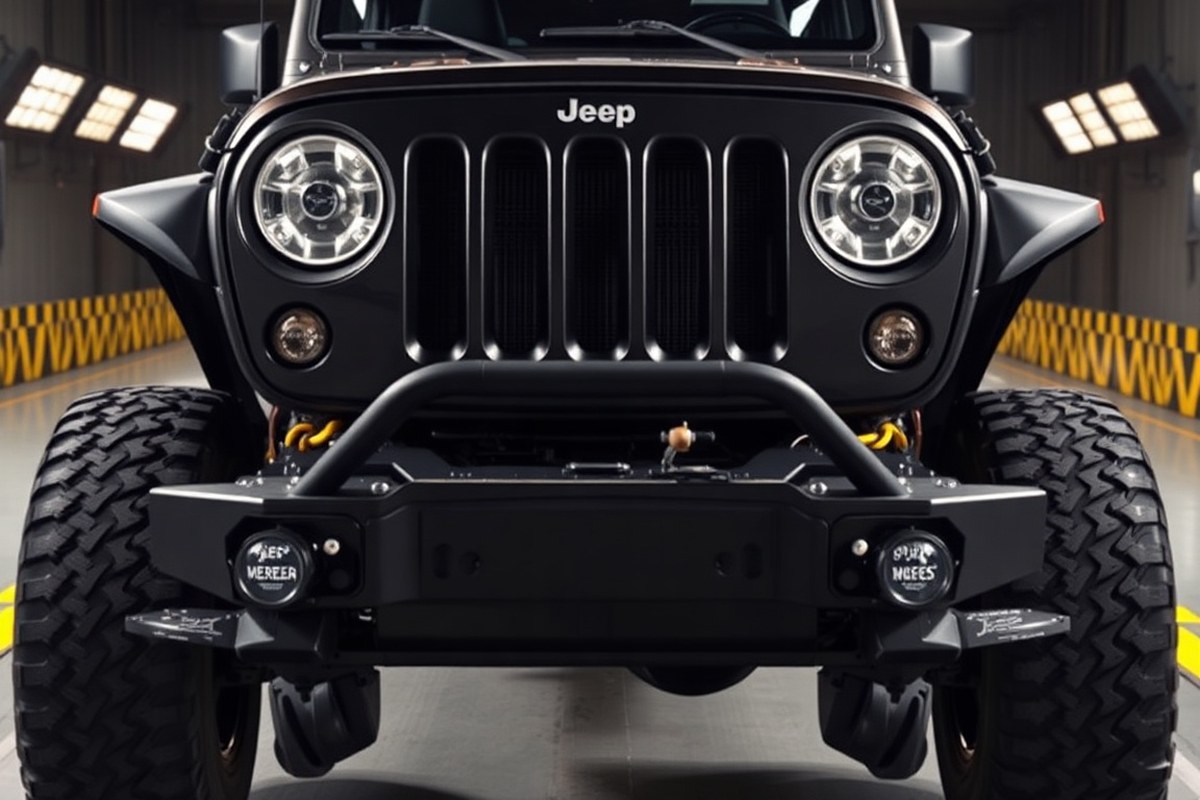
The Jeep Wrangler’s safety ratings have improved over recent years, but the vehicle still faces unique challenges in crash testing due to its design and off-road focus. The National Highway Traffic Safety Administration (NHTSA) does not provide an overall safety rating for the Wrangler, instead reporting individual test results. For example, the 2020 Wrangler scored 4 out of 5 stars in the frontal crash test. The NHTSA’s decision not to assign an overall safety rating underscores some limitations in the Wrangler’s performance in certain crash scenarios.
The Insurance Institute for Highway Safety (IIHS) reported significant findings, especially in their small overlap crash tests. In early 2022, tests revealed the Wrangler tended to roll over during a driver-side small overlap collision, pointing to a high risk of rollover in those scenarios. The passenger side also showed potential injury hazards, especially for the right foot and leg. Models built after October 2025 saw major safety enhancements, earning an “acceptable” rating in those same crash tests. This progress came from upgraded frame structures and new safety features. The 2026 Wrangler 4-door, for instance, stayed upright in the driver-side small overlap test, greatly reducing previous rollover and injury concerns. Safety also improved with rear seatbelt load limiters and pre-tensioners added in 2024 plus rear side curtain airbags to provide better protection in moderate frontal and side crashes.
Euro NCAP assessed the Jeep Wrangler in Europe and gave it a low rating of just one star in 2018 and 2019. The low score reflected the absence of key standard safety features like automatic emergency braking and lane keeping assist, which help prevent or lessen crashes. Tests included full-frontal and partial-offset front impacts, resulting in an overall score around 50 percent for older Wrangler models. Since these vehicles are sold in Europe under comparable regulations, these test results highlighted a need for Jeep to upgrade Wrangler safety to meet tougher European standards.
The timeline of safety evolution for the Wrangler reveals gradual but important upgrades. In 2018, the Wrangler was redesigned, but early models struggled with rollover and small overlap impacts. By 2022, small overlap crashes still demonstrated tipping and high injury risks. Starting in 2024, Jeep added critical safety features like load limiters and rear curtain airbags, mitigating injury during side and moderate front impacts. The 2026 model year marks a significant turning point with structural enhancements allowing the Wrangler to maintain stability during previously troublesome crash tests. Such upgrades not only improve driver safety but also help earn acceptable ratings in both driver- and passenger-side small overlap crash tests, which test a vehicle’s ability to protect occupants during severe, offset frontal crashes that are common in traffic accidents.
Tracking these developments is essential for prospective Wrangler buyers concerned about crashworthiness. The ongoing improvements suggest that while older models had significant shortcomings in crash safety, newer Wranglers, particularly from 2024 onward, offer better protection. The latest framing changes, advanced restraint systems, and airbag coverage show tangible progress in addressing crash test weaknesses related to rollover and small overlap impacts.
Why Do Jeep Wranglers Have a Higher Rollover Risk?
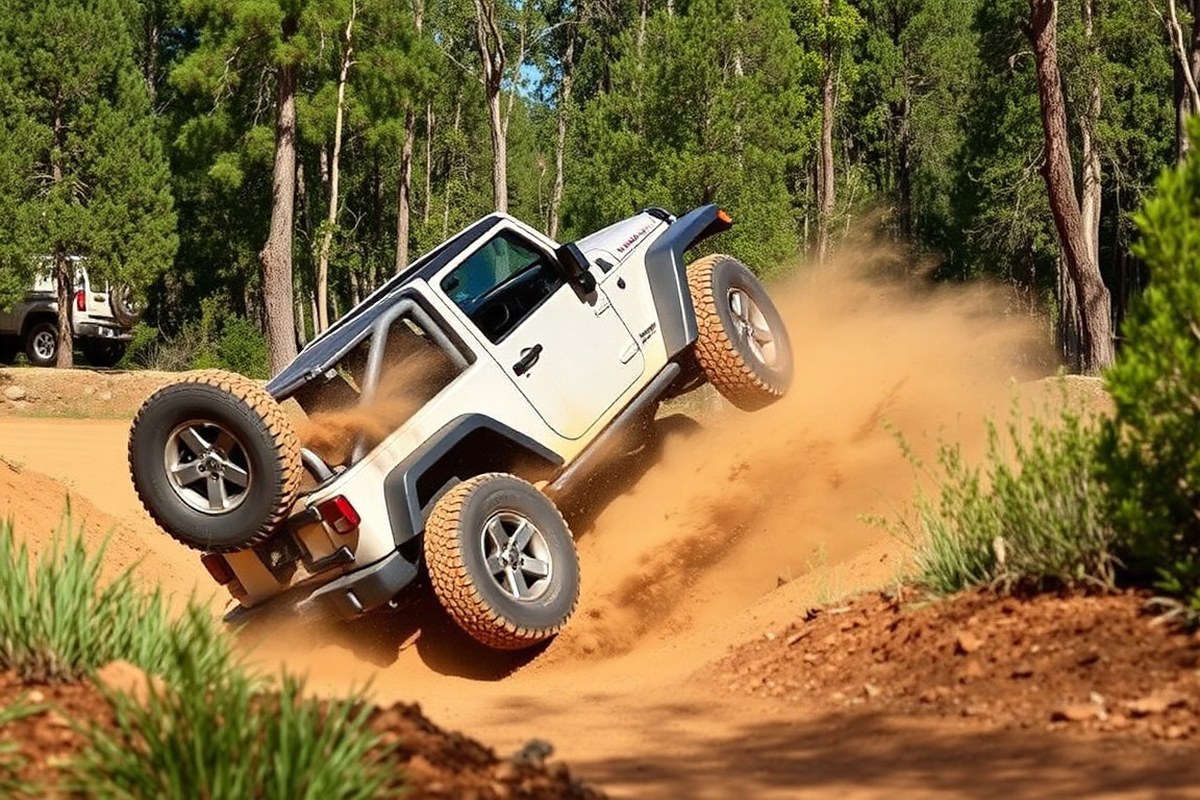
The Jeep Wrangler’s higher rollover risk comes mainly from its tall height, narrow track, and off-road design features. These factors combine to increase the chance the SUV tips during sudden maneuvers. According to the National Highway Traffic Safety Administration (NHTSA), the Wrangler’s rollover risk stands at 26.7 percent, which is above most other SUVs in its class. Newer models have made some progress in reducing this risk through stability control and chassis improvements, but the Wrangler’s design still makes rollovers more likely than in typical on-road SUVs.
Impact of Vehicle Height and Center of Gravity
The Wrangler sits higher off the ground than many SUVs, with ground clearance often over 10 inches. This high ride height raises the center of gravity, making the vehicle more prone to tipping during sharp turns or sudden swerves. The combination of a tall suspension and large tires helps off-road performance but comes at the cost of lateral stability on paved roads. Compared to lower-riding SUVs like the Toyota RAV4 or Honda CR-V, the Wrangler’s center of gravity position significantly increases rollover potential during aggressive driving or emergency maneuvers.
The Wrangler’s narrow track width further adds to this effect, concentrating the vehicle’s mass in a smaller footprint. This tight stance limits resistance to side rolling forces and requires slower turning speeds to maintain stability.
NHTSA Rollover Statistics and Safety Ratings
The NHTSA has been tracking rollover risk for SUVs, including the Jeep Wrangler. Their 2020 data shows the Wrangler with a 26.7 percent rollover risk in single-vehicle crashes, the percentage of serious accidents resulting in a rollover. This figure is notably higher than many popular SUVs, which tend to have rollover risks between 10 and 20 percent. The Wrangler’s 3-star rating out of 5 in the NHTSA’s rollover test confirms this improve risk relative to competitors.
Despite this, its crashworthiness in frontal impact testing remains solid, indicating the vehicle provides reasonable occupant protection once a rollover or collision occurs. The persistent rollover concern mainly relates to vehicle stability rather than crash severity.
Design Elements That Increase Rollover Risk
The Wrangler’s traditional body-on-frame design and solid axles support robustness for off-road use but compromise road handling. The rigid suspension setup and high articulation angles necessary for trail performance produce more body roll on pavement. Also, the short wheelbase and narrow track, common among off-road vehicles, intensify the chance of the vehicle tipping in sudden turns.
Open-air configurations and removable doors may also affect the vehicle’s overall stiffness and how occupants are contained during a rollover. These features appeal to adventure seekers but contribute to the Wrangler’s unique rollover safety profile.
Safety Technology and Improvements to Reduce Rollover Risk
Modern Wranglers include Electronic Stability Control (ESC) systems designed to detect loss of traction and help prevent rollovers. This technology applies selective braking and throttle control to keep the vehicle stable during evasive maneuvers. Starting with the JL generation introduced in 2018, Jeep improve the chassis and suspension geometry to improve road handling without sacrificing off-road capability.
LaneSense® Lane Departure warnings and other driver-assist features also contribute to accident avoidance, which can indirectly reduce rollover incidents by alerting drivers before critical situations escalate. Despite improvements, drivers should remain cautious of the Wrangler’s inherent rollover risk, especially when driving at higher speeds or taking tight turns.
Always maintain moderate speeds during sharp turns and avoid sudden steering inputs to reduce the chance of a rollover when driving a Jeep Wrangler.
Key Safety Features in Jeep Wranglers That Protect Occupants
Jeep Wranglers come equipped with a range of standard and available safety features designed to protect drivers and passengers. All Wranglers include multiple airbags, such as front driver and passenger airbags, side airbags, and side-curtain airbags for improve occupant protection in collisions. These airbags work together with three-point seat belts that feature pretensioners, which tighten the belt immediately upon impact to reduce forward movement, and load limiters, which help moderate the force on occupants during a crash.
Electronic Stability Control (ESC) is standard across Wrangler models. ESC is a important safety technology that helps prevent accidents by detecting and reducing loss of traction. It automatically applies brakes to individual wheels when it senses the vehicle is losing control, such as during skids or sudden swerves on wet or uneven surfaces. This system is especially important for Wranglers because their higher center of gravity can increase rollover risk. Using ESC properly means keeping the system turned on at all times and driving carefully on slippery or off-road terrain where stability can be compromised.
Several driver assistance features are available depending on the trim and optional safety packages. Lane-keep assist helps prevent unintended drifting by gently steering the Wrangler back into its lane if the system detects the vehicle veering without turn signal use. This feature is most helpful during highway driving or long trips where driver fatigue can affect attention. Drivers should activate lane-keep assist in these situations to reduce the chance of side collisions or run-off-road events.
Parking sensors are another available safety technology on Wranglers, known as ParkSense® Front & Rear Park Assist. These sensors alert you with audible warnings and visual indicators if objects, pedestrians, or other vehicles are detected near the front or rear while maneuvering in tight parking spaces. This system can prevent minor collisions and body damage, which often happen during parallel parking or backing out. To use ParkSense effectively, engage it when parking at low speeds, especially in crowded lots or narrow streets common in urban Jeep ownership.
Wranglers do not typically come with advanced crash avoidance systems like automatic emergency braking as standard, though some newer models and trims may offer such features with optional packages. Proper use of the available safety systems involves regular maintenance checks, such as confirming that sensors and cameras are clean and functioning, and familiarizing yourself with alerts or warnings from the vehicle’s systems. Investing around $500 to $1,000 in a safety package can add these conveniences and improve overall safety, particularly if you drive daily in heavy traffic or tight conditions.
How Safe Are Jeep Wranglers for New and Family Drivers?
Jeep Wranglers can be safe for families and new drivers if you take specific precautions. They have support for child safety seats and essential safety features, but their higher rollover risk and limited rear seating mean you’ll need to think carefully about who should drive and how the vehicle gets used. Matching the Wrangler’s characteristics to your family’s needs and driving experience is key.
Safety for Teen Drivers
Wranglers are not the easiest vehicles for inexperienced drivers, especially teens. Their higher center of gravity increases rollover risk, and handling differs from typical sedans or crossovers that new drivers are more familiar with. Teen drivers need strong supervision and training before taking a Wrangler out alone.
Begin with short practice sessions in low-traffic areas to help new drivers adjust to the Wrangler’s steering feel and braking. Emphasize careful speed control and the unique roll risk. Consider delaying Wrangler access until your teen demonstrates consistent safe driving habits in easier vehicles. This approach can reduce accidents and build confidence.
Family and Child Seat Compatibility
The Wrangler offers two rear seating positions equipped with the complete LATCH system for properly securing child safety seats. This allows for safe, straightforward installation in the back seats. Make sure to test your child seat in the Wrangler before purchase to confirm fit and ease of attachment, as space can vary with seat style.
For families, rear passenger space can feel tight during longer trips or when carrying multiple occupants. Booster seats and bulky child seats might make rear seating cramped. It’s important to factor this into your decision if your family regularly travels with more than two children or needs extra cargo plus seating space. Planning your routes and frequent stops might improve comfort on longer drives.
Recommendations for First-Time Wrangler Owners
Start by evaluating your typical driving conditions and passenger needs. When your drives mostly cover city streets or highways without rough terrain, consider whether a Wrangler uniquely suits your needs or if another SUV could offer smoother handling and extra space. Choosing a Wrangler means you should spend time getting familiar with its features by practicing slow-speed manoeuvres, parking, and handling curves.
Check that everyone who regularly rides or drives the Wrangler knows how to properly use seat belts and child restraints. Keep the Wrangler’s safety checklist handy: always use LATCH for young children, ensure all passengers wear seat belts, keep the vehicle loaded evenly, and drive cautiously to reduce rollover risk. These steps help you maximize safety and comfort while embracing the Jeep lifestyle.
What Are the Main Safety Differences Between US and European Tests?
Jeep Wranglers face different safety evaluations in the US and Europe because each region uses distinct crash testing standards. The US focuses on occupant protection in typical crash scenarios, while European tests include pedestrian impact assessments and stricter criteria. These differences lead to varying safety scores for the Wrangler in each region, reflecting the diverse priorities and regulations that shape vehicle design.
Differences in Crash Test Protocols
In the US, crash tests by agencies like the National Highway Traffic Safety Administration (NHTSA) mainly measure occupant injury risk in frontal and side crashes, rollovers, and more. For example, NHTSA uses four tests, but the Wrangler has completed only two so far, giving an incomplete picture. European testing agencies such as Euro NCAP add pedestrian impact tests and stricter measurements of vehicle structures. This includes detailed evaluations of compartment deformation, hinge pillar intrusion, and brake pedal intrusion, which are measured in centimeters and help predict how much the cabin deforms to protect occupants.
A typical Euro NCAP evaluation will measure parts like the lower occupant compartment, with limits such as a maximum 2 cm intrusion in the lower hinge pillar and 6 cm for the brake pedal. These figures show just how precise European tests are in demanding minimal cabin shrinkage and injury risk. This focus on both occupant and pedestrian safety creates a multi-faceted approach to crashworthiness, unlike the US which generally places more emphasis on occupant protection.
Wrangler’s European Crash Results
The Jeep Wrangler has historically scored lower in European tests largely because it performs poorly in pedestrian safety and some compartment intrusion measurements. Euro NCAP and Australia’s ANCAP have rated the JL-generation Wrangler with just one star, mainly due to its design characteristics that compromise pedestrian protection and cabin safety under European standards. These ratings indicate higher injury risk compared to other vehicles tested under the same protocol.
Many US drivers find these results surprising because American tests do not evaluate pedestrian impacts or some finer structural intrusions. Also, the Wrangler’s off-road design and rugged frame may reduce crash performance according to stricter European metrics. This explains why the same vehicle may appear safer in the US while appearing less so in Europe and Australia where testing is more complete.
Pedestrian and Vulnerable Road User Tests
European regulations require pedestrian impact tests that simulate collisions with walking or running people and bicyclists. These tests assess how aggressively a vehicle’s front end, including bumpers and the hood, interacts with vulnerable road users. The Jeep Wrangler’s higher front profile and stiff design tend to perform worse in these tests, increasing the risk of injury in pedestrian crashes.
These pedestrian safety tests are important because they reduce serious injuries in urban environments where vehicle-pedestrian conflicts are common. The US currently does not mandate such tests at the federal level, which partly explains why models like the Wrangler don’t need to meet those criteria to earn high scores domestically. Understanding this difference can help you evaluate how a Wrangler’s safety will vary in city or mixed traffic settings.
Adaptations for US vs European Markets
Regional safety regulations drive how Jeep engineers adapt the Wrangler’s design. In the US, the priority lies more on rollover prevention and occupant restraint systems, influencing features like electronic stability control and airbags. European models must meet stricter compartment intrusion limits and pedestrian impact rules, requiring different bumper designs, hood materials, and possibly active safety technologies to lessen pedestrian injury.
These regulatory requirements can mean that Wranglers sold outside the US may have structural reinforcements and front-end modifications not seen on American models. However, such changes also risk adding weight or reducing off-road capability. Buyers should consider which testing standards apply in their region and how those affect both safety and performance features they value.
Always check crash test results specific to your country to understand which safety features and risks apply to your Jeep Wrangler model.
How Does Off-Road Design Affect Jeep Wrangler Safety On-Road?
The Jeep Wrangler’s off-road design affects its crash safety and vehicle control on paved roads in several ways. High ground clearance improves the Wrangler’s ability to clear obstacles off-road but raises its center of gravity, which can make the vehicle less stable during sharp turns or sudden maneuvers on highways and city streets. This higher ride height often results in increased body roll and reduced handling precision compared to more traditionally designed SUVs primarily built for on-road use.
The suspension setup of the Wrangler, designed to flex and absorb shocks on rough terrain, prioritizes articulation over on-road stiffness. This means the shocks and springs allow significant wheel travel, which is great off-road but can lead to a softer, less responsive feel on paved roads. Drivers may notice more body sway during lane changes or abrupt stops. The solid front and rear axles provide durability off-road but contribute to a rougher ride and less precise steering feedback on asphalt.
Features that aid off-roading, such as large, aggressive tires with knobby tread patterns, improve grip on dirt and rocks but can reduce traction and increase braking distance on wet or smooth pavement. Also, the Wrangler’s shorter wheelbase and taller stance can limit high-speed cornering stability. These characteristics don’t mean the Wrangler is unsafe on-road, but they do require the driver to adjust expectations and driving style.
To maintain control on paved roads, you should adapt your driving habits by slowing down earlier before turns, maintaining a greater following distance, and avoiding sudden steering inputs. Checking tire pressure frequently and switching to tires designed for mixed use can improve stability and stopping performance. You might spend around $150 to $250 more initially to choose all-season tires optimized for road use without sacrificing too much off-road capability.
Driving slower in wet or icy conditions is especially important because the Wrangler’s higher center of gravity combined with off-road tires can further reduce traction and increase rollover risk. Routine maintenance like ensuring suspension components and steering linkages are tight and in good condition can help preserve predictable handling.
In urban or highway environments, a checklist for safer driving with a Wrangler includes always buckling seatbelts, not overloading cargo beyond the manufacturer’s recommendations, and avoiding aggressive acceleration or harsh braking. Using electronic stability control and traction control features available in most recent Wrangler models can assist drivers during slippery conditions or emergency maneuvers.
Overall, the Wrangler’s off-road design often means a tradeoff: excellent capability in rough terrain in exchange for less nimble handling on paved roads. Being mindful of these differences and adjusting your driving accordingly helps you maintain safety whether you’re on a dirt trail or navigating commuter traffic.
Common Myths and Facts About Jeep Wrangler Safety and Rollover
Many believe the Jeep Wrangler is inherently unsafe compared to other SUVs, but this is an oversimplification. The Wrangler’s design focuses on off-road capability, which affects its center of gravity and suspension setup, influencing rollover propensity. However, this does not mean it “immediately” rolls over in accidents. Rollover risk increases during sharp turns or evasive maneuvers, but routine driving and cautious handling reduce this risk significantly.
Media portrayals often show dramatic crash or rollover videos to emphasize danger, yet these scenes can be misleading. Many clips feature specific conditions like high speeds, aggressive maneuvers, or even staged events. Real-world crash data from safety organizations reports Jeep Wranglers have a higher rollover rate than some SUVs, but this does not equate to an inevitable outcome. Proper use of seat belts, driving within safe limits, and the vehicle’s built-in safety systems help protect occupants.
A useful approach to separating myth from fact involves comparing common beliefs to known data and safety principles. For example, one myth is that Wranglers have no rollover protection. In reality, many Wrangler models have reinforced roll bars and come with electronic stability control, which works to prevent rollovers by adjusting engine power and applying brakes to individual wheels.
Consider a worked example: Assume a driver takes a sharp turn at 40 miles per hour in a Jeep Wrangler and an average mid-size SUV. The Wrangler’s higher center of gravity makes it more prone to tipping if not handled carefully. However, if the driver reduces speed to 30 miles per hour, uses smooth steering inputs, and the Wrangler’s stability control is active, the chance of rollover drops considerably. This shows how driver behavior directly impacts safety outcomes, not just the vehicle’s design.
Fueling misconceptions, some think the Wrangler lacks modern safety technology. Wranglers typically include many required safety features such as airbags, traction control, and electronic stability control. These contribute to occupant safety but do not fully eliminate rollover risk due to the vehicle’s shape and height.
Another myth suggests the Jeep Wrangler performs poorly in crash tests. While some ratings reflect challenges due to its rugged frame and removable doors, it still meets federal safety standards. The higher mass and frame strength help reduce intrusion into the cabin during collisions, which safeguards passengers effectively.
Understanding these points clarifies that the Jeep Wrangler’s safety profile involves tradeoffs. It is not inherently unsafe but does require attentive driving and awareness of its rollover tendencies. Avoiding abrupt maneuvers, using safety systems, and matching speed to conditions are practical ways to maintain control and safety in a Wrangler. Recognizing the difference between sensationalized media and data-based facts will help you form a balanced view.
Safety Tips for Jeep Wrangler Owners to Maximize Protection
Reducing the risk of rollover in your Jeep Wrangler starts with smooth and controlled driving. Jeep Wranglers have a higher center of gravity, so avoid sharp turns or sudden steering maneuvers, especially at speeds above 35 mph. Taking corners slowly and leaving plenty of distance from vehicles ahead helps maintain stability.
Regular maintenance ensures safety features stay effective. Check tire pressure monthly and keep it at the manufacturer’s recommended levels, usually around 35 psi. Worn tires or uneven tread can reduce traction, increasing rollover risk. Have brakes inspected every 12,000 miles or once a year to maintain stopping power. Inspect the suspension system during oil changes as rough or sagging suspension affects stability on turns and uneven roads.
- Drive below posted speed limits when turning or on uneven terrain
- Keep tire pressure at recommended levels (usually 35 psi)
- Inspect brakes and suspension at least once a year
- Use lane-keep assist to stay centered in your lane on highways
- Activate traction control in slippery or wet conditions
- Wear seat belts at all times
- Limit cargo and passenger load to avoid exceeding weight capacity
Lane-keep assist works best on highways and roads with clear lane markings. Turn this feature on during highway driving to help prevent drifting. Avoid relying on it in heavy traffic or poor weather, where sensors may be less reliable. Traction control should always be active in rain, snow, or off-road conditions to help maintain grip and avoid skidding. Turn it off only if you need to rock the vehicle free from mud or deep snow.
In bad weather and heavy traffic, reduce speeds and increase your following distance to three or more seconds. Rain and ice reduce tire traction, so slow turns and smooth braking prevent loss of control. Use headlights and fog lights when visibility is low. When stuck in traffic, avoid distractions and position your vehicle to allow quick maneuvering if necessary. Avoid carrying unsecured cargo or large rooftop loads that raise your center of gravity and increase the rollover risk.
Check your tires before any long trip or off-road drive; underinflated or damaged tires can lead to loss of control and increase rollover chances.
Jeep Wrangler Safety: Your Quick-Start Action Plan
Follow these simple steps to improve your Jeep Wrangler’s safety right away and better protect yourself and your passengers.
- Day 1: Check your Jeep’s tire pressure and condition. Proper tires reduce rollover risk and improve handling. You’ll notice smoother driving and better grip.
- Week 1: Install or update all available safety features like electronic stability control if not already active. You’ll see more confidence in steering and less sliding on sharp turns.
- Week 2: Adjust your driving habits to avoid sharp turns and excessive speed, especially off-road. Your Jeep will feel more stable and responsive.
- Month 1: Schedule a professional vehicle inspection focused on suspension and braking systems. A certified mechanic gives you a report confirming everything operates correctly.
- Anytime: Ensure all passengers use seat belts every trip. Reinforce this habit by reminding them or installing seat belt alarms if needed.
- Before off-roading: Remove loose items inside your Jeep to prevent injury during sudden stops or rollovers. You’ll feel more secure knowing the interior is safe.
- Every six months: Practice emergency maneuvers in a safe area to prepare for potential rollover scenarios. Your reaction time and confidence during emergencies will improve.
- Immediately: Review your Jeep’s owner manual safety sections and updates online to stay informed about any recalls or safety advisories.
Frequently Asked Questions
Are Jeep Wranglers Safe in Crashes?
The 2026 Jeep Wrangler 4-door remained upright in the driver-side small overlap crash test, showing improved crash safety compared to earlier models that were prone to flipping. This update addresses a key concern about Wrangler safety in collisions.
What Are the Negatives of a Jeep Wrangler?
Wrangler drawbacks include a rougher ride, poorer fuel economy, and limited modern safety aids in older models. Buyers should weigh these factors against its off-road strengths when considering a Wrangler.
Do Jeep Wranglers Roll over Easily?
Older Wrangler models had a higher rollover risk due to their design, but recent versions have improved stability. Drivers should still take care during sharp turns or off-road use to reduce rollover chances.
What Are the Unspoken Jeep Rules?
Jeep owners often follow traditions like waving at other Jeep drivers and maintaining their vehicle’s rugged look. These customs create a community feel but don’t affect the vehicle’s safety directly.
Jeep Wrangler Crash Test: SAFER… OR NOT?
The 2026 model’s crash test results show significant safety gains, including no rollover in key impact tests. Earlier models scored lower, especially in European tests, reflecting mixed safety reputations over time.
Are Jeep Wranglers Good for City Driving?
Wranglers can handle city driving but may feel bulky and less fuel-efficient compared to typical urban vehicles. They’re better suited for off-road and rural conditions than tight urban environments.
Wrapping Up
Jeep Wranglers offer unique off-road capabilities but require mindful maintenance and careful driving to balance safety on and off the road. You can improve your safety by focusing on tire care, driver habits, and using all available safety features. Start today by checking your tires and seat belt use to make your Jeep safer for every trip.


