
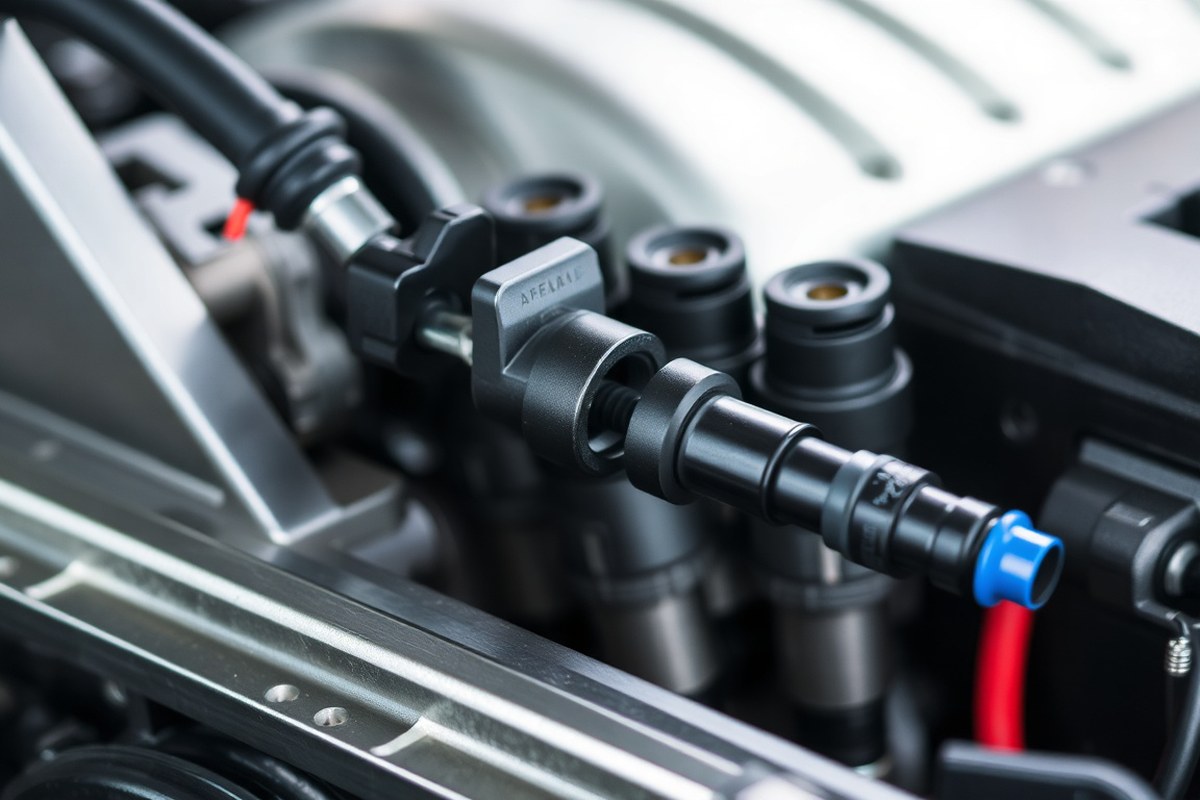
How Do Fuel Injectors Work the Complete Guide to Injection, Maintenance & Costs
How do fuel injectors work? Fuel injectors deliver precise amounts of pressurized fuel into the engine’s combustion chamber or intake manifold for efficient combustion. Controlled electronically or mechanically, they atomize fuel into a fine spray, ensuring better fuel-air mixing and consistent engine performance. Maintaining proper fuel pressure and clean injectors helps engines run smoothly and avoid power loss.
Key Takeaways
- Fuel injectors spray fuel at pressures ranging from 40 to over 3,000 psi, depending on the injection type.
- Electronically controlled injectors use electromagnets to open the nozzle rapidly and precisely.
- Mechanically controlled injectors rely on valve springs to regulate fuel delivery timing and quantity.
- The injector nozzle design promotes fine atomization for improved combustion efficiency and power output.
- High-pressure direct injectors may operate at pressures up to 37,000 psi, especially in diesel engines.
- Keeping fuel injectors clean every 30,000 to 60,000 miles prevents clogging and maintains engine responsiveness.
How Fuel Injectors Deliver Precise Fuel to Engines

A fuel injector is a small, precise valve designed to spray pressurized fuel directly into an engine’s combustion chamber or intake manifold. Its main function is to deliver the correct amount of fuel for combustion, optimizing engine performance, efficiency, and emissions control. Unlike older carburetors that rely on airflow to pull fuel in, fuel injectors actively push fuel under pressure, making the process more accurate and responsive to changes in engine demand.
The operation of a fuel injector involves several coordinated steps. First, the fuel pump pressurizes fuel and sends it to the fuel rail, which distributes fuel evenly to each injector. The injector remains closed due to a spring-loaded nozzle until it receives an electrical signal from the engine’s Electronic Control Unit (ECU). This signal energizes the injector’s electromagnet, pulling a plunger or needle valve away from its seat.
When the needle valve moves, pressurized fuel sprays out through the injector’s nozzle at just the right moment. This spray is finely atomized into a mist to ensure efficient and complete combustion. The duration, frequency, and timing of these injections are precisely controlled by the ECU based on real-time engine data such as throttle position, engine speed, and temperature. This control allows your engine to adjust fuel delivery for situations like accelerating, idling, or cruising, which improves fuel efficiency and reduces emissions.
The fuel pressure plays a critical role in this process. Higher pressure, typically ranging from 40 to 100 psi in gasoline engines, helps create a fine fuel spray that mixes well with air. This pressure must remain constant, controlled by the fuel pump and pressure regulator, to ensure consistent injector performance. If pressure drops or spikes, injectors can spray too little or too much fuel, leading to engine misfires, poor fuel economy, or increased pollution.
The ECU’s electrical signals act like a pulse, opening and closing the injector valves multiple times per second. Each pulse’s length, called the “pulse width,” determines how much fuel is sprayed. For example, a wider pulse delivers more fuel, essential during heavy acceleration, while narrower pulses are used for idle or low-load conditions. In diesel engines, a similar principle applies, but fuel is injected directly into the combustion chamber under much higher pressures, often above 15,000 psi, to ignite the heavier diesel fuel efficiently.
Proper injector function means your engine receives the right air-fuel mix to burn fuel cleanly and efficiently. Symptoms of injector problems, such as clogging or failure, include rough idling, hesitation on acceleration, or increased emissions. In those cases, cleaning or replacement might be necessary to restore perfect injection timing and spray quality, ensuring smooth running and fuel savings.
Main Components Inside a Fuel Injector and Their Roles
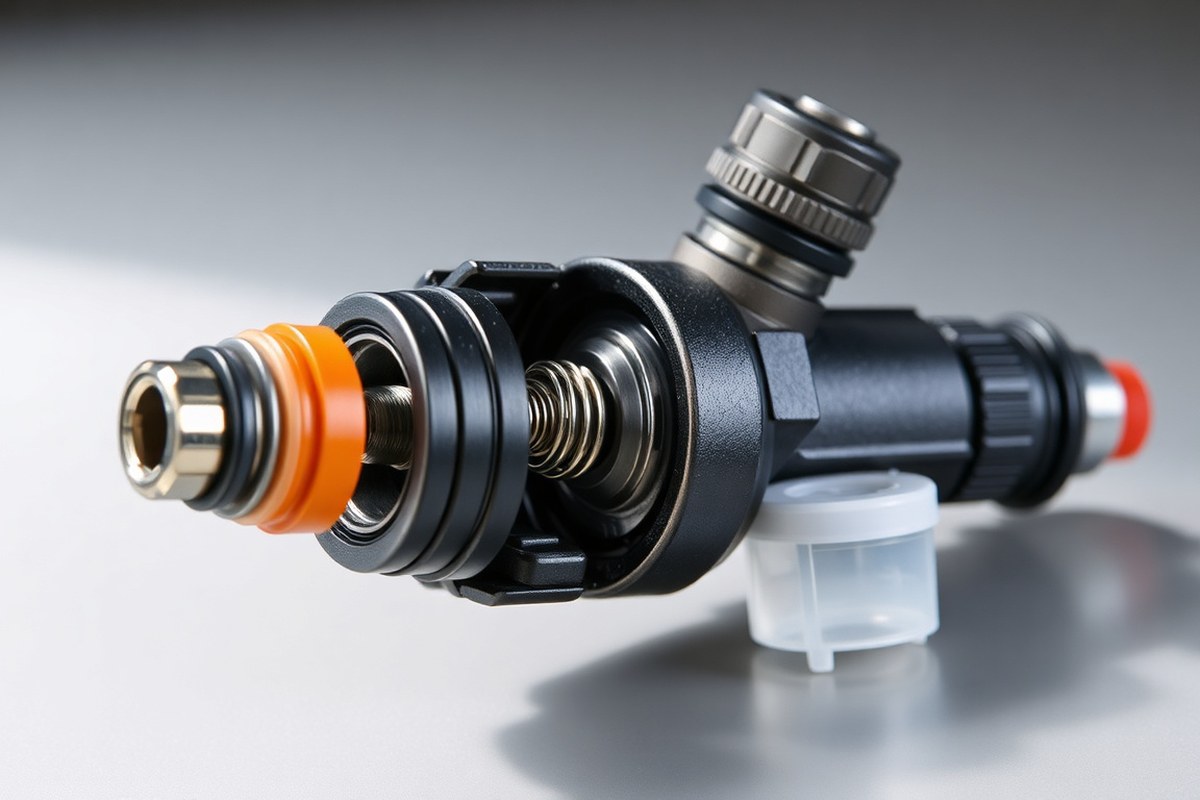
A fuel injector consists of several essential parts that work together to deliver precise amounts of fuel to your engine’s cylinders. These components are the injector body, plunger, valve spring, nozzle, fuel filter, electromagnets, and electronic connector. Each plays a role in controlling fuel flow by responding to shifts in pressure, electrical signals, and mechanical movements.
Injector Body: The Structural Shell
The injector body forms the outer shell and houses all the internal components. It must withstand high fuel pressures, sometimes exceeding 37,000 psi in modern common rail diesel systems. The quality and precision machining of the injector body ensure proper alignment and sealing, preventing leaks and ensuring reliable fuel delivery. The body also protects the internal parts from dirt and debris that could cause wear or blockage.
Plunger and Valve Spring: Managing Fuel Flow
The plunger sits inside the injector body and moves back and forth to regulate the opening and closing of the nozzle. When fuel pressure increases within the injector, it pushes against the plunger, compressing the plunger spring. This action allows fuel to pass through to the nozzle. The valve spring works similarly, providing resistance to ensure the nozzle closes tightly when the fuel pressure drops or when the electronic control cuts the signal. In mechanical injectors, two springs control the timing and amount of fuel precisely by responding directly to fuel pressure changes.
Nozzle: The Precision Spray Outlet
The nozzle is a finely engineered tip with tiny holes where fuel exits the injector at high speed. Its hole size and shape are designed to atomize the fuel effectively, creating a fine mist essential for efficient combustion. The needle valve inside the nozzle opens when the plunger moves, allowing pressurized fuel to spray into the combustion chamber or intake manifold. These tiny holes, often just fractions of a millimeter wide, control the spray pattern and volume that directly affect engine performance and emissions.
Fuel Filter: Protecting Precision Components
Because the nozzle holes and plunger moves are extremely close-fitting, even small particles of dirt can clog the nozzle or damage the plunger mechanism. The fuel filter inside the injector traps impurities before fuel reaches sensitive components. Proper filtration prevents malfunction and uneven fuel flow that could cause poor engine idling or misfires. Failing to maintain clean fuel can lead to injector wear, typically increasing repair costs significantly.
Electromagnets and Electronic Connection: Controlling Timing and Duration
In electronically controlled injectors, electromagnets or solenoids surround the plunger. When the engine’s ECU sends an electric current through the injector’s electronic plug, the solenoid energizes and lifts the needle valve inside the nozzle. This rapid electronic activation controls exactly when and how long fuel sprays out. This precise timing improves fuel efficiency and reduces emissions compared to purely mechanical injectors. The electronic connector also ensures that signals from the ECU are correctly transmitted, making injector response fast and reliable.
Always use fuel that meets your vehicle’s specifications and change fuel filters regularly to avoid injector clogging and potential engine damage.
Types of Fuel Injectors: Mechanical vs Electronic and Fuel Variations
Fuel injectors mainly fall into two control types: mechanical and electronic. They also vary by the fuel they use, such as petrol, diesel, natural gas, and hydrogen, each needing injectors adapted to its chemical and combustion properties. Different injectors manage fuel delivery with specific timing, pressure, and atomization to optimize combustion for each fuel type.
Mechanical Fuel Injectors Explained
Mechanical fuel injectors operate without electronic control, relying instead on engine vacuum or camshaft-driven mechanisms to regulate fuel delivery. The injector opens and closes based on mechanical linkages or pressures, which limits the precision of fuel timing and quantity adjustments. This system was common in older diesel engines and some early carbureted gasoline engines before electronic controls became widespread.
Because mechanical injectors lack electronic sensors and control units, they tend to be less efficient in fuel atomization and combustion management. This can result in higher emissions and less fuel economy compared to modern systems. Replacement or adjustment usually requires manual tuning and expertise, which may increase maintenance complexity and costs.
Electronic Fuel Injectors and ECU Control
Electronic fuel injectors use solenoids controlled by the vehicle’s engine control unit (ECU) to manage the timing, duration, and pressure of fuel injection. The ECU receives data from sensors monitoring engine speed, temperature, and load, then precisely adjusts fuel delivery for optimal combustion. This results in better fuel efficiency, lower emissions, and improved performance.
Modern injectors electronically atomize fuel into a fine mist, which helps the engine burn fuel more completely. The ECU’s control allows adaptation to different engine conditions, such as cold starts or acceleration, by adjusting the injection timing and amount almost instantaneously. Electronic injectors cost more upfront, roughly $50 to over $200 per unit depending on the vehicle and technology, but they improve fuel economy and lower emissions over time.
Diesel vs Petrol Injection Systems
Diesel fuel injectors differ significantly from petrol injectors mainly due to the fuel’s physical properties and combustion process. Diesel injectors must deliver fuel at much higher pressures, often exceeding 20,000 psi in common rail systems, to ensure fine atomization and proper combustion inside the cylinder. They inject directly into the combustion chamber, requiring strong construction to handle high temperatures and pressures.
Petrol injectors typically operate at much lower pressures, around 50 to 100 psi for port injection, although direct gasoline injection systems operate at higher pressures than older designs. Petrol injectors usually inject fuel into the intake manifold or ports rather than directly into the combustion chamber, which influences their design and atomization strategy.
Diesel fuel contains particulates and impurities that increase the chance of clogging diesel injectors, so their filtration systems must be more strong, and maintenance happens more often. Installing new diesel injectors usually involves programming or coding them to work with the vehicle’s engine control unit (ECU), which raises labor expenses. Gasoline injectors do not typically need this type of programming.
Alternative Fuel Injectors (Natural Gas, Hydrogen)
Natural gas injectors differ because natural gas is delivered as a gaseous fuel rather than liquid. These injectors regulate the flow of gas into the intake manifold and must maintain consistent pressure while preventing backfire. Since natural gas engines use spark plugs for ignition, the injector’s role focuses heavily on precise flow control rather than atomization.
Hydrogen injectors share similarities with petrol and natural gas systems but require special adaptations due to hydrogen’s high flammability and wide ignition range. The ECU controls the injection timing and fuel volume carefully to prevent pre-ignition or flashback. Materials used in hydrogen injectors must resist embrittlement caused by hydrogen exposure, making these components more specialized and expensive.
These alternative fuel injectors are important for emerging green technologies, contributing to cleaner emissions and sustainability goals. Their design varies significantly based on fuel pressure, delivery method, and combustion requirements compared to traditional petrol or diesel injectors.
Atomization and Nozzle Design: Key to Efficient Combustion
Atomization in fuel injection is the process of breaking fuel into tiny droplets as it sprays into the engine’s combustion chamber or intake manifold. This mist-like spray mixes thoroughly with incoming air, creating the right conditions for efficient and complete combustion. Without proper atomization, fuel droplets remain too large, causing uneven burning, wasted fuel, and increased emissions.
The nozzle design plays a critical role in how well atomization occurs. Injectors use multiple tiny holes, often arranged in specific patterns, to spray fuel under high pressure, ranging from 40 to 60 psi for port injection and up to 3,000 psi or more for direct injection systems. The number, size, and angle of these nozzle holes determine the spray pattern, which impacts how effectively the fuel mixes with air. For instance, evenly spaced holes forming a fine cone help distribute fuel uniformly, promoting better combustion.
A nozzle with too few or clogged holes disrupts the spray pattern, causing larger droplets to form and fuel to concentrate unevenly. This leads to incomplete combustion, reduced fuel economy, and increased pollutant emissions like unburned hydrocarbons and carbon monoxide. Cleaning or replacing injectors restores nozzle function, improving atomization by reestablishing the fine mist spray essential for efficient burning. Services that eliminate deposits typically cost between $50 and $100 per injector, depending on the vehicle and service provider.
Good atomization results in a quicker, more stable burn of the air-fuel mixture, boosting engine power and responsiveness. Engines with efficient atomization also benefit from lower fuel consumption, as more of the injected fuel burns completely rather than escaping as pollutants. Conversely, poor atomization can cause rough idling, misfires, and a noticeable drop in performance. Over time, carbon buildup around injector nozzles can worsen spray patterns, so periodic maintenance is necessary to preserve optimal function.
In diesel engines, atomization happens at much higher pressures, sometimes exceeding 37,000 psi, to achieve the fine mist required for direct combustion within the cylinder. Gasoline engines typically operate at lower pressures but use carefully designed nozzle holes and spray angles to achieve similar results. Variations in nozzle patterns cater to different engine designs, operating conditions, and fuel types, balancing factors like emissions regulations and desired power levels.
Common Symptoms Indicating Fuel Injector Problems
Symptoms of failing, clogged, or leaking fuel injectors often appear gradually but can seriously impact your vehicle’s performance and efficiency. Early signs usually include rough idling and engine misfires. Misfires happen because the injector delivers too little or no fuel to one or more cylinders, disrupting the combustion process. Rough idling feels like the engine is struggling to keep a steady speed when your car is stopped, indicating uneven fuel supply. These problems matter because they reduce your engine’s power and increase emissions, which might make your car fail an emissions inspection.
Fuel leaks from the injectors also give clear signs. You might smell gasoline around the engine bay, or notice wet spots near the fuel rail. These leaks not only waste fuel but can pose a fire hazard, so spotting them early is important. Also, vacuum leaks at the intake port caused by faulty injectors lead to lean misfires, where the engine struggles due to insufficient fuel. This issue typically results in further rough running and hesitation under acceleration.
- Rough idling or shaking engine at idle
- Engine misfires during acceleration or cruising
- Noticeable drop in fuel economy without other problems
- Fuel smell around the engine or visible fuel leaks
- Engine hesitation or stalling under load
- Increased exhaust emissions and failed emissions tests
- Check engine light illuminating with injector-related fault codes
These symptoms often get worse in colder climates when injector components contract or fuel does not atomize properly. Clogged nozzles, worn internal parts like pintles, or weak solenoids inside the injector are common causes. Cleaning your injectors professionally can restore proper spray patterns and flow rates, especially if you spot early signs. Experts recommend cleaning every 30,000 to 60,000 miles to prevent buildup that reduces injector function. You can also try a high-quality fuel injector cleaner additive, but stubborn clogging usually demands professional service.
Checking for fuel leaks and engine misfires early can prevent costly repairs and maintain your car’s fuel economy and emission standards.
Poor fuel economy is a common early warning when injectors fail to meter fuel correctly. Even without noticeable driving issues, your car may start using more gasoline than usual. This problem arises because leaking or clogged injectors can flood the engine or cause incomplete combustion. Paying attention to mileage drops along with other signs helps you catch injector issues before they cause engine damage or expensive diagnostic bills.
How to Maintain, Clean, and Extend Fuel Injector Lifespan
Fuel injectors require periodic cleaning and maintenance to keep the engine running smoothly and to prevent costly repairs. Regular cleaning intervals depend on your vehicle’s mileage, fuel quality, and driving conditions. Both DIY methods and professional services have roles in maintaining injector performance.
Recommended Cleaning Intervals
Many vehicle manufacturers advise servicing fuel injectors every 30,000 to 60,000 miles. This range depends on your car’s fuel type, how often you drive, and local fuel quality. Using lower-quality or non-Top Tier™ fuels may require cleaning sooner, while high-grade fuel can extend the period between services.
Certain driving conditions, such as city traffic, frequent short trips, or dusty environments, can accelerate injector deposit buildup. Sticking to cleaning roughly once every two to four years or according to your vehicle’s mileage helps avoid performance issues like rough idling, reduced fuel economy, or hesitation.
DIY Fuel Injector Cleaning Methods
Fuel system cleaning additives are a straightforward way to maintain injectors between professional services. These additives dissolve minor carbon or varnish deposits and keep internal passages clear. To use them, add the specified amount directly into your fuel tank before filling up, following product instructions closely.
Many additives are formulated to work best with regular refills and should be used every 3,000 to 5,000 miles as a preventative measure. However, DIY cleaning will not fix serious clogging or mechanical injector problems, it only helps maintain cleanliness.
- Choose a reputable fuel system cleaner compatible with your engine type
- Pour the recommended amount into a nearly empty fuel tank
- Refuel immediately to ensure proper dilution
- Use every few thousand miles to prevent buildup
- Avoid additives containing harmful chemicals that may damage seals
Besides chemical cleaning, inspecting the fuel filter and replacing it regularly prevents debris from reaching injectors. Skipping this step can cause premature nozzle clogging and injector wear.
Professional Cleaning and Testing Services
Professional cleaning involves removing the injectors for ultrasonic cleaning or using pressurized cleaning machines that deliver detergent solutions directly through the injector nozzles. This process removes stubborn carbon, varnish, and deposits that DIY methods can’t eliminate.
Injection flow rate and spray pattern testing are often part of professional services. Testing ensures each injector operates within manufacturer specifications, detecting leaks or mechanical failures early. Prices for professional cleaning can range from $50 to $150 for a service, depending on the shop and vehicle.
Professional service is recommended every 30,000 to 60,000 miles or sooner if your vehicle shows symptoms like rough startup or decreased fuel efficiency. Avoid delaying professional cleaning, as clogged injectors can lead to costly damage to engine components over time.
Maintenance Tips to Prevent Injector Issues
Preventive maintenance is key to extending fuel injector life and ensuring reliable engine performance. Using high-quality Top Tier™ gasoline helps reduce deposit formation because it contains higher levels of detergent additives designed to keep injectors clean. Regular oil changes and timely fuel filter replacements also reduce contaminants that could harm injectors. Keep these steps in mind to support injector health:
- Use Top Tier™ fuel consistently
- Replace fuel filters at manufacturer-recommended intervals
- Follow regular oil change schedules
- Apply fuel system cleaners every 3,000 to 5,000 miles for preventative care
- Address engine performance issues promptly to avoid injector stress
Maintaining the entire fuel system avoids fuel injector failures and keeps both fuel economy and engine power stable over time.
Fuel Injector Replacement Costs and Repair Considerations
Fuel injector cleaning typically costs between $50 and $100 per injector, depending on your vehicle and where you get the service. This process involves removing and chemically cleaning the injector or using specialized cleaning equipment connected to the fuel rail without disassembly. Cleaning helps maintain injector performance but won’t fix mechanical failures.
When repair or replacement is necessary, costs rise significantly. The price to replace a single fuel injector ranges from $150 to $300, with labor adding $100 to $400 or more depending on accessibility. For engines with four cylinders, replacing all injectors can range from $400 to $1,200 including labor. Direct injection injectors often cost more than conventional port injectors due to their design and higher precision requirements, sometimes pushing total expenses toward the higher end of the range.
| Service | Cost per Injector (USD) | Labor Cost (USD) | Total Estimated Range (USD) |
|---|---|---|---|
| Cleaning | 50 – 100 | Included or minimal | 50 – 100 |
| Replacement (Port Injectors) | 150 – 300 | 100 – 300 | 250 – 600 |
| Replacement (Direct Injection) | 200 – 400 | 150 – 400 | 350 – 800+ |
| Full Set of 4 Injectors + Labor | 600 – 1,200 | 200 – 400+ | 800 – 1,600+ |
Labor costs depend heavily on how difficult it is to access the injectors. Injectors buried under intake manifolds or integrated into complex assemblies require more time and skill to remove and reinstall. Vehicles with direct injection systems often demand more labor because these injectors operate at higher fuel pressures and are built differently, which can increase repair complexity and cost.
Knowing your vehicle’s fuel injection type helps set expectations for repair costs. Multi-point sequential injection systems, which deliver fuel to each cylinder individually, can have higher parts and labor costs than simpler systems. Always ask your mechanic for an itemized estimate covering both parts and labor before authorizing work, so you understand how each factor affects the total bill.
When to Diagnose, Repair, or Call a Professional for Injector Issues
Fuel injector issues require timely detection and proper handling to avoid engine damage or poor performance. Diagnostic tests like flow rate measurement and spray pattern analysis help pinpoint specific injector problems. Professionals often use specialized equipment that clips onto fuel lines to measure how much fuel passes through an injector per minute. A typical healthy injector will have a flow rate close to manufacturer specifications, often within 10% of the rated value. Deviations indicate clogging, leaks, or electrical faults affecting fuel delivery precision.
Spray pattern tests show whether injectors emit a fine, evenly distributed mist essential for efficient combustion. Poor or uneven spray patterns usually mean that deposits have built up inside the nozzle or the injector’s internal parts are worn. These tests can be performed on or off the car using ultrasonic cleaning machines combined with visual inspection tools. On-car testing allows you to observe injector response in real-time, while off-car testing provides a controlled environment for a thorough assessment.
Injector cleaning is often the first step when symptoms like rough idling, misfires, or reduced fuel economy appear. Simple fuel additives can help prevent deposits but rarely fix severe blockages. Professional cleaning using ultrasonic baths or pressurized solvents typically costs between $50 and $150 per injector and can restore normal flow and spray characteristics. When an injector does not respond to cleaning, replacement becomes necessary. The lifespan of injectors varies but generally falls between 50,000 to 100,000 miles. Beyond that, internal components like seals and the nozzle valve wear out, and symptoms worsen.
Fuel injector replacement prices range broadly, often from $150 to $300 per injector including parts and labor. The decision to clean or replace involves weighing cleaning cost and chances of success against the injector’s age and ongoing problems. Persistent rough running, fuel leaks, or failure of diagnostic tests indicate replacement is the safer choice. Replacing damaged injectors restores engine efficiency and reduces the risk of catalytic converter damage caused by unburned fuel.
Handling fuel injectors requires safety precautions because they operate under very high fuel pressure, typically 40 to 60 psi in gasoline engines, and even higher in diesel applications. Always relieve fuel system pressure before disconnecting injectors by following the vehicle’s service manual instructions. Wear safety glasses and gloves to protect against fuel sprays, which can ignite. Avoid smoking or open flames nearby, and dispose of fuel-soaked rags properly.
Never attempt fuel injector repairs without first releasing fuel pressure; this prevents dangerous fuel sprays that can cause injury or fire.
Step-by-Step Fuel Injector Care and Troubleshooting Plan
Follow these steps to monitor and maintain your fuel injectors, ensuring optimal performance and catching issues early.
- Before driving: Check for any fuel odors or noticeable leaks around the injectors. Absence of leaks means you can safely start your engine.
- Daily use: Listen for rough idling or hesitation when accelerating. Smooth engine response indicates healthy injectors.
- Monthly: Add fuel injector cleaner following the product instructions. Effective cleaning usually improves fuel efficiency and smoothens performance.
- Every 12,000 miles: Inspect spark plugs and signs of uneven wear or fouling, which can signal injector issues. Even wear suggests injectors are distributing fuel properly.
- Every 30,000 miles or sooner if needed: Schedule a diagnostic scan for fuel injector pulse and spray pattern, especially if you notice engine misfires or poor fuel economy. Clear diagnostic results confirm injector function.
- At first signs of persistent trouble: Consult a professional mechanic for cleaning, repair, or replacement advice. Proper injector service restores engine smoothness and reduces emissions.
- After service: Monitor fuel economy and engine responsiveness. Improved metrics confirm successful injector maintenance or repair.
Frequently Asked Questions
How Does a Fuel Injector Control the Amount of Fuel Sprayed into the Engine?
A fuel injector controls fuel delivery by electronically opening and closing a nozzle, allowing precise amounts of fuel to enter the engine. This timing matches engine demands to optimize performance and fuel efficiency.
Can Bad Fuel Injectors Affect Engine Emissions?
Yes, faulty fuel injectors can cause incomplete combustion, increasing harmful emissions and potentially causing a failed emissions test. Proper injector function is critical for clean engine exhaust.
What Role Does Fuel Pressure Play in Fuel Injector Performance?
Fuel pressure ensures that injectors spray fuel at the correct rate and atomization quality. Insufficient pressure can lead to poor fuel delivery and engine misfires.
Why Do Diesel Fuel Injectors Operate at Higher Pressure Than Gasoline Injectors?
Diesel injectors use higher pressure to atomize thicker diesel fuel efficiently for complete combustion. Pressures can reach up to 37,000 psi in modern common rail systems.
How Does Injector Nozzle Design Affect Engine Power and Efficiency?
The nozzle design determines fuel spray pattern and droplet size, impacting how well fuel mixes with air. Better atomization supports stronger combustion and improved power output.
Are All Fuel Injectors the Same in Gasoline and Diesel Engines?
No, gasoline injectors usually operate at lower pressure and use different spray patterns than diesel injectors which handle higher pressure and viscosity fuels.
Final Thoughts
Fuel injectors precisely control fuel delivery, supporting efficient engine operation and emissions control. Taking small, regular steps to maintain and monitor their function helps avoid costly repairs down the line. Start by adding a quality injector cleaner during your next fill-up to keep your engine running smoothly and spot issues early.


