How Does a Fuel Pressure Regulator Work? A Complete Guide with Tests & Tips
How does a fuel pressure regulator work? It maintains consistent fuel pressure by balancing fuel flow with engine vacuum, ensuring the engine gets the correct fuel amount. A diaphragm inside the regulator adjusts fuel delivery by opening or closing a valve in response to pressure changes, keeping the fuel-to-air ratio stable. For accurate control, the regulator uses a vacuum line connected to the intake manifold, allowing it to respond smoothly to engine demands and drive conditions.
Key Takeaways
- Change your fuel pressure regulator between 50,000 and 100,000 miles, or sooner if you notice fuel leaks or irregular engine idling.
- A properly maintained regulator can last between 100,000 and 150,000 miles without issues.
- Check the fuel pressure regulator during routine maintenance at least every 5,000 miles or six months.
- Engine misfires in about 30% of failing regulators indicate improper fuel pressure control.
- Vacuum reference lines help the regulator adjust fuel pressure to maintain a 1:1 fuel-to-air ratio.
- Excessive fuel pump noise may suggest a malfunctioning regulator in roughly 18% of cases.
How a Fuel Pressure Regulator Controls Fuel Pressure
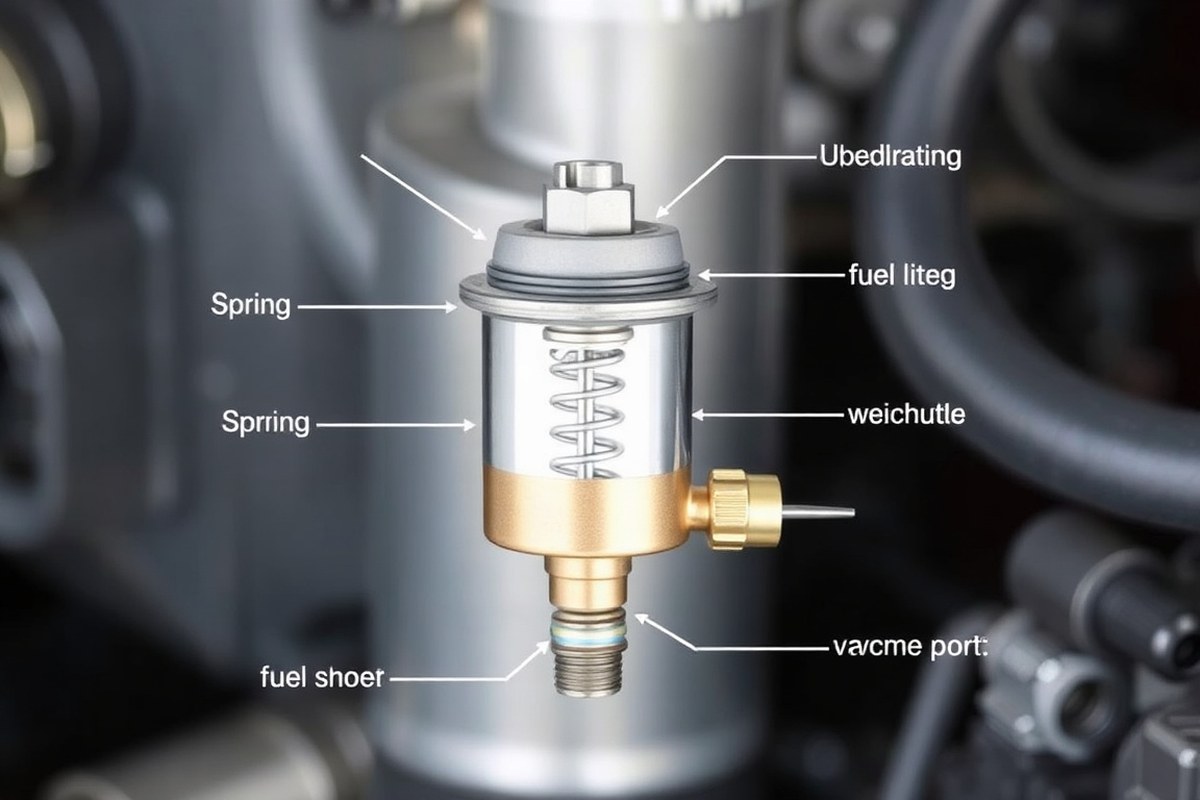
A fuel pressure regulator manages fuel pressure by balancing the pressure in the fuel rail against the vacuum in the intake manifold using a spring and diaphragm system. It mounts on the fuel rail and includes a diaphragm that separates the fuel side from the mechanical spring inside. A vacuum hose links the regulator to the intake manifold, enabling the manifold vacuum to directly affect fuel pressure at about a 1:1 ratio.
Manifold vacuum plays a critical role because it reflects engine load and throttle position. At idle or light load, the manifold vacuum is high, causing the diaphragm to move in a way that opens a bypass valve. This lets more fuel return to the tank, lowering fuel rail pressure to match the lower fuel demand. During heavy acceleration or wide open throttle, the manifold vacuum drops. This causes the bypass valve to close more, reducing fuel flow back to the tank, which increases fuel rail pressure to meet higher injector demands.
The balance inside the regulator comes down to opposing forces: fuel pressure pushing up on the diaphragm and a spring pushing down. The spring is calibrated to maintain a set fuel pressure when the vacuum force is neutral. When vacuum decreases, the spring pushes the diaphragm down, restricting fuel return and raising pressure. When vacuum increases, it pushes the diaphragm upwards against the spring force, opening the valve more to reduce pressure in the fuel rail.
This dynamic allows for precise regulation that matches fuel supply with engine demands, preventing either fuel starvation or excess pressure. A typical aftermarket regulator may maintain pressures around 50 to 52 psi when the vacuum line is disconnected, but the pressure will vary based on engine vacuum and spring calibration during operation.
The diaphragm and spring work in harmony with the bypass valve to continuously adjust fuel pressure. When the vacuum line cracks or detaches, the regulator no longer senses manifold pressure and will shift to a higher fuel pressure that responds less effectively. This can cause running issues like rough idle or hesitation under load because the fuel pressure no longer matches engine needs.
Maintaining this system requires clean fuel and intact components. Debris or deterioration of the diaphragm can cause improper sealing or delayed valve response, leading to fluctuating or incorrect fuel pressure. Regular inspection of the vacuum line and replacement of fuel filters help keep the regulator functioning properly.
Essential Components Inside a Fuel Pressure Regulator
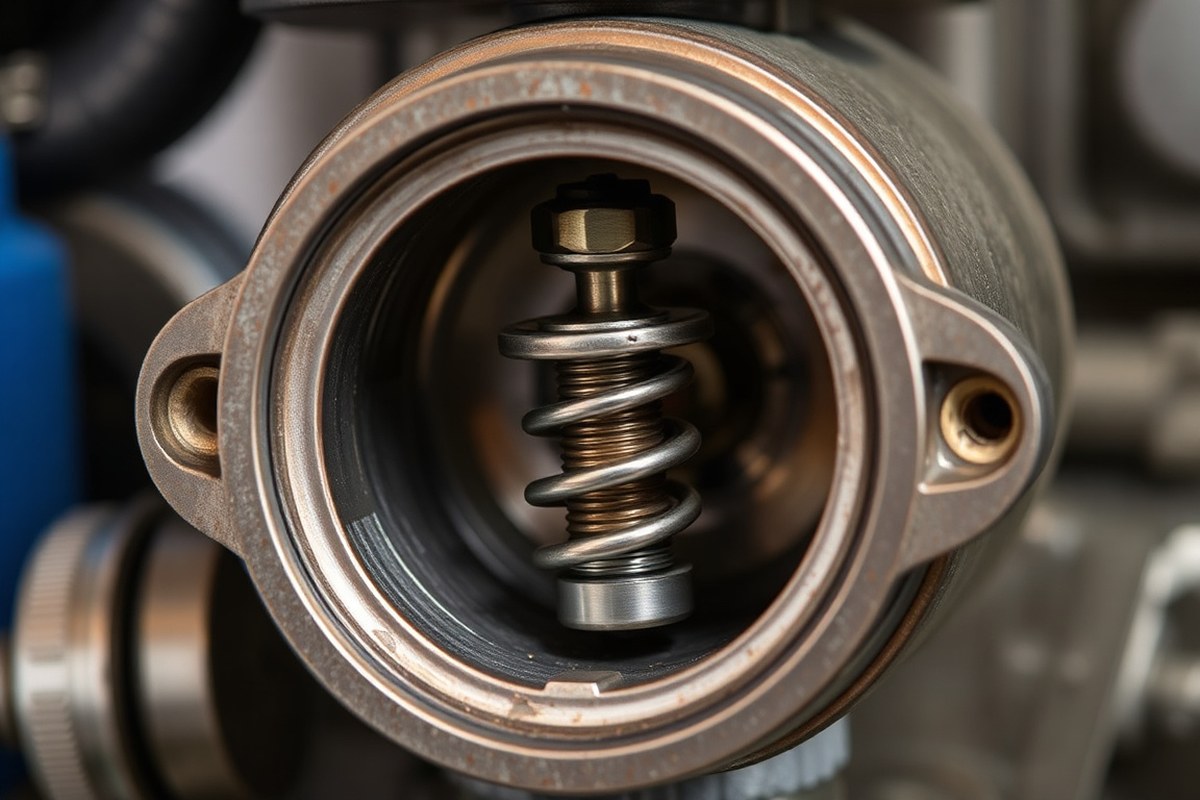
A fuel pressure regulator relies on several key components inside a compact housing to maintain a steady fuel pressure. The most critical part is the diaphragm, a flexible membrane that divides the regulator into two chambers. One side faces the fuel feed line under high pressure, while the other side connects to the engine’s vacuum source. This arrangement allows the diaphragm to react dynamically to changes in fuel pressure and engine vacuum.
The diaphragm’s role is to respond to the pressure differential. When fuel pressure increases, it pushes against the diaphragm, causing it to move. This motion regulates how much fuel returns to the tank through a valve attached to the diaphragm assembly. Simultaneously, the engine vacuum pulls on the opposite side of the diaphragm, allowing it to adjust fuel pressure based on engine load. For example, during idle or low-load conditions, higher vacuum reduces fuel pressure, preventing excessive fuel delivery.
Behind the diaphragm, there is a precision spring that provides calibrated resistance. This spring determines the baseline fuel pressure by pushing against the diaphragm in the opposite direction of the fuel pressure. The spring’s stiffness controls the closing force of the return valve, setting the regulated fuel pressure point, commonly around 40 to 60 psi on many systems. As fuel pressure rises above this preset value, it overcomes the spring force, pushing the diaphragm and opening the valve to redirect excess fuel back to the tank.
The interaction between the diaphragm and spring maintains consistent fuel pressure by balancing the opposing forces of fuel pressure and engine vacuum. When fuel pressure drops, the spring pushes the diaphragm to close the return valve, raising pressure. When fuel pressure rises, it pushes the diaphragm against the spring, opening the valve to relieve pressure. This cycle ensures fuel injectors receive a steady fuel supply regardless of varying engine demands.
Other parts inside the regulator include the valve seat or ball valve usually attached to the diaphragm. This valve physically blocks or allows fuel return flow. Its precise sealing prevents fuel leaks and pressure loss when closed. The entire assembly sits within a metal or composite housing, which protects the internal components and provides mounting points to the fuel rail.
Always check for diaphragm tears or spring fatigue if you notice unstable fuel pressure, as these parts directly affect the regulator’s ability to maintain proper fuel delivery.
Different vehicles may use variations on this basic design, but virtually all rely on the diaphragm-spring interaction to function. In high-performance or boost applications, regulators might include adjustments to accommodate higher fuel pressures or vacuum references. Replacing the regulator typically involves removing the assembly from the fuel rail and installing a new part with a fresh diaphragm and spring, costing from roughly $150 to $350 depending on model and labor.
Types of Fuel Pressure Regulators and Their Differences
Fuel pressure regulators often come in different designs tailored to engine type and fuel system requirements. The two major styles are mechanical and electronic regulators, each with return or returnless fuel flow systems. Knowing which type suits your vehicle helps maintain proper fuel pressure, engine performance, and fuel efficiency.
Inline (Return-Style) Regulators
Inline or return-style regulators are often mounted on the fuel rail or along the fuel line. These mechanical devices use a spring and diaphragm to maintain desired fuel pressure by opening a valve that directs excess fuel back to the tank through a return line. This design typically operates within a pressure range of about 30 to 70 psi.
Return-style regulators rely on a vacuum reference from the intake manifold to adjust fuel pressure relative to engine load, improving fuel delivery accuracy. Because they continuously cycle excess fuel back, these systems require a dedicated return line, adding complexity but supporting precise pressure control.
In-Tank and Integrated Regulators
Many modern vehicles use in-tank fuel pressure regulators integrated into the fuel pump assembly. These units can operate as either return or returnless regulators, eliminating the need for an external return line in the latter case. Instead, they manage pressure by directly controlling pump speed or employing an on-rail regulator within the system.
Integrated regulators cost between $300 and $800 for the parts alone, with labor adding another 2 to 4 hours of work, resulting in total replacement expenses from $600 to $1,500 or more. They improve fuel system efficiency by minimizing fuel heating and evaporation and often offer better compatibility with ethanol and methanol blends, whereas some less expensive external regulators may fail when exposed to these fuels.
Mechanical vs. Electronic Regulators
Mechanical fuel pressure regulators operate using a spring-loaded diaphragm and are valued for their simplicity and reliability in high-performance or older vehicles. They are generally less expensive, costing substantially less than electronic types, and maintain pressure between 30 and 70 psi using vacuum references without requiring electronic input.
Electronic regulators provide precise, real-time control by receiving signals from the engine control module (ECU). They adjust fuel pressure dynamically through solenoid valves or pump speed modulation. This precision supports advanced fuel injection systems and helps meet stricter emissions standards but involves higher cost and complexity.
Return vs. Returnless Systems
Return systems actively send unused fuel back to the fuel tank through a dedicated return line, which helps maintain stable fuel pressure under varying engine demands. These systems often pair with mechanical regulators and require more fuel line infrastructure, which can be costly and cause fuel heating issues.
Returnless systems do not have a continuous fuel return line. Instead, they control pressure by modulating the fuel pump speed or using an in-line regulator without bypassing fuel. The ECU uses sensor feedback to maintain precise rail pressure, improving efficiency, reducing fuel temperature rise, and simplifying the fuel line layout.
Signs and Symptoms of a Failing Fuel Pressure Regulator
A failing fuel pressure regulator disturbs the precise balance of fuel and air your engine needs to run smoothly. This imbalance can lead to various drivability issues and potential engine damage if ignored. You might notice rough idling, difficulty starting the engine, or frequent stalling, which all signal that the fuel delivery pressure isn’t stable. Such fluctuations often cause the engine to misfire, which occurs in roughly 30% of vehicles with regulator problems.
Fuel pressure that is either too high or too low affects how efficiently your engine burns fuel. Excessive pressure tends to flood the engine, leading to black smoke from the exhaust and poor fuel economy because the air-fuel mixture becomes too rich. Conversely, low fuel pressure causes the engine to run lean, resulting in sluggish acceleration and overall reduced power. Both situations increase the risk of engine damage over time and improve emissions.
- Hard starting, requiring multiple attempts before the engine fires up
- Rough or unstable idle causing engine vibrations or surging
- Engine misfires or hesitation under load or acceleration
- Stalling, especially when coming to a stop or during idle
- Black smoke emitting from the exhaust, indicating a rich mixture
- Decreased fuel efficiency due to improper fuel delivery
- Illumination of diagnostic trouble codes like P0089 or P0190
Testing fuel pressure at idle and while revving the engine gives a clear picture of regulator health. If the pressure drops or fluctuates significantly outside typical ranges, usually around 35 to 60 psi for many vehicles, it often points to a faulty regulator or associated fuel system issues. Avoid driving extensively with these symptoms, as this could lead to damaged injectors, spark plugs, or catalytic converters. Addressing fuel pressure irregularities early saves you from costly repairs and ensures your engine runs efficiently and safely.
How to Test a Fuel Pressure Regulator Safely and Accurately
Testing a fuel pressure regulator involves measuring the fuel pressure with a gauge and inspecting the vacuum line for fuel contamination. This procedure confirms that the regulator maintains the proper fuel pressure relative to engine vacuum, ensuring the fuel system works efficiently and safely.
Required Tools and Safety Precautions
You will need a fuel pressure gauge that fits your vehicle’s fuel rail test port and a vacuum gauge or an inspection of the vacuum line connected to the regulator. Safety glasses and gloves are important since you will work with pressurized fuel, which is flammable and hazardous. Always perform the test in a well-ventilated area to avoid inhaling fuel vapors and keep any spark sources away. Before starting, have a fire extinguisher rated for flammable liquids nearby.
Disconnect the battery to prevent accidental ignition when attaching or detaching the gauge. Avoid smoking or working near open flames. Inspect hoses and connections for leaks before and after the test to minimize the risk of fire or injury in the event of a fuel spill.
Testing Fuel Pressure with a Gauge
Begin by locating the fuel rail test port, usually near the fuel pressure regulator or along the fuel line. Attach the fuel pressure gauge securely to this port, ensuring no fuel leaks at the connection. Reconnect the battery and start the engine to allow the fuel system to pressurize. Observe the pressure reading on the gauge and compare it to the specifications listed in your vehicle’s service manual, often found in pounds per square inch (psi) or kilopascals (kPa).
A typical fuel pressure range under idle is about 40 to 60 psi, but this varies by make and model. After noting the steady-state pressure, gently increase engine speed to see if the pressure maintains within the proper range. Fuel pressure that stays too high or too low without changing as rpm changes, or that doesn’t fluctuate with engine vacuum (explained below), likely means the regulator is faulty and should be replaced.
Checking Vacuum Response
Next, examine the vacuum hose connected to the fuel pressure regulator. Remove this hose carefully and inspect inside for any signs of fuel presence. Fuel present in the vacuum line shows the regulator’s diaphragm has ruptured, so the regulator needs replacement. No fuel should ever be present in this hose; it should only carry vacuum pressure from the intake manifold.
Reattach the vacuum hose securely and monitor the fuel pressure gauge while simultaneously applying and releasing engine vacuum, such as by revving the engine or creating a vacuum with a hand pump. The fuel pressure should decrease as vacuum increases, reflecting the regulator’s response adjusting fuel delivery according to manifold pressure. Failure to show changes consistent with vacuum variations suggests the regulator is not functioning correctly.
Always depressurize the fuel system before disconnecting any fuel lines to prevent fuel spray and injury.
Where to Find the Fuel Pressure Regulator in Your Vehicle
The fuel pressure regulator is most commonly found on the fuel rail, a metal or plastic tube that supplies fuel from the pump to the injectors. This position allows the regulator to directly control fuel pressure just before the fuel enters the engine. You will typically find it near the fuel injectors or, in some vehicles, close to the fuel filter. However, the exact location can vary considerably depending on the make and model of your vehicle.
In older or some specialized vehicles, the regulator may not be on the fuel rail itself but rather installed inline within the fuel line or inside the fuel tank. Inline regulators are less common and often harder to access, which can increase replacement time and labor costs. On the other hand, regulators mounted on the fuel rail are usually easier to reach during repairs or inspections because they are located under the hood, close to the engine.
Knowing the exact location is important because it affects how you approach maintenance or replacement. If the regulator is on the fuel rail, you can often perform the job by removing a few bolts and disconnecting the fuel lines, which typically takes around one to two hours at a shop. Replacement parts for OEM regulators usually cost between $30 and $100, depending on your vehicle and whether you choose OEM or aftermarket options. Inline or tank-mounted regulators might require more disassembly or even partial fuel system removal, raising complexity and cost.
Before starting any work, consult your vehicle’s service manual or repair guide to identify the regulator location. Using the correct diagram ensures you do not confuse the regulator with other fuel system components. Accessibility also affects safety; having clear access prevents accidental fuel leaks and gives you room to install or test the regulator properly.
- Located typically on the fuel rail near injectors or fuel filter
- May be inline or inside the fuel tank in some models
- On-rail regulators are easier to access and replace
- Inline or tank-mounted regulators require more work to access
- Consult your vehicle’s manual for exact location
- Replace using appropriate tools and safety precautions
- Consider cost differences between OEM and aftermarket parts
When handling the fuel pressure regulator, always relieve fuel system pressure first to prevent fuel spray or fire risk. Disconnecting the vehicle battery before disassembly can protect against accidental sparks. After replacement, reinstall the regulator in the exact orientation to maintain proper fuel pressure control and prevent leaks. Testing fuel pressure after installation helps confirm good results.
When and How to Replace or Upgrade Your Fuel Pressure Regulator
You should consider replacing or upgrading your fuel pressure regulator if you notice signs like engine performance problems or fuel leaks, or if the regulator has reached the end of its typical lifespan. A well-maintained fuel pressure regulator usually lasts several years, but knowing when to act and what to expect in cost and effort helps keep your vehicle running smoothly.
Replacement Interval and Longevity
Fuel pressure regulators generally last between 50,000 and 100,000 miles, but this depends on your vehicle’s make, model, and driving conditions. Exposure to contaminants or poor fuel quality can shorten this lifespan. Regularly checking for fuel leaks, inconsistent idle, or engine hesitation can catch issues before failure. Cleaning the regulator periodically can also improve performance and extend its life. If you notice any symptoms like rough idling or decreased fuel efficiency, it’s wise to inspect the regulator and surrounding components for leaks or damage.
Upgrade Scenarios and Benefits
You might choose to upgrade your fuel pressure regulator when modifying your engine for higher performance, such as adding a turbocharger or increasing fuel flow needs. Upgraded regulators deliver more precise fuel control, improving engine responsiveness and efficiency under heavier loads. For daily drivers, sticking to the original equipment specification avoids unnecessary complexity and cost. The key is to select a regulator compatible with your vehicle’s year, make, model, and engine type to ensure proper fuel pressure management.
Cost and Labor Estimates
Replacing a fuel pressure regulator typically costs between $150 and $400, combining parts and labor. The regulator itself usually costs $50 to $150 depending on the brand and vehicle requirements. Labor times can range from 1 to 3 hours, influenced by the regulator’s location and the ease of access in your engine compartment. Labor rates differ by region and shop but expect $75 to $125 per hour as a typical range. DIY replacement is possible for some models but requires safety precautions due to fuel system pressure; always relieve fuel pressure before starting work. After replacement, test the fuel system for leaks and confirm stable fuel pressure to ensure the job’s success.
Common Mistakes and Pitfalls When Working with Fuel Regulators
Misdiagnosing fuel pressure regulator issues can lead to unnecessary repairs or ongoing engine problems. Avoid assuming that all fuel system trouble means the regulator must be replaced. Leaks or pressure drops might stem from clogged filters or damaged fuel lines instead. To prevent faulty conclusions, carefully compare symptoms like fuel leaks, engine hesitation, or black smoke to a checklist of regulator-specific signs before proceeding.
During testing, be sure to use a fuel pressure gauge rated for your vehicle’s system pressure, which often ranges between 40 to 60 psi. Check the regulator’s vacuum line for cracks or disconnections that might skew readings. Always perform tests with the engine off first, then running, to observe pressure changes under realistic conditions. Misreading readings due to improper timing or tools can result in replacing a perfectly good regulator.
Wear safety glasses and work in a well-ventilated area when handling fuel components to avoid fire hazards and exposure to harmful fumes.
Fuel pressure regulator replacement is usually a DIY-friendly job, but it needs care to prevent fuel spills and ensure tight seals. Unclamp or unscrew the regulator slowly to release residual fuel pressure. Keep a rag handy to catch drips and consider disconnecting the battery to reduce fire risk. Using the correct gasket or O-ring during installation prevents leaks, which can cause pressure drops or engine damage over time.
- Verify fuel pressure with a properly rated gauge before deciding on replacement
- Inspect vacuum lines for damage or disconnection during testing
- Avoid rushing removal to minimize fuel spills and contaminant exposure
- Use new seals or gaskets during replacement to prevent future leaks
- Confirm symptoms match known regulator failures rather than other fuel system parts
- Test regulator functionality both engine off and running for accurate diagnosis
- Discharge any system pressure carefully before disconnecting fuel components
Failing to follow these steps can result in persistent fuel delivery problems or unsafe repair conditions. For example, skipping the pressure release step often leads to fuel spray that poses fire hazards and mess. Incorrectly interpreting symptoms may lead to replacing a regulator when the actual issue lies in the fuel pump or filter, costing extra time and money. Taking time to understand the system and methodically check components saves repair costs and improve vehicle reliability.
Step-by-Step Action Plan for Managing Your Fuel Pressure Regulator
Follow these steps to diagnose, maintain, or replace your fuel pressure regulator safely and effectively.
- Before you start: Gather tools including a fuel pressure gauge, safety glasses, gloves, and a repair manual for your vehicle to ensure proper procedure.
- Day 1: Locate the fuel pressure regulator using the manual; identifying it correctly prevents confusion and damage.
- Day 2: Perform a pressure test with the vehicle off and ignition on to check for leaks or abnormal pressure drops; a stable reading indicates the regulator is working properly.
- Week 1: Inspect vacuum lines connected to the regulator for cracks or disconnections; fixing these shows improvement in fuel efficiency or idle smoothness.
- Week 2: If pressure tests and inspections reveal faults, schedule replacement; a properly installed regulator restores correct fuel pressure readings.
- After replacement: Run the engine and monitor fuel pressure again to confirm the new regulator maintains correct values under different driving conditions.
- Ongoing: Check the regulator during regular maintenance every 12,000 miles or as recommended for your vehicle to catch potential issues early.
Frequently Asked Questions
How Does Vacuum Pressure Affect a Fuel Pressure Regulator’s Operation?
Vacuum pressure changes the diaphragm position inside the regulator, varying fuel pressure to match engine demands more accurately, improving fuel efficiency and performance. The vacuum line must be properly connected for the regulator to function as designed.
Can a Dirty Fuel Filter Damage a Fuel Pressure Regulator?
Yes, a clogged fuel filter restricts fuel flow and makes the pump work harder, causing fluctuating pressure that can mimic regulator failure or damage it over time. Regular filter replacement helps avoid these issues.
Why Is the Fuel to Air Ratio Important for a Fuel Pressure Regulator?
A 1:1 fuel to air ratio ensures that the regulator adjusts fuel pressure relative to manifold pressure accurately, helping maintain optimal engine performance and emissions. Incorrect ratios disrupt this balance and affect drivability.
What Causes Fluctuating Fuel Pressure Aside from a Bad Regulator?
Issues like a weak fuel pump, clogged filter, or leaking injectors can also cause pressure fluctuations, so diagnose carefully before replacing the regulator. Test components systematically for accurate troubleshooting.
How Often Should the Fuel Pressure Regulator Be Checked During Maintenance?
Inspect the regulator every 5,000 miles or six months during routine service to catch issues early. Regular checks prevent performance problems and prolong regulator life.
Can Aftermarket Fuel Pressure Regulators Improve Performance?
Some aftermarket models offer adjustable pressure settings for tuning but require proper installation and calibration to avoid engine damage. Choose quality parts suited to your vehicle’s needs.
Wrapping Up
A fuel pressure regulator maintains steady fuel supply pressure essential for engine performance and fuel efficiency. Addressing issues early with testing or replacement ensures your engine runs smoothly and prevents costly repairs. Start by safely locating and testing your regulator to know its condition and act accordingly.