How to Measure Truck Bed for Tonneau Cover: Simple Steps for Accurate Fit
How to measure truck bed for tonneau cover requires precise length and width measurements, taken from inside the bed walls for the best fit. Use a long tape measure to capture the exact bed floor length from bulkhead to tailgate and measure the width between the inner bed rails. Accurate measurements ensure your cover fits snugly without gaps or overhangs, protecting your cargo effectively.
Key Takeaways
- Measure truck bed length from the inside of the bulkhead to the inner edge of the tailgate.
- Use a tape measure at least 12 feet long to avoid stretching or guessing.
- Check width between the inside of the bed rails for accurate tonneau cover fit.
- Account for bed liners or accessories by subtracting their thickness from width and length measurements.
- Round measurements to the nearest common bed size, but order according to your exact numbers.
- Common bed lengths include roughly 67 inches for 5.5 feet and 78 inches for 6.5 feet beds.
How to Measure Your Truck Bed Length Correctly

To get the right length for your tonneau cover, measure inside your truck bed from the point where the tailgate closes up to the vertical bulkhead behind the cab. Use a tape measure along the inner bed rail for a precise length.
Preparing the Truck, Close the Tailgate
Start by fully closing the tailgate. A closed tailgate gives you the true length of the bed’s inside space because most tonneau covers attach over the top rails with the tailgate shut. An open tailgate would extend the length artificially and lead to an incorrect measurement, causing a cover that doesn’t fit properly.
Keep the tailgate latched and flush with the bed sides. Check for any bed liners or obstructions that could affect the position of the tailgate or the tape measure placement.
Measuring from Bulkhead to Tailgate
The front bulkhead is the inside vertical wall directly behind your truck’s cab forming the front end of the bed. It is important because the length is measured from here to the inside edge of the tailgate.
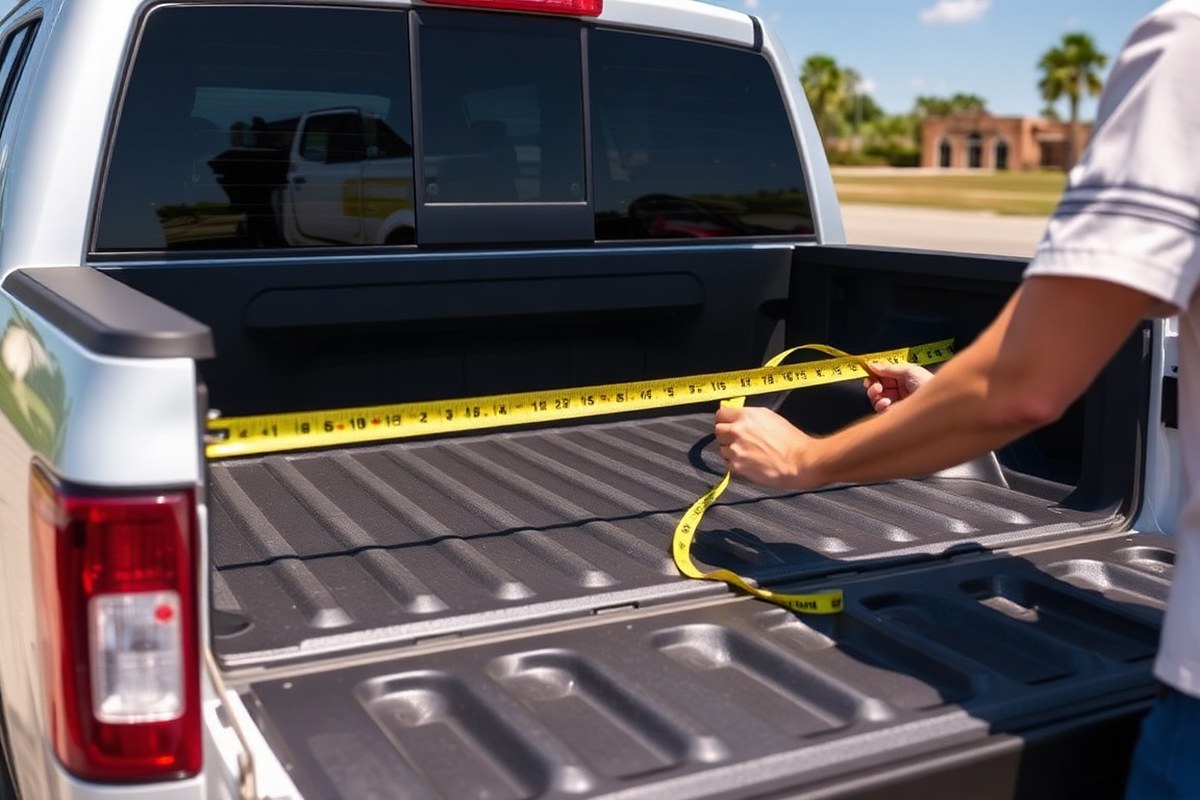
Place the end hook of your tape measure firmly at the inside front edge of the bulkhead. Ensure you are measuring from the inside surface, not the outside or over any trim. Extend the tape along the inside edge of one of the bed rails towards the tailgate’s inside edge.
Securing the tape at the bulkhead can be tricky, use one hand or ask for help to hold it in place. Avoid letting the tape droop or bend; it should lay flat along the bed rail or bed floor for an accurate reading.
- Close and latch the tailgate fully to the bed.
- Locate the inside edge of the front bulkhead inside the bed, right behind the cab.
- Hook the end of your tape measure on the inside edge of the bulkhead.
- Run the tape measure straight along the inside bed rail or bed floor towards the tailgate.
- Stretch the tape to the inside edge of the closed tailgate.
- Keep the tape measure straight and taut, avoiding slack or bends.
- Hold or fasten the tape securely where it meets the inside edge of the tailgate for exact reading.
Recording Your Length Measurement
Once the tape measure reaches the inside edge of the tailgate, note the exact length in inches. This number is your truck bed length, which is the dimension you’ll use to select a tonneau cover. Avoid rounding up or down; write the exact measurement as it appears.
To verify accuracy, measure twice. Small differences of an inch or two can mean a cover won’t fit well, so double-check before ordering. Measuring from the inside edges corrects common mistakes of measuring over the tailgate or from outside edges, which can lead to buying the wrong size tonneau cover.
Measuring Truck Bed Width and Its Importance
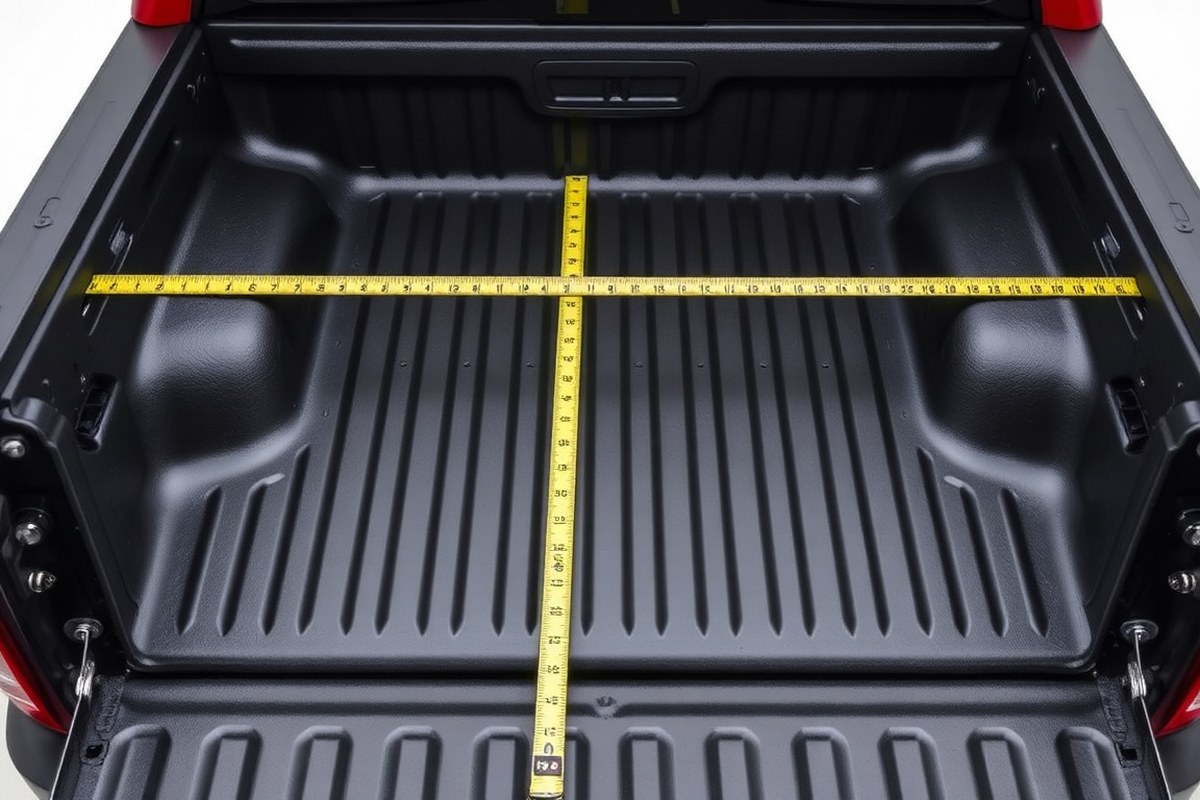
Measuring the width of your truck bed means taking an inside-to-inside measurement across the bed, this helps ensure your tonneau cover fits tightly and securely. Width matters because even small differences can make a cover loose or impossible to install, especially if your truck has flared or non-standard sides.
Where to Measure Truck Bed Width
Measure the truck bed width at the inside edges of the bed rails, right where the tailgate meets the bed floor. This is the most critical point since the cover rests on these rails. Avoid measuring from the outside edges or over any rail caps because those dimensions do not reflect the actual opening you need to cover. Using a tape measure, extend it across the bed from rail to rail, ensuring it runs straight without sagging.
For trucks with flared bed sides, measuring at multiple points along the bed’s length can help identify width variations. Some flare outwards near the rear, so check near the cab and near the tailgate if possible. Choose the narrowest inside width to guarantee the cover fits across the entire span.
Inside Rail Width Versus Outside Width
The inside rail width is the distance between the inside edges of the bed rails. This is the measurement that matters most for a tonneau cover because most covers clamp or sit inside the rails. The outside width includes the thickness of the rails and any protectors or covers, which would cause an overestimation and a poor fit.
Many truck owners mistakenly measure from the outside rail edges or add bed liners into the measurement, resulting in covers that are too big or don’t lock tightly. Always measure the clearance inside the rails, ignoring any plastic rail caps or bed liners that may create false width readings.
Why Width Matters for Cover Selection
A properly fitted tonneau cover requires an accurate truck bed width so the cover seals well and operates smoothly. Covers designed for a smaller or larger width can cause gaps where water or debris enter. Covers that are too wide might not install properly or could deform rails and latches.
Width is especially important if you’re choosing a folding, retractable, or roll-up cover, as these rely on consistent rail width for alignment. Your truck’s flared sides require a cover made to fit that flare to prevent fitment problems.
Avoiding Measurement Errors with Bed Liners and Protectors
Remove or account for drop-in liners or rail protectors before measuring. Drop-in liners add extra thickness and can make the bed width appear narrower or wider than the actual metal rails. When removing liners isn’t practical, measure inside the liner and compare it with the bare rail width provided by the manufacturer or an OEM spec sheet.
Some aftermarket rail caps extend beyond the metal rails; these should be ignored when measuring. Use a ruler or feeler gauge where needed to find the true rail edge underneath. Measuring carefully prevents ordering a cover that won’t fit or leaves gaps.
Always measure the inside width of the bed rails at the tailgate end, avoiding any liners or add-ons, to get the dimension your tonneau cover needs to fit properly.
Understanding Truck Bed Measurement Terminology
The bulkhead of a truck bed is the vertical wall that sits directly behind the cab and at the front end of the bed. It forms a boundary between the cab and the bed and serves as a reference point when measuring bed length. When measuring for a tonneau cover, it’s essential to measure from the inside edge of the bulkhead to the inside edge of the tailgate because this length determines how well the cover will fit from front to back.
Understanding the difference between inside rail and outside rail measurements is important. The inside rail measurement refers to the distance between the inner edges of the bed rails, usually the most common reference point for accessories like tonneau covers. The outside rail measurement includes the truck bed’s total width including the bed rail caps, which can add thickness. Since most tonneau covers mount inside the bed rails, you should use the inside rail measurement to get an accurate size. Measuring over the outside rails risks ordering a cover too large, which will not fit securely.
Knowing bed terms like tailgate, bulkhead, and bed rails helps you take precise measurements. For example, the tailgate is the rear gate that lowers to provide access to the bed. You should always measure with the tailgate closed because most bed accessories, including covers, are designed to fit with the tailgate in that position. Some people confuse bed length by measuring with the tailgate open, leading to an incorrect size for the cover.
When you’re ready to measure, place the tape measure inside the bed, running it along the top edges of the bed rails, starting from the inside of the bulkhead at the front and stopping at the inside of the tailgate. This method ensures you capture the correct length for a cover that fits snugly inside the rails. If your truck has a drop-in or spray-on bed liner or bed rail caps, subtract the thickness of those layers from your measurements. This adjustment prevents ordering a cover that’s tight or impossible to close.
Understanding these terms saves time and money by avoiding misorders and simplifying communication when purchasing your cover. It also helps you spot potential measurement mistakes early, like including the tailgate’s outer edge or not accounting for liners, which can lead to a poor fit. Accurate knowledge of bulkhead, bed rails, and tailgate positions leads to precise measuring, which is the foundation of a well-fitted tonneau cover.
How to Adjust Measurements for Bed Accessories and Liners
Bed accessories like liners, rail systems, and cargo management setups change how you measure your truck bed for a tonneau cover. Spray-in bed liners add a thin layer of protective coating, usually about 1/8 to 1/4 inch thick, which can make the bed floor slightly higher. This means you should measure from the top edges of the bed rails rather than the bed floor. For drop-in liners, which add more thickness and sometimes raise the bed floor by roughly 1/2 inch or more, confirm the cover type that accommodates this extra height. Some tonneau covers are designed to work directly over liners, while others require removing the liner first.
Raised bed rails, aftermarket caps, or built-in stake pockets also affect fit. Measure from the outer edge of your bed rails when they are wider than factory specs or have rail caps installed, instead of from the inside. Covers are often sized to fit snugly on the rails, so ignoring caps or rail width changes can lead to a cover that is too narrow or won’t latch properly. Look for covers specifically made for your truck model’s rail configuration or adjustable rail options.
Cargo management systems like RamBox or Toyota’s deck rail system require special consideration. RamBox storage bins are integrated into the bed walls, making the bed effectively wider and taller on the sides. You usually need a tonneau cover designed to fit with RamBox, as standard covers won’t latch correctly or cover the side compartments.
- Measure add-ons like spray-in liners by including their thickness in your height and width measurements.
- Measure width from the widest points when rail caps or raised rails are installed.
- Check the manufacturer’s guide for covers compatible with cargo management systems.
- Consider professional measurement if you have complex accessories like bed slides or drawer systems.
- Note whether your cover clamps to the rails or requires drilling; accessory presence affects this choice.
- Order a custom or adjustable cover if your truck has aftermarket rails or bed accessories beyond factory specs.
- Confirm seal type compatibility to ensure waterproofing with added accessories.
Measuring directly on the truck with all permanent accessories installed helps you avoid mistakes. Use a steel tape for accuracy and take measurements multiple times. Contact the cover manufacturer or a professional installer for advice or custom options if you can’t find a cover that fits over your bed modifications. Proper fitting ensures your cover seals well, protects cargo, and prevents rattling or damage over time.
Common Truck Bed Sizes Compared to Actual Measurements
Truck bed lengths often fall into common categories that most manufacturers advertise as 5, 6.5, or 8 feet. However, these figures are usually rounded up for marketing simplicity. The actual measurement of your truck bed length is typically a few inches shorter than the advertised size. Getting the precise dimension is important because tonneau covers are designed to fit specific truck bed lengths, cab types, and models. For reference, here’s a comparison of advertised bed sizes with their typical actual measurements:
| Advertised Bed Size | Actual Approximate Measurement |
|---|---|
| 5 ft. / 5.5 ft. Bed | 60, 67 inches |
| 6 ft. / 6.5 ft. Bed | 72, 78 inches |
| 8 ft. Bed | 96, 98 inches |
Different truck models can have variations that affect these numbers. For example, the Ford Ranger has a shortest bed measuring about 50 inches, while a Ford Raptor’s short bed is around 66 inches. This shows why checking your specific model, year, and make is important. Exact measuring is the only way to avoid ordering a tonneau cover that doesn’t fit correctly.
To get an accurate fit for your cover, measure your truck bed starting at the inner edge of the tailgate and ending at the inner edge of the bulkhead.
When your exact measurement falls between two common sizes, choose a tonneau cover designed for the smaller size to avoid installation issues. Keep in mind that different cab styles and bed liners can also affect how your cover fits, so consider those factors when matching your measurements to cover options.
What to Do If Your Measurements Don’t Match Standard Sizes
When your truck bed measurement falls between standard lengths, choosing the right tonneau cover requires careful thought. It’s best not to round down because a cover that is too short leaves parts of your bed exposed and can allow water or debris in. Rounding up can work only if the cover’s design allows some overlap or if it has adjustable or flexible components to fit slightly longer beds.
Most popular tonneau covers from manufacturers like BAKFlip, Retrax, and Roll-N-Lock come in fixed sizes tailored to common bed lengths. Trying to trim or modify these covers is generally not recommended. Doing so risks damaging the sealing system or the cover’s integrity, which can lead to leaks or reduced durability. Modifications also typically void warranties.
Custom covers offer the most precise solution for non-standard bed sizes. They are made to fit your exact measurements, ensuring a tight seal and optimal protection. Custom options cost more, often ranging from $600 to over $1,200, depending on materials and features, but they reduce fitment problems common with off-size beds. Follow this checklist when deciding what to do if your measurements don’t match standard options:
- Compare your actual bed length to the closest standard cover sizes available.
- Avoid covers smaller than your measured bed length to prevent coverage gaps.
- Check product details to see if the cover can accommodate slight length variations.
- Consider manufacturer guidance or support for your specific truck make and model.
- Evaluate the cost and lead time for custom versus standard covers with small size differences.
- Do not cut or alter the cover unless specifically stated safe by the manufacturer.
- Account for bed accessories that might affect cover fit, like toolboxes or bed liners.
Fit issues from using an incorrectly sized cover include poor sealing, which can let water in and damage your truck bed or cargo. A cover that doesn’t sit properly may flap during driving, causing noise or wear. If you have bed accessories or uneven bed rails, adjustments or a custom solution may be necessary to get a proper fit. Always double-check your measurements before ordering to reduce returns or additional expenses.
Step-by-Step Measuring Process with a Worked Example
Measuring your truck bed accurately usually takes about 15 to 20 minutes. You’ll need to record the bed length, width between the rails, and sometimes the height of the rails. These measurements let you find a tonneau cover that fits perfectly, preventing leaks and wind noise.
Measuring Length and Width of Chevy Silverado
Start by placing a 12-foot tape measure at the inside edge of the truck’s bulkhead, the wall right behind the cab. Extend it straight to the inside edge of the tailgate. This gives you the bed length, which for a Chevy Silverado typically ranges from 69.9 to 98.2 inches depending on the model and bed configuration. Next, measure the width by placing the tape between the inner edges of the wheel wells, since most covers rest on these rails.
- Open the tailgate fully to ensure the tape can reach from the bulkhead to the tailgate edge without obstruction.
- Place the tape’s end at the inside edge of the bulkhead flush against the floor.
- Stretch the tape straight to the inside edge of the tailgate and note the length.
- For width, measure across the truck bed at the widest point between the wheel wells.
- Double-check that your tape is taut and not sagging to avoid shorter measurements.
Recording and Verifying Your Measurements
Write down your measurements in a clear, organized format. For example, record:
| Measurement | Value (inches) |
|---|---|
| Bed Length (bulkhead to tailgate) | 72.4 |
| Width (between wheel wells) | 50.8 |
Check your numbers by repeating the process twice and comparing. Accuracy is key because even a half-inch difference can affect how the tonneau cover fits and seals. Measure your truck bed with the bed liners or rails installed, since your cover needs to fit over these accessories.
Using Measurements to Select the Correct Cover
Most tonneau covers come in standard sizes matching common bed lengths: around 69.9, 78.9, or 98.2 inches for Silverado beds. Match your recorded length to the closest standard size to pick a cover. Your length is 72.4 inches, select a 78.9-inch cover to ensure full coverage and allow for tailgate clearance. Width measurements confirm the cover’s cross-rails fit securely over the bed side rails. Providing exact measurements when ordering from retailers like OffroadAlliance.com helps ensure the right fit without returns or modifications.
How to Measure Bed Depth and When It Matters
Measuring your truck bed depth is more important than many truck owners realize when it comes to selecting the right tonneau cover. Depth refers to the vertical distance from the top edge of the bed rail down to the bed floor. This dimension affects how well the cover aligns with the rails and whether the cover can accommodate bed accessories that add height, such as bed liners or toolboxes. For soft covers, depth plays a minor role since they typically strap to the rails, but for hardfold or retractable covers, depth measurement ensures the cover seals properly without gap or strain.
Begin by clearing the truck bed of any liners or cargo. Use a tape measure to gauge the distance from the inner top edge of the bed rail straight down to the bed floor. Take this measurement at various points along the bed length since there might be slight differences between the front, middle, and back. Choose the smallest measurement to ensure your bed cover fits properly.
Hard tonneau covers, including folding and retractable designs, often require precise depth measurements. These covers need to fit snugly on the rails without interfering with the bed’s sides or any installed accessories. For instance, a retractable cover may need enough vertical clearance inside the rails to roll properly. Failure to account for insufficient depth can lead to fit problems, water leaks, or difficulty operating the cover. On the other hand, soft covers generally install on top of the rails and rely less on depth, though ensuring clearance for clamps or fasteners is still necessary.
Adding bed accessories such as spray-in liners raises the bed floor height, effectively reducing usable depth. When adding accessories, measure the bed depth after they are installed to confirm the cover will fit correctly. Some covers come with adjustable rail brackets or custom-fit options to handle this variation. Budgeting a few extra minutes for depth measurement after any bed modification can save you time and money by preventing ordering the wrong cover size.
Always double-check depth measurements at multiple points along the bed rail to catch any dips or variations, a uniform depth measurement helps avoid fit problems later.
Step-by-Step Action Plan for Measuring Your Truck Bed
Follow these steps to get precise measurements for your tonneau cover and avoid ordering the wrong size.
- Before you start: Gather a tape measure, paper, and pen. Make sure your truck bed is empty and clean for accurate measuring.
- Step 1: Measure the length of the truck bed from the inside of the tailgate to the inside of the bulkhead. Write down the number to check it against standard sizes later.
- Step 2: Measure the width in two places, just behind the cab and just in front of the tailgate. Note the smaller width to account for variations.
- Step 3: Measure the depth from the bottom of the bed to the top edge of the sidewalls. This matters if you have a custom liner or need a snug fit.
- Step 4: Check if you have bed accessories like bed rails or liners and subtract their thickness from your width and depth measurements.
- Step 5: Compare your measurements to the manufacturer’s sizing charts for tonneau covers. If your measurements are between sizes, consider going with the next largest size or consult a dealer.
- Step 6: Double-check all measurements by repeating the process once more. Consistent numbers mean you’re ready to order a cover that fits.
Frequently Asked Questions
How Do I Know What Size Tonneau Cover Fits My Truck?
The length of your truck bed determines which tonneau cover fits properly. Take a measurement inside the bed, stretching from the tailgate’s inner edge to the front bulkhead, then select a cover that matches that length exactly.
Are Truck Beds Measured from the Inside or Outside Edges?
Truck beds are measured from inside edge to inside edge. This ensures the cover fits snugly, avoiding gaps and weather exposure.
Will a Tonneau Cover Designed for a 1500 Series Truck Fit a 2500 Series?
Not usually. 1500 and 2500 models often have different bed dimensions, so always measure your specific truck bed rather than assuming compatibility by model number.
Can I Find My Truck Bed Length Using the VIN Number?
The VIN won’t directly provide bed length. It’s best to measure your truck bed directly for accuracy when choosing a tonneau cover.
What Other Truck Bed Features Should I Consider When Measuring?
Bed liners, rails, or caps can affect fit. Measure the bed with any accessories installed to ensure the cover fits properly over them.
Does Bed Width Matter When Buying a Tonneau Cover?
Yes, width affects fit too. Measure the inside width at several points to account for variations and confirm compatibility with the cover.
Key Points to Remember
Accurate truck bed measurements are key to buying the right tonneau cover that fits well and protects your cargo. Take your time measuring length, width, and depth carefully, especially if you have bed accessories. Now you can confidently select the correct cover size for your truck. Go ahead and start checking product options based on the numbers you recorded today.