
How Long Do Nuclear Fuel Rods Last: A Complete Guide to Lifespan and Safety
How long do nuclear fuel rods last? Typically, nuclear fuel rods remain effective for about 3 to 5 years in a reactor before they must be replaced due to reduced efficiency. Their lifespan depends on the type of reactor and fuel composition, affecting how long they safely provide energy. Replacing rods before they become too depleted ensures continuous, safe reactor operation and optimal energy output.
Key Takeaways
- Nuclear fuel rods are usually used for 3 to 6 years, with about 12 to 20 months per fuel bundle in the reactor core.
- Fuel rods consist of uranium oxide pellets stacked inside metal tubes approximately 1 cm in diameter and 14 feet long.
- The lifespan of fuel rods varies by reactor type, fuel enrichment, and position within the reactor core.
- Spent fuel rods continue to emit radiation and remain hazardous for thousands of years due to long-lived isotopes.
- After removal, spent fuel rods are stored in cooling pools and then moved to dry storage casks for long-term safety.
- Spent nuclear fuel still contains fissionable material like uranium-235 and plutonium-239, potentially usable in reprocessing or other industries.
How Long Do Nuclear Fuel Rods Typically Last in a Reactor?
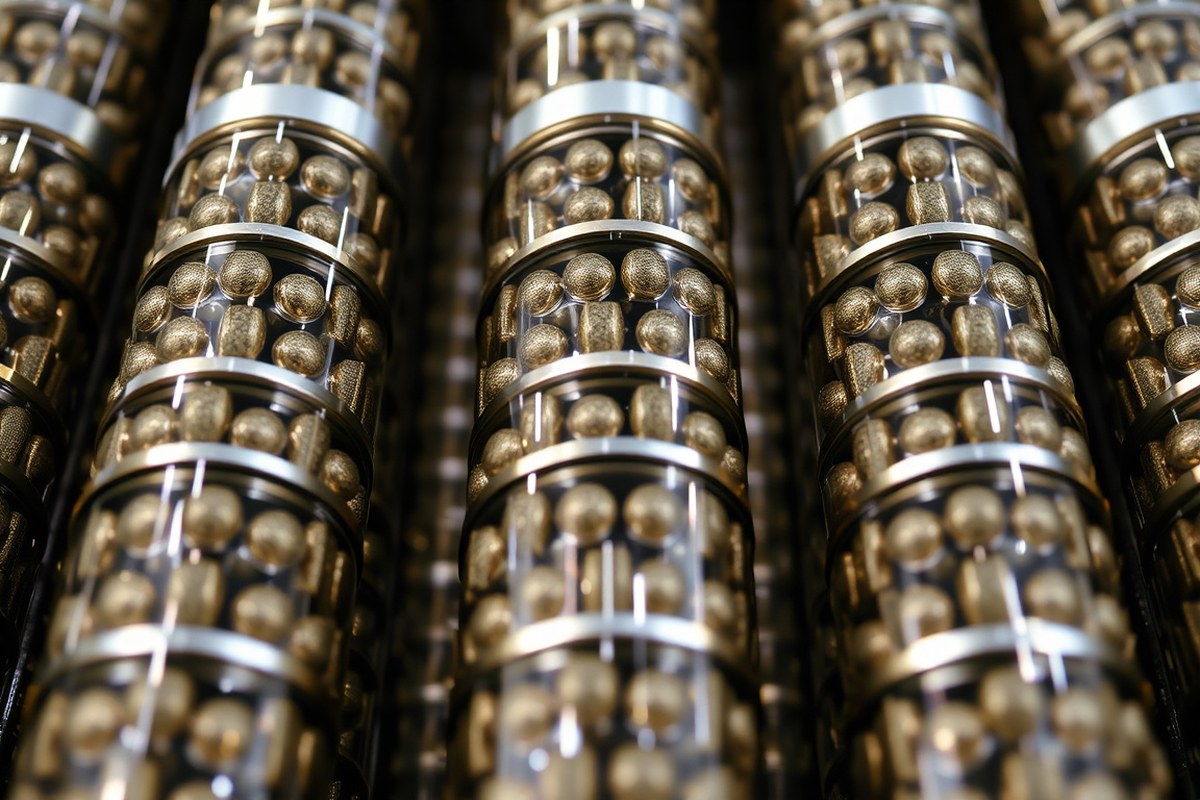
Nuclear fuel rods typically last between 3 and 6 years inside a reactor before they need to be replaced. This lifespan includes multiple operational cycles where the fuel undergoes fission to generate heat for power production. Most commonly, reactors operate with fuel rods for about 3 to 5 years, during which they reach a burn-up level around 45 to 65 gigawatt-days per ton (GWd/t) of uranium. Burn-up measures how much energy is extracted from the nuclear fuel, indicating its remaining usefulness.
The replacement cycle depends on reactor design and fuel management strategies but usually involves removing about one-third of the reactor’s fuel assemblies every 12 to 24 months. This partial replacement keeps the core efficient while managing the buildup of radioactive byproducts that reduce fuel performance. For example, a 1000 MWe power reactor using fuel enriched to roughly 4.5 to 5 percent U-235 will typically swap out a fraction of fuel bundles in intervals of about 18 months to 2 years. These fuel bundles contain dozens to hundreds of rods, each about 14 feet long and weighing roughly 500 kilograms.
Fuel rods become less effective at sustaining fission over time because neutron activation gradually changes their composition and produces fission products that absorb neutrons. Once the fuel reaches approximately 45 to 65 GWd/t burn-up, the rods no longer sustain the nuclear reaction efficiently. Operators replace spent rods with fresh fuel to maintain power output. Higher burn-up allows longer operation cycles, often extending fuel use to the higher end of the 3, 6 year range and reducing the volume of spent fuel generated annually. Burnable absorbers inside the fuel can delay neutron poisoning, supporting these longer burn-up periods.
After about 3 to 5 years of use, depending on the burn-up and reactor type, nuclear fuel rods become “spent.” Although they no longer support a chain reaction, they still contain some fissile material, such as U-235, alongside many radioactive elements. The decision to replace fuel rods is a balance of economics, reactor performance, and safety requirements. If replaced too early, fuel is wasted; if replaced too late, the reactor’s efficiency and safety margins decrease. Operators rely on monitoring systems and fuel performance data to determine the optimal timing, typically linked to planned outages for maintenance and refuelling.
What Factors Influence the Lifespan of Nuclear Fuel Rods?
The lifespan of nuclear fuel rods depends on several interrelated physical, chemical, and operational factors that influence how long they remain effective inside a reactor. One key element is uranium enrichment, the proportion of fissile U-235 isotope in the fuel. Standard enrichment levels for typical reactors range from about 3% to 5%. Higher enrichment generally increases the fuel’s burnup capacity and thus its lifespan, allowing it to generate more energy before becoming spent.
Reactor conditions, including temperature and neutron flux, also directly affect fuel rod durability. Typical operating temperatures for fuel rods range between 500°C and 800°C, which stresses the zirconium alloy cladding that encases the uranium dioxide pellets. This cladding must maintain integrity under radiation and heat to prevent release of radioactive materials. Prolonged exposure to high neutron flux causes damage such as swelling and embrittlement, ultimately limiting the fuel rod’s operational life.
Chemically, the fuel rods undergo oxidation and fission product accumulation. As uranium atoms split, fission products accumulate inside the pellets, increasing internal pressure and fuel rod stress. These chemical changes contribute to eventual degradation. The fuel’s initial composition, including use of additives during fabrication, impacts how the chemical environment evolves and how quickly damage accrues.
- Maintain uranium enrichment between 3% and 5% for efficient longevity.
- Monitor reactor core temperatures, keeping them within recommended ranges to avoid excessive cladding wear.
- Control neutron flux to optimize burnup and limit physical radiation damage.
- Inspect fuel assemblies regularly for signs of cladding swelling or cracking.
- Use high-quality zirconium alloys for cladding to improve resistance to corrosion and radiation damage.
- Consider cycling fuel rod use with partial shuffling to extend overall assembly life.
Carefully tracking reactor operating conditions and fuel performance avoids premature fuel rod failures and costly unscheduled replacements.
Efficiency and longevity also depend on operational management. Reactors typically operate fuel rods for several years, achieving burnup levels around 40 gigawatt-days per ton (GWd/t). Increasing burnup requires careful balancing of fuel enrichment and operational parameters. Fuel rods with low enrichment reach their limits sooner, while overly enriched fuel risks safety and regulatory concerns. Regular reactor core maintenance includes replacing fuel rods that show physical degradation or reduced neutron absorption efficiency.
In summary, the key determinants of nuclear fuel rod lifespan are uranium enrichment, reactor temperatures, neutron flux intensity, and material resilience against chemical changes during fission. Carefully balancing these factors helps maximize fuel use while ensuring safe and stable reactor operation.
How Are Nuclear Fuel Rods Made and What Materials Are Used?
Nuclear fuel rods are made by assembling enriched uranium oxide ceramics into small pellets. These pellets are packed into metal tubes, usually made of an alloy called zirconium, which is strong and resists corrosion inside the reactor. The process includes making uranium pellets, fabricating them into rods, and then bundling the rods into assemblies that fit into reactor cores.
Uranium Pellet Production
The uranium used in fuel rods is usually low-enriched uranium oxide (UO2), a ceramic material. It starts as uranium ore, which undergoes milling and conversion to uranium hexafluoride gas for enrichment. After enrichment, the uranium is converted to a powder that is pressed into small cylindrical pellets roughly 0.4 inches (about 1 cm) in diameter and length.
These pellets are then sintered at high temperatures, around 1,400 to 1,700 °C (2,500 to 3,100 °F), to bond the grains and increase density. The ceramic form allows the pellets to withstand intense heat and radiation inside the reactor. Achieving the right pellet density and uniform size is important for safe reactor operation and efficient fuel burnup.
Fabrication of Fuel Rods
Once the pellets are made, they are loaded into long, thin metal tubes called cladding. This cladding is commonly a zirconium alloy, chosen for its low absorption of neutrons and corrosion resistance in the reactor environment. The tubes are typically about 0.4 inches in diameter and sealed at both ends to contain the fuel.
To create a complete fuel rod, pellets are stacked inside the cladding tube with small gaps to allow for thermal expansion. Then, the tubes are sealed by welding end caps to prevent the release of radioactive gases during reactor operation. The rods go through inspections to check for defects or contamination before assembly.
Assembly into Fuel Bundles
Fuel rods are grouped into fuel assemblies or bundles that fit precisely into the reactor core. This assembly contains a specific number of rods arranged in a defined geometric pattern, often between 60 and 264 rods depending on the reactor type.
The assembly process involves aligning rods in a strong metal framework that holds them under compression and spacing them for optimal coolant flow. Control rods and instrumentation spaces are also accounted for to manage the reactor’s power output effectively. After assembly, the bundles go through quality control checks before shipment to nuclear power plants.
- Convert enriched uranium hexafluoride gas into uranium dioxide powder.
- Press the powder into cylindrical pellets of about 0.4 inches diameter and length.
- Sinter the pellets at high temperature to increase density and strength.
- Load pellets into zirconium alloy cladding tubes with small gaps for expansion.
- Seal the tubes by welding end caps to contain fission gases.
- Inspect the rods for defects and contamination.
- Arrange fuel rods into assemblies using metal frameworks for stability and coolant flow.
- Perform final quality checks before transportation to the reactor site.
How Long Do Spent Nuclear Fuel Rods Remain Radioactive?
Spent nuclear fuel rods stay intensely radioactive once taken out of a reactor, emitting radiation that lasts for thousands of years. Soon after a reactor shuts down, the rods generate considerable decay heat from short-lived fission products, requiring careful control to prevent overheating. For cooling and radiation protection, spent fuel is kept underwater in pools at the plant site for a period ranging from five to 20 years.
The radioactivity of spent fuel decreases over time, but its long-term hazards persist due to certain isotopes. Short-lived isotopes like iodine-131 and cesium-137 cause intense radiation and heat within the first decade. After that, the radioactivity slows down as these elements decay. However, long-lived actinides such as plutonium-239 and uranium-233, both produced during reactor operation, contribute to residual radioactivity for thousands to hundreds of thousands of years. Plutonium-239, for instance, has a half-life of about 24,100 years, making the spent fuel toxic and radioactive for millennia.
Decay heat drops substantially but remains a concern for years after removal. At reactor shutdown, decay heat can be around 7% of the reactor’s former full power and declines by about 90% in the first year. This requires the spent fuel to stay in cooling pools until the heat generation stabilizes to a safe level that allows transfer to dry cask storage if planned. Without active cooling, the temperature can rise, risking water boiling off and possible release of radioactive gases, emphasizing the need for reliable cooling systems.
For long-term management, spent fuel may be stored in dry casks once heat output and radiation have reduced sufficiently, typically after five years or more in pools. These casks provide shielding and passive cooling, allowing storage onsite or in designated facilities. Some countries plan permanent disposal in deep geological repositories, designed to isolate the fuel from the environment for hundreds of thousands of years, addressing the protracted hazard posed by long-lived isotopes.
The timeline for radioactive decay starts with intense heat and radioactivity in the first decade, followed by a gradual decline over centuries to millennia. Short-term management focuses on reducing decay heat and shielding radiation in pools. Long-term safety depends on isolating long-lived actinides from the environment. This dual-phase approach balances practical cooling needs immediately after removal with the extended timescales required to handle persistent radioactivity.
What Happens to Fuel Rods After Removal from Reactors?
After nuclear fuel rods are removed from reactors, they undergo several steps to ensure safe handling, cooling, and disposal. Initially, they remain highly radioactive and must be cooled in water pools before transfer to dry storage or recycled. Safe transport and potential reuse depend on strict protocols that manage radiation risks and regulatory controls.
Spent Fuel Pool Cooling
Once fuel rods are taken out of the reactor, they are placed into spent fuel pools (SFPs). These pools contain water that is continuously circulated to cool the rods and shield radiation. Cooling typically lasts for several years until the radioactivity and heat output decrease enough for the rods to be handled with less risk.
Spent fuel pools maintain water temperatures around 68°F to 77°F (20°C to 25°C) and provide a water depth of at least 20 feet (6 meters) to adequately absorb radiation. The pools require constant filtration and monitoring to prevent radioactive contamination or overheating. Overcrowding can challenge safety, prompting transfers to dry cask storage once the fuel cools sufficiently.
Dry Cask Storage
After enough cooling, usually after 5 to 10 years in the pools, spent fuel is transferred into dry cask storage containers. These casks are strong steel and concrete cylinders that provide shielding and prevent radiation leakage. They also resist weather, seismic activity, and other external hazards.
Dry casks stay on-site at reactor locations or Independent Spent Fuel Storage Installations (ISFSIs). This method can store fuel safely for decades but is not a permanent solution. The casks slowly deteriorate over time and require monitoring. Effective dry storage reduces risk by minimizing water dependency and allowing easier access for inspections.
Recycling and Reprocessing Options
About 96% of spent nuclear fuel contains materials that can be recycled and reused in reactors. Recycling involves chemical reprocessing to extract usable elements such as uranium and plutonium, which can be fabricated into new fuel rods. This process also reduces the volume and toxicity of waste needing disposal.
Currently, the United States prohibits commercial reprocessing mainly due to economic and non-proliferation concerns. However, many European countries recycle spent fuel routinely. Recycled fuel extends the energy extracted from uranium and helps manage long-lived radioactive waste. Recycling requires specialized facilities and strict safeguards to prevent diversion of nuclear material. Handling spent fuel rods after removal follows a series of steps to maintain safety and prepare for long-term management. The steps include:
- Remove spent fuel rods from the reactor and place them into spent fuel pools.
- Cool the rods in these pools for 5-10 years to reduce heat and radiation.
- Inspect the rods and water quality regularly to ensure safe conditions.
- Transfer the cooled fuel into dry cask storage containers at the site.
- Monitor the dry casks for radiation, corrosion, and environmental impact.
- Decide on potential recycling or long-term disposal strategies based on policy and available facilities.
- Transport spent fuel only in certified shipping casks designed to withstand accidents and radiation shielding standards.
- Store fuel temporarily at reactor sites, ISFSIs, or consent-based federal interim storage facilities until permanent disposal options are ready.
Always ensure transportation of spent fuel complies with regulations for radiation shielding, accident resistance, and security to prevent risk to workers and the public.
How Do Different Reactor Types Affect Fuel Rod Lifespan?
Different types of nuclear reactors use distinct fuel rods and assemblies, which influences how long the rods last and how they operate within the reactor core. The number of fuel rods varies with the reactor design, affecting the fuel management and replacement schedule. For example, reactors based on uranium oxide typically use enriched uranium pellets encased in zirconium alloy cladding, but the fuel enrichment levels and assemblies differ widely.
Light Water Reactors (LWRs), the most common type worldwide, usually hold between 121 and 193 fuel assemblies. Each assembly contains hundreds of fuel rods bundled together. The fuel rods in LWRs typically last about 3 to 6 years, depending on the burnup rate, which measures how much energy is extracted from the fuel. Pressurized Water Reactors (PWRs) and Boiling Water Reactors (BWRs) fall under this category, but PWRs generally have more strong fuel assemblies and slightly longer fuel rod life within the reactor core.
Heavy Water Reactors (HWRs), such as CANDU reactors, use natural uranium as fuel with different rod configurations and operate at lower pressures. These reactors feature modular fuel assemblies with somewhat fewer rods per assembly compared to LWRs, and their fuel rods usually last around 1 to 2 years before replacement, but the natural uranium allows for different refueling patterns without shutting down completely.
Fast Breeder Reactors (FBRs) present a different case as they use plutonium or mixed oxide (MOX) fuel rods containing a blend of uranium and plutonium oxides. The fuel assemblies here have a distinct size and construction, and fuel rods last about 2 to 4 years. These reactors operate at higher temperatures and neutron flux, which influences fuel wear and lifespan.
| Reactor Type | Fuel Rod Count per Assembly | Total Fuel Assemblies in Core | Typical Fuel Rod Lifespan | Fuel Material |
|---|---|---|---|---|
| Pressurized Water Reactor (PWR) | 200 to 300 rods | 121 to 193 | 4 to 6 years | Enriched Uranium Oxide |
| Boiling Water Reactor (BWR) | 90 to 120 rods | ~700 (smaller assemblies) | 3 to 5 years | Enriched Uranium Oxide |
| Heavy Water Reactor (HWR/CANDU) | 12 to 20 rods | ~380 | 1 to 2 years | Natural Uranium |
| Fast Breeder Reactor (FBR) | ~200 rods | 60 to 120 | 2 to 4 years | Plutonium/MOX Fuel |
The design and materials influence how fuel rods degrade, requiring different cooling, replacement schedules, and refuelling strategies. PWRs and BWRs use fuel with higher uranium enrichment to allow longer time between replacements, while HWRs can refuel without shutting down and require more frequent fuel swaps. Fast Breeder Reactors face higher radiation damage rates but extend fuel utility by generating more fissile material. These differences affect operation costs and the volume of spent fuel generated over time.
What Safety Measures Govern Nuclear Fuel Rod Replacement and Storage?
Replacing nuclear fuel rods follows strict regulations established by agencies like the U.S. Nuclear Regulatory Commission (NRC). These rules set limits on radiation exposure for workers and the environment, dictate inspection intervals, and specify the maximum time fuel rods can remain in a reactor. Operators use those regulations as a decision rule to determine when to replace rods based on factors like burnup levels and radiation measurements.
Safety protocols focus on minimizing radiation exposure during removal. Workers wear protective gear, and remote handling tools reduce direct contact. The reactor cooldown period lowers radiation levels before removal begins, usually lasting several weeks. Monitoring devices track radiation in real time, and strict access controls prevent unauthorized entry to high-radiation zones.
Spent fuel rods are transferred to cooling pools lined with steel and surrounded by water. Water absorbs heat and radiation, providing shielding. To ensure long-term safety, pools have continuous water circulation and temperature control, maintaining water temperatures typically below 40°C (104°F). Regular inspections check for leaks or corrosion in pool liners and structural components, following a checklist that includes:
- Verifying radiation levels inside and around the pool
- Monitoring water chemistry to prevent corrosion
- Inspecting fuel rod integrity and arrangement
- Ensuring proper functioning of cooling and circulation systems
- Maintaining secure physical barriers and surveillance systems
- Updating radiation protection plans according to new safety data
After several years, often 5 to 10 in cooling pools, spent fuel may move to dry cask storage. These casks provide airtight, heavily shielded containment and are stored in secure areas monitored with radiation detectors, seismic sensors, and surveillance cameras. Long-term storage facilities maintain temperature controls and perform routine maintenance to detect any material degradation or radiation leakage early. This layered approach to safety prevents environmental contamination and keeps workers protected over decades.
Ignoring any step in these protocols can increase radiation risks or cause costly containment failures. For instance, failing to monitor water chemistry could lead to pool liner breaches, while inadequate cooling allows overheating. The investment in safety, both monetary and operational, includes expensive equipment, trained personnel, and ongoing inspections, but it significantly lowers incident risks and complies with legal and environmental responsibilities.
How Is Spent Nuclear Fuel Stored and How Long Can It Remain Safe?
Spent nuclear fuel rods remain highly radioactive and generate heat after use, requiring careful storage to ensure safety for decades. Initially, they stay in specially designed pools for about 5 to 10 years. Later, dry cask storage offers a secure interim solution that can last several decades or more, while permanent disposal plans focus on deep geological repositories designed to contain radioactivity for thousands of years.
Spent Fuel Pools
After removal from a reactor, fuel rods go into large pools filled with water that cools the rods and shields radiation. These pools must maintain continuous circulation and filtration systems to prevent overheating and avoid contamination. Regulations, especially since September 11, require that fuel pools are resistant to natural disasters and terrorist attacks, ensuring secure containment.
The typical duration for fuel rods in pools is 5 to 10 years, enough time for their heat and radioactivity to decrease significantly. Pools are located on-site at nuclear plants and are heavily monitored, providing immediate cooling and radiation shielding. However, pools have limited capacity, prompting the need for additional storage methods as more fuel accumulates.
Dry Cask Storage
Once cooled sufficiently in pools, spent fuel can be transferred to dry casks, which are steel and concrete containers that passively dissipate heat. Dry casks provide an interim storage solution lasting 40 to 60 years or longer, depending on regulatory approvals and maintenance. This method reduces risks associated with pool overcrowding and allows fuel to be stored safely on-site or at independent spent fuel storage installations (ISFSIs).
Transportation casks used to move spent fuel are engineered to withstand over 99 percent of vehicle accidents, including impacts, punctures, water immersion, and fires, ensuring safe transit to interim sites or final disposal facilities. Dry casks require less active management than pools, cutting costs and complexity, but still demand security measures against natural disasters and human threats.
Regular inspections of dry casks are critical to detect any degradation in the containment materials to prevent radiation leaks over long storage periods.
Deep Geological Repositories
Permanent disposal of spent nuclear fuel involves placing it in deep geological repositories hundreds of meters underground. The Nuclear Waste Management Organization (NWMO) is tasked with implementing such repositories using stable rock formations that isolate radioactive waste from the environment for tens of thousands of years. This method addresses environmental protection by preventing groundwater contamination and minimizing exposure risks.
The timeline for opening these repositories varies by country but generally spans multiple decades, from site selection and construction to final waste emplacement. Geological disposal is considered the safest long-term solution, as it provides physical and chemical barriers that reduce radiological hazards to near zero. Interim storage remains necessary until such repositories become operational.
Step-by-Step Action Plan for Understanding Nuclear Fuel Rod Lifespan and Management
Use this plan to grasp how nuclear fuel rods last, what affects their lifespan, and what happens after use.
- Start Today: Read about the typical operational time for fuel rods, usually 3 to 6 years, to set your expectations.
- Within a Week: Explore the main factors that change rod lifespan, such as reactor type and fuel enrichment, to understand variability.
- After 2 Weeks: Review how fuel rods are made with uranium dioxide pellets and zirconium alloy cladding to recognize material roles.
- Within 3 Weeks: Study the radioactive decay timeline of spent fuel rods, which remain hazardous for thousands of years, to appreciate safety needs.
- After 1 Month: Learn about storage methods like dry casks and pools to see how safety is maintained over time.
- Within 6 Weeks: Research how fuel rod management differs by reactor type, such as pressurized water reactors versus boiling water reactors.
- After 2 Months: Examine the regulations and safety protocols for replacing and storing fuel rods to understand legal and technical safeguards.
- Continuously: Follow updates from national nuclear agencies to stay informed about advances or changes in fuel rod technology and management.
Frequently Asked Questions
How Often Do Nuclear Fuel Rods Need to Be Replaced?
Nuclear fuel rods typically need replacement every 3 to 5 years due to reduced efficiency and increased radioactivity. Removing and replacing spent fuel ensures the reactor operates safely and maintains power output.
How Much Is a Nuclear Fuel Rod Worth?
The value of a nuclear fuel rod depends on its uranium content and market prices, but fuel rods themselves are not sold directly as individual items. Their worth is mainly tied to the cost of processed uranium and fuel fabrication.
How Long Do Nuclear Fuel Rods Stay Radioactive?
Spent fuel rods remain radioactive for thousands of years, with significant decay over time; some short-lived isotopes lose half their radioactivity within about 30 years. Safe long-term storage is essential to manage this radioactivity.
What Do They Do with Old Nuclear Fuel Rods?
Old fuel rods are removed from reactors and stored in secure pools or dry casks for cooling and containment. Some are reprocessed to extract usable isotopes, but most become high-level radioactive waste.
Can Nuclear Fuel Rods Be Reused or Recycled?
Some spent fuel rods can be reprocessed to reuse plutonium and uranium isotopes, reducing waste volume, but the process is complex and not widely practiced globally.
How Long Does It Take to Manufacture Nuclear Fuel Rods?
Manufacturing fuel rods can take several months, including uranium conversion, enrichment, pellet fabrication, and assembly into rods. This ensures quality and safety for reactor use.
Wrapping Up
Nuclear fuel rods operate inside reactors for several years before replacement, their lifespan influenced by design and usage factors. After removal, the rods stay radioactive for millennia, requiring strict storage and safety procedures. You can deepen your understanding by exploring your country’s nuclear regulatory agency website for current guidelines on fuel rod handling and disposal.