

Can You Drive Corvette Without MagRide Shocks? 10 Essential Facts & Tips
Can you drive Corvette without MagRide shocks? Yes, it’s possible to drive your Corvette without these adaptive shocks, but expect a stiffer, less smooth ride and diminished handling precision. Removing MagRide affects your suspension’s ability to adjust in real time, so maintaining proper tire pressure and smooth driving becomes essential for safety.
Start by checking your suspension and considering reliable traditional or aftermarket shock absorbers to replace MagRide. Proper suspension tuning helps preserve control and ride quality when MagRide shocks aren’t installed.
Key Takeaways
- Driving without MagRide shocks means a firmer, less adaptive ride with reduced handling finesse.
- Replace MagRide shocks with quality traditional or aftermarket suspension parts matched to your Corvette model.
- Maintain proper tire pressure consistently to support suspension performance without MagRide functionality.
- Adopt smooth acceleration, braking, and steering to minimize body roll and maintain vehicle stability.
- Inspect suspension components regularly, particularly if you’ve removed MagRide shocks to catch wear early.
- Expect lower replacement costs when switching from MagRide shocks to conventional shocks, but monitor ride comfort.
Can You Drive a Corvette Without MagRide Shocks Safely?

You can operate a Corvette without MagRide shocks, but the driving feel will be different. MagRide shocks automatically change damping forces to improve comfort and control on varying roads. Taking them out or turning them off stops this adjustment, leading to a ride that feels harder and less comfortable. On bumpy roads, the suspension will be stiffer, and the car may handle corners with reduced accuracy.
Driving without MagRide shocks remains safe if you take certain precautions. The key is to adopt a smoother driving style, including gradual acceleration, gentle braking, and careful steering inputs. Abrupt changes in speed or sharp turns can magnify body roll and reduce control since the suspension won’t adjust dynamically. Maintaining proper tire pressure also supports safety and handling when MagRide is off. Checking and adjusting your tire pressure regularly will help maintain grip and responsiveness, which is even more important with the less adaptive suspension.
Without MagRide, handling becomes more predictable but less forgiving. You won’t experience the instantaneous adjustments that help the car stay composed over uneven surfaces or during aggressive maneuvers. Expect corners to feel less planted and the ride to feel harsher on rough roads. This is due to the suspension operating with fixed damping settings rather than varying them on the fly. Some drivers appreciate this direct feedback, while others might find it less comfortable or confidence-inspiring compared to a Corvette equipped with functioning MagRide shocks.
To drive your Corvette safely without MagRide shocks, adjust your speed on rough or uneven roads. Slowing down slightly allows the suspension to manage bumps without unsettling the car. Approach corners smoothly, avoiding sudden steering inputs that can cause the stiffer suspension to react abruptly. Regular suspension checks are important to catch any emerging issues early, as the rigid setup can transfer more stress to other components, leading to wear if not addressed.
Removing MagRide shocks does not automatically mean the Corvette is undrivable or unsafe, but it demands more attention to driving habits and maintenance. You’ll sacrifice some sophistication in comfort and handling, trading it for a simpler, firmer suspension feel. Many drivers find this acceptable for street driving or specific track use, provided the suspension is properly tuned and supported with good tire care. Ignoring these adjustments can lead to rougher rides, reduced performance, and potential safety concerns over time.
How Does Driving Without MagRide Affect Suspension Performance?
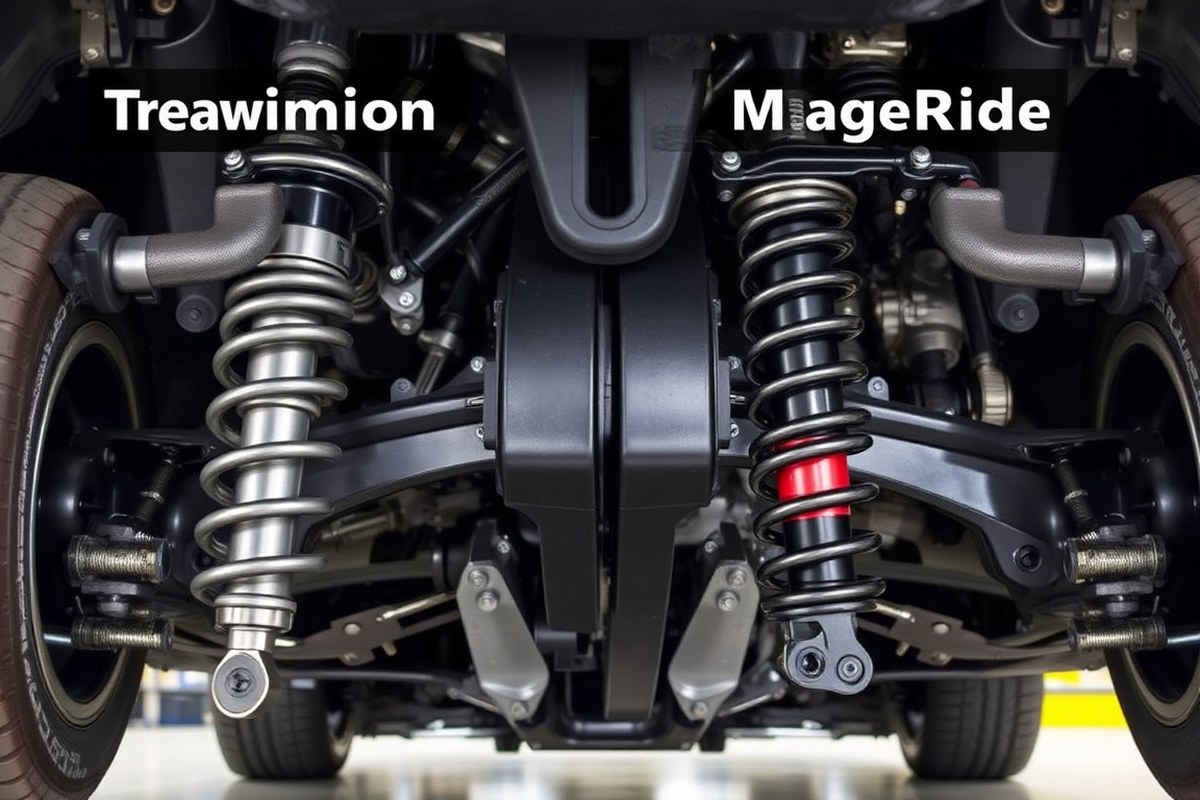
The main difference in suspension performance when removing MagRide shocks from your Corvette involves how the shocks respond to road conditions. MagRide technology uses adaptive magnetic fluid in its shocks, enabling rapid, real-time adjustments to damping stiffness. This system reacts to changes in road texture and vehicle dynamics instantly, optimizing comfort and handling. Without these adaptive shocks, your Corvette will rely on fixed-rate, conventional shocks that cannot adjust on the fly, resulting in a stiffer, less responsive ride.
Without MagRide, the suspension loses the ability to minimize body roll during cornering effectively. The adaptive damping normally reduces lean by stiffening or softening the shocks based on your driving inputs and road feedback. Instead, with conventional shocks, body roll increases significantly, which reduces precision and control in curves. Expect decreased cornering stability and grip, especially at higher speeds or during sharp maneuvers. This loss also slightly lowers your safety margin in emergency situations because the suspension cannot optimize traction dynamically.
Ride comfort also changes noticeably without MagRide. The shocks no longer adjust to absorb bumps smoothly; instead, the suspension transfers more road harshness directly to the cabin. This means driving on rough or uneven surfaces can feel more jarring and less controlled. The suspension’s fixed nature means it struggles to balance comfort with performance, leading to firmer rides that can fatigue the driver and passengers faster over long distances.
Driving without MagRide shocks means paying closer attention to suspension settings like spring rates, sway bars, and shock valving to partially compensate for lost adaptability. Proper setup can help regain some control and reduce body roll, but it won’t deliver the same level of dynamic adjustment. You’ll also want to monitor for increased suspension wear more carefully since fixed shocks experience different loads without the adaptive control.
Monitor body roll closely while driving without MagRide shocks, adjust your speed in corners until you’re confident the stiffer, non-adaptive suspension maintains control safely.
In summary, the functional changes in suspension response from removing MagRide shocks mean the Corvette delivers a more direct but rougher driving experience. You lose the balance and nuance of an adaptive system that manages stiffness automatically. Adaptations in driving style and suspension tuning become necessary to maintain control, comfort, and safety under these conditions. While some enthusiasts appreciate the rawer feel of fixed shocks, this switch also involves trade-offs in long-term suspension durability and consistent handling performance.
What Suspension Options Replace MagRide Shocks?
You can replace MagRide shocks on a Corvette with several suspension options, such as traditional shocks, coilover systems, or air suspension. Not every Corvette model supports MagRide shocks due to differences in design and model year, so checking compatibility is essential. Price-wise, MagRide shocks are usually more expensive than conventional shocks, especially considering labor costs.
Original MagRide Shock Characteristics
MagRide shocks use magnetorheological fluid controlled by electromagnets to adjust damping almost instantly. This system improve ride comfort and handling by continuously adapting to road conditions and driving style. It preserves the Corvette’s engineered balance and responsiveness, giving drivers an edge in stability and control.
The complexity of MagRide involves electronic sensors and actuators integrated with the suspension and chassis systems. Because of this, only Corvette models designed with MagRide-equipped suspensions can use these shocks, meaning you cannot install MagRide on older models or those without compatible mounts and wiring.
Conventional Shock Alternatives
Traditional shock absorbers remain a dependable replacement when you remove MagRide shocks. These mechanically controlled shocks lack the electronic adjustment but provide consistent damping suited for daily driving and spirited road use. They’re compatible with most Corvette models and typically cost less up front and for maintenance.
Replacing MagRide with conventional shocks usually costs between $1,500 and $3,000, including parts and labor, depending on your Corvette’s model year and the shop rates. While the ride might be less adaptable, traditional shocks offer simplicity, lower repair costs, and easier servicing over time.
Aftermarket Suspension Upgrades
Many Corvette owners choose coilover suspension kits to boost their car’s handling after taking out the MagRide shocks. Coilovers integrate springs and dampers in one adjustable setup, giving you control over ride height and firmness. These kits suit drivers aiming for track performance or tailored street handling but often need expert installation and precise alignment.
Air suspension systems can also replace MagRide, offering adjustable ride height and some damping control. However, these systems add complexity and cost, often exceeding the price of traditional shocks and coilovers. Choosing aftermarket options depends on your driving goals, budget, and how much adjustment you want. The following table compares the main suspension replacement options against MagRide shocks in terms of compatibility, cost, and features:
| Suspension Type | Compatibility with Corvette Models | Approximate Cost (Parts + Labor) | Adjustability | Maintenance Complexity |
|---|---|---|---|---|
| MagRide Shocks | Only on models designed for MagRide (varies by year) | $1,500, $3,000 | Electronic real-time adjustment | High (electronics and sensors) |
| Conventional Shocks | Most Corvette models | $1,000, $2,500 | Fixed damping | Low (mechanical only) |
| Coilover Suspension | Most Corvette models (aftermarket kits) | $1,200, $3,000+ | Manual height and damping adjustment | Medium (requires tuning and alignment) |
| Air Suspension | Available for aftermarket installation | $2,500, $5,000+ | Adjustable height and partial damping | High (complex system) |
Using conventional shocks simplifies suspension maintenance but sacrifices the dynamic adjustability of MagRide. Coilovers bridge that gap by allowing manual adjustments but without real-time electronic control. Air suspension offers some adjustability but can be costly and more involved to maintain. Your choice depends on your Corvette model, budget, and tuning preferences.
How to Adjust Your Driving Style Without MagRide Suspension
Driving a Corvette without MagRide shocks requires you to be more deliberate with your inputs to keep the car stable and responsive. Focusing on smooth steering, gradual acceleration, and braking will help manage the Corvette’s handling without adaptive suspension. Controlling body roll during cornering involves anticipating turns and adjusting your technique to compensate for the lack of electronic damping.
Smooth Steering Inputs
Without MagRide shocks, your Corvette’s suspension won’t instantly adjust to road changes, so sudden steering movements can upset the balance. Smooth steering inputs are essential to maintain control and reduce jolts from uneven pavement or curves. This approach helps your tires maintain consistent contact with the road, improving traction and safety. Apply the following steps to sharpen your steering technique:
- Begin turns gently to avoid sudden weight shifts that unsettle the car.
- Maintain a consistent steering angle rather than making quick corrections mid-turn.
- Look ahead to plan your line through turns, enabling smoother steering adjustments.
- Release the steering gently when exiting corners to prevent rear-end instability.
- Avoid abrupt lane changes or weaving to keep the Corvette balanced.
Gradual Acceleration and Braking
The absence of MagRide shocks means your suspension can’t compensate quickly for hard acceleration or braking forces. Abrupt application of throttle or brakes can cause the car to pitch or lose grip more easily. Modulating these inputs helps keep your Corvette stable and responsive. Follow these steps to refine your acceleration and braking techniques:
- Increase throttle progressively after completing the steering input in a turn.
- Begin braking early and apply pressure gradually instead of slamming the brakes.
- Use engine braking where possible to smooth out deceleration.
- Maintain enough following distance to avoid sudden stops.
- Practice trail braking into corners, easing off the brakes as you steer to maintain balance.
Managing Body Roll and Cornering
MagRide shocks actively reduce body roll, but without them, you need to counteract this by adjusting your driving style and suspension setup. Controlling body roll with driving technique translates to better traction and more confidence through corners. Consider these strategies for minimizing body roll:
- Approach corners at slower speeds to reduce lateral forces on the suspension.
- Shift your weight smoothly by applying the accelerator and brakes gently to lessen suspension dive and squat.
- Look for suspension upgrades such as stiffer sway bars, upgraded bushings, or control arms that help limit roll mechanically.
- Practice taking turns using the racing line to reduce the sharpness of your turn radius.
- Keep tire pressures at manufacturer recommendations to ensure consistent sidewall stiffness and handling.
Choosing the Right Tires & Pressure Without MagRide
Your Corvette’s handling depends heavily on the tires you choose and the tire pressure you maintain, especially when driving without MagRide shocks. Without the adaptive damping system, the tires become more critical for absorbing road irregularities and providing traction on corners and braking. Selecting performance tires designed for sport driving can help compensate for the loss of suspension tuning.
Summer performance tires with a softer compound and stiffer sidewalls generally deliver better grip and responsiveness than all-season tires. This type of tire keeps the car planted through turns even when the suspension cannot adjust instantaneously. Look for tires with a treadwear rating between 200 and 300 for a balance between grip and durability. Avoid tires with hard compounds or touring designs, as they limit feedback and traction.
Maintaining the right tire pressure plays a important role in letting these tires perform optimally. Underinflated tires create excessive sidewall flexing, which worsens handling and can increase uneven heat buildup. Overinflated tires reduce the contact patch, which lessens grip and can lead to a harsh ride. For a Corvette without MagRide, a tire pressure of about 32 to 35 psi is a practical starting point but adjust based on driving style and load.
- Check tire pressure cold, before driving, using a reliable gauge.
- Inflate tires to the manufacturer’s recommended psi for daily driving, then raise by 2-3 psi for spirited driving.
- Monitor tire wear patterns every 3,000 to 5,000 miles to catch any uneven wear early.
- Use summer performance tires rated for the temperatures you expect to drive in (typically above 40°F).
- Rotate tires regularly, every 6,000 to 8,000 miles, to promote even wear.
- Replace tires with tread depth below 4/32 inch for optimal wet and dry traction.
A smooth transition away from MagRide requires vigilance in maintaining consistent tire conditions. Without adaptive dampers, shocks do not absorb bumps as actively, so the tires take more load. Running the correct tire pressure helps reduce the risk of excessive bouncing or unpredictable handling. Incorrect pressure or poor tire choice can lead to faster tire wear, increased body roll, and compromised safety during aggressive maneuvers.
Regularly check tire pressure and adjust for load and temperature changes to maintain Corvette handling precision without MagRide shocks.
Recognizing Suspension Issues Without MagRide Shocks
Without MagRide shocks, your Corvette’s suspension relies on traditional components that lack adaptive damping. This means you have to be extra vigilant for signs of wear or failure, as the system won’t self-adjust to road conditions. Monitoring suspension health helps maintain handling, comfort, and safety. Common symptoms include excessive bouncing, pulling to one side, unusual noises, or uneven tire wear.
To spot problems, watch how the car behaves during daily driving and test drives. If your Corvette feels unstable over bumps or sways more than usual, the shocks, struts, or other suspension parts might be worn. Having the car pull left or right, especially on smooth roads, often indicates alignment or suspension issues. Unusual clunks, rattles, or squeaks when going over rough pavement can signal loose or damaged components. Here is a list of common signs your Corvette’s suspension needs service or replacement without MagRide shocks:
- Excessive bouncing after hitting a bump or dip
- Vehicle pulling to one side while driving straight
- Uneven or rapid tire wear patterns
- Clunking or rattling noises from suspension area
- Steering feels loose or less responsive
- Visible leaks from shock absorbers or struts
- Front end drops when braking sharply
Checking your suspension components regularly, ideally every 10,000 miles or as part of routine maintenance, helps catch problems before they worsen. MagRide shocks in Corvettes usually need servicing or replacement within 30,000 to 50,000 miles due to their complex electronics and fluid systems. Traditional shocks may last longer but show similar symptoms when failing.
Visual inspections can reveal cracked bushings, leaking shocks, or damaged mounts. A simple bounce test helps too: press down hard on a corner of the car and release. The vehicle should settle quickly without repeated bouncing. Multiple bounces suggest worn shock absorbers. Repair or replace worn parts promptly to avoid compromised handling, uneven tire wear, or even suspension failure at high speeds.
Maintenance Checklist for Corvettes Without MagRide Shocks
Maintenance for a Corvette without MagRide shocks focuses on traditional suspension components that require regular attention to maintain handling and safety. Since your Corvette no longer benefits from the adaptive damping of MagRide, the remaining shock absorbers, springs, bushings, and alignment need careful upkeep to compensate for the changes in ride dynamics.
Suspension inspection should happen every 5,000 to 7,500 miles or during every oil change since tires, brake wear, and suspension condition often relate. Visual checks look for leaking shocks, cracked bushings or rubber components, and uneven tire wear. Listen for unusual noises over bumps, which often signal worn parts that can worsen without active damping like MagRide.
- Inspect shocks and struts for oil leaks and damage at least every 7,500 miles
- Check and replace suspension bushings if cracked or excessively worn
- Perform wheel alignment every 12,000 miles or after suspension repairs
- Monitor tire wear patterns monthly to catch suspension issues early
- Lubricate any suspension ball joints or grease fittings during oil changes
- Replace shocks every 50,000 miles or sooner if performance drops
- Check spring condition for sagging or corrosion annually
Without MagRide’s electronic adjustment, you’ll rely on standard shock absorbers that wear out in predictable ways. Removing MagRide shifts more stress to conventional components, making it critical to stick to a strict maintenance schedule. Shocks should feel firm yet compliant; sponginess or excessive bouncing after a press test indicates worn shocks. Bad bushings cause loose steering or clunking noise over bumps.
Wheel alignment also plays a bigger role in handling without MagRide. Regular alignment ensures proper tire contact and prevents uneven wear, which can quickly degrade ride quality on traditional suspension systems. Typical wheel alignment costs range from $75 to $150 depending on location and shop.
Costs for this maintenance vary. Shock replacement parts usually cost between $100 to $300 per shock, with labor adding $100 to $200 depending on your mechanic. Bushing replacements can cost $50 to $200 per component depending on material and complexity. Regular inspections during oil changes typically add little to no extra cost if you do them yourself or if the mechanic includes them in routine service.
Cost and Insurance Differences Without MagRide Shocks
Owning a Corvette without MagRide shocks reduces some maintenance complexity but introduces potential impacts on resale value. Insurance premiums typically remain similar regardless of suspension type. Expect replacement shock costs and resale effects to guide your decision most.
Replacement Cost Comparison
Maintaining traditional shocks proves more budget-friendly and simpler than dealing with MagRide shocks. The electronic components of MagRide shocks increase repair difficulty and part costs. Traditional shocks avoid these complexities, offering straightforward replacement procedures.
| Shock Type | Typical Replacement Cost | Maintenance Complexity |
|---|---|---|
| MagRide Shocks | $1,200 – $2,000 | High – electronic system dependencies |
| Traditional Shocks | $300 – $600 | Low – mechanical replacement only |
Cost savings by switching to traditional shocks can be significant, especially when factoring in fewer electronic failures. However, you may sacrifice ride adaptability by giving up MagRide’s real-time damping adjustments.
Insurance and Resale Implications
Insurance companies assess risk primarily through vehicle make, model, driver history, and location. Changing suspension from MagRide to traditional shocks usually does not affect premium costs. Your insurer is unlikely to base rates on suspension type alone.
Resale value reacts differently. Corvette buyers tend to expect original equipment, and removing MagRide shocks lowers appeal and market price. The advanced suspension contributes to performance branding, making its removal noticeable.
Warning: Removing factory suspension components can void warranties or reduce buyer interest, so maintain documentation and consult a trusted mechanic before modifying.
In many cases, keeping the MagRide shocks maintains the highest resale value, even if ownership costs are higher. Selling a Corvette without MagRide can take longer and yield a lower offer.
Safety Tips for Driving a Corvette Without MagRide Suspension
Driving a Corvette without MagRide shocks changes how your suspension manages road conditions, making extra safety precautions necessary. Since adaptive damping isn’t active, you lose instant adjustments that help maintain traction and stability, especially during aggressive cornering or rough surfaces. This demands that you remain more aware of road feedback and adjust your driving to maintain control.
Essential safety practices involve both preparation and real-time responses. First, ensure your suspension components are in good condition, as worn shocks or springs can worsen handling and increase stopping distances. Regular inspections and timely repairs can cost from $250 to $700 depending on parts and labor but are worth the expense for safety and performance. Also, monitor tire condition and pressure closely since tires carry more burden without adaptive suspension. Correct tire pressure, usually between 32 to 35 psi for performance Corvettes, helps prevent reduced grip and uneven wear.
- Drive smoothly; avoid sudden steering, braking, or acceleration inputs
- Increase following distance to allow extra reaction time
- Slow down before corners to compensate for less adaptive handling
- Scan the road ahead for hazards earlier to anticipate changes in traction
- Use engine braking on descents to reduce brake heat and maintain stability
- Keep a properly inflated spare tire and basic tools accessible
- Have a mobile phone or emergency communication device ready
In emergency situations without MagRide’s adaptive support, your response must rely on steady, controlled inputs to regain stability. If you experience understeer (front tires losing grip), gently ease off the accelerator instead of braking hard, and steer toward your intended path without abrupt movements. For oversteer (rear tires sliding), softly apply throttle and countersteer smoothly to regain balance. Braking should be progressive and modulated to avoid locking wheels; ABS systems still function, but abrupt pedal pressure can unsettle the car.
Maintaining calm and focusing on smooth corrections prevents jerky behavior that could escalate loss of control. Practicing these maneuvers in a safe environment, like an empty parking lot, builds muscle memory for real emergencies. Keep in mind that road conditions such as rain or rough pavement increase the challenge, necessitating even lower speeds and cautious handling.
When to Upgrade or Replace Suspension After Removing MagRide
Upgrade or replacement of your Corvette’s suspension after removing MagRide shocks depends mainly on your driving style, road conditions, and performance expectations. You mainly drive on smooth roads and prefer a comfortable ride; the stock suspension without MagRide can work well for a period. However, the moment you notice rougher handling, increased body roll, or less grip during cornering, it’s time to consider upgrading or tuning your suspension components.
Start by assessing your Corvette’s current suspension performance through a combination of personal driving feedback and a simple test. Drive your car on a winding road or a track at moderate speeds and pay close attention to how it responds. You notice excessive bouncing, delayed steering response, or instability during cornering; these signs show you’re missing the advantages of MagRide shocks. This triggers the need for aftermarket coilovers or performance shocks that offer manual adjustability to regain control.
Tuning suspension without MagRide involves manually adjusting spring rates, damping, and ride height. Since you lose adaptive shock tuning, you must match hardware settings to your typical usage. For street use with occasional spirited driving, consider medium spring rates and adjustable dampers that let you firm up or soften the ride as needed. Budget for this process to begin around $1,000 to $2,500 for quality coilovers or shocks, potentially more depending on brand and features.
Apply a simple decision rule: If you experience three or more of the following within 30 days after removing MagRide, body roll greater than 5 degrees during cornering, front-end dive over bumps more than 2 inches, or poor traction in turns, you should upgrade suspension components. This approach helps you balance cost and performance without unnecessary expenses.
Good upgrade results look like improved stability, sharper turn-in, and consistent grip without sacrificing comfort beyond your tolerance. Poorly timed or inadequate upgrades lead to a harsher ride, unpredictable handling, or premature wear of other components like bushings and tires. Keep in mind environment changes, for instance, if you move from mostly highway driving to more track days, tune or upgrade accordingly to maintain control and safety.
Regular inspections are key. Even with a new setup, monitor your suspension after the first few hundred miles and then every season. Adjust damper settings or replace parts showing wear to maintain performance. Consulting a suspension specialist familiar with Corvettes is recommended for customizing your setup to make up for the loss of MagRide’s adaptive features while keeping your Corvette responsive and safe.
Step-by-Step Action Plan for Driving Your Corvette Without MagRide Shocks
Follow these steps to adapt your Corvette and your driving habits to a setup without MagRide shocks, maintaining control and safety.
- Before You Remove MagRide: Inspect your current suspension thoroughly with a trusted mechanic to understand baseline conditions and note any existing issues.
- Day 1 After Removal: Install an appropriate alternative suspension system, such as performance coilover shocks or standard monotube shocks designed for your Corvette model.
- Week 1: Adjust tire pressure to the recommended levels for non-MagRide suspensions, typically slightly firmer to compensate for less damping control, and test driving in a controlled environment.
- Week 2: Gradually modify your driving style by easing off aggressive cornering and hard braking; track changes in vehicle response and ride comfort.
- One Month: Conduct a thorough check for suspension wear or unusual noises, paying close attention to handling and tire wear to catch early signs of issues.
- Every 3 Months: Perform regular suspension maintenance, including lubrication and tightening of components, to keep the setup reliable and learn how the non-MagRide system behaves over time.
- Six Months: Consider consulting a professional to assess whether an upgrade or different shock setup is needed based on your driving preferences and any performance limitations noticed.
Frequently Asked Questions
Can You Drive a Corvette Without MagRide Shocks on Rough Roads?
Yes, you can, but reduce your speed and avoid sudden maneuvers to manage the stiffer suspension and maintain control on rough surfaces.
Will Removing MagRide Shocks Affect My Corvette’s Resale Value?
It likely will lower resale value, as MagRide is a valued performance feature among Corvette buyers.
Does Driving Without MagRide Shocks Increase Tire Wear on a Corvette?
Driving without MagRide shocks can cause uneven tire wear, so monitor tire condition closely and maintain proper inflation.
Can I Use Standard Shocks on a Corvette Originally Equipped with MagRide?
Yes, you can replace MagRide with conventional shocks, but expect differences in ride comfort and handling dynamics.
How Often Should Suspension Components Be Inspected Without MagRide Shocks?
Inspect suspension parts every 6,000 to 10,000 miles to catch wear early and maintain safe handling.
Does Driving a Corvette Without MagRide Affect Braking Performance?
Braking may feel less stable as the suspension adapts slower, requiring smoother brake application for control.
Wrapping Up
You can confidently operate your Corvette without MagRide shocks by selecting the proper suspension substitutes and adapting how you drive. Begin with installing compatible shocks and keep an eye on suspension conditions to maintain steady performance. Acting proactively will preserve your Corvette’s handling and keep your driving experience enjoyable even without the MagRide setup.