What Does 4×4 Mean on a Jeep? A Complete Guide with Practical Tips
The term “what does 4×4 mean on a Jeep” refers to a four-wheel drive system that powers all four wheels simultaneously. This feature provides improved traction, control, and off-road capability by distributing power evenly, especially on slippery or rough terrain. Engaging 4×4 correctly helps your Jeep handle obstacles and uneven surfaces more effectively.
Key Takeaways
- 4×4 means your Jeep sends power to all four wheels, boosting traction on varied surfaces.
- Low-range 4×4 uses lower gears and slower speeds to help you climb obstacles without stalling.
- Part-time 4×4 systems should only run in 4×4 high during slippery or loose conditions to avoid drivetrain damage.
- Select a 4×4 system based on your off-road needs, from basic to advanced models like Selec-Trac.
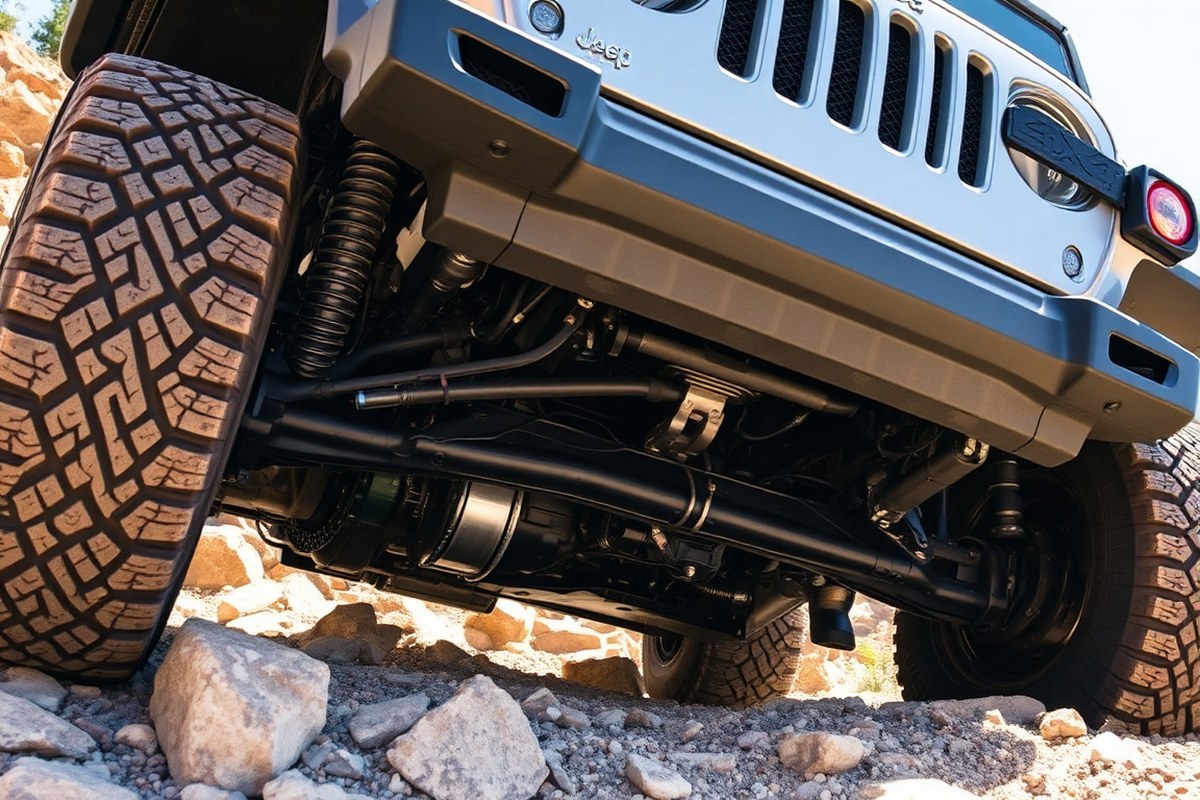
- Use your Jeep’s skid plates and rock rails to protect underbody components when off-roading.
- Regular maintenance keeps the 4×4 system reliable and ready for challenging terrain.
What Does 4×4 Mean on a Jeep and Why It Matters
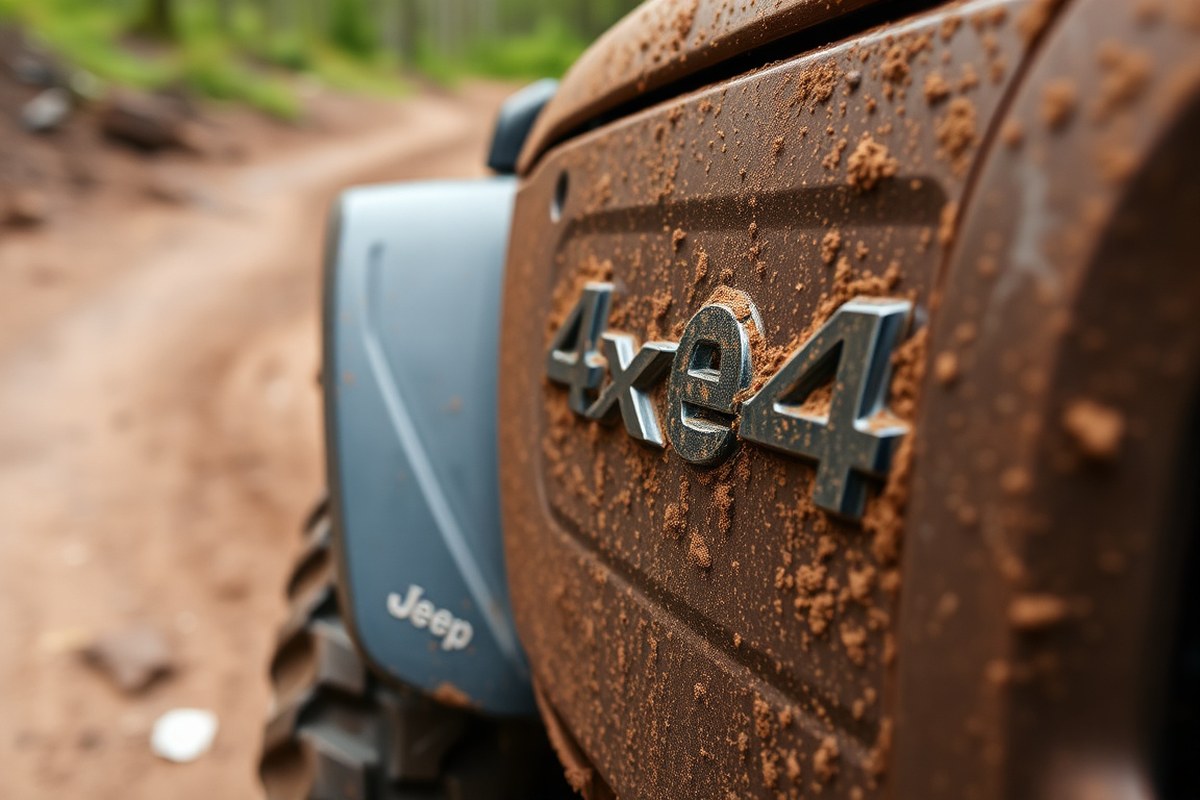
On a Jeep, 4×4 means the vehicle has a four-wheel-drive system that sends power from the engine to all four wheels simultaneously. This setup is designed to improve traction and control, particularly on rough or slippery terrain where two-wheel drive (2WD) might struggle. The “4×4” designation shows the Jeep’s ability to distribute torque evenly to front and rear axles, allowing it to maintain grip whether you’re climbing over rocks, driving through mud, or handling snow-covered roads.
Traction matters most when the surface under your tires is uneven or loose. Unlike 2WD, which powers only one axle (either front or rear), a 4×4 Jeep can actively engage all wheels to pull the vehicle forward. This reduces the chance of getting stuck and grants better stability that’s critical off-road. You’ll notice how a 4×4 system provides control during low-speed maneuvers or steep hill climbs by helping each wheel maintain grip independently through power distribution and locking differentials, depending on the Jeep’s model and system type.
Using a 4×4 feature means you can drive with confidence in conditions where 2WD would easily lose traction. For example, in snow or mud, power sent to all four wheels prevents spinning and slipping. Also, a low-range setting in many 4×4 Jeeps offers even more torque at lower speeds, maximizing grip and control on tough obstacles such as large rocks or deep sand. Engaging 4×4 usually involves either shifting a lever or pressing a button, depending on the model, and it’s best to switch on before you need it to avoid strain on the drivetrain.
Choosing 4×4 adds some weight and complexity to your vehicle, which can slightly reduce fuel economy compared to 2WD. You might also see a minor drop in towing capacity due to the extra drivetrain components. However, this tradeoff is worth it for off-road enthusiasts who require superior traction and better handling in unpredictable conditions. Driving exclusively on pavement with 4×4 engaged can cause tire wear and drivetrain stress, so it’s important to switch back to 2WD or neutral when on normal roads if your Jeep allows.
1 | 4×4 on your Jeep focuses on sending power where traction matters most to keep you moving. This capability makes it easier to navigate challenging terrain, giving you control and confidence that 2WD vehicles can’t match. 2 | Handling steep inclines, mud, or icy conditions, your Jeep’s 4×4 system aids in maintaining control and progress safely and efficiently.
How Jeep’s 4×4 System Works to Boost Off-Road Performance
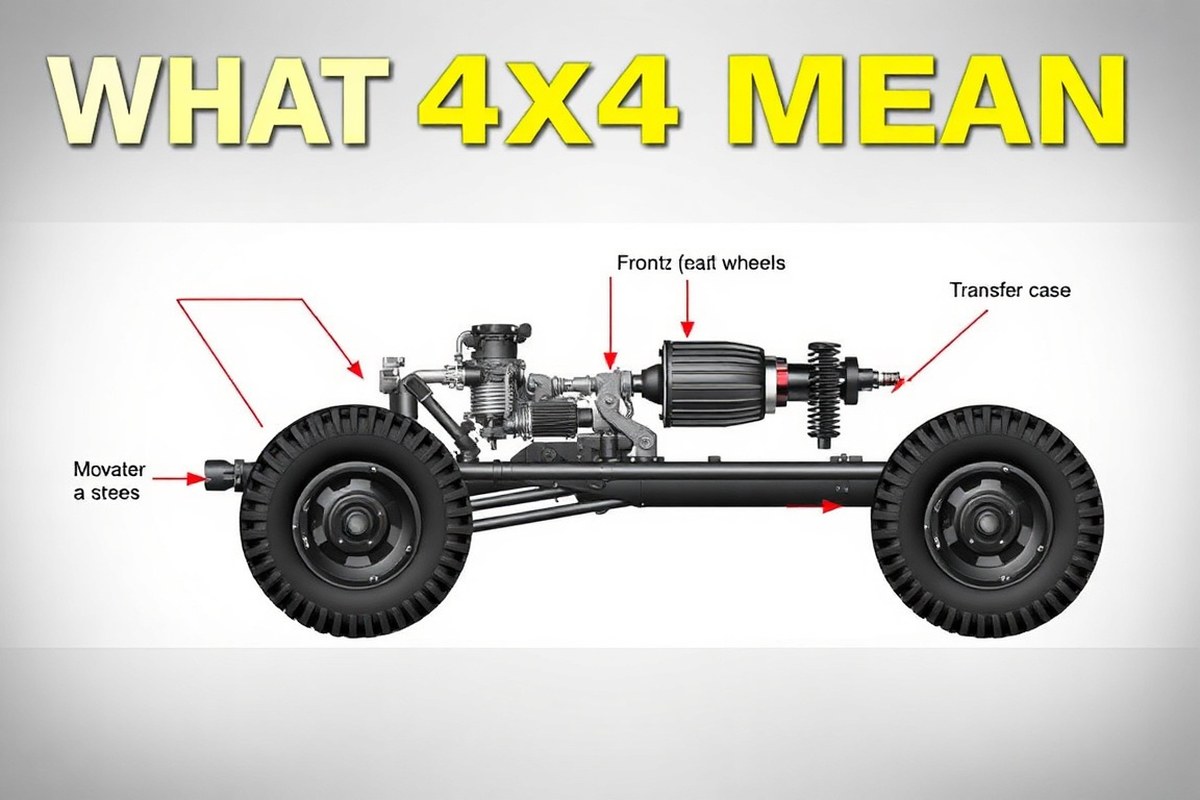
The 4×4 system on a Jeep works by sending engine power to all four wheels simultaneously, improving traction and control on tough terrain. This happens through a component called the transfer case, which allows you to switch between high range and low range gears based on driving conditions. Knowing how and when to use these ranges lets you tackle everything from loose gravel to steep rocky climbs with greater confidence.
Power Distribution Through the Transfer Case
The transfer case is the key part of Jeep’s 4×4 system that splits power from the transmission between the front and rear axles. It enables the engine to drive all four wheels rather than just two, which greatly improves traction on slippery or uneven surfaces. When you engage 4×4, the transfer case activates, locking the front and rear driveshafts together so power flows to all wheels simultaneously.
This setup helps the Jeep maintain grip on low-traction trails like mud, snow, or rocks. In some Jeep models, the transfer case has automatic functions that adjust power distribution, while others require manual shifting. Regardless, the transfer case ensures that torque reaches the wheels best able to use it for forward motion.
High Range: Balanced Speed and Traction
Shifting into 4×4 high range connects all four wheels to the engine with a standard gear ratio. This mode is ideal for driving on wet pavement, gravel roads, or light off-road conditions that require better traction without sacrificing speed. High range lets your Jeep handle rain-soaked trails or loose dirt paths while still allowing normal driving speeds up to highway limits.
For part-time 4×4 systems, it’s important to use high range only on slippery or loose surfaces to avoid drivetrain binding on dry pavement. Using high range on firm, dry roads can cause damage or excessive wear to components because the wheels can’t slip individually.
Low Range: Maximum Torque for Tough Terrain
Low range gear provides a much lower gear ratio in the transfer case, drastically increasing torque sent to the wheels. This setting lets your Jeep crawl over obstacles like rocks, steep inclines, and deep mud with slow, controlled power delivery. It’s essential for demanding off-road situations, providing extra grip and preventing stalling by allowing precise throttle control.
Reserve low range gears for slow speeds, usually about 2 to 3 mph (3 to 5 km/h). For an automatic, put the transmission into neutral before shifting; for a manual, press the clutch first. Certain Jeep variants, such as Quadra-Trac I and Quadra-Trac® SRT®, do not include a low range, so check your model’s features beforehand.
Practical Use and Precautions
Using the correct gear range helps you avoid common problems like stuck tires, transmission damage, or loss of control. For example, use low range for crawling over rocks or pulling heavy loads, as it provides the torque needed for steady movement at slow speeds. High range suits conditions like snowy roads or dirt trails where you still want to maintain higher speeds without losing traction.
On dry pavement, avoid prolonged driving in any 4×4 mode unless your Jeep has a full-time system designed for that environment. Misusing the transfer case can cause mechanical stress, especially on part-time 4×4 models.
Always shift into 4WD Low only when your Jeep is nearly stopped and the transmission is in neutral or the clutch is pressed to prevent damage.
Types of Jeep 4×4 Systems and How to Choose the Right One
Jeep offers several types of 4×4 systems tailored to diverse off-road and driving needs. These include part-time, full-time, and automatic 4×4 systems, each with distinct ways of distributing power and requiring different levels of driver engagement. Choosing the right system depends on your off-road experience, driving conditions, and whether you want manual control or automatic adjustments.
Part-Time 4×4 Systems and Their Uses
Part-time 4×4 systems operate by sending power to either the rear wheels or all four wheels, but the driver must manually engage four-wheel-drive mode. This system is common in many Jeep models designed specifically for off-road use. It offers strong traction on slippery or rugged terrain but should never be used on dry pavement to prevent drivetrain damage.
One popular example is the Selec-Trac system, which adds a “4 Auto” mode for some automatic control while still allowing full driver input. Part-time 4x4s provide excellent capability for moderate to extreme off-road conditions but require the driver to know when and how to engage four-wheel drive.
Full-Time and Automatic 4×4 Explained
Full-time 4×4 systems, like Quadra-Trac I, operate constantly, evenly distributing power to all four wheels without driver input. This eliminates the risk of engaging 4×4 incorrectly and makes driving on varied surfaces easier while maintaining traction. Full-time systems are ideal for those seeking convenience and confidence without manual adjustments.
Automatic 4WD systems, such as Quadra-Trac II, go a step further by intelligently adjusting power distribution based on conditions. They optimize traction for on- and off-road driving, ensuring the right amount of power reaches each wheel. These systems suit drivers who want advanced technology handling traction while they focus on the terrain.
Choosing the Right System for Your Jeep Model
Picking the right 4×4 system depends on your off-road experience, frequency of rough terrain, and how much driver control you prefer. Part-time systems fit enthusiasts willing to engage 4×4 manually and venture into more challenging conditions. Full-time systems serve drivers who want consistent traction with minimal effort. Automatic systems offer a balance by handling 4×4 demands dynamically for everyday and off-road use. The table below compares key features, typical costs, and recommended uses for each 4×4 system type found in Jeep models.
| 4×4 System Type | Power Distribution | Driver Engagement | Best For | Use on Dry Pavement? | Cost Factor |
|---|---|---|---|---|---|
| Part-Time 4×4 (e.g., Selec-Trac) | Manual switch between 2WD and 4WD | High, manual engagement required | Experienced off-roaders, rugged terrain | No, can cause drivetrain damage | Lower to mid-range |
| Full-Time 4×4 (e.g., Quadra-Trac I) | Constant equal power to all wheels | Low, always active, no driver input | Drivers needing consistent traction, mixed use | Yes, safe on all surfaces | Mid-range |
| Automatic 4×4 (e.g., Quadra-Trac II) | Dynamic power distribution based on conditions | Minimal, system adjusts automatically | Everyday drivers, frequent varied terrain | Yes, safe and effective | Mid to upper-range |
Generally, part-time systems cost less but demand more knowledge and attention. Full-time and automatic systems provide convenience and help prevent misuse mistakes but tend to add to the vehicle price. Matching the system to your skill and terrain habits ensures the best performance and longevity of your Jeep’s 4×4.
How to Engage and Use Your Jeep’s 4×4 System Safely
Engaging your Jeep’s 4×4 system properly depends on the mode you need and the terrain you’re tackling. Use 4×4 High (4H) for slippery surfaces at moderate speeds and 4×4 Low (4L) for low-speed, high-torque situations like steep climbs or deep mud. Knowing when and how to shift modes safely keeps your equipment in good shape and you in control.
Engaging 4×4 High Step-by-Step
4×4 High is designed for driving on snow, mud, or wet roads where additional traction is necessary but you don’t need the extra torque of low range. You can usually switch into 4H while driving at speeds up to 55 mph (88 km/h), depending on your Jeep model. Be sure to consult your owner’s manual for speed limits specific to your vehicle.
- Locate the 4WD selector switch or lever on your Jeep’s dashboard or center console.
- While driving at less than 55 mph, move the selector from 2H to 4H, no need to stop the vehicle.
- Wait for the 4WD indicator light on your dashboard to confirm engagement.
- Drive cautiously, maintaining a steady speed and avoiding sharp turns to prevent drivetrain binding.
How to Shift into 4×4 Low Gears
Use 4×4 Low for challenging conditions requiring maximum torque at low speeds, like deep sand, rock crawling, or steep inclines. Engaging 4L demands more care because shifting while moving can damage your Jeep’s transmission or transfer case.
- Bring your Jeep to a complete stop.
- Shift the transmission into neutral (N).
- Move the 4WD selector from 2H or 4H to 4L, either by turning the dial, pushing the lever, or pressing a button, depending on your model.
- Confirm the 4L indicator light illuminates on the dashboard.
- Shift the transmission back into drive or the appropriate gear to start moving.
Do not exceed speeds of 25 mph (40 km/h) in 4L. Moving faster can cause loss of traction or mechanical issues.
Safety Tips for Using 4×4 on Different Surfaces
Engage your 4×4 system only when conditions call for extra traction. Using 4WD unnecessarily, especially on dry pavement, can increase wear and risk damage. Avoid sharp turns and high speeds on slick surfaces even when in 4WD, as traction control is limited.
In mud, sand, or snow, start slowly and maintain steady throttle to prevent wheel spin. If you feel your Jeep slipping excessively, gently ease off the accelerator or shift to a lower gear. Before crossing water or deep mud, ensure your Jeep’s 4WD is fully engaged and use 4L for controlled power delivery.
Always check your owner’s manual for specific instructions about your model’s 4×4 system, as controls and limits vary. When in doubt, stop and engage the proper mode before proceeding. Consulting a licensed professional for regular 4WD system inspections helps keep your Jeep ready for off-road challenges.
Benefits and Real-World Uses of 4×4 Jeeps Off-Road
Using a 4×4 system on your Jeep gives you more control and stability on challenging terrains like mud, snow, sand, and rocks. This system sends power to all four wheels, which improves traction and helps your vehicle avoid getting stuck. For example, when you drive through deep mud or loose snow, each wheel can adjust its grip so your Jeep keeps moving forward instead of spinning out or sliding.
Driving on snow or icy roads becomes much safer with 4×4 engaged because it reduces slipping and sliding. You don’t always need special tires to benefit, but pairing your 4×4 Jeep with winter tires improve safety and performance even more. The system distributes power evenly, so each wheel can tackle slippery patches effectively, giving you better control when braking or climbing steep, icy hills.
When tackling rocky trails or steep off-road slopes, the 4×4 system lets you use the best traction settings for your Jeep. A system with locking differentials, for example, keeps power flowing equally to wheels stuck on rocks, preventing one wheel from spinning uselessly while others sit idle. This feature helps you crawl over rocks or uneven ground with steady momentum and less risk of getting stuck or damaging your Jeep.
Sand presents its own challenge because tires can dig in and sink. A 4×4 system, especially ones designed for off-road use, reduces this risk by ensuring all tires rotate and share power. This helps maintain forward motion rather than spinning tires that dig deeper. Using the right 4×4 mode or low gear range increases your Jeep’s crawling power, allowing you to cross sandy dunes or beaches confidently.
The main tradeoff for these benefits is fuel efficiency. Running in 4×4 mode consumes more gas than 2WD, so use it primarily in conditions where traction matters. On dry, paved roads, switching back to 2WD saves fuel and reduces unnecessary wear on drivetrain components. Still, when you face wet gravel, mud, snow, or rough trails, activating 4×4 is your best bet for maximizing traction and control.
Always engage 4×4 only at low speeds or while stopped if your Jeep’s system requires it, to avoid drivetrain damage and ensure proper operation on rough terrain.
Common Mistakes and Maintenance Tips for Jeep 4×4 Systems
The most common mistake with Jeep 4×4 systems is driving in 4×4 mode on dry pavement, especially with part-time 4×4 like Command-Trac. This can cause drivetrain binding because the wheels can’t slip freely on dry surfaces, which strains front and rear differentials and can lead to costly repairs. Only Selec-Trac’s 4 Auto setting is designed to be used on dry pavement, as it automatically adjusts power distribution without binding the drivetrain.
Regular maintenance is essential to keep your 4×4 system working well and avoid expensive damage. You should check the transfer case and differential fluid levels every 30,000 to 50,000 miles or as recommended by your Jeep model’s manual. Changing these fluids according to the schedule keeps gears lubricated and prevents overheating or wear. Fluid types differ, use only those specified for your Jeep’s transfer case and differentials to maintain proper seal and performance. Watch for signs your 4×4 system might need repairs, including:
- Unusual noises like whining or clunking during 4×4 engagement
- Difficulty shifting into or out of 4×4 mode
- Vibrations or shuddering while driving in 4×4
- Warning lights related to traction or drivetrain on the dashboard
- Leaking fluid under the Jeep from transfer case or differentials
Traction control, ABS, and stability control systems work together to help maintain your Jeep’s 4×4 system performance and safety. These systems reduce wheel spin and help keep you on course, but they do not replace the need for proper 4×4 use and maintenance.
Basic tips for maintaining your Jeep 4×4 system include checking fluid levels regularly, avoiding 4×4 mode on dry paved roads unless your Jeep has 4 Auto, inspecting drivetrain components during oil changes, and having a professional inspect the system if you notice any warning signs. Ignoring maintenance or continuing to misuse 4×4 can lead to differential or transfer case failures that may cost several hundred dollars to repair or replace.
How 4×4 Affects Fuel Economy, Towing, and Tire Choices
Four-wheel drive systems reduce fuel efficiency mainly because they add weight and increase mechanical drag in the drivetrain. A 4×4 system includes extra components like a transfer case and additional axles, which naturally cause more resistance and require more energy to move. You can expect a Jeep with 4×4 to have slightly lower miles per gallon than a comparable two-wheel-drive model. Using 4×4 unnecessarily, especially on dry, paved roads, increases fuel consumption further and can strain the drivetrain.
To maximize fuel economy, use part-time 4×4 systems in two-wheel-drive mode during regular driving. Engage four-wheel drive only when you need better traction off-road or in slippery conditions. Avoid driving in four-wheel drive on dry pavement to prevent added wear and fuel loss. For example, switching from 4×4 to 2WD on highways can save fuel without compromising safety. However, leave 4×4 engaged for snow, mud, or loose dirt where traction is critical.
Regarding towing, 4×4 can positively impact capacity and control, especially on uneven or slick surfaces. The added traction helps when hauling trailers over dirt roads or steep grades by preventing wheel slip. However, total towing limits depend mostly on the Jeep’s engine, transmission, and chassis ratings. The extra drivetrain weight from 4×4 slightly reduces payload, but in rough conditions, four-wheel drive often makes towing safer and more stable. When towing on pavement, keep 4×4 off unless conditions require it, to protect the drivetrain and avoid fuel waste.
Special tires help optimize your Jeep’s 4×4 performance and safety. If you use your Jeep for off-roading or winter driving, consider all-terrain or mud-terrain tires with reinforced sidewalls and deeper treads for better grip. Lowering tire pressure by 3 to 5 PSI improves traction and protects tires in rocky or sandy terrain. For sandy surfaces, dropping air pressure 10 to 12 PSI can improve flotation and maintain momentum, but be sure to restore normal pressure when returning to pavement.
Winter tires are designed with rubber compounds and tread patterns that stay flexible and grip icy or snowy roads better than standard all-season tires. They improve safety in cold weather, especially when paired with your Jeep’s 4×4 system. Using the wrong tires, like summer tires in winter, reduces the benefits of 4×4. Always check local laws regarding winter tire requirements. Remember that aggressive off-road tires can also increase road noise and reduce fuel efficiency when used predominantly on asphalt.
Engineered Features and Future Trends in Jeep 4×4 Technology
Jeep’s latest 4×4 systems incorporate advanced engineering that improve traction, durability, and adaptability on challenging terrain. Among these systems, the electronic disconnecting sway bar, locking differentials, and active transfer cases stand out. These features work together to optimize power distribution between front and rear axles and between left and right wheels. Jeep’s Selec-Terrain® traction management system further adds variable terrain modes, allowing the vehicle to adjust throttle response, transmission shifts, and traction control automatically for surfaces like snow, mud, or rock crawling.
These technologies improve off-road performance by reducing wheel slip and increasing torque to the wheels with the most grip. For example, locking differentials effectively force both wheels on an axle to turn at the same speed regardless of traction loss, which is essential when one wheel is on loose or uneven ground. Engaging these advanced features usually involves pressing a button or turning a dial on the dashboard; Jeep designs their systems to be intuitive even for off-road beginners.
Looking ahead, electrification is reshaping Jeep 4×4 technology substantially. The impending launch of fully electric Jeep SUVs with 4xe technology introduces electric motors on each axle, providing instantaneous torque and allowing for precise power distribution without mechanical linkages like traditional transfer cases. This setup not only improve off-road ability through instant torque vectoring but also improves fuel economy and reduces emissions. Electric 4x4s are expected in the U.S. Starting in 2024. They still maintain high ground clearance and rugged suspension components to meet Jeep’s off-road standards.
Smart technology and autonomous driving features are also influencing how 4×4 systems perform. Adding sensors for terrain recognition and driver-assist functions makes gear selection and traction control more adaptive. This reduces the risk of wheel spin and offers better stability at higher speeds or on steep inclines. For example, advanced driver-assist systems can automatically modulate power between axles or engage braking on specific wheels to maintain control, especially on slippery or uneven surfaces. Automakers including Jeep are integrating these features to offer users a combination of safety and improve off-road capability.
Reliability improvements focus on strengthening critical components like axles, differentials, and transfer cases. Better materials and sealed electronics contribute to longevity, especially under harsh conditions such as mud, water crossings, or extreme temperatures that can reach below 0°F in some off-road environments. Proper maintenance, including timely fluid changes and inspection of high-stress parts, is critical to avoid failures, which can cost hundreds to thousands of dollars in repairs. More sophisticated systems typically have higher upfront costs, often ranging from $2,000 to $5,000 above base models depending on how many advanced features are included. The tradeoff is better performance, resale value, and safer off-road driving experiences.
Avoid engaging advanced locking differentials or off-road modes on dry pavement to prevent drivetrain damage and costly repairs.
Step-by-Step Action Plan for Using Your Jeep’s 4×4 System
Get the most out of your Jeep’s 4×4 by following these simple steps to engage and maintain the system properly.
- Before your first off-road trip: Read your owner’s manual to understand your Jeep’s specific 4×4 system and controls. Confirm you can identify 2WD, 4HI, and 4LO modes.
- Day 1, at home: Practice switching between 2WD and 4HI on dry pavement at low speed to get comfortable and ensure all lights and indicators respond correctly.
- Week 1, light off-road use: Engage 4LO on loose, low-traction surfaces like dirt or sand to feel the difference in torque and control. If the vehicle moves smoothly without noise or slipping, the system works as intended.
- After the first off-road session: Check for abnormal noises, leaks, or vibrations around the transfer case and axles. Inspect fluid levels according to the maintenance schedule.
- Monthly maintenance: Rotate tires evenly and inspect for uneven wear, which could signal issues with the 4×4 system alignment or engagement timing.
- Every 6 months or 5,000 miles: Have a certified technician inspect the transfer case fluid and differentials, especially if you frequently use deep mud or water crossings.
- Before towing or heavy load: Shift to the recommended 4×4 mode as per your Jeep’s guide to maximize traction and stability on inclines or slippery roads.
- Keep a log: Record how often and in which conditions you use each 4×4 mode to track performance and maintenance needs.
Frequently Asked Questions
Can I Use 4×4 on Dry Pavement Without Damaging My Jeep?
Using basic or part-time 4×4 on dry pavement can cause drivetrain binding and damage. It’s best reserved for wet, loose, or slippery surfaces to prevent wear.
Does 4×4 Improve Jeep Towing Capacity?
4×4 offers better traction when towing but doesn’t increase the Jeep’s actual towing capacity. Check your vehicle specs to know the exact limits.
What Maintenance Is Unique to Jeep 4×4 Systems?
Regularly inspect and service transfer cases, differentials, and axles to keep the 4×4 system running smoothly. Follow your owner’s manual for schedule specifics.
How Do Skid Plates Protect My Jeep 4×4?
Skid plates shield important components like the engine and transfer case from rocks and debris during off-road driving. They prevent costly damage on rough terrain.
Can I Switch Between 2WD and 4WD While Driving?
Many Jeep 4×4 systems allow shifting between 2WD and 4WD high range at low speeds. Consult your manual for exact procedures and speed limits.
Does Engaging Low Range 4WD Damage My Jeep on Hard Surfaces?
Low range 4WD should be used off-road only; using it on hard surfaces can strain the drivetrain. Reserve it for obstacles where low speed and torque are needed.
Final Thoughts
Understanding and using your Jeep’s 4×4 system properly makes a clear difference when tackling challenging terrain or hauling loads. Start by getting familiar with your model’s controls and regularly checking the system’s condition. Take your Jeep off-road cautiously and use the right mode for the conditions to protect your vehicle and enjoy the full benefits of your 4×4. Your next step should be to schedule a system inspection if you haven’t already, ensuring your Jeep is ready for your adventures.