
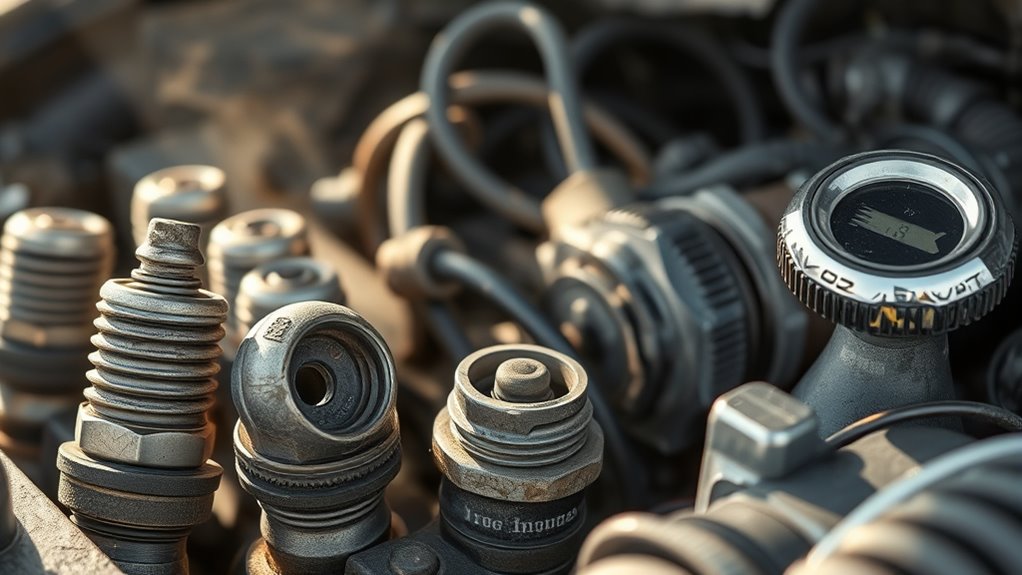
7 Consequences of What Happens If You Don’t Change Spark Plugs
If you don’t change your spark plugs, you’ll likely face engine misfires and rough idling because worn plugs fail to ignite fuel properly.
Starting your engine will take longer, and acceleration will feel sluggish.
Fuel efficiency drops as incomplete combustion wastes fuel, while emissions increase, harming the environment.
Over time, faulty plugs can cause costly engine damage.
Regular maintenance prevents these issues, helping your engine run smoothly and last longer.
Keep exploring to uncover how to protect your engine best.
Key Takeaways
- Worn spark plugs cause engine misfires, rough idling, and decreased fuel efficiency due to incomplete combustion.
- Faulty plugs lead to difficult engine starts and increased strain on the battery and starter.
- Ignoring spark plug replacement results in sluggish acceleration and noticeable power loss.
- Old spark plugs increase harmful emissions, risking environmental damage and failed emissions tests.
- Prolonged neglect causes engine damage, including carbon buildup and ignition coil failure, leading to costly repairs.
How Worn Spark Plugs Cause Engine Misfires and Rough Idling
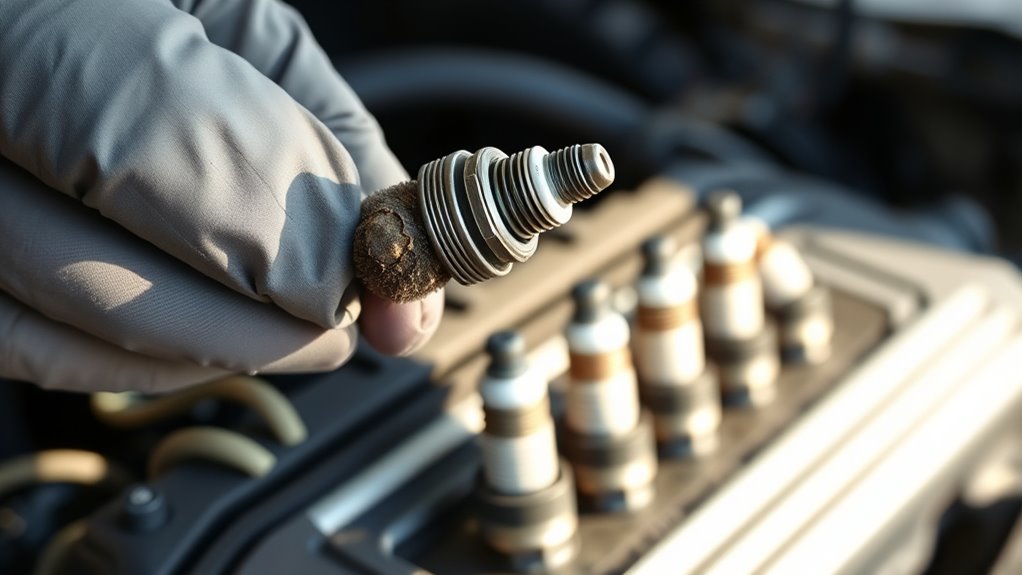
When your spark plugs wear out, they can’t generate the strong spark needed for proper combustion, causing your engine to misfire. Worn spark plugs increase the gap between electrodes, leading to irregular firing in the ignition system. This inconsistency results in engine misfires that cause rough idling and engine hesitation.
You’ll notice your engine running unevenly, sometimes stalling or vibrating more than usual. Deposits and fouling on these plugs further disrupt spark consistency, worsening the problem. As misfires continue, your vehicle’s fuel efficiency drops because incomplete combustion wastes fuel.
Ignoring worn spark plugs not only diminishes performance but also puts extra strain on other engine parts. By recognizing these symptoms early, such as rough idling and decreased fuel efficiency, you can address worn spark plugs before they cause more serious issues. Maintaining your ignition system ensures smooth engine operation and helps you avoid costly repairs down the line.
How Old Spark Plugs Affect Engine Starting
If your spark plugs are old, you might notice that your engine takes longer to start, especially when it’s cold outside. That’s because weak or inconsistent sparks make ignition tougher. This, in turn, puts extra strain on your starter and battery. If you ignore worn plugs, you could end up dealing with frequent starting problems and extra wear on important parts. So, it’s definitely worth keeping an eye on them!
Difficulty Starting Engine
How quickly your engine starts can depend heavily on the condition of your spark plugs. When you have worn spark plugs, their ability to produce a strong spark weakens, causing difficulty starting engine issues. This can lead to engine misfire or prolonged cranking as the fuel-air mixture struggles to ignite.
Over time, deposits build up on the spark plug electrodes, insulating the tip and further reducing spark strength. This makes it harder for your engine to fire up efficiently. Furthermore, your ignition system faces extra stress during startup, which can wear down components like the starter and battery faster.
If you’re noticing your engine takes longer to start or cranks excessively, worn spark plugs might be the culprit that’s holding you back.
Cold Weather Challenges
Why does your engine struggle more in cold weather? It’s often due to fouled spark plugs that just can’t keep up. Old spark plugs produce weaker sparks, making ignition slower when temperatures drop.
This leads to misfires and rough engine operation, especially during engine startup. Here’s how cold weather challenges your engine with worn plugs:
- Reduced spark strength delays ignition, making starts sluggish.
- Fouled spark plugs increase misfires in low temperatures.
- Cold weather worsens the impact of aged plugs on engine startup.
- Rough engine operation becomes common until plugs are replaced.
Ignoring spark plug maintenance in cold weather means your engine struggles more, risking longer cranking times and unreliable starts.
Increased Starter Strain
When your spark plugs wear out, they demand more electrical current from your starter motor to ignite the engine, which puts extra strain on the system. As spark plugs age, increased resistance in the ignition system forces the starter motor to work harder, accelerating wear and tear.
This added engine strain often results in longer start times and misfires during startup, causing repeated attempts that further stress the starter and battery. Over time, this cycle can lead to starter motor overheating and eventual failure, culminating in costly repairs.
How Old Spark Plugs Reduce Acceleration
When your spark plugs wear out, your engine starts to lose power and doesn’t respond as quickly. You’ll probably notice a delay when you hit the gas, making acceleration feel sluggish. That’s because old plugs can’t ignite the fuel-air mix as efficiently as they used to, which cuts down your engine’s overall performance.
Power Loss Effects
Although you might not notice it right away, old spark plugs can markedly reduce your vehicle’s acceleration by causing incomplete combustion and misfires. This power loss impacts your engine performance and overall fuel efficiency.
When your ignition system can’t produce a strong spark, the engine struggles to generate torque, leading to sluggish acceleration. Here’s what happens:
- Worn spark plugs increase the ignition gap, causing incomplete combustion and reduced power.
- Fouled plugs fail to ignite the fuel-air mix properly, triggering misfires.
- Deposits on plugs create firing irregularities, further lowering engine performance.
- Decreased spark efficiency results in less effective fuel use, harming fuel efficiency.
Ignoring spark plug wear means your vehicle won’t accelerate as smoothly or efficiently as it should.
Delayed Throttle Response
If you press the gas pedal and notice a sluggish response, worn spark plugs could be the culprit behind the delayed throttle response. Old spark plugs cause delayed ignition in the engine, making it harder for the combustion chamber to ignite fuel quickly.
As these plugs age, the ignition gap widens, reducing the spark’s strength and slowing acceleration. Deposits build up on the plugs, hindering proper spark delivery and causing misfires that further decrease throttle responsiveness.
This inefficiency in the combustion process not only delays throttle response but also lowers fuel efficiency since the engine struggles to burn fuel effectively. By neglecting to replace old spark plugs, you risk enduring sluggish acceleration and reduced overall engine performance every time you try to speed up.
Why Fuel Efficiency Drops Without Regular Spark Plug Changes
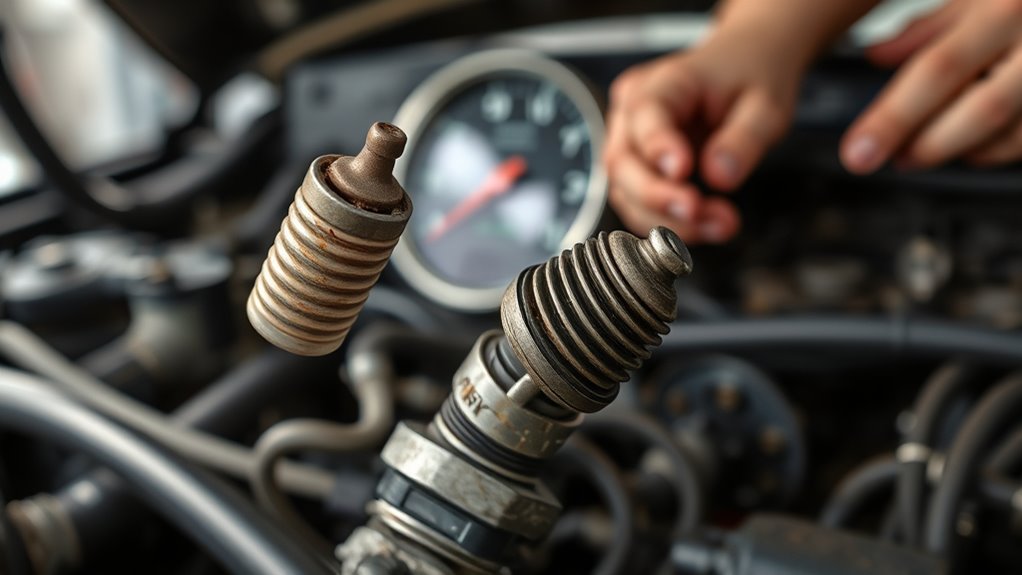
Because worn spark plugs cause incomplete combustion, your engine ends up consuming more fuel than necessary. When spark plugs degrade, they don’t ignite the fuel-air mixture efficiently, which directly lowers your fuel efficiency. Here’s why regular spark plug changes matter:
- Widened Ignition Gap: As spark plugs wear, the gap increases, weakening the spark and forcing your engine to burn extra fuel to compensate.
- Deposits and Buildup: Dirt and carbon on spark plugs block proper firing, causing your engine to work harder and consume more fuel.
- Ignition Misfires: Faulty spark plugs lead to misfires, meaning unburned fuel escapes, reducing overall efficiency.
- Decreased Engine Performance: Your engine struggles to maintain ideal performance, burning more fuel to keep up.
How Faulty Spark Plugs Increase Vehicle Emissions
When your spark plugs fail to ignite fuel properly, your vehicle ends up releasing more harmful emissions into the air. Faulty spark plugs cause incomplete combustion, which means not all the fuel burns efficiently.
This incomplete combustion leads to increased emissions, including higher levels of unburned fuel and hydrocarbons escaping through the exhaust. As unburned fuel accumulates, it contributes to carbon buildup inside your engine, worsening performance and pollution.
Moreover, defective plugs raise nitrogen oxides (NOx) and carbon monoxide (CO) levels, both dangerous pollutants. This spike in emissions not only harms the environment but can also cause your vehicle to fail emissions tests.
Why Worn Spark Plugs Can Lead to Costly Repairs
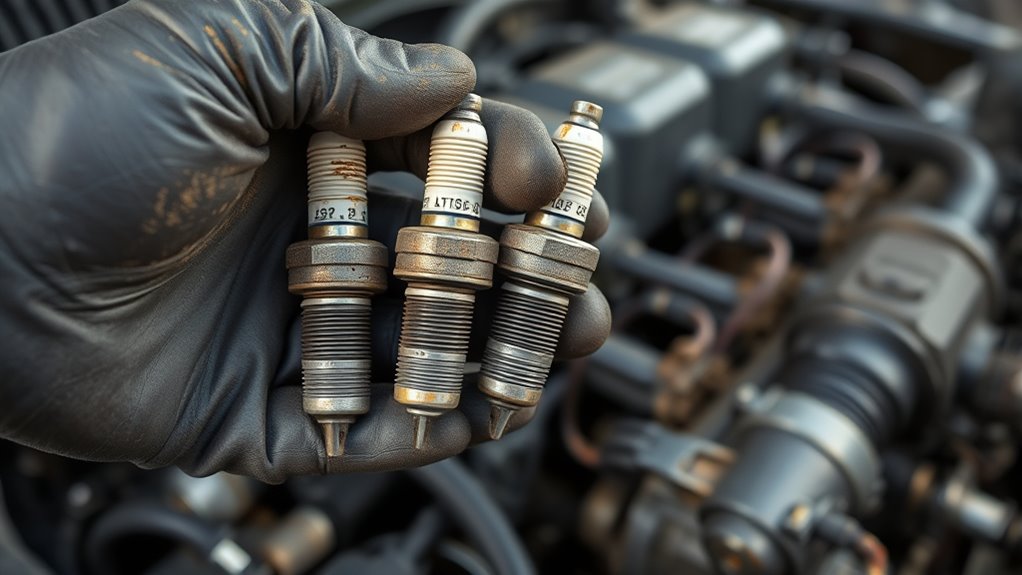
Poorly maintained spark plugs don’t just harm the environment. They can also hit your wallet hard. Worn spark plugs cause engine misfires, which strain your catalytic converter and lead to costly repairs. If you ignore them, you risk more severe engine damage and higher expenses.
Here’s why worn spark plugs can lead to costly repairs:
- Engine misfires increase stress on key components, raising repair costs.
- Faulty spark plugs can damage ignition coils, requiring expensive replacements.
- Incomplete combustion causes carbon buildup, harming pistons and valves.
- Poor engine performance can cause hesitation or stalling, escalating engine repair bills.
When and How to Replace Spark Plugs to Protect Your Engine
Although spark plugs may seem like small components, replacing them on time plays a crucial role in protecting your engine’s performance and longevity. You should follow your vehicle manufacturer’s recommended interval, usually between 30,000 and 100,000 miles. This depends on the spark plug type and driving conditions.
During routine maintenance, inspect your spark plugs for wear, fouling, or deposits. Replace them if you notice significant damage or buildup. When it’s time to replace spark plugs, make sure to set the gap according to your vehicle’s manual. This ensures ideal spark delivery and engine efficiency.
Carefully torque the plugs to the specified settings to avoid damage or misfiring. Regularly replacing spark plugs maintains efficient combustion, improves fuel economy, and prevents engine misfires or costly repairs. Staying on top of this routine maintenance helps keep your engine running smoothly and extends its lifespan.
Frequently Asked Questions
Can Bad Spark Plugs Damage My Car’s Catalytic Converter?
Yes, bad spark plugs can damage your car’s catalytic converter. When you experience ignition delay and engine misfire, unburned fuel reaches the exhaust, causing an emission increase.
This extra fuel can overheat and clog the catalytic converter, reducing its efficiency. You’ll also notice power loss and decreased fuel efficiency, forcing the converter to work harder and wear out faster.
Replacing spark plugs on time protects both performance and your catalytic converter.
How Do Spark Plugs Affect My Vehicle’s Warranty?
Wondering how spark plugs affect your vehicle’s warranty? If you skip replacing them, you risk warranty exclusions because most manufacturer policies require you to meet service requirements, including timely spark plug changes.
Ignoring these can lead to coverage limitations, leaving you responsible for repair costs caused by neglect. Staying on schedule helps keep your warranty intact and protects you from unexpected expenses related to engine issues caused by worn spark plugs.
Are Spark Plug Issues Covered in Routine Vehicle Inspections?
Yes, spark plug issues are covered in routine vehicle inspections because they’re part of the ignition system. Inspectors check for signs of wear or fouling that could cause engine misfires, starting problems, and reduced fuel efficiency.
Since spark plugs affect emission control, their condition is essential during emissions tests. By catching problems early, you’ll keep your engine running smoothly and avoid costly repairs down the road.
Can Worn Spark Plugs Cause Battery Problems?
Think of your ignition system as a delicate orchestra; worn spark plugs throw it off balance, causing engine misfires that strain your battery. Skipping spark plug maintenance reduces fuel efficiency and burdens emission control systems, making your battery work overtime.
You’ll notice tougher starts as the starter motor drains the battery trying to ignite the engine. Keeping your spark plugs fresh keeps everything in harmony, protecting your battery and boosting overall performance.
How Do Different Spark Plug Types Impact Engine Performance?
Different spark plug materials affect your engine’s performance by influencing firing voltage and durability. For example, iridium plugs require lower firing voltage and last longer than copper ones.
The spark plug gap and heat range you choose impact combustion efficiency and engine temperature control. Electrode design also shapes spark quality, affecting ignition consistency.
When you pick the right materials and specifications, your engine runs smoother, uses fuel efficiently, and reduces emissions.
Conclusion
If you don’t change your spark plugs regularly, you’ll face misfires, poor acceleration, and higher fuel costs. All of these can lead to expensive repairs down the road. Remember, “a stitch in time saves nine.”
By staying on top of spark plug maintenance, you’ll keep your engine running smoothly, save money, and reduce harmful emissions. Don’t wait until problems pile up. Replace your spark plugs on time to protect your vehicle and enjoy a hassle-free drive.