Removing Tonneau Cover Rails in 3 Easy Steps
First, clear your truck bed and gather needed tools like a trim removal tool and socket wrench.
Next, locate and carefully remove all fasteners securing the tonneau cover rails, keeping everything organized to avoid losing parts.
Finally, gently detach the rails using the trim tool to avoid damage, then inspect and clean the truck bed surface.
If you want to protect your truck bed and make this process smoother, there’s more to discover about each step.
Key Takeaways
- Clear the truck bed and gather necessary tools including trim removal tool and Torx bits before starting the rail removal process.
- Locate all fasteners along the tonneau cover rails using a flashlight to find hidden screws or bolts.
- Carefully loosen and remove fasteners, keeping them organized for easy reinstallation.
- Use a plastic trim removal tool to pry off clips and support rails while detaching to prevent damage.
- Clean the truck bed surface thoroughly after rail removal to remove debris and inspect for damage.
Prepare Your Truck Bed and Gather Tonneau Cover Rail Tools
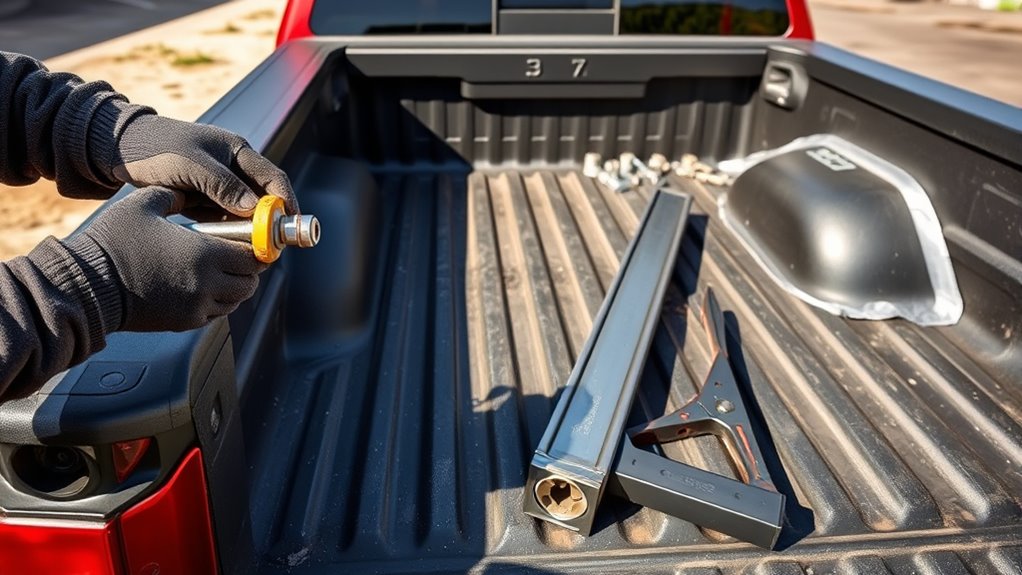
Before you begin removing your tonneau cover rails, make sure to clear your truck bed of any cargo, debris, or dirt to create a safe and tidy workspace. This step prevents damage and gives you room to work comfortably.
Clear your truck bed first to ensure a safe, clean workspace and prevent damage during tonneau rail removal.
Next, gather all necessary tools, including a plastic trim removal tool, T25 or T30 Torx bits, and an impact drill with a hex head bit. Wearing gloves is essential to protect your hands from sharp edges and to maintain a firm grip while handling tools and parts.
Before you remove anything, inspect the tonneau cover rails and truck bed for fasteners, clips, or bolts securing them. This inspection helps you plan your removal strategy efficiently.
Set up a clean workspace nearby to organize removed hardware, keeping screws and clips sorted to avoid losing important pieces. By preparing properly, you’ll streamline the removal process and minimize frustration when taking off your tonneau cover rails.
Locate and Remove All Fasteners Securing the Tonneau Cover Rails
While inspecting the tonneau cover rails, carefully scan their entire length to find every fastener, including screws, bolts, and clips. Use a flashlight to spot any hidden fasteners tucked beneath rubber seals or trim pieces.
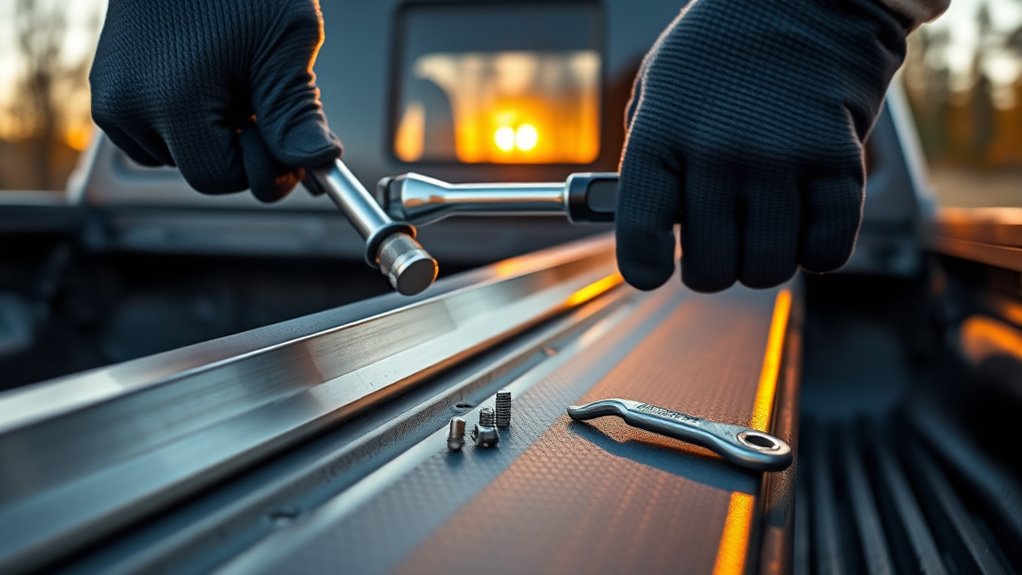
Once you’ve identified all fastener locations, gather the appropriate tools like a socket wrench, screwdriver, or trim removal tool for removal. Begin loosening and removing each fastener, making sure not to strip or damage them in the process.
As you remove the screws, bolts, and clips, organize them by type and location in labeled containers. This will help you keep track and streamline reinstallation later.
Before moving on, double-check your inspection to guarantee no fasteners remain attached. Properly locating and removing all fasteners is essential to prevent damage to the rails or truck bed and to assure a smooth, hassle-free removal in the next step.
Detach the Tonneau Cover Rails Carefully and Inspect the Truck Bed
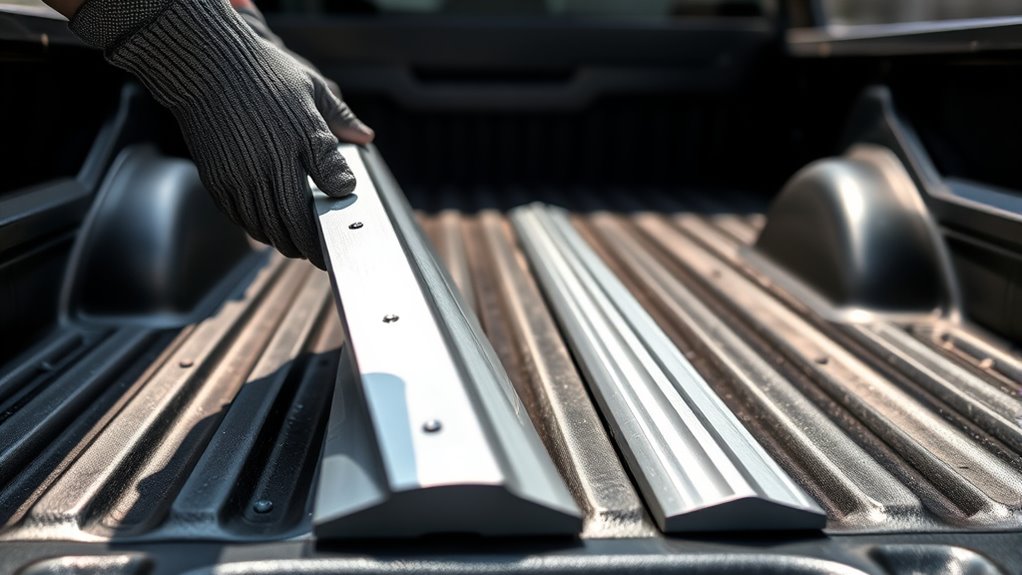
Once you’ve loosened all the fasteners, carefully pry off the plastic clips holding the tonneau cover rails with a trim removal tool to prevent breaking them. Support the rails with your hands or ask for help to detach them smoothly, minimizing stress or damage during removal. Use the right tools, like a socket wrench or Torx bit, to fully remove any remaining bolts securing the rails.
After detaching the tonneau cover rails, thoroughly inspect the truck bed for leftover clips, debris, or signs of damage. Pay close attention to the bed surface to catch any small parts that might have fallen during removal. Clean the area with a mild detergent and soft brush to remove dirt and adhesive residue, preparing the truck bed for any further work. Taking these careful steps assures your truck bed stays in good condition throughout the removal process.
Frequently Asked Questions
Can I Remove Tonneau Cover Rails Without Power Tools?
Yes, you can remove tonneau cover rails manually without power tools by using alternatives like screwdrivers and wrenches.
Follow removal tips such as applying lubricant to help with rust removal and be gentle to protect your truck’s paint. Keep safety precautions in mind to avoid injury.
Check rail compatibility for reinstallation, reuse bolts when possible, and focus on bolt tightening during installation to guarantee a secure fit.
What Type of Lubricant Is Best for Loosening Bolts?
For bolt loosening, you want a penetrating oil or rust penetrant as your go-to. These sprays penetrate corrosion, easing bolt removal. Use a removal spray designed for fastener treatment to break down rust.
After loosening, apply an anti seize compound or thread lubricant for corrosion prevention and smoother future bolt lubrication. Your lubricant selection should focus on effective bolt lubrication without attracting dirt. Avoid thick greases and choose metal-specific solutions for best results.
How Do I Prevent Damage to Paint During Rail Removal?
To prevent paint damage during rail removal, focus on paint protection and surface preparation. Use plastic trim tools for tool safety, avoiding metal that causes paint scratches. Apply painter’s tape as a protective barrier.
Follow gentle removal techniques, working slowly to reduce stress on the paint. Keep a clean workspace to avoid debris causing scratches, wear protective gear, and consider paint matching products for touch-ups.
These removal tips also help with rust prevention.
Are Replacement Rails Compatible With All Truck Models?
Think all replacement rails fit every truck bed perfectly? They don’t. Rail compatibility varies widely because of different vehicle models, rail variations, and model years.
Aftermarket rails sometimes offer a universal fit, but you’ll often face fitment issues or poor sealing. OEM replacements usually guarantee better compatibility with specific truck types.
Always check compatibility closely to avoid problems with security or bed integrity when swapping rails on your truck.
Can I Reuse the Original Bolts After Removal?
You can often reuse the original bolts if you carefully check for bolt corrosion, thread stripping, or rust. Use proper removal tools to avoid damage, and clean bolts thoroughly for rust removal before reinstalling.
Always verify bolt size and material compatibility to guarantee a secure fit. Follow torque specifications closely and take safety precautions during installation.
Keep weather effects in mind, as exposure can weaken bolts over time. Proper installation tips will help maintain durability.
Conclusion
Now that you’ve removed the tonneau cover rails, you’ll see how much easier it is to customize your truck bed. For example, imagine Jake, who wanted to install a new bed liner after removing his old rails.
Following these simple steps, he quickly cleared the rails, making way for a perfect fit. With just a little prep and care, you can do the same, keeping your truck ready for any upgrade or maintenance you need.