How to Diagnose White Smoke Caused by Bad Spark Plugs
To diagnose white smoke caused by bad spark plugs, start by inspecting them for white or gray deposits, oily wetness, or burned electrodes. These signs signal fouling or damage.
Check the spark plug gap and ignition timing to guarantee proper combustion. Use a spark tester to identify misfires.
Run compression and coolant tests to rule out leaks.
Addressing these issues usually stops the smoke. But understanding the underlying causes and maintenance tips can help prevent future problems.
Key Takeaways
- Inspect spark plugs for white, grayish, or chalky deposits indicating fouling or coolant leaks causing incomplete combustion and white smoke.
- Check for wet, oily, or greasy spark plugs suggesting oil or coolant contamination leading to misfires and white smoke emissions.
- Observe engine symptoms like rough idling, hesitation, or white smoke during cold starts or acceleration linked to spark plug misfires.
- Use a spark tester to confirm consistent spark production and perform compression and coolant leak tests to rule out other engine faults.
- Ensure spark plug gaps are correct and plugs are clean or replaced to maintain efficient combustion and prevent white smoke.
How White Smoke Points to Bad Spark Plugs
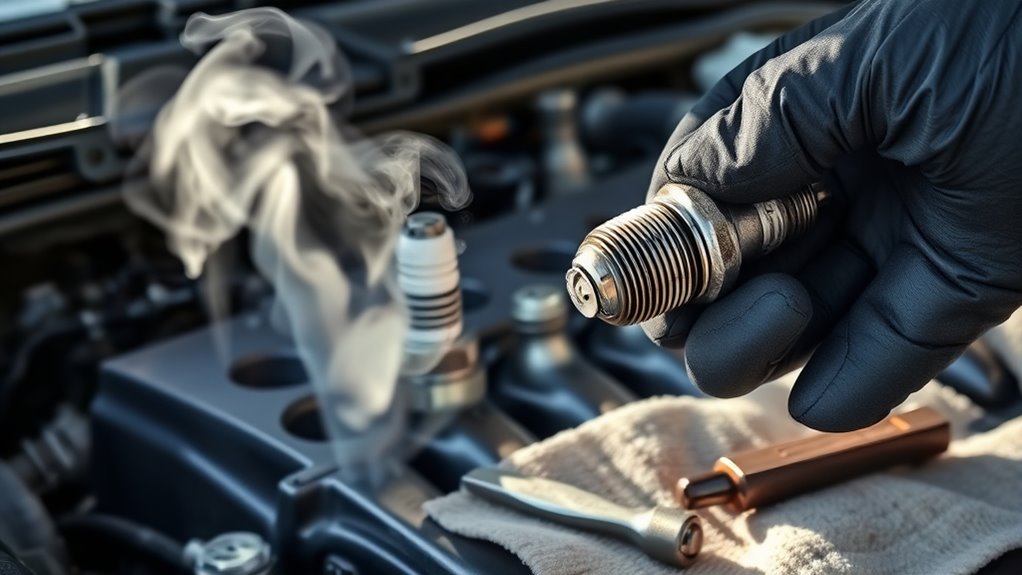
When your engine produces white smoke, it often signals that your spark plugs aren’t firing properly, causing incomplete combustion. This incomplete combustion lets unburned fuel or oil slip into the exhaust system, creating that noticeable white smoke.
If your spark plugs are worn or fouled, they struggle to ignite the air-fuel mixture efficiently. You might notice this white smoke especially during cold starts or when you accelerate.
Wet or oily deposits on your spark plugs are clear signs they’re not doing their job right, which directly contributes to the smoke problem. Along with white smoke, you may experience rough idling or hesitation, indicating the spark plugs are affecting engine performance.
Recognizing these symptoms early helps you understand that bad spark plugs are likely causing the white smoke. Addressing spark plug issues promptly can restore proper combustion and reduce white smoke emissions, keeping your engine running smoothly.
What to Look For When Inspecting Spark Plugs
When you’re checking out spark plugs, keep an eye out for unusual colors and deposits. For example, white ash or black grease can indicate different problems. Also, don’t forget to look for any moisture—it might mean there’s a coolant leak or incomplete combustion happening. These little visual hints can really help you figure out what’s causing white smoke.
Visual Signs Of Fouling
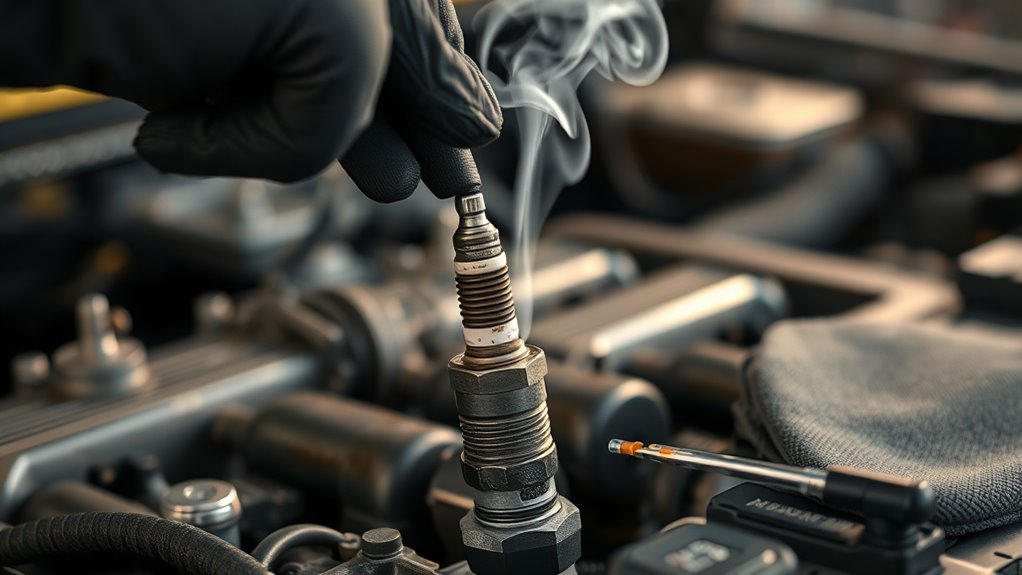
Although fouled spark plugs can cause various engine issues, you can often spot the problem by carefully inspecting their appearance. Look for white or grayish deposits coating the electrodes and insulator. This buildup often signals fouled spark plugs.
If the plugs appear wet or oily, it indicates oil fouling, which commonly leads to incomplete combustion and white smoke. You might also see a white, chalky coating on the spark plug tips, a sign of coolant leaks.
Burned or damaged electrodes, such as melted or eroded tips, suggest overheating or misfires. By checking for carbon buildup, wetness, or unusual discoloration, you can quickly identify the cause of fouling and take steps to fix the white smoke issue before it worsens.
Spark Plug Moisture Indicators
Spotting moisture on spark plugs can give you clear clues about what’s causing white smoke in your engine. When inspecting spark plugs, pay close attention to moisture indicators that reveal coolant, water, or oil intrusion. Here’s what to look for:
- A wet, shiny, or oily deposit on the electrode and insulator suggests moisture presence.
- A white or translucent film on the spark plug tip signals coolant or water contamination.
- Sticky or greasy textures indicate potential oil or coolant leaks fouling the spark plugs.
- Damp spark plugs wet with fuel or coolant can cause misfires and poor combustion.
Color And Deposit Analysis
How can the color and texture of spark plug deposits help you pinpoint the cause of white smoke? By closely inspecting these deposits, you can identify if white smoke stems from coolant leaks, oil fouling, or fuel issues.
Dry, white ash-like deposits often indicate incomplete combustion due to bad spark plugs or a poor fuel mixture. Wet or oily white deposits point to oil fouling, which may cause white smoke. Crystalline or hard white deposits suggest mineral buildup from coolant leaks.
| Deposit Type | What It Indicates |
|---|---|
| Dry white ash | Incomplete combustion/fuel issues |
| Wet/oily white | Oil fouling causing white smoke |
| Crystalline white | Coolant leaks/mineral buildup |
| No deposits | Spark plug likely not the cause |
Check deposits carefully to diagnose white smoke accurately.
How Oil and Coolant Leaks Affect Spark Plug Condition
When oil leaks into the spark plug wells, it can foul the plugs and cause misfires. This often leads to white smoke coming from burning oil. On the other hand, if coolant seeps into the combustion chamber, it washes down the plugs and leaves behind deposits, which also result in white smoke.
Oil Fouling Effects
Although oil and coolant leaks might seem unrelated to spark plugs, they directly affect their condition and performance. Oil fouling happens when oil leaks into the combustion chamber, coating the spark plugs with black, greasy deposits. This buildup hinders spark generation, causing misfires and incomplete combustion.
As a result, you might notice increased white smoke from the exhaust. Here’s how oil fouling impacts spark plugs:
- Oil deposits coat the electrodes, reducing spark efficiency.
- Greasy buildup causes misfires and rough engine performance.
- Prolonged oil fouling accelerates spark plug wear and failure.
- Incomplete combustion from fouled plugs leads to persistent white smoke.
Understanding these effects helps you diagnose white smoke caused by bad spark plugs and address underlying oil leaks promptly.
Coolant Intrusion Signs
Oil fouling isn’t the only leak that affects spark plug condition. Coolant leaks can cause distinct and telling symptoms as well. When coolant leaks into the combustion chamber, you’ll often notice white smoke with a sweet smell and milky oil contamination.
Spark plugs exposed to coolant may show white, chalky deposits or corrosion, indicating internal intrusion. A cracked head or blown gasket can cause these issues, leading to misfires and rough running.
| Symptom | Cause |
|---|---|
| White smoke | Coolant burning in chamber |
| Sweet smell | Coolant vapor in exhaust |
| Milky oil | Coolant mixing with oil |
| Chalky deposits on plugs | Coolant residue on electrodes |
| Misfires/rough running | Spark plug fouling from leaks |
Recognizing these signs helps diagnose coolant leaks quickly.
Why Spark Plug Fouling Causes White Smoke and Incomplete Combustion
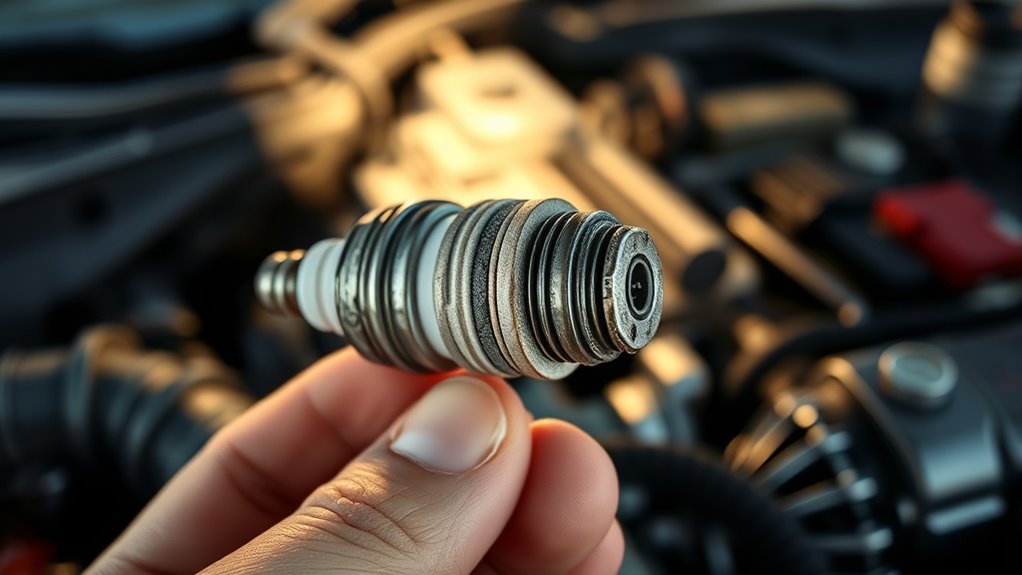
If spark plugs get fouled by oil or carbon deposits, they can’t generate a strong spark, which leads to incomplete combustion. This incomplete combustion causes unburned fuel and oil to enter the exhaust system, creating white smoke.
When your spark plugs are dirty or worn, they struggle to ignite the air-fuel mixture properly. This disrupts ignition timing and reduces spark intensity.
Here’s why spark plug fouling causes white smoke and incomplete combustion:
- Deposits insulate spark plug electrodes, weakening the spark and causing misfires.
- Misfires result in unburned fuel exiting the combustion chamber.
- Unburned fuel vaporizes in the exhaust, producing visible white smoke.
- Inefficient combustion increases emissions, including white smoke.
How to Tell If White Smoke Is From Spark Plugs or Other Causes?
White smoke from your vehicle can stem from different issues, so it helps to identify whether spark plugs are the cause or if something else is at play. If you notice white smoke mainly during cold starts that fades as the engine warms up, this often points to spark plugs causing incomplete combustion.
Check the spark plugs for oil or fuel deposits. They’ll look wet or fouled if they’re faulty. On the other hand, if white smoke persists during acceleration and smells sweet, it’s more likely coolant entering the combustion chamber, not related to spark plugs.
Monitoring when the white smoke appears—only at startup or continuously—gives clues about the root cause. A quick visual inspection of your spark plugs can reveal fouling or abnormal wetness, confirming if they’re behind the white smoke. This approach helps you pinpoint whether spark plugs or other issues are responsible, so you can address the problem accurately.
Why Spark Plug Gap and Ignition Timing Matter for White Smoke
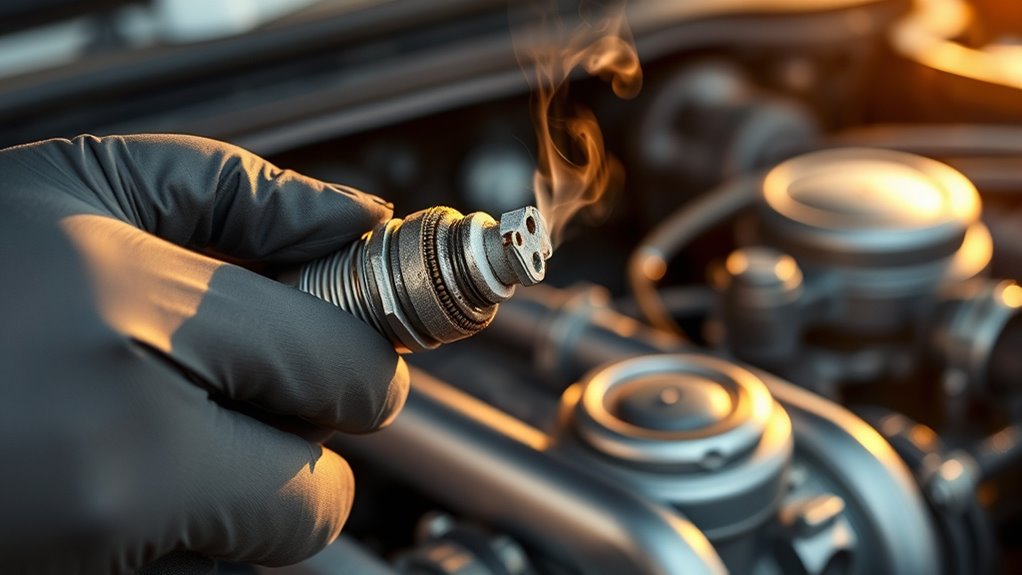
You need the right spark plug gap to deliver a strong spark. This ensures complete combustion and helps prevent white smoke.
If your ignition timing is off, the fuel might ignite too early or too late. When that happens, unburned fuel can exit the engine as white smoke.
Proper Spark Plug Gap
Because proper spark plug gap directly influences ignition timing, it plays an essential role in preventing white smoke from your engine. A correctly set spark plug gap ensures a strong, consistent spark that promotes complete combustion. This reduces unburned fuel that causes white smoke.
Here’s why you need to focus on the spark plug gap:
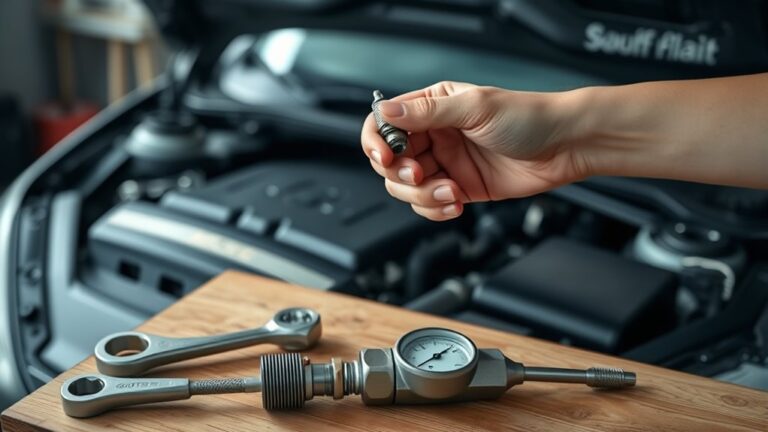
- Manufacturers specify precise gaps (usually 0.028 to 0.060 inches) for effective ignition.
- A gap too wide weakens sparks, causing misfires and white smoke.
- A gap too narrow risks premature ignition and combustion issues.
- Regularly checking and adjusting the spark plug gap keeps ignition timing accurate and minimizes white smoke from incomplete combustion.
Maintaining the right spark plug gap is key to a smoother, cleaner-running engine.
Impact Of Ignition Timing
When ignition timing is off, your engine won’t burn fuel completely. This often results in white smoke from unburned fuel or coolant entering the combustion chamber. A spark plug gap that’s too wide or narrow disrupts ignition timing, causing misfires and white smoke.
Correct ignition timing guarantees sparks ignite fuel at the most favorable moment. This prevents incomplete combustion and excess white smoke.
| Issue | Effect on Combustion |
|---|---|
| Wide/Narrow Spark Gap | Misfires, white smoke |
| Advanced Timing | Unburned fuel, white smoke |
| Retarded Timing | Coolant vapor, white smoke |
Maintaining proper spark plug gap and ignition timing helps you avoid white smoke. It also keeps your engine running efficiently.
Simple Tests to Check Spark Plugs for Damage or Contamination
Although spark plugs may seem small, they play a crucial role in your engine’s performance. Checking them for damage or contamination is essential when diagnosing white smoke issues. Start by removing the spark plugs to get a clear view of their condition.
Here are four simple tests to help you identify any problems:
- Inspect the electrodes for fouling, such as oil, fuel deposits, or carbon build-up. These can cause misfires and white smoke.
- Look for white or creamy deposits on the insulator. This signals coolant intrusion or oil contamination.
- Check the spark plug surface for melting, erosion, or cracks. These indicate physical damage.
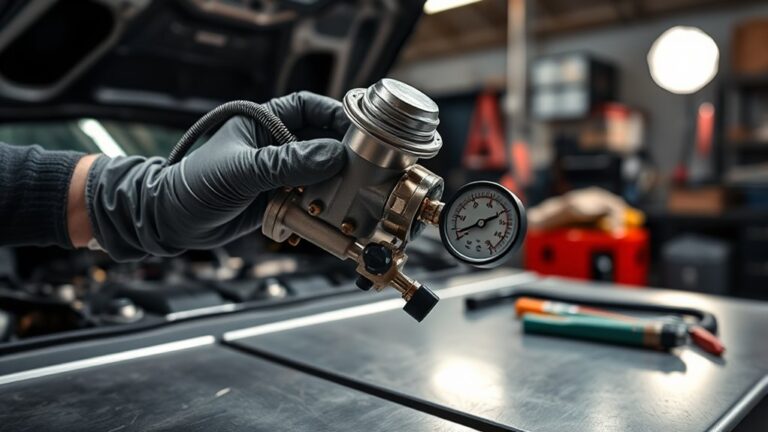
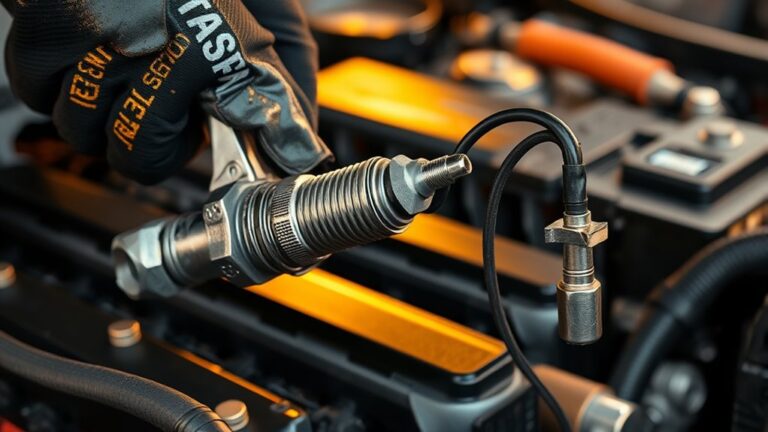
- Use a spark tester to confirm each plug produces a strong, consistent spark.
How to Diagnose Misfires Caused by Bad Spark Plugs and White Smoke
How can you tell if bad spark plugs are causing misfires and white smoke in your engine? Start by inspecting your spark plugs for signs of fouling, like oil, fuel, or coolant deposits. These wet or contaminated plugs often lead to incomplete combustion, which results in misfires and white smoke, especially during startup or acceleration.
Check the spark plug gaps too. Improper gaps can prevent proper ignition timing and cause the engine to misfire. If you notice persistent misfire symptoms along with white smoke, faulty spark plugs are likely the culprit.
You can often fix these issues by cleaning or replacing damaged spark plugs and making sure the ignition timing is correct. By closely examining your spark plugs and addressing any fouling or damage, you’ll improve combustion efficiency, reduce white smoke, and eliminate misfires, keeping your engine running smoothly.
Compression and Coolant Tests to Confirm Spark Plug Issues
To confirm if your spark plugs are causing engine issues, you’ll want to perform compression and coolant tests. These tests help pinpoint whether white smoke stems from spark plug problems or deeper engine faults.
Start with a dry compression test on each cylinder to detect low compression, which may indicate valve or piston ring issues linked to spark plug fouling.
Follow with a wet compression test by adding a small amount of oil to the cylinder. If compression improves, worn piston rings are likely. If not, valves or head gaskets might be at fault.
Compare compression readings across all cylinders to spot uneven compression patterns that suggest specific spark plug or internal engine problems.
Conduct a coolant leak test to see if coolant is intruding into the combustion chamber, causing white smoke and affecting spark plug performance.
Combining these compression and coolant tests gives you a clearer diagnosis before deciding on repairs.
How to Clean or Replace Faulty Spark Plugs to Stop White Smoke
Since faulty spark plugs can cause white smoke, you’ll need to remove and inspect them carefully. First, make sure the engine is cool, then use a spark plug socket to remove each spark plug. Look for white deposits, oil residue, or corrosion, which indicate the cause of white smoke.
If the spark plugs are only lightly fouled, clean them with a wire brush or a spark plug cleaner to remove debris from the electrodes. However, if they’re damaged or heavily fouled, replace them with new ones that match your manufacturer’s specifications for gap and heat range.
Before reinstalling, check the spark plug gap using a gap tool and adjust it to the recommended measurement. Properly gapped and clean or new spark plugs ensure effective ignition, reducing the chance of white smoke caused by misfires or incomplete combustion. This simple maintenance can help stop white smoke and improve your engine’s performance.
When to Check Engine Seals or Head Gasket After Spark Plug Problems
If white smoke continues to billow from your exhaust after you’ve cleaned or replaced faulty spark plugs, you should check the engine seals and head gasket next. Persistent smoke often means coolant is leaking into the combustion chamber, usually due to a failed head gasket or damaged engine seals.
To diagnose this, follow these steps:
- Look for milky oil or coolant contamination in the oil, indicating head gasket failure.
- Inspect engine seals and gaskets for cracks or leaks that could cause coolant intrusion.
- Perform a compression test to identify leaks in the head gasket or seals affecting cylinder pressure.
- Monitor coolant levels and engine temperature to spot signs of head gasket or seal damage.
Addressing these issues promptly prevents further engine damage and helps confirm whether the white smoke stems from spark plug fixes or deeper problems with your head gasket and engine seals.
Preventive Spark Plug Maintenance to Avoid White Smoke and Engine Damage
While you might not think much about spark plugs until a problem arises, regular preventive maintenance is key to avoiding white smoke and engine damage. You should inspect and replace spark plugs according to the manufacturer’s recommended intervals to prevent fouling and misfires that cause white smoke.
Always use the correct spark plug type and gap size for your engine to ensure proper combustion, minimizing incomplete burning that leads to white exhaust smoke. Keep ignition leads and coils in good condition to maintain consistent spark delivery and reduce misfires.
Address underlying issues like oil or coolant leaks and incorrect fuel mixtures promptly, as these can damage spark plugs and contribute to white smoke. Routine engine diagnostics, including checking spark plugs for fouling or deposits, help you catch early signs of problems before they escalate.
Frequently Asked Questions
Can Using the Wrong Spark Plug Brand Cause White Smoke?
Yes, using the wrong spark plug brand can cause white smoke. Different spark plug materials affect ignition timing and combustion efficiency.
If your spark plugs don’t match your engine’s specifications, they can disrupt ignition timing, leading to incomplete combustion and unburned fuel vapor that appears as white smoke. Plus, improper materials may cause electrode damage, making the issue worse.
Always choose spark plugs designed for your engine to avoid these problems.
How Does Driving Style Influence Spark Plug Wear and White Smoke?
Your driving habits directly affect spark plug wear and white smoke production. Aggressive driving with rapid acceleration and high RPMs causes your engine temperature to fluctuate, leading to spark plug fouling and misfires.
These misfires result in white smoke from unburned fuel. If you drive gently and maintain steady speeds, you’ll keep your engine temperature stable. This helps reduce spark plug wear and minimize white smoke caused by incomplete combustion.
Are Aftermarket Spark Plugs More Prone to Causing White Smoke?
Yes, aftermarket spark plugs can be more prone to causing white smoke if you don’t choose ones with proper spark plug compatibility. When manufacturers cut corners on quality, you risk inconsistent electrode gaps or materials that foul easily. This can lead to misfires and white smoke.
To avoid this, stick with high manufacturer quality plugs designed for your car. That way, you’ll guarantee proper ignition and reduce the chance of smoke issues.
Can Weather Conditions Affect Spark Plug Performance and White Smoke?
You should know that up to 30% of engine misfires are linked to weather impact, which directly affects spark plug performance and white smoke. Cold, humid conditions cause moisture buildup, leading to incomplete combustion, while poor fuel quality worsens this.
Hot weather can speed up spark plug wear, increasing white smoke during acceleration. So, always consider both weather impact and fuel quality when diagnosing white smoke issues related to spark plugs.
How Often Should Spark Plugs Be Replaced to Prevent White Smoke?
You should replace your spark plugs every 30,000 to 50,000 miles to maintain ideal spark plug longevity and prevent white smoke. Sticking to your vehicle’s maintenance schedule is key. Delaying replacement can cause fouling and incomplete combustion, leading to smoke issues.
Always use high-quality, manufacturer-recommended plugs to extend their life. Regular inspections help catch wear early and keep your engine running clean and efficiently.
Conclusion
If you’re seeing white smoke, don’t assume it’s just a simple spark plug issue. Investigate thoroughly. Bad spark plugs can cause incomplete combustion, but oil or coolant leaks might be the real culprits.
Test compression and check for leaks to pinpoint the problem. Cleaning or replacing spark plugs often stops white smoke. But if it persists, you’ll want to inspect engine seals or the head gasket.
Staying proactive with spark plug maintenance keeps your engine running clean and smooth.