How Many Gallons Are in a Jeep Grand Cherokee Fuel Tank?
Your Jeep Grand Cherokee’s fuel tank capacity typically ranges from 20 to 24.6 gallons, depending on your model year and trim.
Diesel versions and off-road trims like the Trailhawk can hold up to 26.5 gallons for longer drives.
Tank size varies with engine type and features, affecting how far you can go before refueling.
If you want to understand how these differences impact your driving and maintenance, there’s plenty more to explore.
Key Takeaways
- Jeep Grand Cherokee fuel tanks typically range from 20 to 24.6 gallons depending on the model year and generation.
- Diesel versions and off-road trims like Trailhawk may have larger tanks, up to 26.5 gallons.
- Early models (1993-1998) generally have smaller tanks around 20 gallons, while recent generations hold about 24.6 gallons.
- Tank size varies by engine type, with V8 and diesel models often featuring bigger capacities than V6 versions.
- Always check the owner’s manual or official sources for the exact fuel tank capacity of a specific Jeep Grand Cherokee.
Jeep Grand Cherokee Fuel Tank Capacity: What You Need to Know
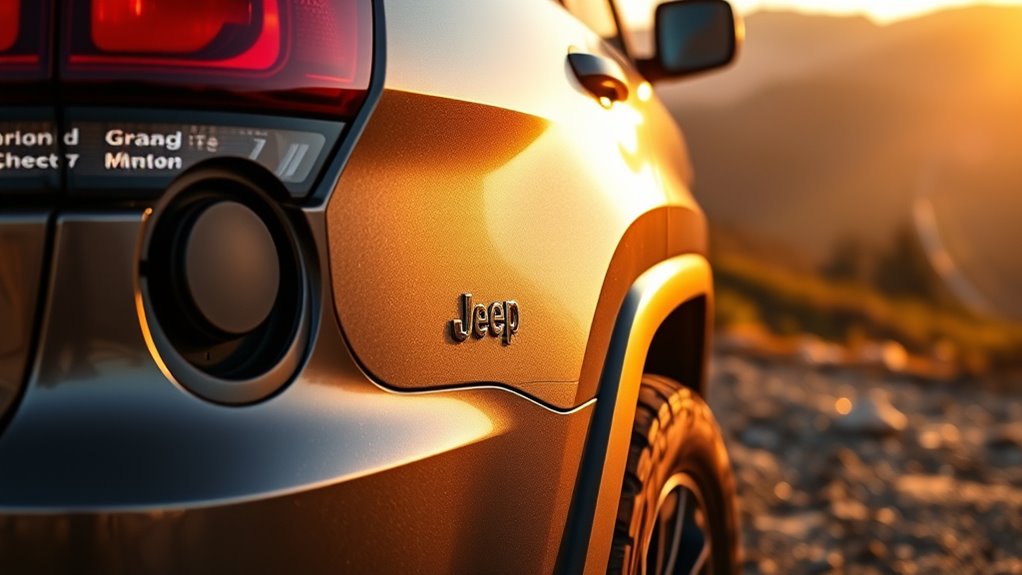
Although fuel tank sizes can vary by model year and trim, the Jeep Grand Cherokee generally holds between 20 and 24.6 gallons of fuel. Early models tend to have smaller tanks closer to 20 gallons, while the 4th and 5th generations usually feature fuel tank capacities around 24.6 gallons.
Your Jeep’s engine type plays a role in this variation; diesel models often come with slightly larger tanks, sometimes up to 26.5 gallons, to improve fuel economy on long drives. Knowing your vehicle’s fuel tank capacity helps you plan refueling stops more efficiently and understand how far you can travel before needing gas.
Keep in mind that differences in trim and engine choices can affect the exact fuel tank size, so the capacity you experience might not match other Grand Cherokee models. Understanding these factors will give you better insight into your Jeep’s fuel economy and overall driving range.
Finding the Exact Fuel Tank Capacity for Your Jeep Grand Cherokee
When you need to know the exact fuel tank capacity of your Jeep Grand Cherokee, the best place to start is your owner’s manual or by contacting a dealership with your vehicle’s VIN. These sources provide the most accurate information tailored to your specific model.
Moreover, you can sometimes find the fuel tank capacity printed inside the fuel door or near the filler neck, which offers a quick reference. For extra verification, checking Jeep’s official website or OEM parts retailers can confirm the exact size.
Online Jeep forums and owner groups also share detailed specs for various model years and trims, which can help if you don’t have immediate access to official documents. By verifying through these reliable channels, you’ll ensure you know the precise fuel tank capacity of your Jeep Grand Cherokee, making fueling and maintenance decisions easier and more accurate.
Fuel Tank Capacity by Generation: 1st to 5th
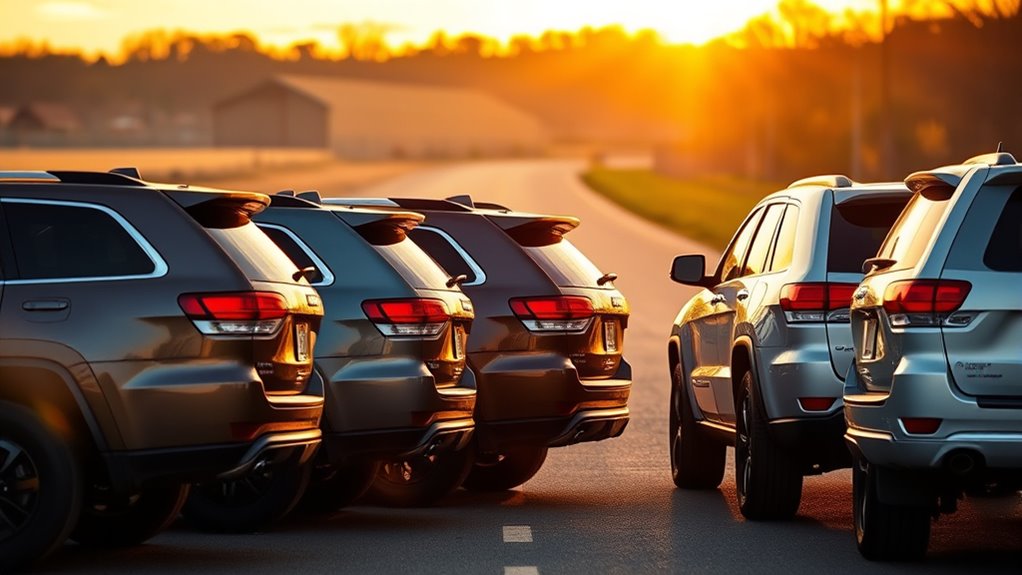
Knowing the exact fuel tank capacity for your Jeep Grand Cherokee means understanding how it varies across different generations. The 1st-generation Jeep Grand Cherokee, produced from 1993 to 1998, holds around 20 gallons.
Moving to the 2nd-generation models (1999-2004), the fuel tank capacity increases slightly to about 22 gallons. When you reach the 3rd generation (2005-2010), you’ll find a capacity close to 24 gallons.
The 4th generation (2011-2021) and the current 5th generation (2022 and newer) offer the largest fuel tank capacity, around 24.6 gallons. This gradual increase in fuel tank capacity reflects design changes and improvements in each generation.
While engine type and trim level can influence the exact size, these figures give you a clear overview of what to expect depending on your Jeep Grand Cherokee’s generation. Knowing this helps you plan refueling stops and understand your vehicle’s range better.
Engine Types and Their Impact on Fuel Tank Size
How does the engine type affect the fuel tank size in a Jeep Grand Cherokee? The engine size and type directly influence the fuel tank capacity to meet the vehicle’s fuel demands. You’ll notice differences based on the engine’s fuel consumption and intended use.
Engine size and type shape the fuel tank capacity to suit fuel consumption and vehicle use.
Here’s how engine types impact fuel tank size:
- V8 Engines: Larger engines like V8s usually have bigger fuel tanks to support higher fuel consumption. This allows longer drives without frequent refills.
- V6 Engines: More fuel-efficient V6 models typically come with a standard fuel tank capacity around 24.6 gallons. This balances performance and range.
- Diesel Variants: Diesel engines tend to have slightly larger tanks, between 24.8 and 26.5 gallons, to maximize efficiency on long trips.
Understanding these differences helps you choose the right Grand Cherokee that matches your driving needs and fuel expectations based on engine types and fuel tank capacity.
Gas vs. Diesel: How Fuel Tanks Differ on the Grand Cherokee
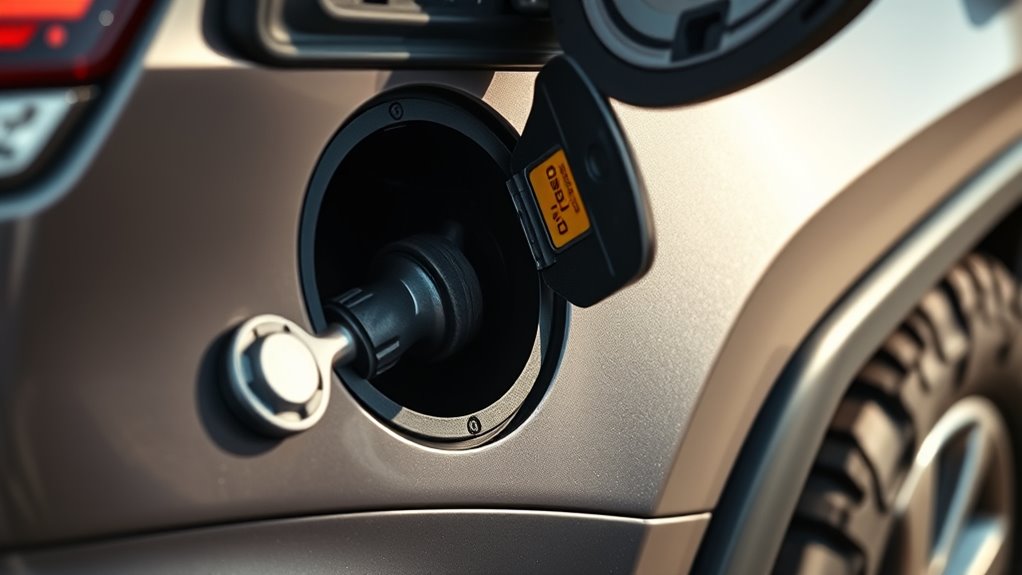
Engine types set the stage for the differences you’ll find between gas and diesel fuel tanks in the Jeep Grand Cherokee. If you drive a gas-powered Jeep, expect a fuel tank capacity around 24.6 gallons.
Diesel models, however, usually come with slightly larger tanks, ranging from about 24.8 to 26.5 gallons. This increase in fuel tank capacity helps diesel engines maximize mileage and cut down on how often you need to refuel, especially on long trips or off-road adventures.
The diesel tanks are designed with their engine’s efficiency and intended use in mind, often holding more fuel to support extended driving. Keep in mind, tank size can vary depending on the model year and trim, so always verify your specific Jeep.
Understanding these differences helps you plan fuel stops better and appreciate how the Grand Cherokee’s fuel system matches its engine type.
How Trim Levels Affect Fuel Tank Capacity
You’ll notice that engine size and fuel type can impact the fuel tank capacity across Jeep Grand Cherokee trims. Off-road versions often have tweaks that adjust tank size to support longer drives. So, to get the exact gallons, you’ll want to check the specific trim and model year.
Engine Size Influence
Why do some Jeep Grand Cherokee models come with bigger fuel tanks than others? It mainly comes down to engine size and trim levels. Larger engines, like V8s, consume more fuel, so they often get bigger fuel tanks to match.
Here’s why engine size influences fuel tank capacity: Bigger engines need extra fuel for maximum performance, leading to larger tanks. Higher trim levels with additional features often include bigger tanks to support increased fuel demands.
Fuel tank sizes vary to balance vehicle weight, efficiency, and driving range based on engine and trim.
Off-Road Trim Variations
Although all Jeep Grand Cherokee trims share a rugged design, off-road versions like the Trailhawk often come with larger fuel tanks to help you go further between fill-ups. Off-road trims typically boost fuel tank capacity to around 26.5 gallons, especially in diesel models, supporting longer trips in remote areas.
This increase accounts for the extra demands of tough terrains and extended driving ranges you’ll encounter off the beaten path. Higher trim levels equipped with specialized off-road gear often include these bigger tanks to keep you going without constant stops.
However, fuel tank capacity can vary by model year and factory options, so it’s wise to check your specific Jeep Grand Cherokee’s details. This guarantees you know exactly how far your adventure-ready vehicle can take you.
Fuel Type Differences
How does the type of fuel impact the Jeep Grand Cherokee’s tank capacity? Fuel type plays a key role in determining the fuel tank capacity, especially when paired with different engine sizes and trim levels. Here’s what you should know:
Gasoline models usually have a fuel tank capacity of around 24.6 gallons, while diesel versions often feature slightly larger tanks, up to 26.5 gallons.
Higher trim levels, like the Trailhawk, may come with larger tanks to support off-road adventures and extended driving ranges.
Engine size matters. V8 or diesel engines often require bigger fuel tanks to maintain performance and range compared to V6 engines.
Why Fuel Tank Size Matters for Driving Range and Refueling
Because a larger fuel tank lets you drive farther without stopping, it plays a key role in your Jeep Grand Cherokee’s overall convenience and performance. The fuel tank size directly affects your driving range, meaning fewer refueling stops during long trips.
With about 24.6 gallons, you can cover over 500 miles, depending on fuel efficiency. This reduces time spent searching for gas stations and lets you focus on the road ahead.
| Benefit | Impact |
|---|---|
| Longer driving range | Travel farther on one fill-up |
| Fewer refueling stops | Save time and hassle |
| Convenience | Less interruption on trips |
| Flexibility | Plan routes without gas worries |
| Confidence | Drive remote areas with ease |
Choosing the right fuel tank size means optimizing your Grand Cherokee’s usability and making every journey smoother.
Fuel Tank Capacity and Its Role in Off-Road and Long Trips
Where can your Jeep Grand Cherokee take you on a single tank of gas? Its fuel tank capacity ranges from about 20 to 26.5 gallons depending on the model. This plays a vital role in off-road trips and long journeys.
This capacity directly impacts your vehicle’s extended range, letting you travel farther without frequent stops.
Here’s how the fuel tank capacity benefits you:
- Larger tanks in diesel or higher trims offer an extended range, perfect for remote off-road adventures.
- Reduced refueling frequency allows you to explore rugged terrains confidently and safely.
- Better planning for fuel stops helps maximize your Jeep’s capabilities during long trips and overlanding.
Understanding your Jeep Grand Cherokee’s fuel tank capacity guarantees you’re prepared for challenging terrains and extended travel. It makes your off-road and long-distance experiences more enjoyable and stress-free.
Fuel System Maintenance Tips for Your Jeep Grand Cherokee
Maintaining your Jeep Grand Cherokee’s fuel system is essential to guarantee consistent performance and avoid costly repairs. You should regularly replace the fuel filter every 30,000 miles to attain optimal fuel flow.
Keep an eye on the fuel tank level, especially during cold weather, to prevent fuel line freeze-up. Using high-quality fuel additives can keep the system clean and efficient. Also, inspect fuel lines and connections for leaks or damage routinely.
| Maintenance Tip | Key Action |
|---|---|
| Fuel Filter | Replace every 30,000 miles |
| Fuel Additives | Use recommended high-quality types |
| Fuel Lines | Check for leaks or damage |
| Fuel Tank Level | Keep above 1/4 tank in cold weather |
| Manufacturer Schedule | Follow for pump and system health |
Following these fuel system maintenance tips helps you extend the lifespan of your Jeep’s fuel components and maintain reliable performance.
How Weather Conditions Affect Your Jeep’s Fuel Consumption
When weather conditions shift, your Jeep’s fuel consumption can change noticeably. Different factors impact fuel efficiency, so it’s important to understand how weather conditions affect your driving.
In cold weather, fuel thickens and flows less efficiently. This reduces fuel efficiency, especially if you take frequent short trips that don’t allow your engine to reach its ideal temperature.
Hot weather means you might rely on air conditioning more. Running the A/C increases engine load, which leads to higher fuel consumption.
Wind and road conditions also matter. Strong headwinds create resistance, forcing your Jeep to burn more fuel to maintain speed. Snow and icy roads increase rolling resistance, further reducing fuel efficiency.
Finding Replacement and Upgraded Fuel Tanks for Your Jeep
When you’re searching for a replacement or upgraded fuel tank, it’s important to pick one that fits your Jeep’s year and trim. You don’t want to end up with something that doesn’t quite match or work right.
It’s also a good idea to think about whether you want an OEM or aftermarket tank. Each has its own pros and cons when it comes to quality and price, so weigh those carefully before deciding.
And don’t forget, proper installation and regular maintenance are key to keeping your fuel tank running smoothly. Taking the time to do it right will pay off in the long run.
Compatible Tank Models
How do you find the right fuel tank replacement for your Jeep Grand Cherokee? Start by focusing on compatibility. Your tank must fit your model year, engine type, and trim.
Replacement tanks usually match the original capacity, around 24.6 gallons. But upgraded options offer more fuel storage.
Here’s how to choose compatible tank models:
- Verify your Jeep’s year and trim to ensure the tank fits perfectly.
- Decide if you want OEM replacement tanks that maintain original capacity or upgraded tanks with increased capacity (25-30 gallons).
- Purchase from trusted sources like dealerships or authorized retailers to guarantee quality and proper fit.
OEM Vs Aftermarket
Although OEM fuel tanks guarantee a perfect fit and preserve your Jeep Grand Cherokee’s original performance, aftermarket tanks can offer increased capacity or enhanced durability, provided you carefully verify their compatibility with your specific model year and trim.
OEM tanks are designed precisely for your Jeep, guaranteeing seamless installation and maintaining resale value. On the other hand, aftermarket options might bring additional features, but you must confirm their specifications thoroughly to avoid fitment issues.
When choosing between OEM and aftermarket, prioritize compatibility to ensure safety and proper function. Always buy from reputable dealers or brands to secure quality.
This way, you can confidently select a replacement or upgraded tank that meets your Jeep’s needs without compromising performance.
Installation And Maintenance
To find the right replacement or upgraded fuel tank for your Jeep Grand Cherokee, you’ll need to confirm your vehicle’s exact model year, trim, and engine type to guarantee compatibility. Whether you choose an OEM or aftermarket tank, proper installation is essential for safety and performance.
Here’s how to approach installation and maintenance:
- Follow manufacturer instructions closely or seek professional installation to ensure the tank fits correctly and functions safely.
- Regularly inspect the fuel tank for leaks, corrosion, or damage to catch issues early.
- Replace fuel filters and perform routine maintenance to extend your tank’s lifespan.
Upgraded tanks often offer increased capacity or reinforced construction. But always verify compatibility with your Jeep’s specifications before installation to avoid problems.
How Fuel Tank Size Influences Resale Value and Fuel Choices
Because a larger fuel tank extends your driving range, it can make a Jeep Grand Cherokee more appealing to buyers who prioritize long trips or off-road adventures. When considering resale value, a bigger fuel tank size often adds practical appeal, especially for those who need fewer stops on lengthy drives. This feature can boost the vehicle’s market worth by highlighting convenience and efficiency.
You should also pay attention to fuel choices, as selecting the right fuel type and maintaining the fuel system properly can preserve your Jeep’s performance and resale value. Buyers frequently evaluate fuel tank capacity alongside fuel economy to assess cost-effectiveness. By sticking to recommended fuel options and keeping the tank and fuel system in good shape, you ensure your Grand Cherokee remains reliable and attractive in the used car market.
Ultimately, understanding how fuel tank size influences resale value and fuel choices helps you make smarter decisions for both daily use and future sales.
Frequently Asked Questions
How Do I Safely Drain the Fuel Tank on My Jeep Grand Cherokee?
To safely drain the fuel tank on your Jeep Grand Cherokee, first check the fuel tank size and fuel capacity details. This helps you estimate how much fuel you’ll handle. Park on a level surface, turn off the engine, and disconnect the negative battery terminal.
Use proper gear and locate the drain plug or petcock at the tank’s bottom. Slowly open it to drain fuel into an approved container. Then, use tank measurement methods to verify it’s empty before reassembling.
What Type of Fuel Pump Does the Grand Cherokee Use?
Think of your Grand Cherokee’s fuel pump as the heart that keeps fuel flowing smoothly. It uses an electric, high-pressure pump located inside the fuel tank, designed for direct or multi-point fuel injection.
If you notice fuel pump symptoms like sputtering or stalling, a fuel pump replacement might be needed. Knowing the fuel pump location inside the tank helps you plan repairs or upgrades efficiently.
Don’t ignore those signs!
Can Adding Fuel Additives Increase My Jeep’s Tank Capacity?
No, adding fuel additives won’t increase your Jeep’s tank capacity. That’s a common tank capacity myth. Fuel additive benefits mainly improve fuel quality and engine performance but don’t change how much fuel your tank holds.
Always check additive compatibility with your Jeep’s engine to avoid issues. If you want more fuel capacity, you’d need physical modifications, not additives. So, stick to additives for efficiency, not volume changes.
How Long Does It Take to Fill the Fuel Tank Completely?
It usually takes you about 3 to 5 minutes to fill your Jeep Grand Cherokee’s fuel tank completely at a typical gas station. Refill times depend on the pump’s flow rate and gas station options, like nozzle size.
Being mindful of fuel efficiency helps you plan stops better, so you don’t spend extra time refilling. Choosing stations with faster pumps can cut your wait and get you back on the road quicker.
Are There Any Fuel Tank Recalls for Specific Grand Cherokee Models?
There aren’t any widespread recalls specifically targeting the Jeep Grand Cherokee’s fuel tank design due to manufacturing defects.
If you’re worried about safety, you should regularly check recall procedures through the NHTSA website or contact your Jeep dealer. They can verify if your model has any outstanding recalls related to fuel tanks or other components.
Staying proactive guarantees you catch any issues early, even though fuel tank recalls remain rare for this vehicle.
Conclusion
Understanding your Jeep Grand Cherokee’s fuel tank capacity is like knowing the size of your water bottle before a hike. It helps you plan better.
Whether you have a gas or diesel engine, or a specific generation model, knowing the exact gallons your tank holds guarantees you’re never caught off guard.
Keep your fuel system in check, consider upgrades, and remember, fuel capacity can impact both your driving range and resale value.
Drive smart, and fuel up wisely!