Why Is My Jeep Shaking? A Complete Guide to Causes and Fixes
Why is my Jeep shaking? The most common cause is worn or loose steering and suspension parts, especially with solid front axle designs in Jeep Wranglers. Shaking often happens at speeds between 45 and 55 mph due to a resonance effect triggered by these components. Start by checking your tire balance and condition, as unbalanced or damaged tires usually cause shaking at higher speeds around 50 to 70 mph.
Key Takeaways
- Worn steering and suspension components often trigger shaking due to Jeep’s solid front axle resonance around 45-55 mph.
- Unbalanced or damaged tires cause steering vibration typically between 50-70 mph and should be inspected first.
- True Jeep death wobble features violent front-end oscillation and requires immediate full steering and suspension inspection.
- Jeep Wrangler JK models (2007-2018) are more prone to shaking, especially with stock or 33-inch tires.
- Steering stabilizers like the ICON 22039 can reduce steering vibrations specific to JK Wranglers.
- The 2018-2019 Jeep Wrangler JL recall addressed frame weld defects linked to shaking and steering issues.
What Causes Your Jeep to Shake While Driving?

Your Jeep shaking while driving usually traces back to issues with tires, suspension, or steering components that connect these systems. Tires have a big impact on how steady your ride feels. Unbalanced or unevenly worn tires can cause consistent vibrations that you feel in the steering wheel. Balancing tires involves adding small weights to the rim to counteract heavy spots, which mechanics typically do when they mount new tires or during an alignment service. Vibrations usually get worse as speed increases when tires are unbalanced, which can cause faster tire wear and might affect steering.
On the suspension side, wear in parts like ball joints, bushings, or the track bar can cause the entire front end to shake, especially on rough roads or at highway speeds. The track bar, which keeps the front axle centered under the vehicle, is often the main culprit in violent shaking episodes. A loose, bent, or broken front axle can cause it to swing side to side, causing the death wobble, a quick, forceful vibration that makes the steering wheel jerk uncontrollably. This oscillation happens because worn suspension joints allow movement that reacts with the forces of the tires on the road, creating a resonance effect.
The steering wheel vibrates because the steering linkage and suspension parts aren’t holding the wheels firmly. Worn tie rod ends or ball joints mean your wheels can’t maintain a steady position, and this looseness transmits directly through the steering column. This is especially noticeable at highway speeds where forces on the front end increase. Along with a worn steering system, poor wheel alignment can cause vibrations by putting uneven stress on tires, making the wheel return unevenly after bumps or turns.
To address shaking caused by tires, start by checking tire balance and condition. This costs around $15 to $40 per tire at most shops. Tires showing uneven wear or damage might need to be replaced, which typically costs $150 to $300 per tire based on size and brand. Next, inspect the suspension components for looseness or damage. Mechanics usually perform a full front-end inspection, checking ball joints, bushings, track bar, and steering linkage. Repair costs vary widely; replacing a track bar can range from $150 for basic parts plus labor, whereas a full suspension tune-up including tie rods, ball joints, and bushings can exceed $500 or more. Good repair results mean the steering wheel remains steady at all speeds, no wobble or shimmy occurs, and tire wear evens out after alignment. Ignoring components that cause shaking risks rapid deterioration and can make the Jeep unsafe to drive.
How Solid Front Axle Design Affects Jeep Stability
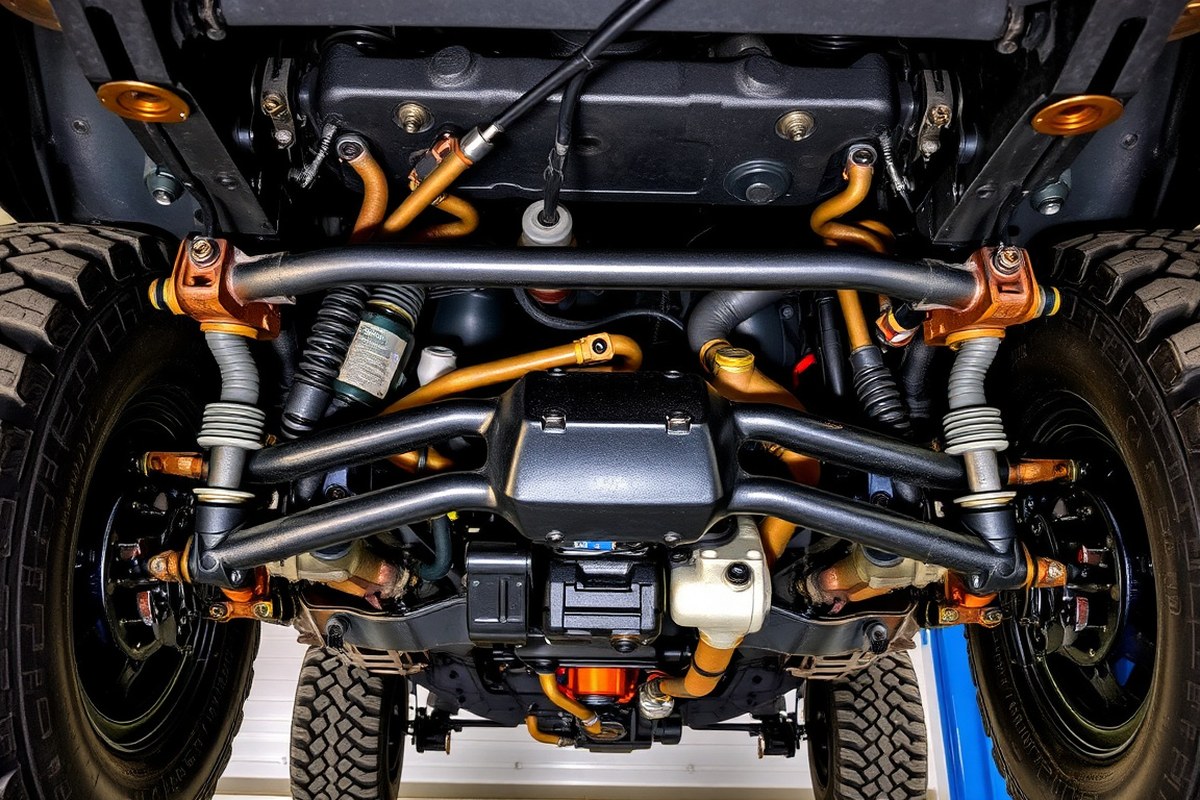
The solid front axle design mounts both front wheels on one rigid axle housing, a setup found on Jeep Wranglers and Gladiators. Unlike independent suspension systems where each wheel moves independently, this design moves both wheels together as a unit. This configuration delivers strong durability and good off-road flex, but it can increase the chance of shaking or wobbling if steering or suspension parts wear down.
The reason solid front axles cause more shaking is tied to how forces transfer through the front end. When one part of the axle housing moves or oscillates, the entire assembly responds. Loose or worn steering or suspension parts, like track bar bushings or ball joints, may cause the axle to rock back and forth. This effect is often felt as the infamous “death wobble,” typically occurring between 45 and 55 mph. The solid axle does not self-correct as an independent suspension would, so the shaking can get worse rapidly if the issue isn’t fixed.
This design directly influences suspension wear since all the linked components share the loads between both wheels. Worn track bars, suspension arms, or loose bolts cause the entire front axle to move instead of staying steady. On a lifted Jeep, this stress increases because aftermarket suspension changes alter the geometry, putting extra strain on factory parts. You need to regularly check that these parts are tightened to factory specifications, especially the track bar bolts and bushings, and confirm the vehicle’s caster alignment is correct. Caster angle plays a bigger role than toe settings in preventing wobble on solid axles.
Good results come from addressing any looseness or wear promptly. Have a professional inspect and tighten all front suspension bolts, replace worn bushings, and ensure proper alignment. Typical repairs might include replacing track bar bushings for $50 to $150 depending on parts and labor. Proper maintenance and alignment can dramatically reduce shaking and extend the life of the suspension components. Neglecting these issues means you risk continued or worsening wobble, faster wear on tires, and unsafe handling.
Check for loose or worn suspension bolts and track bar bushings regularly, especially if your Jeep has suspension lifts or you often drive off-road, to prevent death wobble from developing.
Common Symptoms That Indicate Jeep Death Wobble
A key sign that your Jeep is experiencing death wobble is a violent vibration in the steering wheel. This shaking is not mild or brief; it feels like a strong, rapid side-to-side oscillation that you can feel throughout the front end of the vehicle. The sensation commonly starts while driving at steady speeds above 40 mph and can be so intense it makes controlling the Jeep challenging. Recognizing this feeling early helps you act before it turns into a dangerous situation.
Aside from the steering wheel vibration, uneven tire wear is a practical symptom indicating that your Jeep’s suspension or steering components may be loose or worn, contributing to death wobble. Tires might develop irregular tread wear, such as cupping or scalloping, which confirms misalignment or damaged steering parts. Keeping an eye on tire condition during routine checks can reveal wobble issues before the steering shake appears.
Noises coming from the steering components are also warning signs. Clunks, knocks, or rattles heard especially after hitting bumps or rough terrain point to loose or failing parts in the front axle or steering linkage. These sounds occur because the components have excess play that worsens over time, making your Jeep prone to the self-reinforcing oscillation known as death wobble.
- Violent, rapid steering wheel shake, often at speeds above 40 mph
- Noticeable uneven or cupped tire wear
- Clunking or knocking noises from the front suspension or steering
- Steering wheel may feel loose or hard to keep steady
- Shaking occurs even on smooth roads, not only off-road
- Symptoms may temporarily lessen with a steering stabilizer but return later
Active steering vibration doesn’t always develop suddenly; it can begin as minor shimmy that slowly intensifies. A steering stabilizer can reduce the feel of wobble but won’t solve the root causes, such as worn ball joints, track bars, or tie rod ends. Mechanics often check steering and suspension components during an alignment, diagnosing worn parts that could cause death wobble. Budgeting a few hundred dollars for inspections and necessary repairs is typical, though prices vary depending on parts and labor. Early recognition and professional service improve safety and avoid costly damage.
Responding quickly to these signs prevents death wobble from escalating. Tracking your Jeep’s driving feel and performing regular inspections of steering parts and tires are essential steps toward safe handling and avoiding this unsettling condition.
Which Jeep Models and Modifications Are Most Susceptible?
Wrangler JK models from 2007 through 2018 are commonly reported for experiencing shaking issues, especially the death wobble. Cherokee models also face this problem often, making these two Jeep types the most susceptible overall. It’s not just the model; modifications such as lift kits and larger tires influence how likely your Jeep is to shake on the road.
Lift kits change your Jeep’s suspension geometry, which can affect the front end’s stability. The lift itself doesn’t automatically cause shaking, but it can cause caster angles to drift out of their factory specs. When this happens, the front suspension is less able to resist the oscillations that cause the wobble. This means a lifted Wrangler developing shake may be dealing with alignment or wear issues, not just the lift.
Tire size also plays a role. Stock tires usually measure about 33 inches in diameter. Increasing tire size adds weight and rotational mass, which places more demand on the steering system. Larger tires, therefore, may make shaking more noticeable and increase the chance of wobble if the steering components or suspension aren’t upgraded accordingly.
| Factor | Description | Impact on Shaking |
|---|---|---|
| Jeep Models | Wrangler JK (2007-2018), Cherokee | Highest reported incidence of death wobble |
| Lift Kits | Modify suspension height, can alter caster angle | Can increase wobble risk if caster drifts, but not direct cause |
| Tire Size | Stock around 33 inches; larger tires add mass | Larger tires stress steering, increasing wobble risk |
| Steering Setup | Single vs dual stabilizer bars | Dual stabilizers help at high lift and tire sizes |
Upgrading to dual steering stabilizers tends to become worth considering once you add a lift or increase tire size substantially. The additional stabilizer helps absorb oscillations that lead to shaking. If your Jeep’s lift is moderate and tires are stock or close to stock size, a dual set might not be necessary, but heavy modifications often demand this step.
Maintaining proper suspension geometry through alignment checks, especially caster angle measurement, is critical with any modifications. Hard impacts or years of wear can push these angles out of spec, raising shake risk regardless of the lift or tires you use. Consulting a specialist to verify these specs whenever you modify your Jeep can save you frustration and improve driving stability.
Step-by-Step Diagnosis: How Mechanics Identify the Cause
The first parts mechanics inspect for shaking in your Jeep are the track bar, its mounting hardware, tie rod ends, and ball joints. These components hold the front axle and steering together, so any looseness or wear can cause shaking. Then wheel balance and alignment are checked to ensure tires and steering are working smoothly together.
Inspecting the Track Bar and Mounts
The track bar keeps the front axle centered under the Jeep’s frame, preventing excessive side-to-side movement. Worn bushings or loose mounts allow the axle to shift, triggering shaking or death wobble. Mechanics visually inspect mounting bolts for tightness and wear, then check bushings for cracks or deformation.
To test for play, a helper slowly turns the steering wheel while the mechanic watches the track bar connection points. Any visible movement or clunking noises means the track bar or mounts may need replacement. Replacement costs vary but expect $150 to $400 for parts and labor depending on Jeep model and shop rates.
Do not tighten a loose track bar without checking bushings; worn bushings render tightening ineffective and cause repeated problems.
Checking Ball Joints and Tie Rod Ends
Ball joints and tie rod ends connect the steering knuckles to control arms and steering linkage. They allow wheel movement but wear over time, creating unwanted play that results in shaking. Mechanics grip the wheel at the three and nine o’clock positions and rock it to detect any looseness in these joints.
Inspection includes cycling the steering while observing the tie rod ends and drag link for play or noise. Worn ball joints, in particular, can cause violent motion at the tire because they carry the Jeep’s weight while allowing pivoting. A typical test sequence looks like this:
- Safely raise the front axle off the ground using a jack and jack stands.
- Grasp the tire at the sides and rock it back and forth.
- Listen and look for movement at the ball joints and tie rod ends.
- Have an assistant slowly turn the steering wheel side to side.
- Observe steering linkage and track bar for unusual movement or clunks.
- Note any component with excessive play for replacement.
Replacing worn ball joints or tie rod ends stops shaking better than using a steering stabilizer alone.
Verifying Wheel Balance and Alignment
Unbalanced tires cause vibration at certain speeds, sometimes mistaken for suspension issues. Mechanics inspect tires for uneven wear and verify proper balance with a wheel-balancing machine. For alignment, a specialized machine measures toe, camber, and caster angles to ensure wheels point correctly.
Alignment checks only make sense after worn suspension parts like the track bar or tie rod ends are repaired. Attempting alignment with loose components wastes money because the wheels will shift again. Proper alignment costs $75 to $150 depending on location and vehicle.
Skip alignment until all suspension and steering parts are tight and in good condition to get accurate results.
Assessing Steering Stabilizer Condition
The steering stabilizer dampens front-end vibrations but does not fix the root cause of shaking. Mechanics inspect it for leaks, bent rods, and mounting hardware condition. A failing stabilizer can worsen symptoms or give a false sense that the shaking is under control. Replacing a worn or weak stabilizer costs around $50 to $150 for parts and labor, but it should only be done after addressing track bar, ball joints, and tie rod ends.
How to Safely Manage Jeep Shaking While Driving
Continuing to drive your Jeep when it starts shaking or experiences death wobble is risky. The rapid movement in the steering system reduces your ability to control the vehicle, which can lead to dangerous situations on the road. It is safest to slow down gradually while maintaining a firm grip on the steering wheel. Avoid sudden braking or sharp turns, as these can worsen the wobble and increase the chance of losing control. If death wobble strikes, take these immediate actions to regain control safely and bring your Jeep to a stop:
- Firmly hold the steering wheel with both hands to resist the shaking.
- Slow down steadily without braking abruptly, ease off the gas pedal and let the Jeep coast to lower speeds.
- Turn on your hazard lights to alert other drivers.
- Find a safe location off the road to park and stop the vehicle.
- Avoid sudden steering inputs or rapid acceleration until repairs are made.
Once stopped, it’s critical that you do not continue driving your Jeep until a professional inspects the front suspension and steering components. The sources of death wobble often involve worn or damaged parts like ball joints, tie rod ends, or track bars, and driving on them can worsen the damage and put you at further risk. Repair costs vary depending on the specific components involved, but prompt service can prevent more expensive repairs down the line.
Adding a steering stabilizer can help minimize steering feedback and prevent death wobble in the future. Although it won’t stop wobble that’s already started during a drive, a stabilizer reduces the chance that rough road conditions or larger tires will trigger instability. Routine preventive maintenance and timely repairs ensure your Jeep remains safe and handles correctly on all road types while helping you avoid unexpected shaking.
Fix Options: DIY Repairs Versus Professional Service
You can handle some Jeep shaking problems yourself, especially if the cause is simple like loose bolts or worn bushings. However, many issues require precise tools and expert knowledge, such as adjusting caster angles or disassembling suspension components, where professional help is best. Use a decision rule: attempt DIY only if the fix involves basic tightening or part replacement without special tools or alignment needs; otherwise, book a shop visit.
Simple DIY Repairs You Can Try
Start by checking for any visibly loose bolts or fasteners on your front suspension, especially the track bar. Tightening them to the correct torque, which depends on your Jeep’s model and year, can often reduce or eliminate shaking. Look up the factory torque specs in your owner’s manual or online to get these values right. Replacing worn track bar bushings is another manageable task if you have basic hand tools; many Jeeps allow these to be swapped without full component removal.
Wheel bearings also affect shaking and may be overlooked. If you can safely jack up the front wheel and it feels loose or rough when spun, replacing the wheel bearing can help. This repair is reasonably straightforward on many Jeep models and requires standard bearing tools. Avoid replacing entire assemblies unnecessarily by testing each component individually. Performing these fixes yourself saves money and time if you have confidence working under the vehicle safely.
When to Schedule Professional Inspection
Complex issues like adjusting the positive caster angle or diagnosing death wobble require professional service. The caster angle must match factory alignment specs precisely, which a shop with an alignment rack can set. Pulling apart knuckles or replacing ball joints involves tools and techniques not usually found in a typical home garage. Loose or damaged suspension components can turn a DIY fix into a safety risk if done incorrectly, so err on the side of caution and visit a shop.
Professional mechanics perform a thorough front-end inspection to identify all worn or loose parts. They use diagnostic steps that avoid random parts replacement, ensuring you don’t spend money on fixes you don’t need. After repairs, a shop will complete a detailed alignment to restore handling. Immediate professional attention is important when shaking changes how the Jeep steers or handles, as delayed repairs can worsen wear and increase costs.
Cost and Time Estimates for Repairs
Simple repairs like tightening loose bolts or swapping bushings can take under an hour and cost $20 to $100 for parts if you do them yourself. Wheel bearing replacement might take 2 to 3 hours and around $150 to $300 for parts, depending on model. DIY kits and tools add to costs but remain less expensive than shop labor.
Professional service varies widely. Front-end inspections often run $100 to $150, with alignment included or extra, costing $80 to $120. Repairs involving suspension disassembly or ball joint replacement can take 3 to 5 hours, with labor rates from $90 to $150 per hour depending on your location. Parts bought from OEM suppliers ensure quality but add to costs. Proper service restores your Jeep’s performance and safety, often worth the investment compared to guesswork or incomplete fixes.
Preventive Maintenance to Avoid Future Jeep Shaking
To keep your Jeep shaking-free, stick to a regular maintenance schedule focused on tire balancing, suspension checks, and alignment adjustments. These steps ensure your vehicle’s components work properly together, reducing wear and preventing problems like death wobble. Establishing a routine helps catch issues early before shaking starts or worsens.
Regular Tire Inspection and Balancing
Inspect your tires every 3,000 to 5,000 miles for uneven wear, damage, and proper inflation. Tire imbalances cause vibrations that can mimic or trigger shaking in your Jeep, especially at highway speeds. Balance tires each time you install new ones or notice vibration, typically every 6,000 to 8,000 miles. Balancing costs about $15 to $50 per tire depending on the shop and equipment used.
A thorough tire check involves visually scanning for bulges, cuts, or uneven tread. Keep the tire pressure at the manufacturer’s recommended level, found on the door jamb or owner’s manual, since under- or overinflated tires change how the Jeep handles and may cause shaking.
Scheduled Suspension and Steering Checks
Set a formal suspension and steering inspection every 12,000 miles or annually, whichever comes first. This check includes looking for worn ball joints, tie rod ends, control arms, and wheel bearings, all parts that directly affect stability and can cause shaking. Physically check wheel bearings by jacking up each wheel and wiggling it top to bottom and side to side. Any looseness means a worn bearing must be replaced.
Steering stabilizers can help reduce vibration and are recommended especially if you have a lifted suspension or larger tires. They aren’t a cure-all but do dampen steering feedback and can delay the onset of shaking when paired with proper maintenance.
- Inspect ball joints and tie rod ends for excessive play.
- Check control arm bushings for cracks or looseness.
- Test wheel bearings by wiggling tires with the vehicle jacked up.
- Look for leaks or damage on shocks and struts.
- Confirm steering stabilizer is intact and functioning if installed.
- Lubricate all applicable suspension grease fittings.
Ignoring minor suspension play can lead to severe shaking and potentially dangerous driving conditions.
These checks take about 30-60 minutes if performed during routine service and typically cost $50 to $100 if done at a shop. DIY is possible if you have the tools and a lift or jack stands.
Alignment Frequency and After Modifications
Get a professional alignment at least once every 12,000 to 15,000 miles or after any suspension work, steering component replacement, or tire size change. A proper alignment sets caster, camber, and toe angles within specifications for your Jeep model and modifications. This prevents uneven tire wear and reduces the chance of vibration-induced shaking.
Caster angle is especially important in lifted Jeeps or those with steering lifts because it affects directional stability and steering feedback. Certified technicians use alignment machines that measure angles to a fraction of a degree, adjusting components to meet factory or custom specs.
Typical alignment cost ranges from $80 to $150 depending on location and services included. Neglecting alignment after modifications or damage can cause persistent shaking and premature part wear.
Step-by-Step Action Plan to Stop Your Jeep from Shaking
Follow these clear steps to identify and reduce shaking safely, keeping your Jeep stable on every drive.
- Before You Drive: Check tire pressure and look for uneven wear. Properly inflated, balanced tires usually stop vibrations.
- Day 1: Test drive at low speed. Note any steering wheel shake or noise. This helps isolate the shaking conditions.
- Day 2: Inspect suspension components, look for loose bolts, worn track bars, or failing tie rod ends. Fixing looseness often reduces shake.
- Day 3: Examine wheel bearings and ball joints. Replace any parts that show wear or play to restore smooth motion.
- Week 1: If shaking persists, have the front axle alignment checked or adjusted. Proper alignment improves stability and prevents death wobble.
- Week 2: Test drive again at highway speeds. If vibration remains, consult a professional mechanic experienced with Jeep solid front axles.
- Ongoing: Maintain regular inspections of lift kits, steering stabilizers, and suspension hardware, especially after off-road use or heavy modifications.
Frequently Asked Questions
Why Is My Jeep Shaking at 70 Mph?
Your Jeep likely has a steering or suspension issue around highway speed. Common causes include loose track bars, worn bushings, or unbalanced tires contributing to vibration at higher speeds.
Why Does My Jeep Shake When Idling in Drive Only?
Shaking only when idling in drive often indicates engine or transmission mounts issues. These mounts may be worn or damaged, causing vibration to transfer into the vehicle body.
How Do I Fix a Jeep Death Wobble?
Fixing death wobble usually requires inspecting and repairing steering and suspension components like track bars and ball joints. A professional may recommend replacing worn parts and adjusting alignment for stability.
What Causes Shaking in Jeep Wrangler JK/JKU at 55-65 Mph?
Shaking in this speed range is often due to tire imbalance or steering component wear. Lifted Jeeps with larger tires need careful check of steering geometry and stabilizers to prevent oscillations.
Can a Steering Stabilizer Fix Jeep Death Wobble?
A steering stabilizer can reduce symptoms but rarely cures death wobble alone. It’s more effective when combined with proper suspension repairs and alignment adjustments.
Why Does My Jeep Shake More After Hitting a Pothole?
Hitting a pothole can damage suspension components or throw off wheel alignment, increasing shaking. Inspect for bent parts or loose bolts following such impacts.
The Bottom Line
Shaking in your Jeep usually points to suspension, steering, or tire issues that need prompt attention for safe driving. Start by addressing simple checks like tire condition and suspension looseness before moving to more complex fixes. Scheduling a professional inspection can pinpoint hard-to-see problems and protect your rig’s stability. Taking action now reduces the risk of severe death wobble on the road.