Where to Put Dielectric Grease on Spark Plugs in 5 Easy Steps
First, clean and inspect your spark plug and boot, ensuring they’re dry and free of grime.
Next, apply a small amount of dielectric grease inside the rubber boot, avoiding the metal terminal to prevent conductivity issues.
Then, push the boot evenly onto the spark plug with firm, careful pressure.
Make sure it seats fully, creating a moisture-proof seal with no gaps.
Avoid common mistakes like over-greasing or contaminating terminals, and you’ll keep your ignition reliable.
There’s more to know for perfect results.
Key Takeaways
- Apply a small amount of dielectric grease inside the rubber boot, avoiding the metal terminal.
- Spread the grease evenly on the inner surface of the boot, focusing on the area touching the ceramic insulator.
- Do not put grease on the spark plug’s metal terminal or ceramic insulator to maintain conductivity.
- Ensure the grease creates a moisture-resistant seal inside the boot without blocking electrical contact.
- After applying grease, push the boot firmly onto the spark plug to seal and protect against water intrusion.
Clean and Inspect the Spark Plug and Boot Before Applying Grease
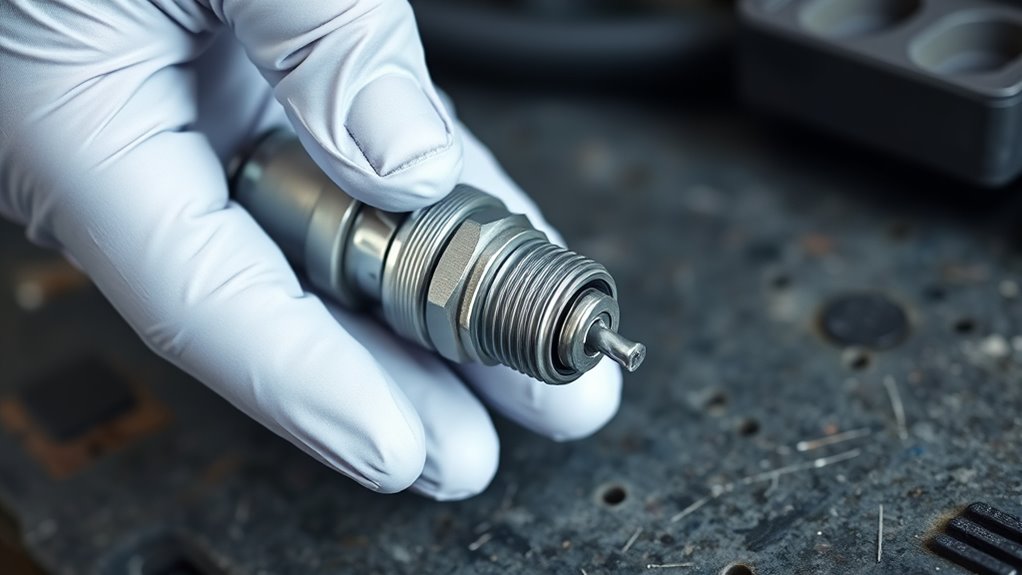
Before applying dielectric grease, you should remove the spark plug and carefully inspect it for dirt, corrosion, or damage. Take a close look at the ceramic insulator and metal terminal to spot any cracks or wear.
Next, clean both the spark plug and boot thoroughly using a contact cleaner or a clean cloth to eliminate any dirt or debris. Don’t forget to check the spark plug threads to verify they’re free of grime, as this will help with proper installation and sealing.
After cleaning, make sure everything is completely dry before you even think about applying dielectric grease. Trapped moisture or dirt can cause issues down the road.
Apply Dielectric Grease Inside the Spark Plug Boot (Avoid Metal Terminal)
Once the spark plug and boot are clean and dry, you can apply a small amount of dielectric grease inside the rubber spark plug boot. Be careful to avoid the metal terminal, as applying grease directly onto it can interfere with the electrical contacts and reduce spark efficiency.
Instead, spread the dielectric grease evenly around the inner surface of the boot, focusing on the area that will contact the ceramic insulator of the spark plug. This creates a moisture-resistant seal that helps prevent corrosion and guarantees a reliable connection.
By coating the inner wall of the boot, you protect the electrical contacts from moisture and dirt without hindering conductivity. When you install the boot later, the grease will help it slide on smoothly and maintain a snug fit.
This simple step improves the longevity and performance of your spark plug connection by keeping it clean and sealed.
Push the Boot Onto the Spark Plug Evenly
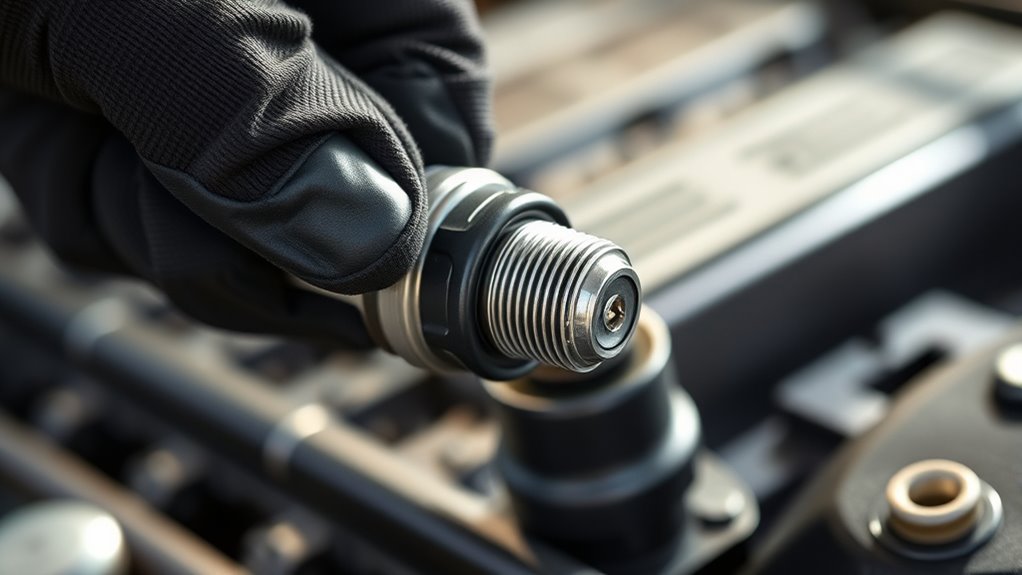
Although it might feel tricky at first, you need to push the spark plug boot onto the plug evenly to guarantee a secure fit. Start by ensuring you’ve applied dielectric grease inside the boot, which helps create a smooth seal and prevents moisture buildup.
Push the spark plug boot on evenly after applying dielectric grease to ensure a secure, moisture-resistant connection.
As you push the boot, do it firmly but carefully, so you don’t risk damaging the components. Proper seating is essential for a reliable electrical connection.
Keep these tips in mind:
- Align the boot correctly with the spark plug terminal to avoid uneven pressure.
- Rotate the boot slightly while pushing to distribute the dielectric grease evenly.
- Stop if you feel resistance; adjust gently to maintain even pressure.
Verify the Boot Is Firmly Seated and Sealed to Prevent Moisture
To prevent moisture from causing misfires or corrosion, make sure the spark plug boot is pushed firmly onto the ceramic insulator until it clicks or seats completely. This guarantees the boot is firmly seated and creates a proper seal, blocking moisture from sneaking in.
After installation, check for a tight fit around the base of the spark plug boot. No gaps or looseness should be visible. You can gently tug on the boot to confirm it’s securely attached and won’t easily come off.
Inspect that the boot covers the ceramic insulator evenly and fully, ensuring an effective barrier against moisture. A well-sealed spark plug boot not only protects against water intrusion but also prolongs the life of your spark plug and ignition system.
Taking these steps helps maintain peak engine performance and prevents issues related to moisture exposure.
Troubleshooting Common Mistakes When Using Dielectric Grease
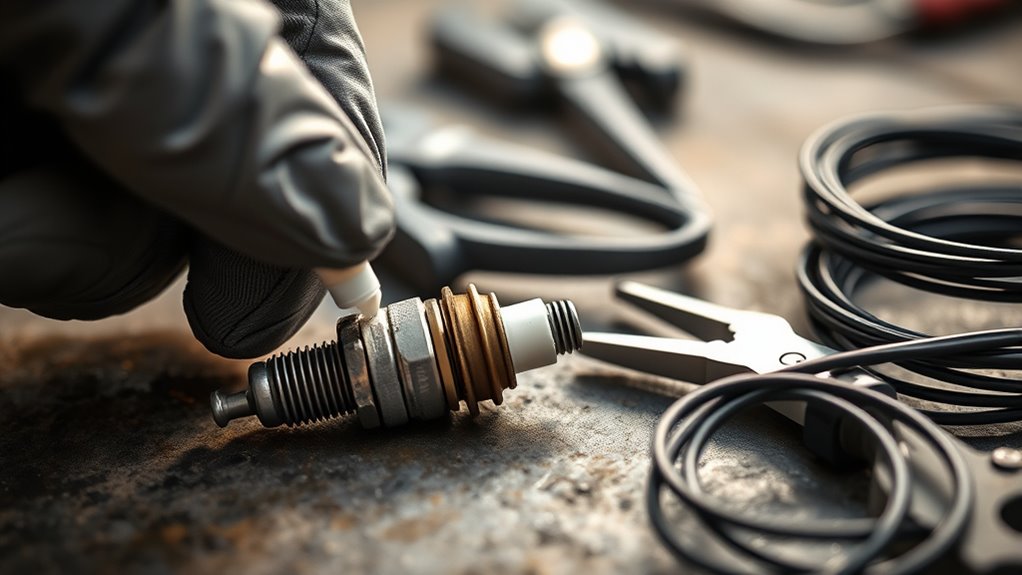
Ensuring the spark plug boot seals properly helps keep moisture out, but using dielectric grease incorrectly can still cause problems. To avoid misfires and poor connections, you need to focus on the application and use the grease the correct way. Here are common mistakes to watch for:
Proper spark plug boot sealing is key, but incorrect dielectric grease use can still cause misfires and connection issues.
- Applying grease directly on metal terminals or electrode tips, which blocks electrical contact and leads to misfires.
- Using too much grease inside the boot or on contact surfaces, trapping dirt and moisture, reducing reliability.
- Putting grease on the ceramic insulator instead of the boot, preventing proper sealing and insulation.
Also, always clean and dry spark plugs and ignition parts before applying grease. This ensures good connections and prevents corrosion. By following these tips, you’ll maintain optimal engine performance and avoid common pitfalls with dielectric grease use.
Frequently Asked Questions
Can Dielectric Grease Improve Spark Plug Lifespan?
Yes, dielectric grease can improve your spark plug durability by preventing corrosion and moisture buildup. It helps maintain proper electrical conductivity between the spark plug and boot, reducing the chance of misfires.
While it doesn’t directly enhance heat dissipation, it protects the ceramic insulator from environmental damage, which indirectly supports longer spark plug life. Applying it correctly guarantees a secure, corrosion-free connection, so your spark plugs last longer and perform better.
Is Dielectric Grease Safe for All Engine Types?
Dielectric grease is generally safe for most gasoline engines, offering excellent engine compatibility due to its chemical safety and temperature resistance. However, you shouldn’t use it on diesel engines because their components require different lubricants.
It won’t affect conductivity when applied properly, but avoid putting it on metal contacts. Always select a high-quality grease to protect sensitive plastics and rubbers.
Following manufacturer guidelines guarantees you don’t harm your engine’s performance.
How Often Should Dielectric Grease Be Reapplied?
You should reapply dielectric grease every 6 to 12 months, depending on your maintenance schedule and environmental conditions. If you notice water or corrosion, or if you perform spark plug cleaning or replacement, increase how often you apply it.
For high-moisture areas, more frequent reapplication helps keep the grease effective and maintains waterproof seals. Follow the reapplication tips from your vehicle’s manual to ensure maximum protection and prevent damage from dirt or moisture buildup on spark plug boots.
Can I Use Dielectric Grease on Other Ignition Parts?
Yes, you can use dielectric grease on other ignition parts to enjoy lubrication benefits, electrical insulation, and corrosion prevention. Just make sure you avoid compatibility concerns by not applying it directly to metal contacts, as that can hinder conductivity.
Instead, apply it on connector boots and wiring surfaces to protect against moisture and environmental damage. This way, you maintain a reliable ignition system while preventing corrosion and ensuring easy disassembly when needed.
Will Dielectric Grease Affect Spark Plug Performance?
Dielectric grease won’t affect spark plug performance if you follow the right grease application technique during spark plug installation. Since it’s insulative, not conductive, you need to avoid putting it on the metal electrode to prevent weak sparks.
Instead, apply it only on the boot and insulator to keep moisture and corrosion away. For maintenance tips, always use just a thin layer to guarantee reliable ignition and long-term performance.
Conclusion
Now that you know where to put dielectric grease on your spark plugs, you’re ready to keep your engine running smoothly. Think of the grease as a protective shield, guarding against moisture and corrosion.
Just follow these simple steps, and your spark plugs will stay snug and sealed like a well-fitted glove. With a little care, you’ll avoid common mistakes and enjoy better performance every time you turn the key.