What Gas Does Jeep Wrangler Take?
Your Jeep Wrangler mostly takes regular unleaded gasoline with an 87 octane rating. However, if you have a turbocharged 2.0L engine, you’ll want to use premium fuel (91 octane or higher) for the best performance.
Diesel Wranglers, like those with the 3.0L EcoDiesel, require diesel fuel and offer better torque and fuel efficiency. Using the wrong fuel can cause serious damage.
Keep going if you want to understand fuel types, costs, and maintenance tips for your Wrangler.
Key Takeaways
- Most Jeep Wranglers use regular unleaded gasoline with an 87 octane rating for optimal performance.
- Turbocharged Wrangler models, like the 2.0L engine, require premium fuel with 91+ octane.
- Diesel Wrangler models, such as the 3.0L EcoDiesel, run exclusively on diesel fuel.
- Always check the owner’s manual, fuel cap, or door jamb sticker for the recommended fuel type and octane.
- Using the correct fuel prevents engine damage, maintains performance, and ensures warranty coverage.
Gasoline and Diesel Fuel Types for Jeep Wranglers
Although most Jeep Wranglers run smoothly on regular unleaded gasoline with an 87 octane rating, you’ll need premium fuel if you have a turbocharged 2.0L engine for the best performance. You should always check your owner’s manual or fuel cap to confirm the right fuel type for your Wrangler.
Gasoline models are common and well-suited for daily driving and off-road adventures. If you opt for a diesel engine, like the 3.0L EcoDiesel, you’ll be using diesel fuel instead.
Diesel Wranglers offer advantages in towing capacity and long-distance fuel efficiency but typically require more maintenance, such as frequent fuel and oil filter changes.
Using the correct fuel type, whether gasoline or diesel, ensures your engine runs efficiently and lasts longer. So before filling up, make sure you know which fuel matches your Jeep Wrangler’s specific engine to keep it performing at its best.
Which Jeep Wranglers Have Gasoline or Diesel Engines?
Most Jeep Wranglers come with gasoline engines that run on regular unleaded fuel. However, some models offer diesel options, like the 3.0-liter EcoDiesel V6. You’ll also find the 4xe plug-in hybrid, which uses both gasoline and electric power.
If you want to know which engine your Wrangler has, it’s easy to check. Just look at the engine label, owner’s manual, or even the VIN details. They’ll give you all the info you need.
Gasoline Engine Availability
Which Jeep Wranglers run on gasoline, and which offer diesel options? Most Jeep Wranglers come with gasoline engines that operate on regular unleaded fuel with an octane rating of 87. These gasoline engine options dominate the lineup, including the 4xe plug-in hybrid, which pairs a gasoline engine with an electric motor, both using regular unleaded fuel.
Some newer Wranglers feature turbocharged gasoline engines requiring premium fuel (90 octane) for best performance. Diesel engine options, like the 3.0-liter EcoDiesel V6, are less common and available in select models.
To know if your Wrangler has a gasoline engine, check under the hood, consult the owner’s manual, or use the vehicle identification number (VIN). This way, you can verify you’re using the right fuel for your Jeep.
Diesel Engine Options
If you’re considering a diesel engine for your Jeep Wrangler, you’ll find that certain models offer this option, typically equipped with the 3.0L EcoDiesel V6. These diesel engines deliver impressive torque and better fuel efficiency compared to the more common gasoline-powered Wranglers.
While most Wranglers use gasoline engines like the 3.6L V-6, the EcoDiesel variant stands out for those wanting more power and longer range between fill-ups. Diesel Wranglers tend to be less common and are usually available in specific markets or higher trim levels.
If you prefer diesel, look for the EcoDiesel badge or consult the owner’s manual to confirm. Choosing a diesel engine means you’ll enjoy enhanced fuel efficiency, making it a solid option for both daily driving and off-road adventures.
Identifying Engine Types
Although Jeep Wranglers come with various engine options, you can quickly determine whether yours has a gasoline or diesel engine by checking the engine label under the hood or decoding the VIN. Most models, including the JL and earlier versions, feature gasoline engines like the 3.6L V-6 or 2.0L turbo inline-four.
However, some Wranglers offer diesel engines, such as the 3.0L EcoDiesel V6, mainly in specific markets or trims. To identify your Wrangler’s engine type, look for the engine label or stamp under the hood.
You can also decode the VIN online or at a dealership. Don’t forget to consult your owner’s manual or the door jamb sticker, as they clearly state the engine type and the correct fuel to use.
Recommended Octane Ratings for Jeep Wrangler Gasoline
You’ll usually want to use regular unleaded gasoline with an octane rating of 87 for most Jeep Wranglers. But if you have a turbocharged model, like the 2.0L engine, then premium fuel with at least 91 octane is necessary. It’s always a good idea to check your owner’s manual or the fuel cap to make sure you’re using the right octane for your engine.
Recommended Octane Levels
The recommended octane level for most Jeep Wranglers is regular unleaded gasoline with an octane rating of 87. Using this rating helps prevent engine knocking and ensures your Jeep runs smoothly.
However, certain turbocharged models, like those with a 2.0L engine, require premium fuel with an octane rating of 91 or higher to perform ideally. You don’t need to use higher octane fuels, such as 93, unless your owner’s manual specifically says so.
Always check the fuel cap label or your vehicle’s manual to confirm the exact octane rating for your Jeep Wrangler. Sticking to the recommended octane rating not only protects your engine but also maximizes efficiency and performance without unnecessary expense.
Engine Compatibility With Octane
When selecting fuel for your Jeep Wrangler, understanding engine compatibility with octane ratings is crucial to maintain performance and efficiency. Most standard engines in Jeep Wranglers require regular unleaded gasoline with an octane rating of 87, meeting their fuel requirements effectively.
However, if your Wrangler has a turbocharged engine, like the 2.0L turbo, it needs premium fuel with an octane rating of 91 or higher to run at its best. Older models with a 3.6L V-6 engine also perform well on 87 octane. Using a higher octane than recommended won’t boost performance and only adds unnecessary cost.
To guarantee proper engine compatibility and meet fuel requirements, always check your owner’s manual or the fuel cap label before filling up.
Can You Use Regular Unleaded Gasoline in a Jeep Wrangler?
Although some Jeep Wrangler models feature turbocharged engines that may call for higher-octane fuel, most Wranglers run efficiently on regular unleaded gasoline with an octane rating of 87. You can confidently use regular unleaded gasoline in these models without sacrificing performance or fuel economy.
This fuel type provides a good balance of power and efficiency for your Jeep Wrangler’s engine. However, it’s vital to check your owner’s manual or the fuel cap label to confirm the recommended octane rating for your specific model. Using the correct octane rating helps maintain engine health and prevents potential damage.
While higher-octane fuels might benefit certain turbocharged engines, regular unleaded gasoline remains suitable for the majority of Jeep Wrangler vehicles. Sticking to the recommended octane ensures your Wrangler runs smoothly and reliably, making regular unleaded gasoline a practical and cost-effective choice for everyday driving.
Why Some Jeep Wranglers Need Premium Gasoline
Since some Jeep Wranglers come equipped with turbocharged 2.0L engines, you’ll need to use premium gasoline with an octane rating of 91 or higher to keep your engine running smoothly. Turbocharged engines have higher compression ratios, which increase the risk of engine knocking if you utilize lower-octane fuel.
Turbocharged 2.0L Jeep Wranglers require premium 91+ octane fuel to prevent engine knocking and ensure smooth performance.
Engine knocking occurs when fuel combusts prematurely, potentially damaging your engine over time. Using regular unleaded gas in an engine designed for premium can reduce your Jeep’s performance and efficiency.
Manufacturers specifically tune these turbocharged engines to optimize power and fuel economy with premium gasoline. If you disregard this requirement, you might experience decreased acceleration, rough idling, and long-term wear.
Always check your owner’s manual to see if your Jeep Wrangler requires premium gasoline. Following this guideline helps preserve engine health and ensures your vehicle performs at its best, especially if it’s equipped with a turbocharged engine.
How Diesel Engines Impact Jeep Wrangler Performance
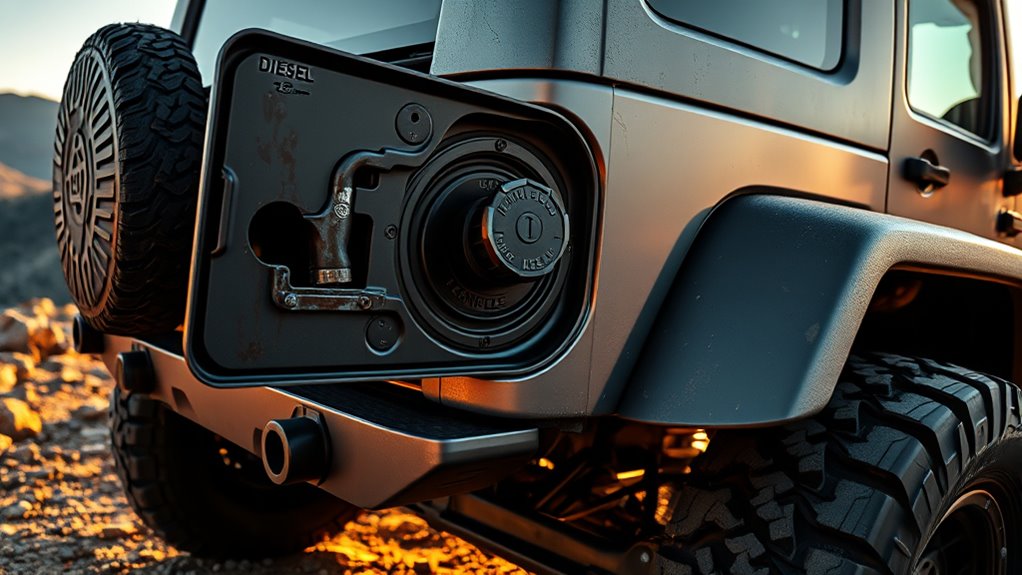
If your Jeep Wrangler comes with a turbocharged gasoline engine, you know how important the right fuel is for smooth performance. Now, if you’re considering a model with diesel engines, like the 3.0-liter EcoDiesel V6, you’ll notice a significant impact on performance.
Diesel engines deliver more torque, which boosts your Wrangler’s towing capacity and enhances its off-road capability. That strong low-end torque helps you tackle rugged terrain with greater ease and control.
Plus, diesel engines generally offer better fuel efficiency, letting you go farther between fill-ups compared to gasoline models. Keep in mind, though, diesel Wranglers usually require more maintenance, such as regular fuel filter changes and specific additives to keep the engine running smoothly.
While they come with higher upfront costs and can face cold-weather starting challenges, the benefits in fuel efficiency and off-road performance make diesel engines a solid choice for serious Jeep enthusiasts.
What Happens If You Put Diesel in a Gasoline Jeep Wrangler?
When you accidentally put diesel fuel into a gasoline Jeep Wrangler, your engine won’t run properly and may misfire or stall. Diesel’s properties clash with a gasoline engine, disrupting combustion. If you do this, don’t start the engine; doing so risks worsening damage.
Putting diesel in a gasoline Jeep Wrangler causes misfires and stalls; avoid starting the engine to prevent damage.
Diesel can clog your fuel system components, leading to costly repairs.
Here’s what can happen if diesel enters your gasoline engine:
- Fuel injectors and fuel lines may get clogged.
- The fuel pump can suffer serious damage.
- Fuel filters may become blocked, reducing fuel flow.
- Combustion chamber components can be harmed.
- Extensive repairs or even engine replacement might be necessary.
To avoid these issues, have your fuel system drained and cleaned by a professional immediately after the mistake. Acting fast protects your Jeep Wrangler’s fuel system and keeps your gasoline engine running smoothly.
How to Identify Your Jeep Wrangler’s Engine and Fuel Type
To identify your Jeep Wrangler’s engine and fuel type, start by checking the engine bay and the driver’s door jamb. Look for labels or stamps that have this information. You can also take a peek at the owner’s manual—it usually has these details too.
If you want to be extra sure, use your Jeep’s VIN to decode the engine and fuel info online. These simple steps will help you figure out whether your Jeep runs on gasoline or diesel.
Engine Identification Methods
Although identifying your Jeep Wrangler’s engine and fuel type might seem tricky at first, several straightforward methods can help you quickly find this information. Start with engine identification by checking the engine bay for a label or stamp showing the engine type and fuel requirements.
Don’t forget to consult the door jamb sticker. It often lists the engine model and recommended fuel. Your owner’s manual provides clear engine details and fuel guidelines.
You can also use a VIN decoder online to get detailed engine specs based on your Vehicle Identification Number. Finally, look for engine-specific features like turbochargers or diesel components to help distinguish gasoline from diesel engines.
These steps make engine identification simple and accurate for your Jeep Wrangler.
Fuel Type Verification
How can you quickly verify the fuel type for your Jeep Wrangler? Start by checking the engine label or stamp under the hood. It often shows engine info and fuel specs.
The door jamb sticker also lists recommended fuel types. Don’t forget your owner’s manual; it provides clear fuel type verification for your model.
You can also use your VIN with an online decoder to confirm the exact engine and fuel requirements. Diesel models usually have distinct badges or labels.
| Location | Info Found | Purpose |
|---|---|---|
| Engine Label | Engine type & fuel | Quick fuel identification |
| Door Jamb Sticker | Engine specs & fuel | Verification on entry |
| Owner’s Manual | Fuel type details | Definitive reference |
| VIN Decoder | Engine & fuel type | Online confirmation |
| Diesel Badges | Fuel type indicator | Easily spot diesel models |
Jeep Wrangler Fuel Cost Differences: Gasoline vs Diesel
Wondering whether gasoline or diesel will save you more on fuel for your Jeep Wrangler? It depends on how you use your vehicle and what you prioritize. Gasoline models typically run on regular unleaded fuel with an octane rating of 87, which tends to be cheaper per gallon. Diesel Wranglers, like the 3.0-liter EcoDiesel, use diesel fuel that usually costs more upfront but offers better fuel economy.
Consider these factors when deciding between gasoline vs diesel for your Jeep Wrangler:
- Diesel fuel is pricier but provides greater miles per gallon
- Gasoline engines have lower initial costs and are more widely available
- Diesel excels in towing and high-mileage scenarios
- Gasoline models might require more frequent refueling stops
- Your overall fuel expenses hinge on your driving habits and fuel economy
In short, diesel often saves money over time if you drive a lot or tow, but gasoline is generally cheaper for everyday use.
Maintenance Tips for Gasoline vs Diesel Jeep Wranglers
When maintaining your Jeep Wrangler, you’ll find that gasoline and diesel models each demand specific care to keep them running smoothly. Using the correct fuel is critical because mixing fuel types can cause severe engine damage. Gasoline Wranglers typically run on 87 octane unleaded fuel, while diesel versions need diesel fuel like B20 or higher.
Maintenance routines differ: gasoline engines require oil changes every 5,000 to 7,500 miles and spark plug replacements. Diesel engines need more frequent oil and fuel filter changes plus diesel-specific additives to prevent fuel gelling in cold weather.
| Aspect | Gasoline Wrangler | Diesel Wrangler |
|---|---|---|
| Fuel Type | Regular unleaded (87 octane) | Diesel (B20 or higher) |
| Oil Change Interval | Every 5,000 to 7,500 miles | More frequent |
| Filters | Air filter checks | Frequent fuel and oil filter changes |
| Additives | Not typically required | Diesel-specific additives needed |
| Common Maintenance | Spark plugs replacement | Fuel system cleanliness maintenance |
Proper maintenance guarantees your Wrangler performs at its best and lasts longer.
Fuel Needs for the Jeep Wrangler 4xe Hybrid
Although the Jeep Wrangler 4xe is a hybrid, it runs efficiently on regular unleaded gasoline with an 87-octane rating. You don’t need premium fuel, which means you save money and enjoy easy refueling wherever you go. The hybrid system pairs a 2.0L turbocharged engine with an electric motor, both tailored to perform best on regular gas.
The Jeep Wrangler 4xe efficiently runs on regular 87-octane gasoline—no premium fuel needed for optimal performance.
Using higher octane fuel won’t boost performance since the engine’s designed around that 87 octane rating.
Here’s what you should know about fueling your Jeep Wrangler 4xe:
- Uses regular unleaded gasoline with an 87 octane rating
- No need for premium fuel, saving you extra costs
- Hybrid system optimized for regular gas efficiency
- Proper fueling maintains performance and fuel economy
- Supports the vehicle’s overall durability and reliability
Stick to regular gas, and your Jeep Wrangler 4xe will run smoothly and efficiently every time.
Environmental and Warranty Factors for Jeep Wrangler Fuel
Since using the right fuel directly affects your Jeep Wrangler’s engine health, sticking to the manufacturer’s recommendations is essential for maintaining your warranty coverage. Using the recommended fuel type, typically 87 octane regular gasoline for most models or premium fuel for turbocharged engines, prevents engine knocking and guarantees peak engine performance. If you use the wrong fuel, you risk damaging engine components, which can void your warranty coverage.
Additionally, fuel quality influences your Wrangler’s emissions and environmental impact. Proper fuel use helps your vehicle meet environmental regulations, supporting emissions system health and warranty compliance. For hybrid models like the 4xe, consistent use of the correct fuel type ensures both the engine and electric systems run efficiently, reducing emissions and protecting your warranty.
Frequently Asked Questions
How Does Altitude Affect the Jeep Wrangler’s Fuel Efficiency?
Altitude impacts your Jeep Wrangler’s fuel efficiency by changing air density. At higher altitudes, thinner air means your engine works less hard, which can improve fuel efficiency but might reduce engine performance slightly.
Down at sea level, denser air boosts engine performance but often causes your Wrangler to consume more fuel. Your engine sensors adjust fuel delivery based on altitude impact, so you’ll notice these efficiency changes depending on where you drive.
Can Jeep Wranglers Run on E85 Ethanol Fuel?
You can run certain Jeep Wranglers, like the 4xe hybrid, on E85 ethanol fuel, but most aren’t designed for it. Using E85 in non-flex-fuel models can hurt your engine performance and reduce fuel economy.
Fuel additives in E85 may also affect how your Wrangler runs. Always check your owner’s manual before switching fuels to avoid damage and maintain ideal performance and efficiency.
What Are the Signs of Using the Wrong Fuel Type in a Wrangler?
If your Wrangler’s engine sounds like a bad beat with knocking or rattling, that’s a strong sign of incorrect fuel symptoms. You might feel rough idling or hesitation when you hit the gas, like it’s fighting against you.
Fuel contamination or wrong fuel can mess with fuel additive effects, causing poor performance and higher fuel consumption. Don’t ignore a persistent check engine light. It’s your Wrangler’s way of waving a red flag.
How Often Should the Fuel Filter Be Replaced in a Jeep Wrangler?
You should replace the fuel filter in your Jeep Wrangler every 30,000 to 60,000 miles to keep the fuel system running smoothly. If you frequently drive in harsh conditions or use low-quality fuel, consider changing it closer to every 20,000 miles.
Regular filter maintenance prevents clogs and protects your engine. Using fuel additives can also help keep the fuel system clean, but they don’t replace the need for timely filter changes.
Is It Safe to Mix Different Octane Fuels in the Jeep Wrangler?
Mixing different octane fuels in your Jeep Wrangler is like blending two paint colors. You might get a shade that’s off. While it won’t wreck your engine immediately, inconsistent fuel additives can harm fuel economy and cause rough performance.
Poor fuel storage or varying ethanol levels add risks too. To keep your Jeep running smoothly and protect long-term durability, stick to one octane level and avoid mixing fuels whenever possible.
Conclusion
Choosing the right gas for your Jeep Wrangler is like picking the perfect fuel for a long road trip. Getting it wrong can stall your adventure. Just like a runner depends on the right nutrition, your Wrangler thrives on the correct octane or diesel grade.
Remember, using premium gas when recommended not only boosts performance but also protects your engine. It ensures every mile feels like a smooth, unstoppable journey. Keep your Jeep fueled right, and the road will always welcome you.