What Do Bad Spark Plugs Look Like?
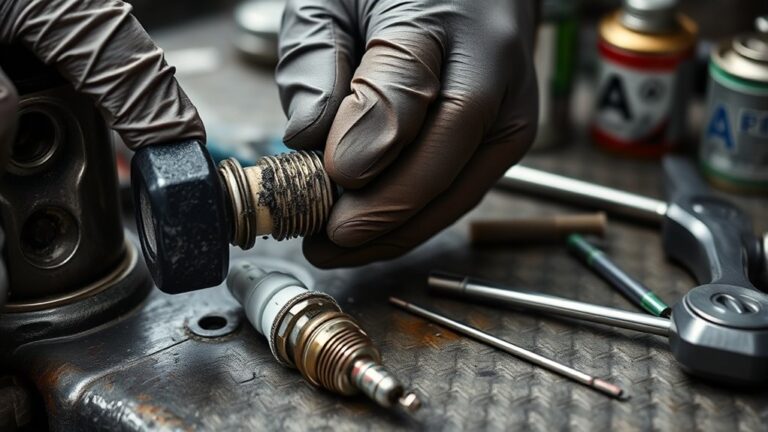
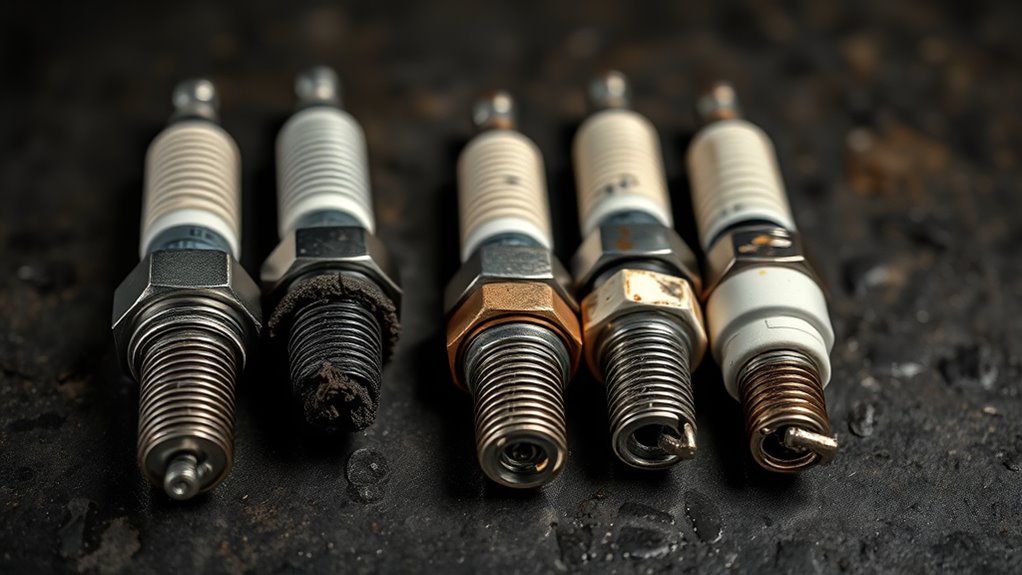
You’ll know spark plugs are bad if you see black, oily, or white deposits on the electrodes or insulator. Cracks, chips, or melted parts also signal trouble.
Overheating leaves burn marks, blisters, or melted metal, while heavy soot points to fouling from a rich fuel mix or oil leaks.
Worn or widened electrodes show wear and tear. Spotting these signs helps you catch engine problems early, and there’s more to learn about what each condition means.
Key Takeaways
- Bad spark plugs often have black carbon, oily deposits, or heavy soot buildup on electrodes and insulator tips.
- Physical damage like cracked, chipped, melted, or blistered electrodes indicates a bad spark plug.
- White deposits or blistered surfaces on spark plugs signal overheating or incorrect heat range.
- Rounded, eroded, or widened electrodes show wear and degrade spark plug performance.
- Burn marks, cracks, or missing pieces on insulators or electrodes are signs of electrical arcing or heat damage.
How To Quickly Identify a Bad Spark Plug
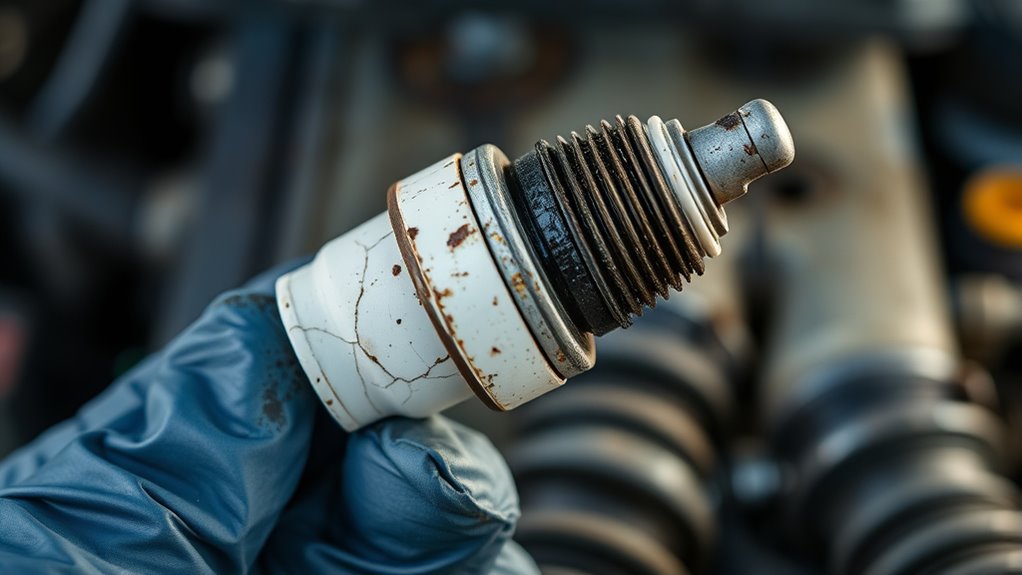
When you want to quickly identify a bad spark plug, start by checking for visible deposits like black carbon, oil, or fuel buildup on the electrodes and insulator tip. These visual signs are classic indicators of spark plug fouling.
If the plug looks wet or oily, it’s likely suffering from oil fouling. A dry, sooty appearance usually points to carbon fouling. Besides deposits, inspect the insulator for cracks or chips and look at the electrodes for signs of wear or damage, such as erosion or widening.
Excessive heat damage can cause white, blistered deposits or even melted electrodes, which are clear visual signs that the plug is failing. By spotting these issues early, you can avoid misfires or poor engine performance without needing specialized tools.
Keeping an eye out for spark plug fouling and physical damage helps you quickly assess whether a spark plug needs replacement.
What a Normal Spark Plug Looks Like
You’ll notice a normal spark plug has light brown or grayish-tan deposits on the side electrode, which means it’s working just right. The ceramic insulator stays clean and free of cracks or heavy buildup. When you check the gap, it should look consistent, without any signs of erosion or damage.
Typical Appearance Features
Although spark plugs endure high temperatures and pressures, a normal spark plug shows light brown or grayish-tan deposits on the side electrode, signaling proper combustion. You’ll notice the electrodes and insulator tip are free from damage or heavy deposits, which means no fouling or buildup is present.
The ceramic insulator stays clean, without cracks or discoloration, ensuring it’s in good condition. The electrode gap remains consistent, showing no signs of excessive wear or erosion that could affect performance.
Signs of Proper Function
Recognizing the signs of a properly functioning spark plug helps you guarantee your engine runs smoothly. When inspecting spark plugs, look for specific features that indicate proper function.
A normal spark plug will have light brown or grayish-tan deposits on the side electrode, showing normal combustion. It should have clean electrodes free from heavy fouling, carbon buildup, or oil deposits. Also, there should be no cracks, burns, or melted areas on the insulator and electrodes, which means no damage.
The spark plug gap should match manufacturer specifications, neither widened nor uneven. Overall, a spark plug with a dry, uniform appearance and minimal deposits signals it’s working correctly. By identifying these signs, you assure your engine maintains ideal performance and avoids issues linked to faulty spark plugs.
Carbon Fouled Spark Plugs: Key Signs
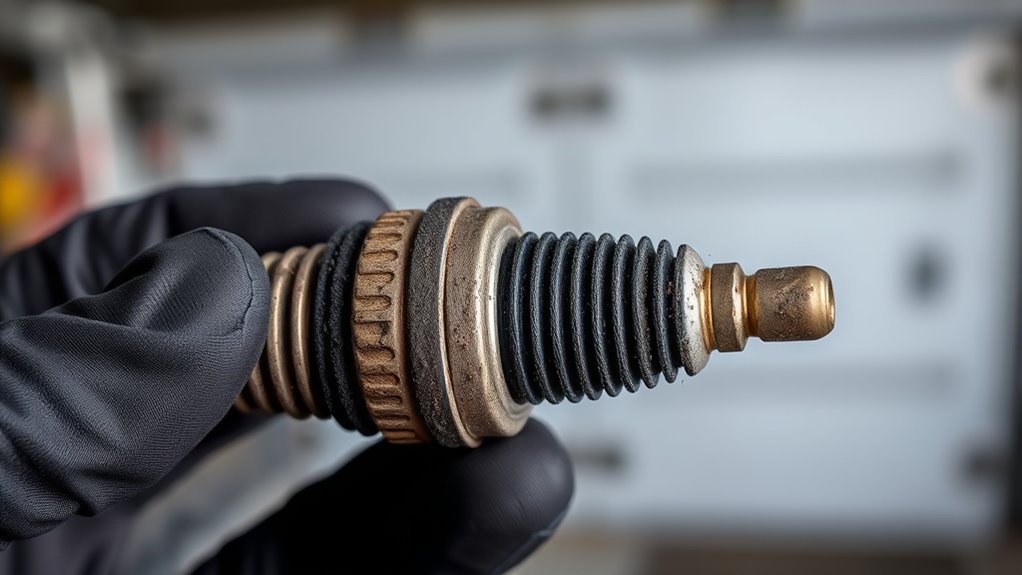
When your spark plugs develop a black, dry soot coating on the electrodes and insulator tip, they’re likely carbon fouled. This buildup results from carbon fouling, often caused by a dirty air filter or driving at low speeds for extended periods.
During your spark plug inspection, you’ll notice this characteristic black soot signaling a too rich fuel mixture or frequent idling, both leading to incomplete combustion.
Black soot on spark plugs signals a rich fuel mix or frequent idling causing incomplete combustion.
Carbon fouled plugs can cause misfires, rough idling, and a drop in engine performance. If you spot these signs, addressing the underlying issues like cleaning or replacing the air filter and adjusting driving habits is essential.
Simply replacing the affected spark plugs isn’t enough. You need to fix what’s causing the carbon buildup to prevent it from recurring. Regular spark plug inspection helps you catch carbon fouling early, ensuring your engine runs smoothly and efficiently.
Oil Deposits on Spark Plugs: What To Look For
If you spot black, oily, and sometimes glossy deposits on your spark plugs, it’s a clear sign that oil is leaking into the combustion chamber. These oil deposits coat the electrodes and insulator tip, causing your spark plugs to foul and disrupt proper ignition.
When this happens, you’ll likely notice a drop in engine performance, rough idling, or even misfiring.
Oil deposits on spark plugs usually point to worn piston rings or valve seals as the root cause. Ignoring these signs can lead to persistent black smoke from the exhaust and increased oil consumption.
Here’s what to look for with oil deposits on spark plugs:
- Black, oily, and glossy coating on the spark plug electrodes and insulator tip
- Rough engine idling and misfires affecting overall performance
- Persistent black exhaust smoke coupled with higher oil usage
Spotting these signs means it’s time to have your engine’s sealing components inspected and repaired.
Wet Spark Plugs From Engine Flooding Explained
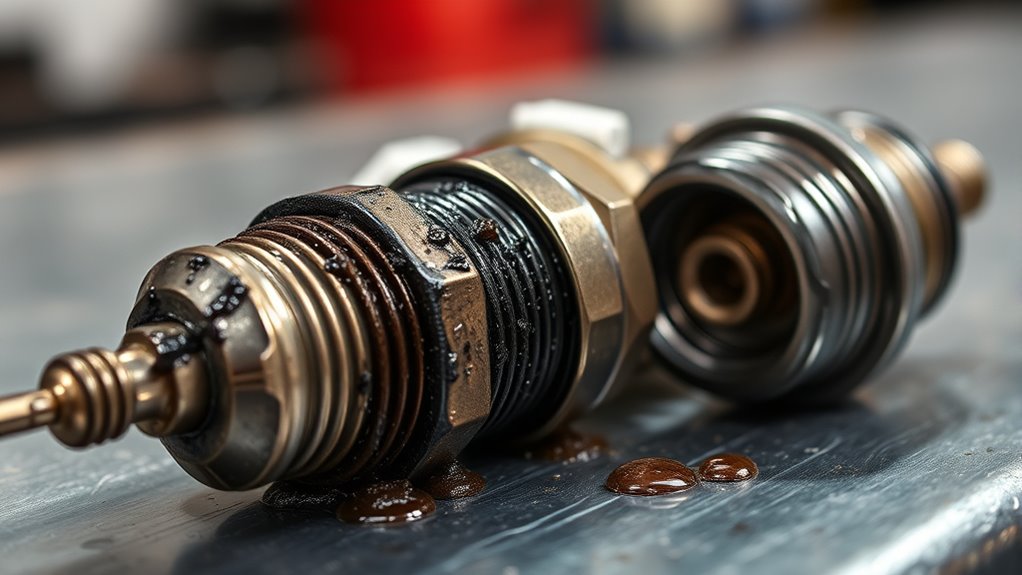
Although wet spark plugs might look like a minor issue, they can cause serious starting problems by preventing the spark needed for ignition. Wet spark plugs appear visibly soaked with fuel or oil, giving them a shiny, damp look.
This usually results from engine flooding, which happens when multiple failed start attempts cause excess fuel to accumulate around the spark plug. The fuel deposits make it hard for the spark to jump the gap, leading to misfires or difficulty starting your engine.
To fix this, you can let the spark plugs air dry or gently clean and wipe them dry. However, simply drying the plugs won’t solve the problem if engine flooding keeps happening.
You’ll need to address the root causes like a flooded engine or leaking fuel injectors to prevent recurrent wet spark plugs and guarantee reliable ignition every time you start your vehicle.
Burned Spark Plugs: Visual Indicators
Wet spark plugs can cause starting issues, but burned spark plugs bring a different set of problems that are just as serious. When your spark plug shows signs of overheating, it means the engine’s running too hot. This can seriously affect performance.
You’ll notice specific visual indicators that point to a burned spark plug:
- Burned electrodes that look melted or blistered due to extreme heat exposure
- White deposits or discoloration on the insulator tip, often with shiny, glazed surfaces
- Insulator cracks or burn marks, which indicate the plug has been subjected to temperatures beyond its normal range
These signs tell you that the spark plug isn’t functioning properly and needs attention. Ignoring these burned electrodes and insulator cracks can lead to misfires or engine damage. Keep an eye out for these visual cues to catch overheating issues early and maintain your engine’s health.
Worn Spark Plug Electrodes: What They Tell You
When spark plug electrodes wear down, they often show clear signs that you shouldn’t ignore. Worn electrodes typically appear rounded, eroded, or widened due to prolonged use and material loss. This spark plug erosion reduces their ability to generate a strong spark, impacting your engine’s performance.
You might notice a significant gap between the center and side electrodes, a clear sign of electrode wear that weakens the spark’s intensity. Furthermore, worn electrodes often have a shiny or glazed surface caused by excessive heat and electrical erosion.
The smooth or rounded edges you see mean the spark plug can’t ignite the fuel-air mixture as effectively, leading to misfires or rough idling. If you spot visible pitting or erosion on the electrodes, it’s time to contemplate replacing the spark plug.
Recognizing these signs early helps you maintain ideal engine function and avoid costly repairs.
Broken or Damaged Spark Plug Electrodes To Watch For
If you spot cracks, chips, or missing pieces on the spark plug electrodes, you’re likely dealing with broken or damaged components that can seriously affect engine performance. Damaged electrodes often show visible fractures or burn marks caused by excessive heat or electrical arcing.
These issues reduce spark efficiency, leading to misfires or poor fuel economy. Furthermore, overheating signs like blistering or white deposits often accompany this damage. Keep an eye out for:
- Melted or chipped electrodes that interrupt the spark path
- Ceramic insulator cracks indicating stress that may worsen electrode damage
- Burn marks or blistering as clear overheating signs
Addressing broken or damaged spark plug electrodes promptly helps maintain peak engine function and prevents further harm to ignition components. If you notice any of these symptoms, it’s time to replace the spark plugs to avoid costly repairs down the road.
What Spark Plug Color Reveals About Engine Health
Although spark plug color might seem like a small detail, it reveals a lot about your engine’s health and combustion efficiency. When you inspect the spark plug color, you can quickly gauge how well your engine is running.
A healthy spark plug usually shows light brown or grayish-tan deposits on the side electrode, signaling proper combustion and good engine health.
If you notice black, dry soot, it indicates carbon fouling, often from a rich fuel mixture or poor air filtration. Oily black deposits suggest oil fouling, which could mean worn piston rings or valve seals.
Burned or blistered spark plugs with white deposits point to overheating or an incorrect heat range. Excessive discoloration or unusual deposits signal engine issues and mean it’s time to replace your spark plugs.
Paying attention to spark plug color helps you catch problems early and keep your engine running smoothly.
Common Causes of Spark Plug Fouling and Wear
Because spark plugs play a crucial role in ignition, understanding what causes their fouling and wear can help you maintain your engine’s performance. Spark plug fouling and electrode wear often stem from specific engine conditions and maintenance issues. Knowing these common causes lets you spot problems early.
Here are three key contributors to spark plug fouling and wear:
- A rich fuel mixture creates black, dry soot deposits, leading to spark plug fouling that reduces ignition efficiency.
- Oil leaks into the combustion chamber cause oil deposits and a black, oily buildup on the spark plug, accelerating electrode wear.
- Mechanical problems like worn piston rings or valve seals allow oil to enter the chamber, worsening fouling and electrode degradation over time.
When To Replace Spark Plugs Based on Visual Signs
You’ll want to replace spark plugs if you notice heavy carbon fouling, oily deposits, or burned electrodes. These signs mean the plugs aren’t doing their job properly and could affect how well your engine runs.
It’s good to know what to look for so you can take action before bigger problems start developing. Catching these issues early can save you from more expensive repairs down the road.
Identifying Carbon Fouling
How can you tell if your spark plugs are suffering from carbon fouling? Look for black soot deposits covering the electrodes and insulator tip. This dry, black buildup often signals carbon fouling, which comes from a too-rich fuel mixture, dirty air filters, or prolonged idling.
When this happens, you might notice engine misfires, rough idling, or trouble starting.
To identify carbon fouling, check for:
- Heavy black soot deposits on the spark plug surface
- A dry, powdery appearance rather than oily residue
- Performance issues like engine misfires or rough running
If you spot these signs, clean or replace the spark plugs and address the root cause to prevent further fouling. That way, you’ll keep your engine running smoothly.
Recognizing Oil Deposits
What clues tell you that oil is fouling your spark plugs? Look for black, oily, and greasy residues coating the electrodes and insulator tip. These oil deposits usually mean oil is leaking into the combustion chamber, often due to worn piston rings or valve seals.
If you spot fouled spark plugs with heavy oil deposits, it’s essential to replace them after fixing the oil leak. Ignoring this can lead to engine misfire, rough performance, and trouble starting your engine.
Regularly inspecting your spark plugs for these signs helps you catch issues early. When you see thick, oily buildup, don’t wait. Replace the spark plugs and have a mechanic check the root cause to keep your engine running smoothly.
Detecting Burned Electrodes
When should you replace spark plugs due to burned electrodes? You need to act when you spot signs of overheating that can harm your engine’s performance. Burned electrodes often show clear damage, and ignoring them risks further issues.
Look for these visual cues:
- Blistered electrodes or cracks in the ceramic insulator indicate excessive heat.
- Melted electrodes reveal the spark plug ran beyond its heat tolerance.
- White deposits on the insulator tip signal overheating and potential engine damage.
If you notice burned electrodes with blistered or melted electrodes, it’s time to replace the spark plugs. These signs mean the spark plug isn’t functioning properly and could lead to misfires or reduced fuel efficiency. Replacing them ensures your engine runs smoothly.
Using Spark Plug Appearance for Engine Troubleshooting
Although you might not realize it at first, examining the appearance of your spark plugs can reveal a lot about your engine’s condition. Spark plug appearance offers valuable clues for engine troubleshooting, helping you pinpoint issues quickly.
For example, brown or grayish-tan deposits on the electrode usually mean your spark plug is working properly, serving as a good baseline. However, black, dry soot deposits indicate carbon fouling, often caused by a rich fuel mixture or extended low-speed driving. This suggests fuel system or tuning problems.
If you notice oily deposits on the electrodes or insulator tip, it signals oil leaks from worn piston rings or valve guides. Meanwhile, blisters, melted electrodes, or white deposits are clear signs of overheating, likely due to engine overheating or using the wrong heat range spark plugs.
Frequently Asked Questions
How Often Should Spark Plugs Be Inspected for Signs of Wear?
You should inspect your spark plugs every 30,000 to 50,000 miles, following your vehicle’s recommended inspection intervals. If you drive under tough conditions like short trips or heavy loads, check them more often.
Regular inspections help catch wear indicators early, so you can schedule spark plug replacement before performance drops. Staying on top of these inspection intervals keeps your engine running smoothly and prevents costly damage from worn plugs.
Can Bad Spark Plugs Cause Poor Fuel Economy?
Think of your ignition system as a finely tuned orchestra; when spark plugs go bad, it’s like the lead violinist missing notes, throwing everything off.
Yes, bad spark plugs can cause poor fuel economy because they disrupt efficient combustion, making your engine work harder. This inefficiency lowers fuel efficiency and raises consumption.
Maintaining your spark plugs in top shape guarantees your ignition system fires smoothly, saving you money at the pump.
Are Certain Spark Plug Brands More Prone to Fouling?
Yes, certain spark plug brands are more prone to fouling because of differences in spark plug materials and manufacturing defects. If you pick brands with poor-quality materials or inconsistent production, you’ll likely face quicker fouling.
Also, brands with weak reputations often don’t control heat ranges properly, leading to carbon buildup. To avoid headaches, stick with reputable manufacturers who use durable materials like iridium or platinum and maintain strict quality standards.
How Does Driving Style Affect Spark Plug Lifespan?
If you drive like you’re racing a rocket, your spark plugs won’t last long! Aggressive driving heats up your ignition system, causing carbon deposits to build quickly and ruining engine performance.
Frequent high revs and rapid acceleration wear out spark plugs faster. On the other hand, smooth driving helps keep your ignition system cool, reduces carbon buildup, and extends spark plug lifespan, ensuring your engine runs efficiently and reliably.
What Tools Are Best for Cleaning Spark Plugs Safely?
For safe spark plug removal, use a proper spark plug socket to avoid damage. When choosing cleaning tools, opt for a wire brush or a specialized spark plug cleaning machine. They remove deposits without harming the electrode.
A soft-bristled toothbrush works well for delicate areas. Always follow safety precautions: avoid metal tools that can scratch the insulator. Apply dielectric grease after cleaning to protect your plugs from moisture and fouling.
Conclusion
When you peek under the hood, your spark plugs tell a story, like little detectives whispering engine secrets. Spotting carbon black or oily stains is like reading warning signs flashing in neon.
Don’t let worn plugs sing a sad tune of misfires and sluggish rides. Trust your eyes; replacing them on time keeps your engine humming a smooth, powerful song.
So, listen close. Your spark plugs speak, and you’ve got the power to keep things running bright.