
What Do Bad Shocks Sound Like When Driving?
If your shocks are bad, you’ll hear clunking over bumps, rattling from worn bushings, or squeaking when steering or turning. You might notice knocking when braking or fluid hissing if there’s a leak. These sounds mean your shocks aren’t absorbing impacts properly, risking safety and handling.
You’ll also feel excessive bouncing or uneven tire wear. Keeping shocks in good shape is key for a smooth ride.
There’s more to know about spotting and fixing these issues.
Key Takeaways
- Bad shocks often produce clunking or knocking sounds when driving over bumps due to loose or damaged internal components.
- Rattling noises typically indicate worn bushings or broken shock mounts affecting suspension stability.
- Squeaking or high-pitched squeals arise from dry or damaged shock bushings during steering or bump impacts.
- Hissing or bubbling sounds suggest hydraulic fluid leaks from failing shocks, reducing damping effectiveness.
- Heavy thuds or repeated bouncing indicate worn shocks unable to absorb road impacts properly.
Common Noises That Indicate Worn Shocks
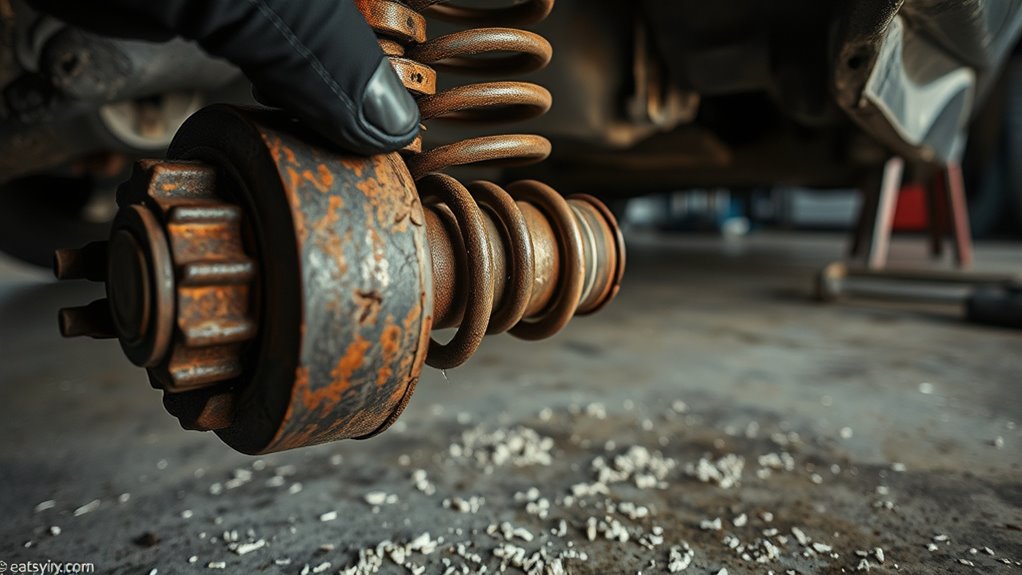
When you hear clunking noises over bumps, it often means your shocks have loose hardware or internal damage. These clunking noises usually indicate that parts inside the shock absorber aren’t secured properly or are failing.
Along with that, rattling sounds can point to worn bushings or broken shock mounts. If you notice rattling sounds while driving, it’s a good sign that components meant to stabilize your shocks are deteriorating.
Rattling sounds often signal worn bushings or broken mounts, indicating your shock absorbers need attention.
Squeaking noises often come from dry or damaged shock bushings, which lose their ability to cushion impacts quietly. If you catch squeaking noises, it means the bushings need attention before they cause further issues.
Paying attention to clunking noises, rattling sounds, and squeaking noises can help you spot worn shocks early and avoid costly repairs. Keeping your shocks in good shape ensures a smoother, safer ride and prevents damage to other suspension parts.
Common Causes of Shock Noises: Clunking, Rattling, and Leaking
Although shock noises can vary, clunking, rattling, and leaking are the most common sounds that signal trouble. Clunking usually happens when you hit bumps and often means loose hardware or internal shock failure.
If you hear that heavy thud, it’s a clear sign your shocks aren’t securely attached or are breaking down inside. Rattling, on the other hand, tends to occur as you drive, caused by worn bushings or broken shock mounts. This constant vibration noise points to parts that aren’t holding firm, affecting your ride’s stability.
Leaking shocks produce hissing or bubbling sounds as hydraulic fluid escapes, which not only creates noise but also reduces your shocks’ ability to dampen bumps effectively. When you notice leaking, it’s vital to act fast because fluid loss leads to poor handling. Paying attention to these sounds can help you catch shock issues early and keep your drive smooth and safe.
Why Worn Bushings Make Rattling and Squeaking Sounds
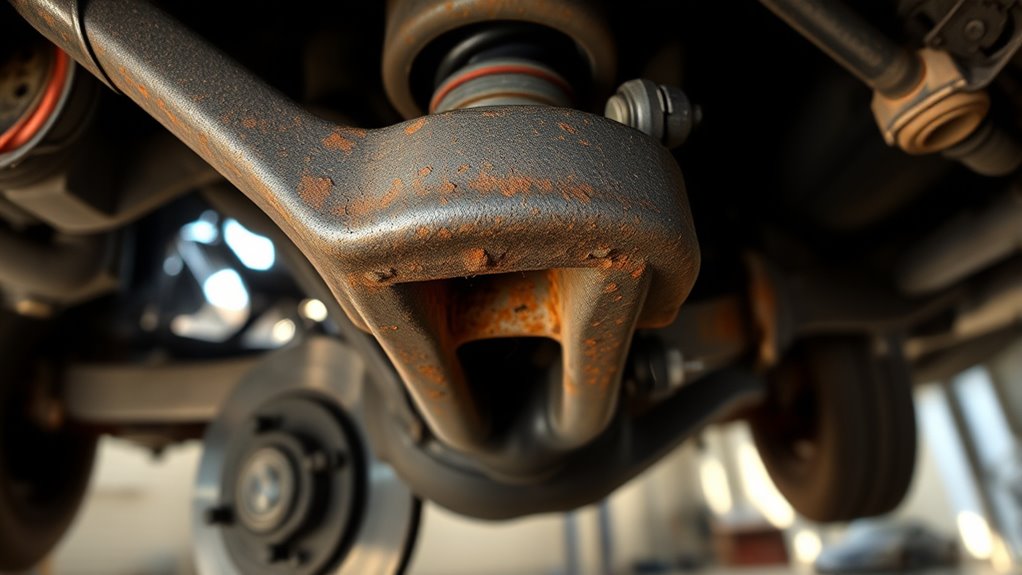
Because worn bushings let metal parts rub against each other, you’ll often hear rattling sounds as your vehicle moves. These rattling sounds occur because loose or damaged bushings fail to cushion metal components, causing metal-to-metal contact, especially when you drive over uneven surfaces.
As the bushings degrade, their rubber material dries out and loses lubrication, leading to squeaking noises. You might notice high-pitched squeals or squeaks, particularly when going over bumps or turning, which signal that the bushings have deteriorated.
The severity of these noises often increases with suspension movement or vibration intensity. Ignoring worn bushings not only causes distracting rattling sounds and squeaking noises but can also accelerate wear on other parts.
Harsh Noises From Leaking Shock Absorbers
You might start hearing harsh noises like squeaks, clunks, or hisses when your shock absorbers begin leaking fluid. These sounds happen because dry metal parts are rubbing together or damaged internal components are moving around. It’s really important to pay attention to these signs since leaking shocks can seriously impact your vehicle’s safety and handling. So, if you notice any of these noises, it’s a good idea to get your shocks checked out sooner rather than later.
Identifying Fluid Leak Sounds
When your shock absorbers start leaking fluid, you’ll often hear a distinct hissing or swooshing sound as the hydraulic fluid escapes. These fluid leaks usually become more noticeable during turns or when driving over uneven surfaces.
Along with hissing, you might also pick up a harsh knocking noise when hitting bumps. This is caused by the internal loss of damping control. If the internal seals fail completely, a sudden loud bang or thud may occur due to rapid fluid leakage.
Furthermore, dry or damaged shock bushings can cause continuous squeaking or squealing. Recognizing these specific sounds, like hissing from fluid leaks and knocking from impaired shock function, helps you identify when your shocks are compromised and need attention before the problem worsens.
Causes Of Harsh Noises
Hissing and knocking sounds often signal fluid leaks in your shock absorbers, but these leaks can also cause harsher noises that are harder to ignore. When your shocks are worn, oil leaks reduce their ability to dampen impacts, leading to disturbing sounds.
Here are the main causes of harsh noises from leaking shock absorbers:
- Metal-to-metal contact: As oil leaks out, internal components lose lubrication, causing squeaking or squealing noises.
- Insufficient shock absorption: Worn shocks can’t absorb bumps well, producing knocking or banging sounds.
- Damaged seals: Leaking oil creates hissing or bubbling noises as pressure escapes, sometimes resulting in grinding or creaking during movement.
These harsh noises indicate serious wear and should be addressed promptly to avoid further damage.
Impact On Driving Safety
Although harsh noises from leaking shock absorbers might seem minor, they directly compromise your vehicle’s stability and control. When you hear knocking sounds as you drive over bumps, it signals that your shock absorbers aren’t absorbing impacts properly.
This leads to reduced suspension control, making your vehicle less stable, especially during turns or on rough terrain. Continuous rattling or clunking noises often indicate internal damage or fluid leaks in the shocks, further degrading vehicle stability.
Ignoring these warning signs increases your risk of accidents because your car won’t respond as expected to steering or braking inputs. To keep yourself and others safe, you need to address any abnormal noises from shock absorbers promptly before the problem worsens.
How to Perform a Bounce Test for Shock Issues
If you want to quickly check whether your shocks are worn, perform a simple bounce test by pressing down firmly on each corner of your vehicle and then releasing it. This test helps you identify shocks that aren’t absorbing impacts effectively when you hit a bump on the road.
Follow these steps for an accurate bounce test:
Follow these steps carefully to perform a reliable bounce test on your vehicle’s shocks.
- Press down hard on one corner of your vehicle and let go quickly.
- Watch how the vehicle rebounds. If it bounces more than once, the shocks might be worn or damaged.
- Repeat this on all four corners to assess each shock’s condition.
Excessive bouncing means your shocks aren’t damping the motion properly. This can affect your ride quality and safety. This quick test gives you an initial idea if your shocks need further inspection or replacement, helping you avoid bigger issues down the road.
Visual Signs of Shock Failure to Watch For
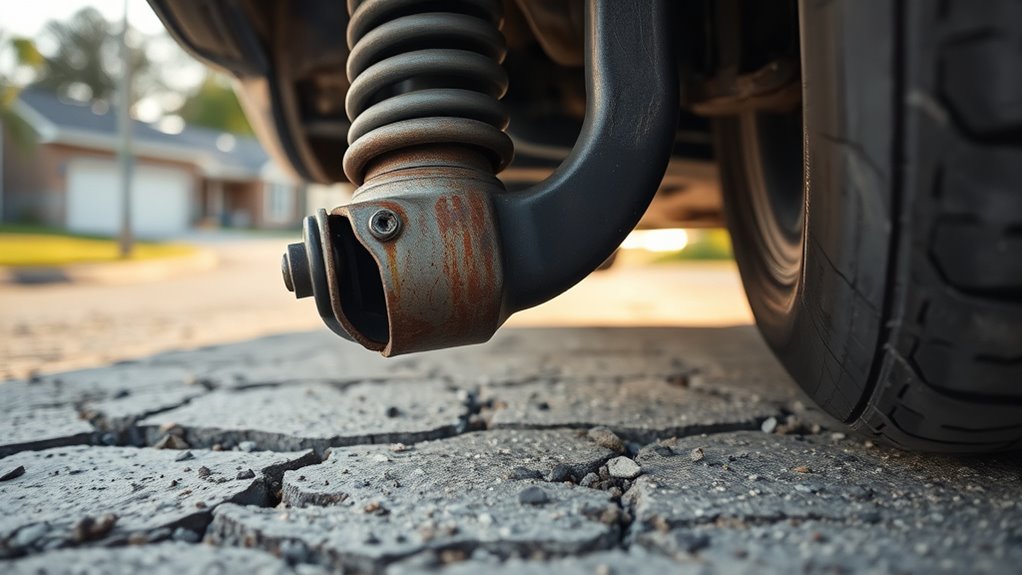
Keep an eye out for fluid leaks or stains around your shocks, since these often mean the seals are failing. Also, check your tires for uneven wear patterns like cupping or scalloping—these can be signs that your shocks aren’t working right. Catching these visual clues early can really help you fix problems before they get worse.
Fluid Leaks And Stains
When you notice oily stains or wet spots on your shock absorbers, it’s a strong indication that the seals have failed and fluid is leaking. This fluid leak means your shocks and struts aren’t working properly, affecting your ride quality. You might feel it more when you hit the gas or go over a bump.
Here are three things to watch for:
- Oily stains near the wheel wells or suspension parts, signaling internal damage.
- Increased bouncing or knocking noises when you hit a bump.
- Your vehicle bottoms out more easily, especially when you hit the gas hard or drive over rough roads.
Addressing fluid leaks early helps maintain control and prevents further suspension damage.
Uneven Tire Wear
Fluid leaks from your shocks don’t just affect ride comfort. They can also lead to uneven tire wear. When shocks fail, your tires may develop cupping or scalloping because the suspension isn’t working consistently.
This uneven wear clearly shows your shocks aren’t absorbing impacts properly. That causes instability and premature tire damage. Regularly checking your tire wear patterns helps catch issues early and can save you costly repairs.
Proper tire rotation and suspension alignment also play key roles in keeping tire wear even. Different types of shock absorbers affect how your suspension handles bumps. So, knowing which shocks you have can help diagnose problems.
| Symptom | What It Means |
|---|---|
| Cupping or scalloping | Shock absorber failure |
| Premature wear on one side | Suspension alignment issues |
| Visible leaks or cracks | Worn shocks or mounts |
| Irregular tread patterns | Poor shock or tire rotation maintenance |
How to Diagnose Shock Noises When Braking, Turning, or on Bumps
Although shock noises can be subtle, you can diagnose issues by paying close attention to sounds while braking, turning, or driving over bumps. Different shock absorber types and suspension tuning impact the noises you hear. Road noise can sometimes mask them too.
Here’s how to pinpoint shock problems:
- Listen for knocking or clunking when braking or turning. This often signals internal shock failure or loose mounts.
- Notice rattling over bumps, which usually means worn bushings or loose shock hardware as the suspension moves.
- Detect squeaking or groaning during steering or bumps, pointing to dry bushings, aging rubber components, or failing strut assemblies.
Risks of Ignoring Shock Noises While Driving
If you ignore those shock noises, you’re actually putting your safety at risk. Your vehicle won’t handle as well, and stopping distances can get longer. Plus, over time, the damage only gets worse.
That means you could be facing some pretty expensive repairs down the line. So, it’s really a good idea to address the problem early. Not only can it save you money, but it also helps keep you safer on the road.
Safety Hazards Increase
When you ignore strange noises coming from your shocks, you put your safety at serious risk. Shocks, designed through a meticulous manufacturing process shaped by historical context, play an essential role in controlling your vehicle’s stability and minimizing environmental impact by ensuring efficient braking and handling.
Overlooking their warning sounds can lead to loss of control during sudden maneuvers due to diminished stability. It can also increase stopping distances as worn shocks compromise braking efficiency. Plus, you might notice uneven tire wear and reduced handling responsiveness from internal failure.
Ignoring these signs risks suspension component failure, making your drive hazardous. Staying alert to shock noises isn’t just about comfort. It’s about preventing accidents and protecting yourself and others on the road.
Costly Repairs Accumulate
Ignoring the warning sounds from your shocks doesn’t just put your safety on the line. It can also lead to mounting repair costs. When you overlook those noises, worn shocks increase strain on other suspension components, causing more damage over time.
This can lead to expensive suspension upgrades or complete shock absorber replacements. Different shock absorber types must be chosen carefully to guarantee vehicle compatibility, or repairs won’t last. If you delay addressing these issues, uneven tire wear and damage to your chassis become inevitable, driving up costs even more.
Acting promptly not only saves you money but also keeps your vehicle performing safely and smoothly. Don’t wait for a minor noise to turn into a costly repair bill.
How Worn Shocks Impact Handling and Safety
Although you might not immediately notice, worn shocks considerably reduce your vehicle’s stability and control by causing excessive body roll and sway during turns. This not only affects your comfort but also compromises your safety on the road.
When your shocks wear out, they disrupt suspension alignment and tire balance, leading to uneven tire wear and less predictable handling. You may also experience longer stopping distances as brake performance suffers due to the suspension’s inability to keep tires firmly on the road.
Here’s how worn shocks impact you:
- Increased body roll and sway reduce steering precision, making sharp turns riskier.
- Uneven tire wear from poor tire balance affects grip and stability.
- Extended stopping distances compromise your ability to brake safely in emergencies.
When and Why to Replace Worn Shocks
Since worn shocks directly affect your vehicle’s performance and safety, you should replace them as soon as you notice symptoms like excessive bouncing, nose-diving during braking, or unusual noises over bumps. Suspension diagnostics can help you identify these issues early, pinpointing worn shock absorber types that no longer provide proper damping.
If you detect knocking or clunking sounds, or see fluid leaks and damaged bushings, it’s a clear signal that replacement is necessary. Swapping out worn shocks restores ride comfort analysis results by improving stability and reducing tire wear.
Timely replacement prevents further suspension damage and costly repairs, keeping your vehicle handling sharp and safe. By staying attentive to these signs and using suspension diagnostics, you guarantee your shocks maintain their critical role in your car’s suspension system, delivering smooth, controlled driving conditions every time.
Maintenance Tips to Keep Shocks Quiet and Effective
Replacing worn shocks is just one part of keeping your vehicle’s suspension performing well and staying quiet. To maintain shock absorber durability and guarantee all suspension system components work smoothly, follow these essential tips:
- Inspect Regularly: Check shocks for oil leaks, cracks, or damaged bushings. Early detection prevents noise issues and preserves vehicle ride quality.
- Tighten Mounting Bolts: Keep all shock mounting bolts secure to avoid rattling or clunking sounds while driving. Loose bolts can quickly degrade shock performance.
- Lubricate Components: Apply proper lubrication to shock bushings and mounts to reduce squeaking from dry or worn parts.
Additionally, perform a bounce test to spot excessive shock movement, and schedule professional inspections periodically. These actions help maintain your shocks’ effectiveness and keep your ride smooth and quiet.
How Replacing Shocks Restores Smooth, Quiet Driving
When your shocks wear out, you’ll notice noises like clunking and rattling that disrupt your drive. Replacing those worn shocks with the right shock absorber types instantly restores ride comfort by smoothing out bumps and absorbing impacts more effectively.
New shocks improve suspension tuning, allowing your vehicle to respond precisely to road conditions and eliminating groaning or knocking sounds caused by internal wear. Fresh shocks also prevent harsh hits and reduce squeaking, making your drive quieter and more controlled.
By restoring proper damping, new shocks stop the rattling and creaking noises that signal suspension failure. Overall, upgrading your shocks transforms your ride into a smooth, quiet experience.
It’s a straightforward fix that enhances both safety and comfort, ensuring your suspension performs at its best and your drives stay peaceful. Don’t overlook shock replacement; it’s key to maintaining a silent, comfortable ride.
Frequently Asked Questions
Can Bad Shocks Cause Uneven Tire Wear?
Yes, bad shocks can definitely cause uneven tire wear because they fail to properly absorb bumps. This leads to inconsistent tire contact with the road. You might also notice suspension noise as your shocks wear out.
Ignoring this can reduce ride comfort and safety. If you spot uneven wear or hear strange noises, it’s time for shock replacement. This will help restore smooth handling and protect your tires from further damage.
Do Bad Shocks Affect Fuel Efficiency?
Wondering if bad shocks really impact your fuel efficiency? They do. When you skip shock absorber maintenance, your suspension performance suffers, causing your engine to work harder and burn more fuel.
Poor shocks also lead to uneven tire wear, increasing rolling resistance. Plus, reduced ride comfort means more bouncing, which wastes energy.
Keeping your shocks in good shape helps maintain fuel economy and a smoother ride, saving you money in the long run.
How Do Bad Shocks Impact Braking Distance?
Bad shocks increase your braking distance because poor shock absorption reduces ride comfort and steering stability. When shocks wear out, your vehicle’s suspension can’t control weight transfer properly, causing excessive nose dive during braking.
This instability makes it harder for your tires to maintain consistent road contact, decreasing traction. As a result, you’ll need more distance to stop safely, especially in emergencies or on rough roads. Replacing bad shocks restores better control and shorter stopping distances.
Are Noisy Shocks Covered Under Vehicle Warranty?
Think of your car’s shocks like your shoes, wearing out over time from every step, not a factory flaw. Noisy shocks usually aren’t covered under your vehicle warranty since they’re seen as normal wear and tear.
To avoid surprise repair cost estimates, you should check your warranty policy details carefully. Regular shock absorber maintenance helps prevent damage, but when noise shows up, you’ll likely pay out of pocket unless defects are proven.
Can Bad Shocks Damage Other Suspension Parts?
Yes, bad shocks can definitely damage other suspension parts. When your shock absorber material deteriorates, it compromises ride comfort and causes excessive bouncing.
This constant movement stresses components like control arms, bushings, and sway bars, leading to premature wear. It also messes with suspension alignment, causing uneven tire wear and steering issues.
If you ignore worn shocks, you’ll end up with costly repairs beyond just replacing the shocks themselves.
Conclusion
When driving, worn shocks can seriously affect your safety and comfort. Did you know that nearly 90% of drivers experience reduced vehicle control due to bad shocks?
If you hear clunking, rattling, or notice harsh noises, it’s time to act. Performing a simple bounce test can help you spot issues early.
Replacing worn shocks not only restores smooth, quiet rides but also keeps you safer on the road. Don’t wait; stay ahead with regular maintenance.