Is 2016 Jeep Patriot Sport Engine 122 or 144? Complete Identification and Comparison Guide
Is 2016 Jeep Patriot Sport engine 122 or 144 horsepower? The answer depends on the engine size: it either has a 2.0L engine with 122 horsepower or a 2.4L engine with 144 horsepower. Checking the engine badge or vehicle documentation can quickly confirm which one you have.
Start by noting if your Patriot Sport is front-wheel drive, usually meaning the 2.0L, or 4×4/AWD, indicating the 2.4L engine. This helps narrow down the engine type before further verification.
Key Takeaways
- The 2.0L engine produces 122 horsepower, while the 2.4L engine produces 144 horsepower in the 2016 Jeep Patriot Sport.
- Front-wheel drive Patriots typically come with the 122 HP 2.0L engine, while 4×4 or AWD versions usually have the 144 HP 2.4L engine.
- Check the engine bay badge for “2.0L” or “2.4L” markings to identify the engine size visually.
- Verify engine size and horsepower by consulting the owner’s manual or the vehicle specification section for your model.
- Use the vehicle identification number (VIN) and cross-reference it with manufacturer data or dealership tools for precise engine confirmation.
- You can identify the 122 HP and 144 HP engines by checking engine control unit (ECU) codes with a trusted Jeep Patriot code list.
Is the 2016 Jeep Patriot Sport Engine 122 or 144 Horsepower?

Your 2016 Jeep Patriot Sport engine is either the 122-horsepower 2.0-liter inline-4 or the 144-horsepower 2.4-liter inline-4, depending mainly on the drivetrain configuration. Generally, the front-wheel-drive (FWD) models come with the smaller 2.0L engine producing 122 horsepower. Your Patriot Sport likely uses the larger 2 engine when equipped with four-wheel drive (4×4), all-wheel drive (AWD), or Jeep’s Freedom Drive system.4L engine rated at 144 horsepower.
This distinction matters because it affects your vehicle’s performance, fuel economy, and maintenance requirements. The 2.0L engine features a displacement of about 1,998 cc (roughly 122 cubic inches), while the 2.4L engine displaces around 144 cubic inches. Simply knowing your Patriot Sport’s model trim is not enough to identify the engine; you must also verify the drivetrain and engine label. The under-hood sticker or engine badge marked with “2.0L” or “2.4L” offers a quick visual confirmation.
To find out which engine your 2016 Patriot Sport has, use your vehicle identification number (VIN). You can decode the VIN using official Jeep resources or an online Jeep Patriot code tool. Matching the VIN with the manufacturer’s details will show if the engine control unit (ECU) is set for the 122 HP or 144 HP version. Identifying this is key since the ECU settings vary between the two engines and impact diagnostics and performance adjustments.
You can also review the owner’s manual or the specifications section in the glove box documentation for direct confirmation. Many dealership service centers and certified mechanics have the specialized tools and expertise to verify engine size and horsepower by scanning the vehicle’s ECU or inspecting factory records. This step avoids costly mistakes, such as buying replacement parts for the wrong engine model.
Look for engine size markings on the intake manifold or engine block if the engine bay is your only accessible area. The 2.0L engine is typically smaller with fewer visible spark plugs and thinner intake runners, while the 2.4L engine features larger components to handle higher output. Expect no extra cost to check the engine type yourself, apart from investing in a reliable VIN decoder or visiting the dealer for a quick confirmation.
Identifying whether your 2016 Jeep Patriot Sport has the 122 HP or 144 HP engine allows you to plan maintenance, repairs, and upgrades effectively. For instance, certain replacement parts, fluids, and tuning settings are engine-specific. Knowing this also lets you understand how your Patriot Sport will perform in daily driving or off-road conditions based on the powertrain’s capacity.
How to Identify the 2.0L (122 HP) vs 2.4L (144 HP) Engines Visually and via Documentation
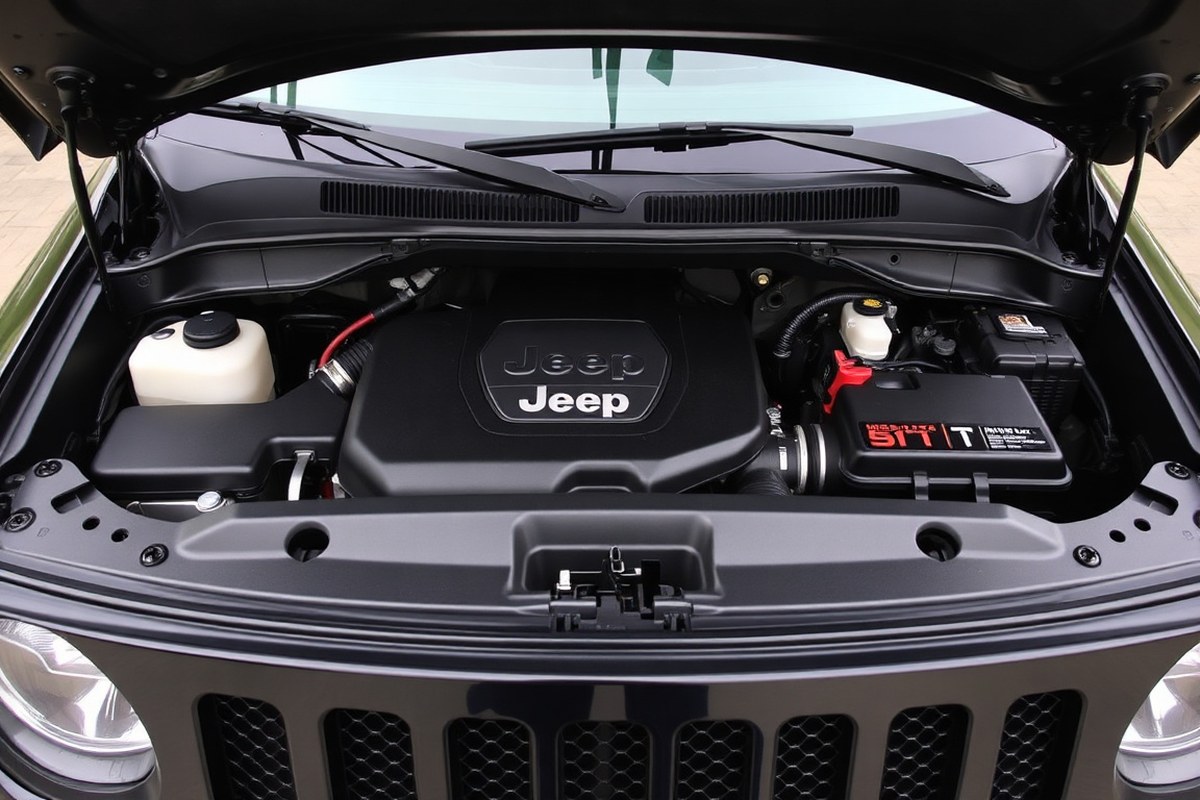
To identify whether your 2016 Jeep Patriot Sport has the 2.0L (122 HP) engine or the 2.4L (144 HP) engine, observe specific visual cues under the hood and review key vehicle documents. The engine cover and labels display distinct markings. Using your vehicle’s VIN and referencing the owner’s manual can provide definitive information about the engine specifications.
Engine Cover and Label Differences
Opening the hood, the first step is to examine the engine cover for labels or embossed numbers indicating displacement and horsepower. The 2.0L engine typically has a simpler intake manifold and a smaller, less complex design compared to the 2.4L engine.
Look for an engine label near the oil fill cap or on the valve cover. The 2.0L version might be marked with “2.0L 122 HP,” while the 2.4L usually reads “2.4L 144 HP.” Also, differences in the intake manifold shape and the number of visible fuel injectors can signal the engine type. The 2.4L’s camshaft profiles and slightly larger intake pipes are also telling.
Using VIN to Confirm Engine Horsepower
The vehicle identification number (VIN) is a reliable way to confirm your Jeep Patriot’s engine specs. The VIN encodes the engine type as part of its characters, which dealerships and some online databases decode for you. Follow these steps to decode engine information from your VIN:
- Locate the VIN, usually on the lower driver’s side of the windshield or the door jamb.
- Write down the full 17-character VIN carefully.
- Visit a trusted online VIN decoder or your local Jeep dealership website.
- Enter the VIN into the decoder’s input field and submit.
- Review the engine section in the decoded report; it should specify “2.0L 122 HP” or “2.4L 144 HP.”
This process requires only your VIN and free or paid access to a decoding service. Local dealerships can also decode the VIN at no cost, giving you official confirmation.
Always verify VIN entries carefully to avoid decoding errors that could lead to incorrect engine identification.
Checking Owner’s Manual and Spec Sheets
The owner’s manual for the 2016 Jeep Patriot Sport includes powertrain specifications, such as engine horsepower and displacement. It often lists both engines since the model was available with either option that year. Look in the index under “engine specifications” or “vehicle specifications.” This section usually contains a table or chart showing horsepower, engine displacement, fuel type, and oil recommendations, which can confirm which engine your vehicle has.
Build sheets or the original window sticker also list engine specs explicitly. If you don’t have the original paperwork, you may request these from the dealership using your VIN. These documents confirm the installed engine and avoid confusion over parts or maintenance requirements.
Key Performance and Fuel Economy Differences Between the Two Engines
The 144 HP engine in the 2016 Jeep Patriot Sport offers noticeably better acceleration and throttle response compared to the 122 HP engine. However, the 122 HP engine generally provides improved fuel economy, especially in city driving. The larger engine’s additional power also translates to improve towing and off-road capability, benefiting drivers who need extra performance for specific situations.
Acceleration and Torque Comparison
The 144 HP engine delivers quicker acceleration, making it easier to merge onto highways or handle stop-and-go traffic conditions with more confidence. While specific torque figures differ slightly, the increased horsepower helps the engine respond more quickly to throttle input. This means the 144 HP engine offers a more engaging and peppy driving experience, especially on inclines or when carrying heavier loads. The 122 HP engine, by comparison, is somewhat slower to accelerate and feels more subdued during aggressive driving but remains adequate for regular commuting and casual driving.
The difference in acceleration can be a deciding factor if your daily routes involve frequent highway merges or urban traffic that demands responsive power delivery. In contrast, the 122 HP can feel underpowered in these scenarios but excels in smoothness and reliability under lighter load conditions.
Fuel Economy Ratings
The 122 HP engine prioritizes fuel efficiency, particularly in city driving where frequent stops demand constant acceleration and deceleration. This engine typically achieves better miles per gallon than the 144 HP model, making it a practical choice for drivers focused on lowering fuel costs. On the highway, the fuel economy difference narrows, but the 122 HP engine still tends to consume less fuel overall due to its smaller displacement and lower output. The following table compares city and highway fuel economy ratings for both engine options, illustrating their relative efficiency in standard driving conditions:
| Engine | City MPG | Highway MPG | Combined MPG |
|---|---|---|---|
| 122 HP (2.0L) | 23, 25 | 28, 30 | 25, 27 |
| 144 HP (2.4L) | 20, 22 | 26, 28 | 23, 25 |
These values vary depending on transmission type, trim level, and driving style. The smaller 122 HP engine’s improved fuel efficiency can be valuable for daily urban drivers who want to minimize fuel stops and costs. The 144 HP engine, while less efficient, balances that tradeoff with stronger performance.
Towing and Off-Road Capability Effects
The 144 HP engine’s extra power and torque give it an edge for towing and off-road use in the Jeep Patriot Sport. This engine can handle light towing tasks more comfortably, making it suitable for hauling smaller trailers, boats, or utility equipment. The added horsepower also improves the ability to tackle steep inclines and rugged terrain, where more immediate power delivery helps maintain momentum.
In comparison, the 122 HP engine is less capable in towing situations and rough terrain due to its lower output. For light off-road excursions or mostly highway driving, it performs adequately, but drivers expecting to use their Patriot Sport for moderate towing or challenging off-road conditions will benefit from the 144 HP engine’s capabilities. Evaluating your typical driving needs against these performance differences can clarify which engine suits your lifestyle best.
Common Maintenance Issues and Reliability Differences for 122 HP and 144 HP Engines
The 2.0L 122 HP engine in the 2016 Jeep Patriot Sport is generally reliable but can have occasional stalling issues. These stalls often happen due to problems with the fuel system or idle air control valve. Ignoring these signs can lead to poor drivability and increased wear on the engine. Regular fuel system cleaning and checking the idle air control valve every 30,000 miles can prevent these stalls and keep the engine running smoothly.
The 2.4L 144 HP engine tends to face overheating problems more frequently. Its higher power output generates more heat, stressing the cooling system. Overheating can damage the head gasket or warp the cylinder head, causing costly repairs or engine failure. To avoid this, check coolant levels monthly, flush the cooling system every 50,000 miles, and replace the thermostat if the engine runs hotter than 230°F on the temperature gauge.
Routine maintenance for these engines differs slightly because of their unique characteristics. Proper oil changes, using the recommended 5W-20 or 5W-30 synthetic blend oil every 5,000 to 7,500 miles, help both engines but pay close attention to higher oil consumption with the 2.4L. The 144 HP engine may also need more frequent belt and hose inspections due to the greater heat stress.
- 2.0L 122 HP: Watch for stalling during idle or low speed; clean or replace fuel injectors and idle air control valve as needed.
- 2.4L 144 HP: Monitor engine temperature; flush cooling system every 50,000 miles and replace thermostat if overheating signs appear.
- Regular oil changes every 5,000 to 7,500 miles, using synthetic blend oil to protect engine internals.
- Check belts and hoses more frequently on the 2.4L because increased heat can cause faster wear.
- Inspect coolant levels monthly to prevent overheating across both engines.
- Address any warning lights promptly; engine misfire or temperature warnings often indicate maintenance needs.
Following these maintenance tips can significantly extend the life of either engine by preventing common problems before they escalate. Cost-wise, cleaning fuel injectors and idle air control valves typically runs between $80 and $150, while a cooling system flush averages $100 to $150. Thermostat replacement may cost $150 to $250 depending on labor. Taking action early avoids expensive repairs and downtime, ensuring your Patriot Sport continues to perform reliably.
How Engine Horsepower Affects Parts Compatibility and Maintenance Schedules
Knowing whether your 2016 Jeep Patriot Sport has the 122 horsepower or 144 horsepower engine is important for selecting the right parts and following the appropriate maintenance routine. These engines differ in displacement and performance specifications, which means some parts like air filters, spark plugs, and even certain sensors may not be interchangeable. Using parts designed for the wrong engine can lead to poor performance, increased wear, and potential damage.
For example, the oil filter and air filter sizes might differ between the 2.0L (122 HP) and 2.4L (144 HP) engines. You should always check the owner’s manual or verify the engine code before purchasing components. Employing the correct microchip or ECU software is also linked to the engine type, so electronic parts should be matched precisely to avoid compatibility issues.
The maintenance schedule varies somewhat between these engines. Both engines typically require an oil change every 5,000 miles using 5W-20 oil, which suits the ambient temperature ranges most Patriot owners experience. However, the stronger 144 HP engine may experience higher internal stresses, suggesting that following the exact manufacturer’s intervals for oil and fluid changes is more critical. Inspections of brakes, tires, and engine fluids should be done every 7,500 miles regardless of engine type. Air filters usually need replacement every 30,000 miles, but in dusty or heavy-use environments, the 144 HP engine might benefit from more frequent air filter changes.
Here’s a checklist to help ensure compatibility and maintenance accuracy: confirm the engine ID number before ordering parts; use 5W-20 motor oil as specified for both engines, paying close attention to oil change intervals; inspect underhood components regularly for signs of wear or leaks, especially around the fuel system and ignition parts; change air filters based on driving conditions, leaning toward more frequent changes with the higher output engine. This routine helps maintain peak engine performance and avoids expensive repairs.
Ignoring these details can result in poor fuel economy, decreased acceleration, and premature component failure. Proper identification and maintenance also preserve the vehicle’s resale value and reliability.
Always verify your engine type before ordering parts to prevent compatibility issues that can cause engine damage or void warranties.
Can the 122 HP Engine Be Upgraded to Match 144 HP Performance?
Boosting the 122 horsepower engine in the 2016 Jeep Patriot Sport to match the 144 horsepower performance is not straightforward. The 144 HP engine generates about 50% more torque, largely due to its larger 2.4-liter displacement compared to the 2.0-liter 122 HP engine. Adding a turbocharger or installing a chip tune can increase power but won’t fully close that gap. Turbocharging the 2.0L requires significant modifications to support extra boost pressure, including reinforced internals like pistons and connecting rods, and upgrading the fuel delivery system. These upgrades raise costs substantially and increase mechanical complexity, often exceeding $2,000 to $3,000 in parts and labor, with no guarantee of reliable 144 HP equivalent output. A chip tune alone typically provides modest gains, often under 15%, which is insufficient to match the larger engine’s torque and horsepower.
Realistic upgrade paths focus on improving performance within the limits of the existing 2.0L platform. Installing a cold air intake, high-flow exhaust, and a performance chip can improve throttle response and add around 10 to 20 horsepower combined, translating to improved everyday driving feel without risking engine longevity. These modifications are generally affordable, ranging from $300 to $1,000 total, and easier to reverse. However, the engine’s smaller displacement and compression ratio cap the maximum power. Expect a mild improvement rather than a full performance transformation. Owners should also consider drivability impacts such as changes in fuel economy and emissions, and ensure any tuning follows local regulations.
Swapping the 2.0L engine for the 2.4L unit the Patriot Sport offers is the most direct way to gain the full 144 HP output. This swap involves replacing the entire engine assembly, ECU, wiring harness, and sometimes transmission components. The process can cost between $3,000 and $5,000 or more, depending on parts and labor availability. A professional mechanic or experienced technician should perform the swap to address engine mounting, electronics, and emissions compliance properly. Though practical, engine swaps come with challenges such as potential issues with warranty, insurance premiums (which tend to be higher for the 144 HP engine due to increased risk), and state inspections. Not all shops are willing to perform such a swap, making it less accessible than simple bolt-on upgrades.
Prior to any upgrade, verify engine codes and consult with specialists who understand Jeep Patriot engine options. Carefully weigh the benefits against costs and the risk of reducing the engine’s lifespan. For most owners, improving performance with bolt-on parts combined with proper maintenance delivers the best balance of cost, reliability, and power.
How Engine Type Influences Insurance, Resale Value, and Driving Suitability
Picking between the 122-horsepower (HP) and 144-HP engines in the 2016 Jeep Patriot Sport affects your insurance rates, resale worth, and driving experience. Insurance providers often see vehicles with stronger engines as riskier, leading to higher premiums. Typically, the 144-HP engine will bring about a modest increase in insurance fees compared to the 122-HP version, but the exact cost varies based on your driving record, where you live, and the insurer’s policies.
Vehicles equipped with the 144-HP engine tend to attract stronger interest in the resale market. Buyers prefer the extra performance and flexibility the larger engine provides, especially in a vehicle like the Patriot that balances utility and daily commuting. This preference for the 144-HP engine means it usually commands a better resale price, assuming similar condition and mileage. The 122-HP version may attract buyers looking for a more budget-friendly or fuel-efficient option, but it typically sells for less.
Choosing the right engine depends on your specific driving needs. The 122-HP engine suits mainly city drivers who prioritize fuel economy and less aggressive performance. It handles urban stop-and-go traffic comfortably and keeps running costs lower. The 144-HP engine fits better for highway travel and occasional off-road use, offering more power for merging, passing, and climbing hills. Its added torque improves performance in tougher driving environments.
| Factor | 122 HP 2.0L Engine | 144 HP 2.4L Engine |
|---|---|---|
| Insurance Premiums | Lower, smaller risk profile | Moderate increase due to higher risk |
| Resale Value | Lower, budget buyers | Higher, preferred by performance buyers |
| City Driving | Better fuel economy, adequate power | More power than needed, higher fuel use |
| Highway Driving | Decent, may feel underpowered | Stronger acceleration and passing ability |
| Off-Road Capability | Limited power for rough terrain | Improved torque and control |
To decide which engine suits you best, consider how you use your Jeep Patriot Sport daily. For mostly urban driving and prioritizing insurance and fuel savings, the 122-HP engine matches well. For extensive highway travel, towing, or off-road activities, the 144-HP engine offers more capability despite a slight increase in insurance costs. Weigh potential savings against your driving style to choose the option that aligns with both budget and performance needs.
How to Use Engine Codes and ECU Information to Accurately Confirm Engine Specs
You can confirm whether a 2016 Jeep Patriot Sport has the 122 HP or 144 HP engine by checking its engine codes stored in the Engine Control Unit (ECU). These codes reveal specifics about the engine type and horsepower. Using an OBD-II scan tool or compatible smartphone app makes it possible to read these engine codes yourself, though expert help is advisable for thorough interpretation.
Finding and Reading Engine Codes
The 2016 Jeep Patriot’s engine is identified by specific codes stored in the ECU, accessible via the OBD-II port. The key difference between the 122 HP 2.0L engine and the 144 HP 2.4L engine often shows up as distinct engine family or calibration codes, such as “ECM P/N” or “Engine Calibration ID.” These alphanumeric codes uniquely identify engine configurations, including horsepower ratings.
To locate these codes, you’ll need to plug in a scan tool to the OBD-II port, usually found under the dashboard near the steering column. Once connected, the scan tool or app can pull up engine details, including hardware identification and software calibration that directly correspond to engine performance specs.
Using Scan Tools and Apps
Obtaining engine codes requires a scanner that supports Jeep models and can read live data or stored trouble codes in the ECU. Basic OBD-II readers costing around $30 to $50 can display engine trouble codes but might not reveal detailed calibration info needed to differentiate horsepower precisely.
Mid-range scan tools or apps, such as those compatible with Bluetooth OBD-II adapters (priced between $50 and $120), provide access to extended data. Apps like Torque Pro or OBDLink allow you to query specific ECU parameters, including engine model codes. Here’s a step-by-step for scanning the ECU:
- Locate the OBD-II port under the driver’s side dashboard.
- Plug in your OBD-II scanner or Bluetooth adapter.
- Rotate the ignition switch to ON, stopping short of starting the engine.
- Launch the scanning app or tool and connect to the ECU.
- Access the engine information menu or live data stream.
- Look for engine family codes, P/N numbers, or calibration IDs.
- Record the codes displayed for reference.
- Cross-check the codes with Jeep engine specifications to confirm HP rating.
Some basic OBD-II tools won’t show engine calibration codes; using specialized apps or professional-grade scanners is critical for identifying exact engine specs.
Knowing When to Consult a Mechanic
Reading your ECU codes can clarify which engine is installed, but interpreting these codes to confirm horsepower needs experience. Codes appear unusual or inconsistent, so check with a Jeep dealer or reliable mechanic. Professionals have access to manufacturer databases and diagnostic equipment that provide precise engine identification.
Also, if your Jeep Patriot shows engine warning lights or performance issues during scanning, a mechanic can diagnose and repair problems accurately. Because incorrect identification can lead to improper parts selection or maintenance, professional advice ensures reliable information and vehicle safety.
Step-by-Step Action Plan to Confirm and Manage Your Jeep Patriot Sport Engine
Follow these steps to identify your 2016 Jeep Patriot Sport engine and handle maintenance and performance decisions confidently.
- Day 1: Locate your VIN and engine code on your Jeep’s documentation or directly on the engine bay to confirm if you have the 2.0L (122 HP) or 2.4L (144 HP) engine. Verify by comparing these to official Jeep specs or your owner’s manual.
- Day 2: Visually inspect the engine size markings and familiarize yourself with physical differences like intake manifold shape; this helps confirm your engine type.
- Week 1: Review your vehicle’s maintenance schedule and align it with the engine type. Adjust service intervals if needed, knowing the 2.4L typically requires slightly different maintenance due to higher output.
- Week 2: Check insurance documentation for any premium differences that might arise from your engine size and horsepower rating, adjusting your coverage if beneficial.
- Month 1: Monitor fuel economy and performance metrics during regular driving; compare them to manufacturer estimates for your engine to detect possible issues early.
- Month 2: If considering performance upgrades, consult a licensed mechanic about the feasibility of boosting the 2.0L engine to match the 2.4L’s power, understanding costs and risks.
- Ongoing: When ordering parts or performing repairs, always specify your engine’s HP rating to ensure compatibility and preserve reliability.
Frequently Asked Questions
How Can I Tell If My 2016 Jeep Patriot Sport Has the 122 HP or 144 HP Engine?
Check the engine badge or under-hood sticker for 2.0L or 2.4L markings, and note your drivetrain type; front-wheel drive usually has the 122 HP 2.0L engine, while 4×4 models often have the 144 HP 2.4L.
Does the Engine Size Affect the Jeep Patriot Sport’s Towing Capacity?
Yes, the 144 HP 2.4L engine generally offers better towing capabilities than the 122 HP 2.0L engine, making it more suitable for heavier loads and trailers.
Can I Swap a 2.0L Engine for a 2.4L in My 2016 Jeep Patriot Sport?
Engine swaps are complex and need professional assessment; the 2.4L engine may require different mounts and wiring, plus ECU reprogramming.
How Does Engine Horsepower Impact My Patriot’s Fuel Economy?
The 122 HP 2.0L engine typically provides better fuel economy than the 144 HP 2.4L, though exact mileage varies with driving conditions.
Are Parts for the 2.0L and 2.4L Engines Interchangeable in the 2016 Patriot Sport?
Some parts may fit both engines, but many components like air intakes and exhaust systems differ; always verify compatibility before purchasing.
Will Insurance Premiums Be Higher for a 2016 Jeep Patriot Sport with the 144 HP Engine?
Insurance costs can be slightly higher for the 144 HP 2.4L version due to increased power, impacting risk assessments by some insurers.
Final Thoughts
Your 2016 Jeep Patriot Sport comes with either a 122 HP 2.0L or a 144 HP 2.4L engine, and knowing which you have affects maintenance, parts, and insurance. Confirm your engine code using your VIN and physical engine markers before making any decisions. Start by checking your vehicle documents and engine bay today to ensure you’re managing your Jeep correctly.