How to Open a Roll-Up Tonneau Cover in 7 Easy Steps
Start by clearing any debris from the cover to avoid damage.
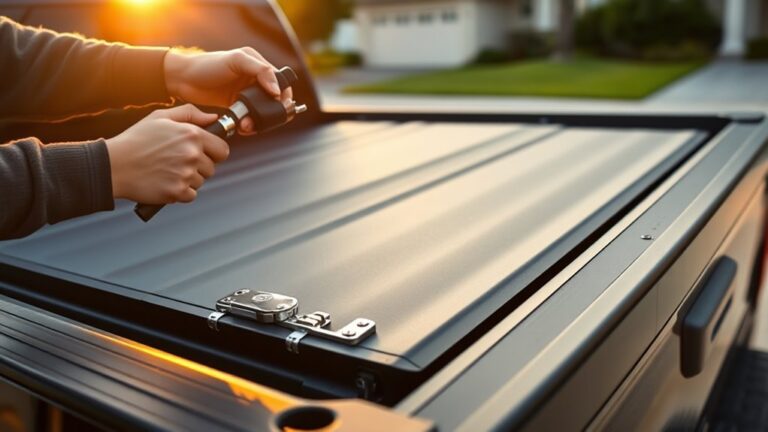
Locate the latch or lock near the tailgate or sides, then disengage it using the key or handle.
Decide if you want to roll the cover up for quick access or fully remove it for bulky cargo.
Roll the cover evenly from the tailgate, secure it with built-in straps, and adjust tension bolts for a smooth roll.
Keep going to uncover helpful tips for maintenance and ease.
Key Takeaways
- Remove debris from the cover and edges to prevent damage and ensure smooth operation.
- Locate the latch or lock near the tailgate or sides and identify its type.
- Use the key or release the latch mechanism to unlock and open the cover gently.
- Decide whether to roll the cover for quick access or remove it for bulky cargo.
- Roll the cover evenly from the tailgate, secure straps firmly, and adjust tension if needed.
Check for Debris on Your Roll-Up Tonneau Cover Before Opening

Before you open your roll-up tonneau cover, why not take a moment to check for debris? Removing leaves, dirt, and small branches from the cover’s surface with a soft brush or your hands can prevent damage and keep it looking good.
During your inspection, focus on the edges and the tracks. Any debris lodged there can cause jams or uneven rolling. Cleaning these areas regularly helps maintain the waterproof seal and overall durability of your cover.
Avoid using harsh tools like metal brushes or knives, which might tear or scratch the material. By keeping the tracks clear and free of debris, you guarantee smooth operation and prevent issues that could lead to costly repairs.
This simple step of inspection and cleaning not only protects your roll-up tonneau cover but also extends its life, making sure it works perfectly every time you need it.
Find the Latch or Lock on Your Roll-Up Cover
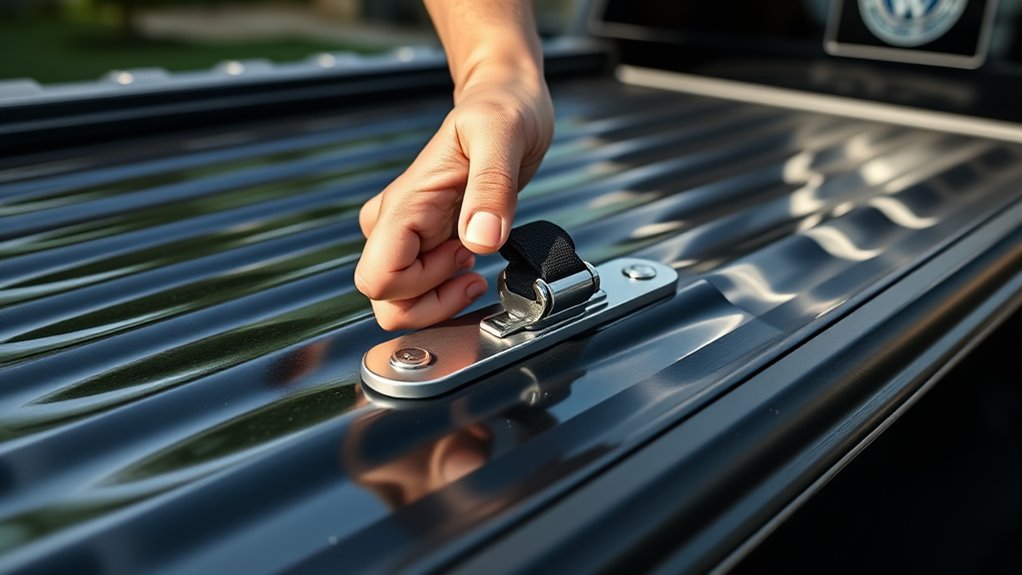
Once you locate the latch or lock on your roll-up tonneau cover, releasing it becomes a straightforward task. The latch or lock is usually positioned near the tailgate or along the sides, designed to secure the cover firmly.
You’ll often find the mechanism either centrally located or on the driver’s side for easy access. To quickly find it, try these steps:
- Feel around the edges of the cover for any catches or handles that might indicate the latch or lock’s position.
- Look closely near the tailgate where most securing mechanisms are installed.
- Identify the type of lock, whether it’s a lever, sliding lock, or key-operated latch, to understand how it holds the roll-up tonneau cover in place.
Knowing your cover’s latch or lock design saves you time and prevents frustration when opening the roll-up tonneau.
How to Unlock the Latch and Open Your Roll-Up Cover
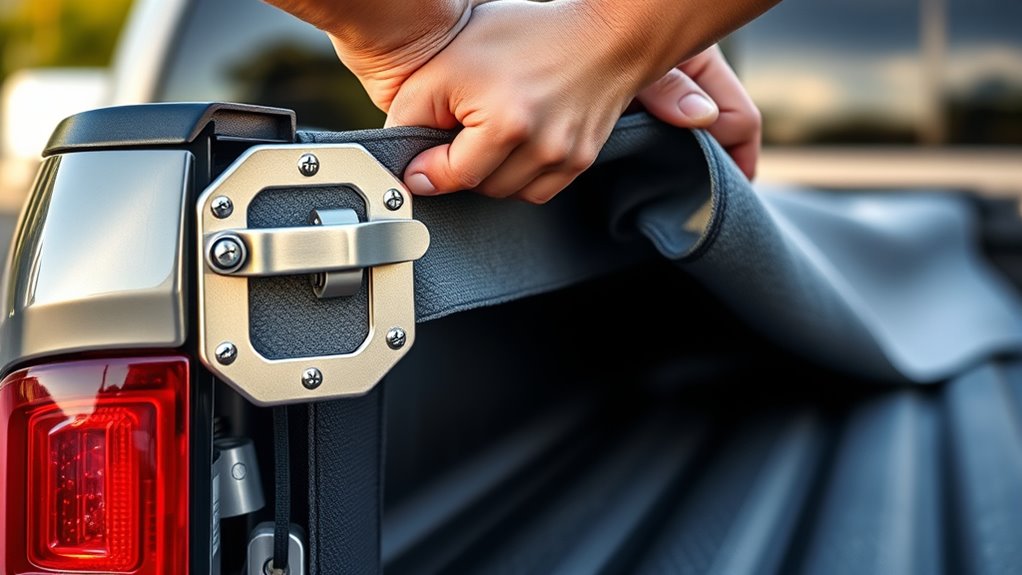
After you’ve found the latch or lock on your roll-up tonneau cover, opening it is the next step. If your latch has a built-in lock, use your key to disengage it by turning gently until the lock releases.
For latches without a key mechanism, look for a lever, sliding component, or handle designed to release the cover. Feel along the edges of the latch to locate the correct release point, making sure you activate the right part of the mechanism.
Once freed, use the handle or lift the latch according to your roll-up cover’s design to open it smoothly. This release mechanism is essential for easy access, so don’t force it if it feels stuck. Double-check that it’s fully disengaged.
Decide Whether to Roll Up or Remove Your Roll-Up Cover
Although rolling up your tonneau cover offers quick access to your truck bed, you might want to remove it entirely when handling bulky cargo or doing a thorough cleaning. Deciding whether to roll up or remove your roll-up cover depends on your needs and conditions.
Consider these factors:
- Access frequency: If you need frequent access to your bed, rolling up the cover saves time and effort. For infrequent use, removing it might be more practical.
- Cargo size: Bulky or irregularly shaped cargo often requires you to remove the cover completely to avoid damage or obstruction.
- Weather conditions and bed repairs: Harsh weather like snow or rain may warrant removal to prevent leaks or damage. Also, if you’re performing bed repairs or modifications, removing the cover is necessary.
Roll Your Cover Evenly Starting at the Tailgate
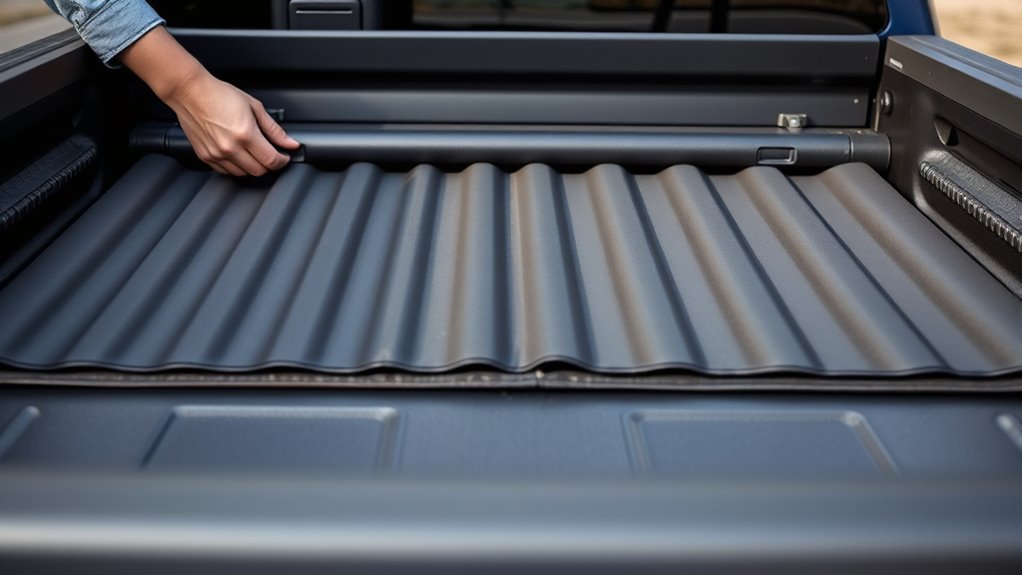
If you decide to roll up your tonneau cover instead of removing it, start at the tailgate edge to guarantee an even roll. Begin rolling from the corner, applying gentle, consistent tension to prevent wrinkles or creases.
Use both hands to guide the roll-up cover, keeping it aligned with the bed rails throughout the process. Maintaining even tension is key; the cover should be taut but not overly tight to avoid bunching or uneven rolling.
As you roll the cover evenly toward the cab, periodically check that it stays aligned with the truck bed. This ensures the roll-up cover maintains smooth tension and prevents misalignment that could cause damage.
Secure the Rolled Cover With Built-In Straps
After you roll your cover evenly, go ahead and wrap the built-in straps around it to keep everything tight and in place. Just make sure to fasten the straps securely with Velcro or buckles. But don’t overtighten them—no need to make it too tight.
Getting the placement right and fastening the straps snugly will help prevent the cover from unrolling while you’re on the move or if it gets windy. It’s an easy way to keep things neat and secure!
Proper Strap Placement
When you roll up your tonneau cover, secure it tightly with the built-in straps to keep it from unrolling during your drive. Proper strap placement is key to maintaining a secure rolled cover and preventing damage. Here’s how to do it right:
- Position the straps evenly along the rolled cover to distribute tension uniformly.
- Fasten each strap snugly using Velcro or buckles, but avoid overtightening to protect the cover.
- Inspect the strap placement and fastening before driving to guarantee they’re secure and won’t loosen.
Ensuring Secure Fastening
Although rolling up your tonneau cover is straightforward, securing it properly with the built-in straps is essential to keep it from unrolling or flapping while you drive. Wrap the straps around the rolled cover, then fasten them using Velcro or buckles.
Make sure the secure fastening is snug but not too tight to avoid damaging the material. Proper securing keeps the cover neat and prevents distractions on the road.
Check that all straps are evenly fastened along the length of the rolled cover to ensure consistent security. Don’t forget to perform regular inspections and replace any worn or damaged straps promptly.
This routine maintenance guarantees your tonneau cover stays firmly in place during transit.
How to Adjust Rolling Tension for Smooth Operation
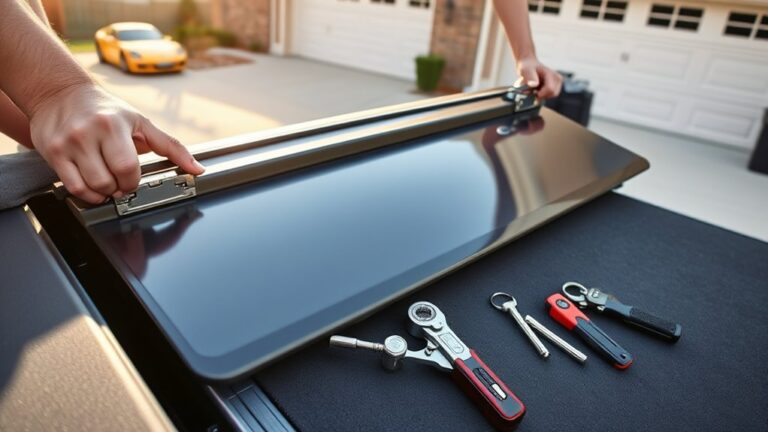
First, find the tension adjustment bolts along the side rails of your tonneau cover. Grab a wrench or the tool that came with it, and start tightening or loosening these bolts little by little. The goal here is to get a smooth, controlled roll-up.
After you make an adjustment, go ahead and roll the cover to see how it feels. If it’s not quite right, just tweak the bolts some more until you get the tension that works best for smooth operation. It’s all about finding that sweet spot for maximum performance.
Locating Adjustment Bolts
Since proper rolling tension is key to smooth operation, you’ll want to start by locating the adjustment bolts. These bolts control the tension adjustment, which guarantees your roll-up tonneau cover functions without wrinkles or sagging. Here’s how to find them:
- Check the ends of the side rails. Adjustment bolts are often placed there.
- Look near the roll-up mechanism itself; bolts are usually accessible for easy tension tweaks.
- Use a wrench or the tool provided with your tonneau cover to identify any bolt that can be turned to tighten or loosen tension.
Proper Tightening Techniques
When you’re ready to adjust the rolling tension, start by locating the adjustment bolts on either side or beneath your roll-up tonneau cover. Use a wrench or the tool provided to tighten these bolts gradually, making sure you apply even tension on both sides.
Tighten the bolts incrementally, testing the cover’s roll-up ease after each turn to avoid over-tightening. If you find the cover hard to roll or notice sagging, loosen the bolts slightly to relieve excess tension.
It’s important to regularly check the tension adjustment to keep your roll-up cover taut and operating smoothly. Consistent maintenance ensures the cover rolls without wrinkles or resistance, protecting your truck bed effectively.
Frequently Asked Questions
What Materials Are Roll-Up Tonneau Covers Typically Made From?
You’ll find roll-up tonneau covers typically made from durable vinyl material, offering excellent weather resistance and UV protection. The fabric options often include reinforced vinyl or PVC, sometimes with ballistic-grade fabrics for extra toughness.
Aluminum construction plays a key role in the core structure and side rails, enhancing material durability while ensuring lightweight strength. These materials also support installation compatibility with most trucks, keeping your cover secure and functional in varied conditions.
Can a Roll-Up Tonneau Cover Improve Fuel Efficiency?
Yes, a roll-up tonneau cover can boost your fuel savings by improving your truck’s aerodynamic impact. By streamlining airflow, it reduces drag and helps with driving efficiency, so your engine works less hard.
Many covers use eco-friendly materials and focus on weight reduction, which further enhances climate benefits and emission reduction. Using one not only protects your cargo but also supports greener driving habits and cuts fuel costs over time.
How Do I Clean and Maintain My Roll-Up Tonneau Cover?
For effective cleaning, use mild soap and water with gentle cleaning products to remove dirt and debris without harming the fabric. Follow a regular maintenance schedule, inspecting seals and straps for damage.
Dirt removal keeps your cover looking fresh and prevents wear, ensuring fabric longevity. Lubricate moving parts for smooth operation, and always dry the cover thoroughly to avoid mold.
These cleaning tips and cover protection steps help prevent damage and extend your tonneau cover’s life.
Are Roll-Up Tonneau Covers Waterproof?
Roll-up tonneau covers aren’t fully waterproof, but they use waterproof material and sealing techniques to boost rain resistance and weather durability. You’ll get good leak prevention and moisture protection if the seals are intact and installation is precise.
Some covers even manage water pooling with drainage channels. Keep in mind, heavy rain or washing might still let some water in, so regularly check seals to maintain ideal protection.
Can I Install a Roll-Up Tonneau Cover Myself?
Yes, you can install a roll-up tonneau cover yourself. Start with compatibility checks to guarantee it fits your truck. Gather basic tool requirements like a socket wrench and screwdriver.
Follow installation tips carefully, paying attention to alignment and clamps to avoid common issues like leaks. Learn adjustment procedures for a snug fit, and know how to perform cover removal if needed.
Comparing brands helps you pick one with easier installations and better instructions.
Conclusion
It’s funny how something as simple as opening your roll-up tonneau cover can feel tricky until you follow these easy steps. By checking for debris, releasing the latch, and rolling it up evenly, you’ll save time and avoid frustration.
Plus, securing it with straps and adjusting tension guarantees smooth operation every time. Now that you know the process, you’ll wonder why you ever hesitated. Your cover will practically open itself!