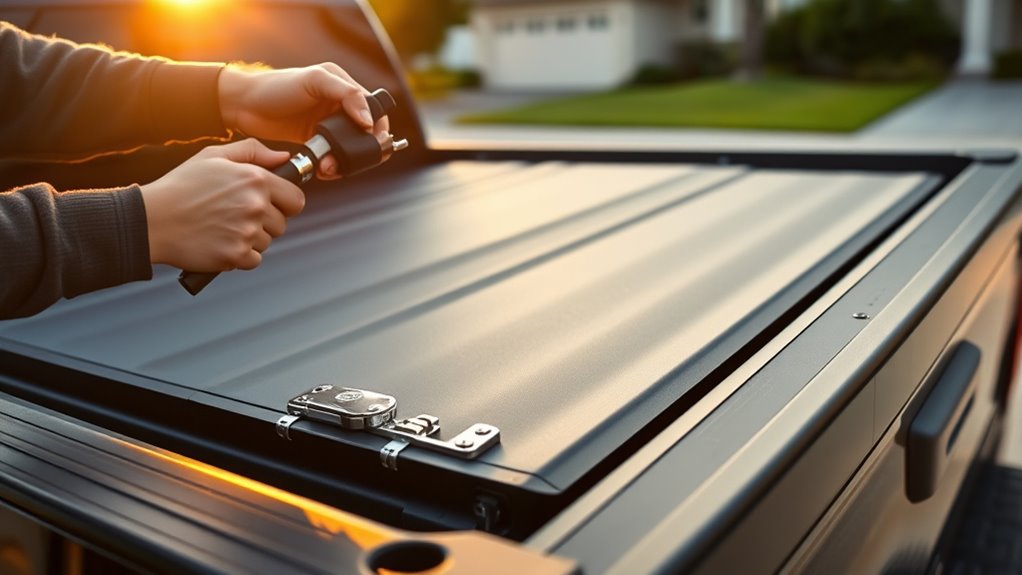
How to Install a Tonneau Cover in 7 Simple Steps
Start by gathering all necessary tools and cleaning your truck bed thoroughly. Measure your bed to make sure the cover fits perfectly.
Next, position and align the rails carefully, making certain they’re level and parallel. Secure the rails evenly using clamps or bolts.
Then, attach and adjust the cover panels for proper fit.
Finally, seal all edges and test the cover’s operation for smooth opening and leak prevention.
Keep going, and you’ll master the finer details for a flawless installation.
Key Takeaways
- Gather necessary tools and clean the truck bed to ensure a smooth installation surface.
- Measure the truck bed dimensions to verify the tonneau cover fits precisely.
- Position and align side rails flush and parallel along the truck bed edges using clamps.
- Secure rails and attach cover panels evenly, tightening all fasteners without overtightening.
- Apply seals along edges and test cover operation for smooth opening and leak prevention.
Gather Tools for Tonneau Cover Installation
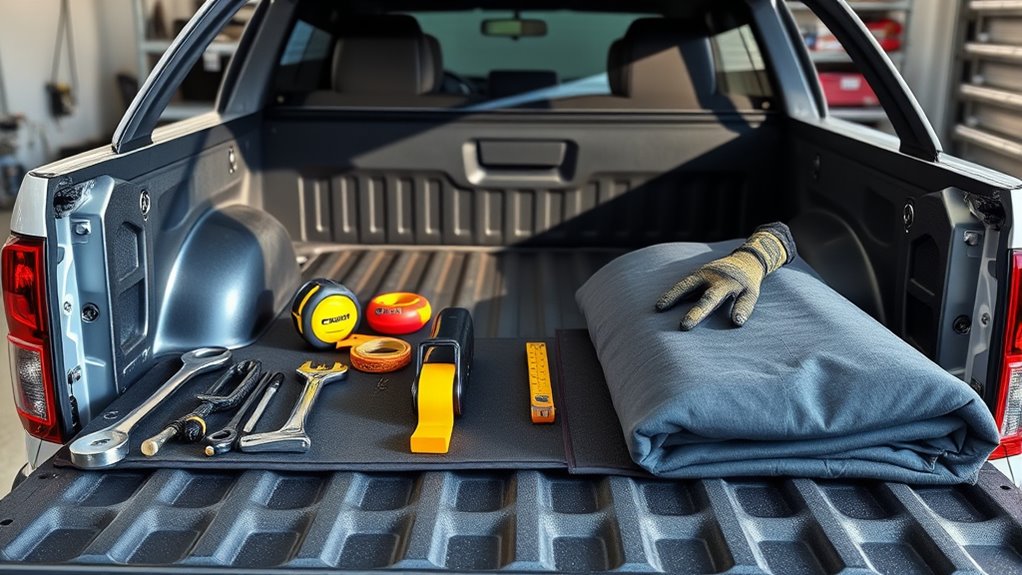
Before you begin installing your tonneau cover, make sure you’ve gathered all the essential tools. Start by collecting screwdrivers, either Phillips or flathead depending on your hardware, along with a ratchet set featuring the right socket sizes.
A measuring tape is vital for precise alignment of the rails and seals, ensuring a snug fit. Don’t forget clamps, which help hold parts securely during the installation process.
Before you immerse yourself, perform a thorough hardware verification to confirm all bolts, screws, and brackets are present. Having a clean cloth handy lets you wipe down surfaces, improving adhesion and removing debris that might interfere with the fit.
Check all hardware carefully and clean surfaces to ensure a secure, debris-free installation.
Using the correct tools and verifying hardware upfront prevents interruptions and reduces the risk of damage. Proper alignment is key for a waterproof, secure installation, so take your time with measurements and positioning.
Gathering these tools and hardware beforehand sets you up for a smooth, efficient tonneau cover installation.
Clean and Prepare Your Truck Bed
Once you’ve gathered your tools and verified your hardware, turn your attention to the truck bed itself. Start by removing any debris, dirt, and loose tools from the truck bed to ensure a clean surface for installation. Sweep out leaves, dust, and small stones that could obstruct the cover’s seal.
Inspect the bed rails carefully for any rust, dents, or damage, as these could affect the tonneau cover’s fit and stability.
Next, wipe down all surfaces thoroughly with a damp cloth or rubbing alcohol. This step is essential for removing grease and oils that might interfere with the seal’s adhesion.
Make sure the truck bed is completely dry before you proceed, since moisture can cause issues later on. Proper preparation of the truck bed will help guarantee a tight seal and a smooth installation process. Taking these steps now saves time and frustration during the actual installation.
Measure Your Truck Bed for an Accurate Fit

First, grab a steel tape and measure the length of your truck bed from the inside edge of the bulkhead all the way to the tailgate. Then, take a look at the width by measuring across the front, middle, and rear sections—this helps you spot any changes in size. And don’t forget, if your truck has wheel wells, make sure to measure the distance between them too, so you get the perfect fit.
Measure Length Precisely
Although it might seem straightforward, measuring your truck bed accurately is vital to guarantee your tonneau cover fits perfectly. Start by using a steel tape measure to get the bed length from the inside edge of the bulkhead to the inside edge of the tailgate.
Measure carefully to avoid slack or sag, which can lead to gaps or misalignment. Record measurements at multiple points to ensure the dimensions are consistent for proper fitment. It’s essential to double-check and record measurements precisely before moving forward.
Comparing your measurements with the tonneau cover’s specifications helps confirm compatibility and prevents fitting issues. Taking time to measure carefully ensures an accurate fit, smooth alignment, and a professional-looking installation with no surprises down the road.
Check Width Variations
After measuring the length of your truck bed, the next step is to check its width at multiple points. This ensures an accurate measurement and a proper fit for your tonneau cover. Truck beds can have variations or tapering that affect bed dimensions and coverage.
Use a steel tape measure to avoid errors, and carefully record each measurement.
Follow these steps for accurate bed width measurements:
- Measure the width at the front of the bed.
- Measure the width at the middle.
- Measure the width at the rear.
- Note any irregularities or tapering in the bed sides.
Choose the widest measurement to guarantee full coverage and the best fit for your tonneau cover.
Record Wheel Well Distance
When measuring your truck bed, you’ll want to record the distance between the wheel wells at their widest points to guarantee your tonneau cover fits properly. Start by using a measuring tape to take accurate wheel well measurements from the inside edge of one wheel well to the other, focusing on the truck bed width at the front, middle, and rear.
This ensures you capture any variations in bed dimensions. Record all measurements precisely to avoid issues during tonneau cover installation. Before buying, perform a compatibility check by comparing your measurements against the manufacturer’s specifications.
Accurate measurement accuracy is essential for proper fit and cover fitment along the truck bed rails, preventing gaps, overhangs, or inadequate coverage once installed.
Position and Align the Tonneau Cover Rails
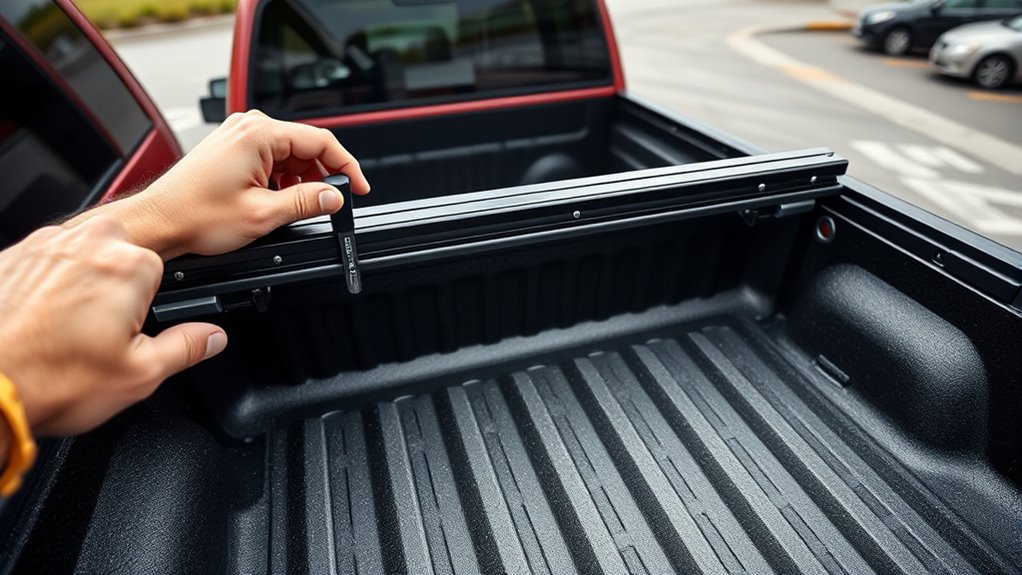
Start by positioning the side rails along the top edges of your truck bed. Make sure they sit flush and parallel—that way, everything lines up just right. You can use the factory pre-drilled holes or the marked spots to help align the rails accurately. It’s a good idea to double-check that they don’t interfere with the cab or tailgate before moving on. Once you’re happy with the alignment and everything looks level and centered, go ahead and secure the rails evenly. This will keep them from shifting later on.
Rail Alignment Techniques
Although positioning the tonneau cover rails may seem straightforward, aligning them precisely is crucial for a secure fit and smooth operation. Start by placing the side rails along the truck bed, confirming proper alignment using factory mounting points or pre-marked holes.
Check for levelness from front to back and side to side to avoid misalignment.
Follow these rail alignment techniques:
- Position the rails flush with the top edge and parallel to each other.
- Use factory mounting points or pre-marked holes for accurate rail positioning.
- Gradually tighten clamps evenly, checking frequently to prevent warping or twisting.
- Confirm clearance so rails don’t interfere with tailgate movement.
This careful alignment prevents issues during clamp tightening and ensures a secure, functional fit.
Ensuring Flush Fit
After aligning the rails along the truck bed using the factory mounting points, focus on guaranteeing they fit flush with the bed edges. Position the rails so they sit flush with the bed rails, avoiding any gaps or overlaps.
Use measurements to verify both rails are parallel and centered across the truck bed’s width. Make adjustments as needed to guarantee the rails are level and securely positioned, preventing any tilt or misalignment.
Check carefully that the rails don’t interfere with the tailgate’s movement, maintaining a flush fit that won’t obstruct functionality. Taking these steps guarantees proper installation, maximizing the tonneau cover’s performance and appearance.
Aligning and securing the rails precisely is key for a durable, professional fit.
Checking Rail Spacing
How do you guarantee the tonneau cover rails sit perfectly before securing them? It starts with checking the rail spacing and ensuring proper positioning along your truck bed. Follow these steps for accurate alignment:
- Measure the distance between the inner edges of the truck bed rails to confirm correct rail spacing.
- Position the side rails so they’re parallel and aligned with the truck bed edges, using factory mounting points or pre-marked spots for proper placement.
- Ensure the rails don’t extend into the tailgate gap or interfere with tailgate movement.
- Use a level tool to check that the rails are level and straight. Visually inspect from multiple angles to confirm alignment.
This method guarantees your tonneau cover rails fit securely and function smoothly.
Secure the Rails Evenly With Clamps or Bolts
When you secure the rails with clamps or bolts, position them evenly along the side rails to guarantee balanced support across the truck bed. Start by spacing each clamp or bolt uniformly to maintain proper support and prevent uneven pressure points.
Use a wrench or screwdriver to tighten each clamp gradually and symmetrically, making sure you don’t overtighten and risk damaging the rails or bed surface. Pay close attention to alignment as you tighten; the rails should remain parallel and flush with the truck bed sides.
If you notice any misalignment, adjust the clamps or bolts accordingly before fully securing them. Consistent tightening pressure helps avoid warping and keeps the rails stable.
Once all clamps or bolts are snug and properly aligned, your rails will provide solid support, ready to hold the tonneau cover firmly in place. This step ensures your cover stays secure and performs well over time.
Attach and Adjust the Tonneau Cover Panels
Where should you start when attaching the tonneau cover panels? Begin by aligning the panels with the side rails, making sure the bolt holes match the pre-drilled spots or marked positions on the rails. This ensures a proper fit and simplifies the securing process.
Next, follow these steps:
- Secure the panels using the manufacturer’s clips, snaps, or fasteners, tightening evenly to prevent warping.
- Check that each panel sits flush against the rails and truck bed; adjust the position if necessary.
- Tighten tensioning mechanisms or screws to make the cover taut, eliminating wrinkles or sagging.
- Test the cover by opening and closing it several times, making final adjustments for smooth operation and proper alignment.
Seal the Edges and Test the Cover’s Operation
Though securing the panels is essential, you’ll want to seal the edges next to keep water and debris out. Start by inspecting the seal strips along your truck bed sides to guarantee they’re properly installed and free of gaps.
Apply weatherstripping tape or rubber seals around the cover’s edges, pressing them firmly into place to assure they adhere well and align perfectly. This helps eliminate any gaps that could let water seep through.
Once sealed, test the cover’s operation by opening and closing it several times to confirm smooth movement and proper locking. To check for leaks, spray water along the edges and carefully observe for any seepage.
If you notice water entering or if the cover doesn’t operate smoothly, make the necessary adjustments to the seals or alignment. Taking these steps ensures a tight seal and reliable cover operation, protecting your truck bed effectively.
Frequently Asked Questions
Can I Install a Tonneau Cover Without Professional Help?
Yes, you can install a tonneau cover without professional help if you follow a step-by-step guide and check cover compatibility first. Most DIY installations require standard tools and careful initial setup.
Be mindful of common challenges like alignment and sealing, and remember safety tips throughout. Time estimation varies, but expect a couple of hours.
Keep warranty considerations in mind. Incorrect installation might void it. If you’re confident, DIY can save money and be rewarding.
Will a Tonneau Cover Improve My Truck’s Fuel Efficiency?
Oh sure, a tonneau cover will magically turn your truck into a fuel economy superstar overnight if only! In reality, its aerodynamic design reduces wind drag, improving fuel savings by 5-10%, especially during highway driving.
The lightweight cover won’t hurt your truck performance, and it adds weather resistance, protecting cargo while helping emission reduction. You’ll notice better driving dynamics and environmental benefits, making it a smart, practical upgrade for your truck’s fuel efficiency.
How Do I Maintain and Clean My Tonneau Cover?
To maintain your tonneau cover’s material durability, clean it regularly using mild soap and water with a soft cloth to avoid scratches. Focus on stain removal gently without harsh chemicals.
Inspect seals often to guarantee waterproof features stay effective. Follow a maintenance schedule by applying UV protection annually to prevent sun damage.
Don’t forget hinge lubrication every few months for smooth operation. Regular upkeep extends cover longevity and keeps it looking great.
Are Tonneau Covers Theft-Resistant?
Yes, tonneau covers can be theft-resistant if you choose one with strong security features. Look for lock mechanisms and anti-theft locks that act as solid theft deterrents. Some models include reinforced materials and hidden compartments for extra protection.
You can also upgrade with alarm systems, electronic sensors, or surveillance options to boost security. Proper installation guarantees these features work effectively, keeping your truck bed safe from unauthorized access.
Can I Install a Tonneau Cover on a Bed Liner?
You absolutely can install a tonneau cover on a bed liner. It’s like fitting a glove on your truck’s bed. Focus on bed liner compatibility and cover alignment to avoid gaps.
Choose material options that handle weather resistance well. Use proper installation tools for secure locking mechanisms to boost cargo security.
Keep seat access and cover removal in mind for convenience. With the right prep, you’ll have a sleek, secure setup that keeps your gear safe rain or shine.
Conclusion
Now that you’ve secured the rails and adjusted the panels, the moment of truth is just ahead. As you seal the edges and test your tonneau cover, you might wonder, will it fit perfectly and protect your truck bed as promised?
Don’t rush; take a breath and check every detail carefully. When it clicks into place smoothly, you’ll know all your effort paid off. Ready to enjoy a sleek, secure truck bed?