

How to Gap Iridium Spark Plugs in 5 Easy Steps
To gap iridium spark plugs in 5 easy steps, first find your vehicle’s recommended gap from the manual or labels under the hood.
Next, gather precise tools like a non-magnetic feeler gauge and a gentle gap adjuster.
Carefully measure the gap, inspect for damage, and gently adjust the ground electrode without forcing it.
Finally, verify the gap fits snugly and clean the plug before installation.
Following these basics guarantees top engine performance, and there’s plenty more to perfect the process.
Key Takeaways
- Find the recommended spark plug gap in your vehicle’s manual or manufacturer’s website before starting.
- Use a non-magnetic, corrosion-resistant feeler gauge and a spark plug gap tool designed for iridium plugs.
- Measure the gap carefully between electrodes and inspect for wear or damage, replacing plugs if necessary.
- Gently adjust the ground electrode with slight pressure, avoiding excessive force to protect the iridium tip.
- Verify the gap fits snugly with the feeler gauge and clean the spark plug before installation.
Find Your Vehicle’s Recommended Spark Plug Gap
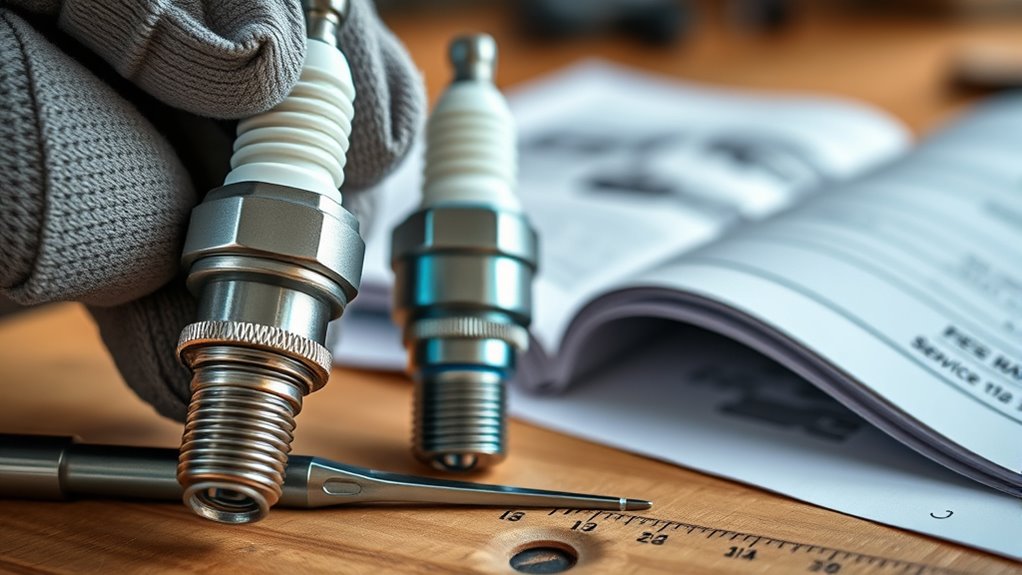
Before gapping your iridium spark plugs, you’ll need to find the exact gap specification for your vehicle. Start by checking your owner’s manual, which often lists the manufacturer’s recommended gap for optimal engine performance.
Begin by consulting your owner’s manual for the precise spark plug gap recommended by the manufacturer.
If you don’t have the manual handy, look for stickers or labels under the hood on the radiator support or firewall that may display the proper gap. You can also visit the manufacturer’s website or consult a vehicle-specific spark plug catalog to confirm the correct spark plug gap.
Trusted online databases and automotive forums provide reliable gap specifications tailored to your model. Knowing the exact gap specification is crucial because an incorrect gap can lead to misfires and reduced engine efficiency.
Once you have the proper gap, you’ll be ready to measure and adjust your spark plugs with the right gap tools. Ensuring you use the manufacturer’s recommended gap guarantees your engine runs smoothly and efficiently.
Gather the Right Tools for Spark Plug Gap Adjustment
After finding your vehicle’s recommended spark plug gap, you’ll need the right tools to measure and adjust it accurately. Using the proper tools guarantees you get a precise measurement without damaging the iridium tip or ground electrode. Avoid coin-style gap tools; instead, opt for specialized spark plug gap tools designed for iridium plugs.
Here are three essential tools you should have:
1. Feeler Gauge
A non-magnetic, corrosion-resistant feeler gauge provides the most precise measurement, typically between 0.028 and 0.060 inches.
2. Gap Gauge
A wire or slot-type gap gauge allows you to gently adjust the gap without harming the new spark plug’s delicate components.
3. Spark Plug Gap Tool
Designed specifically for iridium plugs, this tool helps you carefully bend the ground electrode to the correct measurement.
Using these proper tools will help you adjust the gap accurately and protect your iridium spark plugs during installation.
Measure and Inspect Your Iridium Spark Plug Gap
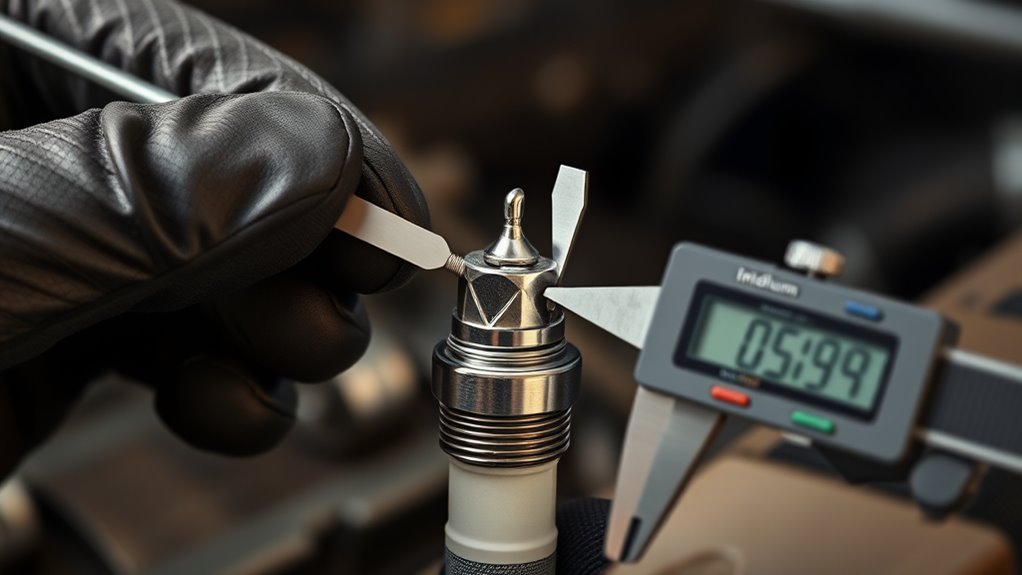
When you measure your iridium spark plug gap, use a precise feeler gauge or a specialized gapping tool to guarantee accuracy. Carefully insert the gauge between the center and ground electrodes without forcing it, as the iridium tip is delicate and can easily suffer damage.
Take note of the measured gap and compare it to the manufacturer’s recommended specifications found in your vehicle’s manual. This ensures your spark plug will perform properly. Before making any adjustments, thoroughly inspect the electrodes for wear, cracks, or debris that could impact the accuracy of your measurement or the spark plug’s efficiency.
If you spot any damage, consider replacing the spark plug rather than adjusting it. Always re-measure the gap after any adjustment to confirm it remains within the proper range. This careful measuring and inspection process helps maintain ideal engine performance and prolongs the life of your iridium spark plugs.
Adjust the Spark Plug Gap Gently to Avoid Damage
Since iridium spark plugs have delicate electrodes, you’ll need to adjust the gap with gentle, controlled pressure to avoid damage. The ground electrode and iridium tip are made of delicate material, so use a spark plug gapping tool designed for proper gapping. Avoid pliers or excessive force to prevent cracking or breaking the iridium tip.
Follow these steps for damage prevention and a precise gap:
- Use a feeler gauge to measure the gap frequently during adjustment, ensuring accuracy without over-bending.
- Apply slight, controlled pressure to bend the ground electrode gently, protecting the delicate iridium tip.
- After each adjustment, recheck the gap with the feeler gauge to maintain precision and avoid unnecessary stress on the electrode.
Verify Gap Accuracy and Clean Spark Plug Before Installation

Although you’ve carefully adjusted the gap, you’ll want to verify its accuracy with a precise feeler gauge before installation. To measure the gap correctly, slide the feeler gauge gently between the spark plug’s center and ground electrode. Avoid forcing it to prevent damage to the iridium electrode. The gauge should fit snugly, indicating the proper gap.
Verify spark plug gap with a feeler gauge, gently sliding it to avoid electrode damage.
If it doesn’t match the manufacturer’s specifications, carefully adjust the ground electrode using a non-metallic tool, then measure the gap again.
Before installing, clean the spark plug thoroughly. Use a soft cloth or compressed air to remove any dirt or debris from the electrode and tip. Keeping the electrode clean ensures ideal spark and performance.
Verifying the gap and cleaning the spark plug before installation helps maintain engine efficiency and prevents misfires. This guarantees your vehicle runs smoothly. Taking these steps assures the spark plug is ready to deliver the best possible performance.
Frequently Asked Questions
Can Gapping Iridium Plugs Improve Fuel Efficiency?
Yes, gapping iridium plugs can definitely improve your fuel efficiency. Proper spark plug maintenance guarantees the ignition system fires correctly, optimizing the combustion process and boosting engine performance.
This precise engine tuning helps enhance vehicle efficiency and gas mileage. Regularly checking gaps supports spark plug longevity and reduces misfires, which your vehicle diagnostics will appreciate.
Following these fuel economy tips keeps your engine running smoothly and saves you money at the pump.
How Often Should I Check My Spark Plug Gap?
Think of your spark plugs as the heartbeat of your engine. Just like you’d check your pulse regularly, you should check your spark plug gap every 30,000 to 50,000 miles. Doing this keeps ignition timing precise, boosting combustion efficiency and engine performance.
Following your vehicle’s maintenance schedule helps prolong spark plug lifespan, improves fuel economy, and reduces repair costs. Regular checks also aid engine diagnostics and ensure vehicle safety, especially considering different spark plug materials.
Is It Safe to Gap Iridium Plugs by Hand?
Yes, you can safely gap iridium plugs by hand if you follow proper hand gapping safety steps. Use precise gap measurement tools during spark plug inspection to avoid damaging the delicate iridium tip.
Iridium durability is high but brittle, so gentle gap adjustment steps are vital. Respect manufacturing tolerances to maintain spark plug lifespan and guarantee spark plug compatibility.
If unsure, consider professional installation to prevent corrosion and optimize performance.
Can Improper Gapping Cause Engine Misfires?
Yes, improper gapping can cause engine misfires by disrupting ignition timing and reducing combustion efficiency. When your spark plug gap is off, it stresses ignition components, leading to spark plug wear and electrode damage.
This hurts engine performance and spark plug longevity, increasing fuel consumption and misfire symptoms. Using proper spark gap tools helps maintain correct gaps, making engine diagnostics easier and ensuring reliable operation without misfires.
Do All Iridium Spark Plugs Require Gapping Before Use?
Not all iridium spark plugs require gapping before use, but you should always perform a spark plug inspection using gap measurement tools. Following manufacturer guidelines guarantees proper ignition system compatibility and peak electrical conductivity.
Proper gap affects engine performance and spark plug lifespan, preventing spark plug wear. Including gap checks in your maintenance routines boosts automotive safety and keeps your engine running smoothly.
Always verify before installation to avoid issues down the road.
Conclusion
Just like a gardener tending to delicate blooms, you’ve carefully measured and adjusted your iridium spark plugs, ensuring each gap is just right. This small, precise act is like planting seeds for your engine’s smooth performance and long life.
With patience and care, you’ve set the stage for sparks to dance perfectly, igniting power with every turn. Now, your vehicle is ready to roar, fueled by your thoughtful touch.