How to Clean Spark Plugs in 5 Simple Steps
To clean your spark plugs in five simple steps, first make sure the engine is cool and disconnect the battery.
Carefully remove the plugs using a proper socket, avoiding damage.
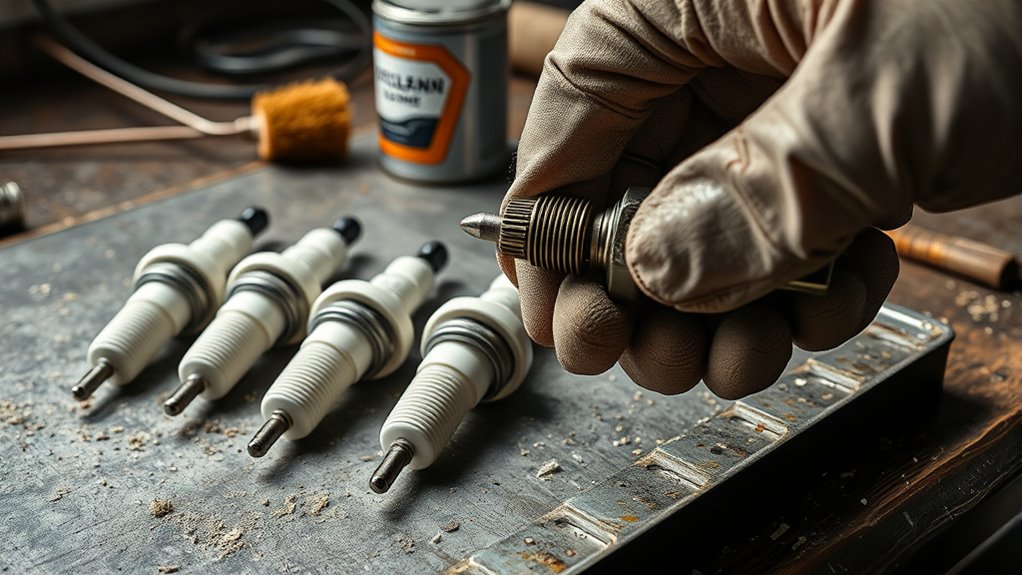
Inspect them for wear or buildup, then gently clean deposits with a wire brush or sandpaper.
Check and adjust the gap to manufacturer specs using a gap tool.
Finally, reinstall the plugs by hand and tighten properly.
Follow these steps, and you’ll keep your engine running smoothly while uncovering more tips for ideal spark plug care.
Key Takeaways
- Remove spark plugs carefully using a spark plug socket and clean area to avoid debris entering the engine.
- Inspect spark plugs for carbon buildup, fouling, or damage before cleaning.
- Use a wire brush or 220-grit sandpaper to gently remove light deposits from the spark plug electrodes and insulator.
- For tougher buildup, apply carburetor cleaner and use a small file or brush for effective cleaning.
- Replace spark plugs if heavily fouled, cracked, or damaged instead of attempting further cleaning.
Safety First: Preparing to Remove Spark Plugs
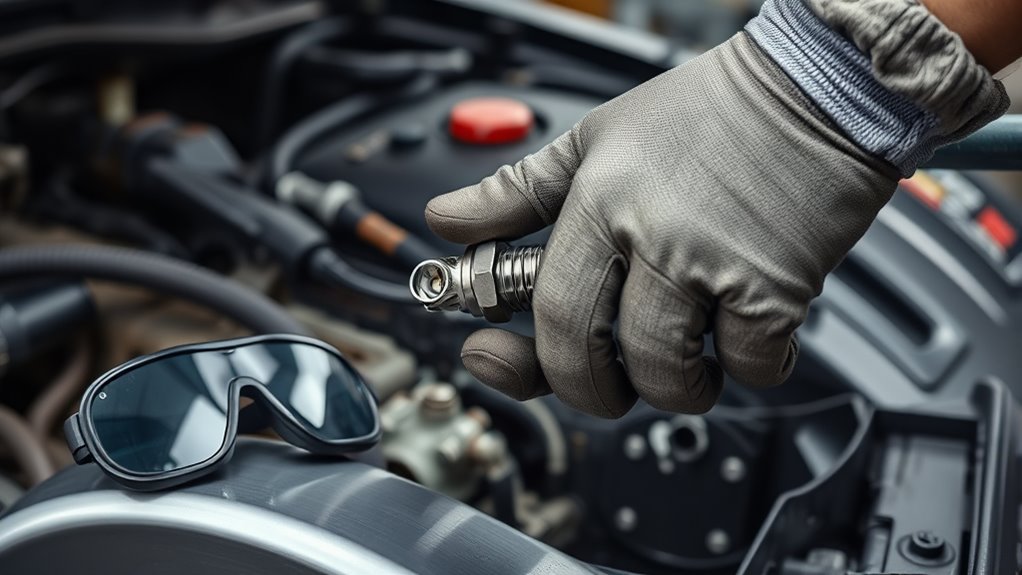
How do you guarantee your safety before removing spark plugs? First, make sure the engine has cooled completely to avoid burns or damage. Handling spark plugs when the engine is hot can be dangerous, so patience is key.
Next, disconnect the negative terminal of the battery. This essential safety step prevents electrical shocks during maintenance. Before you start unscrewing anything, clear away any debris or dirt around the spark plugs. This protects your engine from contaminants falling inside when you remove the plugs.
Always use the proper tools, like a spark plug socket and ratchet, to safely loosen and remove the plugs without damaging the ceramic insulator. Finally, label or note the position of each spark plug to guarantee they go back exactly where they belong.
Following these safety steps helps you avoid injury and keeps your engine running smoothly throughout the cleaning process.
Removing Spark Plugs Without Damage
When removing spark plugs, what steps can you take to prevent damage? First, clear any debris around the spark plug to stop dirt from falling into the combustion chamber. Use a spark plug socket with a rubber insert or foam liner to grip the plug firmly without harming it.
Turn your wrench slowly and steadily counter-clockwise, avoiding excessive force that could crack the porcelain insulator. Keep the spark plug straight as you unscrew it; applying lateral force risks breaking the ceramic.
Before removal, carefully disconnect ignition wires or coil boots by pulling on the boot, not the wire, to avoid damage. Taking these precautions guarantees you remove the spark plug safely and maintain its integrity, making the next cleaning step easier and more effective.
Inspecting and Cleaning Spark Plugs Effectively
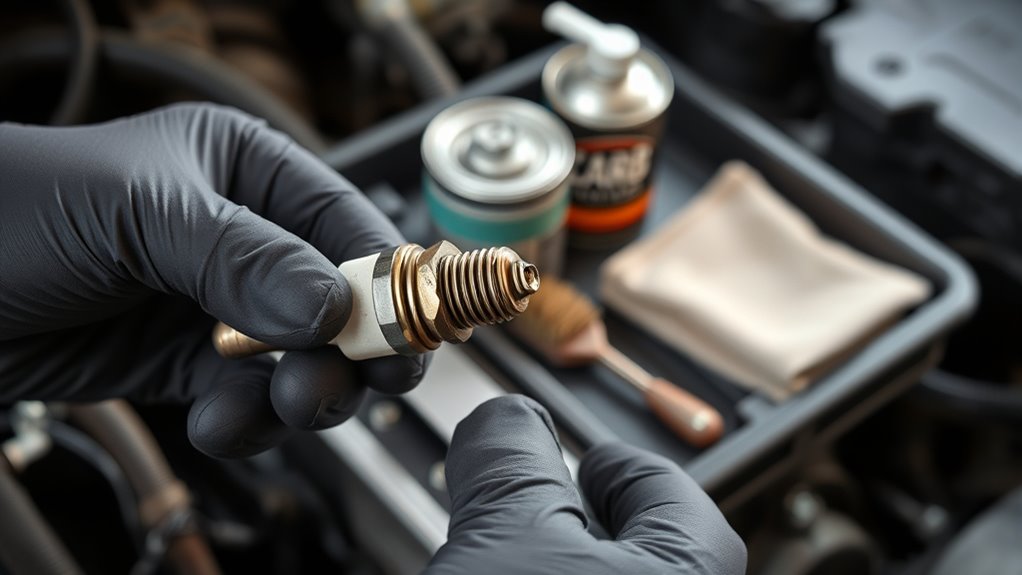
Before cleaning your spark plugs, carefully inspect each one for signs of wear, fouling, or damage like rust, carbon buildup, or cracked porcelain. Remove each spark plug and look closely for heavy deposits or cracks that could impair performance.
If the spark plug is only lightly soiled, use a wire brush or 220-grit sandpaper to gently clean off carbon buildup without damaging the ceramic insulator. For tougher deposits, a small file or carburetor cleaner can help. But if the spark plug shows heavy fouling or wear, it’s best to replace it instead of cleaning.
After cleaning, inspect the spark plug again to verify no cracks or excessive wear remain. Only reinstall plugs that are in good condition, helping your engine run smoothly and efficiently. Using a wire brush carefully ensures you remove dirt without harming the spark plug’s delicate parts, maintaining peak performance.
Checking and Adjusting Spark Plug Gaps to Specs
Although it may seem like a small detail, checking and adjusting the spark plug gap is essential for your engine’s performance. First, grab a spark plug gap tool to measure the distance between the center and ground electrode accurately.
Check your vehicle’s manual to find the recommended spark plug gap, usually between 0.028 and 0.060 inches. If the gap doesn’t match the specs, gently bend the ground electrode with the tool to adjust it.
Be careful not to use too much force, as this could damage the electrode. After adjusting, measure the gap again to confirm it’s correct. Ensuring the spark plug gap is set to the manufacturer’s specification promotes ideal ignition performance and helps prevent engine misfires.
Taking the time to properly check and adjust the spark plug gap will keep your engine running smoothly and efficiently.
Reinstalling Spark Plugs for Reliable Engine Performance
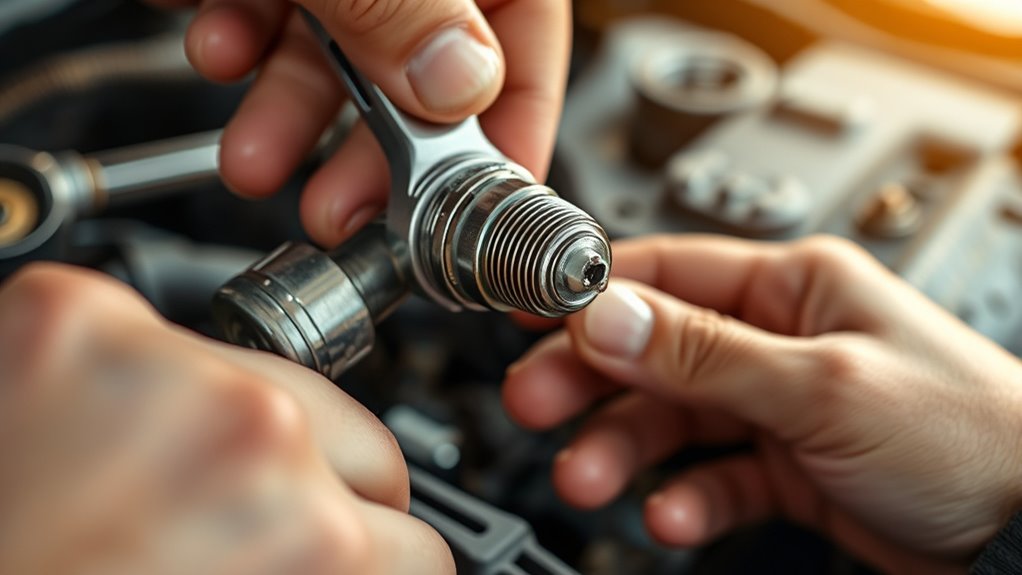
Since a properly installed spark plug guarantees reliable engine performance, you need to make certain the plug is dry, correctly gapped, and lightly coated with anti-seize before reinstalling it. Start by applying a small amount of anti-seize compound to the spark plug threads to prevent corrosion and make future removal easier.
Next, thread the spark plug into the cylinder head by hand to avoid cross-threading. Once hand-tight, use a torque wrench to tighten the spark plug to the manufacturer’s recommended torque specification, assuring a secure fit without over-tightening.
After that, reconnect the spark plug wire or ignition coil carefully, making sure it seats firmly to prevent misfires. Finally, start your engine and listen for smooth operation, confirming the spark plug is installed correctly and working as it should.
Following these steps guarantees your spark plug delivers reliable engine performance and helps maintain your vehicle’s efficiency and power.
Frequently Asked Questions
How Often Should Spark Plugs Be Cleaned or Replaced?
You should follow the maintenance frequency recommended by your vehicle’s manufacturer, usually around every 30,000 miles. However, if you notice engine misfires, rough idling, or decreased fuel efficiency, you’ll want to clean or replace your spark plugs sooner.
Regularly inspecting them during routine maintenance helps you stay on top of their condition. For severe fouling or damage, replace them immediately to keep your engine running smoothly.
Can Cleaning Spark Plugs Improve Fuel Efficiency?
Yes, cleaning spark plugs can improve fuel efficiency and offer noticeable fuel savings. When you remove carbon buildup and fouling, your engine fires more effectively, leading to better combustion.
This reduces wasted fuel and lowers engine strain. By keeping your spark plugs clean, you help your vehicle run smoother and more efficiently, potentially boosting fuel savings by up to 5-10%.
Regular maintenance guarantees you get the most out of every gallon.
What Tools Are Best for Cleaning Spark Plugs at Home?
For flawless, fast cleaning, you’ll want a wire brush or a dedicated spark plug cleaning brush. They’re fantastic for fighting carbon buildup without harming the porcelain. Fine-grit sandpaper works well for gentle scrubbing on lightly fouled plugs.
Small files help remove stubborn spots without shifting the spark gap. Don’t forget compressed air or ultrasonic machines to clear debris. Use carburetor or brake cleaner sprays for dissolving greasy grime.
These tools make cleaning methods easy and effective.
Are There Any Spark Plug Types That Don’T Require Cleaning?
Yes, you’ll find that platinum and iridium spark plugs don’t require cleaning thanks to their specialized maintenance design. These plugs resist fouling and buildup, letting you skip cleaning during their lifespan, which often exceeds 60,000 miles.
Instead of cleaning, you should focus on regular inspection and replace them only if they’re damaged or worn. This specialized maintenance approach saves you time and keeps your engine running smoothly.
How Do Weather Conditions Affect Spark Plug Performance?
Weather impact can seriously affect your spark plug performance. In humid or rainy conditions, moisture builds up, causing misfires or fouling.
Cold weather increases carbon deposits, making your plugs less efficient. Hot, dry weather speeds up carbon and oil fouling, hurting performance.
Sudden weather changes create condensation inside the engine, which can damage insulation and ignition. Keeping consistent weather conditions helps maintain stable combustion and prolongs your spark plugs’ lifespan.
Conclusion
Now that you’ve cleaned your spark plugs, your engine will purr like a content cat. By following these simple steps, you’ve given your vehicle the spark it needs to run smoothly and efficiently.
Remember, regular maintenance keeps your engine firing on all cylinders, saving you time and money down the road. So, keep those plugs clean and your ride will thank you with every turn of the key!