7 Easy Steps to Add Transmission Fluid to Your Jeep Cherokee
To add transmission fluid to your Jeep Cherokee, start by parking on a level surface and warming the engine.
Check the fluid level and condition with the dipstick, making sure it’s between the “Full” and “Add” marks.
Next, safely drain the old fluid and remove the pan to clean and inspect the filter.
Reinstall the pan with a new gasket, then add fluid gradually.
After that, warm the vehicle again and recheck the levels for accuracy.
Follow these steps closely to keep your transmission running smoothly and avoid costly repairs.
Key Takeaways
- Park the Jeep Cherokee on a level surface, engage the parking brake, and warm up the engine for an accurate fluid reading.
- Pull out the transmission dipstick, wipe it clean, reinsert fully, then check fluid level and condition (reddish and sweet-smelling).
- Place a drain pan under the transmission, loosen the drain plug or bolts, and drain the old fluid completely before removing the pan.
- Clean and inspect the transmission pan and filter, replace the filter if clogged, and reinstall the pan with a new gasket or sealant.
- Gradually add the recommended transmission fluid, start the engine to warm and circulate fluid, then recheck and adjust the fluid level using the dipstick.
Why and When to Add Transmission Fluid to Your Jeep Cherokee
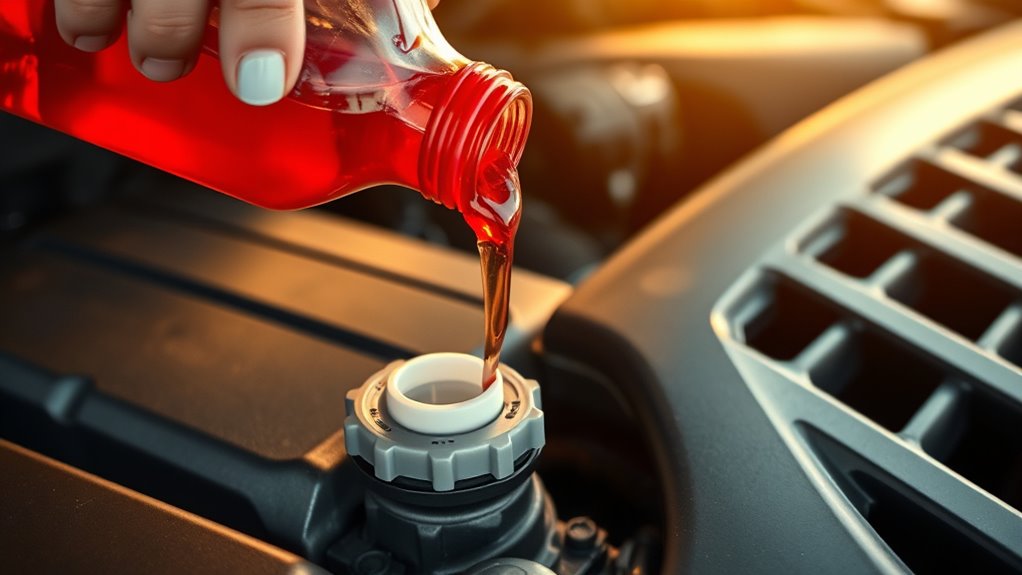
Why should you add transmission fluid to your Jeep Cherokee, and when is the right time? You need to maintain proper hydraulic pressure and guarantee smooth shifting by keeping your transmission fluid at the right level.
Over time, transmission fluid naturally decreases due to leaks or fluid breakdown, so it’s essential to check the fluid level regularly. If you notice gear slipping or the fluid level is below the recommended mark, it’s time to add transmission fluid.
Ignoring low fluid can lead to overheating, transmission failure, or costly repairs. By routinely checking the fluid level and topping it off when necessary, you keep your Jeep Cherokee’s transmission running at its best and extend its lifespan.
Don’t wait for serious issues to show up. Make checking and adding transmission fluid a regular part of your vehicle maintenance to avoid unexpected breakdowns and ensure smooth performance on every drive.
Get Your Jeep Ready and Gather Tools
Before you start, make sure your Jeep Cherokee is parked on a level surface and that the engine is warmed up. It’s important to have everything ready before diving in.
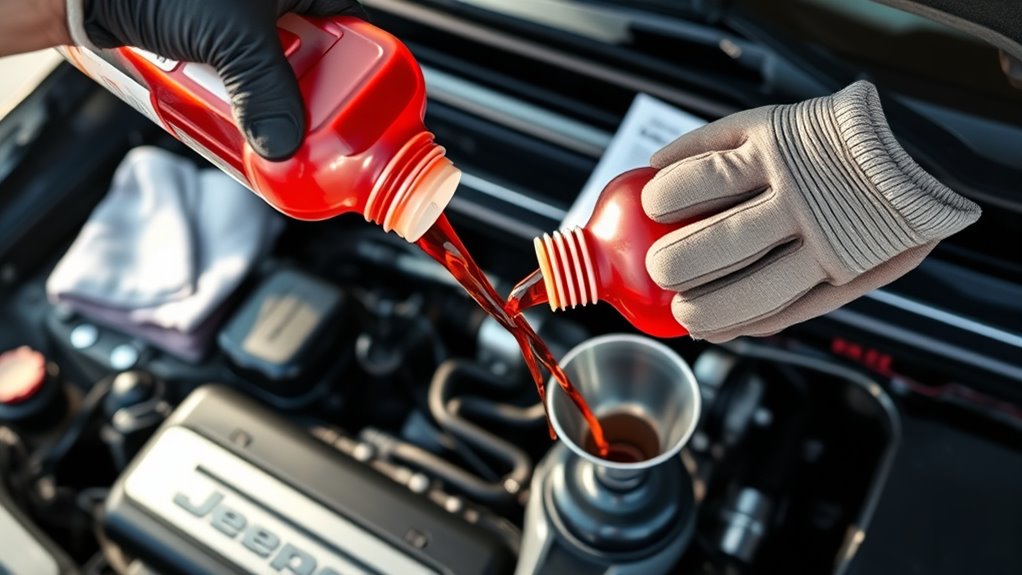
Next, gather the right tools. You’ll need a clean funnel, the correct transmission fluid, and a dipstick to check the levels.
Oh, and don’t forget to wear gloves and safety glasses to keep yourself protected while you work. Safety first!
Vehicle Preparation Steps
Although adding transmission fluid is straightforward, you need to prepare your Jeep Cherokee properly to guarantee safety and accuracy. Start by parking your vehicle on a level surface to get an accurate reading when checking the transmission fluid.
Make sure the engine is warmed up, as fluid expands with heat and this affects the level. Engage the parking brake securely to prevent any movement during the process.
Next, locate the transmission dipstick, usually marked with a bright handle near the engine bay. This is essential for monitoring the fluid level correctly.
Put on gloves and safety glasses to protect yourself from hot fluid splashes. Following these vehicle preparation steps ensures you work safely and maintain your Jeep Cherokee’s transmission system effectively.
Necessary Tools Checklist
To add transmission fluid to your Jeep Cherokee efficiently, gather five essential tools first. These tools will make the process smoother and help you avoid messes.
You’ll need a clean funnel, the correct transmission fluid specified in your owner’s manual, and a compatible dipstick with a bright handle for easy identification. Also, have a microfiber cloth to wipe the dipstick and some paper towels for any spills. If necessary, a transmission fluid pump will help add fluid precisely.
| Tool | Purpose |
|---|---|
| Clean Funnel | Pouring transmission fluid cleanly |
| Correct Transmission Fluid | Ensures proper vehicle function |
| Compatible Dipstick | Check fluid level accurately |
| Microfiber Cloth | Wiping dipstick and spills |
Safety Precautions Overview
Once you’ve gathered the tools needed to add transmission fluid, focus on preparing your Jeep Cherokee safely. First, park it on a level surface and engage the parking brake to guarantee stability. Confirm the engine is warmed to operating temperature for an accurate fluid level reading.
Wear safety glasses and gloves to protect yourself from hot fluid and skin contact with transmission fluid. Use a funnel to avoid spills, and keep clean rags handy to wipe any drips immediately. Double-check that your vehicle is securely supported; don’t rely solely on a jack to prevent accidents during the process.
Taking these safety precautions ensures your work with the tools goes smoothly and keeps you safe while maintaining the proper transmission fluid level.
Check Transmission Fluid Level and Condition With the Dipstick
First, warm up your Jeep and park it on a level surface. Once it’s steady, find and pull out the transmission dipstick to check the fluid level. You’ll want to see that the fluid sits between the Full and Add marks.
Also, take a moment to look at the fluid’s color and smell. It should be a clear reddish color with a slight sweet scent. This quick check is an easy way to tell if your transmission fluid needs topping off or maybe even a full replacement.
Fluid Level Check
How can you be sure your Jeep Cherokee’s transmission fluid is at the right level and in good condition? First, make sure the engine is warmed up and the vehicle is on a level surface.
With the engine running and in park or neutral, pull out the transmission fluid dipstick, wipe it clean, then fully reinsert it. Pull it out again to check the fluid levels.
The fluid should sit between the “Full” and “Add” marks when at operating temperature. Always recheck the fluid level after adding any fluid to maintain optimal performance.
Fluid Color Inspection
Why does the color of your Jeep Cherokee’s transmission fluid matter? Fluid color inspection tells you a lot about its condition. When you check the fluid with the dipstick, make sure the engine’s warm and the vehicle’s on a level surface.
The transmission fluid level should be between the “Full” and “Add” marks. Healthy fluid is reddish with a slightly sweet smell, showing proper lubrication. Dark, cloudy, or burnt-smelling fluid means it’s time for a change to avoid transmission damage.
Regularly check the fluid to catch problems early.
| Fluid Color | Smell | Meaning |
|---|---|---|
| Reddish | Slightly sweet | Healthy, good lubrication |
| Dark brown | Burnt | Needs replacement |
| Cloudy | Foul | Contaminated or old |
| Clear | None | Low fluid level |
| Black | Strong burnt | Severe damage likely |
Drain Old Transmission Fluid Safely and Remove the Pan
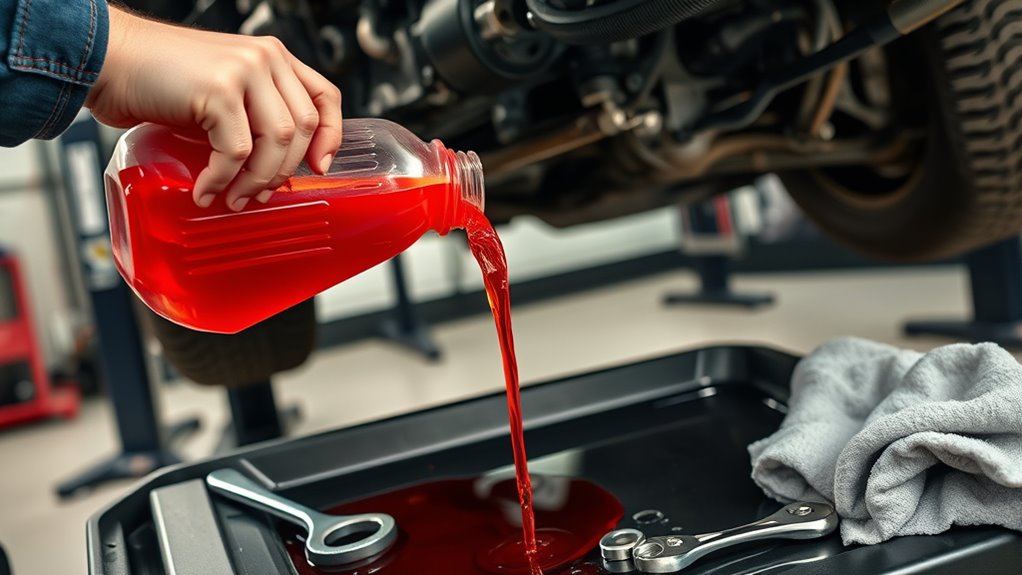
Before removing the transmission pan, position a drain pan underneath and loosen the bolts to let the old fluid drain out safely. If your Jeep Cherokee’s transmission pan has a drain plug, start by removing it to allow the fluid drain to begin smoothly.
If there’s no drain plug, carefully pry the transmission pan away from the case using a suitable tool. Tilt the pan downward to ensure all the old transmission fluid drains out completely. Once the fluid drain is finished, remove the transmission pan entirely to access the filter and gasket.
Make sure to handle the pan carefully to avoid spilling any remaining fluid. This step prepares you for cleaning and inspecting the pan and filter, which comes next. Draining the old fluid properly and removing the pan will help maintain your Jeep Cherokee’s transmission performance and prevent contamination during the refill process.
Clean and Inspect the Transmission Pan and Filter
Once you’ve removed the transmission pan, take the time to clean it thoroughly and inspect both the pan and filter for any signs of damage or debris. Carefully remove any old gasket material or RTV sealant from the transmission pan’s mating surfaces using a gasket scraper or razor blade. This guarantees a proper seal when reassembling.
Spray the transmission pan with aerosol cleaner to remove grime and check for cracks, warping, or metal shavings that could indicate internal issues. Next, inspect the transmission filter for clogs, damage, or excessive debris. If you notice any problems, replace the filter to maintain excellent transmission performance.
Make sure all gasket surfaces are smooth and completely free of residue before you move on. Taking these steps helps prevent leaks and extends the life of your transmission by keeping fluid clean and flowing properly.
Reinstall the Pan and Add Transmission Fluid Gradually
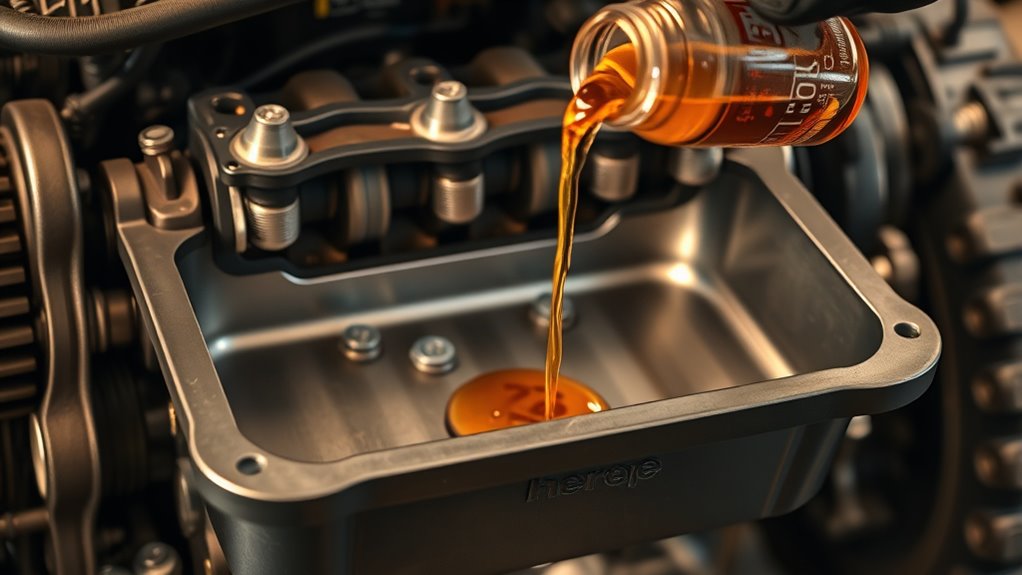
After ensuring the transmission pan and filter are clean and properly prepared, you’ll need to carefully position the pan back onto the transmission. Make sure the gasket or RTV sealant is correctly aligned to prevent leaks. Start threading the bolts by hand in a crisscross pattern; this helps seat the transmission pan evenly and avoids warping the seal.
Gradually tighten the bolts to the manufacturer’s specified torque, usually around 8 Nm (71 in-lbs), working from the center outward. Next, fill the transmission with the recommended transmission fluid, adding small amounts gradually. Check the dipstick frequently to avoid overfilling.
This careful approach ensures you fill the transmission to the proper level without waste or damage. Once you’ve added the fluid, you’re ready to proceed with warming up the vehicle and rechecking fluid levels to confirm everything is perfect.
Warm Up the Vehicle and Recheck Transmission Fluid Levels
Since transmission fluid expands as it warms, you’ll want to start your Jeep Cherokee and let it idle in Park or Neutral until it reaches normal operating temperature. This guarantees the transmission fluid circulates thoroughly, giving you an accurate level reading.
Use the dipstick marked with a Full Hot indicator to check the fluid once the engine is warm. After adding fluid, always recheck the level since it can fluctuate with temperature changes.
| Step | Action | Purpose |
|---|---|---|
| 1 | Start engine, idle in Park/Neutral | Warm up transmission fluid |
| 2 | Let vehicle reach operating temp | Ensure fluid expands and circulates |
| 3 | Pull dipstick, check fluid level | Obtain accurate reading |
| 4 | Add fluid gradually if low | Avoid overfilling |
| 5 | Recheck fluid level after warming | Confirm correct transmission fluid level |
Warming up and rechecking keeps your transmission fluid at the right level for peak performance.
Frequently Asked Questions
Can I Use Any Type of Transmission Fluid in My Jeep Cherokee?
You can’t just use any transmission fluid in your Jeep Cherokee because transmission fluid compatibility is essential. Using the wrong type can cause shifting problems and damage.
Synthetic fluids often offer better performance and temperature stability, but only if they meet your Jeep’s specs. Also, pay attention to fluid color significance. Different colors indicate different formulations.
Always stick to the manufacturer-recommended fluid, like Mopar ATF+4 or an approved equivalent.
How Often Should I Change My Jeep Cherokee’s Transmission Filter?
You should change your Jeep Cherokee’s transmission filter every 30,000 to 60,000 miles to keep transmission maintenance on point. If you often tow or drive in stop-and-go traffic, consider replacing it more frequently.
Always check fluid compatibility when adding transmission fluid, and watch for leaks that could signal filter or system issues. Regular filter changes help prevent debris buildup, ensuring smooth shifting and prolonging your transmission’s life.
What Are the Signs of a Transmission Fluid Leak?
You’ll notice signs of a transmission fluid leak like reddish or brownish puddles under your Jeep, a burning smell near the transmission, or delayed shifting. These fluid leak causes often stem from damaged seals or loose bolts.
Leak detection methods include checking for visible cracks and using the dipstick to monitor fluid levels. For repair options, you can tighten bolts, replace seals, or seek professional help to prevent further damage.
Is It Necessary to Reset the Transmission Computer After Adding Fluid?
You don’t usually need a transmission computer reset after adding fluid. The system automatically handles fluid level calibration as you drive, so it adapts without manual input.
However, if you’ve done a full fluid change or notice shifting issues, running transmission system diagnostics and performing a reset might help restore peak performance. Always check your owner’s manual to see if your specific model requires a transmission computer reset after fluid adjustments.
Can Adding Too Much Transmission Fluid Harm My Jeep Cherokee?
Yes, adding too much transmission fluid can harm your Jeep Cherokee. Fluid overfill causes increased pressure inside the transmission, which may lead to seal leaks and transmission damage.
This excess fluid can also create foam, resulting in erratic shifting and slipping. Overfilling impairs proper fluid circulation, leading to overheating and reduced vehicle performance.
To keep your Jeep running smoothly, always maintain the fluid level between the Full and Add marks on the dipstick.
Conclusion
Now that you’ve added transmission fluid to your Jeep Cherokee, you’ve taken a vital step in extending its lifespan. Vehicles with proper fluid maintenance can last up to 150,000 miles longer.
Regular checks prevent costly repairs and keep your transmission running smoothly. Remember, consistent care not only saves money but also guarantees your Jeep performs at its best for years to come.
Keep an eye on fluid levels, and your ride will thank you!