
How Tight Should Spark Plugs Be?
You should tighten your spark plugs using a calibrated torque wrench to the manufacturer’s specifications, usually between 7 and 30 lb-ft depending on your engine and plug type.
For tapered plugs, turn finger tight plus about 1/16 to 1/8 turn.
For gasket seats, finger tight plus ¼ to ⅝ inch to compress the gasket.
Over- or under-tightening risks engine damage, leaks, or misfires.
If you want to avoid common mistakes and understand exact techniques, there’s more to explore.
Key Takeaways
- Tighten spark plugs using a calibrated torque wrench to manufacturer’s specified torque, typically between 7-15 ft-lbs for aluminum heads and 15-30 lb-ft for cast iron.
- For tapered seat plugs, tighten finger tight, then turn an additional 1/16 to 1/8 turn; for gasket seat plugs, turn ¼ to ⅝ inch after finger tight.
- Always tighten spark plugs on a cold engine to avoid thermal expansion affecting torque accuracy.
- Reduce torque by about 20% when using anti-seize compound, or follow manufacturer recommendations to prevent over-tightening.
- Avoid under-tightening to prevent compression leaks and misfires, and over-tightening to prevent thread damage and spark plug cracks.
Why Correct Spark Plug Torque Is Critical
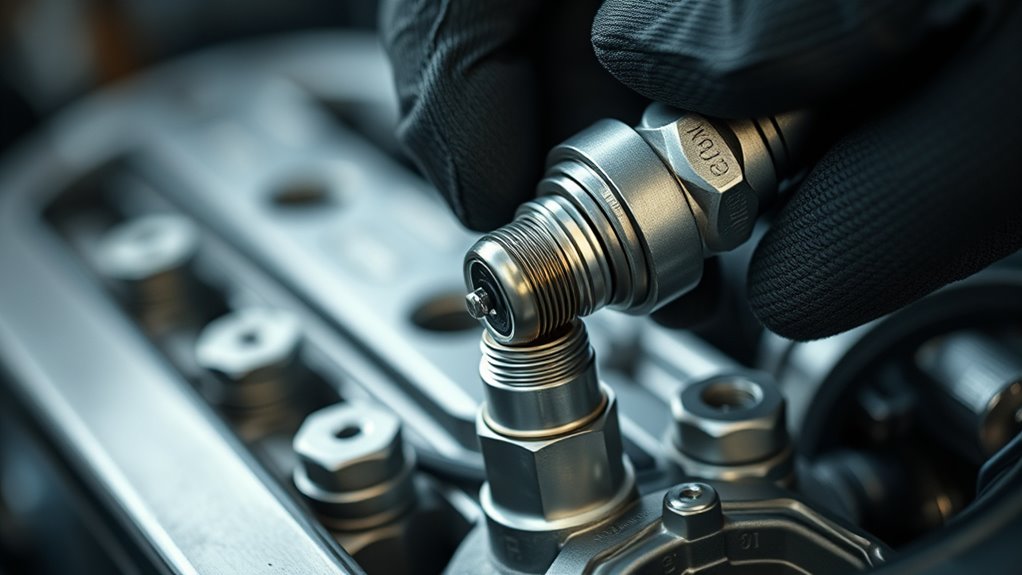
When you tighten spark plugs to the correct torque, you guarantee they seat securely. This prevents leaks and misfires that can damage your engine. Proper torque ensures the spark plug seals perfectly with the combustion chamber, maintaining ideal compression and preventing gas leaks.
You also promote effective heat transfer, which keeps the spark plug from overheating and prematurely wearing out. If you apply too much or too little torque, you risk damaging the threads in the cylinder head, leading to costly repairs.
Using the manufacturer’s specified torque values is vital because it accounts for the type of crush or gasket washer involved. This ensures a tight seal without over-compressing. To get it right every time, you should use a torque wrench.
This tool helps you apply the precise torque needed, avoiding guesswork and reducing the risk of applying excessive force that can strip threads or crack the plug. Correct torque isn’t just a recommendation; it’s necessary for engine reliability.
What Happens When Spark Plugs Are Too Loose
Applying too little torque to your spark plugs can cause several problems that affect engine performance and longevity. When spark plugs aren’t tight enough, they may not seal properly, leading to compression leaks and engine misfires.
This incomplete combustion reduces your engine’s efficiency and increases emissions. Loose spark plugs also cause more vibrations, which can damage the threads in the cylinder head over time.
Moreover, an improperly seated spark plug hinders heat transfer, causing the insulator to overheat and potentially trigger pre-ignition. If your plugs are too loose, they risk backing out during engine operation, damaging both the spark plug and surrounding components.
To avoid these issues, always ensure your spark plugs are tightened to the manufacturer’s recommended torque. Keeping them tight enough prevents leaks, maintains proper combustion, and protects your engine from unnecessary wear and damage.
Risks of Over-Torquing Spark Plugs
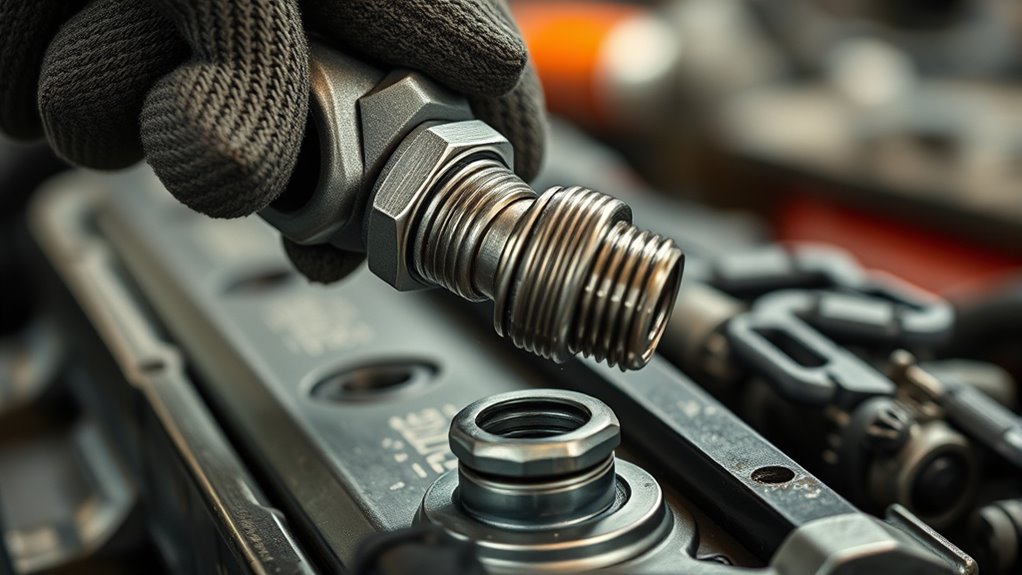
Excessive torque on spark plugs can cause serious damage to your engine components. When you over-torque spark plugs, you risk deforming the housing and stretching or breaking the threads. This can lead to costly repairs.
Over-torquing spark plugs risks housing damage and broken threads, leading to expensive engine repairs.
Over-tightening also puts mechanical stress on the insulator, which may cause pre-ignition issues and electrode failure. Furthermore, applying too much torque can damage the gasket, resulting in leaks and poor sealing.
Here are some risks you face with over-torquing:
- Deformed housing and damaged threads, complicating future plug removal
- Compromised gasket integrity, causing leaks
- Insulator deformation leading to pre-ignition and electrode wear
- Overheating spark plug causing insulator cracks and engine misfires
Avoid over-torquing to protect your spark plugs and engine. Proper torque guarantees longevity and peak performance without risking unnecessary damage.
Spark Plug Torque Differences: Tapered vs. Gasket Seats
When you’re installing tapered seat spark plugs, you’ll generally just turn them about 1/16 to 1/8 of a turn after finger-tightening. It’s pretty straightforward. On the other hand, gasket seat plugs need a bit more attention—they require a precise torque, usually around 3/8 to 5/8 of a turn, to compress the gasket properly. Following these turn guidelines is key because it helps you avoid leaks or damage during installation. So, keeping these differences in mind makes the whole process a lot easier and safer.
Tapered Seat Torque
Although tapered seat spark plugs don’t use gaskets, you still need to tighten them carefully to guarantee a proper seal. Tapered seat torque involves first installing the plug finger tight, then using a torque wrench to reach the manufacturer’s specified torque, followed by an additional 1/16 turn. This precise tightening ensures the plug seats correctly, preventing leaks and promoting efficient heat transfer.
Keep in mind:
- Always start finger tight to avoid cross-threading
- Apply the specified torque setting from the manual
- Add the extra 1/16 turn for secure seating
- Avoid over-tightening to prevent seat deformation and cylinder head damage
Mastering tapered seat torque helps maintain engine performance and prevents costly repairs.
Gasket Seat Tightening
Because gasket seat spark plugs rely on compressing a gasket to seal properly, you’ll need to tighten them differently than tapered seat plugs. For gasket seat tightening, after finger tightening, turn the spark plug about ¼ to ⅝ of a full rotation to compress the gasket enough for a gas-tight seal. This prevents leaks and maintains engine compression.
Be careful not to over-tighten, as that can deform the gasket or damage the threads, causing sealing problems or thread failure. On the other hand, under-tightening may lead to leaks and poor engine performance.
Unlike tapered seat plugs, which only need a slight 1/16 turn, gasket seat tightening requires more precise torque to guarantee proper sealing and reliability.
Installation Turn Guidelines
Properly tightening spark plugs depends on recognizing the differences between tapered and gasket seat types during installation. When installing spark plugs, following the correct turn guidelines guarantees a proper seal and prevents damage.
Keep these points in mind when installing spark plugs:
Tapered seat plugs usually need about a 1/16 turn after finger tightening before final torque. Gasket seat plugs require a 1/4 turn after finger tightening if the gasket is new or the plug is reinstalled. For reused gaskets, apply only a 1/4 turn to avoid over-tightening.
Always start with finger tightening, then apply the specified turns for correct torque.
How to Tighten Spark Plugs Correctly
You’ll want to tighten spark plugs using the proper torque techniques to avoid damage or poor performance. Always use a torque wrench for accuracy. Also, keep in mind whether your plugs need anti-seize or not, since that can affect how tight you should go. Following these steps will help you get a secure fit without overdoing it.
Proper Torque Techniques
When tightening spark plugs, always follow the manufacturer’s specified torque, usually between 7 and 15 ft-lbs. Using the correct torque specs guarantees a secure fit without damaging the plug or engine.
To tighten spark plugs properly:
- Use a calibrated torque wrench for accuracy.
- Tighten spark plugs on a cold engine to avoid misreading torque due to thermal expansion.
- For tapered seat plugs, tighten finger tight plus 1/16 turn; for gasket seat plugs, finger tight plus 1/4 turn or as specified.
- Avoid guessing torque. Over-tightening can strip threads, and under-tightening can cause poor performance.
Following these proper torque techniques helps you maintain engine efficiency and spark plug longevity. Always stick to the torque specs for the best results.
Anti-Seize Considerations
Following the right torque specs is key, but what you apply to the threads can change how tight you need to go. When using anti-seize on spark plug threads, it reduces friction, which means you risk over-tightening if you don’t adjust your torque.
Most manufacturers recommend sticking to the same torque as dry threads, but some experts suggest lowering it about 20% when anti-seize is applied. Applying a thin, even coat with a brush helps avoid over-application, which can easily lead to excessive tightening.
Be especially cautious with aluminum heads, as improper torque combined with anti-seize can strip threads. Always follow your vehicle manufacturer’s guidelines on anti-seize use and torque adjustments to ensure proper sealing and prevent damage.
Using a Torque Wrench to Tighten Spark Plugs
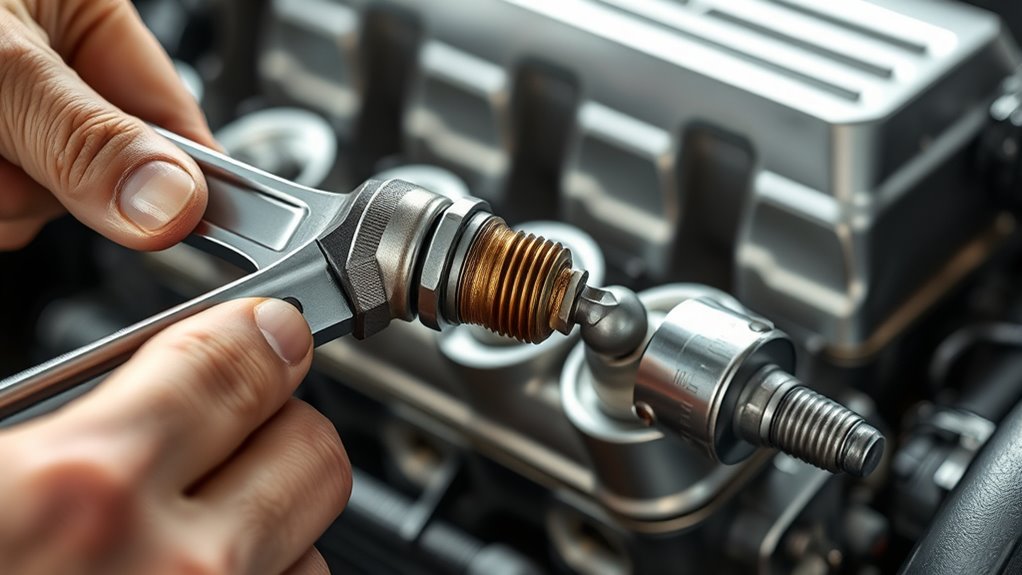
Although it might seem straightforward, using a torque wrench to tighten spark plugs is essential for applying the exact manufacturer-recommended torque, usually between 15 and 30 lb-ft. This precision helps avoid issues like thread damage and gasket failure. Before you start, make sure your torque wrench is properly calibrated to guarantee accuracy.
When tightening spark plugs, remember these key points:
- Always tighten spark plugs on a cold engine to prevent thermal expansion affecting torque.
- For tapered seat plugs, tighten finger tight, then apply a 1/16 turn with the torque wrench.
- For gasket seat plugs, tighten finger tight, then turn ¼ to ⅝ inch using the torque wrench.
- Using the torque wrench correctly ensures proper sealing and engine performance.
Should You Apply Anti-Seize to Spark Plug Threads?
If you want to make future spark plug removal easier and protect aluminum heads from thread damage, applying a thin layer of anti-seize can help. Anti-seize reduces friction between the spark plug threads and the cylinder head, preventing galling and seizing during installation or removal.
However, it’s essential to use only a light coating, as too much anti-seize can cause over-tightening and damage the threads. Keep in mind that anti-seize changes the torque needed to properly seat the spark plug because it lowers friction, so you’ll need to adjust your torque wrench settings accordingly.
Note that some spark plug manufacturers advise against using anti-seize, especially if the plugs have plated or coated threads. They say it’s often unnecessary and could affect performance. Always check your vehicle or spark plug manufacturer’s recommendations before applying anti-seize to guarantee proper installation and avoid any issues down the road.
Adjusting Spark Plug Torque for Aluminum vs. Cast Iron Heads
Because aluminum heads are softer than cast iron, you need to be extra careful when tightening spark plugs to avoid stripping the threads. Aluminum heads typically require a lower torque spec, usually around 7-15 ft-lbs, to prevent damage. Over-tightening can deform or crack the threads, leading to costly repairs.
Aluminum heads need gentler spark plug torque to avoid thread stripping and costly damage.
Cast iron heads, being more durable, allow for slightly higher torque values but still must follow the manufacturer’s torque spec.
To adjust torque correctly for each head type, keep these points in mind:
- Always use a torque wrench for precise tightening.
- Follow the manufacturer’s torque spec specific to your engine head material.
- Avoid over-tightening aluminum heads to protect the softer threads.
- Guarantee proper sealing without risking thread damage on cast iron heads.
How to Prepare Spark Plug Threads Before Installation
Before you install your spark plugs, it’s a good idea to clean the threads thoroughly. You can use a thread chaser or a wire brush to get rid of any dirt or debris that might be stuck there.
If your vehicle’s manufacturer suggests it, go ahead and apply a light coating of anti-seize compound. This helps prevent galling and makes it easier to remove the spark plugs down the road.
Taking these simple steps ensures the threads engage properly and that your spark plugs fit securely.
Thread Cleaning Techniques
When preparing spark plug threads for installation, you’ll want to carefully clean away dirt, carbon deposits, and old gasket material using a thread chaser or tap. Proper thread cleaning techniques guarantee the threads are clear of debris, preventing cross-threading and allowing you to achieve the correct torque and seal.
Remember to avoid aggressive tools or excessive force, as they can damage the aluminum or steel threads.
Keep these tips in mind:
- Use a thread chaser or tap gently to clean threads.
- Inspect threads for cracks or deformation before installing.
- Guarantee all debris is removed for a proper fit.
- Handle threads carefully to avoid damage.
Following these thread cleaning techniques prepares your spark plug threads for smooth installation and reliable performance.
Anti-Seize Application Guidelines
Although cleaning the threads is essential, applying a thin, even coat of anti-seize compound to your spark plug threads will prevent galling and make future removal much easier. Use a small brush or a dedicated applicator to spread the anti-seize evenly, avoiding excess that can skew torque readings.
Make certain the anti-seize you choose is compatible with aluminum and other materials to prevent corrosion or adverse reactions. Don’t over-apply; a light coat is enough to protect the threads without causing over-tightening or damage.
Always check your vehicle manufacturer’s recommendations regarding anti-seize use, especially if your engine operates under high temperatures or vibrations. Proper anti-seize application ensures smooth installation and easier spark plug maintenance down the road.
How to Retorque or Reinstall Spark Plugs Safely
Because proper torque guarantees engine performance and prevents damage, you’ll want to start by finger-tightening the spark plug to engage the threads correctly. Next, use a torque wrench set to the manufacturer’s specified value, usually between 15-30 lb-ft, to avoid over- or under-tightening.
Keep these tips in mind when retorquing or reinstalling spark plugs safely:
- Clean the threads thoroughly and apply anti-seize if recommended, but adjust your torque wrench setting accordingly.
- For tapered seat plugs, finger-tighten, then turn 1/16 to 1/8 of a turn. For gasket seat plugs, turn ¼ to ⅝ of a turn after finger-tightening.
- Always tighten spark plugs on a cold engine to prevent damage from thermal expansion.
- Double-check torque specs in your vehicle’s manual and use a calibrated torque wrench for accuracy.
Following these steps assures spark plugs sit securely without risking thread damage or engine issues.
How to Identify Damage From Incorrect Spark Plug Torque
Properly tightening spark plugs helps prevent damage, but incorrect torque can still cause serious issues you need to recognize. Over-tightening often deforms the spark plug housing and leads to visible thread damage. This weakens the connection and risks thread breakage during removal.
Cracks in the insulator usually point to excessive torque or faulty installation, so don’t overlook them. Under-torquing or over-torquing can also cause gasket damage or leakage, which affects engine performance.
When inspecting your spark plugs, check for worn electrodes and cracked insulators. These are early signs that torque wasn’t applied correctly. If you notice thread damage or breakage, it’s a clear indication the plug was tightened beyond the recommended specifications.
Regularly examining these factors helps you catch problems early, ensuring your engine runs smoothly and preventing costly repairs down the line. Stay vigilant about thread damage to maintain best spark plug performance.
Common Spark Plug Torque Mistakes to Avoid
When you tighten spark plugs incorrectly, you risk stripping threads, causing misfires, or damaging engine components. Avoid these common torque mistakes to keep your engine running smoothly.
First, don’t over-tighten spark plugs, especially in aluminum heads, as this can strip threads and lead to costly repairs. Second, under-tightening causes poor sealing, which can trigger misfires and harm your engine due to insufficient heat transfer.
Avoid over-tightening or under-tightening spark plugs to prevent thread damage and engine misfires.
Third, avoid applying anti-seize without adjusting torque settings; it can cause over-tightening and thread damage. Fourth, never reuse old gaskets or skip proper torque procedures, as leaks and compromised engine performance may result.
Using a torque wrench calibrated to the manufacturer’s specs is crucial. It guarantees consistent, accurate tightening, preventing these issues and extending spark plug and engine life.
Frequently Asked Questions
How Often Should Spark Plugs Be Replaced for Optimal Engine Performance?
You should replace your spark plugs every 30,000 to 50,000 miles for peak engine performance, following your vehicle’s maintenance schedule. If you have iridium or platinum plugs, they can last up to 60,000 to 100,000 miles.
Keep an eye on signs like misfires or rough idling and inspect them regularly during routine maintenance. Sticking to the recommended intervals helps you avoid engine problems and keeps your ride running smoothly.
What Tools Besides a Torque Wrench Are Needed for Spark Plug Installation?
You’ll need more tools than a wizard’s entire toolbox for spark plug installation! Besides a torque wrench, grab a plug socket or spark plug wrench for tight spaces, and a gap gauge to check electrode spacing.
Use a thread chaser or wire brush to clean threads, ensuring tool compatibility and proper seating. A small ratchet or socket wrench helps control tightening, and applying anti-seize compound can make future removal a breeze.
Can Spark Plug Gap Size Affect Engine Efficiency and Power?
Yes, spark plug gap size directly affects engine efficiency and power. If your gap is too wide, the spark struggles to jump, causing misfires and poor combustion. Too small, and the spark weakens, reducing power output.
You also need to take into account gasket clearance to make sure the plug seats properly without damaging components. Keeping the gap within manufacturer specs helps your engine run smoothly, maximizing fuel economy and performance.
Are There Specific Spark Plugs Recommended for High-Performance Vehicles?
Yes, you should use specific spark plugs designed for high-performance vehicles to guarantee spark plug compatibility. Brands like DENSO offer Iridium Power and Iridium TT plugs that provide better durability and ignition performance.
These plugs have smaller center electrodes and handle higher heat ranges, matching aggressive engine tuning. Always check your vehicle’s manufacturer specs to pick the right plug and gap size, so you maintain peak efficiency and power.
How Does Engine Type Influence the Choice of Spark Plug Heat Range?
Engine type shapes your spark plug’s heat range like a tailor fitting a suit. It’s all about engine compatibility. If you drive a turbocharged or high-performance engine, you’ll want hotter plugs for better heat dissipation.
For cooler-running engines, colder plugs prevent overheating. Aluminum heads dissipate heat faster than cast iron, so you’ll need plugs that match that difference. Always choose plugs designed to sync perfectly with your engine’s specs.
Conclusion
Getting your spark plug torque right isn’t just a detail; it’s the heartbeat of your engine’s performance. If you’re too loose, you risk misfires. Too tight, and you might damage threads or break plugs.
Think of it like Goldilocks: not too tight, not too loose, but just right. By following proper techniques, you’ll keep your engine humming smoothly and avoid costly mistakes.
So, tighten with care. It’s the spark that keeps you moving forward.