How Many Spark Plugs in a V6 Engine? Clear Answers and Maintenance Tips
How many spark plugs in a V6 engine? A V6 engine has six spark plugs, one per cylinder. This setup ensures each cylinder ignites the fuel-air mixture efficiently for smooth engine performance. Checking the spark plug count is an easy first step when planning maintenance or repairs on your V6 engine.
Key Takeaways
- Replace spark plugs in your V6 every 30,000 to 100,000 miles, depending on the plug type and vehicle recommendations.
- Most V6 engines use one spark plug per cylinder, totaling six plugs in standard configurations.
- Identify your V6 spark plug arrangement by consulting the vehicle’s manual or inspecting the engine block.
- Use the correct socket size and an extension when removing spark plugs to avoid damaging threads in the engine head.
- Common V6 spark plug replacement takes about one to two hours, depending on engine accessibility and your experience level.
- OEM spark plugs with iridium or platinum tips usually last longer but cost more during replacement.
How Many Spark Plugs Are in a V6 Engine?

Most V6 engines have six spark plugs. Each cylinder in the engine requires one spark plug to ignite the air-fuel mixture, so the number of spark plugs equals the number of cylinders. Since a V6 engine consists of six cylinders arranged in a V shape, it naturally needs six spark plugs, one per cylinder. This ensures each cylinder fires properly, which is essential for smooth engine performance and power output.
The reason why the cylinder count matches the spark plug count lies in how internal combustion engines work. Each cylinder completes its combustion cycle independently and requires a spark to ignite the fuel-air mixture at the correct moment. Without a spark plug in each cylinder, that cylinder would not produce power, reducing the engine’s efficiency and performance. For a six-cylinder engine, six sparks are needed, one per cylinder, to maintain consistent combustion throughout the engine’s cycle. Here’s a simple comparison between engine cylinder count and the number of spark plugs:
| Engine Type | Cylinder Count | Spark Plug Count |
|---|---|---|
| Inline-4 Cylinder Engine | 4 | 4 |
| V6 Engine | 6 | 6 |
| V8 Engine | 8 | 8 |
| V12 Engine | 12 | 12 |
V6 engines, by definition, have six cylinders unless specified as a different configuration, but that is rare. Each cylinder’s spark plug acts as the ignition point for combustion in that chamber. This design lets the engine run efficiently by ensuring each cylinder fires in sequence and at the right time. Any spark plug failure in a V6 engine causes one cylinder to misfire, which noticeably affects engine power and smoothness.
Even though the standard is one spark plug per cylinder, there are some exceptions in specialized engines. For example, some engines use twin spark plug setups to promote more efficient combustion, but these designs still link the number of spark plugs to the number of cylinders, usually doubling the spark plugs per cylinder rather than changing the fundamental relationship.
How to Identify Spark Plug Count in Your V6 Vehicle
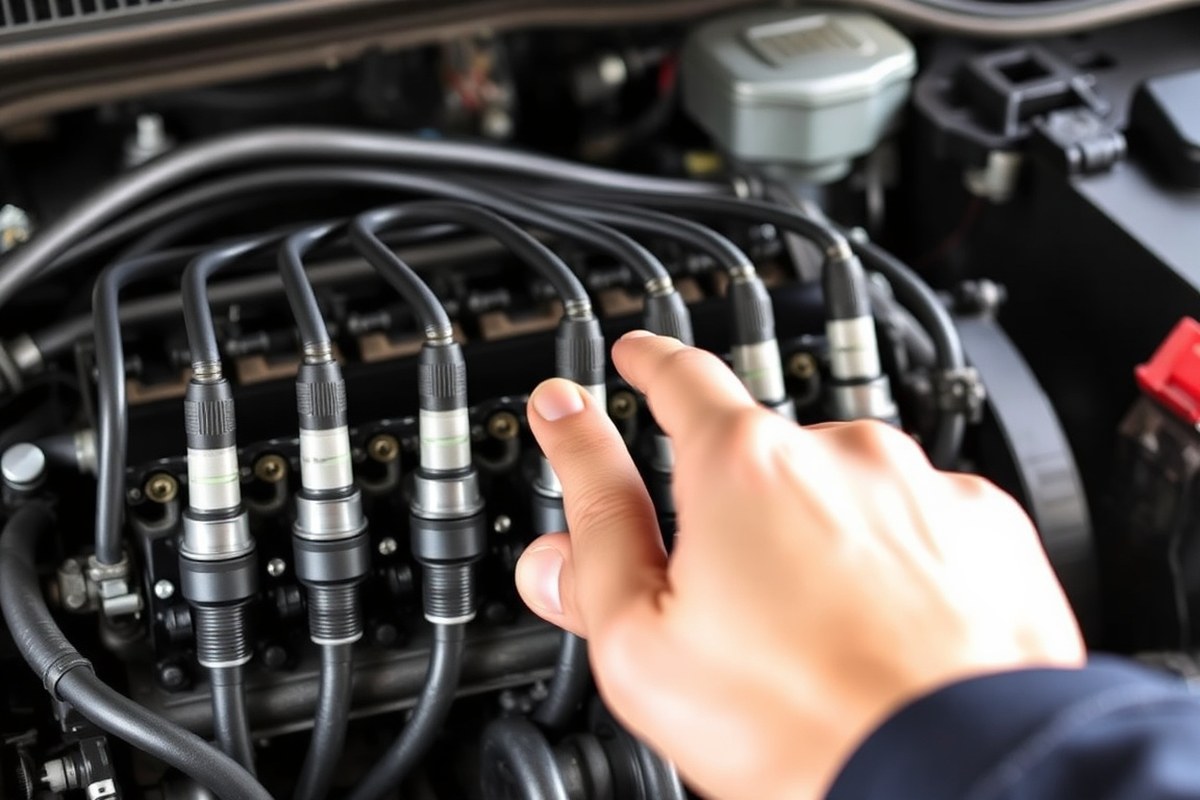
Most V6 engines use one spark plug per cylinder, so six spark plugs is the standard count for a V6. However, some V6s feature twin-spark designs with two spark plugs per cylinder, doubling the total. Identifying how many spark plugs your specific V6 has can be done easily by checking your vehicle’s manuals, visually inspecting the engine, or looking up popular model variations.
Checking Engine Specifications in Manuals
The owner’s manual or factory service manual is the most accurate source for the spark plug count and type in your V6 engine. These manuals usually list the engine specifications under sections like “engine maintenance” or “ignition system.” They will specify the number of cylinders and whether the engine uses single or twin spark plugs per cylinder. Online versions of manuals are often available on the automaker’s website by entering your vehicle’s make, model, and year.
When consulting the manual, also check the recommended maintenance interval for spark plug replacement and the exact spark plug size and gap requirements. These details help prevent misfires and poor engine performance caused by incorrect plugs or installation.
Counting Spark Plug Wires or Coils Outside the Engine
Physically inspecting your engine can reveal how many spark plugs you have without removing parts. Most traditional V6 engines will have six spark plug wires or ignition coils, one connected directly to each spark plug. Newer engines often use coil-on-plug ignition systems, meaning each coil sits atop each spark plug, making it easy to count the coils visible on the engine’s cylinder heads.
Look along each cylinder bank for the coils or wires; the total number corresponds to the spark plugs. Note that some twin-spark engines have two plugs per cylinder but might share coils or have a special coil setup, so count both coils and plugs carefully if possible.
- Locate ignition coil packs or spark plug wires on each cylinder bank
- Count the coils or wires visible on the outside of the engine
- Check cylinder head size and layout to estimate plug positions
- Look for two plugs per cylinder in twin-spark configurations
- Compare findings with online forums or repair guides for your model
Never disconnect spark plug wires or coils with the engine running to avoid electrical shocks or damage to the ignition system.
In V6s with a waste spark system, coils may fire two plugs simultaneously, so the coil count might be half the spark plug count. Confirm this by referencing repair materials or a dealer if unsure.
Notable V6 Models with Different Spark Plug Setups
Some V6 engines deviate from the standard six-spark-plug design. For example, Alfa Romeo’s 16-Valve “Twin Spark” V6 models use two spark plugs per cylinder, totaling twelve plugs. This improves combustion efficiency but also requires more maintenance and higher replacement costs. These engines use both 10 mm and 14 mm diameter spark plugs with varying electrode gaps around 0.039 to 0.043 inches.
Most mainstream V6 engines, such as those from Ford, Toyota, and Honda, have six spark plugs, one per cylinder. Their maintenance and replacement tend to be straightforward. However, some older or high-performance turbocharged V6s might have special coil or plug arrangements, so checking your model’s specification is critical for correct parts and service.
- Alfa Romeo Twin Spark V6: 12 spark plugs total
- Standard V6 engines (Ford, Toyota, Honda): 6 spark plugs total
- Engines with waste spark systems: coils may fire two plugs simultaneously
- Twin spark setups require checking both plugs in cylinder for wear
- Varying spark plug gap sizes depending on engine design and year
Knowing the exact spark plug count and arrangement helps in ordering the right parts and troubleshooting issues like misfires or rough idle. Always pair the spark plug count with the proper coil or wire setup to ensure a smooth-running engine.
Why and When to Replace Spark Plugs in a V6 Engine
Most spark plugs in a V6 engine last between 30,000 and 100,000 miles depending on their type and your driving conditions. Replacing them on time is important to maintain engine efficiency and avoid misfires or poor fuel economy. Knowing when to inspect and replace them helps you avoid performance problems and costly repairs.
Recommended Mileage Intervals for Various Spark Plug Types
Standard copper spark plugs usually need replacement every 20,000 to 40,000 miles. Platinum plugs last longer, commonly around 60,000 to 100,000 miles, while iridium plugs often go up to 100,000 miles or more. Always check your vehicle’s owner manual for exact intervals, as automakers specify timing based on engine design and spark plug material.
Routine inspections should occur at least once a year or every 12,000 to 15,000 miles. This gives you a chance to catch wear signs early before full replacement. Some cars might require more frequent checks if they experience severe driving conditions like frequent stop-and-go traffic or extensive idling, which can degrade plugs faster.
Common Symptoms of Bad Spark Plugs in a V6
Bad spark plugs often cause engine misfires, rough idling, and poor acceleration. You might notice a drop in fuel efficiency as the engine burns fuel less efficiently without a proper spark. The Check Engine Light is a frequent indicator of spark plug trouble but can also signal other engine issues, so proper diagnosis is necessary.
Hard starts or hesitation during acceleration also point to plug problems. A misfire at higher speeds or under load suggests that spark plugs may be fouled or worn. If your V6 engine runs unevenly or makes unusual noises, checking the spark plugs should be part of troubleshooting.
Factors That Shorten Spark Plug Lifespan
Contaminants like oil or carbon deposits from a rich fuel mixture accelerate spark plug wear. Overheating caused by improper heat range plugs or engine overheating damages the electrode, reducing spark effectiveness. Short trips that don’t warm the engine fully can also cause deposits to build up faster.
Driving conditions influence lifespan significantly. Heavy towing, performance driving, or dusty environments increase stress on plugs. Using low-quality fuel or ignoring regular maintenance on ignition coils and wires can cause plugs to fail earlier than expected. Routine maintenance on the ignition system helps prolong spark plug life.
Tools and Time Needed to Replace Spark Plugs on a V6
Replacing spark plugs on a V6 engine typically takes around 1 to 2 hours, depending on your experience and the engine layout. This process requires some patience and attention to detail to avoid damaging the spark plug threads or surrounding components.
You will need specific tools to carry out the replacement safely and efficiently. Most V6 engines have six spark plugs, one per cylinder, which means you’ll repeat the removal and installation steps six times. The availability of space around the spark plugs can vary, affecting how quickly you can work.
- Spark plug socket (usually 5/8-inch or 13/16-inch) with a rubber insert to protect plugs
- Ratchet wrench with an extension bar to reach recessed plugs
- Torque wrench to tighten spark plugs to manufacturer specifications (typically 13-22 lb-ft)
- Gap gauge to check and adjust spark plug gap if necessary
- Dielectric grease for spark plug boots to ensure a good seal and ease future removal
- Compressed air or a blower to clean debris around the plugs before removal
- Anti-seize compound, if recommended by the spark plug manufacturer
Start by allowing the engine to cool completely to prevent burns and reduce thread damage risk. Use compressed air to blow away dirt around each spark plug area. Then, carefully remove the ignition coil or spark plug wire boot, using a twisting motion to avoid tearing. Unscrew the spark plug with the socket and ratchet, and inspect the removed plug for wear patterns that might indicate engine issues.
Before installing new spark plugs, check and adjust the gap with the gauge to match your engine’s specification. Apply a small amount of anti-seize compound if advised; however, some manufacturers warn against it as it can affect torque readings. Insert the new plug by hand to avoid cross-threading, then use the torque wrench to tighten to the recommended setting. Reinstall the ignition coil or boot with dielectric grease inside the boot to prevent moisture and corrosion.
Variations in the replacement process depend on your specific V6 engine. Engines with direct ignition coils on each plug simplify the job, as you remove only the coil instead of a wire boot. Access might be restricted in some cars, requiring removal of engine covers or intake manifolds, which can increase work time up to 3 hours. Following the manufacturer’s service manual is important to ensure proper torque and order of installation, reducing the chance of engine misfires or damage.
Cost Factors for V6 Spark Plug Replacement
Replacing spark plugs on a V6 engine typically costs between $150 and $400, depending on the type of spark plugs used and how much labor is needed. Since a V6 engine has six cylinders, replacement involves six spark plugs. The cost depends largely on whether you select standard copper plugs or longer-lasting iridium plugs, as well as how accessible the plugs are in your engine layout.
Iridium plugs cost more upfront, often $10 to $20 each, compared to $2 to $5 for copper plugs. The longer lifespan and better performance of iridium plugs can justify the higher cost, especially since manufacturers like VW and Mazda recommend replacement intervals around 40,000 miles even with iridium plugs. Labor costs vary due to engine design; some V6 engines have spark plugs that are hard to reach, increasing the time mechanics spend on removal and installation.
| Spark Plug Type | Cost per Plug | Labor Time | Typical Labor Cost |
|---|---|---|---|
| Copper | $2, $5 | 1, 2 hours | $75, $150 |
| Platinum | $6, $12 | 1, 2 hours | $75, $150 |
| Iridium | $10, $20 | 1, 2 hours | $75, $150 |
| Labor-Intensive V6 (tight engine bay) | $2, $20 (per plug) | 2, 3 hours | $150, $225 |
Mechanics typically charge $75 to $150 per hour, with total labor ranging from an hour to three based on engine accessibility. Tire rotation or ignition coil replacement can add to labor costs, so getting a clear estimate from your service provider is important. Consider that V6 engines with complex intake manifolds or tight engine bays can push labor costs to the higher end of the range.
Iridium plugs deliver better combustion, last longer, and maintain engine performance compared to copper plugs, which wear faster and need more frequent replacement. Their price premium makes sense if you plan to keep your vehicle for the long haul or want to avoid frequent spark plug changes. In contrast, copper plugs are a cheaper short-term fix but cost more over time due to frequent replacements.
To save money, buy your spark plugs from reputable parts retailers before scheduling service. Also, ask your trusted mechanic if changing only the worn plugs versus all six at once is possible for your vehicle, they may recommend full replacement for consistent performance, but some situations allow partial replacement.
Do not attempt spark plug replacement without checking your vehicle’s torque specifications to avoid damage to the cylinder head or plug threads.
Common Mistakes and Safety Tips for V6 Spark Plug Replacement
One common mistake when replacing spark plugs in a V6 engine is over-tightening the plugs, which can strip the threads in the cylinder head or break the spark plug itself. To prevent this, use a torque wrench set to the manufacturer’s recommended torque, usually between 13 to 22 ft-lbs depending on your specific engine. Another frequent error is cross-threading the spark plugs during installation. Start threading the spark plug by hand before using any tools to ensure it goes in straight.
Ignition coils, especially in modern V6 engines with coil-on-plug systems, can be damaged if you pull on the wire instead of the connector or use excessive force during removal. Handle them gently and disconnect electrical connections carefully. Always check for corrosion or dirt on the coil boots, as debris can cause poor contact and spark failure.
Driving with a missing or bad spark plug in a V6 engine causes one cylinder to misfire or not fire at all. This misfire leads to increased fuel consumption because the engine compensates for the lost power, which lowers fuel efficiency and can cause damage to catalytic converters over time. Immediate repair is necessary to avoid further engine damage or driveability issues. A safety checklist to follow when replacing V6 spark plugs helps avoid injury and damage:
- Disconnect the battery to prevent accidental sparks.
- Work on a cool engine to avoid burns from hot components.
- Use the correct spark plug gap as specified for your engine.
- Apply anti-seize compound sparingly to the plug threads only if recommended by the manufacturer.
- Replace ignition coil boots if cracked or brittle to ensure a good seal.
- Keep the work area clean to prevent dirt from entering cylinders.
- Double-check torque values before final tightening to avoid damage.
In some V6 engines, spark plug access is tight, requiring removal of engine covers or intake components. Take your time removing these parts without forcing them to prevent breaking clips or connectors. Also, keep in mind that spark plugs exposed to different cylinder head temperatures may require specific torque or replacement intervals. Following exact procedures and safety precautions reduces the risk of costly repairs and helps keep your V6 running smoothly.
Variations in V6 Spark Plug Setups Across Popular Car Models
Most V6 engines use six spark plugs, consistent with one plug per cylinder. However, the type and configuration can vary significantly between manufacturers and between naturally aspirated and turbocharged models. For example, popular V6 engines found in cars like the Honda Accord and the Chevy Silverado usually follow this one plug per cylinder standard, but differences in plug heat range, gap size, and material can affect performance and maintenance requirements.
Turbocharged V6 engines often require spark plugs that tolerate higher combustion temperatures and pressures. These plugs typically have a colder heat range to prevent pre-ignition and detonation, which can damage the engine. Honda and Chevy models with turbocharged V6 setups may also use iridium or platinum spark plugs for extended life and better ignition reliability at these demanding conditions.
You can identify your engine’s specific spark plug setup by checking the owner’s manual or service guide. The exact spark plug type, gap settings, and torque specifications are typically listed there. If those are unavailable, you can look up the engine’s code online or physically inspect the spark plugs to note their size and markings. Correctly matching the spark plug to your engine type ensures optimal performance, fuel efficiency, and reduced risk of misfires.
| Make/Model | Engine Type | Spark Plug Count | Typical Plug Type | Notes |
|---|---|---|---|---|
| Honda Accord V6 | 3.5L Naturally Aspirated | 6 | Iridium | Standard heat range, plug gap ~0.044 in |
| Chevy Silverado V6 | 4.3L Naturally Aspirated | 6 | Platinum | Recommended gap ~0.060 in |
| Ford F-150 V6 Turbo | 3.5L EcoBoost Turbocharged | 6 | Iridium, colder heat range | Designed for higher temp/pressure |
| Jeep Grand Cherokee V6 | 3.6L Pentastar Naturally Aspirated | 6 | Iridium | Standard gap ~0.053 in |
| Nissan Altima V6 | 3.5L Naturally Aspirated | 6 | Iridium | Common in 2013, 2018 models |
Matching spark plugs to your V6’s specifications affects engine start-up and running smoothness. Using plugs intended for a different heat range or gap can cause issues such as rough idling, increased emissions, or even engine knock. Turbocharged engines usually need plugs with lower heat ranges because excess heat can cause pre-ignition. This difference directly impacts what you use for replacements.
The number of plugs rarely changes between V6 models, but checking the exact plug type for your engine variant saves you from performance and longevity problems. Cross-reference your VIN or engine code with manufacturer specs or use a trusted online parts database. Maintenance schedules often recommend spark plug replacement every 60,000 to 100,000 miles, depending on the material and driving conditions, so knowing your plug setup helps plan timely service.
Understanding V6 Spark Plug Firing Order and Arrangement
The firing order and spark plug arrangement in a V6 engine ensure smooth operation and balanced performance. The cylinders number differently depending on the bank and the engine’s angle, influencing how spark plugs fire in sequence to maintain optimum timing and power delivery across all cylinders. Understanding this layout helps in maintenance and troubleshooting ignition issues.
Common Cylinder Numbering Systems in V6 Engines
In V6 engines, each cylinder requires its own spark plug, and cylinders are typically arranged in two banks. The numbering commonly follows the pattern where the frontmost cylinder on the right (passenger) bank is labeled R1, followed by R2 and R3 towards the rear. The left (driver) bank uses L1 at the front, then L2 and L3 behind it. This system clearly identifies each spark plug’s position relative to the engine block, which is important for correct firing order and wiring.
The front of the engine usually points towards the belt side and accessories, so this numbering helps technicians locate and replace plugs without confusion. Variations exist depending on engine design and manufacturer but the L1 to L3 and R1 to R3 format remains a practical standard for V engines.
Typical Firing Orders for 60° and 90° V6 Designs
The firing order balances the power strokes of each cylinder to reduce vibrations and promote smooth engine operation. V6 engines with a 60-degree bank angle often use a firing order of R1-L1-R2-L2-R3-L3. This sequence spaces the ignition events to optimize firing intervals uniformly. On 90-degree V6 engines, two common firing orders include R1-L2-R2-L3-L1-R3 or R1-L3-R3-L2-R2-L1. These orders help reduce uneven firing intervals that could otherwise cause roughness or increased engine wear.
For other applications like marine engines, different firing orders such as 1-2-4-6-5-3 may be used to suit operational speed and load requirements. Uneven firing intervals, like 90° and 150° gaps, are less common in V6s but may appear in performance or specialized engines to influence exhaust sound or power delivery.
Role of Firing Order on Spark Plug Operation
The firing order dictates the timing sequence of spark plugs igniting their respective cylinders, which is key to preventing engine knocking and keeping power delivery even. Each spark plug fires as its cylinder approaches top dead center during the compression stroke. A well-planned firing order maintains balanced engine rotation and avoids vibrations caused by multiple cylinders firing too closely or simultaneously.
Proper spark plug wiring and arrangement follow the firing order so the ignition system triggers plugs in the correct cycle. During maintenance or replacement, matching spark plug wires to their corresponding cylinder and firing sequence preserves engine smoothness and efficiency.
Ensure spark plug wires are connected to the correct cylinders according to the firing order to prevent misfires and engine performance issues.
Step-by-Step Action Plan for V6 Spark Plug Maintenance
Keep your V6 engine running smoothly by following this maintenance plan. Each step helps ensure your spark plugs perform well and last as long as possible.
- Before you start: Check your vehicle manual or online to confirm your V6 has six spark plugs. This prevents ordering the wrong parts.
- Week 1: Gather the necessary tools like a spark plug socket, ratchet, and gap gauge. Having everything ready reduces the chance of mistakes during replacement.
- Week 2: Inspect your current spark plugs for wear or buildup. This tells you if replacement is needed soon.
- Month 1: Replace spark plugs using proper torque and gap measurements recommended for your V6 engine. Correct installation ensures optimal performance.
- After 6 months: Listen for engine misfires or rough idling, signs that spark plugs may need attention again.
- Yearly: Schedule a professional checkup if you notice frequent performance issues. A mechanic can identify problems beyond spark plugs.
Frequently Asked Questions
How Many Spark Plugs Are Needed in a V6 Engine?
A V6 engine requires 6 spark plugs, one for each cylinder. This ensures proper ignition and performance across all cylinders.
Are V6 and 6 Cylinders the Same in Terms of Spark Plug Requirements?
Yes, a V6 means the engine has 6 cylinders, so it needs 6 spark plugs, matching the cylinder count exactly.
Are Iridium Spark Plugs Worth It for a V6?
Iridium spark plugs last longer and provide better ignition, but they cost more. Consider the tradeoff between price and longevity.
How Much Does It Cost to Replace Spark Plugs on a V6?
The cost varies widely depending on labor and parts, with deep-set plugs increasing the time and expense significantly.
Can I Replace V6 Spark Plugs Myself Safely?
Yes, with the right tools and safety precautions, you can replace V6 spark plugs, but avoid forcing tight spark plug sockets.
Do All V6 Engines Use the Same Spark Plug Firing Order?
No, the firing order can vary by manufacturer and engine design, so check your vehicle’s service manual for specifics.
Key Points to Remember
Your V6 engine uses six spark plugs, one per cylinder, which is key for efficient combustion. Replacing them at recommended intervals keeps your engine running well and prevents costly repairs. Start by confirming your engine type and gathering the right tools. Taking care of your spark plugs means better fuel economy and fewer engine troubles down the road.