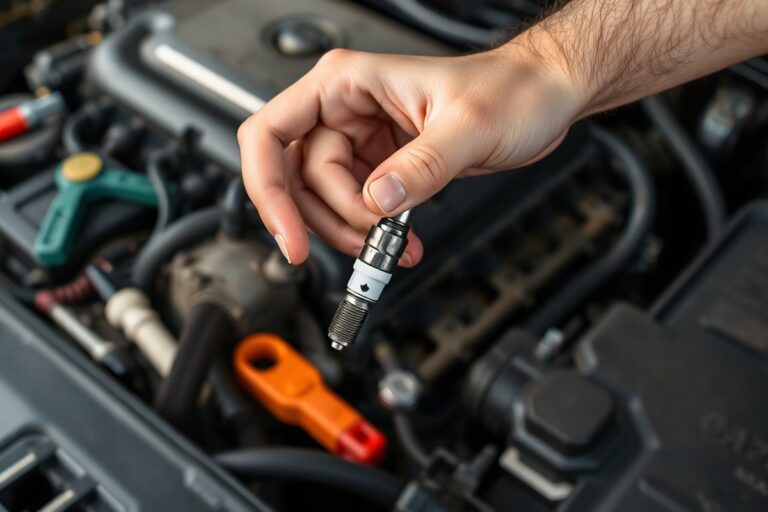
How Many Spark Plugs Are in a 4 Cylinder Engine – a Complete Guide for Beginners
How many spark plugs are in a 4 cylinder engine? A 4 cylinder engine has exactly 4 spark plugs, one for each cylinder. These spark plugs ignite the fuel-air mixture inside each cylinder to power your engine. Checking these plugs regularly helps prevent engine problems and keeps your car running smoothly.
Key Takeaways
- Inspect spark plugs every 30,000 miles to ensure good condition and efficient engine performance.
- Replace spark plugs between 30,000 to 100,000 miles depending on your car manufacturer’s recommendation.
- Each cylinder in a gas engine requires one spark plug to ignite the fuel-air mix during combustion.
- Diesel engines don’t use spark plugs but rely on glow plugs for cold starts instead.
- Worn spark plugs can cause poor fuel efficiency, engine misfires, and trouble starting your car.
- Keep spark plugs clean and properly gapped to maintain smooth engine operation.
How Many Spark Plugs Does a 4 Cylinder Engine Have?

A standard 4-cylinder gasoline engine has exactly four spark plugs, one per cylinder. This one-to-one ratio reflects the basic design rule of spark plugs matching the number of cylinders in a gas engine to ignite the air-fuel mixture inside each combustion chamber. You can usually confirm this by counting the wires or coils on your engine; if you see four lined up, the engine almost certainly has four spark plugs.
The spark plugs screw directly into the cylinder head and provide the necessary spark for fuel combustion to power the engine. Over time, these plugs wear out and need inspection or replacement, but the number remains fixed unless the engine design changes. Each cylinder requires its own spark plug to deliver consistent firing and smooth engine performance, so missing spark plugs or faulty ones cause misfires, rough idling, or reduced fuel efficiency.
Exceptions to the single-plug-per-cylinder rule exist but are rare. Some engines, typically found in performance or specialty vehicles, might have two spark plugs per cylinder. These dual-plug setups create a more efficient and complete burn of the fuel mixture, which can improve engine power and emissions. However, for most everyday 4-cylinder engines in passenger cars, you’ll only encounter one spark plug per cylinder.
You can check your vehicle’s engine label or owner’s manual to find specific details about the spark plugs, including the exact number and type required. Proper maintenance involves inspecting them regularly, about every 30,000 miles, to ensure they generate a strong spark and prevent engine issues. While the cost of replacing spark plugs on a 4-cylinder engine is generally lower than in larger engines, ranging from 100 to 300 AED (or SAR) in labor, the consistent condition of all four plugs directly affects your car’s performance and fuel economy.
How Spark Plugs Work in Gasoline Engines

Spark plugs play a key role in gasoline engines by igniting the air and fuel mix inside each cylinder at exactly the right moment to create power. They work closely with the ignition coil, which supplies the high voltage needed for the spark. Each cylinder requires its own spark plug to ensure the engine runs smoothly and efficiently.
Role of the Spark Plug in Ignition
The spark plug sits threaded into the cylinder head, at the top of the combustion chamber. As the engine runs, gasoline and air mix inside the cylinder and get compressed by the piston. At peak compression, the spark plug delivers a small but intense electrical spark that ignites this mixture. The rapid explosion pushes the piston down, creating mechanical energy that powers the vehicle.
This ignition process must happen precisely to maintain engine performance and fuel efficiency. A weak or faulty spark plug can cause misfires, rough idling, or difficulty starting your car. Since these plugs fire thousands of times per minute, durability is critical.
How the Ignition Coil and Spark Plug Work Together
The ignition coil takes low voltage power from the battery and transforms it into a high voltage (often 20,000 volts or more). This powerful electrical pulse travels through ignition wires to reach the spark plug. The plug uses this voltage to generate a spark across its small electrode gap inside the cylinder.
This high-voltage spark is strong enough to ignite the compressed air and fuel mixture despite the harsh conditions and high temperatures, which often exceed 1,000 degrees Fahrenheit inside the combustion chamber. This coordination between coil and plug repeats constantly while the engine runs.
Need for One Spark Plug per Cylinder
Each cylinder in a gasoline engine has its own spark plug because every cylinder operates independently in its combustion cycle. Proper timing and individual ignition guarantee that each cylinder fires at the correct moment. This keeps the engine balanced and prevents power loss.
In a 4-cylinder engine, four spark plugs ensure all cylinders combust correctly. Missing or faulty spark plugs can cause one or more cylinders to misfire, reducing power output and increasing fuel consumption as the engine compensates for the lost cylinder power.
What Good Ignition Looks Like and Common Problems
A well-functioning spark plug delivers a consistent, strong spark that ignites fuel efficiently every time. Typical maintenance intervals to check or replace spark plugs vary but often fall between 30,000 and 100,000 miles depending on the plug type.
Signs of poor spark plug performance include difficulty starting, horsepower loss, rough running, and increased fuel use. Damaged plugs, corroded electrodes, or improper gaps can lead to weak sparks or no spark at all. Spark plug wires or ignition coils may also degrade and affect ignition.
Always check the manufacturer’s specifications for spark plug gap and replacement intervals to avoid premature ignition issues.
Why Diesel Engines Don’t Have Spark Plugs
Diesel engines do not have spark plugs. Instead, they use glow plugs to assist with starting, especially in cold conditions. The ignition process in diesels relies on heat from compressed air, not an electrical spark.
The Role of Glow Plugs in Diesel Engines
Glow plugs are heating elements that warm the air inside the cylinder before the engine starts. Their main job is to make starting easier when the engine is cold, as diesel fuel ignites at high temperatures caused by compression. Unlike spark plugs, glow plugs don’t create a spark; they simply increase the temperature in the combustion chamber to promote ignition.
Glow plugs typically operate only during engine start-up. Once the engine reaches normal operating temperature, the heat generated by compression keeps the fuel igniting properly without the glow plugs.
How Diesel Engines Ignite Fuel Without Spark Plugs
Diesel engines use a process called compression ignition. The air inside each cylinder is compressed to a very high pressure, raising its temperature to as much as 1,400 to 1,800 degrees Fahrenheit (760 to 980 degrees Celsius). This intense heat causes the injected diesel fuel to ignite automatically when it enters the cylinder as a fine mist. This eliminates the need for a spark to initiate combustion.
Fuel injectors spray the diesel at the right moment into the superheated air, which causes the fuel to burn and drive the piston down. Because ignition depends on heat from compression, controlling air pressure and temperature inside the cylinder is critical to the engine’s performance.
Number and Maintenance of Glow Plugs
Diesel engines usually have one glow plug per cylinder. For a 4-cylinder diesel, you will find four glow plugs. Each glow plug must be in good condition to ensure smooth starting and efficient combustion in cold weather.
Glow plugs wear out over time and may need replacement every 60,000 to 80,000 miles depending on driving conditions and the manufacturer’s recommendations. Signs of faulty glow plugs include hard starting, excessive white or black smoke during warm-up, and rough idling.
When and How Often to Check or Replace Spark Plugs
Spark plugs in a 4-cylinder engine typically last between 30,000 and 100,000 miles, depending on the type and driving conditions. Standard copper spark plugs usually need replacement closer to 30,000 miles, while more durable iridium or platinum plugs can last up to 100,000 miles. You should consider inspecting or replacing spark plugs according to your vehicle manufacturer’s recommendations, often found in the owner’s manual. Regular checks help prevent engine misfires or poor performance caused by worn spark plugs.
Several factors affect the wear of spark plugs. Frequent short trips where the engine doesn’t fully warm up, aggressive driving, use of low-quality fuel, or deposits forming from oil leaks can all reduce spark plug life. Also, some spark plugs are located deeply or under intake manifolds, which can make inspection and replacement more time-consuming and costly. Monitoring these factors impacts how soon you should check and replace the plugs. Here is a practical checklist for when to inspect or replace spark plugs on your 4-cylinder car:
- At routine service intervals, typically every 30,000 to 60,000 miles for copper plugs
- Every 60,000 to 100,000 miles for iridium or platinum plugs
- Notice symptoms like engine misfires, rough idling, or poor acceleration?
- When fuel economy decreases noticeably after normal driving
- The engine struggles to start or shows delayed response
- When professional inspection reveals worn, fouled, or damaged plugs
Replacing spark plugs only when necessary saves money and prevents unnecessary labor, especially if your engine has hard-to-reach spark plugs. Getting a professional mechanic to perform the inspection can identify problems early and confirm if replacement is needed. Costs will vary with plug type and labor time, but avoiding driving with faulty or missing spark plugs reduces the risk of major engine damage and higher repair bills.
Step-by-Step Guide to Replacing Spark Plugs on a 4 Cylinder Engine
Replacing spark plugs on a 4-cylinder engine requires careful steps to avoid damage and ensure optimal engine performance. You need the right tools, cautious removal of old plugs, and proper installation of new ones.
Tools Required for Spark Plug Replacement
Prepare specific tools to make the job efficient and safe. A spark plug socket the right size, usually 5/8 inch or 13/16 inch depending on your engine, is essential. You will also need a ratchet wrench with an extension to reach the plugs easily. A torque wrench is important to tighten the plugs to manufacturer specifications, preventing over-tightening that can damage the threads.
Also, have a spark plug gap tool to check and adjust the gap if necessary, and a compressed air can or blower to clear any debris from the spark plug wells before removal. Gloves and safety glasses offer extra protection during the job.
Removing Spark Plugs Safely
Access the spark plugs by first opening the hood and locating them on top of the engine, usually covered by an ignition coil or spark plug wires. For coil-on-plug designs common in 4-cylinder engines, disconnect the electrical connectors carefully and remove the coils to reach the spark plugs. Before pulling the plugs, use compressed air to blow out dirt from around each plug well to prevent debris from falling into the combustion chamber during removal.
- Allow the engine to cool completely, as spark plugs and engine parts get very hot and can burn you.
- Disconnect the negative battery cable to avoid accidental electrical shocks or shorts.
- Remove ignition coils or spark plug wires by gently twisting and pulling without forcing.
- Blow out dust and debris from around the spark plugs using compressed air.
- Use the spark plug socket with a ratchet and extension to turn each spark plug counterclockwise carefully until it loosens.
- Remove the spark plugs straight out to avoid damaging the threads or breaking the plug.
Take care not to cross-thread plugs when removing or installing; turning the spark plug feel for resistance and backing off slightly helps prevent this.
Installing New Spark Plugs Correctly
Check the gap on each new spark plug using your gap tool. Adjust the gap to the vehicle manufacturer’s specifications if it’s off. Most 4-cylinder engines require a gap between 0.028 and 0.040 inches, but check your owner’s manual or service guide for the exact figure.
Screw in the spark plugs by hand at first to ensure the threads engage properly. Use the torque wrench to tighten each plug to the recommended torque, generally between 13 to 22 foot-pounds for most 4-cylinder engines, avoiding over-tightening which can strip threads or damage the cylinder head.
- Confirm the new spark plugs are the correct type and gap for your engine.
- Apply a small amount of anti-seize compound only if the manufacturer recommends it; many modern plugs come pre-coated.
- Thread the spark plugs by hand into the cylinder head until snug.
- Use a torque wrench to tighten plugs to factory torque specifications.
- Reinstall the ignition coils or spark plug wires carefully, ensuring a secure fit.
- Reconnect the negative battery cable if it was disconnected.
Never overtighten spark plugs; follow torque specs closely to avoid costly engine damage.
Testing the Engine After Replacement
After installing new spark plugs, start the engine to check for smooth operation. Listen for misfires, rough idling, or unusual sounds that could indicate improper installation. Allow the engine to reach normal operating temperature and monitor for any warning lights on the dashboard.
If the engine runs smoothly and no diagnostic trouble codes appear, the replacement was successful. In case of any abnormalities, recheck plug installation and wiring connections before considering professional diagnostics.
Comparing Spark Plug Counts: 4 Cylinder vs Other Engines
| Engine Type | Number of Cylinders | Spark Plugs per Cylinder | Total Spark Plugs | Common Ignition Coil Arrangement |
|---|---|---|---|---|
| 4-Cylinder | 4 | 1 | 4 | Individual coils per plug (Coil-On-Plug) |
| V6 | 6 | 1 | 6 | Individual coils per plug or coil packs |
| V8 | 8 | 1 or 2 | 8 to 16 | Individual coils or coil packs |
| Inline-6 | 6 | 1 | 6 | Individual coils per plug |
In general, every cylinder in a gasoline engine has at least one spark plug. The number of spark plugs per cylinder can vary, especially in performance or larger engines. For example, a 4-cylinder engine typically has four spark plugs, one per cylinder. A V6 engine, with six cylinders arranged in a V shape, usually has six spark plugs, one per cylinder as well. Some engines feature two spark plugs per cylinder to improve combustion efficiency and emissions. This practice is more common in V8 engines or high-performance designs, which can have anywhere from eight to sixteen spark plugs total. This layout helps create a more complete and faster burn of the air-fuel mixture inside each cylinder. Regarding ignition coils, a 4-cylinder engine often uses four individual coils, each sitting directly on top of a spark plug. This setup, known as Coil-On-Plug (COP), provides reliable and consistent spark without the need for spark plug wires. In some engines, coil packs are used instead. These packs distribute the spark using fewer coils, firing plugs in pairs or groups based on the firing order. A V6 engine can have individual coils per plug or coil packs, depending on the vehicle’s design. Exact coil and spark plug arrangements depend on the make, model, and year of the engine. If you are checking or replacing coils on your 4-cylinder engine, identify whether it has COP or a coil pack first. This affects the parts you buy and the replacement process. Faulty spark plugs or coils can cause engine misfires, rough idle, or the check engine light to come on, making it important to know the ignition system layout for diagnostics. For replacement, a COP setup means swapping one coil at a time, typically costing between $15 and $50 per coil. Coil packs sometimes cost more but cover multiple plugs. Regular inspection every 30,000 to 60,000 miles keeps your ignition performance strong.
Common Spark Plug Problems and How to Spot Them
Bad spark plugs show several clear symptoms that you can spot while driving or inspecting your engine. Common signs include rough idling, poor acceleration, increased fuel consumption, and difficulty starting the engine. When your engine misfires or you notice a loss of power, worn spark plugs could be the cause. Immediate attention avoids further damage to the ignition system or catalytic converter, which can be costly to repair.
Checking spark plugs without removing them is limited but still possible. You can listen for unusual engine sounds like sputtering at idle, or watch for black smoke from the exhaust. Under the hood, inspecting wiring and spark plug boots for cracks or corrosion offers clues. However, to truly diagnose spark plug health, removal is necessary to examine them visually and measure the gap with a spark plug gap tool. A worn plug will often have a wider gap than specified, for example, most 4-cylinder engines use a gap around 0.028 to 0.060 inches depending on the model.
- Engine misfires or hesitation during acceleration
- Rough or uneven idle causing vibration
- Hard starting, especially in cold weather
- Decreased fuel efficiency noted over weeks
- Check engine light turning on
- Visual signs like black soot, oil fouling, or worn electrodes
- Gap exceeding factory specifications by 0.01 inch or more
When spark plugs fail completely during driving, the engine may stall or misfire repeatedly, which can reduce vehicle control and driveability. The combustion process might not ignite properly, causing jerking or loss of power, especially under load or high RPMs. Prolonged driving with bad plugs strains the ignition coil and the catalytic converter, risking expensive repairs that can range from several hundred to over a thousand dollars.
To assess spark plugs, remove them carefully with a spark plug socket and ratchet, avoiding damage to the threads. Clean any debris before pulling the plug out. Inspect the tip for deposits: black dry soot suggests a rich fuel mixture or weak spark, oily residue indicates oil leakage into the combustion chamber, while a blistered or cracked ceramic insulator shows overheating. Check the electrode gap with a feeler gauge and compare it to the vehicle’s recommended specification found in the owner’s manual or under the hood sticker. Adjusting the gap manually is possible if it’s slightly off, but heavily worn or damaged plugs should be replaced.
Cost and Time Estimates for Spark Plug Replacement on 4 Cylinders
Replacing spark plugs on a 4-cylinder engine generally involves purchasing four spark plugs, one for each cylinder. The cost of these spark plugs can range from about 50 AED to 200 AED for the full set, depending on the brand and type you choose. Standard copper spark plugs are on the lower end of this price range, while iridium or platinum plugs, which last longer and perform better, often cost more. Choosing the right type matters because it influences the engine’s efficiency and how often you’ll need replacements.
Labor costs for replacing spark plugs on a 4-cylinder engine tend to be lower than on V6 or V8 engines because there are fewer plugs to replace and the engine layout is simpler. On average, replacing spark plugs on a 4-cylinder might cost around 30 to 60 minutes of labor time at a service shop. A V6 or V8 will usually take longer due to more plugs and more difficult access, sometimes up to double that time. Labor rates vary by region and shop, but can range from $50 to $150 per hour, so expect the labor cost to be roughly $25 to $75 for spark plug replacement on a 4-cylinder.
Time needed for the job often depends on the type of spark plugs and your car’s design. For many 4-cylinder models, a straightforward spark plug change can be completed in 30 to 60 minutes by an experienced mechanic. Cars with coil-on-plug ignition systems might save some time by eliminating the need to remove distributor caps or wires. Conversely, if the plugs are hard to reach or if other components have to be removed first, the process might take longer. DIY mechanics should plan on about an hour and have the proper tools ready, such as a spark plug socket, ratchet, and torque wrench, to tighten the plugs to the manufacturer’s specifications.
For example, if you buy a set of four iridium spark plugs at 150 AED total and pay a mechanic charging 100 AED/hour who takes 45 minutes, your total cost would be 225 AED. If you perform the replacement yourself, you only spend the 150 AED on parts, but it will take some time and care to do the job right. Properly tightened spark plugs can improve fuel efficiency and engine performance, while plugs that are too loose or tight risk damage or engine misfiring.
Check your vehicle’s owner manual for the recommended spark plug gap and torque settings before installation to avoid engine damage or poor performance.
Step-by-Step Action Plan for Spark Plug Care on Your 4-Cylinder Engine
Keep your engine running smoothly by following these steps to check and replace spark plugs on time.
- Before 30,000 miles: Check your owner’s manual for recommended spark plug type and replacement interval, ensuring you use the right plugs for your engine.
- At 30,000 miles: Inspect all four spark plugs for wear, carbon buildup, or damage; clean minor deposits if needed and note any irregularities.
- At 60,000 miles or sooner if symptoms appear: Replace all four spark plugs to maintain engine efficiency; confirm installation by smooth engine start and idle.
- Every 15,000 miles: Check for spark plug wire or coil condition to avoid misfiring; replace faulty wires or coils to keep sparks strong.
- Before long trips: Perform a quick spark plug and wire inspection; smooth acceleration and steady engine RPM indicate good spark plug health.
- When you notice engine issues: Investigate spark plugs immediately if you experience rough idling, misfires, or poor fuel economy; fixing plugs often resolves these common problems.
Frequently Asked Questions
How Many Spark Plugs Are Needed for a 4-cylinder Engine?
A 4-cylinder engine needs 4 spark plugs, one per cylinder. Each spark plug ignites the fuel-air mix inside its cylinder to keep the engine running smoothly.
How Much Does It Cost to Replace Spark Plugs on a V6 Engine?
Replacing spark plugs on a V6 can cost between 100 AED and 300 AED in labor, plus the price of plugs. The total depends on plug type and how accessible the plugs are.
How Much Does It Cost to Replace Four Ignition Coils?
Costs vary widely, but replacing four ignition coils usually costs more than spark plugs. Labor time and part prices both affect the total, so check local rates for accurate estimates.
Do You Need 8 Spark Plugs for a V8 Engine?
Yes, a V8 engine typically requires 8 spark plugs, with one spark plug per cylinder. This setup ensures each cylinder fires properly for balanced engine performance.
What Does a Spark Plug Do in a 4-cylinder Engine?
A spark plug creates a spark that ignites the fuel-air mixture inside each cylinder. This ignition powers the engine by creating controlled explosions in all four cylinders.
Can a 4-cylinder Engine Run with One Bad Spark Plug?
An engine might run with one faulty spark plug but will run rough and lose power. It’s best to fix bad plugs quickly to avoid damage and maintain efficiency.
Key Points to Remember
Your 4-cylinder engine has four spark plugs, one per cylinder, which ignite the air-fuel mixture for combustion. Regular inspection and timely replacement of these plugs prevent engine issues and keep fuel efficiency steady. Start by checking your vehicle’s recommended service interval and plan your replacements accordingly for smoother, more reliable performance.