How Long Is a Jeep Gladiator? Detailed Size and Comparison Guide
The Jeep Gladiator is 218 inches long, which is about 18.2 feet. This length places it squarely in the middle of the mid-size pickup truck category. Knowing its length helps you plan for parking and garage space before buying or driving one.
Key Takeaways
- The Jeep Gladiator’s 218-inch length fits well within most mid-size pickup truck segments.
- A length of 18.2 feet means standard home garages may be tight but generally manageable for parking.
- The Gladiator’s 137.3-inch wheelbase impacts its maneuverability and off-road stability.
- Its bed length is shorter than some competitors like the Honda Ridgeline by about 4 inches.
- Height varies slightly by trim, affecting clearance in low garages or tight trails.
- Choosing different trims or tires can change overall height and sometimes length by a small margin.
How Long Is the Jeep Gladiator Exactly?
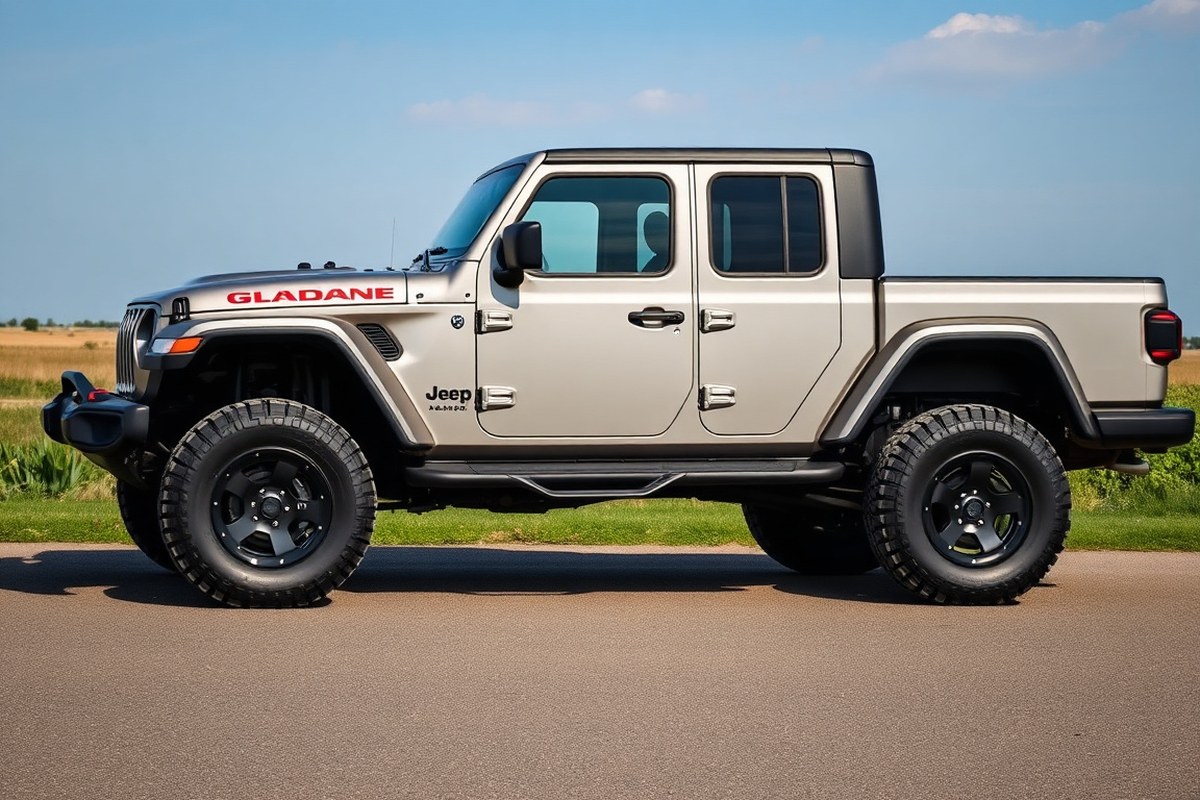
The Jeep Gladiator is exactly 218.0 inches long, which translates to about 18.2 feet. This precise measurement reflects the total length from the front bumper to the rear bumper without variation across different trims or model years from 2021 through 2026. Knowing this exact length matters when you consider parking, garage clearance, and maneuvering in tight spaces, especially compared to other mid-size pickups.
Measuring the truck yourself or verifying this length before a purchase helps confirm if it fits your garage or storage area comfortably. Standard garage doors usually offer 7 feet of height clearance, and while width is a separate concern, the length of 18.2 feet means you’ll need nearly 19 feet of space to park inside without risking damage. This is particularly important if your garage has other stored items or if the door opens inside. You can measure your garage floor from the door to the back wall to ensure at least 19 feet of clear length. Your garage might not fit the Gladiator, so consider parking it outside or upgrading to a larger or longer storage option.
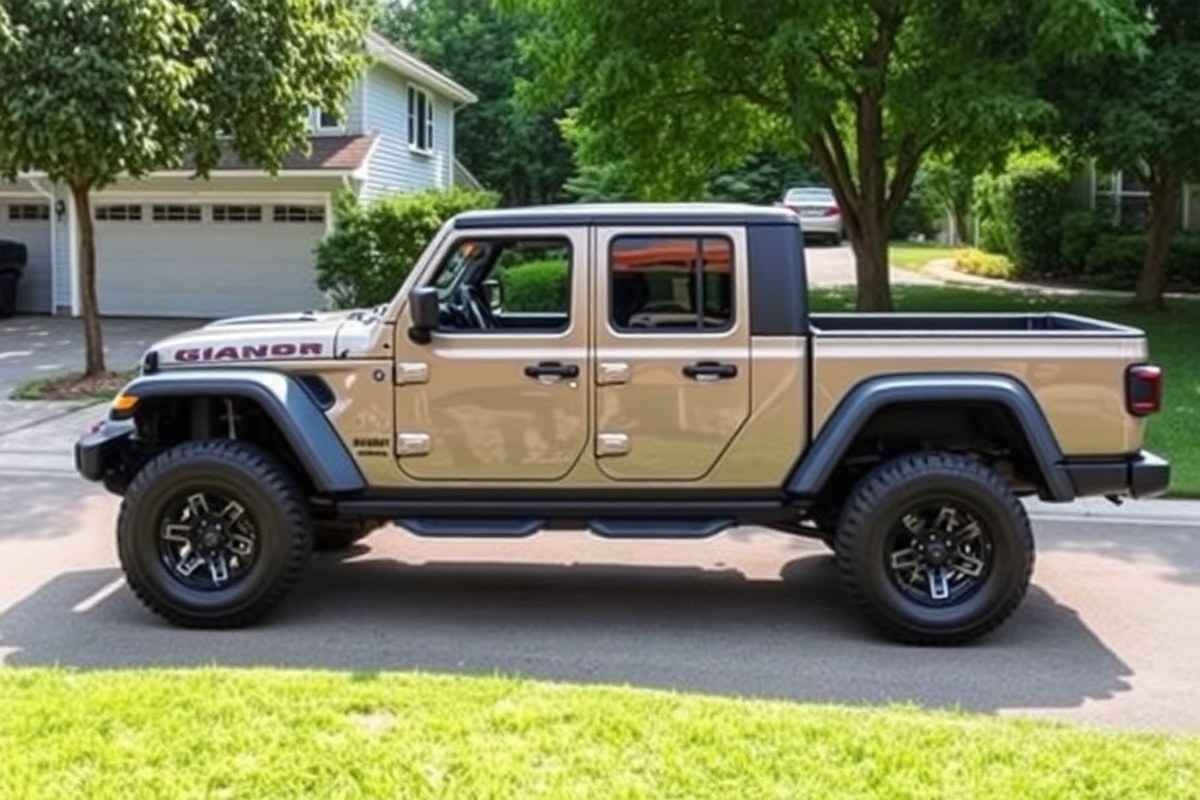
The Gladiator’s length consists of a 137.3-inch wheelbase plus about 80 inches of combined front and rear overhang. This structure supports off-road stability and cargo capacity but also impacts how the truck handles tight turns or fits in parking spaces. Keep in mind that loads extending beyond the 60.3-inch bed length will project past the rear bumper. Legally, any overhang more than 4 feet at night requires a red flag for visibility. Planning cargo sizes accordingly helps maintain safe and legal road use.
Use a tape measure on the spot to quickly check the Gladiator’s exact length. Measure from the very front edge of the front bumper to the farthest point on the rear bumper along a flat surface. This measurement should match the official 218.0 inches. Dealers or online specifications will often state this, but doing your own check affirms what you’re working with in real terms.
The Gladiator fits into the mid-size pickup group, offering a decent mix of cabin room, bed length, and maneuverability. It’s about 5 inches longer than the GMC Canyon and roughly 7 inches shorter than a Ford Ranger SuperCrew, helping you picture its size compared to other trucks. Knowing the precise length helps you avoid problems when parking, towing, or storing, making it easier to plan based on your needs.
What Are the Full Dimensions of the Jeep Gladiator?
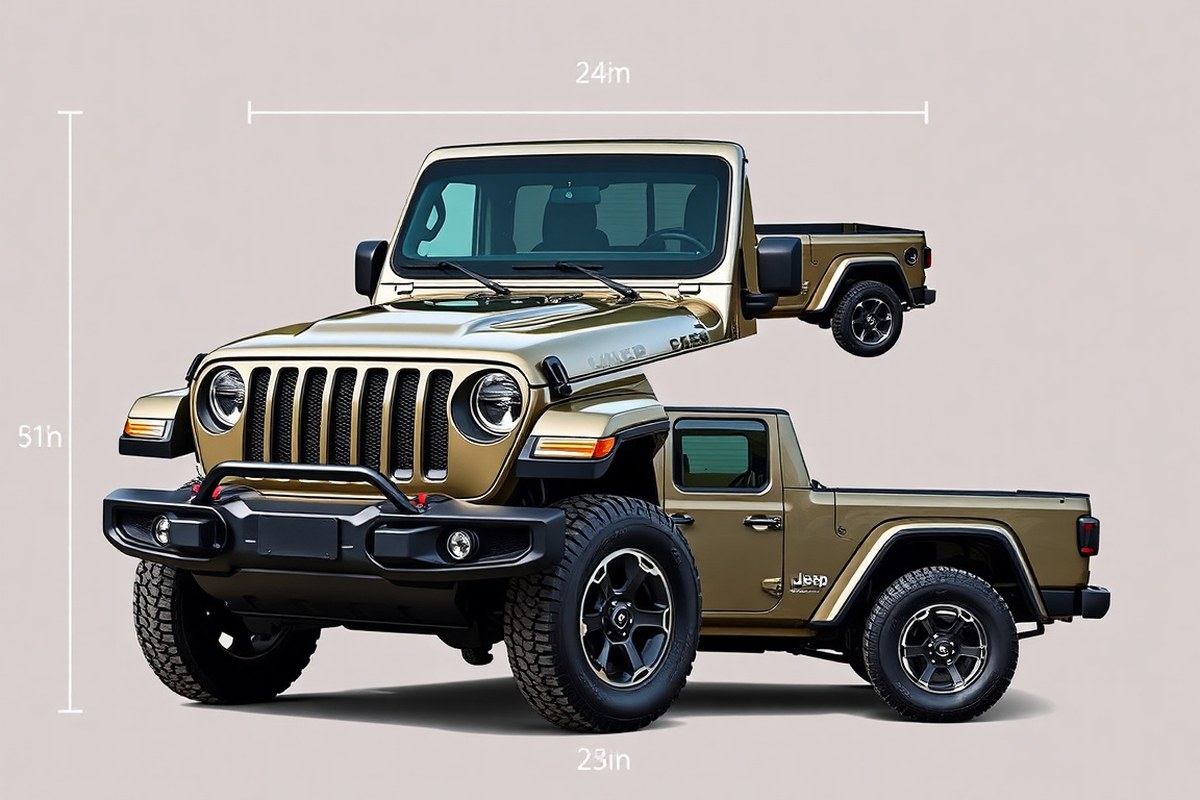
The Jeep Gladiator measures 218 inches in length, making it a full-sized midsize pickup. It stands between 73.1 inches and 76.1 inches tall, depending on the trim level and tire options. The width is 73.8 inches without mirrors, which expands when including side mirrors, usually adding several inches to the overall width. This information matters because precise knowledge of your vehicle’s dimensions helps you plan parking, garage storage, and driving on narrow roads.
The wheelbase of the Gladiator is 137.3 inches. The wheelbase, the distance between the centers of the front and rear wheels, affects vehicle stability and ride comfort. The longer wheelbase contributes to a smoother ride and steadier handling, especially on highways or off-road trails. However, it also results in a wider turning circle, here about 149 feet, which means making tight U-turns requires more space compared to shorter-wheelbase vehicles.
Height variation from 73.1 to 76.1 inches reflects differences among trim levels and tire sizes. For example, the Sport trim usually has the lower height, while the Rubicon with larger, more aggressive tires can reach the taller end of that range. This affects clearance in tight spaces like garages and underpasses.
Width with mirrors is important to measure before parking or driving through narrow lanes. Although the base width is 73.8 inches, you can expect the overall width to increase by several inches depending on the style and size of the mirrors. This total width influences how comfortably you can maneuver the Gladiator in urban or crowded environments.
To accurately check your Gladiator’s dimensions, measure your specific model while parked on a flat surface. For the width, include mirrors and note any aftermarket modifications, as these can add to the size. Measure height from the ground to the highest point on the vehicle, including antennas or roof racks when installed. Knowing exact numbers helps when selecting covered parking spots or navigating height-restricted areas.
Make sure to confirm your exact Gladiator model’s size before parking in tight spots or planning garage space, as tire and trim variations can change the height and width noticeably.
How Does the Jeep Gladiator’s Wheelbase Affect Driving?
The Jeep Gladiator’s wheelbase measures 137.3 inches, a key factor influencing its driving dynamics. This length strikes a balance between stability and maneuverability, making the truck capable both on city streets and rugged off-road trails. Understanding how the wheelbase affects handling helps you make the most of its design when driving or tackling tough terrain.
Definition of Wheelbase and Its Measurement
Wheelbase is the distance between the centers of the front and rear wheels on a vehicle. For the Jeep Gladiator, this distance is 137.3 inches. Measuring the wheelbase is straightforward: it’s the length from the middle of the front axle to the middle of the rear axle. This number directly impacts how the vehicle behaves on the road and off it.
A longer wheelbase generally improves ride comfort and straight-line stability, while a shorter wheelbase improves agility and ease of turning. At 137.3 inches, the Gladiator sits in the midsize truck range, designed to blend the best of both worlds for drivers who need versatility.
Effects on Ride Quality and Stability
The Gladiator’s 137.3-inch wheelbase contributes to smooth ride quality by providing a solid foundation. A longer wheelbase helps absorb bumps and irregularities better than a short wheelbase, reducing pitching motions over uneven surfaces. This benefit is especially useful when driving off-road or on rough city streets where comfort matters.
In addition to comfort, this wheelbase length improves stability at higher speeds. It gives the Gladiator a more planted feel, reducing sway and helping maintain control during lane changes or highway cruising. This stability is important when carrying cargo or towing, common tasks for pickup trucks.
Influence on Turning Radius and Off-Road Handling
The wheelbase length also directly affects the turning radius of the Gladiator. A 137.3-inch wheelbase results in a turning circle large enough to limit tight turns compared to smaller SUVs, but still manageable for a midsize pickup. Maneuverability in tight city streets or narrow trails requires careful steering, but the Gladiator remains easier to handle than most full-size trucks with longer wheelbases.
Off-road, the wheelbase impacts the truck’s ability to clear obstacles and maintain traction. A longer wheelbase increases the risk of getting hung up on rocks or steep inclines, but the Gladiator balances length with ground clearance and approach angles to minimize this risk. Choosing the right line and speed becomes more important in challenging off-road conditions when wheelbase limits come into play.
How Does the Gladiator’s Length Compare to Other Pickup Trucks?
The Jeep Gladiator fits squarely in the midsize pickup truck category, sharing similar overall length dimensions with competitors like the Ford Ranger and GMC Canyon. It measures about 218 inches in length, which is comparable to those rivals. However, bed length is also a key factor to consider if you plan to haul gear frequently. The Gladiator offers a 60-inch bed, which matches the Ford Ranger but falls short of the Toyota Tacoma’s available 72-inch bed. The Tacoma’s longer bed often appeals more to buyers who routinely transport longer items like ladders or kayaks.
| Pickup Truck | Overall Length (inches) | Bed Length (inches) | Size Segment |
|---|---|---|---|
| Jeep Gladiator | 218 | 60 (5 feet) | Midsize |
| Ford Ranger | 210 | 60 (5 feet) | Midsize |
| Toyota Tacoma | 212 (Double Cab) | 72 (6 feet) | Midsize |
| Honda Ridgeline | 210 | 60 | Midsize |
| GMC Canyon | 212 | 61 | Midsize |
Knowing these measurements helps you select a truck that fits your personal parking space and can handle your cargo needs. The Gladiator’s overall length lets it fit in standard garages and parking spots, unlike many full-size pickups. Yet if you want the flexibility of a longer bed for hauling unusually long or bulky items, the Toyota Tacoma’s 6-foot bed or stepping up to a full-size model might be necessary. Each truck balances length and bed size differently based on its design goals, so the specifics matter depending on whether your priority is maneuverability, off-road capability, or maximum cargo volume.
What Are the Bed Dimensions and Cargo Space in the Gladiator?
The Jeep Gladiator’s pickup bed measures approximately 60.3 inches in length, making it a practical size for hauling a wide range of gear. This length allows you to transport items like dirt bikes, camping equipment, or building materials with relative ease. Its bed width is around 49.4 inches between the wheel wells, giving you enough room for wider items to sit securely without too much shifting during travel.
The bed depth, which is about 33.9 inches, plays a significant role in what and how much you can carry. This depth ensures that taller or bulkier gear doesn’t extend above the bed rails excessively, helping to protect your cargo from wind and road debris while driving. It also reduces the risk of gear falling out, letting you drive more confidently on rougher terrain or highways. The depth is especially valuable for outdoor gear such as coolers, tents, or toolboxes that need to stay stable and protected.
With a cargo volume of roughly 35.5 cubic feet, the Gladiator’s bed offers solid space for its category, although it’s smaller than some full-size pickups with longer beds. This volume suits weekend adventures and typical hauling needs like firewood, landscaping supplies, or motorcycle transport. The trade-off for this size is improved maneuverability over larger trucks, as the bed remains compact enough to fit in tighter parking spaces or garages common in urban or suburban settings.
To make the most of the Gladiator’s bed space, start by measuring your typical cargo to ensure it fits within the 60.3-inch length and 49.4-inch width. Secure loads with straps attached to the bed’s tie-down points to prevent shifting. You can add bed liners or bed mats for extra protection against scratches and moisture. Using bed extenders or cargo racks can increase your hauling flexibility when needed, but be aware that these may impact aerodynamics or legal size restrictions depending on your location.
Do not overload the bed past its maximum weight capacity, as this can affect driving stability and cause damage to the suspension or bed structure.
How Do Trim Levels and Tires Affect Gladiator’s Size?
Different trim levels and tire choices cause the Jeep Gladiator’s height to vary between about 73 and 76 inches. Width remains mostly consistent, but off-road-focused trims usually come with taller suspensions and larger tires that increase ground clearance. These changes affect your garage fit, approach angles off-road, and overall ride height.
Trim-Specific Height Differences
The Gladiator Sport trim has the lowest height at roughly 73.1 inches, benefiting from standard suspension and all-season tires. Moving up, trims like the Overland add comfort features and street-oriented tires, raising the height to around 75 inches. The Rubicon trim, built for off-road use, measures about 76.1 inches tall due to its specialized suspension and 33-inch tires. The Mojave trim, designed for desert running, stands near 76.0 inches with similar tire sizing and desert-runner suspension.
This height range between 73.1 and 76.1 inches matters if your garage or parking area has a low clearance. You should measure your door height before selecting a trim, especially if you want the Rubicon or Mojave. The width across trims stays close to the same, as tires don’t usually increase overall vehicle width dramatically, but they do affect height and ground clearance.
Tire Options and Impact on Clearance
Tire size directly impacts the Gladiator’s ride height and ground clearance. Sport trims come standard with smaller all-season tires that keep the height lower. In contrast, trims like Rubicon and Mojave feature 33-inch tires designed for more rugged terrain, which add several inches of height. Optional mud-terrain tires on the Willys Sport, which measure about 32 inches, also increase clearance and improve off-road capability.
Swapping to larger tires beyond factory options can raise your ride height but may require recalibrating your speedometer and potentially adjusting suspension components to maintain proper handling. Larger tires improve off-road clearance but might reduce fuel efficiency and increase road noise. When planning tire upgrades, check your trim’s suspension setup and consider if wheel wells accommodate bigger tires without rubbing.
Off-Road Packages and Dimension Changes
Off-road packages integrated into trims like Rubicon and Mojave include not just larger tires but also upgraded suspension components, skid plates, and reinforced rock rails. These changes raise the vehicle’s height and clearance by improving the suspension travel and ground clearance. For example, Rubicon’s off-road suspension combined with 33-inch tires accounts for the highest overall height of 76.1 inches.
These packages improve approach and departure angles useful for trail driving, but the higher height can reduce aerodynamic efficiency and tricky entry into lower garages or parking structures. Base Sport trims without these packages maintain a lower profile better suited for daily urban driving. Always verify clearance measurements before purchasing to ensure compatibility with your parking environment.
What Practical Considerations Does Gladiator’s Size Bring?
The Jeep Gladiator’s overall length of about 218 inches poses some practical challenges and benefits for daily use. It usually fits inside a standard two-car garage, which is around 20 feet deep, but it’s a tight squeeze. You’ll want to measure your garage depth carefully and consider any shelving or storage in the back before parking your Gladiator inside to avoid damage or cramped space.
In city environments, the Gladiator’s longer length means parking in tight spots can be more difficult than with smaller SUVs or compact trucks. Maneuvering into parallel parking spaces or tight parking structures may require extra care and time. To ease parking challenges, practice three-point turns in low-traffic areas and use backup cameras and sensors if your trim includes them.
The Jeep Gladiator offers a towing capacity reaching 7,650 pounds and can carry a payload of up to 1,725 pounds, depending on the specific model you choose. Its overall size aids in providing stability and the ability to tow trailers or transport equipment. Because its longer length increases the turning radius, you should allow more room for cornering and drive at reduced speeds to maintain control in urban traffic or rugged terrain.
- Measure your garage depth, including shelving, before parking the Gladiator.
- Use backup cameras and parking sensors to improve tight space maneuvering.
- Practice parking in safe, open areas to develop confidence with the truck’s length.
- Allow extra space for turns due to longer length when towing trailers.
- Check your local parking rules for vehicle size restrictions in urban areas.
- Secure cargo carefully since the payload limit tops at 1,725 pounds.
These considerations help you plan how and where to park, load, and tow with the Gladiator. Overlooking garage space can lead to scratched paint or blocked doors, while poor parking technique may cause dents or fines. Using the truck’s technology aids and adjusting expectations for maneuvering will make the size less of a hurdle and maximize the Gladiator’s utility on and off the road.
How Does the Gladiator’s Size Influence Off-Road Capability?
The Jeep Gladiator’s size directly impacts its off-road capability by balancing clearance and angles that help tackle rough terrain. Its design focuses on key specs like approach, breakover, and departure angles, plus ground clearance, to ensure it can handle steep climbs, dips, and obstacles. A well-chosen size helps you avoid getting stuck or damaging the vehicle, critical for trail navigation.
Approach, Breakover, and Departure Angles
The Gladiator offers a 43.6-degree approach angle, meaning the front end can climb steep slopes or rocks without contact. Its 20.3-degree breakover angle indicates decent clearance for the midsection over sharp ridges or bumps, reducing undercarriage scrapes. With a 26-degree departure angle, the rear of the truck can drop off steep edges without catching or dragging.
Together, these angles form a checklist when choosing trails or obstacles. To use this practically, always scout or measure the steepness of hills or obstacles against the Gladiator’s angles before driving. Off Road Pages, an in-dash app, helps monitor these angles during your drive, offering real-time information to avoid trouble.
Ground Clearance and Its Importance
Ground clearance on the Jeep Gladiator is high, allowing it to pass over rocks, logs, and uneven terrain without scraping important components. While exact figures vary by trim and tire setup, the Gladiator typically offers clearance around 11 inches or more. This height protects the underbody and suspension parts, reducing damage risk and maintaining vehicle integrity.
Higher ground clearance improves your ability to maneuver over off-road obstacles, but it also raises your center of gravity. This can impact stability, especially on side slopes or uneven ground, so you should adjust driving speed and angle accordingly. A cautious approach combined with ground clearance knowledge helps you avoid undercarriage damage or rollovers.
How Longer Length Affects Off-Road Maneuvering
The Gladiator’s longer length compared to many SUVs improves cargo capacity but can present challenges on tight trails. More length means a larger turning radius, so negotiating sharp switchbacks or narrow trails becomes trickier. The breakover angle is partly influenced by the wheelbase and overall length, so a longer vehicle increases the chance of getting hung up on crests or ridges.
Still, the Gladiator balances length with its off-road geometry. Its height and suspension help offset the potential downsides of length by providing clearance and flexibility. When driving, prioritize slow, deliberate movements, and use spotters if possible in narrow or technical sections. Plan routes considering your vehicle’s size, as smaller or shorter vehicles have an easier time maneuvering tight obstacles but may lack the Gladiator’s cargo and power advantages.
Keep in mind that while good ground clearance helps clear obstacles, it also raises your center of gravity; take turns slowly to avoid tipping on uneven trails.
How to Choose and Use Your Jeep Gladiator Based on Its Size
Follow this plan to decide if the Gladiator fits your needs and to get the most out of its dimensions for daily use and off-road adventures.
- Before You Buy: Measure your typical parking and garage spaces to confirm the Gladiator’s 218-inch length fits comfortably.
- Day 1: Test drive the Gladiator focusing on handling with its 137.3-inch wheelbase to assess maneuverability in your usual environments.
- Week 1: Load the bed to evaluate cargo capacity and plan for tie-down points based on its 60-inch wide bed and 5-foot length.
- Week 2: If considering towing, check the clearance needed for your trailer including the Gladiator’s overall length and tire size.
- Month 1: Adjust off-road setup, noting how extended length affects trail approach angles and parking on tight sites.
- Ongoing: Review tire size and trim impacts on ground clearance and width to optimize fits in narrow or crowded areas.
Frequently Asked Questions
How Long Is a Jeep Gladiator?
The Jeep Gladiator measures 218 inches, about 18.2 feet long, fitting mid-size pickup standards. This length balances maneuverability and cargo capacity well for both on-road and off-road use.
What Is the Wheelbase Length of the Jeep Gladiator?
The wheelbase of the Jeep Gladiator is 137.3 inches, contributing to its stable driving experience. A longer wheelbase improves control, especially on uneven off-road terrain.
Does the Jeep Gladiator’s Length Vary by Trim?
No, the length remains consistent at 218 inches across all trims, though height and tire size may vary slightly. Trim differences affect ground clearance, not overall length.
How Does the Gladiator’s Length Affect Parking in Urban Areas?
At 218 inches, parking can be challenging in tight city spaces but manageable in regular spots. Using parking sensors and cameras helps with maneuvering in crowded areas.
Is the Gladiator’s Length Suitable for Off-Road Trails?
Yes, the 218-inch length strikes a balance between stability and trail maneuverability, helping in rough terrain. Its off-road design and long wheelbase work together for controlled handling.
How Does Gladiator’s Length Compare to the Honda Ridgeline’s Length?
The Gladiator is slightly longer than many mid-size trucks, with a shorter bed than the Ridgeline, whose bed is 64 inches. The difference mostly affects cargo and load configuration.
Wrapping Up
The Jeep Gladiator’s length and overall size balance cargo space with off-road ability, making it a strong choice if you need both utility and trail performance. Confirm your parking and towing requirements match the Gladiator’s dimensions before buying. Next, spend time driving and loading the truck to fully understand how its size fits your everyday and adventurous plans.