How Long Do Iridium Spark Plugs Last and When to Replace
You can expect iridium spark plugs to last between 75,000 and 100,000 miles thanks to their durability and resistance to wear. Replace them if you notice engine misfires, rough idling, or decreased fuel efficiency.
Also, check them visually for electrode erosion or fouling. Proper installation and avoiding harsh driving habits help extend their lifespan.
Keep an eye on their condition, and you’ll find even more tips to maintain peak engine performance ahead.
Key Takeaways
- Iridium spark plugs typically last between 75,000 and 100,000 miles under proper conditions.
- Replace spark plugs around 100,000 miles or sooner if engine performance issues occur.
- Signs for replacement include misfires, rough idling, decreased fuel efficiency, and electrode wear.
- Regular inspection for electrode erosion, fouling, and gap size ensures timely replacement.
- Proper installation, gapping, and maintenance extend iridium spark plug lifespan and performance.
Understanding Iridium Spark Plugs
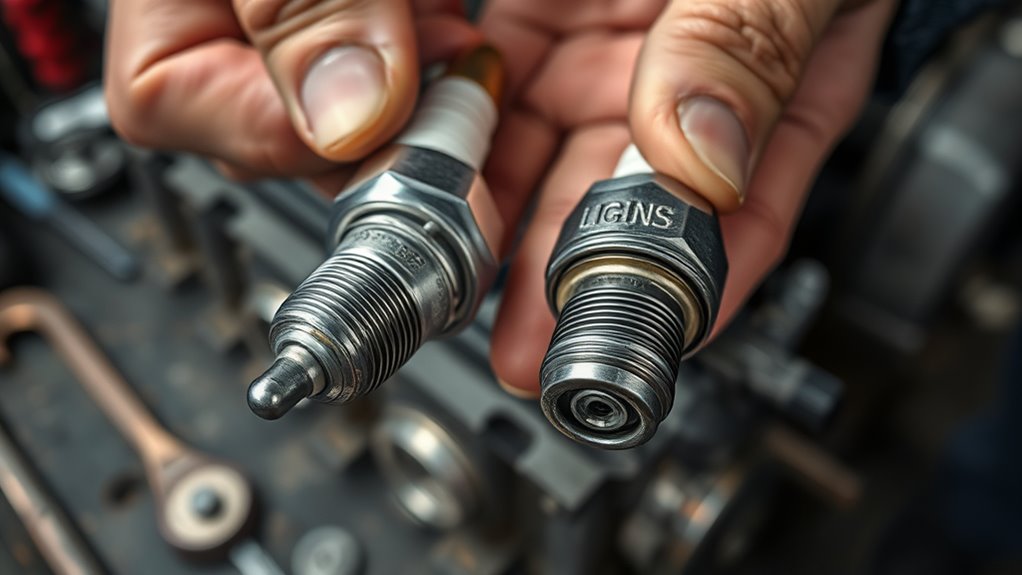
Although you might not think about spark plugs often, understanding iridium spark plugs can help you appreciate their value in your vehicle. These spark plugs feature a fine wire center electrode made of iridium, a metal known for its exceptional resistance to wear and corrosion. This design allows iridium spark plugs to maintain their gap integrity much longer than traditional copper or platinum plugs, which means you won’t need to adjust them as frequently.
Because of their durability, iridium spark plugs often last over 75,000 miles, with some models reaching up to 100,000 miles. This longevity makes them a smart choice for modern vehicles that aim to reduce maintenance costs over time. Even though they’re built to last, you should still inspect your iridium spark plugs periodically to catch any signs of wear or fouling. That way, you ensure your engine runs smoothly and efficiently.
Typical Lifespan of Iridium Spark Plugs
When you choose iridium spark plugs, you can expect them to last well beyond the lifespan of traditional plugs, often exceeding 75,000 miles. Some models even reach up to 100,000 miles, making their replacement interval much longer.
However, this lifespan can vary based on your engine’s condition, the brand you pick, and how well you maintain your vehicle. Using high-quality fuel and regular inspections will help you get the most out of your iridium spark plugs.
Keep in mind, some plugs might show wear before the recommended replacement interval, so staying alert is key.
| Factor | Typical Range |
|---|---|
| Lifespan (miles) | 75,000 – 100,000 |
| Replacement Interval | Extended service |
| Maintenance Importance | High |
| Fuel Quality Impact | Significant |
| Inspection Frequency | Regularly recommended |
Signs You Need to Replace Iridium Spark Plugs
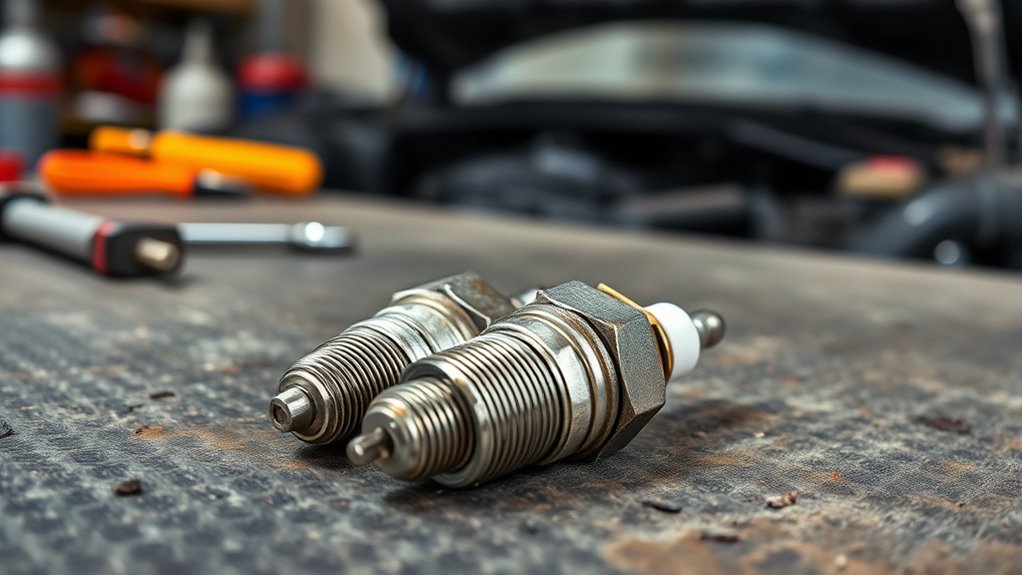
Knowing the typical lifespan of iridium spark plugs helps you plan for their replacement, but recognizing the signs of wear guarantees you don’t wait too long. Key warning signs include engine misfires, sputtering, or hesitation, especially when idling or driving at low speeds.
If you notice a drop in fuel efficiency, it’s another clear indicator that your iridium spark plugs may be failing. Hard starts or engine stalling also point to worn or damaged plugs.
Performing a visual inspection can reveal electrode erosion, excessive gap, or fouling, all of which signal that your spark plugs are nearing the end of their useful life. Even though iridium spark plugs last longer than standard types, sticking to manufacturer-recommended replacement intervals is essential.
How Driving Habits Affect Spark Plug Life
How you drive can really affect how long your iridium spark plugs last. If you’re making lots of stops and taking short trips, your plugs might not get hot enough. That can lead to buildup, which wears them out more quickly.
On the other hand, if you’re driving aggressively or accelerating fast, you’re putting extra stress on the plugs. That speeds up the wear and tear, too. So, the way you drive plays a big role in how long your spark plugs stay in good shape.
Impact Of Frequent Stops
Why does your driving style matter for spark plug life? Frequent stops, especially in city traffic, prevent your spark plugs from reaching their ideal operating temperature. This leads to carbon fouling and accelerated wear, meaning your spark plugs won’t last as long as they should.
When you take mostly short trips, the plugs don’t fully self-clean, increasing the risk of misfires and electrode buildup. Stop-and-go driving causes incomplete combustion, which deposits more residue on the electrodes.
As a result, you’ll need to pay closer attention to spark plug maintenance and may have to replace them more often even if your mileage is still within recommended limits. Understanding how frequent stops impact spark plug life helps you adjust your maintenance schedule and keep your engine running smoothly.
Effects Of Short Trips
Frequent stops in city traffic aren’t the only driving habits that affect your spark plugs. Short trips play a big role too. When you often drive short trips, your engine rarely reaches its ideal operating temperature. This leads to increased carbon buildup on your iridium spark plugs, causing fouling and reducing their efficiency.
Cold starts during these short drives cause repeated thermal cycling, which accelerates the degradation of spark plug materials. Moreover, incomplete combustion common in short-distance driving further fouls the iridium spark plugs, shortening their lifespan.
If you mostly drive short distances, expect your iridium spark plugs to wear out faster than if you drove on highways regularly. Understanding how short trips impact spark plug life helps you maintain your engine’s performance and know when it’s time to replace those iridium spark plugs.
Aggressive Driving Consequences
Although you might enjoy the thrill of rapid acceleration and hard braking, aggressive driving puts extra stress on your engine
and speeds up the wear of your iridium spark plugs. Rapid acceleration demands higher voltage, causing faster electrode erosion.
High speeds raise engine temperatures, leading to premature electrode deterioration. Consistently driving aggressively can reduce your
iridium spark plugs’ lifespan from 100,000 miles to around 60,000 miles or less.
| Driving Habit | Impact on Spark Plugs | Result |
|---|---|---|
| Rapid Acceleration | Higher voltage demand | Faster electrode erosion |
| Hard Braking | Increased engine stress | Accelerated wear |
| High-Speed Driving | Elevated engine temperature | Premature deterioration |
| Consistent Aggression | Reduced lifespan | Replace sooner |
Adjust your driving to extend your iridium spark plugs’ life.
Common Causes of Iridium Spark Plug Wear
If you want your iridium spark plugs to last beyond 75,000 miles, you need to watch out for factors that accelerate their wear. One major culprit is the buildup of carbon deposits, which results from rich fuel mixtures or incomplete combustion. These deposits foul the spark plugs, reducing their efficiency and lifespan.
To extend iridium spark plug life, avoid carbon buildup caused by rich fuel or incomplete combustion.
Furthermore, poor fuel quality and oil fouling can also cause premature wear by contaminating the electrode surface.
Excessive engine heat due to cooling system issues can speed up iridium electrode degradation. Incorrect installation or improper gap settings put extra strain on the plugs, causing them to wear unevenly.
Using low-quality or incompatible spark plugs further increases the risk of premature electrode erosion. By keeping your engine well-maintained and using the right parts, you can minimize wear and guarantee your iridium spark plugs deliver top performance for the long haul.
Comparing Iridium Spark Plugs to Copper and Platinum Alternatives
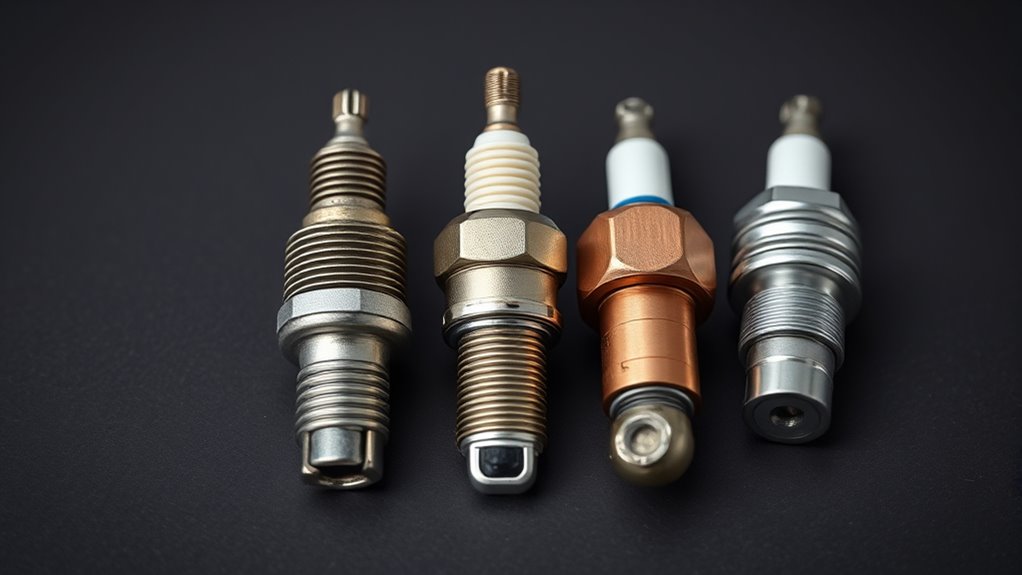
Understanding what affects iridium spark plug wear naturally leads to comparing them with other common types like copper and platinum. You’ll find that iridium spark plugs outperform both copper and platinum when it comes to longevity and resistance to wear.
While copper plugs require replacement every 20,000 to 30,000 miles, iridium plugs can last over 75,000 miles, sometimes reaching 100,000 miles with proper care. Platinum spark plugs fall in between, with a lifespan of 60,000 to 100,000 miles.
Here’s a quick comparison:
| Feature | Copper | Platinum | Iridium |
|---|---|---|---|
| Lifespan (miles) | 20,000 – 30,000 | 60,000 – 100,000 | 75,000 – 100,000+ |
| Electrode Wear | High | Moderate | Low |
| Heat Resistance | Low | Moderate | High |
| Cost | Low | Moderate | High |
| Maintenance Frequency | High | Moderate | Low |
Choosing iridium spark plugs means investing upfront but gaining longer-lasting, reliable performance.
How to Inspect Iridium Spark Plugs
To inspect your iridium spark plugs, start by taking a close look at the electrode. Check for any signs of wear or damage—this can tell you a lot about how well your plugs are doing.
After that, you’ll want to measure the gap between the electrodes. Make sure it matches the manufacturer’s specifications because an incorrect gap can affect your engine’s performance.
Finally, keep an eye out for any fouling, like carbon buildup or oil deposits. These can cause problems and reduce how efficiently your spark plugs work. Taking these steps will help keep your engine running smoothly.
Visual Condition Check
When you inspect your iridium spark plugs, start by closely examining the electrode tips for signs of wear like rounding or erosion. These indicate it’s time for a replacement. A thorough visual inspection helps you catch issues early and maintain engine performance.
Focus on these key areas: Look for carbon fouling, oil deposits, or black soot on the electrode and insulator. These signal contamination or misfiring. Check the ceramic insulator for cracks or damage that could affect safety and efficiency.
Note any excessive gap enlargement between the center and ground electrodes. This increases voltage demand and reduces spark efficiency. Always compare your findings to manufacturer specs to decide if your spark plugs need replacing based on their visual condition.
Measuring Electrode Gap
Although iridium spark plugs are designed for durability, you should regularly measure the electrode gap to guarantee peak performance. Use a feeler gauge to check the gap between the center and ground electrodes.
Insert the largest blade that fits with a slight drag to find the current gap. Typically, this gap ranges from 0.044 to 0.060 inches, but always confirm your manufacturer’s specs.
Inspect for wear or erosion, which widens the gap over time, especially after 50,000 miles. Adjust the gap carefully with a non-metallic tool or seek professional help to avoid damaging the fragile iridium electrode.
| Step | Tool | Typical Gap (inches) |
|---|---|---|
| Measure gap | Feeler gauge | 0.044 – 0.060 |
| Inspect electrode | Visual check | N/A |
| Adjust gap (if needed) | Non-metallic tool | Manufacturer’s spec |
Identifying Fouling Signs
Since iridium spark plugs endure high temperatures and harsh conditions, inspecting them regularly for fouling signs is essential. You can catch problems early by performing a careful visual inspection, which helps maintain engine performance.
When checking for fouling, look out for these key indicators of fouled iridium spark plugs: black, oily, or carbon-covered electrodes and insulator tips, which indicate oil or fuel contamination. Also, watch for wet or greasy deposits on the spark plug, signaling fuel or oil fouling.
Cracks, erosion, or excessive carbon buildup on the insulator can cause misfires and rough running. Remove the spark plug periodically to spot these fouling signs before they worsen.
Keeping an eye on your spark plugs ensures your engine runs smoothly and efficiently.
How Spark Plug Gap Affects Performance
Properly setting the spark plug gap plays a crucial role in your engine’s performance. The spark plug gap is the distance between the center and ground electrodes, and it must match your vehicle manufacturer’s specifications.
If the gap is too wide, your ignition system needs more voltage to create a spark, which can lead to misfires and reduced efficiency. Conversely, a gap that’s too narrow produces a weak spark, causing incomplete combustion and lower power output.
Over time, electrode erosion gradually widens the gap, affecting how well your engine ignites the fuel-air mixture. When you perform a spark plug replacement, always check and adjust the gap to maintain peak performance.
Keeping the spark plug gap correctly set ensures reliable ignition, smoother idling, and better fuel economy, helping your engine run at its best between replacement intervals.
Why You Should Check Spark Plug Voltage Regularly
Checking the spark plug gap helps maintain your engine’s performance, but it’s also important to keep an eye on spark plug voltage regularly. Monitoring spark plug voltage allows you to detect electrode wear and the increasing gap that can affect ignition.
Regularly monitoring spark plug voltage helps detect electrode wear and ignition issues early.
As electrodes wear down, worn spark plugs demand higher voltage to create a spark, signaling it’s time for inspection.
By tracking spark plug voltage, you can spot early signs of fouling or damage before engine problems arise. You can prevent misfires and maintain smooth engine operation. Plus, you’ll identify when spark plugs are nearing the end of their effective life.
Keeping an eye on spark plug voltage helps you avoid unexpected performance issues and ensures your engine runs efficiently. Regular checks give you a heads-up on worn spark plugs, helping you maintain peak ignition and overall vehicle reliability.
When to Replace Iridium Spark Plugs
You should plan to replace your iridium spark plugs around 100,000 miles. But if you notice things like engine misfires, rough idling, or your fuel efficiency dropping, it’s a good idea to check them sooner.
It’s also smart to inspect your spark plugs during routine maintenance, especially after you hit 80,000 miles. That way, you can catch any wear early and avoid bigger problems down the road.
Following these simple steps will help your engine run smoothly and efficiently for a long time.
Replacement Interval Guidelines
Although iridium spark plugs are built to last much longer than traditional plugs, you should plan to replace them around the 100,000-mile mark. This replacement interval guarantees your engine runs efficiently and avoids unexpected issues.
Keep in mind that the exact lifespan depends on your vehicle’s manufacturer and driving conditions. To maintain peak performance, consider these tips for managing your spark plugs’ replacement interval:
- Check your vehicle’s manual for recommended intervals.
- Inspect plugs regularly during routine maintenance.
- Adjust replacement timing based on driving habits and conditions.
Signs Indicating Replacement
When your engine starts misfiring or sputtering, especially at low speeds or idle, it’s a clear sign your iridium spark plugs may need replacing. Other signs indicating replacement include a drop in fuel efficiency, sluggish acceleration, or difficulty starting your vehicle.
Visual inspection might reveal eroded or rounded electrodes, confirming wear. Also, if your ignition system demands higher voltage than usual, it’s time to check those spark plugs.
| Signs Indicating Replacement | What to Look For |
|---|---|
| Engine performance issues | Misfires, sputtering, hesitation |
| Visual wear | Rounded or eroded electrodes |
| Fuel and starting problems | Poor mileage, hard starts, black smoke |
Keep an eye on these signs to maintain your engine’s health with timely iridium spark plug replacement.
Benefits of High-Quality Iridium Spark Plugs
Because high-quality iridium spark plugs use advanced materials, they last considerably longer than other types, often exceeding 75,000 to 100,000 miles. This durability means you won’t need to replace them as often, saving you time and money in the long run. Iridium plugs also handle higher temperatures and resist electrode wear better than platinum or copper plugs, maintaining their performance consistently.
When you choose premium iridium plugs, you benefit from:
- Improved engine performance and smoother starts
- Enhanced fuel efficiency thanks to consistent ignition
- Reduced misfires, leading to fewer engine issues
Their superior durability ensures the spark plug gap stays intact longer, keeping your engine running at its best throughout the plug’s lifespan. By investing in high-quality iridium spark plugs, you’re choosing reliability and efficiency that outperforms standard options.
Tips to Extend Your Spark Plug’s Life
To get the most out of your iridium spark plugs, you should regularly inspect and clean them to catch early signs of wear. Using high-quality fuel with the correct grade helps reduce carbon buildup. Avoiding short trips and aggressive driving limits electrode wear.
Also, guarantee proper installation and gapping to prevent unnecessary damage. When it’s time to replace spark plugs, follow the manufacturer’s recommended interval, usually around 100,000 miles, to maximize their lifespan.
| Tip | Benefit |
|---|---|
| Regular inspection & clean | Detect wear early, prevent failure |
| Use proper fuel grade | Reduce fouling, extend service life |
| Correct installation | Avoid electrode damage, ensure fit |
Frequently Asked Questions
Can Iridium Spark Plugs Improve Fuel Efficiency?
Yes, iridium spark plugs can improve your fuel economy by delivering a consistent and reliable spark that guarantees complete combustion. This stable ignition reduces fuel wastage and helps your engine run smoother, which directly supports emission reduction.
When your engine burns fuel more efficiently, you get better mileage and cleaner exhaust. By using iridium plugs, you’re not only boosting fuel efficiency but also contributing to lower emissions overall.
Are Iridium Spark Plugs Compatible With All Engine Types?
Iridium spark plugs aren’t compatible with all engine types, so you’ll need to check engine compatibility carefully. While iridium spark plugs offer excellent durability and performance thanks to their advanced materials, not every engine design supports them.
Some engines, especially certain diesels, use glow plugs instead. Always consult your manufacturer’s specs to confirm the thread size, electrode gap, and fitment match your engine’s requirements before switching to iridium plugs.
How Do Iridium Spark Plugs Affect Engine Noise Levels?
Think of your engine noise as a symphony. Iridium spark plugs act like a skilled conductor, reducing discord. Their spark plug longevity means you get consistent, precise ignition that cuts down on misfires and combustion irregularities.
This leads to noticeable noise reduction, making your engine run smoother and quieter. When your plugs wear out, the harmony fades, causing increased vibrations and knocking. So, keeping iridium plugs in good shape keeps your engine’s tune just right.
Can Using Iridium Spark Plugs Void Vehicle Warranty?
Using iridium spark plugs won’t void your vehicle’s warranty if you stick to manufacturer policies. Warranty coverage usually requires you to use OEM or OEM-equivalent parts, so replacing your plugs with approved iridium models is fine.
However, if you install non-approved or incompatible plugs, you could risk losing coverage. Always check your vehicle’s warranty terms to make sure you’re following the proper guidelines and protecting your warranty.
What Are the Environmental Impacts of Disposing Old Spark Plugs?
Think of old spark plugs as tiny time bombs of environmental hazards. When you toss them carelessly, hazardous metals like iridium and lead seep into soil and water, poisoning ecosystems.
But when you choose recycling methods, you transform waste into valuable resources, preventing pollution and conserving metals like nickel and platinum. So, by recycling your spark plugs properly, you protect wildlife, reduce landfill toxins, and help sustain a healthier planet for everyone.
Conclusion
When it comes to iridium spark plugs, you want to stay ahead of the curve to keep your engine running smoothly. Knowing when to replace them can save you from costly repairs down the road.
Keep an eye on signs of wear and check voltage regularly. Don’t wait until the plug’s life is hanging by a thread. With proper care and timely replacement, you’ll get the most bang for your buck and enjoy a smoother ride.