How Long Do Bilstein Shocks Last: Complete Guide
You can expect your Bilstein shocks to last between 50,000 and 100,000 miles, depending on your vehicle type and how you drive.
Driving on rough roads, heavy towing, and harsh weather can wear them faster.
Regular inspections and proper maintenance extend their life.
Signs like bouncing, noise, or leaks mean it’s time to replace or rebuild.
Choosing the right model for your needs also helps.
Keep exploring for tips on care, installation, and maximizing performance.
Key Takeaways
- Bilstein shocks typically last between 50,000 to 100,000 miles, with OEM truck shocks sometimes exceeding 124,000 miles before performance drops.
- High-performance models like 8112 or 8100 offer enhanced durability for demanding off-road and heavy-duty conditions.
- Regular inspections, proper maintenance, and correct installation significantly extend the lifespan of Bilstein shocks.
- Harsh driving conditions, heavy loads, and exposure to extreme weather accelerate shock wear and necessitate earlier replacement.
- Signs for replacement include rough rides, excessive bouncing, fluid leaks, unusual noises, and uneven tire wear.
How Long Do Bilstein Shocks Last on Different Vehicles?
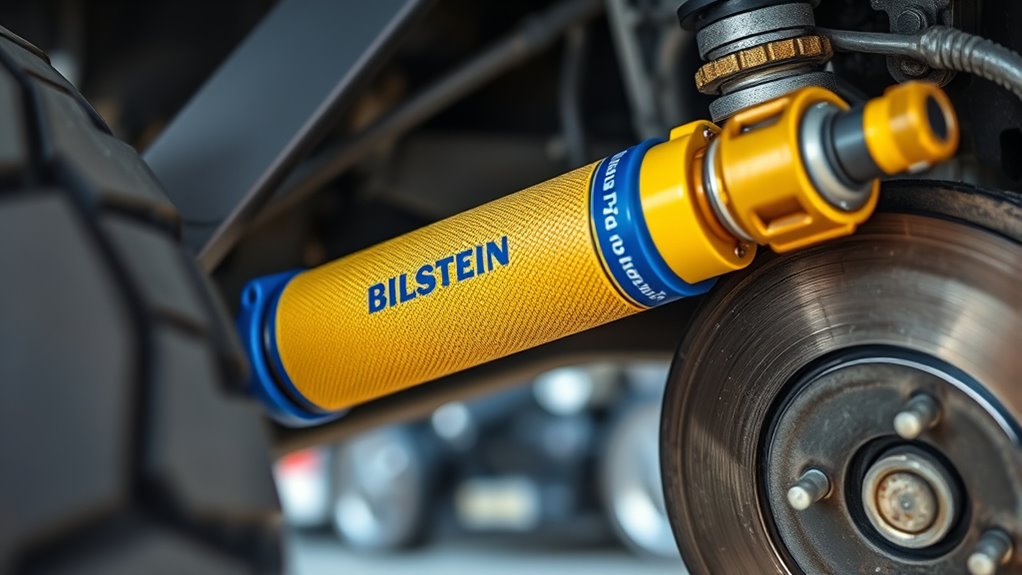
Although the lifespan of Bilstein shocks varies by vehicle and usage, you can generally expect them to last between 50,000 and 100,000 miles under normal driving conditions. How long shocks last depends on the type of vehicle you drive and how you use it.
For example, OEM Bilstein shocks on trucks often exceed 124,000 miles before you notice a drop in performance. If you drive a passenger car, the shocks may last closer to the lower end of that range but still provide reliable service.
Upgrading to high-performance Bilstein models like the 8112 or 8100 can extend how long your shocks last because they’re built tougher. With regular inspections and proper maintenance, you can maximize their lifespan.
Which Driving and Environmental Factors Wear Out Bilstein Shocks Faster?
When you frequently drive on rough roads, potholes, or off-road trails, your Bilstein shocks wear out much faster. The constant impact and vibrations from bumpy, uneven surfaces accelerate shocks wear compared to driving on smooth pavement.
Extreme temperatures also play a role. Both intense heat and freezing cold degrade the seals and fluids inside your shocks, leading to quicker deterioration.
If you often drive in wet or salty environments, corrosion can eat away at the shock components, compromising their integrity and shortening their lifespan.
Furthermore, heavy towing or carrying loads beyond your vehicle’s recommended limits puts extra strain on the shocks, causing them to wear out prematurely.
To maximize your Bilstein shocks’ durability, try to avoid these harsh conditions when possible or inspect your shocks more frequently if you can. Understanding which driving and environmental factors cause shocks wear helps you maintain better control over your vehicle’s suspension health.
Common Signs Your Bilstein Shocks Need Replacement
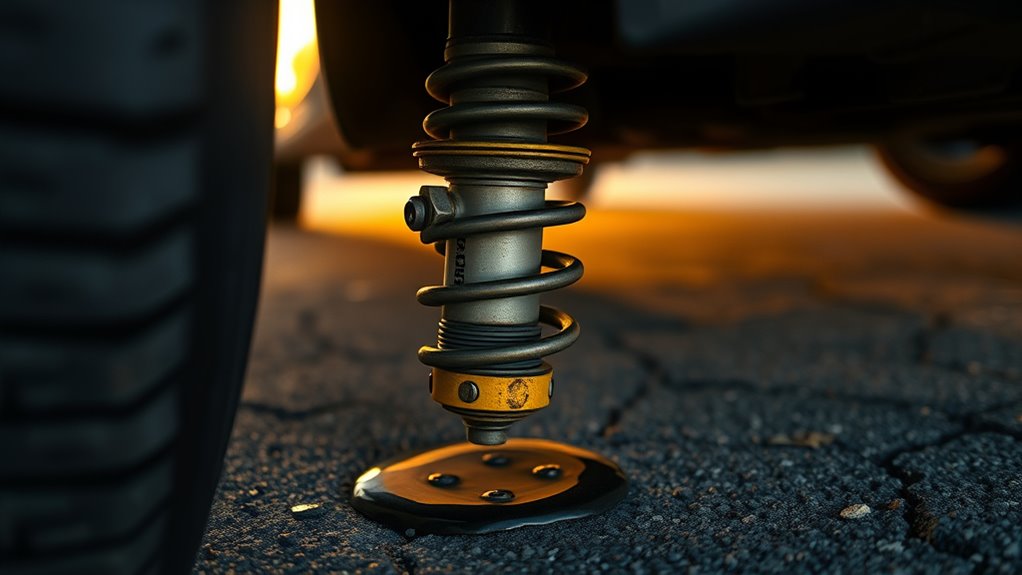
If you notice your ride becoming noticeably rougher or your vehicle swaying more during turns, your Bilstein shocks might be failing. When shocks need replacement, you’ll often feel excessive bouncing over bumps or a rougher overall ride, signaling they’re no longer absorbing impacts properly.
Increased body roll during turns and longer stopping distances also indicate the shocks need to be replaced to maintain safe handling.
Additionally, listen for unusual clunking or rattling noises over bumps, which suggest worn or damaged shock components. Keep an eye out for uneven tire wear patterns, as failing shocks can’t keep your tires in proper contact with the road.
Although visible fluid leaks or oily residue around the shock body are clear signs the seals have failed, these signs alone confirm your shocks need replacement. Recognizing these symptoms early helps you maintain vehicle safety and performance.
How to Inspect Bilstein Shocks for Leaks, Damage, and Wear
Start by checking your Bilstein shocks for any fluid leaks around the seals. This often signals worn or damaged parts, so it’s important to catch it early. After that, take a close look at the shock bodies themselves. Make sure there are no dents, cracks, or rust, as these can weaken their structure and affect performance. Lastly, don’t forget to examine the mounts and bushings. Look for any cracks or excessive play to ensure everything stays securely in place and works as it should.
Visual Leak Inspection
How can you tell if your Bilstein shocks are leaking or damaged? Start by visually inspecting the shock absorber for any oil leaks around the piston rod and seal area. These leaks usually indicate worn or damaged seals.
Look closely for fluid accumulation or wetness on the shock surface, which also signals internal seal failure. While checking for leaks, observe the rubber bushings and mounts for cracks or deterioration that could affect performance.
Make sure the piston rod moves smoothly without excessive play or binding, as this shows the shock is in good condition. Although you’re focusing on leaks now, keep an eye out for any rust or dents on the shock body, as these can hint at more serious issues down the line.
Assessing Physical Damage
After checking for leaks, turn your attention to physical damage on your Bilstein shocks. Inspect the shock housing closely for dents, cracks, or rust that could weaken its structure. Damage to the piston rod or housing can seriously affect performance.
While driving, watch for excessive bouncing or instability, signs your shocks might be failing. Also, listen for unusual noises like clunks or rattles when going over bumps. They often point to internal damage.
Focus on these key areas:
- Look for dents, cracks, or rust on the shock body
- Check the piston rod for bends or wear
- Notice any abnormal bouncing or instability during driving
- Listen for clunking or rattling sounds indicating internal damage
Regularly evaluating physical damage helps you catch issues before they worsen.
Checking Mounts Wear
Where should you focus when inspecting Bilstein shocks for worn mounts? Start by examining the rubber bushings and mounts closely for any excessive wear, cracking, or deterioration. These components play a vital role in shock performance, so any damage can lead to reduced effectiveness.
Next, check the shock body and seals for fluid leaks, as leaking indicates seal failure and potential internal wear. Also, inspect the shock housing for dents, cracks, rust, or corrosion that might weaken its structure.
Don’t forget to look at the piston rod for scratches, pitting, or bends, which point to damage. Finally, pay attention to unusual noises or excessive bouncing while driving. These are common signs that your shock mounts or internal parts need attention or replacement.
When to Rebuild or Replace Your Bilstein Shocks
You’ll want to rebuild or replace your Bilstein shocks when you start noticing signs like increased bouncing, leaks, or a rougher ride. It’s usually pretty clear when they’re not performing like they used to. Now, deciding whether to rebuild or replace them really depends on the condition of the shocks and your budget. Sometimes a rebuild can save money, but if they’re too worn out, replacement might be the better option.
Maintenance plays a big role in figuring out the right timing. If you keep up with regular checkups, especially after driving in tough conditions, you can catch wear early on. That way, you can extend the lifespan of your shocks and avoid bigger issues down the road.
Signs of Shock Wear
When your Bilstein shocks start showing signs like visible leaks, dents, or cracks, it’s a clear signal that you need to inspect them closely and consider rebuilding or replacing them. Recognizing these signs of shock wear helps you maintain your vehicle’s performance and safety.
Ignoring worn Bilstein shocks can lead to damage in other suspension components and compromise ride quality. You should look out for these key indicators that suggest it’s time for shock service:
- Excessive bouncing, nose-diving during braking, or increased body roll
- Unusual clunking or rattling noises over bumps
- Uneven tire wear patterns like cupping or feathering
- Reduced ride comfort and instability on rough terrain
Catch these signs early to keep your suspension system functioning smoothly.
Rebuild Versus Replace
How do you decide whether to rebuild or replace your Bilstein shocks? If your shocks show leaks, reduced damping, or minor damage but still have usable internal parts, a rebuild is a cost-effective way to restore performance. It typically costs $150–$275 per shock.
Rebuilding can notably extend their lifespan, especially with high-end models like the Bilstein 8112 and 8100, which are designed for easy rebuildability. However, if your shocks are physically damaged, severely leaking, or have hit their service life, usually between 50,000 to 100,000 miles, it’s better to replace them.
Regular inspections help you pinpoint when a rebuild is enough or when replacement is necessary. This way, your suspension performs reliably without wasting money on unnecessary parts.
Maintenance Impact Timing
Although Bilstein shocks are built to last, regular maintenance plays a crucial role in determining when you should rebuild or replace them. You should regularly inspect your shocks, especially after rough driving or off-road use, to catch early signs of wear.
Most street-use Bilstein shocks need servicing or replacement around 40,000 to 50,000 miles, but driving conditions and environmental exposure affect this timeline. Pay close attention to increased bouncing or rough ride quality, visible leaks or damaged seals, harsh weather effects like salt or moisture exposure, and any performance decline despite routine maintenance.
How to Maintain Your Bilstein Shocks for Longer Life
To keep your Bilstein shocks performing at their best, you should regularly inspect them for leaks, damage, or unusual wear so you can address issues early. Proper maintenance is key to extending their lifespan.
Clean your shocks gently with water and a soft brush. Avoid high-pressure washers because they can harm the seals. Don’t forget to lubricate the mounting points periodically. This prevents rust and keeps the shocks securely attached.
Also, replace worn bushings and any damaged components promptly to maintain peak shock performance. By staying proactive with these simple maintenance steps, you’ll reduce the risk of premature wear and costly replacements.
Taking care of your Bilstein shocks ensures they continue to deliver smooth, reliable performance mile after mile.
Why Suspension Alignment and Tire Pressure Matter for Bilstein Shocks
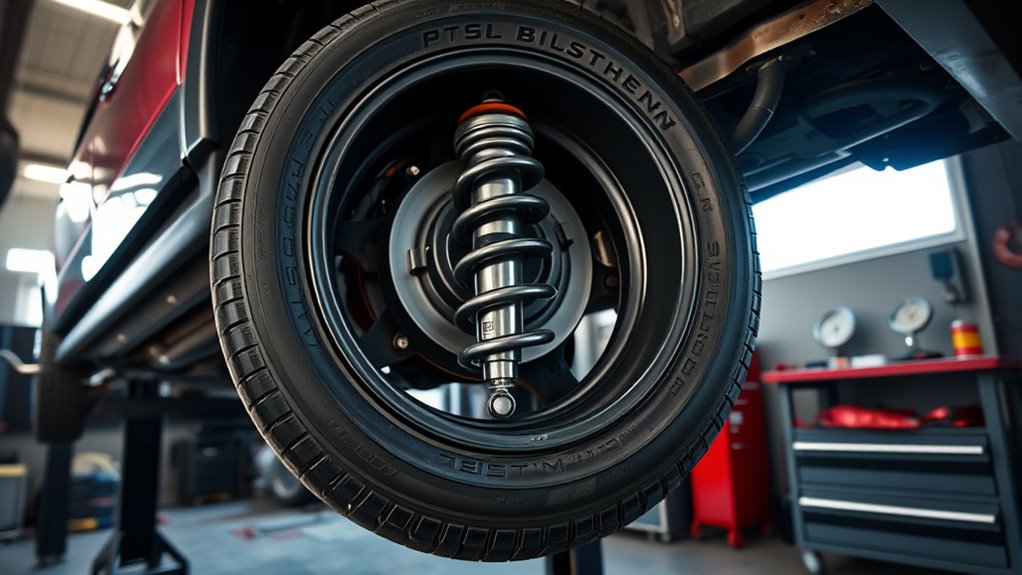
Since your Bilstein shocks rely on balanced forces to function properly, keeping your suspension aligned and tires at the right pressure is vital. Proper alignment ensures even load distribution, preventing uneven wear and premature shock failure.
Meanwhile, maintaining correct tire pressure reduces unnecessary strain, helping your shocks last longer and perform at their best. Misaligned wheels or incorrect tire pressure can cause your shocks to face uneven forces, which leads to leaks, excessive bouncing, and faster deterioration.
Here’s why alignment and tire pressure matter for your Bilstein shocks:
- Proper suspension alignment balances forces on shocks, avoiding uneven wear.
- Correct tire pressure minimizes shock stress and protects internal components.
- Misaligned wheels increase the risk of leaks and reduced shock life.
- Over- or under-inflated tires accelerate shock damage and wear.
Regularly checking alignment and tire pressure according to specs keeps your Bilstein shocks working smoothly and extends their lifespan.
Step-by-Step Guide to Installing Bilstein Shocks Correctly
Before you start installing your Bilstein shocks, make sure you lift your vehicle securely using a jack and jack stands to keep things safe. Safety first, right?
Next, you’ll want to focus on the proper mounting techniques. Carefully remove the old shocks, then align the new ones correctly. Taking your time here really pays off.
Safe Vehicle Lifting
When you’re ready to install your Bilstein shocks, make sure you elevate your vehicle carefully using a hydraulic lift or jack stands. This will keep it stable throughout the process. Safe vehicle lifting is essential to avoid accidents and guarantee smooth installation.
Follow these steps for safe vehicle lifting:
- Position the lift or jack stands on solid, level ground.
- Locate manufacturer-recommended lifting points on your vehicle.
- Raise the vehicle slowly, checking stability at every stage.
- Never rely on a jack alone; always use jack stands for support.
Proper Mounting Techniques
After safely lifting your vehicle as outlined earlier, you can begin installing your Bilstein shocks by focusing on proper mounting techniques. Start by removing old shocks and inspecting mounting points for damage. Use new, high-quality mounting hardware and bushings to guarantee a secure fit and prevent premature wear.
Align the shock absorber carefully with the mounting brackets, making sure the piston rod remains straight and properly positioned. Tighten all mounting hardware to the manufacturer’s specified torque values found in the Bilstein installation manual. This step is vital for correct function and safety.
Once installed, double-check every bolt and hardware piece for tightness. Finally, take your vehicle for a test drive to confirm the shocks operate smoothly without any noise or uneven movement, ensuring your installation is successful.
How to Break In New Bilstein Shocks for Best Performance
Although your new Bilstein shocks are ready to perform, you’ll want to drive gently over varied surfaces for at least 100 miles to let their internal components settle properly. This break-in period is essential for optimizing damping performance and ensuring smooth handling once fully settled.
To get the best from your new shocks, follow these key steps during break-in:
Avoid aggressive driving, sharp turns, and heavy braking to prevent uneven seating of internal parts. Drive on a mix of smooth and rough roads to help the shocks adjust to different conditions. Regularly inspect your shocks for leaks or unusual noises to confirm proper installation. And make sure to follow any specific break-in instructions provided by Bilstein for your model.
Maintenance and Driving Habits to Prevent Premature Bilstein Shock Wear
Proper maintenance and mindful driving habits play a crucial role in preventing premature wear of your Bilstein shocks. Regularly inspecting your shocks for leaks, damage, or wear helps catch early signs of deterioration before performance drops.
You should also maintain proper suspension alignment and tire pressure to avoid uneven stress that shortens shock life. Periodically cleaning your shocks with water and a soft brush removes dirt buildup, preventing seal damage and corrosion.
On the driving side, try to avoid aggressive maneuvers and drive gently over rough terrain to minimize impact stresses that accelerate wear. Furthermore, promptly replacing worn bushings and mounts reduces extra strain on your shocks, extending their service life.
How Bilstein Shocks Improve Handling and Fuel Efficiency
When you upgrade to Bilstein shocks, you’ll notice a marked improvement in handling thanks to their consistent damping and precise valving. These shocks enhance your vehicle’s performance by reducing body roll and stabilizing suspension movement, allowing you to maintain better control during cornering.
This means safer, more confident driving, especially at higher speeds or on challenging roads.
Additionally, Bilstein shocks help maximize fuel efficiency by minimizing rolling resistance and keeping your suspension properly aligned. This not only saves you money at the pump but also reduces unnecessary tire wear.
Here’s how Bilstein shocks improve your driving experience:
- Provide consistent damping for smoother, controlled rides
- Reduce body roll and improve stability during turns
- Maintain optimal tire contact for better steering response
- Enhance fuel efficiency by reducing rolling resistance
With Bilstein shocks, you get a noticeable boost in overall performance and efficiency.
Choosing the Right Bilstein Shock Model for Your Driving Needs
Understanding how Bilstein shocks enhance your vehicle’s handling and efficiency is just the start. To get the most out of your ride, you need to choose the right shock model that matches your driving needs.
For everyday street driving and light off-roading, the Bilstein 5100 series monotube shocks are a great fit. They last between 50,000 to 100,000 miles with proper care.
If you’re into serious off-road adventures, opt for high-performance models like the 8112 or 8100 series. These are built to handle tougher conditions and extended use.
For mainly paved roads and a comfortable ride, the B6 series offers durability and minimal maintenance. They typically last 60,000 to 80,000 miles.
If you tow heavy loads or haul frequently, select shocks calibrated for increased load capacity, although expect shorter service intervals. Always match the shock model to your vehicle and driving conditions, following manufacturer recommendations to guarantee peak performance and longevity.
Frequently Asked Questions
Are Bilstein Shocks Compatible With Air Suspension Systems?
Yes, Bilstein shocks can be compatible with air suspension systems, but it depends on the specific shock model. You’ll want to check if the shocks are designed or adapted for air suspension, as they need the right mounting points, size, and calibration.
Installing them often requires extra parts like air bags or brackets. To guarantee proper fit and performance, consult the manufacturer’s specs or a professional installer before making changes to your air suspension setup.
Can I Use Bilstein Shocks on Off-Road Vehicles Without Modifications?
It’s a coincidence that you’re asking about off-road compatibility just as Bilstein shocks are known for their street use focus. You can use some Bilstein shocks on off-road vehicles without modifications, especially the 5100 series, which offers decent off-road compatibility straight out of the box.
However, for tougher terrain, you’ll want heavier-duty models like the 6112 to guarantee durability and ideal handling without compromising performance.
What Warranty Coverage Do Bilstein Shocks Typically Include?
Bilstein shocks typically include warranty coverage that protects you against manufacturing defects and faulty parts for the lifetime of the shock, as long as you’re the original owner. You’ll want to keep up with proper installation and regular maintenance to keep that warranty valid.
Some high-performance models might have special terms or exclusions, so check your specific shock’s warranty details to know exactly what’s covered and what’s not.
How Do Bilstein Shocks Compare to Other Premium Shock Brands?
You might think all premium shocks are the same, but Bilstein shocks actually set themselves apart in the performance comparison. They deliver consistent damping and heat dissipation where others might falter.
While Fox offers more off-road customization, Bilstein balances durability, comfort, and reliability for everyday and rugged use. So, if you want shocks that last and perform without fuss, Bilstein’s the smart choice over many competitors.
Are There Specific Tools Required for Bilstein Shock Installation?
Yes, you’ll need specific installation tools for Bilstein shocks. Basic hand tools like wrenches, sockets, and a jack usually cover most installs.
However, some models require specialized tools, such as a spring compressor for coilover shocks and a torque wrench to tighten bolts correctly. Using the right size sockets is essential to avoid damaging parts.
Always check the Bilstein installation manual to make sure you have all the necessary installation tools before starting.
Conclusion
Your Bilstein shocks are the unsung heroes smoothing every bump and twist on your ride. Treat them like trusted companions. Inspect regularly, drive thoughtfully, and break them in gently.
With a little care, they’ll keep your journey steady and your handling sharp, lasting miles beyond the ordinary. Remember, replacing or rebuilding at the right time keeps your drive as smooth as silk.
This way, every road turns into a thrilling adventure rather than a rough challenge.