How Long Can You Drive With Bad Spark Plugs
You can drive a short distance with bad spark plugs if your engine runs smoothly, but don’t push it if you notice rough idling, hesitation, or difficulty starting. Ignoring these signs risks misfires, higher fuel consumption, and serious engine or catalytic converter damage.
It’s best to limit driving and replace plugs promptly to avoid costly repairs. Understanding the causes, symptoms, and proper maintenance can help you keep your engine running reliably and efficiently.
Key Takeaways
- Driving a short distance (around 50 miles) with bad spark plugs is possible if the engine runs smoothly without misfires or rough idling.
- Symptoms like rough idling, hesitation, or difficulty starting indicate the need to limit driving and replace spark plugs promptly.
- Continuing to drive with faulty spark plugs increases risks of engine misfires, reduced power, and higher fuel consumption.
- Prolonged use of bad spark plugs can cause damage to the catalytic converter and engine components, leading to costly repairs.
- Regular inspection and timely replacement of spark plugs prevent engine damage and maintain fuel efficiency and vehicle reliability.
What Spark Plugs Do and Why They Matter
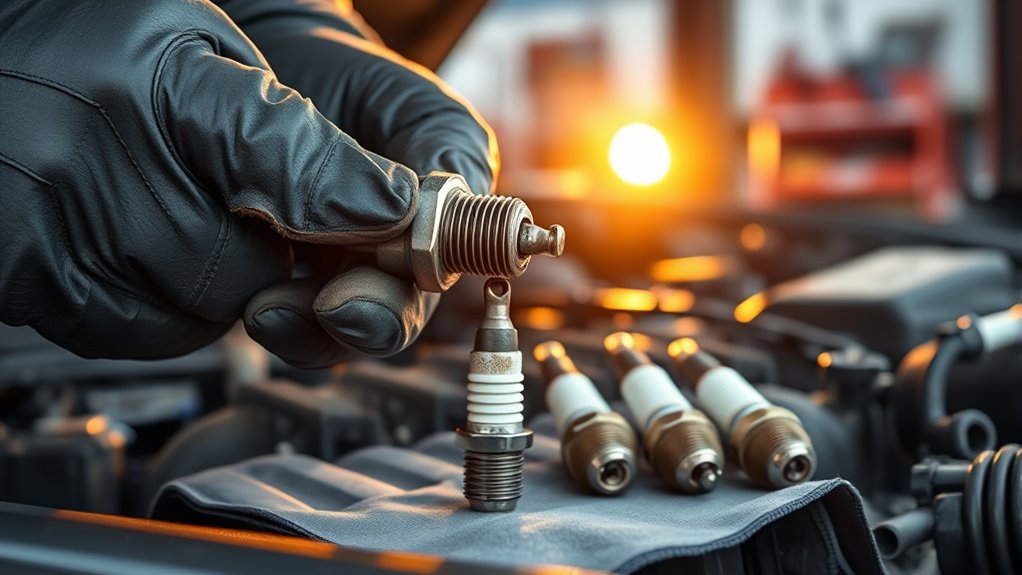
Although you might not see them, spark plugs play a fundamental role in your engine by igniting the air-fuel mixture inside each cylinder. This ignition creates tiny explosions that push the pistons, generating the mechanical energy your vehicle needs to move.
When spark plugs work properly, they guarantee efficient fuel combustion, which helps boost fuel economy and cut down on emissions. However, bad spark plugs can disrupt this process, causing misfires and rough idling.
This directly impacts your engine performance, leading to sluggish acceleration and reduced power. Using the right type of spark plugs and keeping them in good condition is essential for maintaining your engine’s reliability and longevity.
Ignoring bad spark plugs doesn’t just hurt performance. It can also cause more serious engine damage over time. So, understanding what spark plugs do and why they matter helps you appreciate why keeping them in top shape is indispensable for your vehicle’s health.
How to Recognize When Spark Plugs Are Failing
When your spark plugs start to fail, your engine will often give you clear warning signs that something’s wrong. One of the most noticeable signs is a misfiring spark, which causes your engine to run roughly or hesitate during acceleration. You might also experience difficulty starting your vehicle or hear unusual noises like knocking or popping from the engine. Reduced fuel efficiency is another clue that a bad spark plug is affecting performance.
Visually inspecting your spark plugs can reveal worn electrodes, carbon buildup, or cracked insulators. These are clear indicators that they need replacement. Furthermore, the check engine light may come on or flash when misfires occur due to bad spark plugs. If you notice consistent engine issues, especially after cold starts, it’s time to check your spark plugs. Recognizing these symptoms early helps prevent further engine damage and keeps your car running smoothly.
Top Causes of Bad Spark Plugs
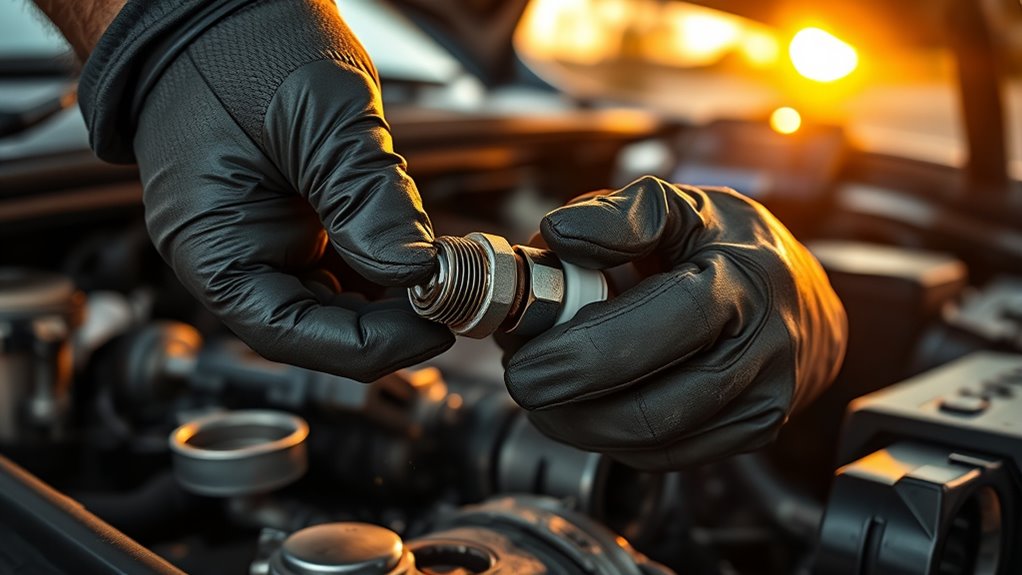
If you want your engine to run smoothly, you need to understand what causes spark plugs to fail prematurely. One common culprit is worn or eroded electrodes from prolonged use. This reduces the spark’s effectiveness and causes misfires.
Carbon deposits can also build up when your engine runs too rich or if oil fouling occurs. These deposits insulate the electrode and impair ignition. Overheating, often caused by incorrect gap settings or poor fuel quality, can crack or break the ceramic insulator, leading to spark plug failure.
Weak spark voltage or ignition coil issues speed up spark plug deterioration and increase misfires. Finally, using the wrong type or incompatible spark plugs leads to improper combustion and early damage. To avoid these problems, make sure your spark plugs are suitable for your vehicle and maintain your ignition system properly. This will prevent misfires and keep your engine running efficiently.
How Environmental Factors Affect Spark Plug Performance
Understanding what causes spark plugs to fail is just part of the picture. Environmental factors also play a significant role in their performance.
When you drive in cold weather, your spark plugs face extra challenges. Low temperatures make it harder for them to ignite the air-fuel mixture, causing rough engine operation and misfires.
Moisture and snow can lead to a fouled spark, as corrosion and deposits build up on the plugs. Thickened engine oil in the cold adds to this fouling, reducing spark plug efficiency.
Using cold-weather-rated spark plugs and maintaining them properly helps you avoid these issues and keep your engine running smoothly.
| Environmental Factor | Effect on Spark Plug Performance |
|---|---|
| Cold Temperature | Increased misfires, harder ignition |
| Moisture and Snow | Corrosion, fouled spark |
| Thickened Engine Oil | Deposit buildup, fouling |
| Improper Maintenance | Accelerates fouling and wear |
| Cold-Weather Plugs | Improved reliability in harsh conditions |
What Happens When Spark Plugs Go Bad
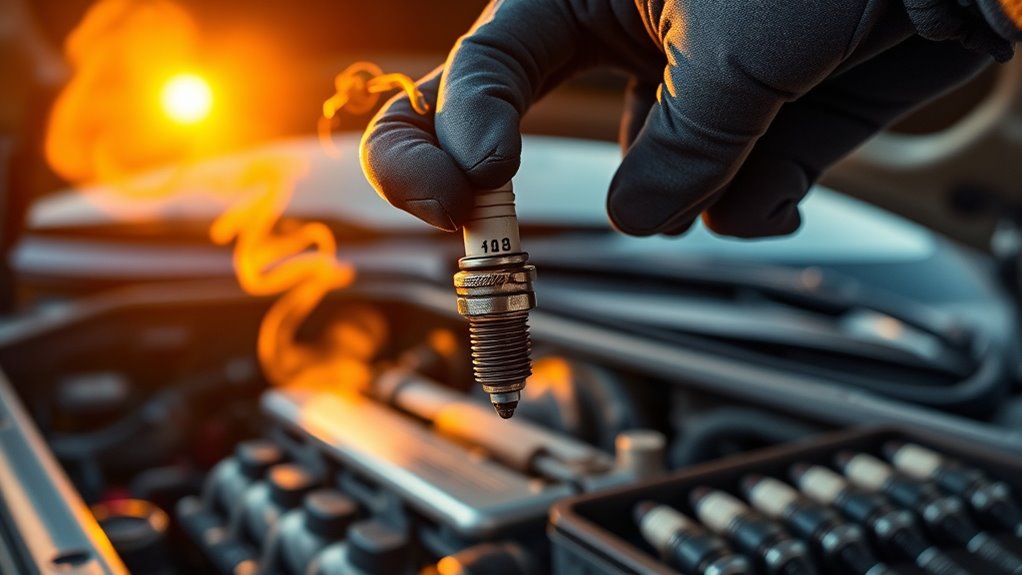
When your spark plugs go bad, you might start noticing engine misfires. This can cause your car to idle roughly and make acceleration feel sluggish. Basically, your engine isn’t firing as smoothly as it should.
Because of that, combustion efficiency takes a hit. What does that mean for you? Well, your fuel consumption goes up and your car produces more emissions than usual.
If you ignore these warning signs, it can lead to bigger problems down the road. For example, essential parts like the catalytic converter could get damaged over time. So, it’s a good idea to get those spark plugs checked out sooner rather than later.
Engine Misfire Symptoms
Because bad spark plugs fail to ignite the air-fuel mixture consistently, your engine can start to misfire, causing noticeable jerking or stuttering during acceleration and rough idling. When you experience an engine misfire, you might also feel a drop in power or hesitation as unburned fuel disrupts smooth combustion.
Your check engine light could come on or even flash, signaling that something’s wrong. Ignoring these symptoms won’t just make driving uncomfortable; it can lead to increased emissions and damage to your catalytic converter over time.
Paying attention to these engine misfire signs early helps you avoid costly repairs and keeps your vehicle running efficiently. So, if you notice rough idling or jerky acceleration, it’s time to inspect your spark plugs.
Combustion Efficiency Loss
If your spark plugs start to fail, you’ll notice your engine losing power and running less efficiently due to incomplete combustion. This happens because the combustion process becomes disrupted, causing misfires and rough idling. Over time, this inefficiency can lead to engine damage if ignored.
Here’s what to expect when combustion efficiency drops:
- Reduced engine power and acceleration
- Fuel economy decreases by up to 30%
- Rough idling and hesitation during acceleration
- Carbon buildup on pistons and valves from unburned fuel
Component Damage Risks
Incomplete combustion from bad spark plugs doesn’t just reduce performance; it puts your engine’s components at risk. When spark plugs fail, engine misfires occur, causing unburned fuel to enter the exhaust system.
This leads to excessive heat, which can damage pistons and valves over time. Continuous misfires also increase wear on other engine parts, speeding up overall component damage.
Unburned fuel can overheat and damage the catalytic converter, resulting in costly repairs. Ignoring faulty spark plugs means you risk serious engine damage, including cylinder head and piston failure.
To avoid these problems, it’s essential to address spark plug issues promptly. Doing so keeps your engine running smoothly and prevents expensive damage from ongoing misfires.
How Bad Spark Plugs Affect Fuel Efficiency and Emissions
When your spark plugs start to fail, your engine can’t burn fuel as efficiently. This drives up fuel consumption and lowers your gas mileage. This decline in fuel efficiency not only costs you more at the pump but also harms the environment by increasing harmful emissions.
Here’s how bad spark plugs impact your vehicle:
- Incomplete combustion causes more fuel to be wasted, reducing fuel efficiency.
- Unburned fuel escapes into the exhaust system, raising emissions of hydrocarbons and carbon monoxide.
- The engine runs richer due to misfiring plugs, which increases pollutant output.
- Prolonged poor ignition can damage the catalytic converter, worsening emissions problems.
How Long Is It Safe to Drive With Bad Spark Plugs?
Bad spark plugs don’t just drain your fuel and increase emissions. They can also affect how long you can safely keep driving. Generally, you can drive safely for short distances, like up to 50 miles, if your engine runs smoothly without misfires.
However, if you notice rough idling, difficulty starting, or reduced power, it’s best to limit driving and replace the spark plugs promptly. Driving beyond 100 miles with faulty spark plugs raises the risk of serious engine damage, including harm to pistons or the catalytic converter.
How long you can drive safely depends on the severity of the spark plug issue and whether symptoms are present. Regularly monitoring your engine’s performance and addressing spark plug problems early will help you avoid costly repairs.
Risks of Driving Too Long With Faulty Spark Plugs
If you keep driving with faulty spark plugs, you’re putting your engine at serious risk. Misfires and overheating can cause some major damage over time.
You’ll probably start noticing your fuel economy taking a hit too, since your engine won’t be running as smoothly as it should.
And that’s not all—bad spark plugs can actually damage your catalytic converter, which means you could be facing some expensive repairs down the road. So, it’s definitely worth getting them checked sooner rather than later.
Engine Damage Risks
Although you might not notice immediately, driving with faulty spark plugs can quickly lead to serious engine damage. Misfires caused by bad spark plugs disrupt combustion, increasing soot and carbon buildup that harms your engine.
Ignoring this problem puts your vehicle at risk of costly repairs. Here are the main risks you face:
- Engine misfires damage cylinder heads and piston rings, reducing engine efficiency.
- Uneven firing wears pistons, valves, and cylinder walls prematurely.
- Unburned fuel overheats the catalytic converter, causing emissions system failure.
- Accelerated engine wear can ultimately lead to complete engine failure.
To avoid these risks, replace spark plugs promptly. Driving too long with faulty plugs not only compromises performance but also threatens your engine’s longevity.
Fuel Economy Impact
Ignoring faulty spark plugs doesn’t just risk engine damage. It also hits your fuel economy hard. Bad spark plugs cause incomplete combustion, forcing your engine to burn more fuel to keep running. This can lower your mileage by up to 15-20%, increasing your fuel costs.
Plus, misfires from bad spark plugs make your fuel system work overtime, further reducing fuel economy. If you keep driving without replacing them, you’ll notice your fuel consumption rising steadily.
| Issue | Effect on Fuel Economy | Result |
|---|---|---|
| Incomplete Combustion | -15% to -20% mileage | Higher fuel costs |
| Engine Misfires | Increased fuel use | Wasted fuel |
| Unburned Fuel Emissions | Lower efficiency | More fuel consumed |
Keep spark plugs in good shape to save fuel and money.
Catalytic Converter Harm
When you drive with faulty spark plugs, unburned fuel can enter your exhaust system and cause serious damage to your catalytic converter. Engine misfires from bad spark plugs increase unburned hydrocarbons, which clog and overheat the catalytic converter. This buildup shortens its lifespan and leads to costly repairs. Ignoring spark plug problems puts your catalytic converter at risk of irreversible damage.
Here’s what happens when you keep driving with faulty spark plugs:
- Unburned fuel flows into the catalytic converter.
- Engine misfires cause excess heat buildup.
- The catalytic converter gets clogged and overheated.
- Your vehicle’s performance drops, and repair costs rise.
Don’t delay fixing spark plugs to protect your catalytic converter and avoid expensive damage.
How Bad Spark Plugs Hurt Your Catalytic Converter
Because bad spark plugs cause incomplete combustion, unburned fuel can enter your exhaust system and damage the catalytic converter. When your spark plugs misfire, raw fuel reaches the catalytic converter, contaminating and clogging it over time. This contamination reduces its ability to filter harmful emissions effectively.
Furthermore, misfires increase the temperature inside the catalytic converter, leading to overheating and potential failure. The excessive heat and fuel buildup strain the catalytic converter, causing it to wear out faster than usual.
If you keep driving with faulty spark plugs, the continuous misfires can cause excessive emissions, putting even more stress on the catalytic converter. Replacing worn or fouled spark plugs promptly helps prevent this damage, ensuring your catalytic converter functions properly and your vehicle stays emission-compliant.
Ignoring bad spark plugs doesn’t just harm performance; it risks costly catalytic converter repairs or replacements down the road.
When to Replace Spark Plugs and How to Do It Right
You should replace your spark plugs every 30,000 to 80,000 miles, or sooner if you notice things like engine misfires, rough idling, or a drop in fuel efficiency. It’s important to use the right tools and stick to the manufacturer’s specs for the spark plug type and gap. Doing this ensures you get a proper replacement.
Identifying Replacement Timing
Although spark plugs can last anywhere from 30,000 to 80,000 miles depending on their type and your driving habits, knowing the right time to replace them is essential for maintaining your engine’s performance. To identify when to replace spark plugs, watch for signs you need a change, like engine misfires, rough idling, or reduced fuel efficiency.
You should also:
- Inspect spark plugs visually for worn electrodes, deposits, or cracks.
- Follow your vehicle manufacturer’s recommended replacement interval.
- Check the spark plug gap and type to match specifications.
- Monitor your driving conditions, as harsher conditions can shorten spark plug life.
Proper Replacement Procedures
When it’s time to replace your spark plugs, following the proper steps guarantees your engine runs smoothly and efficiently. Typically, you should replace your spark plugs every 30,000 to 80,000 miles, following your vehicle manufacturer’s recommendations.
Before starting, disconnect the negative battery terminal to avoid electrical issues. Use a spark plug socket and ratchet to carefully remove the old plugs. While you’re at it, inspect the ignition coil and wires for wear to prevent misfires.
When installing new spark plugs, make sure you use the correct type and gap specified in your owner’s manual. Tighten them to the recommended torque, then perform an engine idle test to confirm everything’s working right. This proper replacement process helps maintain ideal engine performance and fuel efficiency.
Choosing Correct Spark Plugs
Following proper replacement procedures sets the stage for choosing the right spark plugs to keep your engine running efficiently. To replace spark plugs correctly, you need to pay attention to several key factors:
- Use your vehicle manufacturer’s specifications to select the correct spark plug type, including size, heat range, and electrode design.
- Replace spark plugs every 30,000 to 80,000 miles, depending on the plug material and driving conditions.
- Always gap new spark plugs according to the manufacturer’s recommendations for *ideal* ignition.
- Tighten spark plugs to the specified torque and replace them in sets to *guarantee* balanced engine performance and avoid misfires.
How to Diagnose Spark Plug Problems Yourself
Wondering how to tell if your spark plugs are causing engine trouble? You can diagnose common spark plug issues by paying attention to engine misfires, rough idling, or difficulty starting. These symptoms often point to faulty spark plugs.
Next, visually inspect the spark plugs for worn electrodes, heavy deposits, or cracked insulators, signs that they need replacement. Using a spark tester helps you check if the spark is strong and consistent during operation, confirming their condition.
Listen closely for unusual engine noises like knocking or popping, which may also indicate ignition problems. Furthermore, keep an eye on your fuel efficiency; a sudden drop often signals misfiring caused by bad spark plugs.
Choosing the Right Spark Plugs for Your Vehicle
Diagnosing spark plug problems is only part of keeping your engine running smoothly. You also need to select the right spark plugs for your vehicle. Choosing the proper spark plugs ensures efficient combustion and helps avoid engine issues. Always start by consulting your vehicle’s owner’s manual for the manufacturer’s specifications and recommended gap size.
Selecting the right spark plugs is essential for efficient combustion and preventing engine problems.
Here are four key points to weigh when selecting spark plugs:
- Match the spark plug type to your vehicle’s requirements, whether copper, platinum, or iridium.
- Take into account iridium plugs for longer life, typically 80,000 to 100,000 miles.
- Use the correct heat range to prevent fouling or pre-ignition.
- Follow proper installation torque to avoid damaging the spark plug or affecting performance.
Frequently Asked Questions
Can Bad Spark Plugs Cause Starting Problems in Cold Weather?
Yes, bad spark plugs can cause starting problems in cold weather. When your spark plug lifespan is nearing its end, it struggles to create a strong spark, impacting your ignition system.
This makes it harder for your engine to ignite the fuel-air mixture, especially in low temperatures. You’ll notice longer crank times and rough idling.
To avoid these issues, replace worn spark plugs promptly to maintain reliable cold starts and a healthy ignition system.
Do Spark Plug Issues Affect Hybrid or Electric Vehicles?
About 70% of hybrid vehicle issues relate to engine components like spark plugs, so yes, spark plug problems definitely affect hybrid durability. If your hybrid’s spark plugs fail, you’ll notice rough idling and reduced fuel efficiency.
However, electric vehicles have no spark plugs, so spark plug issues don’t impact electric compatibility at all. You can drive an electric car without worrying about spark plug deterioration, unlike hybrids where maintenance is essential.
How Do Spark Plug Gaps Influence Engine Performance?
Spark plug gaps influence engine performance by affecting ignition timing. If the gap’s too narrow, you won’t get a strong enough spark to ignite the air-fuel mixture properly, which lowers fuel efficiency and power.
If it’s too wide, misfires happen because the voltage can’t jump the gap consistently. You need to keep the gap at the manufacturer’s specs to maintain peak ignition timing and maximize fuel efficiency while avoiding rough engine operation.
Are There Specific Brands Known for Longer-Lasting Spark Plugs?
Yes, you’ll find that brands like Bosch, NGK, and Denso stand out for spark plug longevity and brand durability. You might think all spark plugs wear out quickly, but these manufacturers use advanced materials like iridium and platinum to extend lifespan considerably.
Choosing high-quality spark plugs from these trusted brands means you won’t need frequent replacements, saving you time and money while keeping your engine running smoothly.
Can Bad Spark Plugs Trigger the Check Engine Light?
Yes, bad spark plugs can definitely trigger the check engine light. When your ignition system misfires due to faulty plugs, it disrupts combustion, causing incomplete fuel burning.
This not only reduces fuel efficiency but also activates sensors that detect problems and alert your car’s computer. So, if your check engine light comes on, it’s a good idea to check your spark plugs and ignition system to avoid further issues.
Conclusion
You might think you can drive forever with bad spark plugs, but coincidence has a way of catching up, like that unexpected stall right before an important meeting. Ignoring spark plug issues not only hurts your engine’s performance but can also damage your catalytic converter.
So, don’t wait for bad luck to strike twice. Replace those spark plugs promptly, and you’ll keep your car running smoothly and avoid costly repairs down the road.