How Do You Unclog Fuel Injectors in 3 Simple Steps?
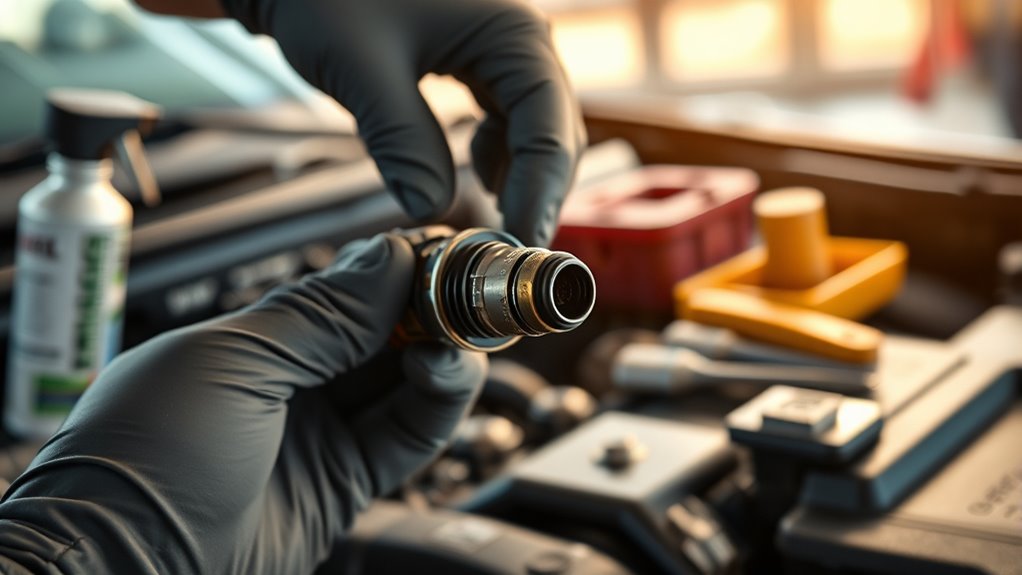
To unclog your fuel injectors, first relieve fuel pressure by disconnecting the battery, removing the fuel pump fuse, and running the engine until it stalls.
Next, soak the injectors in a fuel injector cleaner solution for several hours to dissolve deposits.
Finally, clear the injectors using compressed air, pushing it through at 20-30 PSI to remove debris and check spray patterns.
If you want to guarantee ideal injector performance and safe reinstallation, keep exploring these steps.
Key Takeaways
- Relieve fuel pressure and remove injectors safely by disconnecting the battery and fuel supply.
- Soak injectors in a fuel injector cleaner solution for several hours to dissolve deposits.
- Use compressed air at 20-30 PSI to blow out debris and check the spray pattern.
- Rinse injectors thoroughly after soaking and before reinstalling.
- Reinstall injectors, restore fuel pressure, and verify proper spray performance.
Relieve Fuel Pressure and Safely Remove Fuel Injectors
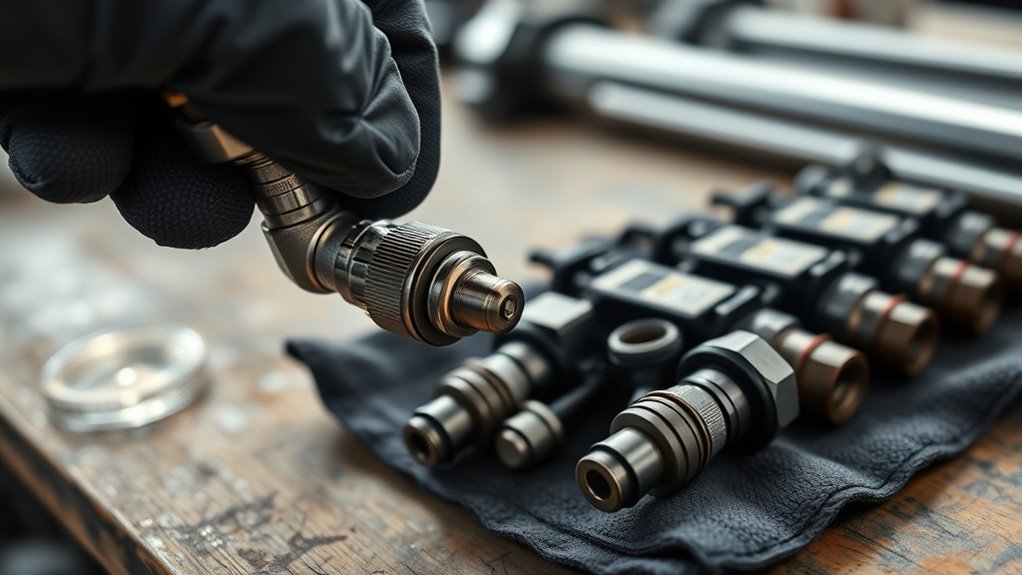
Before you begin, disconnect the negative battery cable to prevent sparks and guarantee safety. Next, remove the fuel pump relay or fuse, then start the engine and let it run until it stalls. This step safely releases residual fuel pressure in the fuel system.
Open the fuel filler cap to let air in, which helps depressurize fuel lines further. Use a fuel pressure gauge to confirm the pressure reads zero before you proceed. Once the fuel pressure is fully relieved, carefully disconnect fuel lines and electrical connectors attached to the fuel rail.
Loosen the fuel rail bolts to gain access to the injectors. Now, you can safely remove fuel injectors without risking fuel spray or damage. Properly releasing fuel pressure and following these steps ensures your fuel injectors removal goes smoothly and safely, setting you up for the next phase of unclogging your injectors.
Soak Injectors in Fuel Injector Cleaner Solution
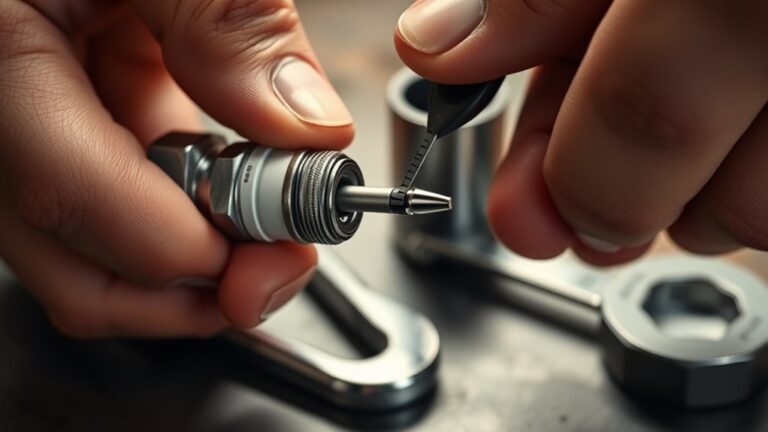
Soaking your fuel injectors in a high-quality cleaner is an essential step to dissolve the carbon deposits and buildup clogging the nozzles. After injector removal, submerge the fuel injectors fully in a fuel injector cleaner solution designed specifically for soaking.
This cleaning method targets stubborn clogs by allowing the solution to penetrate deep inside the nozzle openings. Be sure to avoid contact with any electrical components or connectors to prevent damage.
The recommended soak time is several hours or overnight, giving the cleaning solution ample time to break down tough deposits. This soak injectors step is crucial in the cleaning process because it loosens carbon deposits that simple rinsing can’t remove.
Once the soak time is complete, rinse the fuel injectors thoroughly with clean water or a recommended solvent to flush out any residual cleaner. This ensures your fuel injectors are properly cleaned and ready for reinstallation, improving their performance and fuel efficiency.
Clear Fuel Injectors With Compressed Air and Test Flow
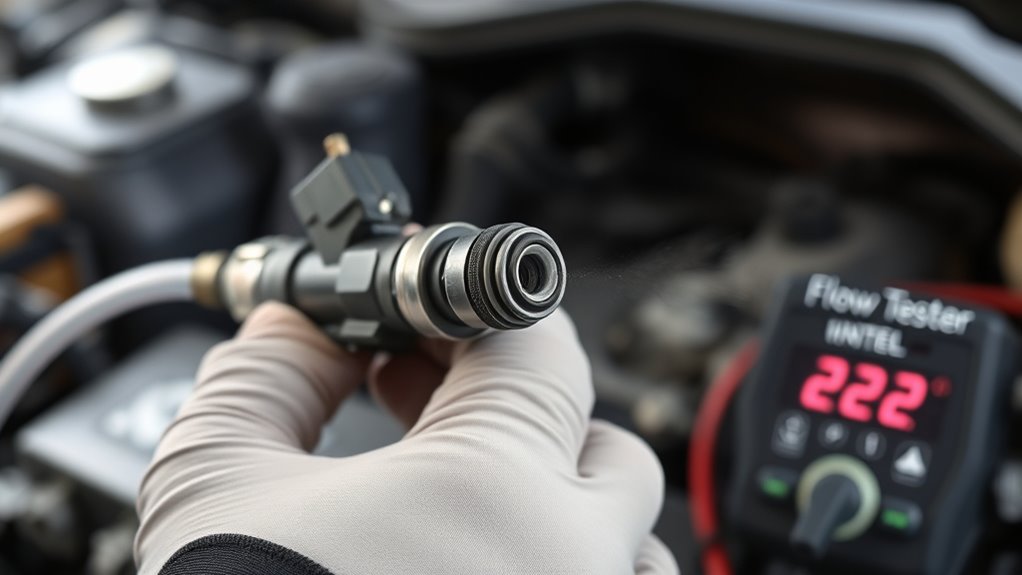
After soaking your fuel injectors to break down stubborn deposits, the next step is to clear them using compressed air. Start by removing injectors from the fuel rail and connecting a compressed air source to push air through the injectors in reverse flow.
Use an appropriate adapter or hose to seal the air supply at the injector inlet, directing the outlet into a container or cleaning solution. Apply compressed air at around 20-30 PSI to force debris out of clogged injectors effectively.
During cleaning, watch the injector spray pattern and flow rate closely. A uniform, steady spray confirms clean fuel injectors, while inconsistent or weak flow indicates remaining blockages.
Once cleaned, reconnect the injectors, restore fuel system pressure, and perform a flow test to evaluate injector performance. This method guarantees thorough cleaning and helps you verify that your fuel injectors are functioning at their best before reinstalling them.
Frequently Asked Questions
What Are the Signs of Clogged Fuel Injectors?
You’ll notice clogged fuel injectors when your engine performance drops, causing engine stalling, power loss, and rough idling. Fuel efficiency decreases, and emission levels rise, often producing a strong fuel smell or black smoke.
Poor fuel quality can shorten injector lifespan, so sticking to your maintenance schedule helps. Vehicle diagnostics might reveal trouble codes linked to injectors, alerting you early.
Watch for hesitation during acceleration or difficulty starting as key signs.
How Often Should Fuel Injectors Be Cleaned?
You should clean your fuel injectors every 30,000 to 50,000 miles to maintain fuel efficiency and engine performance. Regular cleaning helps prevent carbon buildup that affects the injector spray pattern, fuel pressure, and emission control.
Ignoring it can cause engine misfire, vacuum leaks, and shorten your fuel system lifespan. Stick to your vehicle’s maintenance schedule and watch for signs like rough idling to keep everything running smoothly.
Can I Use Household Cleaners to Soak Injectors?
You shouldn’t use household cleaners to soak injectors because their solvent types often lack chemical compatibility with fuel system parts. These DIY techniques risk injector damage by leaving harmful residues or causing corrosion.
For cleaning effectiveness and safety precautions, always choose cleaning solutions formulated specifically for fuel injectors. Following proper maintenance tips ensures you safeguard delicate components and achieve reliable injector performance without unnecessary risks.
Is Professional Cleaning Better Than DIY Methods?
Yes, professional cleaning is better than DIY methods because it includes thorough fuel injector inspection and ultrasonic cleaning that removes stubborn deposits effectively. Professionals use advanced chemical cleaning methods and injector flow testing, ensuring peak engine performance impact.
They also offer fuel system diagnostics and can recommend injector replacement if needed. While DIY cleaning risks incomplete cleaning and damage, professional service benefits your engine’s health and helps determine proper cleaning frequency.
What Tools Do I Need to Remove Fuel Injectors Safely?
Did you know 70% of injector failures happen during DIY removal? To remove fuel injectors safely, you’ll need a screwdriver set, a fuel pressure gauge to depressurize the system, and protective gloves for safety gear.
Use an inspection mirror for hard-to-see spots. You’ll also need tools for fuel line disconnect and O-ring removal, plus a container for cleaning. Don’t forget replacement seals to guarantee a proper refit after injector removal.
Conclusion
Unclogging your fuel injectors is like giving your engine a fresh breath of life. By carefully relieving pressure, soaking injectors in cleaner, and blasting them with compressed air, you’re clearing the path for fuel to dance freely once again.
It’s a simple ritual that transforms sluggish performance into smooth power, letting your car roar with renewed spirit. Take these steps, and watch your ride come alive, ready to conquer the road ahead.