How Do Hydrogen Fuel Cell Vehicles Work?
You power your hydrogen fuel cell vehicle by converting hydrogen into electricity through a clean chemical reaction inside the fuel cell stack. Hydrogen and oxygen combine, producing only water vapor and heat as byproducts.
The generated electricity powers an electric motor that drives your car.
Hydrogen is safely stored at high pressure in durable tanks and refuels quickly in just minutes. This tech offers long driving ranges and fast refueling.
If you want, you can explore how these vehicles compare to others and their growing infrastructure.
Key Takeaways
- Hydrogen fuel cell vehicles generate electricity through a chemical reaction between hydrogen and oxygen in the fuel cell stack.
- Inside the fuel cell, a catalyst splits hydrogen into protons and electrons, producing electrical current from electron flow.
- Protons pass through the electrolyte to combine with oxygen and electrons at the cathode, creating only water vapor and heat as byproducts.
- The generated electricity powers an electric motor that drives the vehicle’s wheels efficiently and cleanly.
- Hydrogen is stored in high-pressure tanks and refueled in minutes, enabling a driving range comparable to conventional vehicles.
Why Hydrogen Fuel Cell Vehicles Matter
Although you might not see them everywhere yet, hydrogen fuel cell vehicles matter because they offer a clean, efficient alternative to traditional cars. These vehicles are zero-emission, releasing only water vapor and heat. That means you’re driving without contributing to air pollution.
Hydrogen fuel cell vehicles provide a clean, zero-emission alternative to traditional cars, reducing air pollution.
Another big plus is their quick refueling time, just 3-5 minutes, comparable to what you’re used to with gasoline vehicles. This convenience makes switching easier for you. Plus, hydrogen fuel cells pack a high energy density, so you get a driving range similar to conventional cars.
When hydrogen is produced using renewable energy, these vehicles reduce greenhouse gas emissions even further, helping you lower your carbon footprint. By choosing hydrogen fuel cell vehicles, you’re supporting energy diversification and reducing reliance on fossil fuels.
In short, they provide a sustainable, practical option that fits your lifestyle while benefiting the planet.
How Does a Hydrogen Fuel Cell Vehicle Generate Electricity?
When you power up a hydrogen fuel cell vehicle, it generates electricity by triggering a chemical reaction between hydrogen and oxygen. Inside the fuel cell stack, hydrogen molecules undergo an electrochemical reaction where a catalyst splits them into protons and electrons.
The electrons travel through an external circuit, producing electricity that powers the electric motor. Meanwhile, protons pass through the electrolyte membrane to the cathode, where they reunite with oxygen and electrons, creating water vapor. This process generates electricity efficiently without combustion, releasing only water and heat as byproducts.
| Step | Process Description | Result |
|---|---|---|
| Hydrogen Splitting | Catalyst splits hydrogen into protons and electrons | Free electrons flow |
| Electron Flow | Electrons travel through external circuit | Generates electricity |
| Proton Movement | Protons move through electrolyte membrane | Combine with oxygen |
| Final Reaction | Protons, electrons, and oxygen unite | Water vapor produced |
This elegant electrochemical reaction inside the fuel cell stack powers your vehicle cleanly and efficiently.
What Are the Main Components of a Hydrogen Fuel Cell Car?
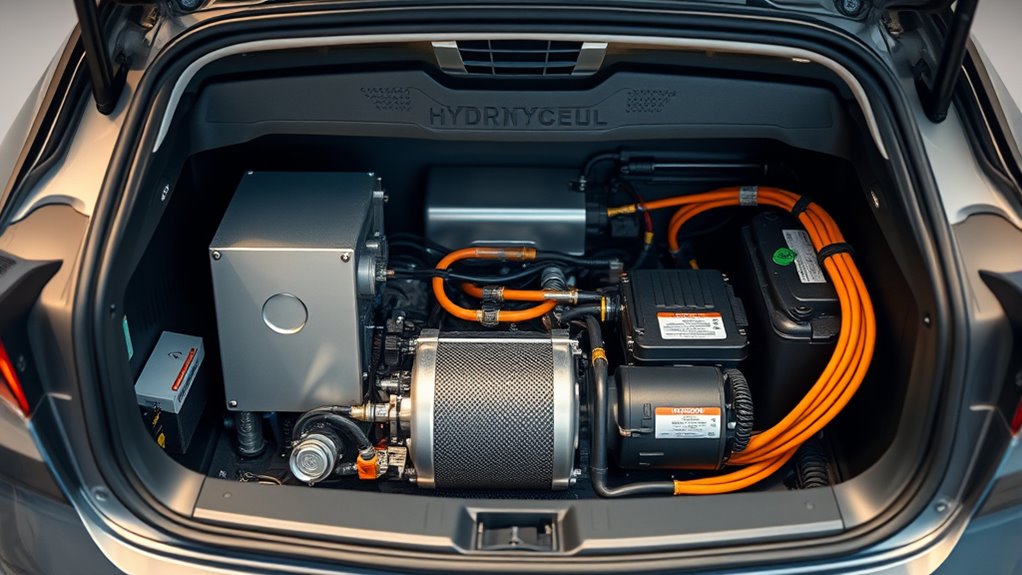
Since hydrogen fuel cell vehicles rely on a unique energy system, understanding their main components helps you see how they work together to power the car efficiently. Here are the key parts you’ll find in a hydrogen fuel cell car:
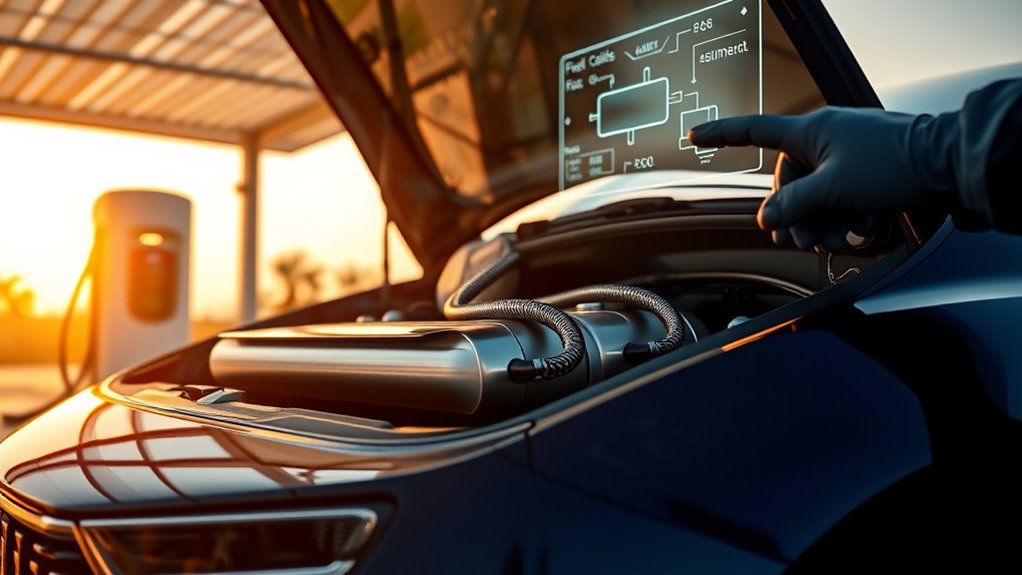
- Fuel Cell Stack: This is where hydrogen and oxygen combine in an electrochemical reaction to produce electricity without combustion.
- Hydrogen Storage Tank: It safely holds compressed hydrogen gas onboard, ready to supply the fuel cell stack.
- Electric Motor and Power Electronics: The electric motor uses the electricity generated to drive the wheels, while power electronics regulate electrical flow, control the motor’s operation, and manage energy transfer within the vehicle.
Together, these components form a seamless system. The power electronics ensure energy moves smoothly from the fuel cell stack and battery to the electric motor, giving you a clean and efficient driving experience powered by hydrogen.
How Is Hydrogen Stored and Used Onboard?
To power the fuel cell stack, hydrogen must be stored safely and delivered precisely. In your hydrogen fuel cell vehicle, hydrogen storage happens in high-pressure, carbon-fiber onboard tanks, typically holding gas at 700 bar (10,000 psi). These tanks are engineered to be extremely durable and crash-tested to keep you safe during accidents.
The onboard tank’s capacity usually provides a driving range of about 300-400 miles, so you won’t need to refuel often. When you drive, hydrogen flows from the tank through a regulated system that controls both pressure and flow, ensuring the fuel cell receives the right amount.
The hydrogen remains in gaseous form until it reaches the fuel cell, where it undergoes a chemical reaction with oxygen. This reaction generates electricity to power your vehicle, making hydrogen storage and delivery critical for smooth, efficient operation of your fuel cell car.
How Does the Fuel Cell Generate Power for the Motor?
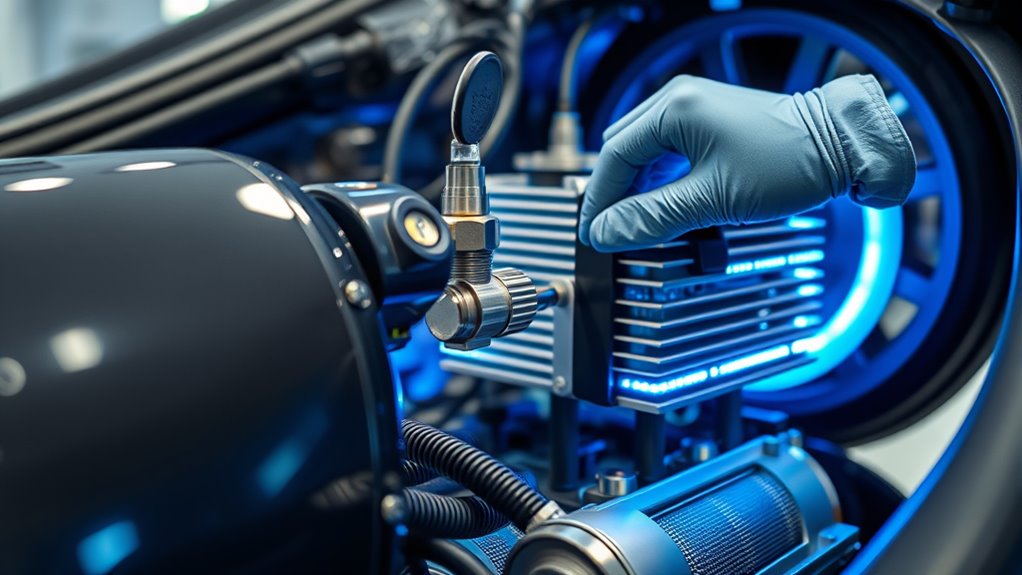
You’ll see, the fuel cell stack generates electricity by combining hydrogen and oxygen through a precise electrochemical reaction. Inside, hydrogen splits into protons and electrons. This creates an electric current that powers the motor.
What’s great is that this clean process produces only water vapor as a byproduct. So, the system is not just efficient but also eco-friendly.
Electrochemical Reaction Process
Although it might seem complex, the fuel cell generates power by combining hydrogen and oxygen through an electrochemical reaction instead of combustion. Here’s how it works:
- Hydrogen atoms enter the anode, where a catalyst splits them into protons and electrons.
- Electrons travel through an external circuit, creating an electric current that powers the motor.
- Protons pass through the electrolyte membrane to the cathode, where they recombine with oxygen and electrons.
This reaction produces water vapor as the only byproduct. The electrochemical reaction efficiently converts hydrogen and oxygen into electricity without burning fuel, making the process clean and quiet.
Understanding this core process helps you appreciate how hydrogen fuel cell vehicles generate power while emitting just water.
Electricity Generation Mechanism
How exactly does a fuel cell generate the electricity that powers your vehicle’s motor? In a fuel cell, electricity generation happens through an electrochemical reaction between hydrogen and oxygen, without any combustion.
Hydrogen molecules enter the fuel cell and split into protons and electrons at the anode catalyst. The electrons travel through an external circuit, creating an electric current that powers your motor. Meanwhile, protons move through the electrolyte membrane to the cathode, where they reunite with oxygen and electrons to form water.
This continuous flow of electrons and protons keeps the electricity generation steady, ensuring your vehicle runs smoothly. Thanks to this efficient electrochemical process, the fuel cell converts hydrogen into clean, reliable power for your ride.
How Does the Lithium-Ion Battery Support the Fuel Cell System?
Since the fuel cell generates electricity continuously, the lithium-ion battery steps in to store any excess energy and provide extra power when you accelerate. This battery plays a vital role in power management by balancing energy flow between the fuel cell and electric motor. It enhances efficiency and improves your driving experience.
Here’s how the lithium-ion battery supports the fuel cell system:
- Energy Storage: It captures surplus electricity from the fuel cell and regenerative braking, keeping energy ready for later use.
- Power Boost: During acceleration, the battery supplies additional power to meet increased demand, ensuring smooth performance.
- System Support: When the fuel cell is idle, the battery powers vehicle startup and accessories, maintaining operation without delay.
How Does Regenerative Braking Recover Energy in Hydrogen Cars?
When you slow down or hit the brakes in a hydrogen fuel cell vehicle, something cool happens—the electric motor flips into generator mode. This means it starts capturing the kinetic energy that would normally just be lost as heat. Then, that energy gets converted into electricity and stored in the lithium-ion battery for later use.
Energy Capture Mechanism
Although you might not notice it, regenerative braking plays a crucial role in hydrogen fuel cell vehicles by capturing kinetic energy that would otherwise be lost during deceleration. This energy capture mechanism converts that kinetic energy into electrical energy, which is stored in the onboard battery for later use.
When you ease off the accelerator or apply the brakes, the electric motor switches to generator mode, recovering energy that traditional brakes would waste as heat.
Here’s how it works in three key steps:
- The motor captures kinetic energy during braking.
- It converts this energy into electrical energy.
- The electrical energy recharges the onboard battery, improving efficiency and extending range.
This process not only boosts energy efficiency but also reduces brake wear.
Battery Role in Braking
Regenerative braking captures kinetic energy and converts it into electrical energy, but the battery plays a key role in storing and managing this recovered power. When you brake, the motor switches to generator mode, converting mechanical energy into electricity.
This electrical energy is then stored in the onboard lithium-ion battery, enabling energy recovery that boosts efficiency and driving range. The battery’s on-board storage reduces fuel cell reliance, conserving hydrogen fuel.
| Process | Role of Battery | Benefit |
|---|---|---|
| Braking | Motor acts as generator | Captures kinetic energy |
| Energy conversion | Battery stores energy | Enables energy recovery |
| Storage | On-board lithium-ion | Powers acceleration |
| Efficiency | Manages power flow | Extends driving range |
| Fuel conservation | Supports fuel cell | Saves hydrogen fuel |
How Does Refueling a Hydrogen Fuel Cell Car Work?
Since refueling a hydrogen fuel cell vehicle works much like filling up a petrol car, you’ll connect a compressed hydrogen nozzle to the vehicle’s hydrogen tank. At the fuel station, hydrogen gas is transferred under high pressure, around 700 bar, directly into your car’s onboard tank. This process takes just 3 to 5 minutes, giving you a driving range of 200 to 400 miles.
Here’s how refueling works:
- Securely attach the hydrogen nozzle to the hydrogen tank to prevent leaks.
- Hydrogen gas flows into the tank under high pressure, controlled by safety systems.
- Once full, the nozzle automatically shuts off, and your tank seals tight.
This quick and efficient refueling ensures you’re back on the road fast, enjoying clean energy without long wait times.
How Do Hydrogen Fuel Cell Cars Compare to Battery Electric Vehicles?
How do hydrogen fuel cell cars stack up against battery electric vehicles? When it comes to range, hydrogen vehicles typically match or exceed many gasoline cars, traveling 200-300 miles on a full tank. Battery electric vehicles’ range varies more widely depending on battery size but often falls short of hydrogen’s consistency.
Refueling is another key difference: hydrogen cars can refuel in just 3-5 minutes, while battery electric vehicles usually need several hours to recharge. This quick refueling makes hydrogen vehicles convenient for longer trips.
However, battery electric vehicles don’t require hydrogen infrastructure and can charge at home or public stations, powered by electricity that may come from renewable or non-renewable sources. While hydrogen cars generally have higher upfront costs, they offer the advantage of fast refueling and a solid range.
Ultimately, your choice depends on infrastructure availability, driving habits, and priorities like refueling speed and environmental impact.
What Are the Driving Range and Performance Benefits of Hydrogen Cars?
You’ll get an extended driving range of about 200 to 300 miles on a full tank of hydrogen. And the best part? Refueling only takes a few minutes, so you’re back on the road quickly.
Hydrogen cars also offer smooth acceleration and instant torque, which means they perform just as well as gasoline vehicles. Plus, thanks to their high energy density, they keep up steady performance even in tough conditions like cold weather.
Extended Driving Range
What makes hydrogen fuel cell vehicles stand out is their impressive driving range and quick refueling. When you choose a hydrogen car, you’ll enjoy a driving range of 200 to 300 miles on a full tank, similar to gasoline cars. The onboard hydrogen tanks store enough fuel to support extended trips, so you won’t need to stop often.
Plus, refueling takes just 3 to 5 minutes, letting you get back on the road fast.
Here’s why extended driving range matters:
- Hydrogen tanks hold high energy density fuel for long distances.
- The fuel cell efficiently converts hydrogen to electricity, maintaining consistent power.
- Quick refueling minimizes downtime on long trips.
This combination makes hydrogen vehicles practical for everyday use and long drives.
Enhanced Vehicle Performance
Although hydrogen fuel cell vehicles share a similar driving range with gasoline cars, they deliver more than just distance. They offer impressive performance benefits you’ll notice every time you hit the accelerator.
The electric motor powered by the fuel cell provides instant torque, giving you smooth, quick acceleration that rivals traditional vehicles. With a driving range of 200-300 miles on a single hydrogen tank, you can travel far without frequent stops. Refueling only takes about 3-5 minutes, adding convenience to performance.
Thanks to the high energy density of hydrogen and the efficient fuel cell combined with onboard batteries, these vehicles maintain consistent performance across different terrains and conditions. This blend of technology ensures you get reliable, powerful driving every time you get behind the wheel.
What Safety Measures Protect Hydrogen Storage and Use?
Since hydrogen is stored under high pressure, manufacturers design storage tanks with strong carbon-fiber composites to withstand impacts and prevent leaks. Your vehicle’s hydrogen storage system also includes several critical safety features to keep you safe.
Here are the key measures protecting hydrogen storage and use:
- Pressure relief devices and safety valves: These components prevent over-pressurization by safely releasing hydrogen if pressure rises beyond safe limits.
- Leak detection systems: They continuously monitor for hydrogen leaks and automatically shut off the hydrogen supply if any leaks are detected, reducing risks immediately.
- Rigorous testing and certification: Tanks and fuel lines undergo crash and thermal resistance tests to guarantee durability during accidents or fires.
In case of a collision, the system vents hydrogen quickly to disperse it safely, minimizing explosion or fire hazards. These combined safety measures ensure hydrogen fuel cell vehicles manage hydrogen storage and use securely and reliably.
How Is Hydrogen Vehicle Infrastructure Developing Worldwide?
With hydrogen storage and safety well managed in vehicles, the next challenge lies in building the infrastructure to support refueling. Currently, there are over 109 hydrogen refueling stations worldwide, but the goal is to reach 300 by 2030 to match the growing number of hydrogen vehicles.
Countries like Japan, South Korea, and Germany lead infrastructure development, creating extensive refueling networks to encourage adoption. Europe has seen a sharp increase in hydrogen refueling stations recently, with plans to expand further as part of broader climate goals.
Even Australia is joining the effort, setting up a station in Victoria backed by government funding and research initiatives. This expansion of hydrogen refueling stations is critical, as infrastructure development directly supports market growth.
Many regions are working to integrate hydrogen refueling into existing fuel networks, making it easier for you to find convenient places to refill your hydrogen vehicle and help drive the shift toward cleaner transportation.
Frequently Asked Questions
What Is the Environmental Impact of Producing Hydrogen Fuel?
The environmental impact of hydrogen production depends on the energy source you use. If you rely on green energy, like renewables, you’ll benefit from significant emission reduction and better sustainability practices.
However, producing hydrogen through fossil fuels releases a lot of greenhouse gases, harming the environment. To truly minimize your carbon footprint, you should focus on green hydrogen production, which supports cleaner energy and helps you drive toward a more sustainable future.
How Much Do Hydrogen Fuel Cell Vehicles Typically Cost?
Hydrogen fuel cell vehicles typically cost between $50,000 and $70,000, which is higher than many gasoline or electric cars. When you consider cost comparison, pricing factors like production scale and technology improvements play a big role.
Market availability is still limited, contributing to affordability concerns. However, leasing options and government incentives can help lower your overall expenses, making these vehicles more accessible as the market grows and prices gradually drop.
Are There Government Incentives for Buying Hydrogen Cars?
By chance, just as you’re considering a hydrogen car, you’ll find plenty of government incentives waiting for you. You can grab purchase rebates like California’s $4,500 offer, plus tax credits that lower your upfront cost.
Subsidy programs often include government grants to support your investment. These perks make owning a hydrogen vehicle more affordable and rewarding, so don’t miss out on the financial help available to you right now.
How Long Do Hydrogen Fuel Cells Last Before Needing Replacement?
You can expect hydrogen fuel cells to last between 5,000 to 10,000 hours, roughly 150,000 to 200,000 miles, before needing replacement. Fuel cell durability depends on factors like driving conditions and maintenance requirements.
Can Hydrogen Fuel Cell Vehicles Be Used in Extreme Weather Conditions?
You can rely on hydrogen fuel cell vehicles for weather resilience, as they maintain cold climate performance even below freezing. In fact, with advanced thermal management, they handle snow and ice smoothly, preventing water buildup and startup delays.
These vehicles adapt to extreme temperature changes by using heating and cooling systems to keep fuel cells efficient. So, whether it’s frigid winters or scorching summers, you’ll experience consistent, reliable operation.
Conclusion
Picture yourself gliding silently down the road, the hum of a hydrogen fuel cell vehicle powering your journey. You’re not just driving, you’re embracing a cleaner, greener future where your car breathes in hydrogen and exhales only water.
With advanced safety measures and growing infrastructure, hydrogen fuel cell vehicles offer you an exciting blend of efficiency and eco-friendliness. So, why not be part of this revolution and drive toward a sustainable tomorrow?