Does Oil Filter Brand Matter: Ranking the 10 Best Filters
Yes, the oil filter brand you choose really matters because it directly impacts your engine’s protection and lifespan. Trusted brands like WIX, Bosch, and Mobil 1 use high-quality synthetic media and durable materials to capture up to 99.9% of contaminants, ensuring longer-lasting filters and fewer engine issues.
Budget filters often sacrifice quality and durability, leading to more frequent changes. Keep exploring to find out which top brands deliver the best value and performance for your vehicle.
Key Takeaways
- Oil filter brand matters as premium brands offer superior filtration efficiency, durability, and proper fitment, reducing engine wear and extending engine life.
- Synthetic media filters from brands like Mobil 1 and K&N provide better contaminant removal and longer service intervals than budget options.
- Durable materials such as steel end caps and silicone anti-drain back valves in top brands enhance filter longevity and performance under harsh conditions.
- Budget filters often have shorter lifespans and lower filtration quality, requiring frequent replacements and risking compromised engine protection.
- Trusted brands like WIX, Bosch, and Mobil 1 consistently meet or exceed OEM standards, balancing cost, quality, and reliable engine protection.
Why Your Oil Filter Brand Choice Really Matters
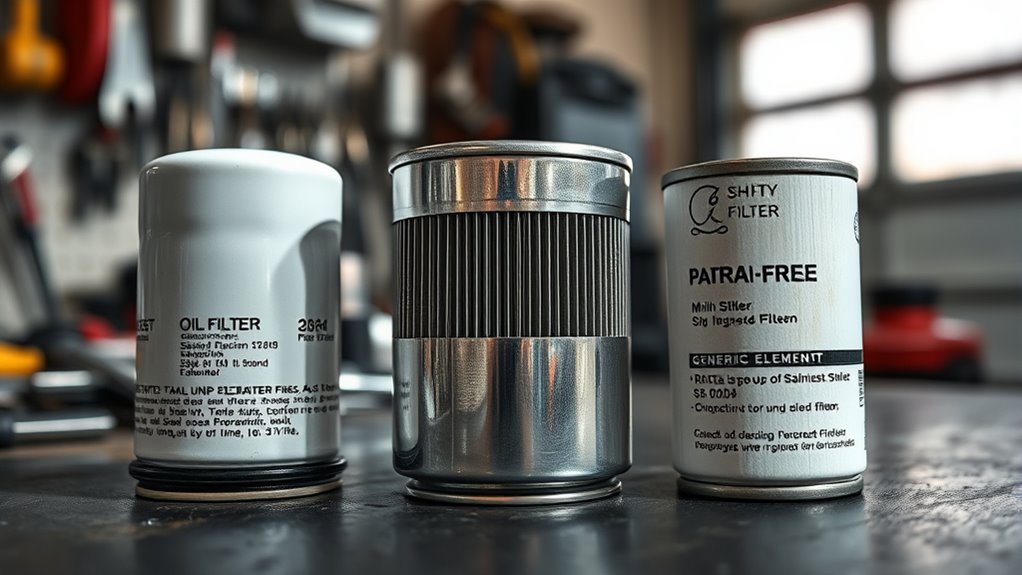
Choosing the right oil filter brand directly impacts how well your engine stays protected. When you pick a high-quality oil filter, you’re ensuring superior filtration efficiency that removes nearly all contaminants before they damage your engine.
Selecting a quality oil filter brand is crucial for optimal engine protection and contaminant removal.
OEM brands and trusted aftermarket filters often use synthetic media and durable components like silicone valves and steel base plates. These materials not only improve filtration but also prevent leaks and extend filter life.
You don’t want to risk cheap filters lacking a proper anti-drain back valve, as they can allow dirty oil to circulate during startup, increasing wear and tear. By choosing reputable oil filter brands, you guarantee proper fitment and consistent performance.
This gives your engine the best chance to stay clean and run smoothly. Investing in a quality oil filter means better engine protection, longer engine life, and fewer costly repairs down the road. Don’t settle for less when it comes to your engine’s health.
Understanding Filtration Efficiency: How Top Oil Filters Compare
You’ll want to get a good grasp on how efficiency ratings work—they basically show a filter’s ability to catch particles as small as 25 microns. But remember, real-world performance can differ depending on the filter’s media and build quality. So, keeping these factors in mind will help you pick a filter that really protects your engine.
Efficiency Ratings Explained
Although efficiency ratings are tested under controlled conditions, they give you an essential measure of how well an oil filter removes harmful particles from your engine oil. Filtration efficiency ratings show the percentage of contaminants removed based on micron size, with top filters boasting 95% to 99.9% efficiency.
Synthetic media typically outperforms cellulose filters, offering superior contaminants removal. But efficiency ratings don’t tell the whole story. Dirt-holding capacity and flow rate also play critical roles, ensuring your filter handles debris without restricting oil flow.
Together, these factors impact engine protection and performance. So, when choosing a filter, look beyond just efficiency ratings. Consider the media type, dirt capacity, and flow characteristics to get the best overall filtration for your engine’s needs.
Particle Size Filtration
Efficiency ratings give you a snapshot of how well an oil filter removes contaminants, but understanding the specific particle sizes a filter can trap reveals more about its protective capabilities. Filtration efficiency hinges on the filter media’s ability to capture particles as small as 20-25 microns, critical for shielding your engine from wear-causing debris.
A performance oil filter with synthetic filter media excels here, removing finer contaminants and boosting filtering performance. Furthermore, filters with larger surface areas increase dirt-holding capacity, helping maintain efficiency throughout longer oil change intervals.
When choosing your filter, consider how well its media handles particle size and contaminant load. These factors directly affect engine longevity. The right filter media ensures your engine stays cleaner, running smoother, and lasting longer.
Real-World Performance Variations
While lab tests show top oil filters capturing up to 99.6% of contaminants, real-world performance can vary depending on factors like installation quality, your vehicle type, and driving conditions. You’ll find that even high-quality filters with excellent filtration efficiency may not perform identically once installed.
Proper installation quality guarantees the filter seals correctly and functions as intended. Your vehicle’s engine and typical driving conditions, whether stop-and-go city traffic or long highway trips, also influence how well a filter traps contaminants.
Choosing premium filters with synthetic media and larger surface areas generally reduces engine wear by capturing finer particles over extended intervals. Ultimately, understanding how real-world factors affect performance helps you select an oil filter that reliably protects your engine beyond lab results.
What Makes Oil Filters Durable: Materials And Build Quality
You’ll notice that the type of filter media plays a big role in durability, especially when reinforced pleats help prevent collapse. It’s pretty interesting how those tiny folds can make such a difference. Also, keep an eye on the end cap materials—metal ones, for example, add a lot of strength and stability. On top of that, the way the filter is built really matters. Construction techniques can affect how well an oil filter holds up when it’s under pressure and exposed to heat. So, all these factors together make a big difference in durability.
Filter Media Types
What makes an oil filter truly durable? It starts with the filter media. Synthetic media, like micro-glass fibers, offer superior filtration efficiency and durability compared to cellulose blends.
Pleated media increases surface area, boosting filter capacity and lifespan. Wire-backed media, paired with durable steel end caps, prevents collapse under high pressure, maintaining consistent flow.
| Media Type | Filtration Efficiency | Filter Capacity |
|---|---|---|
| Cellulose | Moderate | Moderate |
| Synthetic Media | High | High |
| Pleated Media | High | Very High |
| Wire-Backed Media | Structural Support | Prevents Collapse |
Choosing filters with quality synthetic, pleated, and wire-backed media guarantees your engine stays protected longer.
End Cap Materials
Because oil filters endure constant pressure and vibration, their end cap materials play an essential role in durability. You want steel end caps or other corrosion-resistant materials that resist warping and seal reliably.
Filters with metal reinforcement or wire backing inside the filter media prevent tearing and keep structural integrity intact. The end caps’ durability also depends on the quality of the metal housing, which withstands engine heat and vibration.
Choosing a filter with a silicone anti-drain back valve is smart, as it outperforms rubber valves in heat resistance and longevity. Paying attention to end cap materials guarantees your oil filter handles tough conditions without failing, protecting your engine effectively over time.
Construction Techniques
Although many factors affect an oil filter’s durability, construction techniques play a crucial role in ensuring reliable performance. You’ll find durable construction starts with steel base plates and reinforced housings that resist warpage and provide high-pressure resistance.
Inside, pleated synthetic media offers excellent dirt-holding capacity while metal end caps and wire backing prevent media collapse, maintaining structural integrity. Rubber valves, often made from silicone or other high-quality materials, support anti-drain back functions, enhancing reliability and longevity.
Filters built with these materials and techniques stand up to demanding engine conditions, ensuring consistent filtration and protecting your engine. When choosing an oil filter, paying attention to these construction details helps you select one that balances durability and performance effectively.
Lifespan And Value: What To Expect From Popular Oil Filter Brands
When you choose an oil filter, understanding its lifespan and value can save you money and protect your engine. Popular brands vary widely in how long they last and what they offer in return. Budget filters like Ecogard typically last around 5,000 miles, while premium filters such as Mobil 1 Extended Performance can reach up to 15,000 miles. This difference impacts your service interval and overall cost comparison.
Here’s what to expect from popular oil filters:
- Budget filters cost less ($3-$6) but need more frequent replacement.
- Premium filters ($9-$22) offer better filtration efficiency and durability.
- Longer lifespan means fewer changes and better engine protection.
- Investing in premium filters balances cost with superior value and reduced engine wear.
Top 10 Oil Filter Brands For 2024
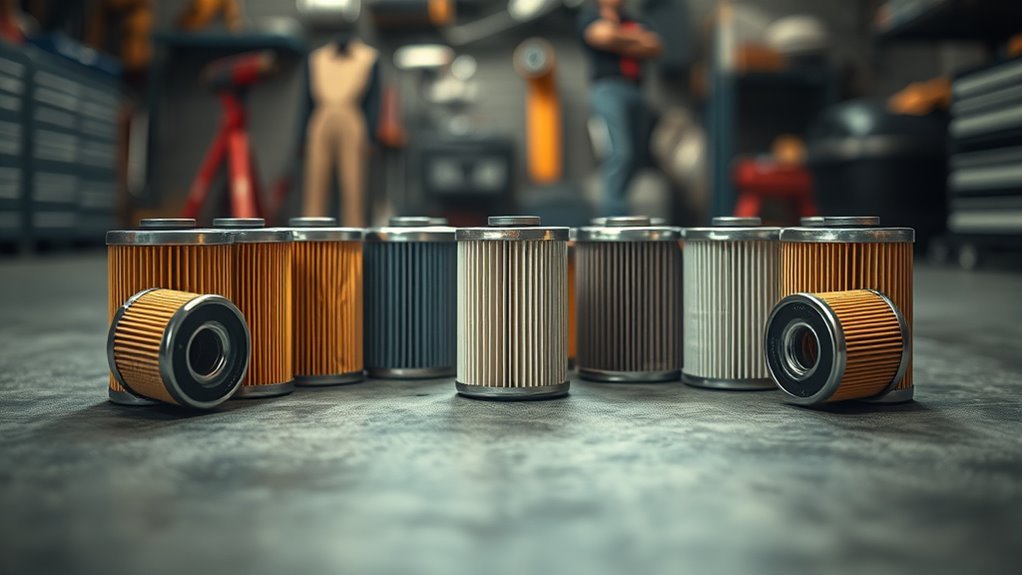
When you’re picking an oil filter brand, it’s a good idea to compare how well each one performs because efficiency and durability can be quite different. Brands like WIX, Bosch, and Mobil 1 really stand out since they’ve proven to be reliable and offer great filtration quality. Getting to know what each brand is known for makes it easier to choose a filter that fits your engine’s needs perfectly.
Filter Performance Comparison
Since choosing the right oil filter can greatly impact your engine’s longevity, understanding how the top 10 brands for 2024 perform is essential. Filter performance hinges on filtration efficiency and the ability to remove contaminants as small as 20-30 microns.
Leading brands like K&N, WIX, and Mobil 1 use synthetic media and synthetic fiber, achieving multi-pass efficiencies over 99%. Durability also matters, with many filters featuring steel housings and silicone anti-drain back valves to maintain a high oil flow rate.
Key performance factors include:
- Filtration efficiency and contaminants removal
- Use of synthetic media and synthetic fiber
- Multi-pass efficiency exceeding 99%
- Durability ensuring consistent high oil flow rate
Choosing wisely means better engine protection and longer filter life.
Brand Reputation Overview
Understanding filter performance sets the stage for appreciating why brand reputation matters so much when choosing an oil filter. When you pick from trusted brands like WIX, K&N, Bosch, Motorcraft, and Fram, you’re relying on manufacturers with a solid reputation for meeting or exceeding OEM standards.
These brands guarantee superior filter quality, durability, and consistent performance by adhering to strict industry standards.
| Brand | Key Strengths |
|---|---|
| WIX | High-quality components, durability |
| K&N | 99% contaminant removal efficiency |
| Bosch | OEM fit, engineered durability |
| Motorcraft | Factory-level reliability |
| Fram | Affordable, solid performance |
Choosing a reputable brand means you’re investing in proven filter quality and engine protection backed by strong manufacturer reputation.
Best Oil Filter Brands For Synthetic Vs. Conventional Oils
When choosing oil filters, the brand you pick can make a significant difference, especially between synthetic and conventional oils. Synthetic oils demand filters with superior filtration efficiency and durability. Leading brands like Mobil 1 and K&N design oil filters specifically to handle synthetic oils, using advanced media to trap smaller particles and support extended service intervals.
OEM filters often suit conventional oils but might lack the reinforced features needed for high-performance engines running synthetics.
Consider these key points when selecting your oil filter brand:
- Advanced media in synthetic oil filters boosts filtration efficiency and debris capture
- Premium brands like Bosch and WIX offer thicker media and larger surface areas for longer intervals
- Features like silicone anti-drain back valves improve durability under high pressure
- Choosing a reputable brand guarantees protection and peak performance for high-performance engines
Selecting the right brand tailored to your oil type maximizes engine protection and longevity.
Budget Vs. Premium Oil Filters: Where To Spend And Save
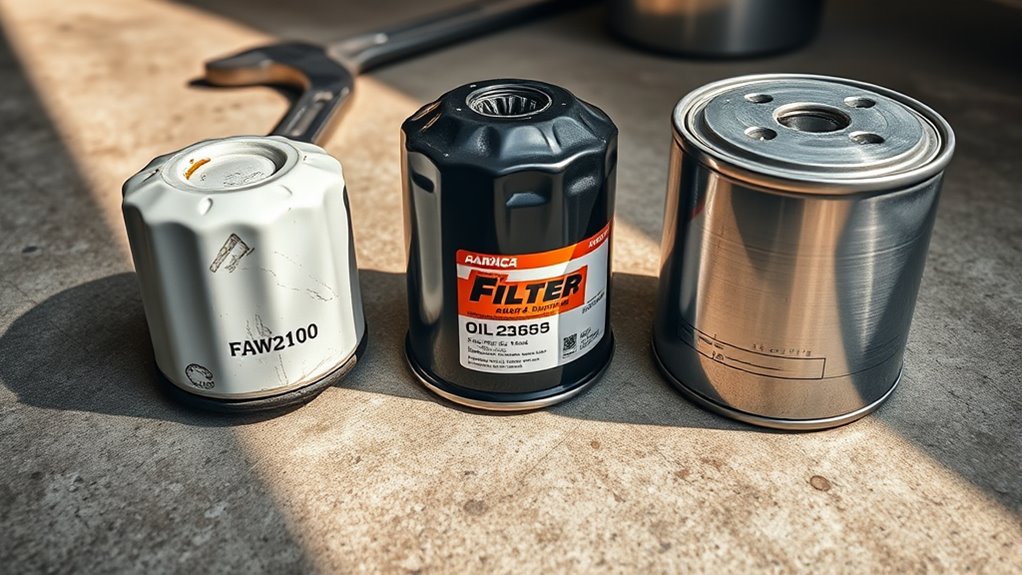
Although budget oil filters may save you money upfront, they often compromise on filtration quality and durability. This can affect your engine’s health over time. Budget oil filters like Supertech and STP usually cost under $5 but offer lower filtration efficiency and shorter service intervals, typically around 5,000 to 10,000 miles.
They may also lack durable features such as steel end caps or silicone valves, increasing the risk of leaks and early failure. On the other hand, premium oil filters like Mobil 1, K&N, and Bosch provide superior contaminant removal, up to 99.6%, and extend service intervals to 15,000 to 20,000 miles.
Investing in premium oil filters enhances engine protection and performance, especially if you drive frequently or demand more from your vehicle. When deciding where to spend or save, consider how much you prioritize engine longevity versus short-term savings during oil changes.
Balancing cost with filtration efficiency and durability guarantees you get the best value without compromising your engine’s health.
Matching Oil Filters To Your Vehicle’s Needs
Since your engine relies on clean oil to run smoothly, choosing the right oil filter designed specifically for your vehicle is essential. Matching oil filters to your vehicle’s needs ensures proper fitment and filtration efficiency. This prevents leaks and protects your engine from contaminants.
Choosing the right oil filter ensures proper fit, prevents leaks, and keeps your engine contaminant-free.
Whether you opt for OEM parts or trusted aftermarket filters, make sure they match your vehicle compatibility. You can verify fitment through manufacturer specs or part numbers.
Focus on these key points when selecting your oil filter:
- Confirm vehicle compatibility by checking engine type and filter size
- Choose filters with high filtration efficiency (95%+ at critical micron levels)
- Use filter materials like steel end caps and synthetic media for durability
- Prefer OEM parts or quality aftermarket filters designed for your specific model
What Experts And Users Say About Leading Oil Filter Brands
Choosing the right oil filter involves more than just matching specs; the brand you pick plays a big role in performance and engine protection. Industry experts consistently recommend reputable brands like K&N, WIX, and OEM filters for their superior filtration efficiency and durable construction.
These oil filter brands maintain high filter quality, ensuring contaminants are effectively captured to safeguard your engine. User reviews back this up, often praising premium filters such as Mobil 1 Extended Performance and Motorcraft for longer-lasting protection and precise fitment.
Both experts and users agree that brand reputation strongly correlates with consistent quality and reliable performance throughout the filter’s lifespan. On the other hand, many users report that lower-cost or no-name filters tend to underperform, risking increased engine wear and oil contamination.
When you choose well-established oil filter brands, you’re investing in better engine protection and filter effectiveness, making a noticeable difference in your vehicle’s health and longevity.
How To Choose The Best Oil Filter Brand For Your Vehicle
To find the best oil filter brand for your vehicle, you need to focus on compatibility, quality, and durability. Choosing an oil filter brand that matches your engine’s specifications guarantees *ideal* filtration efficiency and engine protection.
Finding the best oil filter means prioritizing compatibility, quality, and durability for optimal engine protection.
OEM filters often provide the perfect fit and performance guarantees. Trusted brands like WIX or Bosch offer high-quality filters featuring synthetic media, metal end caps, and silicone valves to boost lifespan and reliability.
Keep these tips in mind when selecting your filter:
- Prioritize compatibility to avoid fitment issues and maintain filtration efficiency.
- Opt for high-quality filters with synthetic media for superior dirt trapping.
- Choose trusted brands known for durability and engine protection.
- Avoid budget filters that may compromise material quality and shorten filter life.
Frequently Asked Questions
Can I Reuse an Oil Filter After Changing Oil?
You shouldn’t reuse an oil filter after changing oil. The filter material loses effectiveness, reducing filtration and harming filter performance.
Filter lifespan and durability decline once used, which risks engine damage. Proper filter installation requires a new, compatible filter to guarantee maintenance and compatibility.
Reusing compromises these factors, so always replace the oil filter with each oil change to keep your engine running smoothly and protect its longevity.
How Do Oil Filters Affect Oil Change Intervals?
You can extend your oil change intervals by up to 50% when using high-quality synthetic filters with superior filtration efficiency. The filter material and manufacturing quality directly impact dirt capacity and filter lifespan, ensuring consistent oil flow.
A well-designed bypass valve prevents unfiltered oil from circulating, protecting your engine. Choosing filters with better filtration and durability means fewer oil changes without risking engine health. This saves you time and money in the long run.
Are Oil Filter Sizes Universal Across All Vehicles?
No, oil filter sizes aren’t universal across all vehicles. You’ll find size variations based on vehicle specifications like filter dimensions, mounting types, and filter threads. Different container sizes and thread patterns mean you can’t just pick any filter.
Always check fitment charts to guarantee universal compatibility for your specific engine. Using the right size prevents leaks and ensures proper filtration, keeping your engine protected and running smoothly.
Do Oil Filters Impact Fuel Efficiency?
Imagine your engine’s lifeblood flowing smoothly, free from grit and grime. Yes, oil filters impact fuel efficiency. Filter quality and filtration efficiency make sure contaminants don’t strain your engine.
When you choose a filter, consider brand reputation, material durability, and manufacturing standards. Design features and performance ratings matter, too. While cost considerations are important, investing in a top filter pays off by maintaining ideal oil flow and boosting your fuel economy over time.
What Is the Environmental Impact of Used Oil Filters?
Used oil filters can cause significant environmental pollution if you don’t dispose of them properly. They contain toxic substances that risk soil and water contamination, increasing landfill impact.
You’ll face recycling challenges, but following regulatory standards helps with pollution control. Choosing eco-friendly options and using authorized waste management services guarantees safer disposal.
Conclusion
Choosing the right oil filter brand isn’t just a minor detail—it’s a smart move that keeps your engine running smoothly and your wallet happy. While some filters might seem like a gentle nudge to save, others offer a robust hug of protection.
By understanding what your vehicle truly needs, you can confidently pick a filter that’s more than just good enough. It’s the best fit for a long, healthy ride.