Do Tonneau Covers Improve Fuel Economy? What Actually Works for Trucks
Do tonneau covers improve fuel economy? Yes, by reducing aerodynamic drag, they can boost your pickup truck’s mileage by up to 10%. Smoothing airflow over the truck bed lowers wind resistance, which is a key factor in fuel efficiency at highway speeds. Starting with a hard cover usually offers the most consistent fuel savings.
Key Takeaways
- Hard tonneau covers reduce drag more effectively than soft covers, leading to better fuel economy gains.
- Fuel savings from tonneau covers are most noticeable at speeds above 50 mph where aerodynamic drag increases sharply.
- Lightweight covers minimize added weight, preventing fuel economy losses from carrying extra pounds.
- Proper installation ensures the cover fits tightly, maximizing aerodynamic benefits and reducing wind noise.
- Carrying heavy cargo under the tonneau cover can decrease fuel savings by offsetting aerodynamic advantages.
- Other modifications like lowering tire pressure and reducing aggressive driving habits often yield larger fuel economy improvements.
Do Tonneau Covers Really Improve Pickup Truck Fuel Economy?
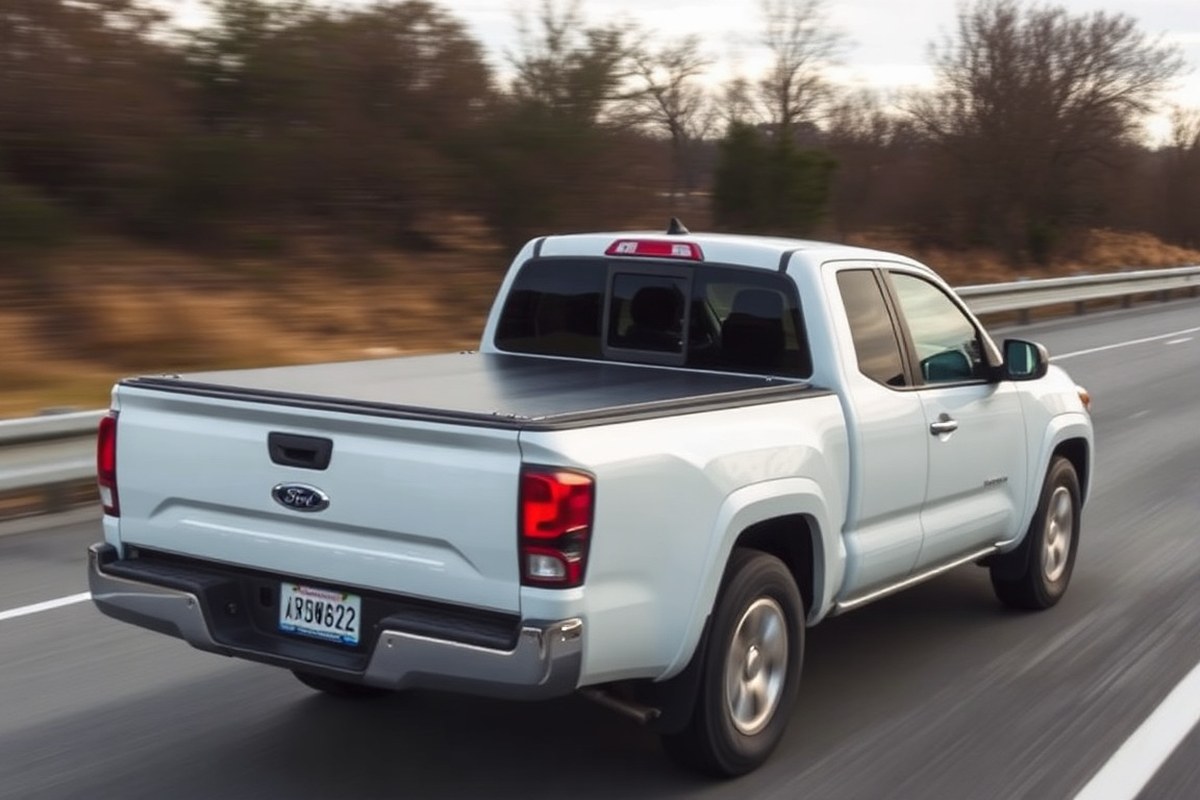
Tonneau covers can improve the fuel economy of pickup trucks by reducing aerodynamic drag. When you drive without a cover, air flows into the open truck bed and creates turbulence. This turbulence increases drag, which forces your engine to work harder and use more fuel. Adding a tonneau cover smooths the airflow over the bed, cutting down on turbulence and helping your truck slice through the air more efficiently.
The degree of fuel economy improvement varies, but studies and expert tests generally show modest gains. Fuel economy can increase up to 10% in some cases, particularly with tightly fitting hard covers that seal off the bed completely. More commonly, you might see around a 1 to 2 miles per gallon increase. For example, one test on a full-sized truck found about a 1 to 2 mpg improvement after installing a hard tonneau cover. Organizations like SEMA estimate that a typical pickup might save about 1.8% in fuel use thanks to a cover. Over a 15,000-mile year with a 20 mpg baseline, this translates to roughly 13.5 gallons saved, which at current fuel prices means savings of about $40 to $60 annually.
Understanding airflow differences helps explain these results. Without a cover, fast-moving air enters the bed and creates a low-pressure zone that disrupts smooth airflow around the vehicle. This trapped air causes drag that reduces fuel efficiency. A tonneau cover prevents this by creating a flat, sealed surface that allows air to flow over the truck bed as if it were part of the cab. This more streamlined shape reduces drag and helps the truck maintain speed with less fuel consumption.
Despite these benefits, the actual mileage gains depend on several factors. Truck model, driving speed, and the cover type all play a role. At highway speeds, aerodynamic improvements make a bigger difference, while in city driving, covers have less effect. Also, lightweight, well-sealed hard covers often perform better than soft or loosely fitting covers. Keep in mind that fuel economy can fluctuate for many reasons, so changes of a few percent might be subtle in daily use.
Installing a tonneau cover mainly costs a few hundred dollars, but the fuel savings alone usually take years to cover that cost. However, combined with cargo protection and security benefits, many pickup owners find tonneau covers to be a practical upgrade. The improved aerodynamics from a quality tonneau cover offer a measurable boost in fuel economy by reducing drag, especially during highway driving.
How Different Tonneau Cover Types Compare in Fuel Economy Benefits
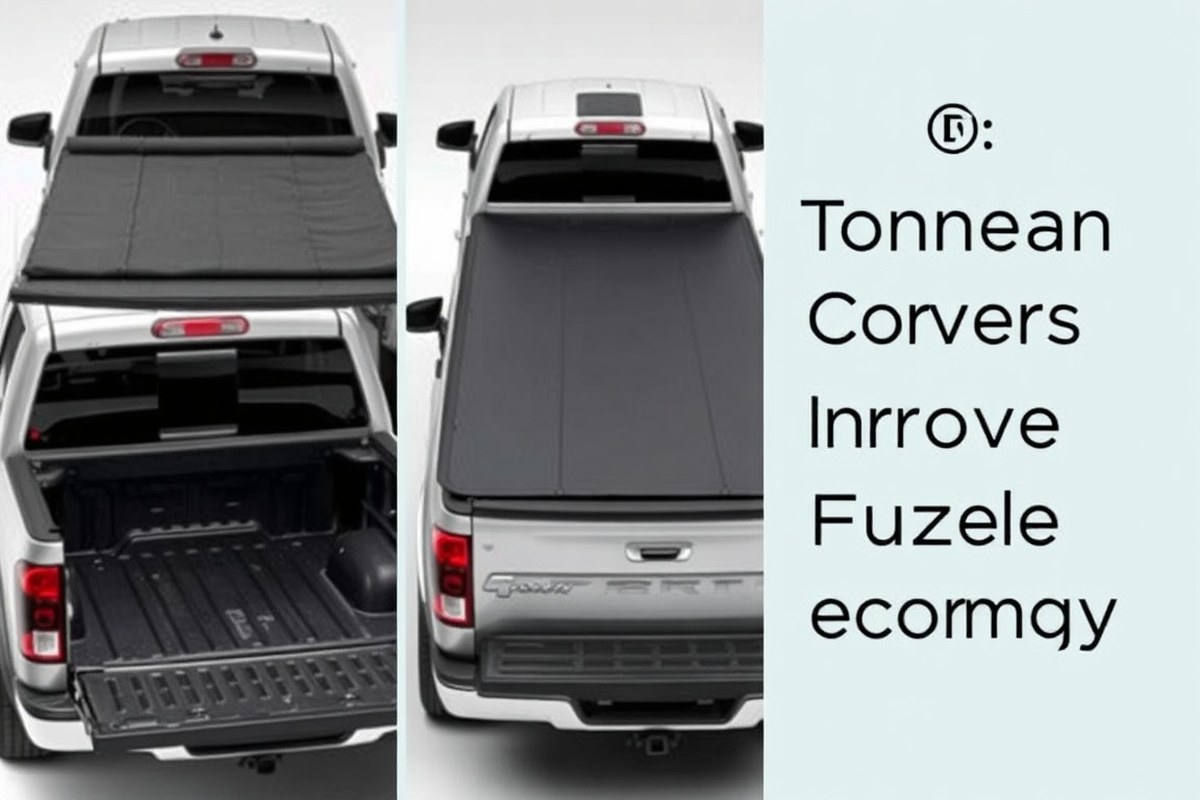
Tonneau covers vary in how much they improve your pickup truck’s fuel economy, mainly because of differences in material weight, design, and ease of installation. Soft roll-up covers tend to offer good fuel savings due to their light weight, while hard folding covers may push fuel efficiency gains higher at the cost of increased weight. Retractable covers look sleek and function smoothly but often weigh more and offer slightly lower fuel benefits.
Soft Roll-Up Covers: Lightweight and Affordable
Soft roll-up tonneau covers are usually made of vinyl, making them lightweight and easy to install. Their low weight helps reduce added drag, contributing to potential fuel economy increases between 5 and 7 percent. These covers are often the most affordable choice and provide decent protection for cargo from weather.
Their simplicity means installation can be quick and straightforward, which suits drivers looking for a low-cost option that still helps save fuel. However, soft roll-up covers may not offer the best security against theft or harsh weather compared to more rigid options.
Hard Folding Covers: Higher Savings with Moderate Weight
Hard folding tonneau covers are made from solid materials like aluminum or fiberglass. Their sturdier build gives better durability and increased security, including lock features unavailable in soft covers. Fuel efficiency improvements with these covers generally range from 7 to 10 percent, higher than softer types due to improve aerodynamics and a tighter bed seal.
These covers tend to weigh more than soft rolls but remain manageable with moderate installation effort. Models like the Worksport AL3 offer a balance of lightweight construction and quick setup, helping you access the truck bed easily without losing fuel savings potential.
Retractable Covers: Sleek but Heavier Options
Retractable tonneau covers typically use aluminum slats that roll into a housing near the cab. These covers provide a clean and modern look while allowing easy partial or full bed access. Potential fuel economy improvements usually fall between 5 and 8 percent, slightly less than hard folding covers.
They are heavier and often more complex to install than other types, which can diminish some aerodynamic benefits. Their higher price and weight might make them less appealing if maximum fuel savings is your main goal. On the plus side, retractable covers typically offer better usability than hinged or single-panel hard covers.
| Bed Cover Type | Material | Installation Ease | Weight | Potential MPG Increase | Cost Range | Security Level |
|---|---|---|---|---|---|---|
| Soft Roll-Up | Vinyl | Easy | Lightweight | 5-7% | Low | Basic |
| Hard Folding | Aluminum/Fiberglass | Moderate | Moderate | 7-10% | Medium | High |
| Retractable | Aluminum | Moderate to Difficult | Heavy | 5-8% | High | Medium |
Choosing the right tonneau cover depends on your priorities. For the best fuel economy boost, lightweight soft cover options work well and come with quick installation. Hard folding covers provide a larger MPG gain and improved security but require more effort to install and add weight. Retractable covers focus on convenience and style but may not maximize fuel savings.
Tip: Prioritize covers that balance low weight and good aerodynamics for better fuel economy; heavy retractable covers may reduce MPG benefits despite convenience.
At What Speeds Do Tonneau Covers Improve Fuel Economy Most?
Fuel economy benefits from tonneau covers are most noticeable at typical highway speeds, generally above 50 miles per hour. The aerodynamic advantage of a tonneau cover comes from its ability to reduce drag, which increases as speed rises. Drag force grows roughly with the square of velocity, so at lower speeds under 40 mph, the drag reduction from a cover results in very small fuel savings, often too minor to detect during everyday driving.
Studies, including a complete SEMA wind tunnel analysis, found that tonneau covers consistently reduce aerodynamic drag by around 5% to 7%, regardless of speeds ranging from 40 to 85 mph. This constant drag reduction translates into roughly 1.8% better fuel economy at an EPA typical road speed of about 48 mph. The report observed no significant difference in drag reduction between 40, 68, and 85 mph test points, suggesting the covers work across a wide speed range but offer relatively incremental improvements.
The relationship between speed and fuel economy clarifies when a tonneau cover’s benefits become worthwhile. Aerodynamic drag becomes a dominant factor in fuel consumption above 50 mph. Since drag increases sharply with speed, reducing it with a cover produces measurable savings mainly on highway trips. A useful rule is that every 5 mph increase above 50 mph causes fuel economy to drop dramatically, comparable to paying an extra 30 cents per gallon of fuel. Installing a tonneau cover helps offset this loss slightly by cutting drag but doesn’t eliminate it.
Below about 40 to 45 mph, fuel economy changes caused by tonneau covers are minimal because other forces like rolling resistance contribute more to energy use. City driving with frequent stops and starts also limits observable gains. At speeds above 50 mph, your pickup truck’s fuel economy can improve by around 1% to 2% with a cover, depending on the specific design and condition. For example, traveling at a steady 60 mph on the highway with a cover might save a few cents per gallon, adding up over many miles but insufficient for large instant savings.
Cost-effectiveness depends on your driving style and typical routes. If most driving is under 50 mph or involves heavy stop-and-go traffic, expect little change in fuel consumption from a tonneau cover. The best scenario to notice fuel savings is steady highway driving above 50 mph over extended periods. Under those conditions, drag reduction helps maintain MPG better than an uncovered bed.
Although a tonneau cover’s aerodynamic improvements rarely exceed a 2% fuel economy gain alone, they add to other benefits like bed protection and vehicle appeal. Your choice to install one should weigh these combined advantages, especially if you drive highways regularly. Alongside managing speed and maintaining steady acceleration, using a tonneau cover represents a modest, real contribution to reducing fuel costs on longer routes.
Installation Tips and Time Needed for Different Tonneau Covers
Installing a tonneau cover usually takes between 30 minutes and 2 hours, depending on the type and your skills. Most covers come with instructions and require only basic tools, making a DIY installation practical for many truck owners. Ensuring a tight and secure fit during installation helps minimize air drag, which can improve your truck’s fuel economy by reducing wind resistance.
Tools and Preparation Needed
Most tonneau covers are designed to install with common hand tools you probably already have. A basic set of screwdrivers, a measuring tape, and sometimes a ratchet or socket wrench set are usually sufficient. Check the cover’s specific instructions beforehand to confirm the tools. Preparation includes cleaning the truck bed rails to remove dirt and debris so the cover lays flat and seals tightly.
Measure your truck bed carefully before buying a cover to ensure proper length and width. Some covers offer adjustable clamps or rails to fit within a range of dimensions. Having an assistant helps to hold the cover in place while you secure it, especially for larger covers.
Step-by-Step Installation Guide
The installation process varies slightly by cover type, but the following steps apply broadly to soft roll-up, hard folding, and snap-on tonneau covers. The key is securing it firmly while preventing gaps that increase drag. Taking your time to align the cover and clamps properly is more important than speed.
- Clean the truck bed rails thoroughly to remove dust, dirt, and moisture.
- Unpack the tonneau cover and check all hardware and instructions.
- Position the cover at the front of the truck bed, aligning it with the bed rails.
- Attach any clamps or mounting brackets loosely, adjusting their position as needed for an even fit.
- Secure the cover clamps or brackets firmly using a screwdriver or wrench, avoiding overtightening that can damage components.
- Test the cover by opening and closing it to make sure it moves smoothly and fits snugly without gaps.
- Inspect the seal between the cover and truck bed for any openings, adjusting clamps to eliminate spaces.
Soft covers typically clamp directly to the rails with snaps or Velcro, taking about 30 to 60 minutes. Hard folding or retractable covers may require 1 to 2 hours due to their heavier materials and additional hardware. Following manufacturer directions closely reduces errors that can affect fit and aerodynamics.
Common Installation Mistakes to Avoid
Failing to clean the bed rails before installation often leads to a poor seal, allowing wind to enter under the cover and increase drag. Over-tightening clamps can warp the rails or damage the cover frame, causing misalignment. Avoid installing the cover on a hot surface or in direct sunlight if possible, as some materials expand and may not fit properly once cooled.
Not checking for even gaps along the cover edges is a frequent error. Small spaces as little as ⅛ inch can let air create drag, limiting fuel economy gains. Take time to adjust and readjust clamp positions to get a consistent fit. If the cover feels loose or rattles at highway speeds, revisit the clamps and seals until the cover is secure.
Common Myths and Misconceptions About Tonneau Covers and Mileage
One common myth is that all tonneau covers are waterproof and that this influences fuel economy. Many covers, especially soft roll-up styles, resist water but do not create a fully waterproof seal. Water can seep through the edges or stitching during heavy rain. This moisture does not directly affect fuel efficiency. The primary benefit comes from reducing air turbulence over the truck bed, not from keeping water out. It’s the smooth airflow created by the cover that matters, which happens regardless of complete waterproofing.
Another misconception concerns the tailgate position. Some truck owners believe lowering the tailgate improves fuel economy by reducing drag. However, studies measuring gas consumption found that the fuel usage with a closed tailgate is about the same as with the tailgate removed. A mesh tailgate actually showed slightly better mileage in some tests. This happens because airflow cycles back into the truck bed when the tailgate is down, increasing turbulence. Keeping the tailgate closed or using a mesh tailgate tends to reduce drag better than driving with the tailgate lowered.
There are questions about whether tonneau covers noticeably improve range in electric pickups. Although data is limited, reducing aerodynamic drag by covering the bed can help EVs use less energy at highway speeds. The exact mileage gain depends on the vehicle’s shape, speed, and cover type but expect relatively modest improvements similar to gas-powered trucks. Since range is valuable in EVs, even a small percentage gain, such as the 6.5 to 7.8 percent improvement seen in gas mileage tests with quality fiberglass or roll-up vinyl covers, could translate into a useful extension of range on long drives.
Myth: All tonneau covers fully waterproof your truck bed and boost your fuel economy by keeping it dry. Fact: Most covers are water-resistant, not waterproof, and fuel savings result from reduced airflow turbulence, not dryness. You want the cover installed snugly to maintain smooth air flow but don’t rely on it to keep your cargo completely dry.
Myth: Lowering the tailgate improves fuel economy by reducing drag. Fact: An open tailgate generally increases drag and fuel use compared to a closed or mesh tailgate. Drive with the tailgate closed or consider a mesh tailgate to minimize air turbulence behind your truck.
Myth: Tonneau covers provide large range improvements for electric pickup trucks. Fact: Covers help reduce drag and can increase EV range somewhat at highway speeds, but improvements usually stay within single-digit percentages. Don’t expect major range jumps, but every bit counts on longer trips.
Always follow the manufacturer’s instructions for installing your tonneau cover tightly to reduce wind fluttering, which can negate fuel economy benefits and wear out the cover prematurely.
How Weight and Cargo Loading Affect Tonneau Cover Fuel Economy Gains
The weight of a tonneau cover does affect fuel economy, but the impact depends on the balance between added mass and aerodynamic gains. Heavier covers add to your truck’s overall weight, which can increase fuel consumption, especially during acceleration and in stop-and-go driving. Most soft or lightweight hard covers weigh between 20 and 60 pounds, so this additional weight is generally small compared to the truck’s total weight. This minor increase is often offset by the reduction in aerodynamic drag, which has a bigger effect on highway fuel efficiency than weight alone.
Loading cargo in your truck bed changes how the tonneau cover influences airflow and fuel economy. An empty bed allows air to swirl around inside, creating drag that lowers efficiency. By covering an empty bed, a tonneau cover smooths airflow and reduces drag significantly. When your bed is loaded, especially if the cargo is roughly level with or below the truck bed’s sidewalls, the cover can still help by lowering turbulence created around loose or irregular cargo. However, if your load is stacked high or protruding above the cover, it can disrupt airflow and minimize any fuel savings.
For best aerodynamic benefit, keep your cargo low and even within the bed before closing the cover. Avoid bulky, uneven loads that force the cover to bulge or stand open. Some tonneau covers are flexible enough to accommodate various loads without leaving gaps, while rigid covers fit tightly but limit cargo height. Securing items to prevent shifting also maintains consistent airflow and avoids creating drag points during driving.
Real-world driving conditions influence how much fuel economy improvement you’ll notice. Higher speeds amplify aerodynamic drag, so a tonneau cover’s effect tends to increase on highways above 50 mph. Stop-and-go traffic or off-road conditions lessen aerodynamic factors but emphasize weight and load impacts. Rough roads, cornering, and braking cycle energy differently than steady highway driving, so any added weight from a cover or heavy cargo has a greater impact during city driving than steady cruising.
Choosing a lightweight cover and managing how you load your truck bed helps balance these tradeoffs. A soft vinyl snap-on cover weighing about 25 pounds paired with low-profile cargo will reduce drag effectively without adding much weight. A rigid cover over heavy cargo might still save fuel on highway trips but could reduce efficiency in urban driving due to the higher mass. Knowing the type of driving you do most often guides your choice for the cover weight and how you load the bed to maximize fuel economy benefits.
Other Effective Truck Modifications to Boost Fuel Economy
Improving your pickup truck’s fuel economy involves more than adding a tonneau cover. Several practical truck modifications and habits can have a bigger impact on your miles per gallon (MPG). Paying attention to tire pressure, oil grade, and driving style offers measurable gains that work well alongside a cover.
Maintaining the correct tire pressure can improve fuel economy by up to 3% or more, according to the U.S. Department of Energy. Underinflated tires increase rolling resistance, forcing the engine to work harder and burn more fuel. Check your tire pressure monthly and inflate tires to the manufacturer’s recommended psi, usually found on a label inside the driver’s door or the owner’s manual.
Choosing the right engine oil also helps. Using the manufacturer-recommended oil grade reduces engine friction, improving efficiency. For example, switching from conventional 10W-30 oil to synthetic 5W-20 can boost fuel economy slightly while improving engine protection. Synthetic oils cost more, roughly $30 to $70 for a full oil change, but they often last longer, offsetting part of the cost with extended intervals between changes.
Adjusting the way you drive plays a major role in saving fuel. Aggressive acceleration, hard braking, and speeding lower MPG significantly. Staying within speed limits and accelerating gently reduces fuel use. Relaxed driving habits can reduce fuel consumption by 10% to 20%, depending on conditions and your truck’s size.
- Keep tire pressure at recommended levels, checking monthly and before long trips.
- Use the oil viscosity grade recommended by your truck’s manufacturer, preferably synthetic for better efficiency.
- Remove excess weight and unnecessary items from your truck bed and cab to reduce drag and load.
- Plan routes to avoid heavy traffic and stop-and-go driving.
- Limit idle time to reduce wasted fuel and unnecessary engine wear.
- Use cruise control on highways to maintain steady speeds and improve MPG.
Combining multiple methods yields better results than relying on a single modification. For instance, a properly inflated set of tires teamed with gentle driving habits and a quality oil change may add more MPG gains than a tonneau cover alone. Each upgrade carries its own cost and time investment, so balance this with expected fuel savings. Checking tires and adjusting driving behavior cost little but need consistent effort. Oil changes vary in price but contribute to long-term engine health and efficiency.
Routine maintenance extends beyond these points. Regular air filter replacement, spark plug checks, and timely engine tune-ups help sustain efficiency. Neglecting these can reduce MPG and increase emissions, counteracting fuel savings from aerodynamic mods like tonneau covers.
Focus on realistic incremental gains. For example, tightening tire pressure by a few psi before a highway trip and driving smoothly can quickly add up to saved gallons over months. When you combine these habits with a tonneau cover, your truck’s fuel economy can improve more noticeably than with any single change alone.
Estimating Your Fuel Savings: A Worked Example and Decision Guide
Estimating your fuel savings from a tonneau cover depends on your truck’s current fuel economy, how much the cover improves it, and your driving habits. A typical improvement ranges from 1 to 3 percent in miles per gallon (MPG), mostly noticeable at highway speeds. Calculating potential savings helps decide if the cover cost is worthwhile for your use.
Calculating MPG Improvement and Cost Savings
Start by finding your truck’s baseline MPG without a tonneau cover. A modest fuel economy boost from a cover might add 1 to 2 MPG if you average around 20 MPG now. You can estimate yearly savings using your annual miles driven and fuel cost per gallon. For example, a 1.5 MPG gain on a truck that drives 15,000 miles per year and gets 20 MPG before the cover would save roughly 375 gallons annually. At $3.50 per gallon, that’s about $1,310 saved each year, though real-world gains are usually smaller. Here’s how a basic calculation works:
| Baseline MPG | 20 MPG |
|---|---|
| Improved MPG | 21.5 MPG (1.5 MPG gain) |
| Annual miles driven | 15,000 miles |
| Fuel cost per gallon | $3.50 |
| Gallons used before | 15,000 ÷ 20 = 750 gallons |
| Gallons used after | 15,000 ÷ 21.5 ≈ 698 gallons |
| Gallons saved | 750, 698 = 52 gallons |
| Annual fuel cost savings | 52 × $3.50 = $182 |
This example assumes steady driving mainly at highway speeds where aerodynamic benefits of a tonneau cover appear. Lower city speeds reduce savings. Also, real MPG gains can be less than 1 MPG in many cases, lowering financial returns.
Tracking Your Truck’s Mileage Accurately
To see if a tonneau cover improves your truck’s mileage, monitor fuel economy before and after installation carefully. Use consistent conditions like similar routes, driving speeds, and load weights. Logging mileage in your truck’s trip computer or a smartphone app for at least 1,000 miles before and after provides better accuracy. Avoid making conclusions from small samples or mixed driving conditions. Follow these steps for tracking your mileage:
- Record your current MPG: Reset the trip odometer and record fuel filled to full, then track miles driven and fuel added over several fill-ups.
- Note driving conditions: Keep a log of your driving type (highway vs. City), weather, and cargo load.
- Install the tonneau cover: Make sure it’s properly secured to prevent added drag.
- Repeat MPG tracking: Follow the same process using the same routes and conditions for at least 1,000 miles.
- Compare results: Calculate average MPG before and after, adjusting for fuel prices to estimate cost savings.
Avoid judging MPG changes from a single tank of fuel; weather and traffic can skew short-term results.
Deciding When a Cover Investment Makes Sense
The purchase of a tonneau cover for fuel savings alone rarely pays off quickly. Most covers sell between $300 and $800. Using the example above, $182 saved per year means a payback time of about 2 to 4 years depending on the upfront cost. Add the value of bed protection and cargo security to the calculation since fuel savings alone might not justify the expense. Consider these factors before buying:
- Driving mostly on highways at speeds above 55 mph increases the chance you’ll notice improved fuel economy.
- Lower highway mileage or mostly city driving reduces savings, extending payback times.
- When fuel prices fall sharply, savings decrease, reducing the cost-effectiveness of the cover for fuel.
Tracking your estimated annual savings compared to cover cost helps you decide. Beyond fuel economy, think about how much cargo protection and convenience matter to you. Investing in a cover makes more sense with multiple benefits or if you plan to keep the truck for several years.
Step-by-Step Action Plan to Boost Your Truck’s Fuel Economy with a Tonneau Cover
Use this plan to select, install, and optimize a tonneau cover for real fuel economy gains on your pickup truck.
- Before you buy: Research tonneau cover types focusing on aerodynamic benefits and weight. Choose a hard folding cover for the best fuel savings if budget allows.
- Day 1: Purchase your chosen tonneau cover and examine installation instructions carefully to plan your setup.
- Day 2 or 3: Install the cover on a clean, level surface. Confirm a snug fit with no gaps or flapping parts, which reduce fuel savings.
- Week 1: Drive at highway speeds, above 55 mph, and monitor your fuel economy using the truck’s onboard computer or a mileage app. Improvements may take time to appear.
- Week 2: Adjust cargo loading to keep the bed aerodynamically stable, avoid tall, loose items that disrupt airflow under the cover.
- Week 3: Compare fuel economy before and after installation over similar driving conditions. A 5 to 10 percent improvement is possible at highway speeds.
- After 1 month: Maintain the tonneau cover with regular cleaning and inspections to prevent wear that could affect fit and efficiency.
Frequently Asked Questions
Do Tonneau Covers Help MPG MythBusters?
Yes, MythBusters found tonneau covers can improve fuel economy by reducing drag, but savings are usually modest. The effect depends on speed and cover type.
What Can I Do to Make My Truck Get Better Gas Mileage?
Besides a tonneau cover, keep tires properly inflated, reduce excess weight, and drive smoothly to improve mileage. These combined changes have a bigger impact than a cover alone.
What Is the Average Lifespan of a Tonneau Cover?
Most tonneau covers last about 5 to 10 years, depending on material and care. Proper maintenance extends their life and keeps fuel-saving benefits consistent.
What Are the Benefits of a Tonneau Cover?
A tonneau cover protects cargo, secures the truck bed, and can improve fuel efficiency by smoothing airflow over the bed. These combined benefits make it a practical upgrade.
Can a Tonneau Cover Cause Any Damage to My Truck’s Paint?
No, quality tonneau covers with proper installation don’t harm paint. Choose covers with soft seals and follow fitment instructions to avoid scratches.
Does Adding a Tonneau Cover Affect My Truck’s Carrying Capacity?
Tonneau covers add minimal weight and don’t reduce payload significantly. They’re designed to sit on the bed edges without limiting cargo space.
Wrapping Up
Tonneau covers can improve your pickup’s fuel economy, especially on highway drives at higher speeds when aerodynamics matter most. Choosing the right cover and ensuring proper installation are key to seeing these benefits. Start by selecting the best cover type for your needs and focus on achieving a tight fit to reduce drag. From there, monitor your mileage to see how much you gain and make small adjustments to optimize results.