Do Superchargers Increase Fuel Economy? What Actually Happens to MPG
Do superchargers improve fuel mileage? Usually, they cut it by 10-20% since they push additional air and fuel into the engine, causing higher fuel use. To minimize this loss, drive gently and tune the system well to prevent unnecessary fuel burn during boost.
Key Takeaways
- Superchargers typically reduce fuel economy due to higher fuel demand when producing boost.
- Modest power gains (20-30%) cause minimal MPG loss, while extreme gains can drop MPG significantly.
- Roots-style superchargers tend to cause higher parasitic loss than centrifugal types, affecting efficiency more.
- Proper engine tuning with optimized air-fuel ratios improves both power and fuel usage on supercharged engines.
- Using higher-octane fuel helps prevent knock and allows safer boost, indirectly supporting fuel efficiency.
- City driving with frequent acceleration magnifies MPG loss compared to steady highway speeds.
Do Superchargers Increase Fuel Economy or Reduce It?

Superchargers generally reduce fuel economy rather than increase it. Their main function is to push more air into the engine, which allows for more fuel to be burned. This increase in fuel supply boosts engine power, but at the cost of using more fuel per mile. Typical fuel economy reductions range from about 15% to 30%, depending largely on how aggressively you drive and how the vehicle’s engine is tuned.
The reason for this drop in miles per gallon relates to the additional fuel the engine needs to support the extra air delivered by the supercharger. When you accelerate hard or demand peak power, the supercharger forces more air into the engine’s combustion chambers. To maintain the correct air-to-fuel ratio, the engine management system supplies more fuel, which directly increases consumption. Also, the supercharger itself uses engine power to turn, creating a parasitic loss that means the engine works harder, further decreasing fuel efficiency.
It is technically possible for a supercharger to improve fuel economy in some very specific and limited situations. This could occur if a smaller displacement engine is equipped with a supercharger and then driven very conservatively, especially during highway cruising where the engine can operate at lower RPMs with better efficiency compared to a larger naturally aspirated engine. However, these savings tend to be modest and require disciplined driving styles like gentle acceleration and low load conditions to avoid increased fuel consumption. Even then, any improvements are usually offset by the parasitic losses and the higher fuel use during acceleration.
Fuel economy is also affected by driving context; city driving with frequent stops and acceleration activates the supercharger more frequently, causing bigger drops in mpg. Highway driving at steady speeds, though, allows for less supercharger engagement and somewhat better fuel efficiency. Premium fuel may support better performance with a supercharged engine, but it does not translate into higher miles per gallon. The increased fuel consumption is mostly due to the engine’s need to maintain the boosted air-fuel mixture and overcome mechanical losses from the supercharger.
Understanding that the primary benefit of a supercharger is added power helps set realistic expectations. You gain between 20% to 100% more horsepower depending on the setup, but fuel economy usually goes down accordingly. A balanced trade-off often results in a 20-30% drop in miles per gallon for moderate power gains, while maximum output can cost significantly more fuel. If conserving fuel is your main goal, superchargers will not help improve efficiency; their design prioritizes performance gains, which comes with fuel costs you should anticipate.
How Different Types of Superchargers Affect Fuel Efficiency
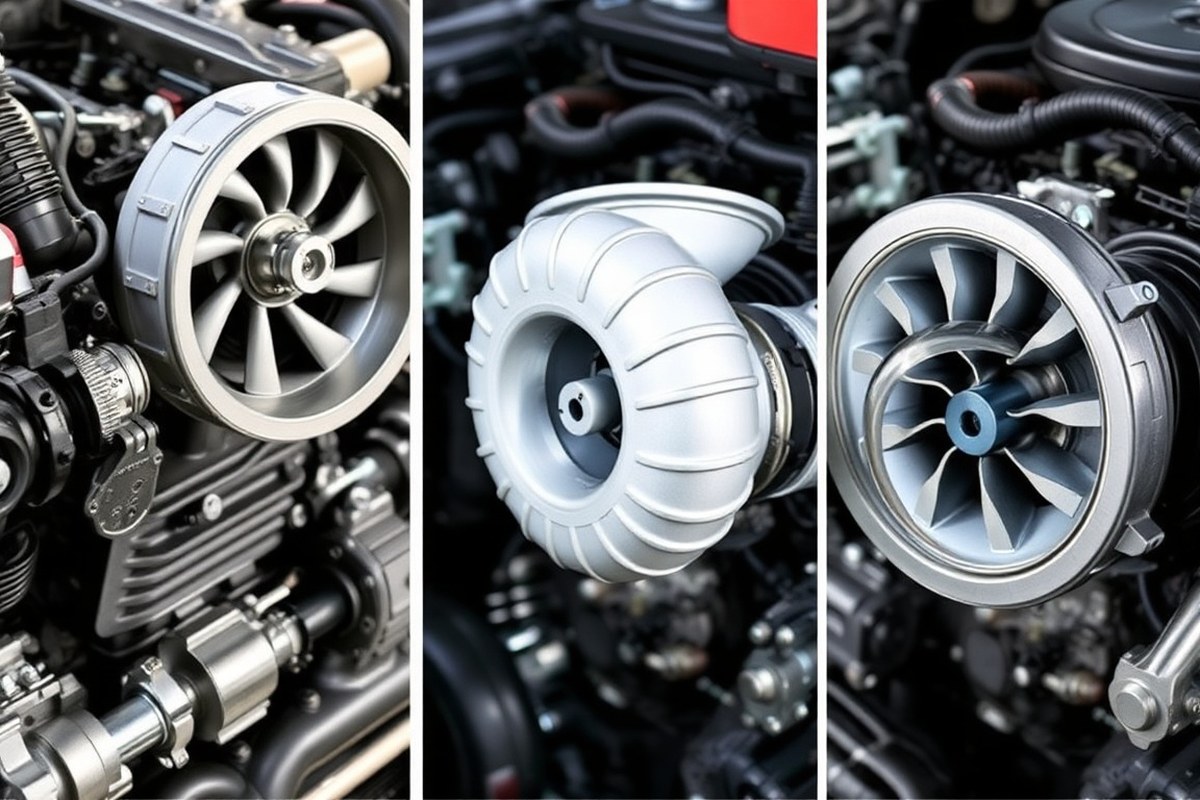
Supercharger types make a significant difference in how much they impact fuel economy. Centrifugal superchargers generally have less effect on fuel efficiency because they draw less power at low RPMs. Roots and twin-screw superchargers provide strong, immediate boost but usually consume more fuel due to their constant parasitic load.
Centrifugal Superchargers and Fuel Economy
Centrifugal superchargers are designed to provide boost that increases with engine RPM, which means they demand less power from the engine at lower speeds. This feature helps keep fuel consumption lower during normal driving conditions compared to other supercharger types. They don’t create boost until you push the throttle hard, so they draw less parasitic power, reducing wasted fuel.
These superchargers are often seen as the closest to being fuel-friendly among superchargers. At low boost levels, the added fuel consumption is minimal, and they can improve overall efficiency relative to running a larger naturally aspirated engine. However, when driven aggressively with high boost, fuel consumption rises significantly as the engine demands more air and fuel to match the increased power output.
Roots-Type Superchargers’ Efficiency Impact
Roots-type superchargers deliver immediate boost across the RPM range by forcing air directly into the engine. While this provides strong low-end torque and instant throttle response, it comes with increased parasitic losses. This means the supercharger constantly draws power directly from the crankshaft, even when full boost isn’t needed, reducing fuel economy during everyday driving.
Due to these constant power demands, Roots superchargers typically lead to higher fuel consumption compared to centrifugal units. Their less efficient airflow design also means the engine often needs more fuel to maintain proper combustion and avoid knock. This type is best suited for drivers prioritizing raw power rather than fuel savings.
Twin-Screw Superchargers: Power vs. Consumption
Twin-screw superchargers combine elements of Roots and centrifugal designs to provide quick boost with better efficiency at higher RPMs. They compress air internally before delivering it to the engine, which increases the density of air and power output. However, the tradeoff is a noticeable increase in fuel consumption due to the consistent energy required to operate the screws and maintain boost.
Applications like those on the Nissan Titan and Armada with twin-screw kits deliver 50-70% more horsepower and torque but come with fuel economy reductions, especially in mixed driving conditions. While these superchargers offer a balance of power and some efficiency improvements, drivers should expect a drop in miles per gallon compared to naturally aspirated engines or centrifugal systems at moderate boost levels. The table below summarizes these differences to help you compare their practical impact on power and fuel economy:
| Supercharger Type | Fuel Efficiency Impact | Parasitic Power Draw | Boost Delivery | Typical Use Case |
|---|---|---|---|---|
| Centrifugal | Lowest impact at low RPMs, moderate under high boost | Low at idle and low RPM | Builds with engine speed | Fuel-efficient daily driving, moderate power |
| Roots | High impact on fuel economy | Constant, high parasitic loss | Immediate boost across RPM range | Instant torque, strong low-end power |
| Twin-Screw | Higher fuel consumption with significant power gain | Moderate to high | Immediate and consistent boost | Balance of power & some efficiency, heavy-duty trucks |
Tip: Choose a centrifugal supercharger for everyday driving if fuel efficiency is a top priority, but expect all superchargers to increase fuel consumption once you demand more boost.
Why Superchargers Increase Fuel Consumption: Parasitic Loss and Boost
Superchargers reduce fuel economy mainly because they mechanically draw power from the engine and force more air into the cylinders, which requires burning more fuel. This mechanical drag, called parasitic loss, reduces miles per gallon (MPG), while the boosted air demands a richer air-fuel mixture that further increases fuel consumption.
Understanding Parasitic Power Draw
Parasitic loss refers to the mechanical energy the engine spends to drive the supercharger. Since superchargers are belt-driven or connected directly to the crankshaft, they constantly consume engine power, even when you’re not accelerating hard. For example, at low RPMs or steady highway cruising, the supercharger may draw about 5% to 15% of the engine’s power output, depending on its size and design.
This continuous power drain means the engine needs to burn more fuel just to maintain speed and overcome that loss. Unlike turbochargers, which use exhaust gases and impose minimal load when off boost, superchargers increase engine load anytime they spin. This mechanical drag lowers overall engine efficiency and makes achieving high fuel economy more difficult.
Boost Pressure and Air-Fuel Ratio Effects
Boost pressure is directly linked to how much air the supercharger forces into your engine. Increasing boost means more oxygen enters the cylinders, which the engine control unit (ECU) compensates for by injecting extra fuel to maintain the ideal air-fuel ratio, usually around 14.7:1 for gasoline engines. If your supercharger raises the intake pressure by 7 psi, that’s nearly a 50% increase over atmospheric pressure, requiring a proportionate increase in fuel.
For example, if your naturally aspirated engine burns 10 gallons of fuel per 100 miles at a given throttle setting, running at that setting with 7 psi of boost might increase fuel consumption by 30% or more since the engine injects more fuel to match the increased air. The richer mixture supports higher power but also raises fuel consumption.
Boost management systems can control the pressure depending on engine speed and load, moderating fuel use during light throttle or cruising. However, any time you floor the throttle or demand maximum power, the increased boost almost always leads to higher fuel consumption.
Fuel Consumption Under Different Load Conditions
Fuel economy penalty varies with driving conditions. Under steady highway cruising, a supercharger produces minimal boost and thus low parasitic loss, keeping fuel consumption closer to a naturally aspirated engine. For instance, you might see only a 5% drop in MPG compared to a non-supercharged vehicle.
In stop-and-go traffic or hilly terrain where acceleration and engine load fluctuate, the supercharger operates more aggressively. It forces more air, triggering the injection of extra fuel, resulting in significantly higher consumption. During hard acceleration, fuel use can increase by 30% to 40% due to both parasitic load and boost needs.
Also, the extra power from a supercharger often causes drivers to accelerate faster or more aggressively, further raising fuel consumption beyond the mechanical factors alone. Lightweight engine parts can reduce parasitic losses slightly, but the increased fuel demand under boost will always be the primary factor lowering MPG in supercharged vehicles.
The Role of Engine Tuning, Octane Fuel, and Driving Style on MPG
Engine tuning, fuel octane, and driving style all influence fuel economy in supercharged vehicles. Proper tuning helps manage fuel delivery and boost levels to optimize efficiency, higher octane fuel enables safer operation under boost, and smooth driving habits reduce the extra fuel consumption caused by aggressive throttle inputs. These factors work together to balance power and fuel use.
ECU Tuning Strategies to Balance Power and Economy
Engine tuning adjusts the fuel maps, ignition timing, and boost control on a supercharged engine. While the main goal usually centers on power and engine safety, tuning can also be optimized to reduce fuel consumption. For example, dialing back maximum boost pressure and leaning out the air-fuel ratio slightly during light throttle conditions can cut unnecessary fuel use.
Modern engine management systems rely on sensors and software to modulate fuel and boost based on demand and conditions. Custom tuning with a handheld tuner or dyno calibration can improve throttle response and fuel efficiency compared to stock supercharger settings.
- Reduce maximum boost to lower parasitic losses on light loads
- Optimize air-fuel ratio for cruising (around 14.7:1) instead of rich mixtures
- Adjust ignition timing for smoother combustion and reduced knock risk
- Enable variable boost control to limit supercharger output at low loads
- Use high-quality engine management software tailored for forced induction
- Schedule regular tune-ups to maintain optimal calibration
Basic tuning improvements may cost between $300 and $800, depending on equipment and shop rates. Good results will show modest gains in highway MPG during steady driving. Overly aggressive tunes aimed only at power will sacrifice fuel economy.
Choosing the Right Octane Fuel
Higher octane fuel resists knocking and pinging under boost, allowing the engine to safely run more aggressive timing and boost settings. Running 91 or 93 octane instead of regular 87 increases the efficiency and safety margin of the supercharged system. This can translate to smoother combustion and slightly better fuel economy when the engine runs optimally.
Switching to premium fuel generally costs $0.40 to $0.70 more per gallon. The fuel economy improvement varies but can offset some extra fuel use under boost by preventing inefficient knock-induced timing retard.
Driving Techniques to Minimize MPG Loss
The way you drive a supercharged vehicle critically affects fuel consumption. Aggressive acceleration and high RPM operation increase boost and parasitic losses, sharply reducing MPG. Smooth, steady throttle inputs and maintaining moderate speeds help the engine operate in lighter load ranges where the supercharger’s fuel penalty is lower. Consider these practical tips to reduce fuel consumption:
- Accelerate gradually instead of flooring the throttle
- Maintain highway speeds between 55 and 65 mph for steady-state cruising
- Shift gears early in manual transmissions to keep RPMs low
- Avoid prolonged idling which wastes fuel without load
- Use cruise control on highways to stabilize throttle input
- Plan routes to minimize stop-and-go traffic
Driving habits can cause MPGs to vary by 20% or more in supercharged cars. The difference is more pronounced in city driving with frequent acceleration. Adopting conscious driving reduces the supercharger’s fuel penalty significantly.
Comparing Supercharged Fuel Economy in City vs. Highway Driving
A supercharger influences fuel economy differently depending on whether you’re driving in the city or on the highway. City driving usually results in a higher fuel penalty from a supercharger due to frequent acceleration, idling, and stop-and-go traffic. These conditions force the supercharger to work harder, increasing boost and fuel consumption. Highway driving allows for more steady speeds and lighter throttle use, helping reduce the fuel penalty, though it still exists compared to a naturally aspirated engine.
In stop-and-go city driving, the engine often runs under higher load during acceleration phases, which pushes the supercharger to produce more boost. This increased boost requires additional fuel to maintain the proper air-fuel ratio, lowering your miles per gallon (MPG). The frequent changes in speed also prevent the engine from settling into an efficient operating range, making fuel consumption less efficient overall. Expect roughly a 25-35% reduction in fuel economy in mixed driving environments, with city driving often falling at the higher end of this range.
On the highway, smoother throttle application and consistent speeds generally reduce the amount of boost needed. Supercharger bypass valves sometimes engage to allow air to bypass the compressor, which further cuts parasitic losses and fuel consumption. This can mean a smaller fuel economy hit, typically around 10-20% less MPG compared to an unboosted engine. Maintaining gentle acceleration, steady highway speeds, and avoiding excess idling can help keep some of the fuel economy penalty in check.
The way you tune the supercharger system also impacts fuel economy differently in various driving conditions. High boost levels increase fuel consumption no matter the environment, but this effect becomes especially costly in city driving due to frequent boost demands. Using the correct octane fuel is key since running below the recommended octane can add an extra 3-10% fuel consumption penalty. For example, running 87-octane fuel on an engine tuned for 91 octane can reduce MPG significantly, especially when paired with aggressive urban driving.
For those who already have a supercharger or plan to install one, you can take steps tailored to the driving environment to reduce fuel waste. In urban settings, limit rapid accelerations and avoid unnecessary idling. On the highway, keep speeds steady and avoid heavy throttle. Proper tuning and using supercharger kits with bypass valves also help moderate fuel economy losses in both city and highway driving. Still, superchargers add mechanical load and demand extra fuel, so you will see a penalty no matter where you drive.
Minimize fuel consumption in city driving by avoiding rapid throttle inputs and idling; this helps reduce boost and the associated fuel penalty imposed by a supercharger.
Maintenance and Modifications to Improve Fuel Economy on Supercharged Engines
Maintaining your supercharged engine carefully can limit the fuel economy loss that comes with forced induction. Regular upkeep ensures the engine and supercharger run efficiently, preventing unnecessary fuel waste caused by mechanical issues or degraded components. Key maintenance actions include checking boost leaks, replacing air filters often, and monitoring spark plug wear to maintain proper combustion. These steps cost between $20 and $100 in parts and usually take under an hour, but they help the engine avoid running excessively rich, which otherwise lowers miles per gallon.
Modifications aimed at improving efficiency mostly focus on optimizing how the supercharger and engine handle heat and airflow. Intercoolers, which cool the compressed air from the supercharger before it enters the engine, can notably improve fuel consumption by increasing air density and reducing the need for rich fuel mixtures. A well-designed air-to-air intercooler can drop intake air temperatures by 50 to 100 degrees Fahrenheit, promoting better combustion and reducing knock risk. Installing one often costs $300 to $800 and may require professional installation. Alongside cooling, reducing parasitic loss by swapping to lighter supercharger pulleys or upgrading drive belts can slightly increase efficiency.
- Regularly check and replace the engine air filter every 12,000 to 15,000 miles
- Inspect and tighten all supercharger boost hoses to prevent leaks
- Swap spark plugs at 30,000 to 50,000 miles with recommendations from your tuner
- Install an air-to-air intercooler to lower intake air temperatures
- Use a smaller supercharger pulley cautiously to reduce parasitic drag
- Drive smoothly to avoid unnecessary boost spikes and excess fuel use
- Monitor fuel trims with a scan tool to adjust tuning as needed
Seasonal changes also affect your supercharged engine’s fuel economy. Cold weather tends to worsen fuel efficiency by 10 to 15 percent due to denser air and increased fuel needed to prevent stalling. Adjusting your driving style and timing maintenance before winter can help offset some of this loss. Keeping the cooling system and intercooler functioning well becomes even more important in hot climates, where intake temperatures rise and efficiency suffers unless adequately managed.
Overall, combining consistent maintenance with targeted modifications like intercooling can reduce the typical fuel economy penalties seen in supercharged vehicles. Spending a bit on upkeep and parts upfront may save fuel costs over time and keep your supercharger running smoothly for longer.
Myths and Misconceptions About Superchargers and Fuel Economy
Many people believe superchargers automatically reduce fuel economy. Although superchargers increase engine power by forcing more air into the combustion chamber, this does not guarantee worse miles per gallon (MPG) in every situation. The confusion mainly arises because using the extra power often leads to heavier throttle input, which burns more fuel. However, the supercharger itself is belt-driven, and its parasitic loss does reduce efficiency somewhat during normal driving. This explains why MPG drops more significantly when the vehicle is driven aggressively versus when it is driven conservatively.
Some assume a supercharger means you must always use premium fuel, thinking premium is only necessary for performance gains. Premium fuel can provide about 1 to 2 percent better MPG compared to regular gas, partly because it has a higher octane rating that resists knocking under boost conditions. Using premium fuel is advisable if your engine is tuned for it, but it is not solely a power requirement; it can marginally improve fuel economy as well. On the other hand, running regular fuel in a supercharged engine not designed or tuned for it risks knocking and lowering both power and efficiency.
Superchargers can actually help improve MPG slightly if you adjust your driving habits over time. Most owners report an improvement of 2 to 4 MPG between the first month and months two to three, as they learn to manage throttle input more efficiently with the added boost. This shows that disciplined driving plays a critical role in limiting the fuel economy penalty associated with superchargers. Common myths and corresponding facts about superchargers and fuel economy include:
- Myth: Superchargers always lower your MPG. Fact: Increased power use usually lowers MPG, but gentle driving with a supercharger can minimize or slightly improve economy.
- Myth: You must get premium fuel exclusively to run a supercharger. Fact: Premium fuel improves MPG by 1-2%, but is mainly suggested for tuned supercharged engines to prevent knock.
- Myth: Superchargers have no impact on fuel use unless you floor the throttle. Fact: The belt-driven supercharger draws power continuously, which affects MPG even at moderate throttle.
- Myth: MPG returns to normal immediately after installing a supercharger. Fact: Fuel economy often drops initially and gradually improves over a few months with throttle discipline.
- Myth: Using a supercharger is a free boost to power with no fuel penalties. Fact: Parasitic losses and increased fuel delivery for boost always affect overall fuel consumption.
Understanding these myths and facts helps set realistic expectations about supercharger fuel economy. By controlling your driving style and choosing the correct fuel grade for your setup, you can enjoy improve engine performance without disproportionate fuel costs.
Alternatives to Superchargers for Better Fuel Economy and Power
Turbochargers provide a popular alternative to superchargers when aiming for improved power without a steep fuel economy loss. Unlike superchargers, which draw power mechanically from the engine’s crankshaft, turbochargers harness energy from exhaust gases. This difference reduces parasitic drag on the engine, often translating into better fuel efficiency. For example, a 2.0-liter turbocharged engine can match the power of a 3.5-liter V6 while using less fuel, making turbochargers a more efficient choice in performance upgrades.
Another option to improve performance with better mileage involves hybrid technology combined with engine downsizing. Hybrids use electric motors to assist the engine, reducing fuel consumption especially in city driving. Also, modern engines with variable-displacement capabilities can switch off some cylinders when full power isn’t needed, which cuts fuel use while maintaining sufficient performance for everyday driving. The following table compares common alternatives for power gains and fuel economy improvements, detailing how they influence efficiency and engine load.
| Option | Power Source | Fuel Economy Impact | Cost and Complexity | When to Choose |
|---|---|---|---|---|
| Supercharger | Engine crankshaft (mechanical) | Higher fuel consumption due to parasitic loss | Moderate cost, moderate installation complexity | Instant boost desired; less concern over MPG |
| Turbocharger | Exhaust gases (exhaust-driven turbine) | Better fuel economy due to less engine drag | Similar to supercharger but often more complex | Balance of power and fuel efficiency |
| Hybrid System | Gas engine + electric motor | Improved MPG, especially in stop-and-go traffic | Higher upfront cost, complex technology | Prioritize fuel economy with added power backing |
| Variable Displacement Engine | Engine with cylinder deactivation | Fuel savings during light-load driving | Built-in feature, no aftermarket retrofit | Moderate power needs with fuel economy in mind |
Choosing a turbocharger requires careful installation and tuning to maximize benefits, including adjusting the air-fuel mixture and ignition timing. Hybrids typically involve a higher initial investment but can substantially reduce fuel costs over time. Variable displacement engines offer a no-modification method for improved efficiency but depend on manufacturer design.
Proper engine tuning is essential; an improperly tuned turbo or supercharger can increase fuel consumption and reduce performance instead of improving both.
Step-by-Step Action Plan to Optimize Fuel Economy with a Supercharger
Follow these steps to balance the power gains of your supercharger with reasonable fuel efficiency. Each phase helps you tune and adapt your car for the best results.
- Before Installation: Choose a supercharger designed for efficiency, like a twin-screw type, to minimize parasitic loss. Confirm manufacturer specs for expected fuel impact.
- Week 1 After Installation: Get a professional engine tune focused on your fuel octane and driving habits. Monitor fuel mileage with daily drives to see initial effects.
- Week 2: Adjust your driving style by avoiding aggressive acceleration and heavy throttle. Track fuel consumption changes to verify improvements.
- Month 1: Use higher-octane fuel as recommended to support tuning and prevent knock. Note if fuel economy stabilizes or improves as a result.
- Month 2: Perform maintenance checks on the supercharger belt and air filters to reduce drag and ensure efficient operation. Assess MPG during city and highway routes.
- Every 6 Months: Reevaluate engine tuning and consider adding fuel-saving mods like intake or exhaust upgrades compatible with supercharging. Compare fuel use before and after changes.
- Ongoing: Avoid unnecessary idling and heavy loads to keep consumption lower. Use real-time fuel economy monitoring tools to stay informed.
Frequently Asked Questions
What Is the Downside of a Supercharger Besides Fuel Economy?
Besides reducing fuel economy, a supercharger adds mechanical complexity and increases engine wear due to higher operating pressures. Regular maintenance becomes more critical to avoid reliability issues linked to the extra stress on engine components.
Does a Supercharger Increase Fuel Consumption Significantly in Daily Driving?
Yes, a supercharger generally boosts fuel consumption by 15-30%, depending on your driving habits and engine tuning. Aggressive acceleration and high boost settings increase fuel use, while light throttle and efficient tuning can minimize the penalty.
Can Running a Supercharger on Lower Octane Fuel Harm Performance or Economy?
Using octane below the recommended level, for example, 87 instead of 91, can cause 6-10% worse fuel economy and reduced power. It may also increase engine knocking risk, so matching fuel grade to the tune is important for best results.
Is Using a Supercharger More Cost-Effective Than Just Buying Premium Gas for Power Gains?
A supercharger delivers significant horsepower gains that premium gas alone cannot achieve, but it costs more upfront and reduces fuel economy. Premium fuel is necessary for supercharged engines but won’t replace the power benefit or fuel cost tradeoff from forced induction.
Have Real-World Tests Shown Superchargers Help or Hurt MPG?
Tests typically show superchargers lower MPG by an average of 20-30%, but results vary by vehicle and driving style. Some efficient setups and careful driving can limit the fuel economy drop, but most drivers see reduced mileage with added boost.
Why Does My Supercharger Cause Such a Big Drop in MPG?
The drop in MPG is mainly due to the supercharger’s parasitic loss and increased fuel demands to produce more power. Aggressive tuning or heavy throttle use amplifies this, so moderating your driving style and proper maintenance can help improve fuel economy.
Before You Go
Superchargers generally reduce fuel economy because they demand more fuel when boosting power, but careful tuning and driving habits can lessen this effect. Start by focusing on a custom tune and adjusting how you drive to see noticeable changes. Keep an eye on fuel use and maintain your system regularly to make the most of your supercharged engine.