Can You Wash a Truck with a Tonneau Cover? A Complete Guide to Safe Cleaning
Can you wash a truck with a tonneau cover? Yes, you can wash a truck with the cover installed if done carefully using the right methods. Avoid automatic car washes with spinning brushes and high-pressure water, which can damage the cover. Start by rinsing gently and use mild cleaners designed for tonneau covers to protect their waterproofing and finish.
Key Takeaways
- Remove soft or electric tonneau covers before automatic or touch car washes to prevent damage.
- Hand wash your tonneau cover with mild soap and water for the safest cleaning.
- Use a soft cloth or sponge instead of abrasive brushes to avoid scratching the cover.
- Apply a UV protectant or specialized tonneau cover cleaner after washing to maintain durability.
- Let cleaning solutions soak for 5 minutes on stubborn dirt before gentle scrubbing.
- Avoid high-pressure water sprays directly on seams to protect waterproof seals.
Is It Safe to Wash a Truck with a Tonneau Cover Attached?

You can wash a truck with a tonneau cover attached, but whether it is safe depends on the washing method and the type of cover. Many manufacturers recommend removing the tonneau cover before using an automatic or touch car wash. These machines often have spinning brushes and high-pressure jets that can scratch the cover surface or damage its seals. Automatic car washes also risk trapping dirt and sand against the cover, which can cause abrasions. Consider the risks carefully before running your truck through a car wash with the cover installed, especially if removing it is hard due to weight or having no help.
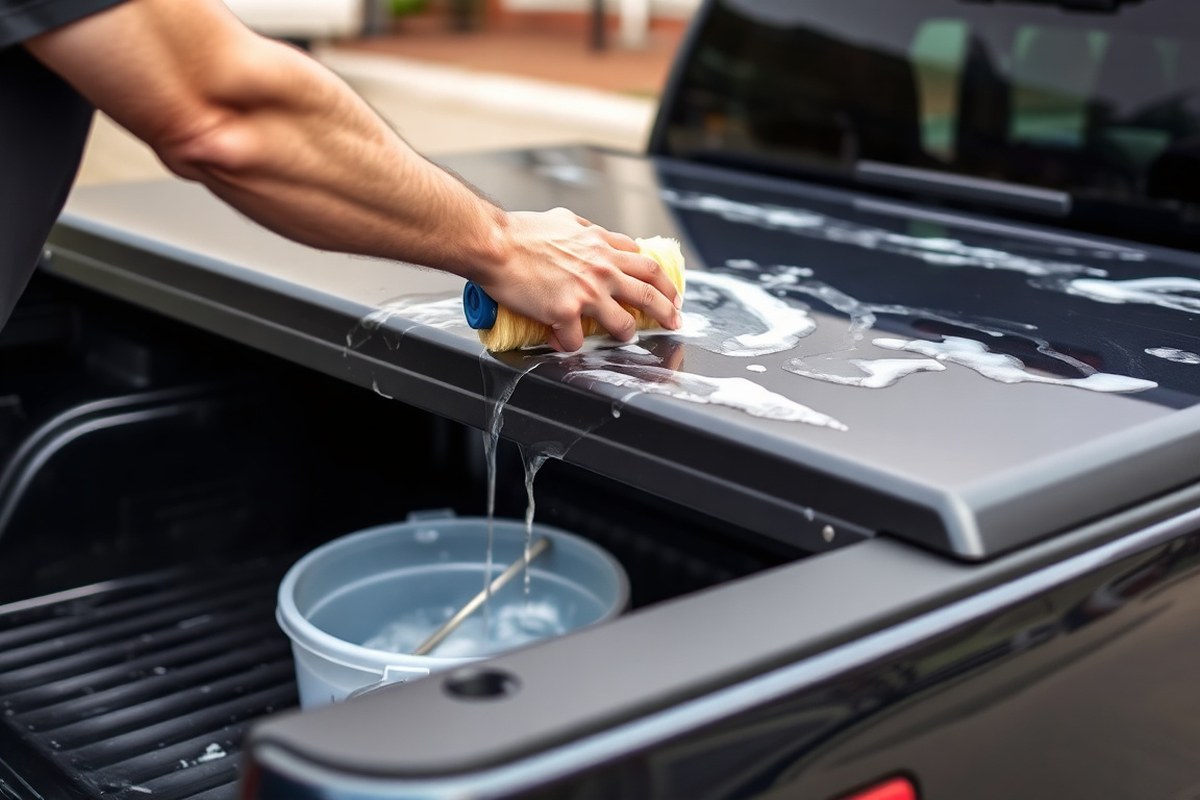
Hand washing is the safest way to clean a truck with a tonneau cover on. It allows closer control over water pressure, avoiding damage from high-pressure nozzles, and lets you clean the cover thoroughly using manufacturer-recommended detergents and soft brushes. For example, TruXedo advises cleaning its soft roll-up covers with car wash soap and a soft-bristle brush. You begin by inspecting the cover to remove loose dirt and debris that might scratch it during washing. Special cleaning products, like the Tyger 2-in-1 Tonneau Cover Cleaner and Protectant, can be applied afterward to maintain UV resistance and flexibility.
Running a car wash that uses spinning brushes, dryer fans, or wax treatments while the cover is on can cause scratches, swirls, or loosen the cover over time. The pressure and friction may damage seals or finish more than washing the bare truck bed would. Manufacturers typically advise removing the tonneau to avoid these issues, but since every cover type responds differently, you should consult your cover’s user manual. Some hard covers tolerate automatic washes better, while most soft covers do not. For trucks with heavy or electric tonneau covers, removal is often more challenging, so hand washing becomes the preferred option.
Deciding whether to remove the tonneau cover before washing your truck comes down to a few factors: how easily you can detach the cover, your choice of wash type, and the manufacturer’s instructions. Removing the cover and washing it separately requires some time and effort but greatly reduces risk of damage. Leaving it on saves time but increases the chance of scratches, seal failure, or damage from high-pressure water. Choose a gentle hand wash or a touchless car wash that uses less abrasive methods if you wash the truck and cover together.
The costs involved include your time for removal and cleaning and potential expense if damage occurs during automatic washing. Removing the cover might take 10 to 20 minutes, depending on its design. Using specialized cleaners ranges from $10 to $25 per bottle. Avoiding costly repairs or premature cover replacement usually justifies this investment. A clean truck and a well-maintained tonneau cover should look smooth, free from dirt or scratches, and maintain their flexibility and water resistance over time. Damaged covers tend to show cracks, peeling, or loose edges, signaling that washing precautions were not taken.
Which Car Wash Types Are Safe for Trucks with Tonneau Covers?

Automatic car washes that use spinning brushes or rollers pose a risk of scratching or damaging tonneau covers, especially those with painted finishes. Touchless car washes avoid physical contact but rely on high-pressure water jets and strong chemicals that may harm seals or surface coatings. A safer option is using self-service bays or hand washing to control the cleaning process and protect your tonneau cover.
Automatic Car Washes with Brushes
Brush-type automatic car washes clean vehicles with coarse brushes or cloth strips that physically scrub the surfaces. While effective on most painted surfaces, these brushes can cause scratches and wear on tonneau covers, particularly if they have a painted or delicate finish. The friction from these spinning brushes can ruin the cover’s appearance and reduce its lifespan.
Many pickup truck owners with tonneau covers avoid brush car washes because the risk of damage outweighs the convenience. Covers with custom paint jobs or special coatings are especially vulnerable. If you must use this type of wash, confirm the brushes are soft-touch and avoid car washes with aggressive rollers or an abrasive cleaning cycle.
Touchless Car Wash Options
Touchless car washes use high-pressure water jets combined with strong detergents to clean surfaces without making physical contact. This approach eliminates the risk of scratches from brushes, which may make it seem safer for trucks with tonneau covers.
However, the very high water pressure, often over 1,000 psi, can damage the rubber seals and surface coatings on your tonneau cover. The chemical detergents used are typically stronger than the soaps you would apply by hand and can degrade finishes or cause discoloration over time.
Consider using touchless washes sparingly if you choose this method. Always check your cover’s manufacturer recommendations regarding chemical exposure and water pressure tolerance.
Self-Service and Hand Wash Bays
Self-service car wash bays give you full control over the cleaning tools and chemicals used. You can choose gentle soaps, soft brushes, or even wash by hand if desired. This method reduces the risks associated with automatic brush or high-pressure wash systems.
Hand washing, although more time-consuming, protects your cover’s finish and seals. It allows careful cleaning of edges and crevices without abrasion or excessive water pressure. Using microfiber cloths and mild detergent designed for automotive finishes helps maintain the cover’s appearance and durability.
Many truck owners with tonneau covers prefer this option. It may take 20 to 30 minutes for a thorough wash, but it is the safest for preserving the integrity and look of your tonneau cover. The following table compares car wash types based on their impact on tonneau covers and suitability:
| Car Wash Type | Cleaning Method | Effect on Tonneau Cover | Recommended Use |
|---|---|---|---|
| Brush Automatic | Spinning brushes or cloth strips | Potential scratches, wear on painted or delicate covers | Not recommended for painted or soft covers; use only if brushes are soft-touch |
| Touchless Automatic | High-pressure water jets and strong detergents | Risk of seal damage and chemical degradation of coatings | Use occasionally; avoid repeated exposure |
| Self-Service Bay | Manual wash with chosen tools and detergents | Safe; full control prevents damage | Highly recommended for preserving cover condition |
| Hand Wash | Manual wash with mild detergent and soft cloths | Safest; no abrasive contact or harsh pressure | Best for maintenance and longevity |
Tip: Avoid automatic car washes with abrasive brushes or dryers to maintain your tonneau cover’s finish and avoid seal damage.
How to Hand Wash a Tonneau Cover Properly
Hand washing a tonneau cover needs careful attention to protect its material while effectively removing dirt. Using the right tools and cleaning agents prevents damage, especially for soft vinyl covers, while ensuring a thorough clean. Follow specific steps depending on whether you have a soft or hard tonneau cover to maintain its appearance and functionality.
Gathering the Right Supplies
Start by collecting gentle cleaning materials designed for automotive surfaces to avoid scratches or material degradation. Choose a mild, neutral pH cleaner suitable for tonneau covers, as harsh soaps can harm soft vinyl. Soft cloths or microfiber towels help remove dirt without causing scratches, and a soft-bristle brush or mitt aids in lifting grime without damaging the surface.
Check your tonneau cover’s manufacturer recommendations when selecting cleaning products to match your specific model. Having a bucket of clean water and a hose with gentle spray will also assist in rinsing off loosened dirt effectively and reduce the risk of residues that cause wear.
Cleaning Soft vs. Hard Covers
Soft covers, usually made from vinyl, require more delicate handling than hard covers. Use a soft-bristle brush to gently apply the cleaning solution and lift dirt without weakening stitching or scratching the surface. Hard covers tolerate a firmer touch but still benefit from using soft microfiber towels to prevent visible marks.
Soft covers particularly benefit from being washed gently by hand and avoiding automatic car washes that may snag or tear the material. Hard tonneau covers often have sturdier surfaces but still need cleaning without abrasive tools. Rinse the cover thoroughly after washing to prevent soap buildup, which can cause streaking or damage over time.
Spot Cleaning Stubborn Dirt
For tough dirt or stains, apply a small amount of the neutral pH cleaner directly to the area and let it sit for a few minutes to loosen the grime. Use a soft-bristle brush or microfiber cloth to gently scrub the spot without applying excessive pressure, which can damage soft covers or scratch hard ones.
Repeat as needed, rinsing frequently to avoid spreading dirt or abrasive particles over the cover’s surface. Avoid household chemicals or harsh cleaners, as they can cause warping, wrinkles, or cracks, especially on soft covers. Always test cleaning products on a small, inconspicuous area before full application to ensure there’s no adverse reaction.
- Rinse the tonneau cover with water to remove loose dirt and debris.
- Apply a neutral pH cleaning solution evenly over one half of the cover.
- Use a soft-bristle brush or WeatherTech Wash Mitt to gently agitate the surface.
- Rinse thoroughly with water to wash away loosened dirt and soap.
- Wipe down the cover with a soft microfiber towel to dry and remove remaining dirt.
- Repeat the cleaning process on the other half of the cover.
- Spot clean stubborn areas by applying cleaner directly and gently scrubbing with a soft brush or cloth.
- Final rinse all over the cover to prevent soap residue and allow air drying.
Preparing Your Truck and Tonneau Cover Before Washing
Before washing your truck with a tonneau cover, take time to prepare both properly to avoid damage. Start by removing any roof racks, bed racks, or loose accessories on the tonneau or truck bed that might get in the way or scratch surfaces during cleaning. These items can be reattached after the wash once the truck and cover dry completely.
Next, inspect all seals and gaskets around the tonneau cover’s edges. Look for cracks, peeling, or worn spots that could let water leak inside the truck bed during washing. Pay special attention if your cover is older, since applying strong water pressure to aging seals may cause leaks. If you have a hard tri-fold cover, examine each hinge closely for corrosion or damage that might worsen with vigorous scrubbing or high-pressure water.
Protective measures are important to keep your tonneau cover in good shape. Use microfiber cloths or soft brushes for cleaning, avoiding rough brushes or spinning brushes that could scratch or loosen hardware. Harsh chemicals can degrade vinyl, canvas, or stitching, so select mild soaps specifically designed for automotive use. Avoid high-pressure washers near seals, latches, and hinges to prevent water intrusion and hardware damage.
- Remove roof racks and loose accessories before washing
- Check seals and gaskets for cracks, wear, or peeling
- Inspect hinges for corrosion or damage on hard covers
- Use soft cloths or brushes and mild automotive soap
- Avoid strong water pressure on seals and hardware
- Take care around latches and moving parts, don’t scrub heavily
- Allow tonneau cover to air dry fully after washing
Taking these steps helps prevent water leaks and surface damage during cleaning. Skipping checks or using the wrong tools might cause costly repairs like seal replacement or hinge corrosion down the line. A thorough inspection and gentle cleaning set a solid foundation for protecting your investment. After washing, inspect the cover again to catch early signs of wear or damage, so you can address issues before they worsen over time.
Protecting and Maintaining Your Tonneau Cover After Washing
Dry your tonneau cover with a clean, soft microfiber towel immediately after washing to prevent water spots and mildew buildup. If you have a soft vinyl cover, gently pat the surface rather than rubbing vigorously to avoid damaging the material. For hard or retractable covers, use a towel or allow them to air dry in a shaded area to protect the vinyl or paint finish from UV damage. Avoid drying your cover in direct sunlight because the heat can cause fading or warping, especially on softer materials.
Applying wax or protectants to your tonneau cover is generally not recommended unless specified by the manufacturer. Many tonneau covers, especially soft or vinyl models, can have their warranties voided by wax or silicone-based products. Instead, use a cleaner designed specifically for your cover type and, if applicable, a UV protectant formulated for vinyl or automotive plastics. For hard covers made of painted aluminum or fiberglass, a light coat of automotive wax once or twice a year can improve shine and add a protective layer, but avoid wax near moving parts or seals to prevent buildup and interference.
Cleaning frequency depends on usage and environment but aim to clean your tonneau cover every 2 to 4 weeks in regular conditions, increasing to weekly if you drive on muddy roads or around salt in winter. After cleaning, inspect hinges, locks, and rails on folding or retractable covers. Lubricate these parts with a silicone-based spray every 3 to 6 months to maintain smooth operation and avoid corrosion. Avoid oil-based lubricants that can attract dirt or damage seals. In dusty or wet climates, more frequent maintenance helps prevent grime buildup and mechanical issues.
Protecting your tonneau cover after washing involves careful drying, avoiding harmful products, and timely lubrication to keep everything working smoothly and looking good. For example, if you live in a sunny region, schedule your wash on cloudy days or during early morning or late afternoon hours to minimize sun exposure. This extra precaution helps reduce vinyl cracking or fading. Also, don’t forget to flush your cover with fresh water after exposure to salt or chemicals to prevent deterioration.
Keep wax and silicone sprays away from your tonneau cover’s moving parts to avoid residue build-up that can cause malfunction.
Special Considerations for Soft, Hard, and Electric Tonneau Covers
Soft, hard, and electric tonneau covers each require different cleaning methods based on their materials and mechanical parts. Soft covers, typically made of vinyl or fabric, need gentle cleaning with mild soap and water to avoid damaging the surface or stitching. Harsh chemicals or abrasive brushes can cause cracks or tears in the vinyl, so use a soft cloth or sponge and rinse thoroughly with clean water. Applying a UV protectant designed for vinyl or fabric can help maintain flexibility and prevent fading, which can cost about $15 to $25 per bottle. Avoid high-pressure water sprays directly on edges to preserve seals.
Hard tonneau covers, usually constructed from aluminum, fiberglass, or hard plastic, handle stronger cleaning products but still benefit from gentle washing to keep finishes intact. You can use automotive-grade cleaner wax or a mild detergent, avoiding acidic or abrasive cleaners that might scratch or dull painted or coated surfaces. Hard covers often include hinges and seals that should be kept clean and lubricated to prevent sticking or leaks. Cleaning those parts with a damp cloth followed by a silicone-based lubricant will help maintain smooth operation and reliable sealing. Damage to guide rails or hinges can cause leaking or difficulty in opening the cover, requiring repair or replacement parts costing several hundred dollars.
Electric tonneau covers combine the concerns of hard covers with added sensitivity due to their motor and wiring. While the exterior surfaces are cleaned using the same mild soap and water method as hard covers, extra care should be taken not to let water pool around the motor compartments or electrical connections. Using a low-pressure rinse and avoiding direct water spray into control units reduces the risk of water damage. Frequent inspection for moisture buildup can prevent corrosion or electrical failure. Repairing an electric tonneau’s motor can be expensive, sometimes upwards of $500, so protecting these components is economical in the long run.
Material type directly affects cleaning product choices. Vinyl and fabric in soft covers respond best to soap-free cleansers or automotive shampoos labeled safe for delicate surfaces. Hard plastic and metal need pH-neutral automotive soaps to preserve paint or powder coating. For electric covers, sticking to gentle cleaners and avoiding petroleum-based products prevents damage to seals and electrical parts. Consistent, careful cleaning will keep each tonneau cover functioning correctly and looking good without risking damage from improper chemicals or techniques.
Common Washing Mistakes That Damage Tonneau Covers and How to Avoid Them
One frequent mistake is using abrasive brushes or scrapers to remove dirt or ice from the tonneau cover. Sharp tools can create scratches or gouges on both soft and hard covers, leading to leaks and accelerated wear. Instead, use a soft brush or a plastic scraper designed for automotive use. When washing, avoid harsh chemicals or high-pressure washers that can damage stitching or seals by forcing water under the cover.
Another issue is neglecting to rinse thoroughly after washing. Residue from soap or cleaners can break down materials over time, causing brittleness or discoloration. Rinse the cover well with plain water to remove all detergent. Also, drying the cover properly is important; leaving it wet can trap moisture that leads to mildew, especially under the seams or folds.
- Do not use sharp tools to remove ice; opt for plastic scrapers or warm water instead.
- Use mild, pH-balanced soap and a soft sponge to prevent scratches.
- Rinse thoroughly to remove all soap residue and avoid material breakdown.
- Dry the cover with a clean microfiber cloth to prevent mildew.
- Inspect stitching and seals regularly for signs of wear or tears.
- Avoid pressure washers closer than 12 inches and use a low-pressure setting.
- Do not apply wax or polish that is not intended for tonneau cover materials.
Once you finish washing, inspect your cover carefully for tears, leaks, or any loose stitching. Address any damage promptly to prevent larger issues. Small rips in soft covers can commonly be fixed at home using repair kits suited for the particular material of your cover. For hard covers, damaged parts might require replacement components, such as the Replacement Receiver Upfit Kit for Retrax Powertrax Tonneau Covers (#RTX76TR). While minor leaks can sometimes be sealed with weatherproof adhesive, extensive damage or problems involving electrical parts should be repaired by a professional to ensure proper function and maintain your warranty.
Seasonal and Long-Term Care Tips for Your Tonneau Cover
Keeping your tonneau cover in good shape through seasonal changes protects its appearance and extends its lifespan. Adjust your cleaning and maintenance routine to the challenges posed by winter’s moisture and summer’s heat. Following tailored care steps helps prevent damage from UV exposure, mold buildup, and weather-related wear.
Winter Cleaning and Protection
Winter demands careful attention to moisture, ice, and road salt, which can degrade seals and surfaces of your tonneau cover. Rinse off road salt promptly using clean water at temperatures above freezing to prevent corrosion. Avoid using harsh de-icing chemicals on the cover; instead, gently scrape off ice with a plastic squeegee to avoid scratching the surface. Apply a water-repellent spray designed for automotive fabrics or vinyl after each wash to prevent mold and mildew. Make sure the cover is thoroughly dry before closing. Taking these steps every two to three weeks during wet, freezing months helps maintain a tight, mold-free seal.
Never use metal tools or abrasive scrapers to remove ice; this can cause permanent damage to the cover’s finish and seals.
Summer UV and Heat Care
In summer, intense UV rays and high temperatures can cause fading, cracking, and accelerated wear on your tonneau cover. Using a UV protectant spray once a month can minimize sun damage and maintain flexibility, especially on soft vinyl or fabric covers. Avoid parking your truck under direct sunlight for prolonged hours when possible. For hard covers, check and clean drainage holes regularly to prevent water accumulation after rain or washing. Summer cleaning should include gentle washing with mild soap and water at least every four weeks to remove dust, pollen, and contaminants that contribute to fading and surface degradation. Protecting your cover during hot weather not only sustains its appearance but also keeps it sealed tightly, maintaining security and water resistance.
Regular Inspection and Servicing
Schedule professional inspections at least once a year to ensure all locking mechanisms, seals, and hinges are working properly. Professionals can detect early signs of wear that are easy to miss, such as loosening clamps or subtle cracks in the frame. If your cover includes electrical components, like in electric tonneau covers, have the wiring and motors checked to avoid malfunctions. Regular lubrication of moving parts with manufacturer-approved lubricants helps preserve smooth operation. During inspections, replace any rubber gaskets or seals that show brittleness or cracking to secure protection from water and dust.
Timely maintenance saves you from costly repairs or early replacement by catching small issues before they escalate. Most professional service checks cost between $50 and $150 depending on the extent of inspection and adjustments.
Step-by-Step Action Plan for Washing Your Truck with a Tonneau Cover
Follow these steps to clean your truck and tonneau cover safely and effectively. Each phase ensures your cover stays protected while your truck looks great.
- Before You Start: Check the type of tonneau cover and read any manufacturer care instructions. Confirm the cover is securely latched to avoid damage during washing.
- Day 1 – Prepare the Truck: Remove loose debris and hose the truck and cover with water to loosen dirt. Water beads or flows off the surface evenly, showing you’re set to begin washing.
- Day 1 – Hand Wash the Cover: Use a soft cloth or sponge with mild soap and water on the cover’s surface. Gently scrub without circular motions to avoid scratches; rinse and inspect for clean, streak-free surfaces.
- Day 1 – Wash the Truck Bed and Other Areas: Use a vehicle-safe detergent and soft mitt for the truck surfaces free of the cover. Rinse thoroughly and check for soap residue.
- After Washing: Dry the cover with a microfiber cloth to prevent water spots and check seals for moisture buildup. Seals should feel dry to the touch.
- After 1 Week: Check your tonneau cover for wear or damage caused by washing. Small scuffs or color changes could require treatment with the suggested care products.
- After 1 Month: Apply a protective dressing or UV conditioner recommended for your cover type to maintain flexibility and prevent cracking.
- Before Winter Storage: Clean and thoroughly dry the tonneau cover, then store according to manufacturer advice if you remove it for the season to avoid mildew and damage.
Frequently Asked Questions
Is It Safe to Go Through a Carwash with a Tonneau Cover?
Most manufacturers advise removing your tonneau cover before entering an automatic car wash to prevent damage from spinning brushes and high-pressure water. Some soft covers may tolerate gentle touchless washes, but it’s safer to hand wash to protect the cover and your truck’s finish.
How to Wash a Truck with a Tonneau Cover?
Use a mild car wash soap, water, and a soft-bristle brush to hand wash both the truck and tonneau cover. Avoid automatic car washes to prevent scratches on the paint and damage to the cover’s material. Always rinse thoroughly and dry with a soft cloth.
Are Tonneau Covers 100% Waterproof?
Most tonneau covers provide good water resistance but aren’t completely waterproof, especially under heavy rain or when water pools on the cover. Check your cover’s specifications and ensure proper sealing to minimize leaks and protect your truck bed.
Do Tonneau Covers Affect Gas Mileage?
Installing a tonneau cover can improve your truck’s aerodynamics and potentially increase gas mileage by reducing drag. However, the actual savings depend on cover type, driving habits, and truck model, so expect modest improvements rather than dramatic changes.
Can I Go Through the Car Wash with a Truck Bed Cover?
Automatic car washes often damage truck bed covers, especially soft or folding types, and may cause swirls or scratches on your truck’s paint. Removing the cover or choosing a hand wash is generally recommended for safe cleaning.
Can I Take a Soft Folding Tonneau Cover Through the Car Wash?
Taking a soft folding tonneau cover through an automatic car wash risks material wear and damage from brushes or high-pressure water. Hand washing following the manufacturer’s instructions is the safer method to preserve the cover’s condition.
Key Points to Remember
Washing a truck with a tonneau cover is safe if you follow proper steps tailored to the cover type and use gentle cleaning methods. Taking care to avoid harsh chemicals and automated brushes will extend your cover’s life. Start by hand washing your cover with mild soap today and watch your truck stay clean without risking damage.