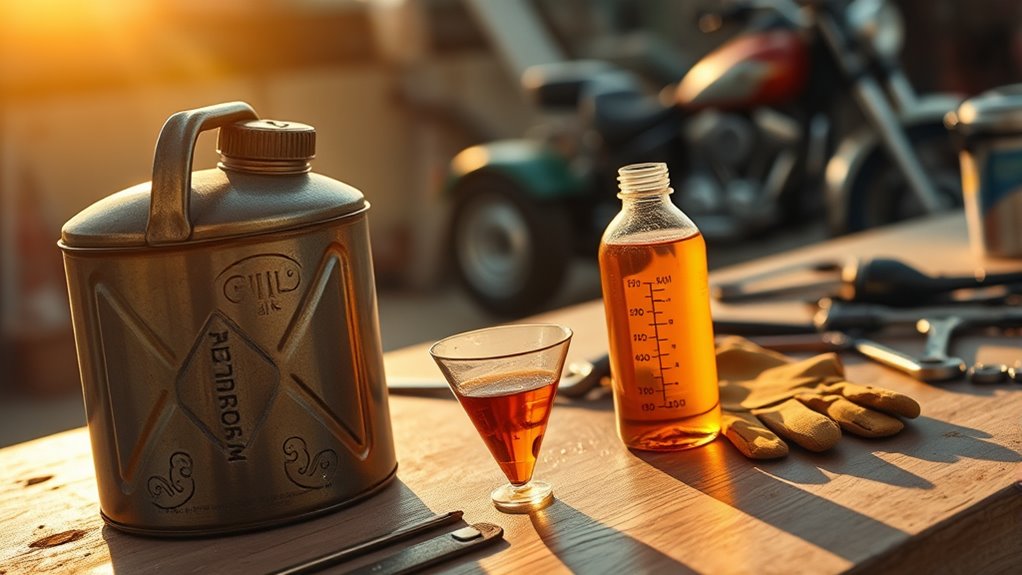
Can Fuel Stabilizer Go Bad and How to Use It Safely
Yes, fuel stabilizer can go bad over time, especially if exposed to air, heat, or moisture. To use it safely, always add stabilizer to fresh gasoline before storage and run your engine to mix it well.
Check for changes like darkening, sediment, or odd smells. Never use stabilizers past their expiration date. Proper storage in a cool, sealed container helps keep it effective.
You’ll find useful tips on detecting and handling stabilizer problems ahead.
Key Takeaways
- Fuel stabilizers can go bad, typically lasting 2-3 years unopened and less once opened; synthetic types last longer.
- Signs of bad stabilizer include color changes, sediment, cloudiness, thickening, or off odors indicating degradation.
- Store stabilizers in cool, dry places away from heat, sunlight, and moisture to prolong effectiveness.
- Always add stabilizer to fresh gasoline before storage and run the engine to ensure thorough mixing.
- Avoid using expired or degraded stabilizer to prevent fuel system clogging and engine performance issues.
What Is Fuel Stabilizer and Why You Should Use It
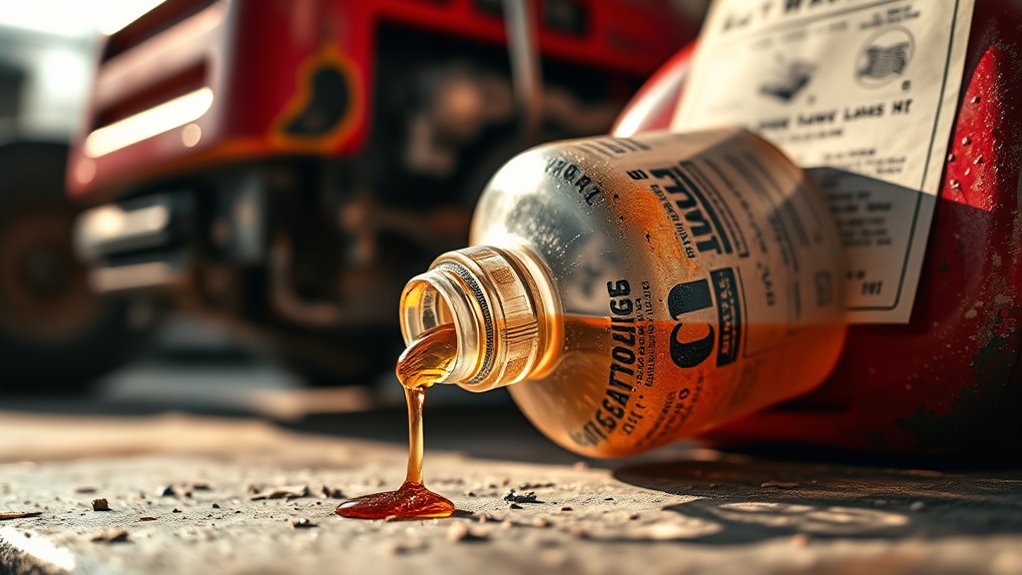
Although gasoline naturally degrades over time, you can prevent this by using a fuel stabilizer, a chemical additive designed to keep your fuel fresh. Fuel stabilizer contains antioxidants and corrosion inhibitors that extend the shelf life of stored fuel, stopping it from breaking down and forming deposits.
When you add fuel stabilizer before storing gasoline or leaving it unused for months, it helps maintain your engine’s performance by preventing gum, varnish, and other buildup. This means your engine runs smoother and lasts longer.
To get the most out of fuel stabilizer, add it properly and avoid exposing your fuel to heat or moisture, which can reduce its effectiveness. Remember, fuel stabilizer itself doesn’t last forever; expired or poorly stored stabilizer won’t protect your gasoline as well.
Using fuel stabilizer is a simple step that saves you from costly engine issues and keeps your equipment ready to go when you need it.
How Fuel Stabilizer Prevents Gasoline Degradation
When you add fuel stabilizer to your gasoline, it works by slowing down the chemical reactions that cause fuel to break down. Primarily, it targets the oxidation process, which leads to gum and varnish buildup that can clog your engine. Here’s how it prevents gasoline degradation:
- The stabilizer contains antioxidants that interrupt the oxidation process, keeping the fuel fresh longer.
- It chemically interacts with fuel compounds to maintain volatility, preventing the evaporation of key components.
- Properly formulated stabilizers form a protective barrier around fuel molecules, reducing their breakdown over time.
Can Fuel Stabilizer Go Bad Over Time?
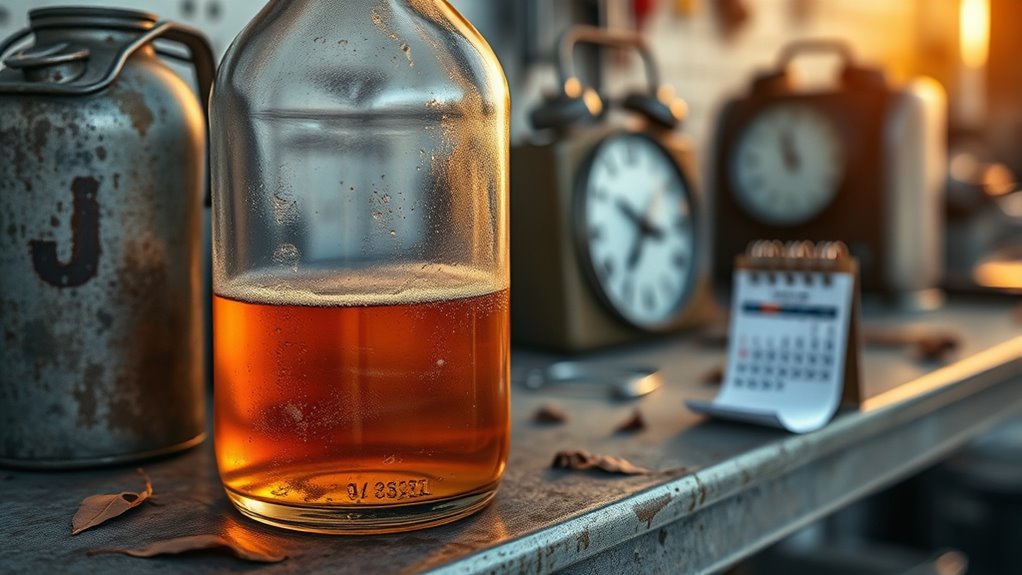
You’ll want to keep an eye out for any changes in color, texture, or sediment—that usually means your fuel stabilizer might have gone bad. Most stabilizers last about 2 to 3 years if they’re unopened. But once they’re exposed to air, heat, or moisture, that shelf life can get a lot shorter. How you store it really makes a big difference in keeping it effective over time.
Signs Of Degradation
Since fuel stabilizer contains chemical compounds, it can degrade over time and lose its effectiveness. When this happens, using it can lead to degraded fuel that harms your engine. To spot signs of degradation, watch for these key indicators:
- Changes in color, like darkening or cloudiness, signal chemical breakdown.
- Sediment, flakes, or separation in the stabilizer show it’s losing potency.
- A sour or off odor means oxidation has occurred, reducing effectiveness.
If you notice thickening or an unusual smell, it’s best not to use the stabilizer. These signs mean the product won’t protect your fuel as intended, increasing the risk of engine problems caused by degraded fuel. Always inspect your stabilizer before use to ensure safe and reliable performance.
Shelf Life Limits
Noticing changes like color shifts or sediment in your fuel stabilizer is a clear sign it might be losing effectiveness. Understanding the shelf life of fuel stabilizer helps you avoid using degraded products that won’t protect your fuel properly.
Unopened stabilizer usually stays effective for about five years if stored well, but once opened, you should aim to use it within one to two years. Over time, exposure to heat, moisture, and oxygen causes chemical breakdown, reducing its protective qualities.
If you use stabilizer past its shelf life, it won’t prevent fuel oxidation or system problems effectively. To keep your engine running smoothly, always check the stabilizer’s condition and respect its shelf life limits before adding it to your fuel.
Storage Impact Effects
Although fuel stabilizer is designed to preserve your fuel’s quality, it can still go bad over time if not stored properly. Exposure to air, heat, and moisture triggers degradation, reducing the stabilizer’s effectiveness. To keep your stabilizer working well, focus on these storage tips:
- Store stabilizer in a cool, dry place to slow chemical breakdown.
- Use opened bottles within 2 years, as exposure to air starts oxidation immediately.
- Watch for darkening, crystallization, or sediment. These signs mean the stabilizer has gone bad.
Proper storage is vital. Even unopened bottles can last up to 5 years but gradually lose effectiveness. By controlling storage conditions, you guarantee your fuel stays protected and your stabilizer remains effective longer.
How to Check If Your Fuel Stabilizer Has Expired
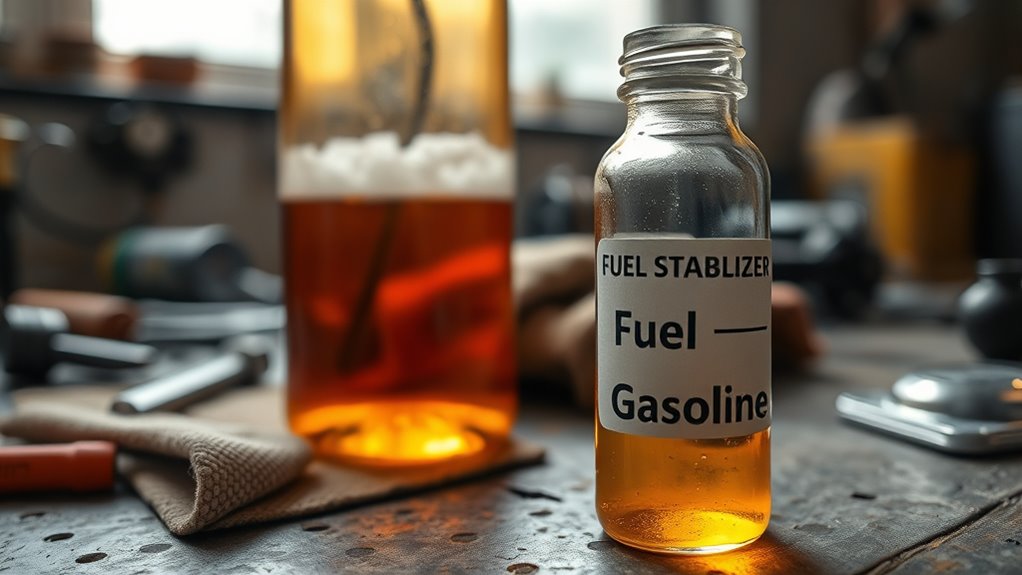
To check if your fuel stabilizer has expired, start by taking a good look at its color and consistency. If you notice any cloudiness or separation, that’s a warning sign. And don’t forget to give it a sniff—an off smell usually means it’s not good anymore.
You can also try mixing a small amount with fresh gasoline. If the mixture stays clear, that’s a good sign the stabilizer is still effective. If it looks murky or weird, it’s probably time to get a new bottle.
Visual Inspection Signs
When you inspect your fuel stabilizer, pay close attention to any changes in color or consistency, such as cloudiness or thickening. These often indicate it has expired. To verify your fuel stabilizer is still good, look for these visual signs:
- Sediment or flakes inside the bottle, which suggest oxidation and breakdown.
- Separation or cloudy appearance after mixing with gasoline, signaling reduced effectiveness.
- An off or sour odor, indicating the stabilizer’s chemical properties have deteriorated.
If you notice any of these signs, it’s best to replace the fuel stabilizer. Regularly checking the bottle’s expiration date or production code also helps you avoid using expired products and guarantees your fuel stays protected.
Testing Stabilizer Effectiveness
Since the effectiveness of your fuel stabilizer directly impacts your engine’s performance, you’ll want to confirm it’s still good before use. Start by checking the manufacturing or expiration date on the bottle. If it’s past that, the stabilizer likely isn’t effective.
Next, visually inspect for changes like cloudiness, sediment, flakes, or separation. A sour or off smell also signals chemical breakdown.
To really test your stabilizer, mix a small amount with fresh gasoline and watch for cloudiness or separation. If you notice any, the stabilizer has probably expired and won’t protect your fuel properly.
Signs Your Fuel Stabilizer Is No Longer Effective
Although fuel stabilizers are designed to prolong fuel life, they can lose their effectiveness over time. As they degrade, you need to watch for signs that your stabilizer is no longer reliable. Here are three key indicators:
- Visual Changes: If the stabilizer darkens, becomes cloudy, thickens, or separates into layers, it’s a clear sign it’s degraded.
- Sediment or Flakes: The presence of sediment, flakes, or sludge inside the bottle suggests oxidation and chemical breakdown.
- Odor: An unpleasant or sour smell means the stabilizer’s chemical composition has changed, reducing its protective properties.
Always check the expiration date, but don’t rely on it alone. These signs together help you determine whether your fuel stabilizer has gone bad. Using an ineffective stabilizer can compromise fuel quality. So, replacing it when you notice these changes keeps your fuel safe and your engine running smoothly.
Types of Fuel Stabilizers and Their Shelf Life
You’ll find that oil-based fuel stabilizers usually last about 2 to 3 years when unopened. On the other hand, synthetic ones can keep their effectiveness for up to 5 years if stored properly. Now, alcohol-based stabilizers tend to have shorter shelf lives, so it’s really important to check the label. Knowing these differences makes it easier to pick the right product and use it before it loses its potency.
Oil-Based Stabilizer Longevity
When you choose an oil-based fuel stabilizer, knowing its shelf life helps guarantee you get the best performance. The longevity of these stabilizers depends heavily on proper storage and handling.
Here’s what you should keep in mind:
- Unopened oil-based stabilizer typically lasts 2 to 3 years if stored in a cool, dry place away from sunlight and moisture.
- Once opened, expect the shelf life to drop to 6 to 12 months, as exposure to air and oxygen speeds up degradation.
- Always check the expiration date and watch for changes in color or consistency, like thickening or cloudiness, which signal it’s time to replace the product.
Proper storage in airtight containers helps maintain the oil-based stabilizer’s effectiveness and prevents premature expiration.
Alcohol-Based Stabilizer Duration
Alcohol-based fuel stabilizers usually last between 1 and 2 years unopened if stored properly, but their effectiveness drops faster once opened. The duration of an alcohol-based stabilizer’s usefulness depends heavily on storage conditions.
Exposure to heat, humidity, or air speeds up evaporation and chemical breakdown, reducing its ability to keep fuel fresh. Once opened, expect the stabilizer to maintain its full potency for about 6 to 12 months.
To make sure your stabilizer is still good, check the expiration date and watch for changes in color, consistency, or odor. Using an expired or degraded stabilizer won’t protect your fuel effectively, so understanding the duration helps you get the best performance and avoid fuel issues down the line.
Synthetic Stabilizer Shelf Life
Although synthetic fuel stabilizers tend to last longer than other types, their shelf life isn’t indefinite. You should know that unopened synthetic stabilizers typically remain effective for 3 to 5 years.
Once opened, their shelf life shortens, often dropping to 1 to 2 years if not stored properly. To maximize their effectiveness, follow these tips:
- Store synthetic stabilizers in a cool, dry place to slow chemical breakdown.
- Watch for visual signs like discoloration or crystallization, which indicate degradation.
- Use the stabilizer within its shelf life to ensure your fuel stays protected.
What Happens If You Use Old or Bad Fuel Stabilizer?
If you use old or expired fuel stabilizer, you’ll likely find it doesn’t protect your fuel as well as fresh product does. Over time, the stabilizer loses its ability to prevent fuel oxidation and degradation. This means gum and varnish can form inside your engine’s fuel system, causing performance problems.
While old stabilizer won’t directly harm your engine, it won’t adequately preserve fuel quality. You might notice the stabilizer has changed color, thickened, or separated, signaling it’s chemically broken down and ineffective.
Here’s a quick comparison of fuel stabilizer conditions:
| Stabilizer Condition | Effectiveness | Engine Impact |
|---|---|---|
| Fresh | High | Ideal fuel protection |
| Slightly Old | Moderate | Reduced protection |
| Expired/Bad | Low or none | Fuel degradation, buildup |
To keep your engine running smoothly, regularly check and replace your fuel stabilizer before it goes bad.
How Much Fuel Stabilizer to Use in Your Engine
When you add fuel stabilizer to your engine, using the right amount is essential to keep your fuel fresh and your engine running smoothly. The typical recommendation is 1 ounce of fuel stabilizer per 2.5 gallons of gasoline, but you should always follow the product label instructions for best results.
Here are three key points to consider:
- Using too little fuel stabilizer may fail to prevent fuel degradation effectively.
- Adding more than the recommended amount won’t improve protection and can be wasteful.
- Proper dosage helps maintain fuel freshness for 12 to 24 months, depending on storage.
For smaller engines like lawnmowers, sticking to the standard 1-ounce dose per 2.5 gallons usually offers sufficient long-term fuel protection. While overdosing generally won’t harm your engine, it’s unnecessary and doesn’t provide extra benefits.
Always measure carefully to get the most out of your fuel stabilizer.
How to Add Fuel Stabilizer Safely: Step-by-Step
To add fuel stabilizer safely, start by pouring the recommended amount directly into your fuel tank before filling it with gasoline. This helps the fuel stabilizer mix properly with the fresh gas. Always use clean, fresh gasoline to prevent contamination and get the most out of the stabilizer.
After filling, run your engine for several minutes so the fuel stabilizer circulates throughout the entire fuel system. This protects it from degradation.
Be sure to check your fuel stabilizer’s manufacturer instructions for the correct dosage and any specific handling tips. Using too little or too much can reduce its effectiveness or cause issues.
Avoid adding fuel stabilizer to a nearly empty tank since this can concentrate chemicals unevenly.
How to Store Fuel Stabilizer for Maximum Freshness
Although fuel stabilizer is designed to keep gasoline fresh, improper storage can cause it to lose effectiveness over time. To maintain maximum freshness, you need to focus on proper storage techniques that protect the stabilizer from environmental factors.
Proper storage is essential to preserve fuel stabilizer effectiveness and keep gasoline fresh longer.
Follow these three key steps for ideal storage:
- Store the stabilizer in a cool, dry place away from direct sunlight and heat sources. Avoid areas with temperature fluctuations, as heat accelerates chemical breakdown.
- Keep the container tightly sealed after each use to minimize air exposure, which speeds up oxidation. If necessary, transfer it to smaller, airtight containers to reduce contact with air and moisture.
- Label the container with the purchase date to keep track of its age. This helps you determine if the stabilizer is still effective before adding it to your fuel.
Storing Treated Fuel and When to Retreat
Even if you treat your fuel with stabilizer, proper storage plays a crucial role in maintaining its quality over time. Fuel treated with stabilizer typically stays effective for 1-2 years if stored sealed and away from heat or sunlight.
You usually don’t need to retreat fuel before a year has passed since the initial treatment, as the stabilizer offers long-term protection against oxidation and degradation. However, if your treated fuel has been stored for over a year, it’s wise to add fresh fuel stabilizer before use to ensure maximum freshness.
Always inspect stored fuel for discoloration, sediment, or off odors, as these are signs it may need retreatment or replacement. Keep in mind that expired or degraded fuel stabilizer loses antioxidant properties, which reduces its effectiveness.
Troubleshooting Common Fuel Stabilizer Problems
When you notice changes in your fuel stabilizer’s color, consistency, or smell, it’s a clear sign that it might have gone bad. Using degraded stabilizer can fail to keep the fuel fresh and may harm your small engine’s fuel system. To troubleshoot common fuel stabilizer problems, follow these steps:
Changes in your fuel stabilizer’s appearance or smell signal it may be degraded and unsafe for use.
- Inspect visually: Look for cloudiness, sediment, or flakes in the stabilizer. These signs indicate chemical breakdown, so don’t use it if you see any.
- Check the smell: A sour or off odor means the stabilizer has deteriorated and won’t offer the protection your fuel needs.
- Review storage and date: Always store the fuel stabilizer in a cool, dry place and verify it’s within its expiration date before use.
Frequently Asked Questions
Can Fuel Stabilizer Be Used in Diesel Engines?
You shouldn’t use regular fuel stabilizer in diesel engines because it lacks diesel compatibility. Diesel engines need stabilizers specifically designed for diesel fuel to prevent issues like microbial growth and fuel gelation.
Using a gasoline-based stabilizer can harm your engine due to incompatible chemicals. Always choose a product labeled for diesel to protect your engine properly and keep the fuel system running smoothly without damage or performance problems.
Is Fuel Stabilizer Safe for Small Engines Like Lawnmowers?
Wondering if fuel stabilizer suits your lawnmower’s engine compatibility? Yes, it’s safe for small engines when you follow the manufacturer’s instructions. You’ll prevent fuel degradation and avoid varnish buildup that clogs carburetors.
Just don’t overuse it. Stick to recommended amounts to avoid residue. Using stabilized fuel keeps your small engine running smoothly through storage seasons, protecting essential components and ensuring your mower starts reliably every time you need it.
Can I Mix Different Brands of Fuel Stabilizer Together?
Yes, you can mix different brands of fuel stabilizer, but you should always consider brand compatibility. Most stabilizers have similar functions, so small mixes usually won’t harm your fuel.
However, since formulations vary, mixing brands might affect effectiveness or stability. To be safe, check each product’s label for compatibility and manufacturer recommendations.
Sticking to one brand is best for ideal results, but occasional mixing generally won’t cause problems.
How Long Before Storing Should I Add Fuel Stabilizer to Gasoline?
You might think adding fuel stabilizer last-minute works, but for the best storage duration, add it shortly before storing, ideally when your tank’s nearly full. Adding it at least 10 minutes before shutting off your engine helps it mix thoroughly, protecting fuel during storage.
If you wait too long, the stabilizer won’t perform as well. So don’t delay. Add it right before your long-term storage to keep fuel fresh.
Does Fuel Stabilizer Affect Fuel Economy or Engine Performance?
Fuel stabilizer doesn’t negatively affect your fuel efficiency or engine performance when you use it correctly. In fact, it helps keep your fuel fresh, supporting consistent combustion and smooth engine operation.
However, if the stabilizer is expired or used improperly, it might cause incomplete combustion, which can reduce fuel efficiency and lead to engine misfires. So, always use the right amount and store it properly to maintain peak performance.
Conclusion
Imagine your fuel system as a garden, vibrant and ready to grow but vulnerable to drying out or decay. Using fuel stabilizer is like watering that garden, keeping your gasoline fresh and your engine humming smoothly.
Remember, stabilizers can lose their power over time, so check and store them carefully. Treat your fuel right, and your machine will thank you with reliable starts and lasting performance, season after season.