
How to Diagnose Rough Idle Caused by Bad Spark Plugs
To diagnose a rough idle caused by bad spark plugs, start by removing and inspecting them for wear, fouling, or cracks.
Check the electrode gap with a feeler gauge to make sure it matches specs, adjusting if needed.
Also, test ignition wires and coils for damage or resistance issues.
Look for symptoms like engine hesitation or vibrations.
If the problem persists, other ignition parts might be involved.
Keep following for detailed steps to fix and prevent rough idle problems.
Key Takeaways
- Inspect spark plugs for fouling, cracks, worn electrodes, or improper gaps causing weak sparks and misfires.
- Check for engine misfires, unusual vibrations, stalling, or rough idle symptoms linked to bad spark plugs.
- Measure spark plug gap with a feeler gauge and adjust to manufacturer specifications to ensure proper ignition.
- Test ignition coils and spark plug wires for damage or resistance issues affecting spark quality.
- Use diagnostic tools to identify misfire codes and verify spark plug condition during rough idle diagnosis.
Why Bad Spark Plugs Cause Rough Idle

When your spark plugs wear out or get fouled, they can’t produce the strong, consistent sparks your engine needs. Bad spark plugs cause incomplete combustion in the engine cylinders, which leads to misfire. These misfiring cylinders disrupt the smooth operation of your engine, making it run unevenly.
As a result, you’ll notice a rough idle, where the engine vibrates and sounds irregular. If your spark plugs are improperly gapped or damaged, the ignition timing becomes unstable, further contributing to the rough idle.
Reduced spark quality from these defective plugs means the fuel doesn’t burn efficiently, and the engine struggles to maintain smooth idling. You might not realize it right away, but bad spark plugs can seriously affect your vehicle’s performance.
Understanding how worn or fouled spark plugs cause misfire and rough idle helps you recognize when it’s time for a replacement, keeping your engine running smoothly and efficiently.
How to Identify Rough Idle Symptoms From Spark Plugs
Recognizing rough idle symptoms caused by bad spark plugs can help you catch engine issues early. When spark plugs wear out or foul, you’ll likely notice increased engine vibrations and shaking at idle. These signs point to rough idle due to misfiring cylinders, which happen when spark plugs fail to ignite the fuel-air mixture properly.
You might also hear sputtering sounds or irregular engine noises like coughing or popping during idle, signaling inconsistent combustion. Another key symptom is unstable RPMs, where your engine speed fluctuates instead of remaining steady.
Furthermore, the “Check Engine” light may come on, alerting you to ignition problems linked to spark plugs. You might even experience a drop in fuel efficiency, especially at low speeds, because faulty spark plugs don’t burn fuel efficiently.
How to Inspect Spark Plugs for Wear and Damage
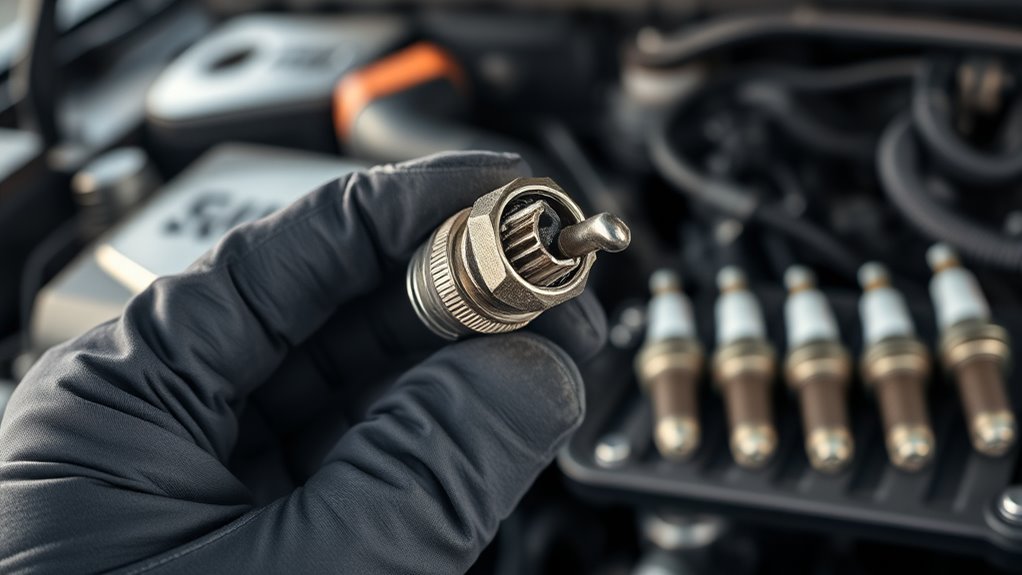
Start by taking a good look at your spark plugs. Check for any cracks, fouling, or worn-down electrodes. Once you’ve done that, grab a feeler gauge and measure the electrode gap to make sure it matches what your engine requires. Catching signs of fouling early on can really help you figure out why your engine might be idling roughly before things get worse.
Visual Spark Plug Inspection
How can you tell if your spark plugs are causing your engine to idle roughly? Start by removing the spark plugs with a spark plug socket and visually inspect them. Look closely for fouled spark plugs, those covered in carbon deposits or oil, which indicate combustion problems.
Check the electrodes for wear like rounded or eroded tips, and examine the ceramic insulator for cracks, burns, or breaks. These damages can cause misfires and rough idling. Also, verify the plugs match your vehicle’s recommended type and heat range to avoid performance issues.
Checking Electrode Gap
Although new spark plugs usually come pre-gapped, you should always check the electrode gap with a spark plug gap tool before installation. Measuring the distance between the center and ground electrodes guarantees the spark plug gap matches the manufacturer’s specifications.
If the electrode gap is too wide, it can cause weak sparks that lead to rough idling and potential misfire. Conversely, a gap that’s too narrow may not generate enough ignition strength.
To avoid these issues, regularly inspect and adjust the gap as needed by carefully bending the ground electrode, taking care not to damage the ceramic insulator. Maintaining the correct spark plug gap helps keep your engine running smoothly and prevents rough idle caused by misfires.
Identifying Fouling Signs
When was the last time you closely examined your spark plugs for signs of fouling? Start by removing each spark plug and inspecting the electrode for carbon fouling, oil deposits, or corrosion. These are common indicators of a fouled spark plug.
Look for a black, soot-like coating on the insulator. This often signals carbon fouling caused by a rich fuel mixture or oil leakage. Also, check for cracks, chips, or broken electrodes that can disrupt spark production and cause rough idle.
Don’t forget to measure the spark plug gap to ensure it meets manufacturer specs. Incorrect gaps contribute to fouling. Finally, assess the ceramic insulator’s condition for melting or damage from overheating, which can further impair performance.
How to Check Spark Plug Gaps and Why It Matters
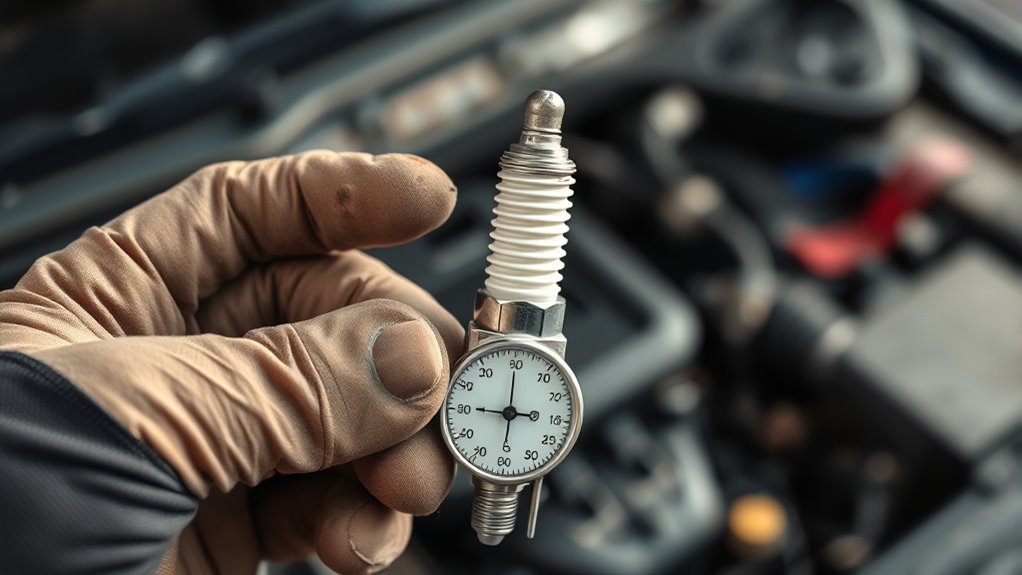
Since the spark plug gap directly affects the strength of the ignition spark, you need to measure it carefully using a feeler gauge to confirm it matches your vehicle manufacturer’s specifications. Spark plug gaps refer to the distance between the center and ground electrodes, and getting this right is vital.
Measuring the spark plug gap with a feeler gauge ensures ignition strength matches manufacturer specs.
If the gap is too wide or too narrow, it can cause weak sparks or misfires, leading to rough idle and poor engine performance. Although most new spark plugs come pre-gapped, you shouldn’t assume they’re perfect. Always double-check before installation.
By regularly inspecting and adjusting spark plug gaps, you guarantee consistent ignition, which keeps your engine running smoothly and efficiently. Ignoring this step can result in misfires that disrupt combustion, causing your engine to hesitate or stall.
Properly gapped spark plugs contribute considerably to stable engine idling and overall vehicle reliability.
How to Avoid Installation Mistakes Causing Rough Idle
Double-checking your spark plug gaps is just one step in preventing rough idle. Proper installation plays an equally important role. Before installing, make sure the spark plug gap matches the manufacturer’s specs to maintain correct ignition timing.
Using a torque wrench, tighten each spark plug to the recommended torque setting. Over-tightening or under-tightening can lead to misfires and rough idling. Also, confirm you’re using the right spark plug type and heat range for your engine to avoid compatibility issues.
Don’t forget to inspect the spark plug and ignition system components for damage or debris that might disrupt a clean spark. Finally, verify spark plug wires or coil packs are securely connected to guarantee proper electrical contact.
How to Perform a Spark Plug Spark Test
Although spark plugs might look fine externally, testing their spark is essential to diagnosing rough idle issues. First, remove the spark plug from the engine and connect it to a spark plug tester or a grounding wire. Make sure the spark plug’s gap is set correctly according to the manufacturer’s specifications before you begin the spark test.
Next, crank the engine while observing the tester. A strong, blue spark indicates the ignition system and spark plug are working properly. If you see a weak or absent spark, the plug is likely faulty and causing rough idle.
Perform this spark test in a well-lit area so you can clearly see the spark’s color and strength. Don’t forget to repeat the test on all spark plugs to verify each one produces a consistent and strong ignition spark. This process helps pinpoint which spark plugs need replacement or further inspection.
How to Tighten Spark Plugs and Check Coil Connections
After testing your spark plugs for proper spark, the next step is to guarantee they’re securely tightened and that the coil connections are in good condition. First, make sure the engine is cool to avoid damaging the spark plugs or threads when you tighten them.
Use a torque wrench to secure each spark plug to the manufacturer’s recommended torque, usually between 13-15 ft-lb. Over-tightening can cause damage, so precise tightening is key.
Next, inspect the coil connections closely. Look for any looseness, corrosion, or visible damage on the coil pack and spark plug wires. If you spot cracks or corrosion, plan to replace those parts soon.
After tightening the spark plugs, gently tug on both the spark plugs and coil connections to ensure they’re firmly seated and won’t come loose during operation. Proper tightening and solid coil connections help maintain consistent spark delivery, reducing rough idle caused by bad spark plugs.
When to Replace Spark Plugs to Improve Idle Quality
You should replace your spark plugs if you notice rough idling, engine misfires, or a drop in fuel efficiency. It’s also a good idea to check the electrodes during a visual inspection—look out for any signs of wear, fouling, or cracks. Keeping up with the recommended replacement schedule really helps keep your engine running smoothly and your idle nice and steady.
Spark Plug Wear Signs
When your engine idles roughly, worn spark plugs often play a key role. To spot wear signs, start by visually inspecting your spark plugs. Look for electrode erosion, cracks, chips, or heavy carbon buildup on the insulator or metal parts.
Oil deposits or corrosion also indicate deterioration. If the spark plug gap appears widened or uneven, that’s another clear sign of wear causing rough idle. These issues disrupt proper ignition, leading to unstable engine performance.
You should check your spark plugs regularly, every 30,000 miles or as your manufacturer suggests, to catch wear signs early. Replacing worn spark plugs promptly helps restore smooth idle and prevents further engine problems, ensuring your vehicle runs efficiently.
Replacement Timing Indicators
Identifying wear signs on spark plugs helps you understand when it’s time for a replacement to improve idle quality. Generally, spark plugs need replacement every 30,000 to 50,000 miles, but always check your vehicle’s recommendations.
Pay attention to persistent rough idling, engine misfires, or reduced fuel efficiency. These are key indicators that your spark plugs might be overdue. A close visual inspection revealing fouled, cracked, or worn electrodes also signals replacement timing.
Furthermore, if the spark plug gap has widened beyond specs, replacing them restores proper ignition and smooth idle. Even after a recent installation, ongoing idle issues or performance drops suggest it’s time to reassess the spark plugs.
Recognizing these signs ensures you replace spark plugs promptly, preventing rough idling and maintaining engine health.
Troubleshooting Spark Plug Wire and Coil Connections
Although spark plugs play a crucial role in engine performance, the connections they rely on, like spark plug wires and coil packs, are equally significant. First, check that all spark plug wires are firmly attached to both the spark plugs and ignition coil. Look for any signs of corrosion or damage.
Next, inspect the coil packs carefully for cracks, burns, or carbon tracking. These issues can cause weak or inconsistent sparks and lead to rough idling. Use a multimeter to measure the resistance of both coil packs and spark plug wires, making sure the readings match manufacturer specifications.
Don’t overlook coil pack connections. Make sure they’re clean, free of dirt or corrosion, and properly seated. If you find any damaged or worn spark plug wires or coil packs, replace them promptly to restore proper electrical flow.
Maintaining these connections helps eliminate misfires and smooth out your engine’s idle.
Other Ignition Components to Check If Rough Idle Persists
If your rough idle keeps acting up, it’s a good idea to take a closer look at other ignition parts, like the ignition coils and spark plug wires. These can wear out or get damaged over time. Also, don’t forget to check the distributor cap and rotor. Cracks or corrosion there can mess with the spark delivery. All these components work together to help your engine run smoothly when it’s idling.
Ignition Coil Inspection
When rough idle continues despite replacing spark plugs, you should inspect the ignition coils next. Start by checking each ignition coil for visible cracks, burns, or corrosion, which can cause weak sparks.
Perform a resistance test using a multimeter and compare the results to the manufacturer’s specs to spot faulty coils. Also, make certain the ignition coil connectors are firmly plugged in and clean to maintain proper electrical contact.
If issues persist, try swapping coils between cylinders to see if the rough idle moves, confirming a bad coil. Using an inductive timing light or scan tool helps you verify that each coil fires sparks at the correct time, making sure your ignition system is functioning properly and ruling out coil-related causes of rough idle.
Spark Plug Wire Condition
Since spark plug wires carry the electrical current necessary for ignition, you should carefully inspect them for cracks, burns, or corrosion that can disrupt performance. Check that the spark plug wires maintain a solid electrical connection to both the spark plugs and coil packs.
Loose or corroded connections often cause misfires and rough idle. Use a multimeter to measure wire resistance; high resistance signals worn wires needing replacement. Always opt for OEM or high-quality aftermarket spark plug wires to guarantee reliable spark delivery.
| Inspection Point | Symptom | Action |
|---|---|---|
| Cracks or burns | Interrupted spark | Replace damaged wires |
| Corrosion at terminals | Poor electrical connection | Clean or replace wires |
| High resistance | Misfires, rough idle | Test with multimeter, replace if needed |
Distributor Cap And Rotor
After checking your spark plug wires, turn your attention to the distributor cap and rotor. These components play a vital role in your ignition system by distributing high-voltage current from the ignition coil to the spark plugs.
Inspect the distributor cap for cracks, carbon tracks, moisture, or corrosion. These issues can disrupt ignition timing and cause rough idle. Also, check the rotor for wear or damage since a worn rotor arm can lead to inconsistent spark delivery. This results in engine hesitation and rough running.
A loose or cracked distributor cap or rotor can cause misfires and unstable idle. Regularly inspecting and replacing worn distributor components will improve ignition reliability and help resolve persistent rough idle problems.
When to Consult a Professional Mechanic
Even if you’ve replaced your spark plugs, persistent rough idling signals that it’s time to bring in a professional mechanic. When rough idle continues alongside symptoms like engine stalling, misfires, or a check engine light, these often point to underlying issues beyond spark plugs.
A professional mechanic uses specialized tools for thorough engine diagnosis, uncovering problems such as vacuum leaks or sensor failures that are tough to detect on your own. If the rough idle worsens or strange noises accompany it, seeking expert help prevents further engine damage and costly repairs.
Tips for Maintaining Spark Plugs to Prevent Rough Idle
Although rough idling can signal serious engine problems, you can often avoid it by maintaining your spark plugs properly. Start by regularly checking and adjusting the spark plug gaps to match your vehicle’s specs, usually between 0.028 and 0.060 inches. This ensures proper ignition and helps prevent rough idle issues.
Use high-quality spark plugs like NGK or Denso recommended for your car to reduce fouling and wear. Stick to your vehicle’s maintenance schedule by replacing spark plugs every 30,000 to 50,000 miles to prevent buildup and misfires.
Also, keep the ignition system clean and inspect spark plug wires and coil packs for damage or corrosion. During routine maintenance, perform visual inspections of your spark plugs for fouling, cracks, or excessive wear.
Frequently Asked Questions
Can Bad Spark Plugs Affect Fuel Efficiency?
Yes, bad spark plugs can definitely affect your fuel economy. When spark plug wear occurs, it reduces combustion efficiency, causing incomplete burning of fuel.
This forces your engine to work harder and consume more fuel to maintain power. You’ll notice your vehicle runs less efficiently and uses more fuel overall.
Keeping your spark plugs in good condition guarantees maximum combustion efficiency, helping you save money at the pump and maintain better fuel economy.
Do Different Engine Types Require Specific Spark Plugs?
Yes, different engine types need specific spark plugs due to differences in combustion. You have to guarantee spark plug compatibility by matching the plug’s design, size, and heat range to your engine’s requirements.
Using the wrong plug can cause misfires or rough idling. Also, replacement intervals vary by engine and plug type, so always follow your vehicle’s manual to keep performance smooth and avoid damage.
How Do Weather Conditions Impact Spark Plug Performance?
Think of your spark plugs as dancers on a stage. Weather impact changes their rhythm. Temperature effects can stiffen their moves in cold or wear them down under intense heat, making sparks less reliable.
Moisture influence acts like a slippery floor, causing missteps or missed beats in ignition. You’ll notice rough idling when these elements disrupt the spark plugs’ performance. So keeping an eye on weather changes helps maintain smooth engine operation.
Can Using the Wrong Spark Plug Brand Cause Rough Idle?
Yes, using the wrong spark plug brand can definitely cause a rough idle. When you choose an incompatible spark plug brand, it can affect ignition timing and combustion efficiency, leading to misfires.
This disrupts your engine’s smooth operation, causing rough idle and hesitation. Always stick to the manufacturer’s recommended spark plug brand to maintain proper ignition timing and keep your engine running smoothly without those annoying rough idle issues.
Are There Any Smartphone Apps to Help Diagnose Spark Plug Issues?
Think of diagnostic apps as your car’s digital stethoscope. Yes, you can use smartphone diagnostic apps to spot spark plug issues quickly.
These apps tap into spark plug sensors through your vehicle’s OBD-II port, giving you real-time data. With mobile troubleshooting, you get misfire counts and ignition coil status right on your phone, making it easier to diagnose rough idle problems without guesswork.
Just remember, a physical check is still key!
Conclusion
So, if your engine’s doing the funky chicken at idle, don’t just blame the universe, blame those spark plugs! They’re the tiny troublemakers causing big headaches. Inspect, gap, and install them right or enjoy your car’s new “rough idle” soundtrack.
If wires and coils start throwing tantrums too, maybe it’s time to call in the pros before your ride turns into a noisy relic. Remember, a well-tuned spark plug saves you from a lot of unwanted drama!