Are All Spark Plugs the Same Size: How to Choose the Right One
No, spark plugs aren’t all the same size. You need to match the thread diameter, reach length, and hex size precisely for your engine.
Using the wrong size can cause misfires, leaks, and engine damage.
Always measure your plug carefully and follow your vehicle’s specs, including heat range and seat type, for the best fit and performance.
Getting these right boosts engine life and efficiency.
Keep exploring to uncover how sizes vary by brand and the best installation tips.
Key Takeaways
- Spark plugs vary in thread diameter, reach length, and hex size, so matching your engine’s specifications is essential for proper fit and function.
- Using the correct reach length ensures the electrode sits properly in the combustion chamber, preventing misfires and engine damage.
- Heat range must be chosen based on engine type to avoid fouling or pre-ignition, balancing combustion chamber temperature effectively.
- Vehicle brands and engine designs influence spark plug size requirements, with Japanese, European, and American vehicles often having different specifications.
- Always verify thread size, reach, seat type, and spark gap, and use proper installation techniques to ensure optimal engine performance and longevity.
What Key Spark Plug Sizes Should You Know?
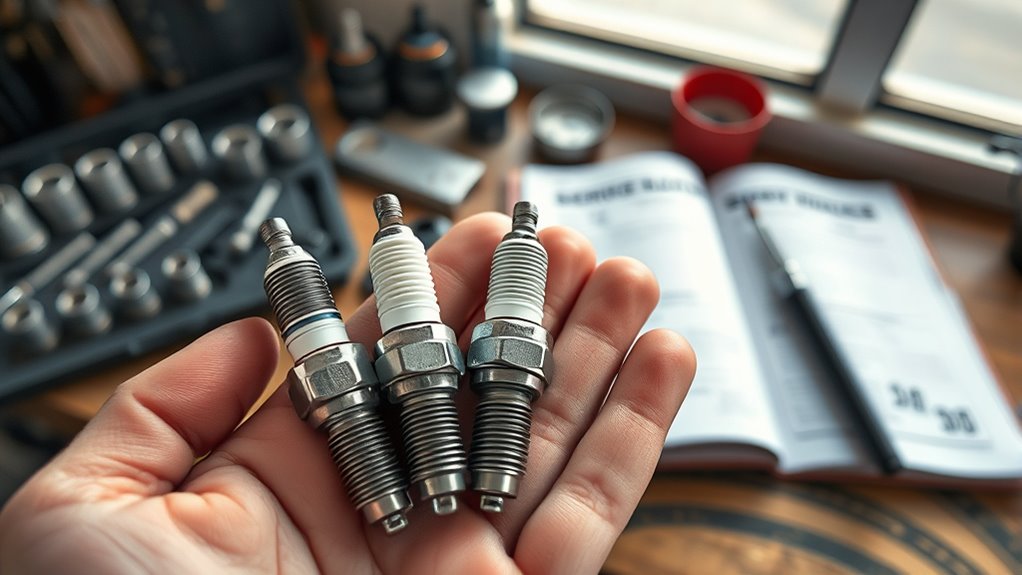
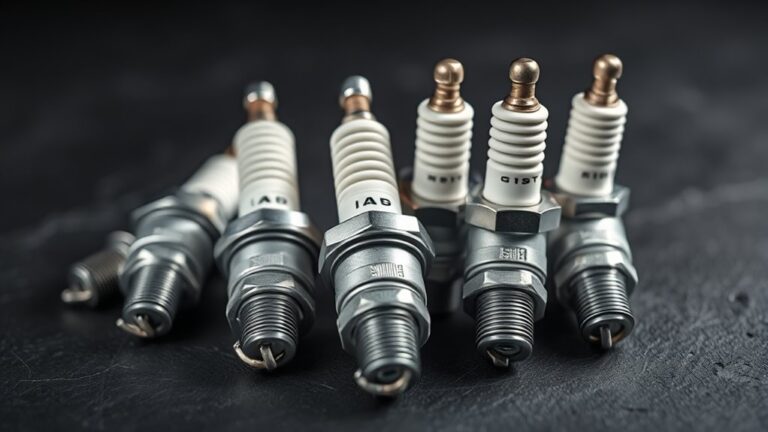
When choosing spark plugs, you need to know the key sizes that affect fit and function. The most critical spark plug sizes to focus on are thread diameter, reach length, and hex size.
Thread diameter must match your engine’s specifications. Common sizes include 10mm, 12mm, 14mm, and 18mm. Measuring it accurately guarantees proper fit and compatibility with your cylinder head.
Thread diameter must align with engine specs for proper fit and cylinder head compatibility.
Reach length determines how far the plug extends into the combustion chamber and can range from about 9.5mm to over 31.75mm. Getting this wrong may lead to misfires or engine damage.
Hex size affects the tool you use for installation and typically falls between 16mm and 21.8mm. Choosing the right hex size makes removal and tightening easier without stripping.
How Does Spark Plug Thread Diameter Affect Fit and Performance?
Although it might seem like a small detail, the thread diameter of your spark plug plays a crucial role in guaranteeing a proper fit and reliable performance. The thread diameter must match the cylinder head’s internal threads exactly for maximum compatibility.
Common sizes include 10mm, 12mm, 14mm, and 18mm. Using the wrong size can cause cross-threading, damaging the cylinder head or resulting in poor sealing. Poor sealing leads to compression loss and misfire, which directly impacts engine efficiency and reliability.
A correct thread diameter guarantees a secure fit, maintaining proper heat transfer and preventing leaks or combustion issues. Always check your engine’s specifications or owner’s manual to verify the correct thread diameter before selecting spark plugs.
This attention to detail ensures your spark plug fits perfectly, avoiding costly repairs and keeping your engine running smoothly.
Why Does Spark Plug Reach Length Matter for Your Engine?
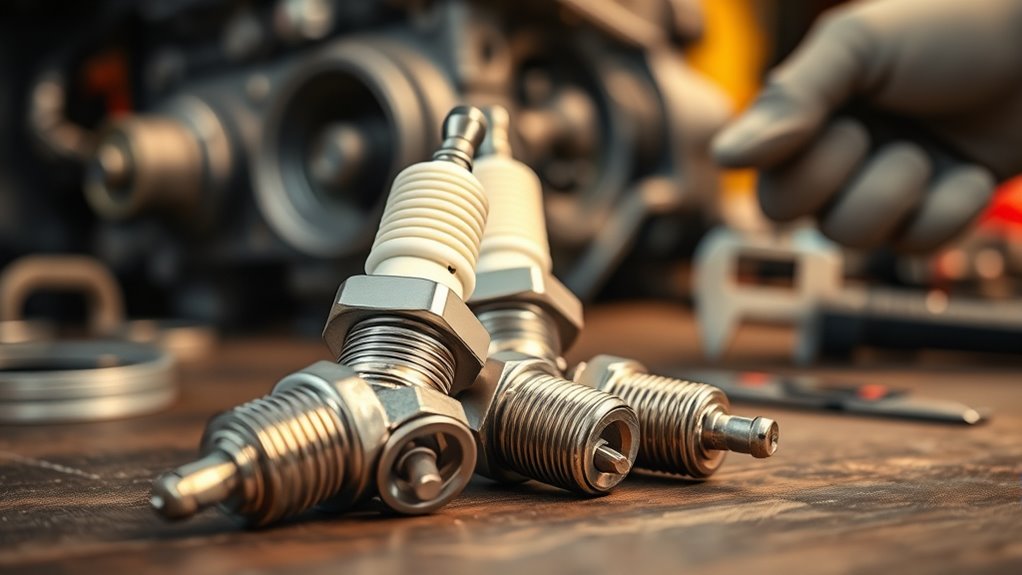
You need the right spark plug reach length because it directly affects how well your engine ignites fuel. If the reach is too short or too long, you could end up with misfires, incomplete combustion, or even engine damage. So, getting this measurement right is key to keeping your engine running smoothly and efficiently.
Impact On Combustion
Why does the reach length of your spark plug matter so much for engine performance? The reach length determines how far the electrode extends into the combustion chamber, directly influencing how well your ignition system ignites the air-fuel mixture.
If the spark plug size doesn’t provide the proper fit, the spark may occur too close to the piston or valves, disrupting combustion and reducing engine performance. A correct reach length guarantees the spark is ideally positioned to create a strong flame kernel, promoting complete and efficient combustion.
This proper alignment supports stable ignition, better fuel efficiency, and consistent heat transfer. So, matching the right reach length is crucial for maintaining your engine’s combustion stability and overall performance.
Risks Of Incorrect Reach
How much difference can a spark plug’s reach length really make for your engine? Using a spark plug with an incorrect reach can seriously impact your engine’s performance and longevity. The electrode length must match your engine’s specifications to maintain proper combustion efficiency and avoid costly issues.
Here are three key risks of choosing the wrong spark plug size:
- Misfires and incomplete combustion caused by improper electrode length.
- Engine damage from fouling the piston or harming the cylinder head threads.
- Increased wear, pre-ignition, or knocking due to incorrect reach.
Ensuring the correct reach length keeps the spark positioned ideally inside the combustion chamber. This protects your engine from damage and maintains smooth, efficient operation.
Which Hex Size Fits Your Spark Plug Tools?
Although spark plugs come in various designs, their hex sizes must match the tools you use to avoid damage. The most common hex sizes for spark plug tools are 16mm, 20.8mm, and 21.8mm. But older vehicles often use a 13/16-inch (21mm) size. Knowing the correct hex size guarantees your socket or wrench fits snugly, making spark plug removal and installation straightforward.
Using the wrong hex size can strip the spark plug or damage engine components, so always check your engine specifications or manufacturer recommendations. A proper fit not only prevents damage but also helps you apply the right torque safely. When choosing spark plug tools, match the hex size carefully to your spark plug’s design to avoid frustrating removal issues or installation mistakes. Getting this right saves time and protects your engine from costly harm.
How to Measure Your Spark Plug Size Accurately at Home
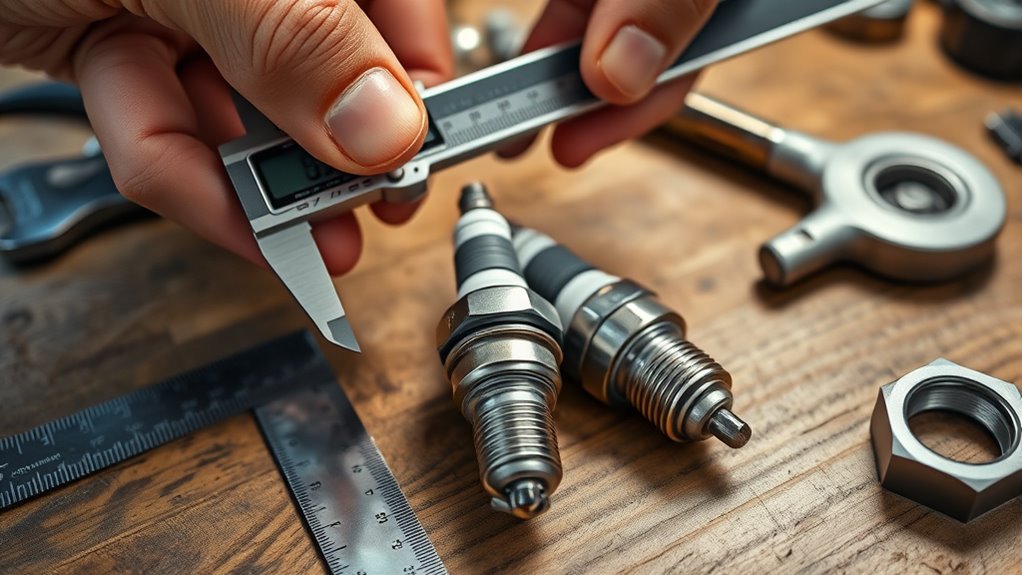
Matching the hex size of your spark plug tools to your spark plug is just one part of the process. To measure your spark plug size accurately at home, you’ll need to focus on two key measurements: thread diameter and reach length. These dimensions ensure compatibility and a proper fit.
Here’s how to do it:
- Use a caliper to measure the thread diameter of the spark plug’s threaded section precisely.
- Measure the reach length by placing the spark plug against a ruler or measuring tape, from the gasket or seat to the electrode tip.
- Make sure the spark plug is clean and free of debris before taking any measurements for accuracy.
Record both measurements carefully. Then double-check these against your vehicle’s specifications or owner’s manual to confirm compatibility. Accurate measurements prevent installation issues and ensure your engine runs smoothly.
How to Choose the Right Spark Plug Size for Your Vehicle
Before you buy a new spark plug, you’ll want to check your vehicle’s owner’s manual or inspect your current spark plug to find the correct thread diameter, reach, and seat type. These details guarantee the spark plug size matches your engine design and maintains proper compatibility.
If you don’t have the original spark plug, use a caliper and ruler to measure the thread diameter and reach accurately. Common thread diameters include 10mm, 12mm, 14mm, and 18mm, while reach lengths can range from about 9.5mm to over 31mm.
Don’t forget to verify the hex size and whether the seat type is gasket or tapered, as these affect fit and performance. Always follow your manufacturer’s specifications when choosing the spark plug size, since even slight deviations can impact engine efficiency.
Selecting the right spark plug size helps keep your engine running smoothly and prevents potential damage.
What Happens If You Use the Wrong Spark Plug Size?
Choosing the right spark plug size isn’t just about fit. It directly affects how well your engine runs. Using the wrong spark plug size can lead to several serious issues that impact performance and longevity. Here’s what you could face:
- Misfires and poor fuel efficiency: An incorrect reach length or thread size can disrupt the spark gap. This causes inefficient ignition and makes your engine misfire or run poorly.
- Engine damage: If the spark plug doesn’t reach the combustion chamber properly, it might damage the piston or cylinder head. This can lead to costly repairs.
- Thread damage and leaks: A mismatched thread size won’t seal correctly. That risks leaks or thread damage in the cylinder head.
Avoiding the wrong spark plug size preserves your engine’s health and performance. Always match the spark plug size recommended for your vehicle to prevent these costly problems.
How Spark Plug Size Impacts Engine Power and Efficiency
Because the spark plug directly ignites the air-fuel mixture, using the right size is crucial for your engine’s power and efficiency. The correct spark plug size ensures a proper fit, allowing ideal combustion by maintaining the right reach and thread engagement.
This proper fit prevents leaks and misfires, which can severely reduce engine power and overall engine efficiency. When the spark plug size is off, combustion becomes inconsistent, causing rough idling and a noticeable loss in performance.
Besides ignition reliability, the right size supports correct heat transfer, which helps keep your engine running smoothly without overheating. Choosing the appropriate spark plug size also protects your engine components, extending their lifespan.
How Spark Plug Heat Range Matches Your Engine’s Needs
You need to pick a spark plug heat range that matches your engine’s temperature to keep it running smoothly. Think of it this way: a hotter plug is better for cooler engines because it helps prevent fouling. On the flip side, a cooler plug is ideal for high-performance engines since it helps avoid overheating. Finding the right balance with the heat range is really important—it keeps your engine efficient and helps it last longer.
Heat Range Importance
When your engine demands a specific heat range, the spark plug must efficiently transfer heat away from its center electrode to keep combustion smooth. Choosing the right heat range prevents issues like fouling or pre-ignition, both of which affect performance.
Your engine operating conditions, such as load, RPM, and temperature, determine whether you need hotter plugs or cooler plugs.
Here’s what you need to know:
- Hotter plugs retain more heat. They are ideal for low-speed or high-friction engines to avoid fouling.
- Cooler plugs dissipate heat faster. They work best for high-performance or high-compression engines to prevent pre-ignition.
- Using the wrong heat range can cause fouling if the plug is too cold or pre-ignition if it’s too hot, risking engine damage.
Selecting the correct heat range guarantees maximum performance and engine longevity.
Engine Temperature Balance
Understanding how a spark plug’s heat range matches your engine’s needs helps maintain the right temperature balance inside the combustion chamber. The spark plug heat range manages proper heat dissipation, preventing engine knocking and fouling.
Hot spark plugs retain heat longer, which is ideal for low-speed engines to avoid carbon buildup. Cold spark plugs dissipate heat quickly and are perfect for high-performance or modified engines producing more combustion heat.
| Spark Plug Type | Engine Type | Purpose |
|---|---|---|
| Hot | City driving, low RPM | Prevent fouling |
| Cold | High-performance, turbo | Prevent pre-ignition |
| Medium | Normal driving | Maintain engine balance |
Choosing the right heat range guarantees engine temperature balance, optimizing performance and longevity.
How Spark Plug Sizes Vary Across Popular Vehicle Brands
Although spark plugs may look similar at a glance, their sizes differ considerably across popular vehicle brands. Understanding these differences is vital for choosing the right spark plug size to guarantee compatibility and peak engine performance. Thread diameter and reach length vary depending on the engine design and vehicle brand.
Here’s how spark plug sizes vary across popular vehicle brands:
- Japanese cars like Honda and Toyota often use smaller thread diameters (10mm or 12mm) reflecting their compact engine designs.
- Most Japanese vehicles commonly require a 14mm thread diameter, while some older American models, like Ford trucks, use larger 18mm threads.
- European brands such as BMW and Mercedes-Benz generally need longer reach lengths (up to 26.5mm) to fit their deeper combustion chambers.
Tips to Install Spark Plugs and Avoid Size-Related Problems
Since spark plugs come in various sizes and specifications, you should always double-check the thread diameter, reach length, and seat type before installation. This guarantees the spark plug size matches your engine’s requirements, preventing issues like misfires or damage.
Always verify thread diameter, reach length, and seat type to ensure spark plug compatibility and prevent engine issues.
Start by gently threading the spark plug by hand to avoid cross-threading. Once it’s snug, use a torque wrench to apply the correct torque recommended by the manufacturer. Over-tightening or under-tightening can cause improper seating or damage to the engine.
Also, confirm the seat type, whether it’s a gasket or tapered seat, to ensure proper seating and prevent leaks. Don’t forget to check and adjust the spark gap according to your vehicle’s manual. A correct spark gap is essential for maximum combustion and engine performance.
Following these tips, you’ll avoid size-related problems and keep your engine running smoothly.
When to Replace Spark Plugs and Consider Changing Sizes
If your engine starts misfiring or your fuel efficiency drops, it’s a clear sign that your spark plugs need replacing. Knowing when to replace spark plugs and consider changing sizes is essential to keep your engine running smoothly.
Generally, spark plugs should be replaced every 60,000 to 100,000 miles, but always check the owner’s manual for your vehicle’s recommendation. Here are three key signs that indicate it’s time for a replacement:
- Engine misfires or poor acceleration.
- Increased fuel consumption or rough idling.
- Visible fouling, corrosion, or wear on the spark plugs.
Before you switch spark plug size, make sure the new spark plug fits your engine to avoid damage or improper firing. Changing spark plug size is only recommended when upgrading performance or addressing specific issues. So always verify compatibility by checking the owner’s manual or part number. This guarantees your engine stays efficient and reliable.
Frequently Asked Questions
Can Spark Plug Size Affect Fuel Economy?
Yes, spark plug size definitely affects fuel economy. If you use the wrong size, you’ll face compatibility issues that hurt combustion, increasing fuel use.
Installation difficulty might rise with improper plugs, risking damage and reducing spark plug durability and lifespan. Plus, brand variations and cost differences mean you should pick a quality plug that fits your engine specs perfectly.
That way, you’ll keep your engine running efficiently and save on fuel.
Do Different Spark Plug Sizes Require Special Gapping Tools?
Yes, different spark plug sizes often require special gapping tools. When you adjust the electrode gap, you need a tool that fits the thread diameter and reach length precisely.
Using the wrong tool can damage the ceramic insulator or the terminal type. Plus, plugs with unique heat ranges or delicate components call for careful handling.
Matching your gapping tool to your spark plug guarantees accurate adjustment and protects sensitive parts.
How Do Spark Plug Sizes Vary in Racing vs. Regular Cars?
You might expect all spark plugs to fit any engine, but racing spark plugs and standard sizes differ drastically. Racing spark plugs have unique dimensions, like larger thread diameters and shorter reaches, designed for extreme performance.
In contrast, regular cars stick to manufacturer specifications and size compatibility for everyday use. When choosing, you’ll find aftermarket options tailored specifically for racing, so don’t assume one size fits all. Always check your engine’s requirements.
Are There Environmental Impacts of Using Incorrect Spark Plug Sizes?
Yes, using incorrect spark plug sizes can harm the environment by increasing emissions and reducing fuel efficiency. To support emissions reduction and pollution control, you should choose the right spark plugs made with eco-friendly materials and follow environmental regulations.
Also, recycling spark plugs and opting for brands focused on sustainable manufacturing helps minimize your environmental impact. Taking these steps guarantees your engine runs cleaner and contributes to a greener future.
Can Spark Plug Size Influence Engine Noise or Vibration?
Yes, spark plug size directly affects engine noise and vibration. When you guarantee spark plug compatibility with your engine, you boost ignition performance and reduce misfires that cause rattling.
Poor installation techniques or ignoring manufacturing standards can lead to improper seating, increasing vibrations and harming engine longevity. Following proper maintenance procedures and choosing the right size keeps your engine running smoothly, quiet, and efficient, making your ride much more enjoyable.
Conclusion
Choosing the right spark plug size isn’t just a detail; it’s the secret ingredient to your engine’s smooth performance. When you match the thread diameter, reach length, and heat range just right, you’re giving your car a little extra TLC under the hood.
So don’t settle for “one size fits all.” Take a moment to measure, compare, and pick wisely. It’s a small effort that sparks big rewards on the road.