
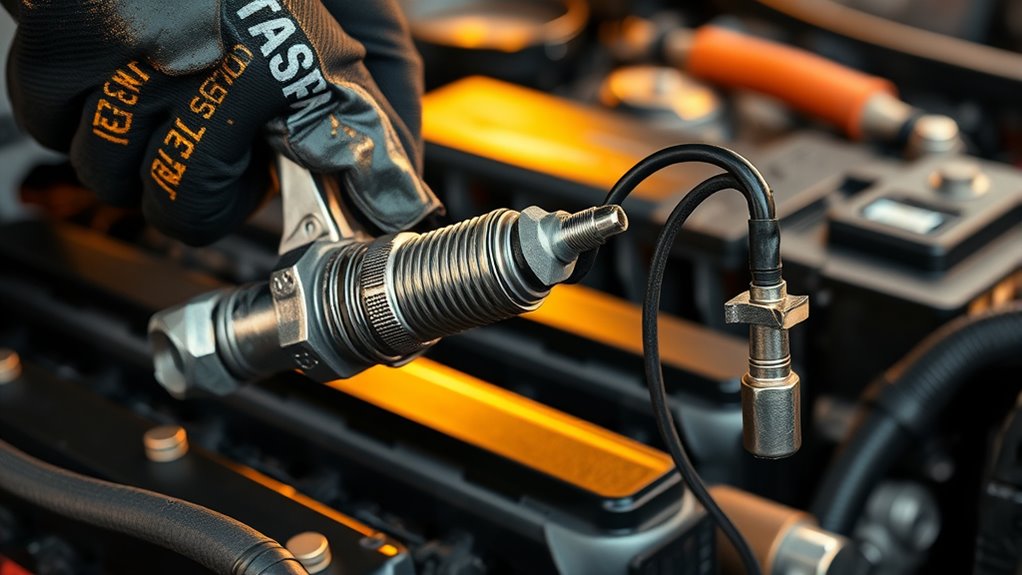
Do I Need to Disconnect the Battery When Changing Spark Plugs?
You should disconnect the battery before changing spark plugs on most modern vehicles, especially those with electronic ignition or advanced computer systems. This helps avoid electrical shorts and protects sensitive components.
Always disconnect the negative terminal first using insulated tools for safety.
Older cars might not require it, but checking your vehicle’s manual is essential. Not disconnecting risks sparks, shock, or ECU damage.
If you want to guarantee a safe and smooth process, there’s more helpful info ahead.
Key Takeaways
- Disconnect the battery on vehicles with electronic ignition or advanced computer systems to prevent electrical shorts and protect ECUs during spark plug changes.
- Always disconnect the negative battery terminal first to minimize sparks and avoid accidental electrical shocks or short circuits.
- Modern, hybrid, and electric vehicles almost always require battery disconnection; check the vehicle’s manual for specific guidance.
- Using insulated tools and safety gear reduces the risk of electrical arcing and personal injury while disconnecting the battery.
- Failure to disconnect the battery can cause voltage spikes that damage sensitive electronics and reset vehicle readiness monitors.
When and Why You Should Disconnect the Battery Before Changing Spark Plugs
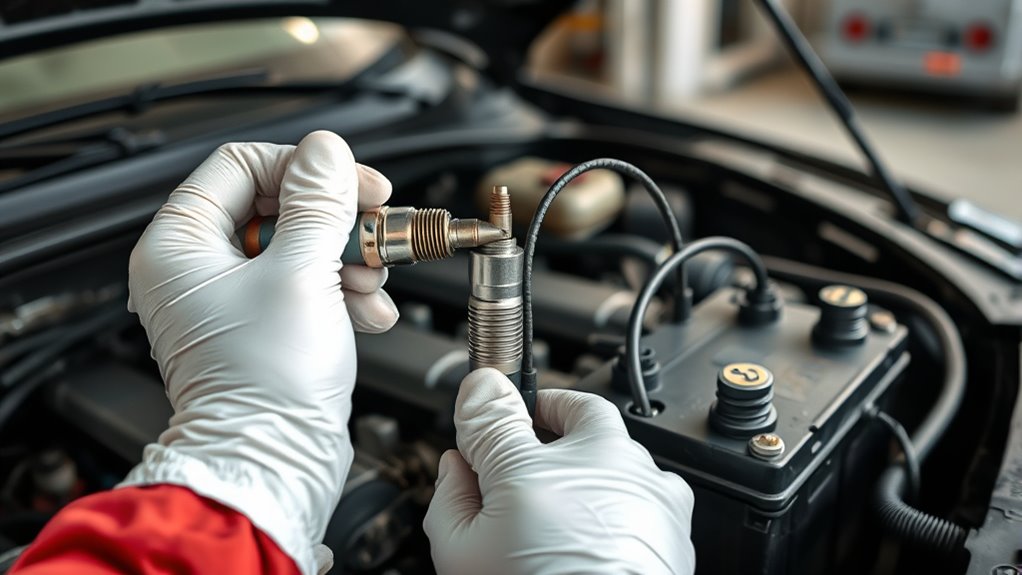
Although some older vehicles with simple ignition systems don’t require it, you should disconnect the battery before changing spark plugs if your car has electronic ignition or advanced computer systems. Disconnecting the battery helps prevent electrical shorts and protects sensitive electronic control units (ECUs) from potential damage during maintenance.
Before you start, locate the battery terminals and carefully disconnect the negative terminal first to minimize the risk of sparks or shocks. This step guarantees you won’t accidentally trigger any electrical currents while working on the spark plugs. Always consult your vehicle’s manual to confirm if disconnecting the battery is necessary for your specific model.
What Are the Risks of Not Disconnecting the Battery?
If you don’t disconnect the battery before changing spark plugs, you expose yourself and your vehicle to several risks. The battery powers the electrical system, so working on spark plugs without disconnecting it can cause sparks or electrical shocks. Metal tools touching live terminals may create electrical arcing, harming both you and the vehicle’s components.
Here are key risks you face if you skip this step:
- Electrical shocks from accidental contact with live battery terminals.
- Short circuits or sparks that can damage sensitive electronic parts in the electrical system.
- Voltage spikes that might fry the ECU or other control modules.
Which Cars Require Battery Disconnection for Spark Plug Replacement?

If you drive a modern car with advanced electronics, like a BMW or Audi, you’ll usually need to disconnect the battery before changing the spark plugs. It’s a good safety measure to prevent any electrical issues while you work.
Now, if you have a hybrid or electric vehicle, battery disconnection is almost always necessary. This helps avoid faults and keeps things safe for you and the car.
On the flip side, many older models—like certain Toyotas and Hondas—often don’t require you to disconnect the battery. Of course, it’s always best to check the owner’s manual just to be sure before you get started.
Modern Vehicles Battery Needs
Since modern vehicles rely heavily on advanced electronic control units and sensitive wiring, you’ll often need to disconnect the battery when changing spark plugs to prevent electrical damage. Battery disconnection is especially important for models with complex ignition systems or computer-controlled components. Here’s when you should consider it:
Luxury brands like BMW, Audi, Mercedes-Benz, and VW usually require battery disconnection to avoid electrical surges. Hybrid and electric vehicles demand it to protect high-voltage systems during engine work. Some newer cars specify disconnecting the negative terminal first, as per their service manuals.
That said, some modern vehicles, including certain Toyotas and Hondas, may not need battery disconnection. Always check your manufacturer’s guidelines to be sure before you start working on your spark plugs.
Older Models Battery Use
While modern vehicles often require battery disconnection due to their complex electronics, many older models handle spark plug replacement differently. Most older cars with simple ignition systems don’t need you to disconnect the battery when changing spark plugs.
For example, Toyota and Honda models typically allow spark plug replacement without disconnecting the battery unless their manuals say otherwise. However, if you own an older vehicle with electronic ignition or sensitive control modules, disconnecting the battery can prevent electrical damage.
Always check your vehicle’s service manual before starting; it will tell you if battery disconnection is necessary. Following proper safety procedures, you can safely replace spark plugs on many older models without disconnecting the battery, saving you time and hassle.
Hybrid And Electric Vehicles
Because hybrid and electric vehicles rely on complex electrical systems, you’ll need to disconnect their batteries before changing spark plugs to prevent damage and guarantee safety. These cars often require you to disconnect the auxiliary 12V battery or the high-voltage battery to replace spark plugs safely. Failing to disconnect the battery can cause electrical surges, damage control modules, or pose safety risks.
Here’s what you should do:
- Disconnect the battery to avoid electric shock and protect sensitive electronics.
- Follow manufacturer guidelines to safely access spark plugs.
- Use proper tools and precautions for high-voltage systems.
Always remember, hybrid and electric vehicles demand extra care during spark plug replacement to keep both you and your car safe.
Is Battery Disconnection Always Necessary When Changing Spark Plugs?
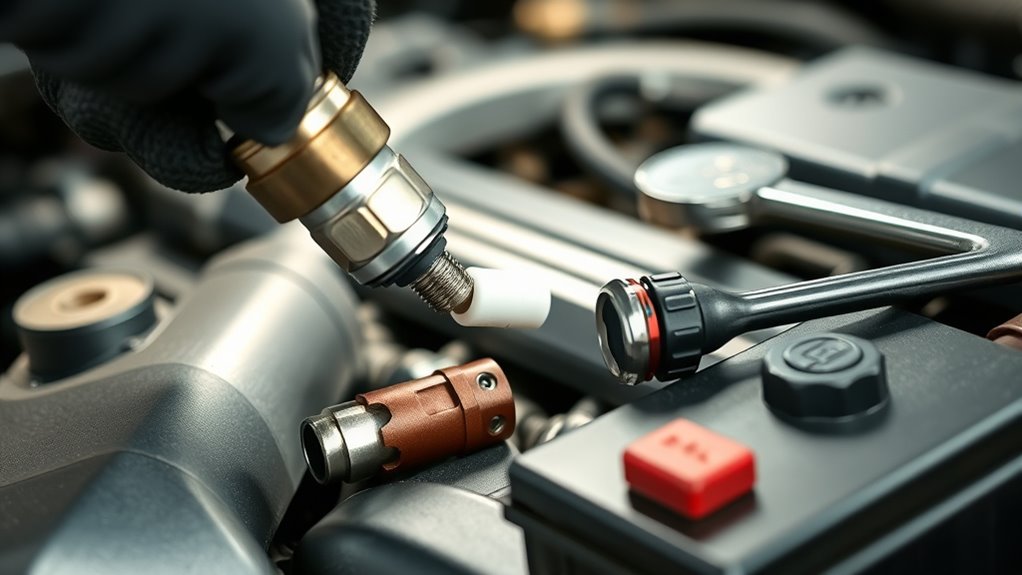
Although disconnecting the battery isn’t always required when changing spark plugs, especially on older or simpler vehicles, you should check your owner’s manual before starting. Many modern cars with advanced electronics recommend you disconnect battery power to avoid potential electrical damage during spark plug replacement.
However, for many vehicles, you can safely replace spark plugs without disconnecting the battery if you follow proper safety steps. Just be aware that disconnecting the battery might reset your vehicle’s electronic systems and readiness monitors.
This reset isn’t usually necessary for spark plug removal, but it’s something to keep in mind. Ultimately, whether you need to disconnect battery terminals depends on your specific car model and its manufacturer’s guidelines.
To avoid any issues, always consult your vehicle’s manual before you begin spark plug replacement to know the best approach for your car.
How to Safely Disconnect and Reconnect Your Car Battery
If your vehicle’s manual recommends disconnecting the battery before changing spark plugs, knowing the right steps will help you work safely and avoid electrical hazards. First, always disconnect the negative terminal before the positive one to minimize the risk of shorts or sparks.
Always disconnect the negative battery terminal first to reduce the risk of electrical shorts or sparks.
Never start loosening terminals without using a properly insulated wrench to avoid accidental contact with metal parts. Avoid working when the battery remains connected, as this can cause damage or injury.
Follow these key steps to safely disconnect and reconnect your car battery:
- Disconnect the negative terminal first using an insulated wrench, then remove the positive terminal.
- Handle the battery carefully, wearing safety glasses and gloves to protect against leaks or acid exposure.
- When reconnecting, attach the positive terminal first, followed by the negative, and ensure both are tightened securely.
Double-check all connections and make sure the battery is firmly mounted before starting your engine.
Essential Tools for Battery Disconnection and Spark Plug Replacement
You’ll need a few key tools to disconnect your battery and replace spark plugs properly. For starters, a battery terminal wrench is super helpful because it lets you remove the terminals safely without causing any damage.
Also, make sure you have the right ratchet and socket sizes on hand. That way, you can handle the spark plugs efficiently and avoid any hassle while working.
Required Tools Overview
Before starting your spark plug replacement, gather the essential tools to guarantee a smooth and safe process. You’ll need to disconnect the battery first, so having the right tools on hand makes the job easier and safer. A spark plug socket is vital for removing and installing spark plugs without damaging them.
Moreover, tools to disconnect battery terminals safely are a must.
Here are three essential tools you’ll need:
- Ratchet wrench with a spark plug socket (usually 5/8 inch or 13/16 inch)
- Battery terminal wrench or socket (commonly 10mm or 12mm)
- Spark plug gapping tool to ensure proper electrode spacing
Wearing protective gloves and safety glasses will also help protect you while working.
Battery Terminal Handling
How exactly should you handle the battery terminals when preparing to change your spark plugs? First, use a wrench to loosen and disconnect the negative battery terminal to prevent electrical shorts.
Always wear gloves and safety glasses to protect yourself from sparks or battery acid. If the terminal is stubborn, carefully use a terminal puller or a flat-head screwdriver to disconnect it without causing damage.
Keep track of each terminal’s order and orientation so you can reattach them correctly later. After replacing the spark plugs, reconnect the positive terminal first, tightening it securely before reattaching the negative terminal.
Following these steps guarantees safe battery terminal handling and prevents electrical issues during your spark plug replacement.
How Battery Disconnection Affects Vehicle Readiness Monitors
Although disconnecting the battery during spark plug replacement can seem like a simple safety step, it often resets your vehicle’s readiness monitors. When you disconnect the battery, the ECU loses power, causing all readiness monitors to reset.
Disconnecting the battery during spark plug changes resets your vehicle’s readiness monitors by cutting power to the ECU.
This means you’ll need to complete a full drive cycle to get them back to “Ready” status. On the other hand, if you keep the battery connected, the readiness monitors typically stay active and retain their status throughout the service.
Here’s what happens when you have a disconnected battery:
- All readiness monitors reset, requiring a drive cycle to restore their status.
- The ECU loses memory of previous system checks, leading to temporary loss of diagnostic data.
- Reconnecting the battery triggers a fresh reset of the monitors, delaying your ability to pass emissions tests until they’re ready again.
Using a Memory Saver to Protect Vehicle Settings During Battery Disconnection
If you want to keep your vehicle’s settings intact while disconnecting the battery, using a memory saver is a smart move. This handy device plugs into the OBD2 port and draws power from a small battery. That way, it preserves your radio presets, clock, and computer data.
It’s really an easy and affordable way to avoid the hassle of resetting everything once you’re done changing spark plugs. Plus, it saves you time and keeps things running smoothly in your car.
Memory Saver Benefits
When you disconnect your vehicle’s battery, using a memory saver keeps your electronic settings intact. This way, you don’t lose radio presets, ECU data, or readiness monitor information. A memory saver is a simple device that plugs into your OBD2 port and runs on a small power source, preserving your vehicle’s memory.
This means you can disconnect battery terminals without worrying about resetting important configurations.
The benefits of using a memory saver include avoiding time-consuming reprogramming of radio and navigation systems. It also helps maintain ECU parameters for ideal engine performance and preserves readiness monitor data to pass emissions tests smoothly.
Using a memory saver is an affordable and effective way to protect your vehicle’s settings during battery disconnection. It makes spark plug changes and other maintenance easier.
How Memory Savers Work
Using a memory saver offers a simple way to keep your vehicle’s electronic settings intact while you disconnect the battery. This device plugs into your car’s OBD2 port and supplies continuous power from a small 9V battery.
By doing this, the memory saver maintains the electrical current needed to preserve your ECU data, radio presets, clock settings, and other important configurations. When you disconnect the battery, the memory saver prevents these settings from resetting, so you won’t have to spend time reprogramming or recalibrating afterward.
Memory savers are affordable, usually costing around $20 to $30, and they’re easy to connect. Using a memory saver lets you disconnect the battery safely without losing your vehicle’s customized electronic settings.
Common Mistakes to Avoid When Handling the Battery During Spark Plug Replacement
Although disconnecting the battery seems straightforward, many people make avoidable mistakes that can cause electrical issues or safety hazards during spark plug replacement. If you’re wondering about the need to disconnect battery terminals, keep in mind that improper handling can lead to an accidental short, damaging your vehicle’s electrical system.
To avoid common pitfalls, watch out for these errors:
- Disconnecting the negative terminal before the positive, which increases the risk of sparks and accidental shorts.
- Neglecting to record radio presets before disconnecting, as this info might be lost when power cuts off.
- Reconnecting the terminals in the wrong order. Always attach the positive first, then the negative, to ensure your car’s electrical system functions properly.
Safety Tips for Preventing Electrical Shorts and Shocks
Because electrical shorts and shocks can cause serious injury or damage, you should take specific safety precautions before and during spark plug replacement. Always disconnect the negative battery terminal first to minimize the risk of electrical shorts while working.
Wearing insulated gloves and safety glasses protects you from accidental shocks near electrical components. Use insulated tools when handling battery terminals or working around live wires to prevent sparks that could lead to shorts or injury.
Never work on the electrical system while the engine is running, as this greatly increases the chance of electrical shorts and shocks. After completing your work, double-check all connections and verify the battery is securely reconnected and tightened before starting the vehicle.
Following these safety tips helps you avoid common hazards and keeps both you and your vehicle safe during spark plug maintenance.
Why Following Manufacturer Guidelines for Battery Disconnection Matters
Taking the right safety measures, like disconnecting the battery properly, sets the foundation for a smooth spark plug replacement. Following manufacturer guidelines is essential because these instructions are tailored to your vehicle’s specific electrical system. They tell you exactly when battery disconnection is necessary, helping you avoid unnecessary steps or potential damage.
By sticking to manufacturer guidelines, you’ll:
- Prevent electrical damage and system errors during the replacement process
- Avoid resetting vehicle readiness monitors or losing important stored data
- Maintain warranty coverage and comply with safety standards
Ignoring these guidelines can lead to costly repairs, void your warranty, or harm sensitive electrical components. So, always consult the manufacturer’s instructions before you disconnect the battery. This guarantees you’re protecting both your vehicle and yourself while making spark plug replacement as safe and efficient as possible.
Final Checks After Battery Reconnection to Ensure Safe Spark Plug Replacement
Once you reconnect the battery, you’ll want to perform a few essential checks to guarantee your spark plug replacement was successful and safe. Start by double-checking that all spark plug connections are properly seated. Make sure no tools or loose parts remain in the engine bay to avoid shorts or damage.
Reconnect the negative terminal first, then the positive, tightening all clamps securely.
Next, start your engine and listen for smooth operation. Watch for misfires or warning lights. Finally, use a scan tool to clear any error codes and confirm all systems are working properly.
Here’s a quick checklist for your final checks after you reconnect the battery:
| Step | What to Do |
|---|---|
| 1. Check spark plug seating | Ensure plugs are firmly in place |
| 2. Remove tools | Clear engine bay of any loose items |
| 3. Reconnect battery terminals | Negative first, then positive, tighten clamps |
| 4. Start engine | Listen for smooth running, no misfires |
| 5. Scan for errors | Clear codes and verify system status |
Frequently Asked Questions
Can I Replace Spark Plugs Without Special Tools?
You can replace spark plugs without special tools by using common alternatives like a socket wrench and spark plug socket. For battery safety, it’s smart to disconnect the battery to avoid any electrical mishaps, especially when handling coil connectors.
A gap tool helps adjust spark plugs to spec, but you can carefully eyeball it if needed. Using anti-seize and a torque wrench guarantees proper installation without fancy gear.
How Often Should Spark Plugs Be Replaced?
You should replace spark plugs every 30,000 to 50,000 miles, but if you use platinum or iridium ones, they can last up to 100,000 miles. Keeping them fresh is key for engine performance and fuel efficiency.
While changing them, always prioritize battery safety by disconnecting the battery to avoid shocks or shorts. Regular checks help you spot wear early, so you can maintain smooth engine operation without unexpected issues.
What Symptoms Indicate Faulty Spark Plugs?
If your engine’s acting up like a fish out of water, you might have faulty spark plugs. You’ll notice rough idling, engine misfires, or a loss of power, especially during acceleration.
Difficulty starting or longer cranking times are red flags too. Keep battery safety in mind. Issues with spark plugs can affect your electrical system, triggering warning lights or a strong gasoline smell.
Don’t ignore these signs to avoid bigger problems.
How Do I Gap Spark Plugs Correctly?
To gap spark plugs correctly, use a spark plug gapping tool to measure the electrode gap, matching the manufacturer’s specs. Handle the spark plug by the ceramic insulator to avoid damaging the spark plug materials.
If the gap’s off, gently bend the ground electrode, then recheck the gap. Proper gapping guarantees ideal spark plug installation and engine performance. Always refer to your vehicle’s manual for the exact gap size recommended for your engine.
Can Dirty Spark Plugs Cause Poor Fuel Economy?
Dirty spark plugs can hurt your fuel economy like a clogged straw slows your sip. When spark plugs get fouled, your engine misfires, forcing it to work harder and guzzle more fuel.
For battery safety, always disconnect the battery before changing plugs to avoid shorts during charging procedures. Keeping your spark plugs clean or replacing them promptly ensures efficient combustion and helps your car run smoother and save gas.
Conclusion
Changing spark plugs can be straightforward, but disconnecting your battery is like putting on a helmet before a bike ride. It’s all about safety first. While not every car demands it, unplugging the battery helps prevent shocks, shorts, and costly damage.
Always check your manufacturer’s guidelines and handle the battery with care. By taking these simple steps, you’re not just changing spark plugs, you’re sparking peace of mind for your ride’s smooth journey ahead.