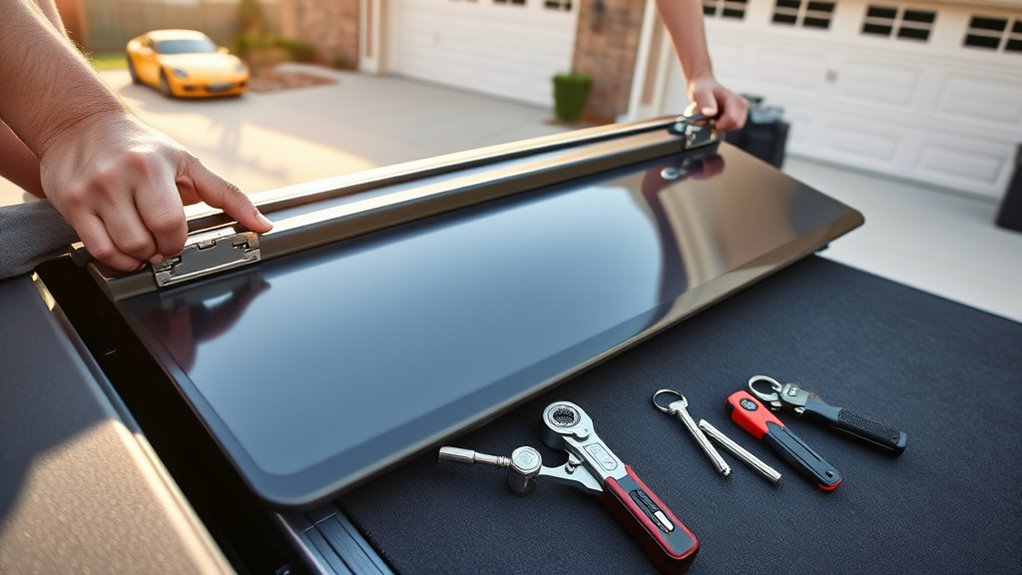
Fiberglass Tonneau Cover Installation Instructions: Follow These 5 Steps
To install your fiberglass tonneau cover, first confirm it fits your truck and gather needed tools. Next, clean and prep the bed by removing debris and ensuring a smooth surface.
Attach and secure the rails evenly along the bed edges. Then install seals and carefully position the cover onto the rails.
Finally, adjust and tighten clamps for a snug, leak-free fit, testing the cover’s operation.
Keep going to uncover tips for a flawless, professional installation.
Key Takeaways
- Verify cover compatibility with your truck and gather all necessary tools before starting the installation.
- Clean and prepare the truck bed by removing debris and ensuring the surface is dry and damage-free.
- Attach and secure rails evenly along the truck bed edges, using clamps without overtightening.
- Install seals firmly on the rails and position the fiberglass cover, aligning all bolt holes precisely.
- Tighten all hardware gradually, test opening and closing, and troubleshoot any leaks or misalignment.
Confirm Compatibility and Gather Tools
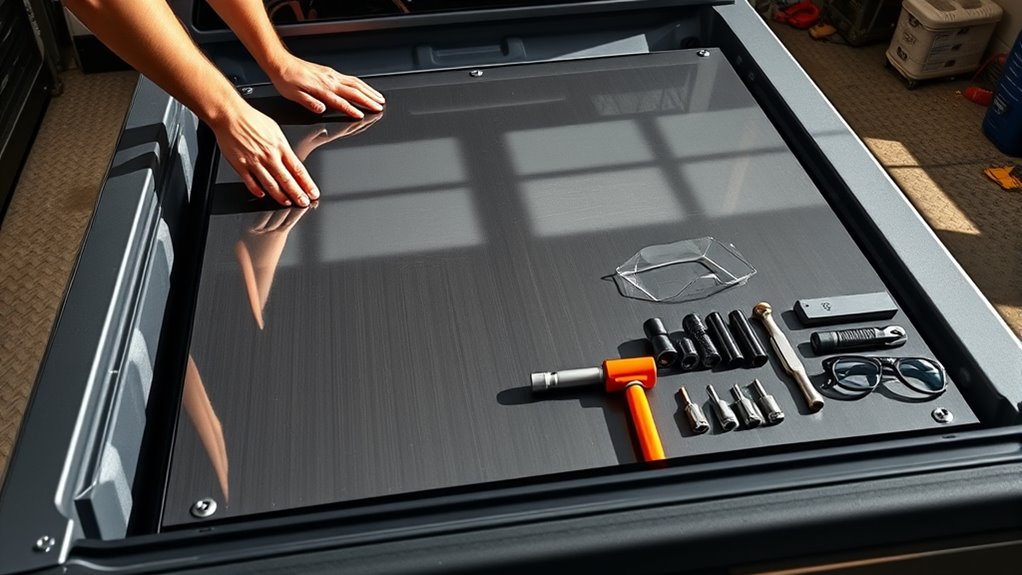
Before you begin installing your fiberglass tonneau cover, make sure it’s compatible with your truck’s exact make, model, and year to guarantee a proper fit. Compatibility is key to avoid fitment issues during installation. First, unpack all components, including rails, clips, clamps, and support brackets, and lay them out on a clean surface.
Ensure your fiberglass tonneau cover matches your truck’s make and model before unpacking all parts carefully.
Check the parts against the manufacturer’s list to confirm nothing’s missing. Missing components can stall your assembly and cause frustration.
Next, gather the necessary tools like a screwdriver set, measuring tape, cordless drill, rubber mallet, and utility knife. Having these tools ready will streamline the installation process.
Before diving in, carefully read the installation instructions and manufacturer’s guidelines. They highlight model-specific requirements and precautions that help you avoid mistakes.
Clean and Prepare Your Truck Bed
Although it might seem simple, thoroughly cleaning your truck bed is essential for a successful tonneau cover installation. Start by removing all debris, dust, and dirt from the surface using a broom, vacuum, or clean cloth.
Next, inspect the truck bed carefully for any dents, rust, or damage that could affect the cover’s fit or sealing. Address any issues you find before moving forward.
Remove obstructions like old weatherstripping or leftover debris that might interfere with the installation. It’s also important to verify that your truck bed dimensions match the fiberglass tonneau cover specifications to guarantee a proper fit.
Finally, make sure the surface is completely dry and free of moisture. A dry, clean, and prepared truck bed surface promotes better sealing and adhesion, setting you up for a smooth and secure installation process.
Taking these steps now saves you from problems later.
Attach and Secure the Tonneau Cover Rails
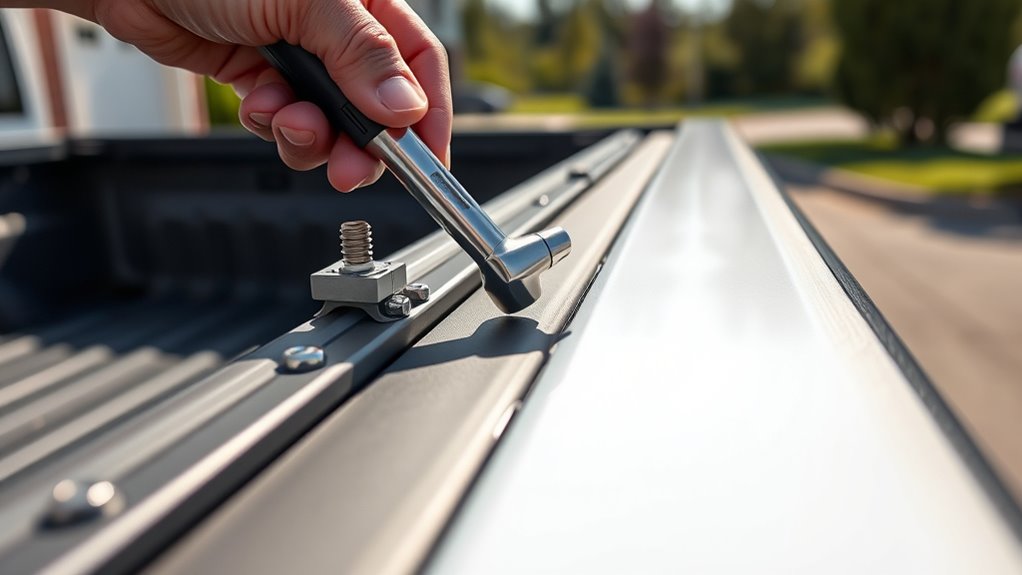
When you attach the tonneau cover rails, position them evenly along the top edges of your truck bed, making sure they’re centered and aligned from front to back. Proper alignment is crucial for the cover’s fitment and overall stability.
If your bed liner obstructs clamp placement, carefully cut notches in it to allow the clamps to securely grip the rails. Use the designated clamp points, usually at the front, middle, and rear, to hold the rails in place without overtightening, which could warp the rails.
Check both rails for straightness and leveling before tightening. Once you confirm the rails are level, evenly spaced, and properly aligned, tighten all clamps securely to ensure the rails won’t shift during use.
Taking these steps while installing the rails guarantees a solid, stable foundation for the tonneau cover, making sure it fits perfectly and performs well over time.
Install Seals and Position the Fiberglass Tonneau Cover
With the rails securely in place and aligned, you’re ready to install the seals along the truck bed edges to improve waterproofing. Start by cleaning the installation surface with rubbing alcohol to guarantee proper adhesion and remove any debris that could cause leaks.
Next, press the seals firmly into place, making sure they’re straight and fully adhered. Trim any excess with scissors for a neat seal placement.
Now, carefully position the fiberglass cover onto the rails, aligning the bolt holes precisely. Check that the cover makes even contact with the seals, which is vital for a tight waterproof fit.
Before securing the fasteners, make any necessary final adjustments to both the seal placement and the cover’s position. This careful alignment ensures the best sealing and prepares your cover for the next steps in the installation process.
Adjust, Tighten, Test, and Troubleshoot Your Cover Fit
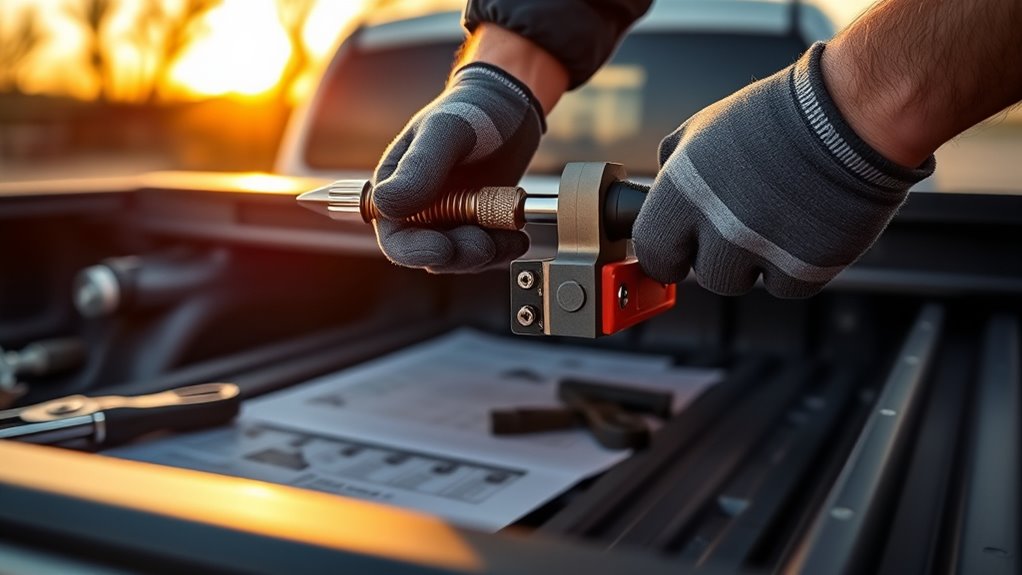
Before you fully tighten the clamps and bolts, gradually adjust them to guarantee the fiberglass cover fits securely and evenly without warping. Focus on aligning the cover so it sits flush with the truck bed, ensuring the seals compress properly to prevent water intrusion. Tighten the hardware step-by-step, avoiding over-tightening that could damage the clamps or cover.
Once adjusted and tightened, test the cover by opening and closing it several times. Check for smooth operation and a consistent seal. If you notice any leaks, misalignment, or difficulty operating the cover, troubleshoot by inspecting the clamps, seals, and alignment. Retighten any loose hardware and reseat the seals as necessary.
| Step | Purpose |
|---|---|
| Adjust clamps | Ensure even, secure fit |
| Tighten hardware | Maintain alignment and seal |
| Test operation | Verify smooth function, no leaks |
Frequently Asked Questions
Can I Paint the Fiberglass Tonneau Cover to Match My Truck?
Yes, you can paint your fiberglass tonneau cover to match your truck with custom paint. Start with thorough surface preparation and primer application to guarantee proper adhesion. Use the right paint types and spray techniques for even color matching.
Employ quality painting tools and apply multiple thin coats, allowing drying time. A finish coating with a clear layer protects against weather considerations. For lasting results, follow touch-up tips and consider professional help for a flawless finish.
How Do I Maintain and Clean the Fiberglass Tonneau Cover?
Like caring for a classic car, maintaining your fiberglass tonneau cover means sticking to a solid maintenance schedule. Use gentle cleaning tools and mild cleaners for stain removal without harming its chemical resistance.
Apply UV protection coatings regularly to keep its shine and prevent damage. Rinse thoroughly to avoid mineral spots, and inspect seals for damage repair.
For long term care, store it properly and avoid abrasive scrubbing to guarantee lasting beauty and function.
Is It Safe to Drive With the Cover Partially Open?
No, it’s not safe to drive with the cover partially open. You’ll face security concerns and theft prevention issues since the cover won’t seal properly.
Weather impact and aerodynamics effects increase fuel consumption, while cover stability suffers, risking damage from road debris. Driving visibility may be obstructed, creating safety hazards.
Plus, legal regulations often require covers to be fully closed. To protect cover durability and your safety, always latch it securely.
Can I Install a Fiberglass Cover by Myself or Need Help?
You can definitely attempt a DIY installation of your fiberglass cover if you have basic tool requirements and are comfortable with mounting techniques and securing methods. The adjustment process might take some time, so expect a few common challenges like alignment issues. Prioritize safety precautions throughout.
Your user experience matters. If you feel unsure or the cover’s heavy, consider professional assistance. Having help can speed up installation time and improve accuracy.
What Warranty Typically Comes With a Fiberglass Tonneau Cover?
You’d think a fiberglass tonneau cover’s durability testing means it’s invincible, but warranties usually cover just 3 to 5 years against defects in material composition or manufacturing process. They often exclude damage from accidents despite UV resistance, impact strength, weatherproofing features, and surface finishes boasting longevity.
Color options and weight capacity don’t affect coverage much. Installation ease matters too. Improper setup can void your warranty, so read terms carefully before you rely on it.
Conclusion
Now that you’ve locked in each step like pieces of a puzzle, your fiberglass tonneau cover fits snug as a glove. With every bolt tightened and seal in place, your truck bed transforms into a fortress against the elements.
You’ve turned a task into triumph, wrapping your ride in a sleek, protective embrace. So roll up your sleeves, give it a final test, and let your cover ride smooth and steady, rain or shine.