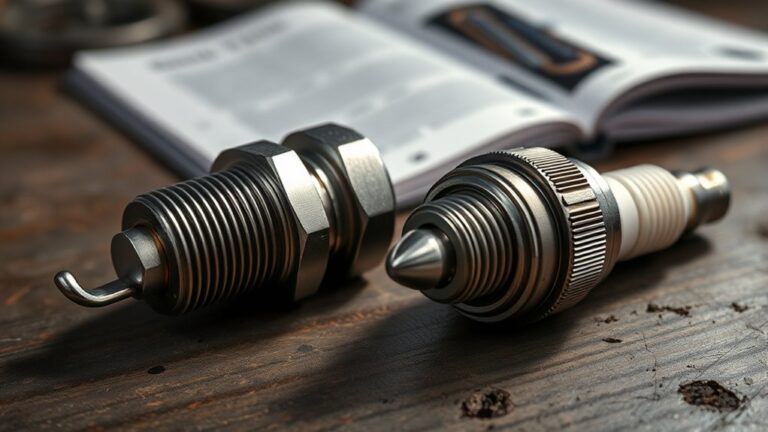

How Long Does It Take to Change Spark Plugs
Changing your spark plugs typically takes between 30 minutes and 2 hours, depending on your engine’s size and layout. Four-cylinder engines are quicker, while V6 or V8 setups often need more time because of harder access or extra parts removal.
Your experience level and weather can also affect timing, especially if plugs are seized or corroded.
Genuine Toyota spark plugs guarantee better performance and fewer issues.
Keep exploring to understand what else can influence the job’s duration and quality.
Key Takeaways
- Spark plug replacement typically takes between 30 minutes to 2 hours, depending on engine type and complexity.
- Four-cylinder engines usually require about 30 minutes, while V6 or V8 engines may take 1-2 hours or more.
- Difficult access, seized plugs, or additional part removal can significantly increase replacement time.
- Experienced mechanics often finish in 30-60 minutes, whereas beginners may need up to 2 hours.
- Proper preparation, tools, and working conditions improve efficiency and reduce overall replacement duration.
How Long Does Spark Plug Replacement Usually Take?

Although the time needed to replace spark plugs varies, you can generally expect the job to take between 30 minutes and 2 hours. If you’re working on a four-cylinder engine, replacing spark plugs often takes around 30 minutes, since the components are usually easier to access.
But if your vehicle has a V6 or V8 engine, it might take up to 2 hours or more, especially when spark plugs sit behind other engine parts or in tight spaces. Using specialized tools like magnetic sockets can speed up removing and installing spark plugs, saving you time.
Plus, if you’re familiar with your engine’s design and have experience, you’ll likely complete replacing spark plugs closer to the 30-minute mark. Keep in mind that the complexity of your engine setup plays a big role in how long you’ll spend on this task, so it’s smart to prepare accordingly before starting.
Which Vehicle Features Affect Spark Plug Replacement Time?
The type of engine your vehicle has plays a big role in how long it takes to change spark plugs. For instance, some engines are designed in a way that makes the plugs easier to access, while others can be a bit tricky.
You’ll also notice that engines with more cylinders generally require more time for replacement. That’s simply because there are more spark plugs to swap out.
Plus, if your spark plugs are hard to reach or surrounded by tight spaces, expect the job to take longer. It’s those cramped spots that can really slow things down.
Engine Type Impact
How much time it takes to change spark plugs often depends on your vehicle’s engine type and design. Larger engines, like V8s, usually take longer because of the increased complexity and tighter spaces.
If your engine uses a coil-on-plug system, you’ll need to remove each coil individually before accessing the spark plugs, which adds time. Some Toyota engines have extra components like intake manifolds or support brackets that can make the job more involved.
When working, you’ll rely on a spark plug socket, but limited space around the plugs might require removing other parts first. High-performance or turbocharged engines are often more complex, pushing replacement times beyond the standard 30 minutes to over an hour.
Knowing your engine type helps you anticipate the effort needed.
Cylinder Count Influence
Because cylinder count directly affects how many spark plugs your engine has, it plays a major role in the time needed for replacement. For example, if your vehicle has a four-cylinder engine, you can expect the job to take about 30 minutes.
But if you drive a six-cylinder, it’ll take roughly 1 to 1.5 hours since there are more spark plugs to remove and install. With V8 engines, the process often stretches to 2 to 3 hours because of the larger size and complexity involved.
The more cylinders your engine has, the more spark plugs you’ll replace, which naturally increases the time required. So, knowing your cylinder count helps you estimate how long spark plug replacement will take.
Accessibility Challenges
Cylinder count gives you a baseline for how many spark plugs you’ll replace, but the layout of your engine can greatly affect how long the job takes. Accessibility challenges often arise from a tightly packed engine bay or obstructive components.
You might need to remove the intake manifold, battery, or engine covers, adding extra labor. Low clearance, complex brackets, or coil-on-plug systems can further prolong the process, especially in longitudinal engines.
Older cars may require extra effort to free corroded or stuck plugs.
| Feature | Impact on Replacement Time |
|---|---|
| Tightly packed engine bay | Increases difficulty and time |
| Removal of engine parts | Adds extra labor |
| Low clearance & brackets | Makes access more challenging |
How Does Engine Layout Impact Spark Plug Access?
Your engine’s layout really affects how easy it is to get to the spark plugs. For example, V-shaped and boxer engines often mean you’ll have to take off some extra parts before you can reach the plugs. On the other hand, engines with a transverse layout usually let you access the spark plugs more quickly. Knowing these differences can help you figure out how much time and effort you’ll need when it’s time to replace them.
Cylinder Configuration Effects
Although engine layouts vary widely, they directly affect how easily you can access and replace spark plugs. The cylinder configuration plays a major role in determining the time and effort required for spark plug replacement. Depending on your engine’s design, access can be straightforward or quite challenging.
Consider these points about cylinder configuration effects on access:
- Inline-four engines usually offer easier access, letting you replace all plugs in about 30 minutes.
- V6 and V8 engines tend to be more complex, increasing replacement time due to more cylinders and tighter spaces.
- Transverse-mounted engines can restrict access, complicating spark plug removal.
- Boxer or horizontally opposed engines often provide better access, speeding up the replacement process.
Understanding your cylinder configuration helps you anticipate the difficulty of spark plug maintenance.
Component Removal Requirements
Engine layout doesn’t just influence how quickly you can spot the spark plugs. It also affects what parts you’ll need to remove to get to them. Inline engines usually offer straightforward access, minimizing component removal.
Meanwhile, V-shaped engines often require taking off intake manifolds or coil packs. Some engines have rear or deep-set plugs, making you remove the air intake or battery. Tight engine bays or compact designs can increase complexity and time.
This is especially true if you must loosen mounts, brackets, or wiring harnesses.
| Engine Layout | Common Components Removed | Impact on Spark Plug Access |
|---|---|---|
| Inline | Minimal | Easier, quicker |
| V-shaped (V6/V8) | Intake manifold, coil packs | More complex, slower |
| Rear-set plugs | Air intake, battery | Difficult, time-consuming |
| Compact designs | Mounts, brackets, wiring | Increased difficulty |
| Narrow bays | Multiple | Substantially slower |
How Does Mechanic Experience Affect Replacement Time?

While replacing spark plugs might seem straightforward, the experience level of the mechanic considerably affects how long the job takes. Your mechanic experience directly impacts labor time, with seasoned professionals completing the task in 30 to 60 minutes. If you’re less experienced, expect the job to take up to 2 hours or more.
Here’s how mechanic experience influences replacement time:
Experienced mechanics quickly locate and access spark plugs due to familiarity with engine layouts. Skilled technicians use specialized tools and efficient techniques that speed up the process.
Newcomers face a learning curve, especially with complex or unfamiliar engines, increasing labor time. Higher mechanic experience guarantees faster, more precise spark plug replacements, reducing vehicle downtime.
What Common Problems Extend Spark Plug Replacement Time?
If you encounter seized or rusted spark plugs, expect the replacement to take much longer than usual. Seized plugs often need penetrating oil and extra effort to loosen, which adds to the time.
Seized or rusted spark plugs require penetrating oil and extra effort, significantly increasing replacement time.
Furthermore, broken porcelain insulators can cause major delays. When the porcelain breaks, you must carefully extract all debris to avoid damaging the engine.
Cross-threaded spark plugs also extend replacement time since you’ll have to carefully rethread or repair damaged threads to prevent future issues. Over-tightened spark plugs that are stuck require more force and sometimes special tools, further lengthening the process.
Finally, built-up carbon deposits or corrosion on the plugs can make removal more difficult, demanding patience and care. These common problems all add time and complexity to what might otherwise be a straightforward spark plug change, so be prepared for some delays if you face any of these issues.
How to Prepare Your Vehicle for Quicker Spark Plug Changes?
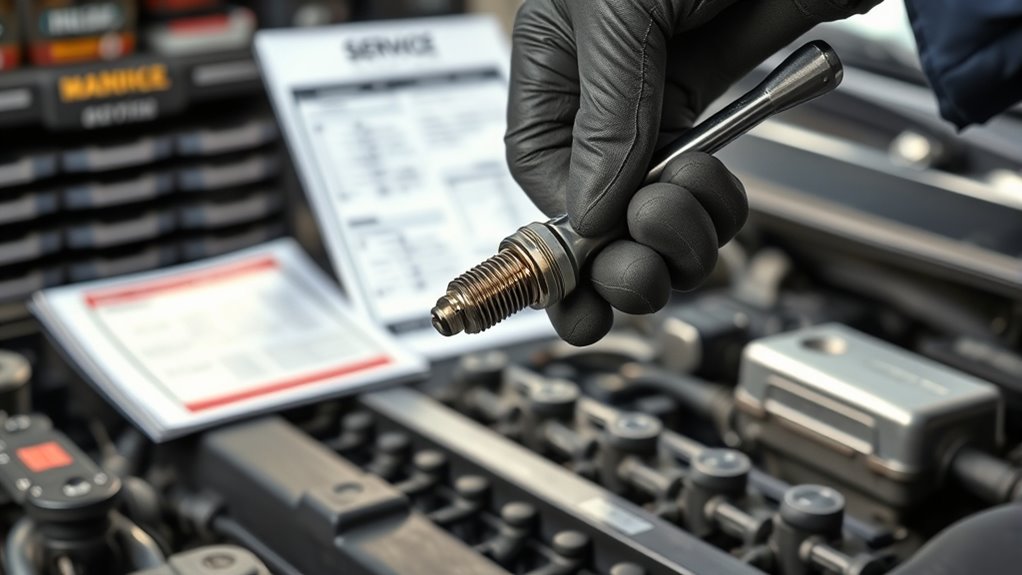
To speed up your spark plug change, start by making sure the engine is completely cool to avoid burns and make removal easier. Next, focus on preparing your vehicle to create easy access to the spark plugs. This will substantially cut down your work time.
Here’s how to get ready efficiently:
Remove the engine cover and any intake parts blocking easy access to spark plugs. Clean the engine bay using compressed air to clear away debris that might fall into the cylinders. Inspect and pre-gap your new spark plugs beforehand to avoid delays during installation. Organize your workspace and lay out all parts and tools within reach.
What Tools Make Spark Plug Replacement Faster?
What tools can speed up your spark plug replacement and make the process smoother? Using the right spark plug tools is key. A magnetic spark plug socket holds each plug securely during removal, cutting down time and preventing drops.
Pair that with a 24-inch extension to easily reach spark plugs tucked deep in tight engine bays. Swivel sockets add maneuverability, letting you navigate around engine obstructions with less effort.
Before you start, use compressed air to blow away debris around the spark plug area. This keeps contaminants out and simplifies removal. Also, invest in properly pre-gapped, high-quality spark plugs and tools. They fit perfectly and reduce the risk of damage during installation, speeding up the process.
With these tools on hand, you’ll find changing spark plugs becomes faster, cleaner, and less frustrating.
How Does Weather Affect Spark Plug Replacement Time?
Having the right tools makes spark plug replacement faster, but weather can still throw a wrench in the process. Cold weather, especially near 25°F, can make engine parts brittle and spark plugs harder to remove. You might find spark plugs frozen or seized, needing extra time and penetrating oil to free them. Plus, working in low temperatures often slows down your dexterity and handling of tools, stretching out replacement time.
To speed things up despite weather challenges, consider these tips:
- Warm up the engine or work in a heated space before starting.
- Use penetrating oil on stuck spark plugs ahead of time.
- Wear gloves that maintain dexterity in cold weather.
- Keep your tools warm or store them indoors before use.
How Does Cylinder Count Affect Spark Plug Replacement Time?
The number of cylinders in your engine directly affects how long it takes to replace spark plugs. More cylinders mean more spark plugs, and often tighter spaces too. That makes accessing them harder and the whole job take longer. You’ll probably notice that four-cylinder engines usually take less time to work on than six- or eight-cylinder ones because their engines are easier to get into.
Number Of Cylinders
How much time will you need to replace your spark plugs? It largely depends on the number of cylinders in your engine. The more cylinders you have, the more spark plugs you’ll need to replace, which increases the time required for the job.
Consider these points about the number of cylinders and spark plugs replacement time:
- Four-cylinder engines usually take about 30 minutes to replace all spark plugs.
- Six-cylinder engines often require 1 to 1.5 hours due to extra plugs.
- Eight-cylinder engines can take 2 to 3 hours because of more plugs and complex access.
- More cylinders may mean removing engine components, adding to the labor time.
Knowing your engine’s cylinder count helps you estimate how long spark plug replacement will take.
Engine Accessibility Impact
Because engines with more cylinders often have tighter spaces and complex layouts, you’ll find that replacing spark plugs takes longer as cylinder count increases. Engine accessibility plays a huge role in spark plug replacement time.
With more cylinders, you often face limited space and extra components that must be removed first, making the process more involved.
| Cylinder Count | Typical Spark Plug Replacement Time | Engine Accessibility Impact |
|---|---|---|
| 4 | 30 min – 1 hour | Easier access, straightforward |
| V6 | 1 – 1.5 hours | Moderate complexity, tighter space |
| V8 | 2 – 3 hours | Requires removing extra components |
| More than V8 | 3+ hours | Very tight spaces, complex layouts |
Understanding engine accessibility helps you anticipate how cylinder count affects spark plug replacement time.
Replacement Time Variation
Although replacing spark plugs might seem straightforward, the number of cylinders in your engine considerably impacts how long the job takes. Each cylinder has a spark plug, so more cylinders mean more plugs to replace. This naturally extends the replacement time, especially as you deal with additional ignition coils and wiring.
Plus, higher cylinder counts often require removing extra components, making access more complex.
Here’s how cylinder count affects spark plug replacement time:
- Four-cylinder engines take about 30 minutes.
- Six-cylinder engines usually need 1 to 1.5 hours.
- Eight-cylinder engines can require 2 to 3 hours.
- More cylinders mean more parts to disconnect and reassemble.
Understanding this helps you anticipate the time and effort for spark plug replacement.
How to Know If Your Spark Plugs Need Replacing Now?
If your check engine light comes on or your car starts struggling to fire up, especially in cold weather, these are clear signs your spark plugs might need replacing. You should also watch for rough idling, engine misfires, or a sudden drop in fuel efficiency without changes in driving habits. Visual inspection can help too. Look for deposits, corrosion, or erosion on the spark plugs.
Here’s a quick guide to help you know when to replace spark plugs:
| Symptom | What It Means |
|---|---|
| Check Engine Light | Possible misfires or engine issues |
| Hard Starts | Worn or failing spark plugs |
| Poor Fuel Efficiency | Spark plugs not igniting fuel properly |
If you notice any of these signs, it’s time to replace spark plugs to keep your engine running smoothly.
When to Expect Longer Replacement Times on Toyota Models?
When working on Toyota models, you can expect longer spark plug replacement times if your vehicle has a V6 or V8 engine. These often require removing extra components like the intake manifold. This adds complexity and extends the time needed.
Additionally, older Toyota engines with carbon buildup or stuck spark plugs can slow you down because they’re harder to remove. Tight engine bays in some models also make accessing spark plugs more challenging, which increases replacement duration. Cold weather can freeze or seize plugs, further prolonging the process.
Watch out for these factors that cause longer replacement times on Toyota vehicles:
- Removing intake manifolds on V6 or V8 engines
- Dealing with carbon buildup or stuck plugs in older engines
- Navigating tight engine compartments with limited access
- Removing obstructive parts like engine mounts to reach plugs
Understanding these can help you prepare for longer spark plug replacement times on your Toyota.
Why Use Genuine Toyota Spark Plugs?
Knowing the factors that affect spark plug replacement times on your Toyota is helpful, but choosing the right spark plugs makes an even bigger difference in how your engine performs afterward. Genuine Toyota spark plugs are designed specifically for Toyota engines, ensuring peak performance and reliability.
When you use OEM parts, you reduce the risk of misfires and ignition issues that often come with aftermarket alternatives. These spark plugs meet strict quality standards, providing consistent firing and extended durability.
Frequently Asked Questions
Can Changing Spark Plugs Improve Fuel Efficiency?
Yes, changing spark plugs can improve your fuel efficiency. When your ignition timing is spot on with new plugs, your engine burns fuel more completely, reducing waste.
This helps your emission system work better, lowering harmful emissions and saving gas. Worn plugs cause misfires and incomplete combustion, which hurt mileage.
How Often Should Spark Plugs Be Replaced?
You should replace spark plugs based on their materials and your car’s ignition timing needs. Copper plugs usually last about 25,000 miles, while platinum and iridium types can go 80,000 to 100,000 miles.
Don’t just guess. Check your owner’s manual and inspect them every 20,000 miles to avoid timing issues. Proper replacement keeps your engine running smoothly and maintains ideal ignition timing for better performance and efficiency.
What Are the Signs of Faulty Spark Plugs?
You’ll notice faulty spark plugs when your ignition performance drops, causing engine misfires and rough idling. If your check engine light comes on, don’t ignore it. It’s often linked to spark plug issues.
You might also feel engine vibrations and poor acceleration. Trouble starting your car, especially in cold weather, and a sudden decrease in fuel efficiency are clear signs that your spark plugs need attention.
Can I Drive With Bad Spark Plugs?
You can drive with bad spark plugs, but it’s like asking your ignition timing to dance out of step. Worn spark plug materials disrupt combustion, causing misfires and poor performance.
While short trips might be okay, prolonged driving risks engine stalls and damage to your catalytic converter. It’s smarter to replace them promptly to keep your engine running smoothly and avoid costly repairs.
Don’t let faulty plugs throw your timing off.
Are Spark Plug Gaps Important to Check?
Yes, checking spark plug gaps is essential because it directly affects ignition timing and can prevent engine misfire. If the gap’s too wide or too narrow, your engine won’t ignite the fuel-air mixture properly.
This can lead to rough idling and poor performance. You should use a feeler gauge to measure and adjust the gap to your vehicle’s specs regularly. This simple check keeps your engine running smoothly and efficiently.
Conclusion
You might think spark plug replacement is always quick, but it really depends on your car’s engine layout, cylinder count, and even your mechanic’s skill. While some believe Toyota models take longer due to design quirks, genuine Toyota spark plugs actually make the job smoother and last longer.
So, before you schedule a replacement, consider these factors. You’ll save time and avoid surprises, ensuring your engine runs efficiently without unnecessary delays.