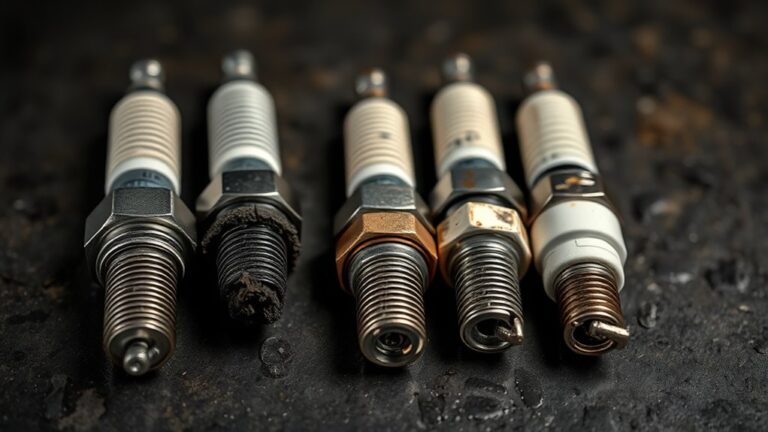

What Tools Do I Need to Change Spark Plugs in 3 Simple Steps
To change spark plugs in three simple steps, you’ll need a spark plug socket with a rubber insert, a ratchet wrench, and an extension bar to reach tight spaces.
Use a spark plug gap gauge to check and adjust the gap.
An adjustable torque wrench is also essential to tighten plugs to the right specs without damaging your engine.
Getting these tools ready will help you work efficiently and safely.
Keep going, and you’ll quickly master the removal, installation, and final tuning process.
Key Takeaways
- Use a spark plug socket with a rubber insert to safely remove and install spark plugs.
- A ratchet wrench with an extension bar helps reach spark plugs in tight engine spaces.
- Employ a spark plug gap gauge to check and adjust the gap according to specifications.
- Hand-thread new spark plugs initially to avoid cross-threading before using a torque wrench.
- Tighten spark plugs with an adjustable torque wrench set to manufacturer’s recommended torque.
Gather Essential Spark Plug Tools
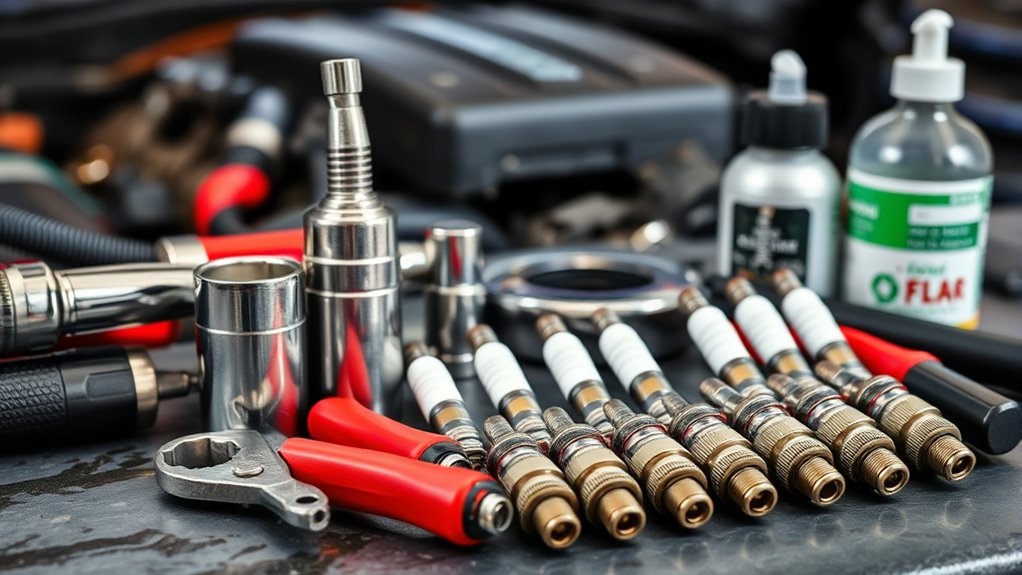
Before you begin changing your spark plugs, it’s important to gather the right tools to make the job easier and prevent damage. Start with a spark plug socket that has a rubber insert to grip the plugs securely during removal and installation.
Pair it with a ratchet wrench and an extension bar to comfortably reach plugs in tight engine spaces. You’ll also need a spark plug gap gauge to check and adjust the electrode spacing to meet the manufacturer’s specifications.
An adjustable torque wrench is essential to tighten each spark plug precisely, avoiding over- or under-tightening. When dealing with ignition wires, a plug boot puller helps remove stubborn boots without damage.
Moreover, a spark plug removal tool can be handy for loosening stuck plugs. Having these tools ready ensures you can work efficiently and protect your engine components throughout the process.
How to Remove and Install Spark Plugs
Once you’ve gathered the right tools, you can start removing the old spark plugs. Begin by disconnecting the spark plug wires or ignition coil using a plug boot puller to avoid damage.
Attach a spark plug socket to a ratchet or flexible extension, then carefully perform spark plug removal by loosening and extracting each plug. When you install spark plugs, first check the gap with a gap gauge and adjust as needed for ideal engine performance.
Hand-thread the new spark plug into the cylinder head to prevent cross-threading. After that, use a torque wrench to tighten the plug to the manufacturer’s specifications. Reconnect the spark plug wires securely to guarantee proper function.
Using these steps and tools guarantees a safe, efficient spark plug change and helps maintain your engine’s performance without complications.
Check Spark Plug Gap and Torque to Specs

Although adjusting the spark plug gap may seem minor, it’s essential for ideal engine performance. First, use a spark plug gap gauge to check the spark plug gap and verify it matches the specifications in your vehicle manual, typically between 0.035 to 0.045 inches.
If needed, gently adjust the gap by bending the electrode with the gauge. Avoid applying too much force to prevent damage. After installation, use a torque wrench to tighten the spark plug to the proper torque, often around 18 lb-ft, but always confirm this in your vehicle manual.
Applying the correct torque prevents damage to the cylinder head and guarantees a secure fit. Finally, recheck the spark plug gap after installation to guarantee consistent firing performance. By carefully checking and adjusting the spark plug gap and tightening to specifications, you’ll help maintain your engine’s efficiency and longevity.
Frequently Asked Questions
How Often Should Spark Plugs Be Replaced?
You should replace spark plugs based on your vehicle manufacturer recommendations, typically every 30,000 to 50,000 miles for conventional plugs and up to 100,000 miles for iridium or platinum types. Following the maintenance schedule helps maintain engine performance and fuel efficiency.
Keep an eye on replacement intervals and use troubleshooting tips if you notice ignition system issues. Comparing costs between types and having the right replacement tools ready makes the process smoother and cost-effective.
Can I Change Spark Plugs Without a Mechanic?
Changing spark plugs without a mechanic is like learning to ride a bike; you just need the right balance. You’ll need spark plug tools like a torque wrench and socket, understand spark plug torque, and pick the right spark plug types or aftermarket spark plugs.
Check the spark plug gap, inspect spark plug wires, and consider spark plug cleaning. Knowing spark plug brands and maintenance helps reduce spark plug replacement cost, making DIY a smart, hands-on choice.
What Symptoms Indicate Bad Spark Plugs?
You’ll notice bad spark plugs through several symptoms. Your ignition system may cause engine misfire or acceleration issues, making your car jerk or hesitate.
You might experience starting problems or slow cranking. Poor idling and engine knocking are common signs too. Fuel efficiency drops, and you could see increased emissions.
Power loss during driving and trouble codes from your vehicle’s computer also point to worn or faulty spark plugs.
Are All Spark Plugs Universal in Size?
Only about 10% of spark plug types are truly universal in size, so you can’t assume all fit your engine. You need to ensure size compatibility, thread specifications, heat range, and gap measurement to match your plug design.
Material differences and electrode shape also affect performance. Always follow manufacturer standards and use proper installation tools to avoid damage.
Checking these details ensures your spark plugs fit perfectly and work efficiently.
Can I Reuse Old Spark Plugs Safely?
You generally shouldn’t reuse old spark plugs, especially if they show spark plug fouling, corrosion, or wear. Spark plug materials and spark plug heat ratings affect lifespan, so mismatched spark plug type or brand can cause issues.
Checking the spark plug gap is essential, but improper spark plug torque during reinstallation may lead to damage. For maximum engine performance and safety, it’s best to follow the recommended spark plug replacement intervals instead of reusing old plugs.
Conclusion
Changing spark plugs is as straightforward as following a recipe. Gather the right tools, remove and install carefully, then check the gap and torque. Just like a skilled chef relies on precise measurements, you’ll rely on these steps to keep your engine running smoothly.
With the right approach, you’ll have your spark plugs replaced in no time. This ensures your car’s heart beats strong and steady every drive. You’ve got this!