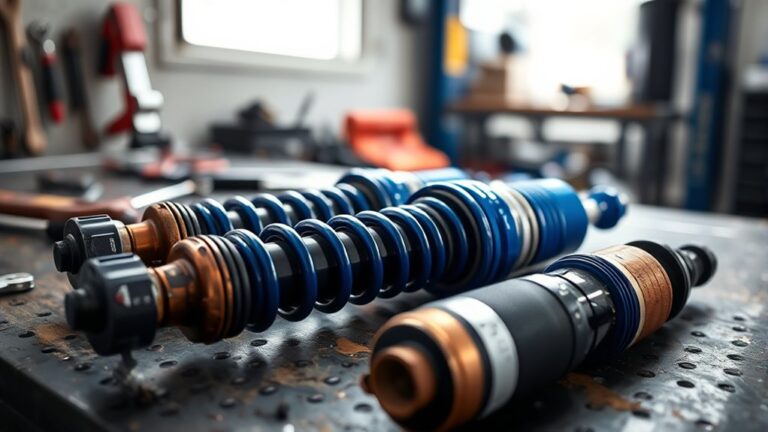

Does My Car Need Alignment After Changing Shocks?
You usually don’t need an alignment after changing shocks because shocks mainly control damping and don’t affect your suspension geometry or wheel angles.
Unless you disturb other components, your alignment should stay intact.
However, replacing front struts is different since they support structural loads and can impact alignment. Proper installation is key to avoiding issues like uneven tire wear or handling problems.
If you want to understand when an alignment is necessary and how to prevent misalignment, keep exploring the details ahead.
Key Takeaways
- Replacing shocks alone usually does not require a wheel alignment since shocks do not affect suspension geometry or wheel angles.
- Front strut replacements often need alignment due to their structural role and impact on camber, caster, and toe settings.
- If suspension components like control arms or tie rods are disturbed during shock replacement, an alignment is recommended.
- Visual inspection of suspension height and alignment marks after replacement helps ensure no geometry changes occurred.
- Uneven tire wear, pulling, or steering issues after shock replacement indicate a need for professional alignment checking.
Do You Need an Alignment After Changing Shocks?
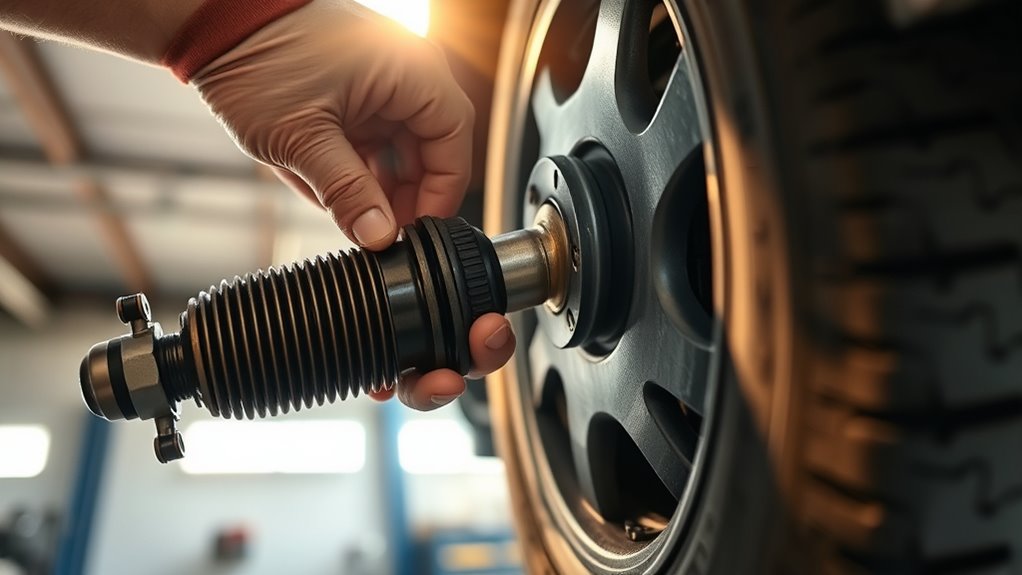
Although changing your shocks improves ride quality, you usually don’t need an alignment afterward since shocks don’t affect your wheel angles or suspension geometry. When you replace shocks alone, the suspension setup remains the same, so your wheels stay properly aligned.
Changing shocks improves ride quality without affecting wheel alignment or suspension geometry.
Alignment becomes necessary only if you replace or adjust suspension components like struts or control arms, which directly influence wheel angles. If your shocks are swapped out without disturbing other parts, your vehicle’s alignment should stay intact.
However, it’s a good idea to visually inspect your tires and suspension for uneven wear or damage after shock replacement. Uneven tire wear can indicate misalignment, so if you spot any issues, getting an alignment is wise.
But generally, you won’t have to worry about alignment just because you changed your shocks. Keep in mind that any suspension work involving loosening or removing components that affect wheel positioning does call for a realignment to maintain proper handling and tire wear.
How Shocks Affect Your Car’s Suspension and Wheel Alignment
When you change shocks, it usually doesn’t affect your wheel alignment. That’s because shocks mainly control how the suspension moves, not the angles of the wheels. Unlike struts, shocks don’t carry the vehicle’s weight or change the suspension’s geometry. So, your car’s height pretty much stays the same.
However, if you replace other suspension parts along with the shocks, that’s when your alignment might be affected. In those cases, it’s a good idea to have the alignment checked to make sure everything is set up correctly.
Shocks Versus Struts
Since shocks primarily control suspension movement without supporting the vehicle’s weight or affecting wheel angles, replacing them usually won’t impact your car’s alignment. Shocks are non-structural suspension parts that mainly dampen the up-and-down motion of your wheels.
They don’t carry the load or set the ride height. That’s the job of springs and struts. Unlike shocks, struts are structural components that play a key role in your suspension geometry and wheel alignment.
If you replace struts, you’ll likely need an alignment because they affect how your wheels sit. But swapping out shocks alone typically won’t change your suspension setup or wheel angles. So unless other suspension parts are disturbed, changing shocks won’t require you to check or adjust your wheel alignment.
Impact On Alignment
Shocks mainly control your car’s suspension movement without changing how your wheels align. Because shocks dampen movement rather than support vehicle weight or adjust suspension geometry, replacing them alone usually won’t affect your wheel alignment.
Shocks don’t alter camber, caster, or toe settings since they don’t carry load or influence suspension height. However, if other suspension components like control arms or struts are removed or adjusted during the shock replacement, you should get your alignment checked.
These components directly impact suspension geometry and wheel angles. So, unless you’re working on more than just the shocks, an alignment isn’t typically necessary. Always verify that any suspension work involving parts affecting suspension geometry is followed by a proper wheel alignment to keep your car handling safely and smoothly.
Suspension Height Effects
How does changing your shocks influence your car’s suspension height and alignment? In most cases, shock replacement won’t directly affect suspension height because shocks don’t support your vehicle’s weight; the springs do. Any slight change in suspension height after shock replacement usually relates to the condition of your springs rather than the shocks themselves.
Since suspension height plays a vital role in maintaining correct wheel alignment, it’s important to keep an eye on it. Significant changes that impact alignment typically happen when springs or struts are replaced, not shocks. After shock replacement, visually inspect your suspension height to confirm it remains consistent.
If you notice any unusual changes, it’s wise to get a professional check to avoid alignment issues down the line.
Differences Between Shocks and Struts for Alignment Needs
You should know that shocks and struts serve different purposes in your suspension system. Shocks mainly handle damping and usually don’t impact your alignment. On the other hand, struts support structural loads and can actually change your wheel angles. So, when you replace struts, you’ll often need an alignment. But if you’re just swapping out shocks, an alignment typically isn’t necessary.
Structural Role Differences
Although shocks and struts both control your vehicle’s ride quality, they play very different roles in your suspension system. Shocks provide damping but don’t offer structural support, so swapping them usually won’t affect suspension geometry or wheel alignment.
Struts, on the other hand, act as structural components, supporting spring loads and directly shaping suspension geometry. When you replace struts, you can alter camber, caster, or toe angles, making an alignment necessary.
Here’s what sets them apart:
- Shocks dampen vibrations without bearing loads
- Struts provide structural support for suspension
- Struts influence suspension geometry and wheel alignment
- Replacing shocks rarely affects wheel angles
- Replacing struts often requires a wheel alignment
Understanding these roles helps you decide if you need an alignment after replacement.
Impact On Vehicle Alignment
Since shocks don’t support your vehicle’s weight or affect suspension geometry, replacing them generally won’t impact your wheel alignment. Unlike struts, which are structural and influence suspension angles, shocks mainly control motion without changing wheel positions.
This means a shock replacement usually doesn’t require a vehicle alignment unless other suspension parts, like control arms or tie rods, are disturbed during the process. Ignoring this difference can lead to unnecessary alignment checks.
However, it’s smart to inspect the suspension after replacing shocks to verify no components affecting alignment were inadvertently affected. Proper vehicle alignment is essential to prevent uneven tire wear and maintain safe handling, so understanding the impact of shocks versus struts helps you know when an alignment is truly needed.
Replacement Alignment Requirements
When replacing shocks, you typically won’t need an alignment because shocks don’t change your vehicle’s suspension geometry or wheel angles. Please note, struts are different. They’re structural and often require alignment after replacement.
Here’s what you need to complete for proper suspension care:
- Inspect surrounding suspension parts for wear or damage
- Understand shocks support ride comfort, not wheel angles
- Recognize struts affect alignment due to their role in suspension load
- Check rear axle condition if suspension components are disturbed
- Always consider a professional alignment after strut replacement
If you only change shocks, an alignment isn’t usually necessary. However, if you replace struts or disrupt components near the rear axle, an alignment ensures your vehicle handles safely and performs well.
Why Replacing Rear Shocks Usually Doesn’t Require Wheel Alignment
Even if you replace your rear shocks, you usually won’t need a wheel alignment because these components don’t affect your vehicle’s suspension geometry or wheel angles. Rear shocks primarily improve ride comfort and shock durability without altering the suspension’s structural setup.
When you perform suspension upgrades focused solely on rear shocks, the process involves straightforward removal and installation, leaving alignment settings untouched. Unlike front suspension parts like ball joints or tie rods, rear shocks don’t control wheel angles, so replacing them doesn’t shift your wheels out of alignment.
However, if other suspension components such as control arms or bushings are worn or replaced during the upgrade, then you might need an alignment. It’s a good idea to have regular inspections to catch any hidden damage that could impact alignment later.
In most cases, though, swapping out rear shocks enhances your ride quality without the extra step of a wheel alignment.
Why Front Strut Replacement Almost Always Requires Alignment
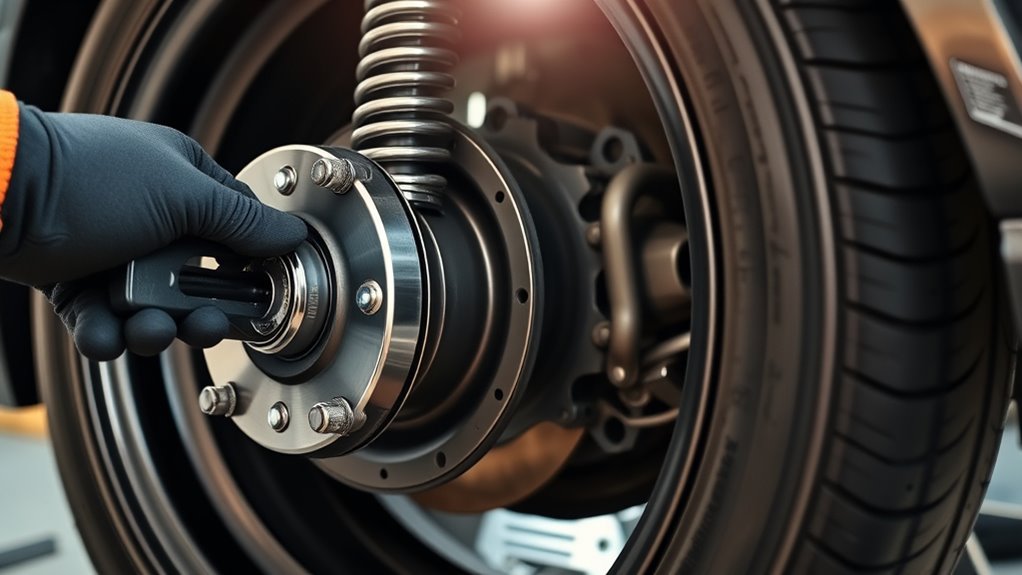
When you replace front struts, you’ll need to loosen bolts that directly affect your wheel alignment. So, if you don’t get an alignment done afterward, your handling can really take a hit. Plus, your tires might wear unevenly, which is something you definitely want to avoid. Getting a proper alignment ensures your car drives safely and smoothly once the job is done.
Strut Bolts And Alignment
Since replacing front struts involves removing and reinstalling strut bolts that directly influence suspension geometry, you’ll almost always need an alignment afterward. These bolts, often eccentric or adjustable, affect camber, caster, and toe settings. Even new strut bolts can have some play, so precise reinstallation is key to maintaining proper alignment.
Misaligned strut bolts can cause uneven tire wear and handling problems, making alignment essential.
Keep in mind:
- Suspension bushings also impact alignment after strut work
- Proper strut bolt adjustment prevents suspension geometry shifts
- Wheel balancing doesn’t fix alignment issues caused by strut bolts
- Tire rotation won’t correct misalignment from improper reinstallation
- Realignment ensures your vehicle performs safely and smoothly
Skipping alignment after front strut replacement risks costly tire and suspension damage.
Handling And Tire Wear
Because front strut replacement changes suspension components that control wheel angles, you’ll almost always need an alignment to maintain proper handling. Misaligned wheels can cause uneven tire wear, reduce tire rotation efficiency, and even affect brake performance.
Steering fluid condition also plays a part in smooth handling, but it can’t correct misalignment caused by new struts.
| Aspect | Effect of Misalignment | Why Alignment Helps |
|---|---|---|
| Tire Wear | Uneven, premature wear | Equalizes camber, toe angles |
| Handling | Pulling, wandering | Restores proper suspension geometry |
| Brake Performance | Reduced stability | Ensures balanced force application |
Skipping alignment after front strut replacement risks costly tire damage and compromised safety, so always get a professional alignment.
How Springs and Shocks Affect Vehicle Height and Alignment
Although shocks play a crucial role in controlling your vehicle’s suspension movement, they don’t support its weight or affect ride height. Springs carry the load and determine how high your car sits. So, if you replace shocks alone, your vehicle height and alignment usually stay the same.
However, worn or replaced springs can change ride height, which might affect alignment.
Keep these key points in mind:
- Springs directly influence vehicle height and suspension geometry.
- Shocks mainly dampen movement, not weight or height.
- Small height changes after shock replacement often come from spring wear.
- Alignment checks are wise if you alter springs but usually unnecessary just for shocks.
- Regular tire rotation, brake maintenance, and engine diagnostics help maintain overall vehicle health, indirectly supporting proper suspension function.
Understanding how springs and shocks impact your ride helps you decide when alignment is necessary and keeps your car running smoothly.
When Shock Replacement Affects Wheel Alignment
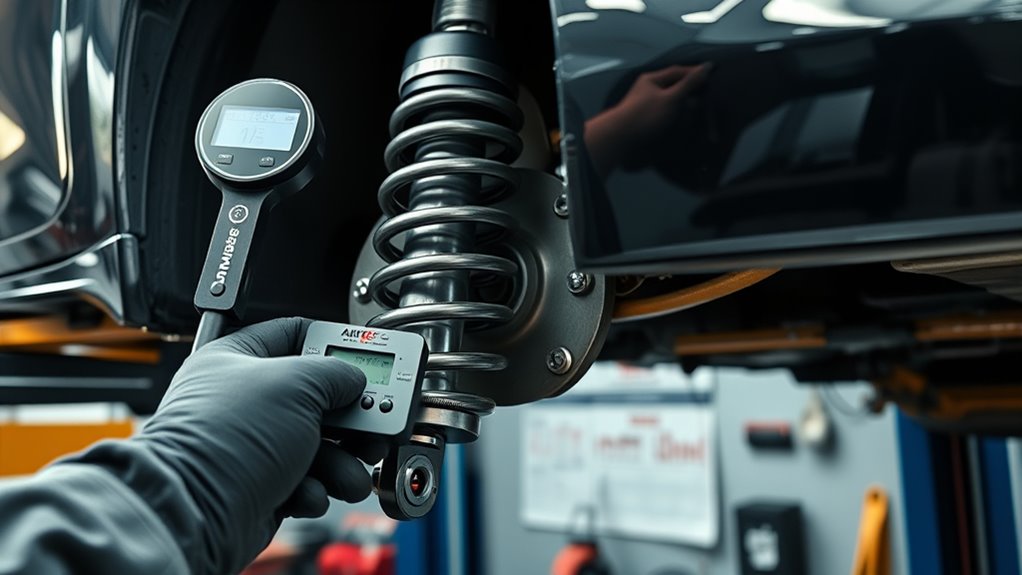
Even though replacing shocks alone usually won’t affect your wheel alignment, certain situations during the process can make an alignment necessary. For instance, if your shock replacement involves suspension upgrades or removing parts like control arms or struts, it can shift suspension geometry, requiring alignment.
Also, if the front shocks are part of a strut assembly, changes can affect camber and caster angles. While rear shocks typically don’t impact alignment, disturbing nearby suspension or brake system components might. Tire balancing after shock replacement is also a good practice to ensure smooth driving.
| Situation | Impact on Alignment | Recommended Action |
|---|---|---|
| Front strut shock replacement | Alters camber/caster angles | Perform alignment |
| Suspension upgrades | Changes suspension geometry | Check and align |
| Rear shock only replacement | Usually no effect | Visual inspection |
Understanding these factors helps you decide when an alignment is necessary after shocks.
Signs Your Car Needs an Alignment After Suspension Work
When you notice uneven tire wear or your steering wheel isn’t centered, these are clear signs your car may need an alignment after suspension work. Even though replacing shocks alone usually doesn’t change your alignment, any adjustments to control arms or tie rods can throw it off.
Keep an eye out for changes in handling, like your car pulling to one side or requiring more steering effort. Visual inspection of your tires can reveal feathered or uneven tread, signaling misalignment.
Look for these signs after suspension repairs:
- Uneven tire wear despite regular tire rotation
- Steering wheel off-center when driving straight
- Vehicle pulling to one side on a flat road
- Increased steering effort or instability
- Unusual brake performance needing brake maintenance
If you experience these, it’s wise to get your alignment checked alongside engine diagnostics to ensure everything runs smoothly.
What Happens During a Professional Wheel Alignment Check
If you notice signs like uneven tire wear or your car pulling to one side after suspension work, a professional wheel alignment check can pinpoint the exact adjustments needed. During the check, a technician mounts sensors or targets on your wheels and uses a computer to measure angles like camber, caster, and toe. These measurements are compared to your vehicle’s manufacturer specifications.
If you’ve replaced shocks or other suspension parts, the alignment ensures everything stays within proper tolerances. The process takes about an hour and includes a thorough brake inspection and tire balancing to promote even wear and safety. Furthermore, some shops offer engine tuning alongside alignment to optimize overall vehicle performance.
The technician carefully adjusts wheel angles to improve handling, increase tire life, and maintain stability. By the end of the check, you’ll have peace of mind knowing your car drives safely and smoothly after suspension changes.
Tips to Avoid Misalignment During Shock or Strut Replacement
Although replacing shocks or struts can improve your vehicle’s ride quality, you’ll want to take specific steps to prevent misalignment during the process. Properly maintaining suspension bushings and ensuring components return to their exact positions helps keep your alignment intact.
Before removal, mark the position of strut bolts and tie rods to guide accurate reinstallation. This reduces the risk of misalignment, which can affect handling and tire wear.
To avoid misalignment during shock or strut replacement, follow these tips:
- Use paint or alignment marks on suspension parts to note their original orientation
- Reinstall shocks or struts exactly where they were, avoiding changes to bolt positions
- Follow manufacturer torque specs to prevent suspension component movement
- Inspect alignment marks and suspension bushings visually before final tightening
- Consider wheel balancing and tire rotation after replacement to maintain even tire wear
Costs and Benefits of Alignment After Shock Replacement
Taking steps to prevent misalignment during shock replacement helps maintain your vehicle’s handling and tire condition. While shocks alone don’t usually affect wheel alignment, if other suspension parts like control arms or tie rods are disturbed, an alignment becomes essential.
Spending $75 to $200 on alignment can save you from uneven tire wear and steering issues down the road. Besides alignment, consider scheduling tire rotation and brake inspection to keep your vehicle running smoothly and safely. These combined maintenance tasks help extend tire life and improve overall performance.
Engine tuning also plays a role in ensuring your car operates efficiently, complementing the benefits of proper suspension care. So, even if you only replaced shocks, if you notice changes in handling or uneven tire wear, an alignment is a smart investment. It’s a small cost that considerably boosts safety and vehicle longevity.
When to Consult a Mechanic About Alignment After Shocks?
Whenever you replace shocks, you should consult a mechanic about alignment if you notice your car pulling to one side or see uneven tire wear. While replacing shocks alone usually doesn’t require alignment, if you’ve disturbed suspension parts like control arms or tie rods, an alignment is crucial. Also, replacing shocks with struts often demands a professional alignment to avoid handling issues.
You should see a mechanic when your tires show uneven wear despite regular tire balancing, the steering wheel vibrates or feels off-center, or you experience poor braking performance that prompts a brake inspection. Also, if suspension components were loosened or removed during shock replacement, or if engine tuning was done alongside suspension work affecting overall vehicle dynamics, it’s a good idea to get an alignment check.
Prompt alignment checks ensure your car stays safe, stable, and efficient after shock changes.
Frequently Asked Questions
How Often Should I Get a Wheel Alignment Regardless of Shocks?
You should get a wheel alignment every 12,000 to 15,000 miles or at least once a year. Keeping your tire pressure in check helps maintain proper alignment, which directly affects your steering response and brake performance.
If you notice uneven tire wear or your car pulling to one side, get an alignment sooner. Regular alignments ensure safer driving, better handling, and extend your tires’ lifespan, so don’t overlook this essential maintenance.
Can Worn Shocks Cause Vibrations Without Affecting Alignment?
Oh sure, your worn shocks love to throw a party of vibrations, but guess what? They don’t mess with your wheel alignment. Shock wear causes those annoying vibrations you feel, like bouncing or oscillations, but alignment stays steady.
Does Weather or Road Condition Impact Alignment After Shock Replacement?
Yes, weather and road conditions can impact your alignment after shock replacement. Extreme temperatures might cause metal parts to expand or contract, while road hazards like potholes can lead to suspension damage.
If your suspension shifts, it can cause uneven tire wear. So, after changing shocks, especially if you’ve hit rough terrain, it’s smart to verify alignment to avoid further damage and guarantee your tires wear evenly.
Are Aftermarket Shocks More Likely to Require Alignment Than OEM?
Yes, aftermarket shocks are more likely to require alignment than OEM shocks. When you choose aftermarket upgrades, they often don’t have the same OEM compatibility. This means their design or fit may change suspension geometry during shock installation.
If the shocks alter ride height or angles, you’ll need an alignment to keep your tires wearing evenly and your handling precise. Sticking with OEM shocks usually means less worry about alignment after installation.
Can I Perform a Basic Alignment Check at Home After Replacing Shocks?
Yes, you can perform a basic alignment check at home after replacing shocks. Start with a suspension inspection to make sure everything’s properly mounted.
Check your tire pressure since uneven pressure affects handling and wear. Look closely at tire tread for uneven wear patterns. Also, test your brake system to confirm the car doesn’t pull when braking.
If you notice pulling or uneven tire wear, consider a professional alignment for the best results.
Conclusion
After changing shocks, checking for alignment is a smart step to secure smooth steering and steady suspension. While rear shocks rarely require realignment, front struts often demand diligent adjustments.
Don’t delay in doing a professional wheel alignment to prevent premature tire wear and maintain maximum maneuverability. Trust the tips to tackle tricky tasks and consult a mechanic when in doubt.
Keeping your car’s coordination crisp keeps your rides safe and satisfying!